How to Catch Trout: The Complete Guide to Bait, Lures, Location, and Presentation
Learning how to catch trout starts with understanding where they live, what they eat, and how they respond to different fishing techniques. Trout have a reputation for being picky, spooky, and hard to figure out, but that reputation is only half true. They are cold-blooded predators with specific needs, and once you understand those needs, catching them becomes a repeatable process instead of a lucky afternoon.
This guide is the full system. It is built on trout biology, field-tested tactics, and the patterns that show up again and again whether you are fishing a stocked pond, a small creek, a tailwater river, or a mountain lake. If you have ever wondered why you got skunked on a day that looked perfect, or why the guy fifty yards downstream was pulling fish out of water you had already fished, the answers are here.
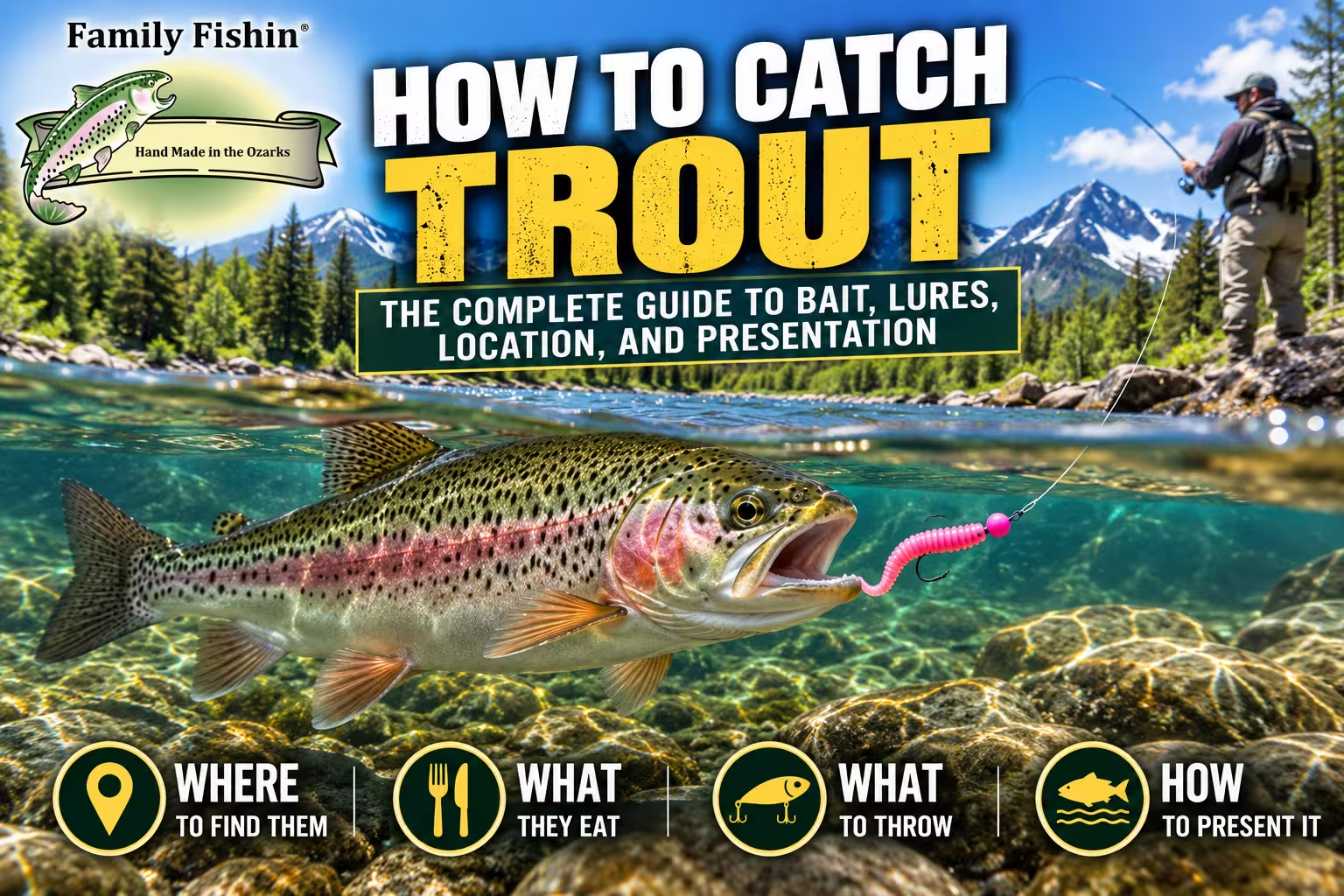
We will cover the four questions that decide every trout trip:
- Where are the trout? (Location, temperature, oxygen, and current)
- What are they eating? (Natural food and what to imitate)
- What should you throw? (Baits, lures, rigs, and gear)
- How should you present it? (Depth, speed, timing, and stealth)
Each section links to a deeper article on our site, so you can use this page as your starting point and dive into any topic when you want more detail.
Trout 101: Know the Fish Before You Fish for It
Before tackle, you need a basic picture of the animal. Trout are members of the salmon family (salmonids), and the species most anglers target in North America fall into a few groups:
- Rainbow trout: the most widely stocked and most commonly caught. They are aggressive, acrobatic, and tolerate a slightly wider temperature range than other trout.
- Brown trout: native to Europe, now established across North America. Browns are warier, often more nocturnal, and tend to grow larger. They reward careful presentation.
- Brook trout: technically a char, not a true trout. They love the coldest, cleanest, most oxygen-rich water and are usually found in small streams and high-elevation lakes.
- Cutthroat trout: western natives, identifiable by the red slash under the jaw. They are often less pressured and more willing to eat.
- Lake trout and golden trout: specialized species that follow the same general rules but in deeper or more remote water.
What all of them share is a physiology built for cold, clean, well-oxygenated water. Trout are ectotherms, meaning their body temperature matches the water around them. That one fact drives their metabolism, their appetite, their location, and their willingness to chase. When the water is in their comfort range, they feed freely and move to eat. When it is too cold, they slow down. When it is too warm, they stress, and a stressed trout does not eat well.
Trout are also energy economists. A trout in moving water is constantly balancing the calories it burns holding position against the calories it gains from food. They want the maximum food for the minimum effort. That is why they sit in specific places and why they ignore most of the water you cast at. We break down the biology in Trout Energy Conservation Explained, and it is worth understanding because it explains almost everything else in this guide.
Step 1: How to Catch Trout by Finding Where They Live and Feed
The number one reason anglers fail to catch trout is not the lure. It is casting to water that does not hold fish. A perfect presentation in an empty spot catches nothing. A mediocre presentation in the right spot catches fish all day.
Water Temperature: The Master Switch
Water temperature is the single most important environmental factor for trout. As a general guide for rainbow and brown trout:
- Below about 40°F (4°C): Trout are sluggish. They feed, but slowly and in short windows. Small baits and slow presentations rule.
- About 45–50°F (7–10°C): Feeding picks up and trout begin moving more.
- About 50–65°F (10–18°C): This is the sweet spot. Metabolism is high, appetite is strong, and trout are willing to chase.
- Above about 68°F (20°C): Stress begins. Trout seek cold refuges like spring seeps, deep pools, and tributary mouths, and feeding drops off.
- Above roughly 75°F (24°C): Dangerous territory. Fish can die, especially if fought hard. Stop fishing.
Brook trout run a few degrees cooler across the board. Carry a cheap stream thermometer. It is one of the most useful tools in your pack. For the full science, read Best Water Temperature for Trout: The Science Behind Why Temperature Controls Everything.
Dissolved Oxygen: The Hidden Limiter
Cold water holds more oxygen than warm water, which is part of why trout are tied to cold water. Trout generally need dissolved oxygen levels above about 6 mg/L to feed comfortably, and levels below about 5 mg/L cause stress. Fast, broken water (riffles, rapids, plunge pools) aerates itself. Still, warm, weedy ponds in summer can be oxygen-poor, especially at dawn after a night of plant respiration. Our guide to How Dissolved Oxygen Affects Trout explains how this creates predictable feeding windows.
Current: Where Trout Sit in Moving Water
In streams and rivers, trout hold in current breaks, places where they can rest in slow water right beside fast water that delivers food. Learn to spot these and your catch rate climbs immediately:
- Behind boulders and rocks. The “pocket” of slack water behind a rock is a classic trout lie.
- Seams. The line where fast water meets slow water is a conveyor belt of food with a resting spot right next to it.
- Undercut banks and overhanging cover. These provide shade, protection from birds, and often deeper water.
- The head of a pool. Where fast water enters a pool, food is concentrated and oxygen is high.
- The tail of a pool. Larger trout often sit here, watching food drift through while staying out of the heaviest current.
- Inside bends. Slower, deeper water on the outside of a bend often holds fish, as does the soft inside edge.
- Logs, root wads, and bridge pilings. Anything that breaks current creates a lie.
For a full breakdown, see How Trout Use Current Breaks (And Why It Matters for Where You Cast).
Ponds and Lakes: Finding Trout in Still Water
Still water has no current to read, so trout position by temperature, food, and cover instead:
- Spring and fall: Trout cruise the shallows and shorelines, following the cool surface layer and food. Cast along banks, inlets, points, and drop-offs.
- Summer: As surface water warms, trout move deeper to find cooler, oxygenated water, often near inlets, springs, or the thermocline.
- Winter: Fish slow down but still feed. Shallow, sunny areas with a bit of warmth can hold fish on bright afternoons.
Stocked ponds add one more layer. Newly stocked trout behave very differently from wild fish, and their behavior changes over days and weeks. We cover that in detail in Stocked Trout Fishing Tips: The First 72 Hours and Where Stocked Trout Actually Feed.
Spawning Areas: Fish Around Them, Not On Them
In spring (rainbows) and fall (browns and brook trout), trout build nests called redds in clean gravel. These show up as lighter, cleaned-looking patches in the streambed. Avoid wading through or fishing directly over redds. Trampling them destroys eggs. Fish the water downstream and near the redds instead, where trout feed on drifting eggs. Learn more in Redd Spawning Gravel: How Trout Build Nests.
Step 2: Understand What Trout Eat
If location is the first step, diet is the second. Trout are opportunistic feeders, but they are not random. They key on what is abundant, easy to catch, and calorie-efficient. When your bait or lure resembles that food in size, color, movement, and depth, you get bites.
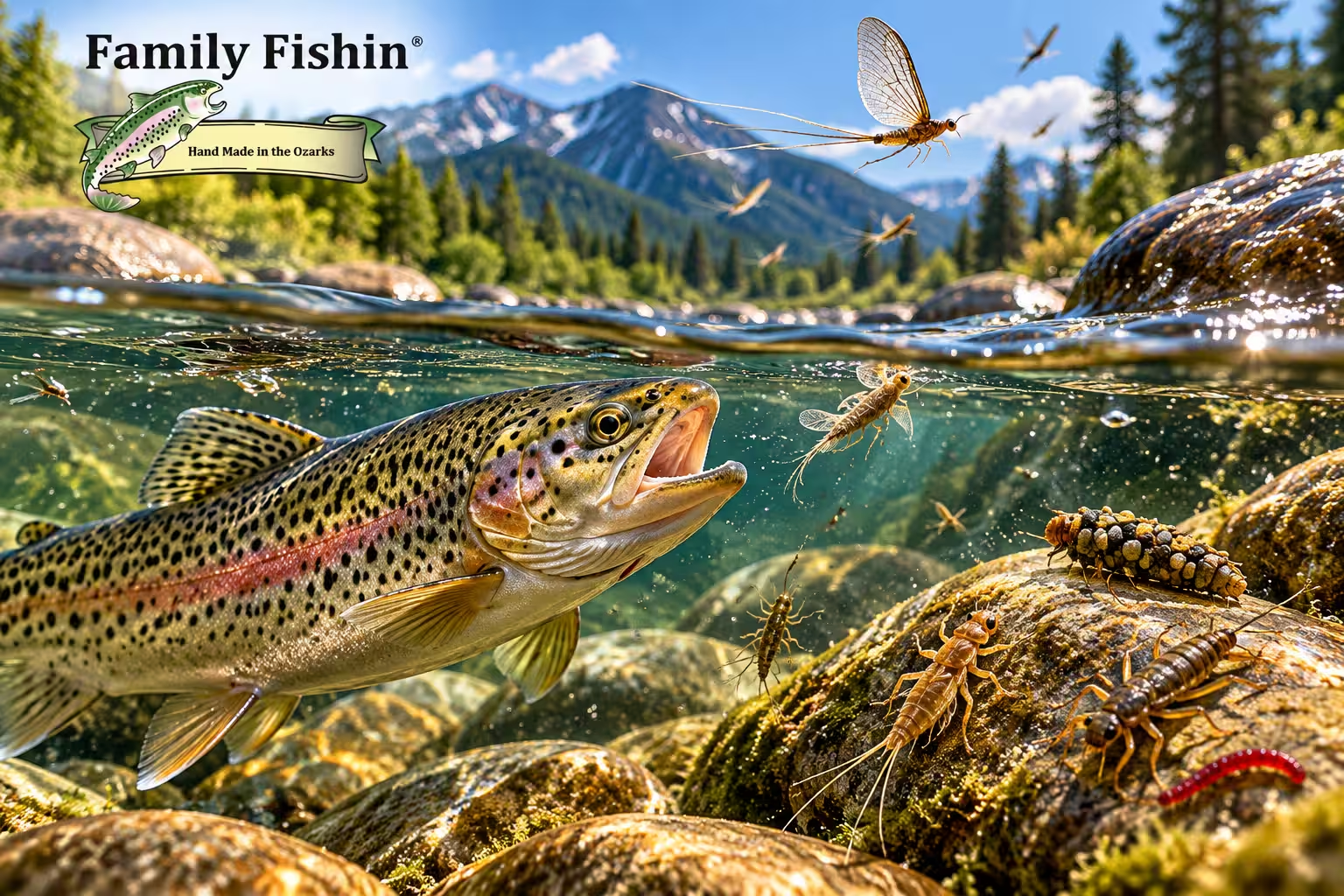
Aquatic Insects: The Foundation of the Diet
Insects make up a huge share of what trout eat in most waters, especially in streams and rivers. The big groups to know:
- Mayflies. A classic trout food in nymph, emerger, and adult stages. See Mayflies for Trout: Subsurface Behavior & Presentation Strategy.
- Caddisflies. Abundant and widespread, eaten as larvae, pupae, and adults. Read Why Trout Eat Caddisflies.
- Stoneflies. Large, calorie-rich, and found in clean, fast water. See Stoneflies for Trout and Stonefly Nymph: How to Rig and Fish It.
- Midges. Tiny but available year-round, and often the main food in winter and in tailwaters. See Midges Explained.
- Hellgrammites. Giant aquatic larvae that big trout will eat. See Hellgrammites Explained.
For an overview of all of them, start with Best Aquatic Insects for Trout: What Trout Eat and Why It Matters.
Crustaceans: Scuds and Crawfish
Scuds (freshwater shrimp) are a staple in many spring creeks and tailwaters. Crawfish are a high-calorie meal that big trout actively hunt. Learn more in Scuds Explained and Why Trout Eat Crawfish. If you fish areas with crawfish, our Crawfish Connection article explains how deeply they shape the whole fishery.
Baitfish: Minnows and Sculpins
Larger trout, especially browns, shift toward fish. Minnows, shiners, and bottom-dwelling sculpins are all on the menu. Our articles Why Trout Eat Minnows and Sculpins Explained show how this changes your lure choice.
Worms, Leeches, Eggs, and Terrestrials
- Worms. After rain, worms wash into the water and trout feed on them heavily. They are also one of the best stocked-trout baits. See Why Trout Eat Worms.
- Leeches. A slow-moving, undulating meal that big trout love. See Why Trout Eat Leeches.
- Eggs. During spawning seasons, loose eggs drift downstream and trout key on them. See Why Trout Eat Eggs (and When to Use Egg Patterns).
- Terrestrials. Grasshoppers, ants, and beetles blown into the water in summer. See Why Trout Eat Grasshoppers.
How Diet Changes by Season
What trout eat changes through the year. Winter leans on midges and small nymphs. Spring brings hatches, runoff, and worms. Summer adds terrestrials. Fall brings eggs, baitfish, and aggressive pre-winter feeding. Our season-by-season breakdown is in Trout Diet by Season.
What Stocked Trout Eat
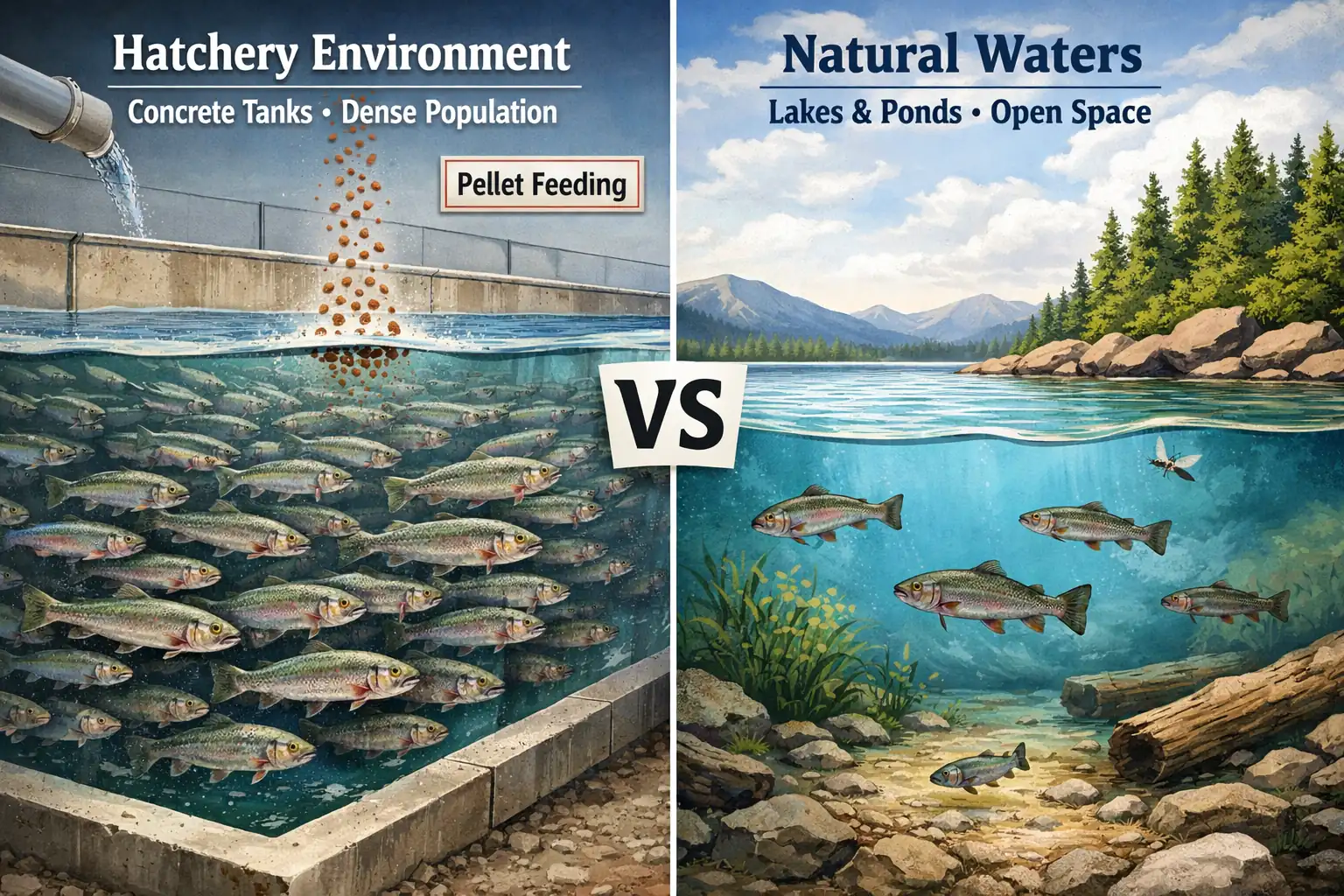
Hatchery trout start out conditioned to eat pellets. They have to learn what natural food is. That is why bright, simple, pellet-like or worm-like presentations work so well on fresh stockers. Understanding this is a major advantage. Read How Stocked Trout Find Food, Stocked Trout Feeding Behavior After Hatchery Conditioning, and Stocked vs Wild Trout: How to Adjust Your Presentation.
Step 3: Choose Your Gear and Setup
Trout fishing does not require expensive gear, but it does reward the right gear. Trout are light-biting, line-aware fish, so finesse beats power.
Rod and Reel
For most trout fishing with spinning gear, a 5’6″ to 7′ ultralight or light-action rod paired with a 1000 to 2500 size spinning reel is ideal. The soft tip protects light line, helps you feel subtle bites, and lets you cast small baits and lures. A smooth drag matters more than anything else on the reel, because trout make quick, hard runs and light line will not forgive a sticky drag.
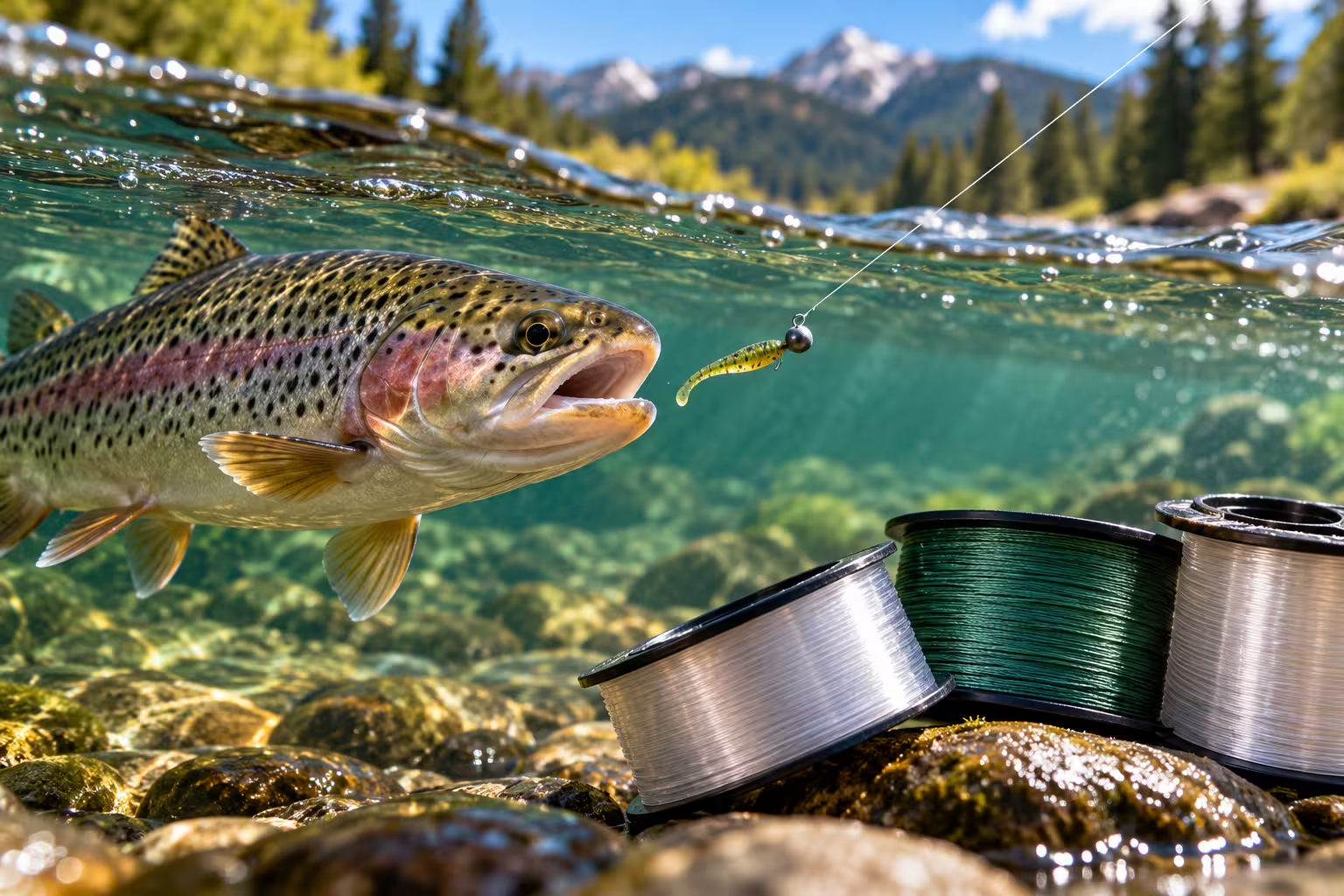
Line
Light line is the single biggest upgrade most trout anglers can make.
- Main line: 2 to 6 lb test is the standard range. Go 2 to 4 lb in clear water or for pressured fish, and 6 lb when you need more strength around cover or for larger fish.
- Monofilament is forgiving, stretches a little (which helps keep hooks in), and floats slightly.
- Fluorocarbon is less visible underwater and sinks, making it a strong leader material.
- Braid has no stretch and great sensitivity, but it is very visible and needs a fluorocarbon or mono leader for trout.
We compare all three in Best Fishing Line for Trout: Mono vs Fluorocarbon vs Braid.
Hooks
Small hooks catch more trout. For bait, sizes #10 to #14 are a good range. Use a bait-holder hook for worms and a light-wire hook for natural presentation. For jigs, match the hook to the bait, as covered in Best Hook Size for Trout Jigs. If you want to understand sizing, shapes, and terminology, see Fishing Hook Anatomy, Sizes, Types, and Terminology Explained.
Rigs That Work
Here are the core trout rigs, from simplest to most versatile:
1. The bobber and bait rig. A float, a small hook, and bait set at the right depth. It is the most beginner-friendly rig, and it keeps bait suspended where trout see it. Depth matters enormously, so read How Deep Should You Set a Bobber for Trout? and compare options in Float Fishing for Trout: 6 Common Types of Bobbers.
2. The split-shot drift rig. Hook and bait with one or two small split shot about 12 to 18 inches above. Cast upstream and let the bait tumble naturally along the bottom. This is the go-to rig for streams.
3. The slip-sinker bottom rig. A small sliding egg sinker above a swivel, with a 18 to 24 inch leader to the hook. Ideal for ponds and lakes, especially with floating dough bait.
4. The jig rig. A jig head with a soft plastic or marabou body, fished with a steady or twitching retrieve. This is one of the most versatile trout setups ever developed. Our full system is in Best Jig Heads for Trout (Complete System Guide), with focused guides on weight, shape, color, and hook size. Pull it all together with Best Trout Jig Setup for Any Condition.
5. The dead-sticking setup. When trout are not chasing, you put the bait in front of them and wait. This tactic is more effective than most anglers expect. See the Dead Sticking Fishing Guide.
Step 4: Best Baits for Trout
Live and natural baits are the most reliable trout catchers, particularly for beginners and for stocked water.
Worms
Nightcrawlers, red wigglers, and garden worms catch trout almost anywhere. Thread a small piece onto the hook so it wiggles naturally, and fish it drifting in current or suspended under a float. Worms work because they are a real food source that washes into streams. We cover rigging in 3 Best Ways to Rig and Fish a Trout Worm and How to Rig Trout Worms for Stocked and Pressured Trout.
Salmon Eggs and Egg Imitations
Single salmon eggs on a small hook are classic. They shine around spawning times and in water where trout have learned to eat eggs. Artificial egg imitations are also strong. See Synthetic Salmon Eggs vs Real Eggs: Which Works Better for Trout?.
Dough Baits and Scented Baits
Dough baits such as PowerBait-style products are designed for stocked trout and are very effective in ponds and lakes. Float them off the bottom on a slip-sinker rig. Scent plays a larger role than many people think. Our scent science series explains why: Garlic, Anise, Fish Oil, Crawfish and Shrimp Oil, and even novelty scents like watermelon and wild berry.
Minnows and Other Live Bait
Where legal, live minnows are strong for larger trout. Always check local regulations, because many trout waters restrict live bait, and some are artificial-only or fly-and-lure-only.
Bait Tips That Add Fish to Your Day
- Use the smallest hook that holds your bait.
- Keep the bait looking natural. A bunched-up worm looks like a mistake. A single wiggling tail looks like food.
- Keep your line light and your leader short and clean.
- Pay attention to bait size. Our guide to Best Trout Worm Sizes shows when size matters.
Step 5: Best Lures for Trout
Lures let you cover water and trigger reaction strikes. They are the best way to find fish in a new spot, and they often catch the larger, more aggressive trout.
Jigs: The Most Versatile Trout Lure
A small jig (1/64 to 1/8 oz) can be fished at any depth and speed, in ponds, creeks, and lakes. Pair it with a soft plastic or marabou tail and you have a lure that imitates minnows, leeches, insects, or worms depending on how you work it. If you are brand new, our Best Trout Lures for Beginners article is the best place to start.
Soft Plastics
Soft plastic worms, grubs, and minnow imitations are deadly on trout, particularly stocked fish. Material, softness, salt content, and tail design all affect how a bait moves and falls. Our guides cover this in depth:
- Best Soft Plastics for Trout (What Actually Gets More Bites + Worm Setup Guide)
- What Are Soft Plastic Fishing Lures Made Of?
- Soft Plastic Tail Design
- What Actually Makes a Soft Plastic Lure “Come Alive”
- Soft Plastic Cold Water Performance
Marabou Jigs
Marabou has natural, breathing movement even when you barely move it. That makes it deadly in cold water and on pressured fish. See Why Marabou Jigs for Trout Are Deadly and Marabou vs Soft Plastics for Trout.
Spinners and Spoons
Inline spinners and small spoons use flash and vibration to trigger strikes, and they are great for covering water in creeks, rivers, and lakes. Small sizes (1/16 to 1/8 oz) in natural or bright colors work best. Cast slightly upstream or across and retrieve just fast enough to keep the blade turning.
Color: What Actually Matters
Color is the topic anglers argue about most and understand least. A few science-backed truths:
- Trout see color, and they see into the near-UV range. See How Fish See Color.
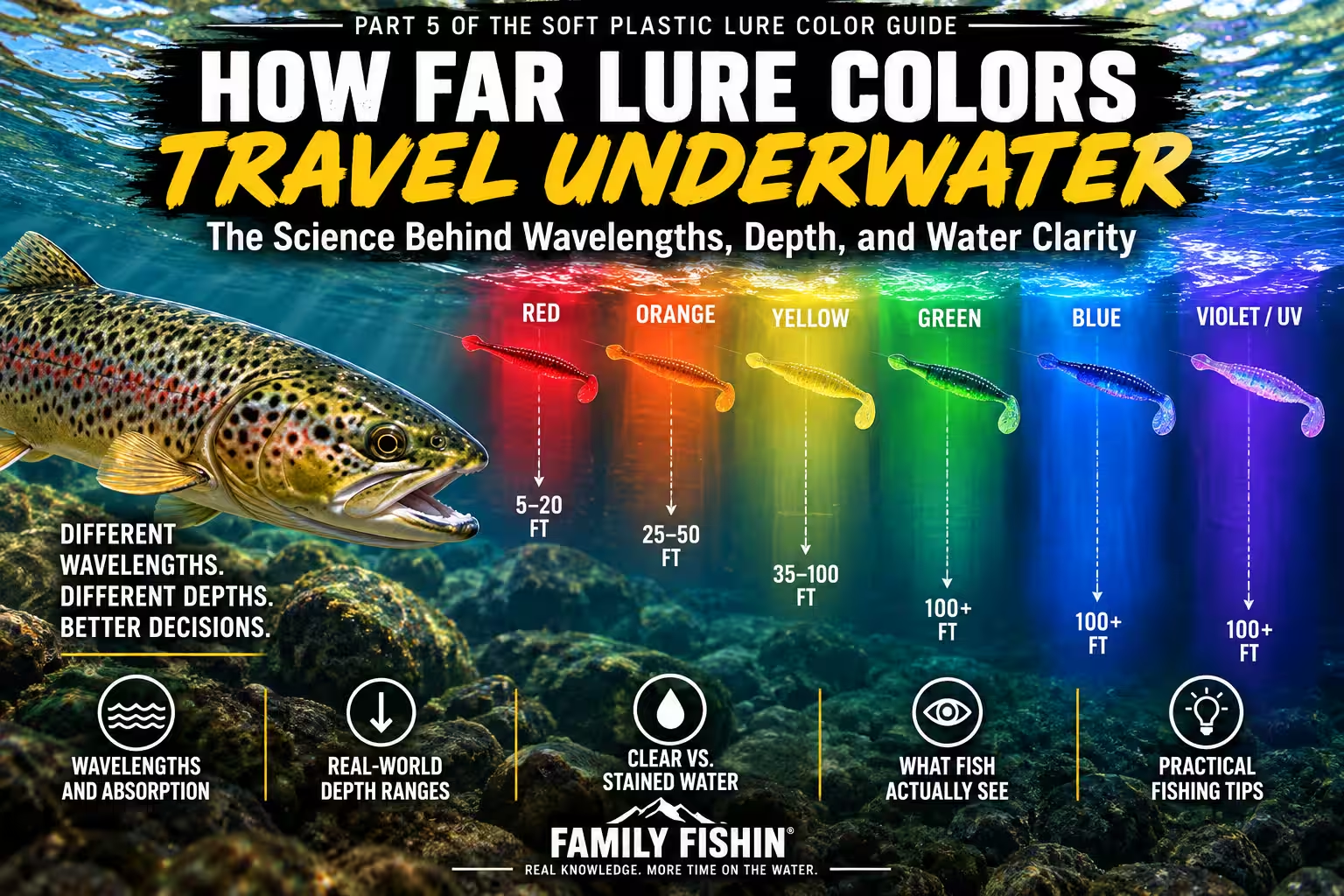
- Light changes color as it travels through water. Reds fade first, and blues and greens last longest. See Why Lure Colors Change Underwater and Fishing Lure Color Wavelengths Explained.
- Contrast against the background often matters more than the “exact” color. See Fishing Lure Color Contrast Explained.
- Water clarity should guide your color choice. See How Water Clarity Affects Trout Fishing.
For practical picks, use Best Soft Plastic Lure Colors, Best Trout Worm Colors for Each Season, and Best Trout Worm Colors for Stocked Trout. If you want to go deeper into specialty finishes, see UV Lures Explained, Glow-in-the-Dark Fishing Lures, and Why Fluorescent Lures Pop So Hard.
A Simple Color Rule
If you want a starting point, use this:
- Clear, bright conditions: natural and subtle colors (olive, brown, white, translucent).
- Stained or low-light water: brighter or higher-contrast colors (chartreuse, orange, pink, black).
- When nothing works: change color and change movement before you change spots.
Step 6: Presentation, the Part That Separates Good from Great
Two anglers can use the same lure in the same spot and one will catch fish while the other gets nothing. The difference is presentation.
Depth: Get It in the Strike Zone
Trout typically will not travel far vertically to chase a lure, especially in cold water. Your bait needs to be at or just above the fish’s level. Count your lure down after casting (one second per foot is a rough guide) and adjust until you find fish. Our article Lure Depth and Strike Zone Explained goes deeper.
Speed: Match the Fish’s Energy Level
Retrieve speed should match water temperature and activity level. Cold water calls for slow, subtle retrieves. Warm, active water allows faster, more aggressive retrieves. Read Retrieve Speed for Trout Fishing: How It Changes Behavior.
Drift: Natural Movement in Current
In streams, the golden rule is a drag-free drift. Cast upstream, let the bait travel at the same speed as the current, and keep your line just tight enough to feel bites. Anything dragging unnaturally across the current is a red flag to trout.
When Trout Follow but Do Not Bite
You see the fish, it follows your lure, and then it turns away. That is frustrating, and it is also fixable. Slow down, change the action, switch to a more natural color, or pause the lure. See Why Trout Follow But Do Not Bite (And How to Fix It).
Short Strikes and Spit Hooks
Trout often mouth a bait and reject it faster than you can react. If you keep feeling taps but not hooking fish, read Why Trout Spit the Hook Before You Feel It and consider softer baits. How Softness Affects Hookup Ratio shows how bait texture changes your landing rate.
Step 7: Timing, When to Fish for Trout
Time of Day
Trout feeding peaks tend to follow light and temperature.
- Spring and fall: Midday to afternoon, when water is warmest within the comfortable range.
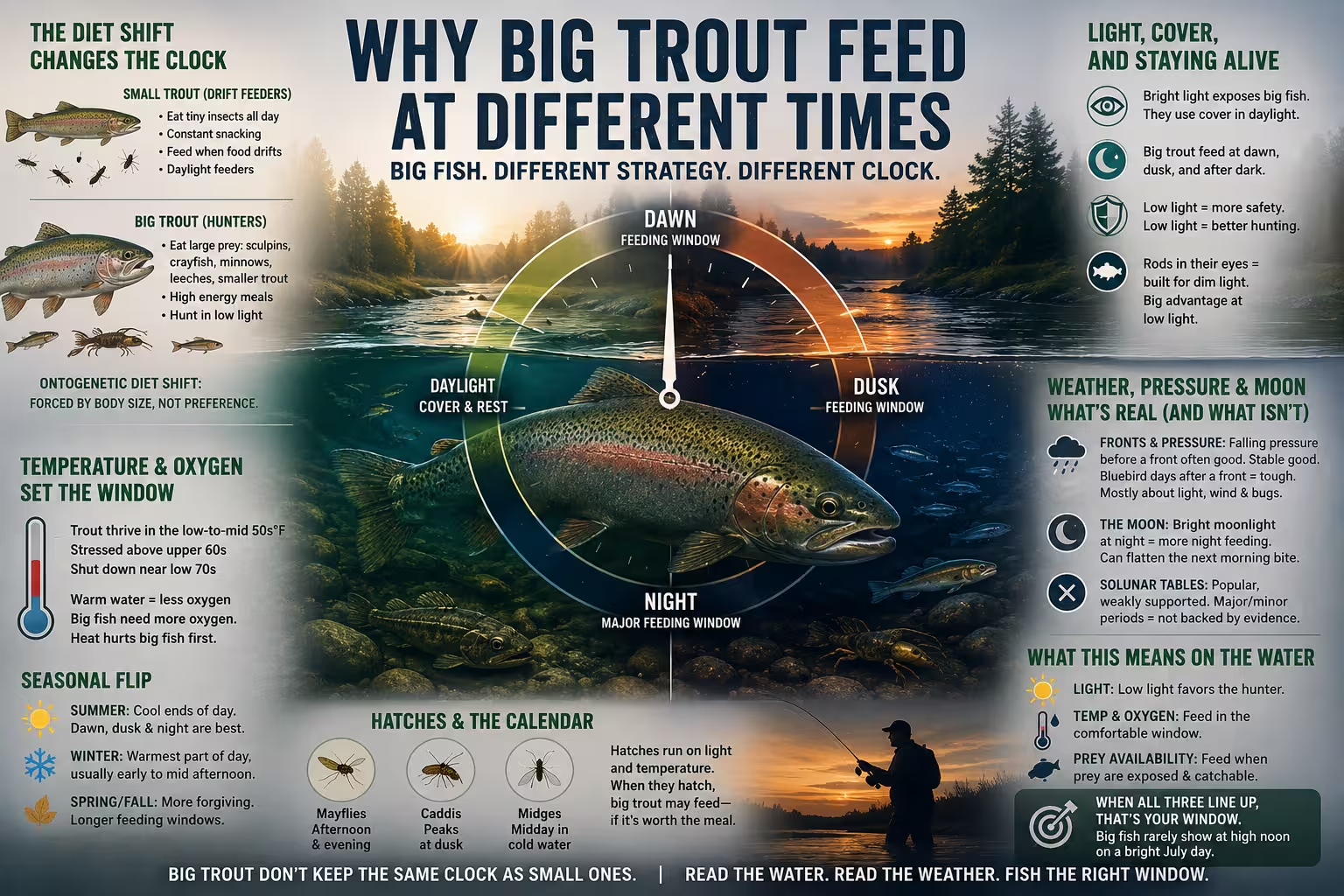
- Summer: Early morning and evening, when water is coolest and oxygen is highest.
- Winter: Late morning through afternoon, when water is warmest.
- Overcast days: Excellent all day, since low light makes trout feel secure.
For the full breakdown, read Best Time of Day to Catch Trout and Why Big Trout Feed at Different Times.
Season by Season
- Winter: Slow down. Fish deep pools and slow runs with small baits and midge patterns.
- Spring: Rising temperatures and runoff trigger feeding. Worms, eggs, and nymphs shine. Stocking season begins in many states.
- Summer: Focus on cold water: tailwaters, spring creeks, shaded streams, and early/late hours.
- Fall: Aggressive pre-winter feeding and spawning movement. Streamers, spinners, and egg patterns are strong.
Weather and Water Conditions
- Rain and rising water: Worms and bright baits can be excellent in slightly stained water.
- Falling barometer before a front: Often a strong feeding window.
- High, muddy water: Fish slower, closer to banks, and use scent and big profiles.
- Low, clear water: Use light line, small baits, and long, quiet approaches.
Step 8: Stealth, Trout Hear and See You
Trout live in a world where predators (herons, otters, ospreys, people) are everywhere. They are tuned to detect threats.
- Vibrations. Trout detect low-frequency vibrations through their lateral line and inner ear. Heavy footsteps on the bank or loud wading telegraphs your presence. See What Trout Actually Hear (And Why It Should Change How You Fish).
- Shadows and movement. A shadow crossing a pool can shut down a feed. Approach from downstream (trout face upstream), stay low, and avoid skylining yourself.
- Learning. Trout, especially in pressured water, learn to avoid lures they have seen. See Do Trout Learn to Avoid Lures?.
A quiet approach, a long cast, and light line are free advantages that cost you nothing.
Fishing Stocked Trout vs. Wild Trout
Many anglers start with stocked trout, so it helps to know how they differ.
Stocked trout:
- Are conditioned to hatchery feed, so they respond to simple, bright, pellet-like or worm-like offerings.
- Hold in the area where they were released for the first day or two, then disperse.
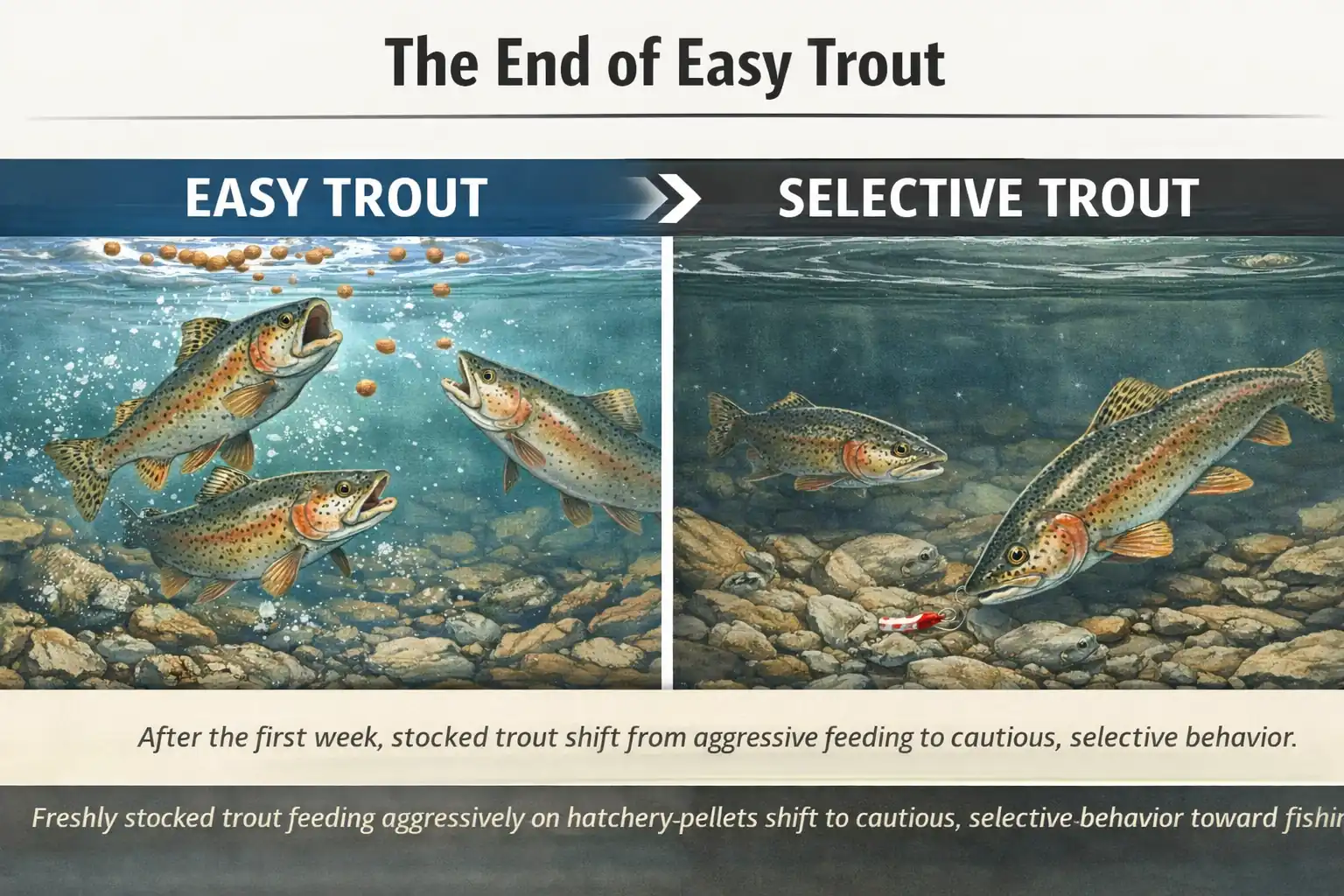
- Are less wary at first, but become more selective after a few days and after being caught.
Wild trout:
- Know their home water in detail and are wary.
- Hold in the best feeding lies and react to natural food.
- Reward stealth, small presentations, and accurate drifts.
If you fish stocked water, plan your visit around stocking days and follow our full system: A Complete System for Catching Stocked Trout Consistently, When Stocked Trout Actually Eat, and How Stocked Trout Behavior Changes After the First Week. For deeper behavior insight, read Part 2: What Trout Actually Think Food Is.
Trout Fishing Near You: Local Guides
Regulations, stocking schedules, and species vary by state. If you fish in Missouri, our Missouri Trout Fishing Guide covers rivers, trout parks, baits, and local tips. For small-water tactics, see Best Baits and Techniques for Creek Fishing.
Before you fish anywhere, check your state wildlife agency for:
- License and trout stamp requirements
- Daily limits and size limits
- Gear restrictions (artificial only, barbless hooks, no bait)
- Seasonal closures
- Stocking schedules
Catch-and-Release Done Right
Trout are sensitive fish, and handling matters. If you plan to release your catch:
- Use barbless or pinched-barb hooks for quick, clean releases.
- Land fish quickly. Don’t play a trout to exhaustion, especially in warm water.
- Keep the fish in the water. Wet your hands before touching it, and never squeeze.
- Minimize air exposure. If you want a photo, lift the fish for a few seconds only.
- Revive before release. Hold the fish facing upstream until it kicks away strongly.
- Skip fishing in dangerously warm water. Fish caught above about 68°F suffer much higher mortality.
For more, read Trout Catch-and-Release: What Actually Keeps Fish Alive.
Common Mistakes That Cost You Trout
- Fishing the wrong water. Cast where trout actually hold, not where it looks pretty.
- Using line that is too heavy. Drop down in diameter.
- Using hooks that are too big. Trout have small mouths and see big hooks.
- Fishing too fast in cold water. Slow down.
- Ignoring depth. If you are not in the strike zone, nothing else matters.
- Spooking fish before the first cast. Slow down your approach.
- Changing too many things at once. Change one variable at a time (depth, speed, color, or size) so you know what worked.
- Giving up on a spot too soon. A good lie may need several casts at different angles.
A Simple Game Plan for Your Next Trout Trip
If you want a repeatable system, use this checklist:
- Check conditions. Water temperature, clarity, and weather.
- Pick your spot. Look for current breaks, deeper pools, structure, or shaded banks.
- Choose your starting rig. A small jig with a soft plastic, or a worm under a float, covers most situations.
- Start light. 4 lb line, a small hook, and a quiet approach.
- Find the depth. Count down or adjust your float until you get bites.
- Dial in speed. Slower in cold water, faster in warm.
- Adjust one variable at a time. Color, size, action, or depth.
- Release fish carefully. Keep trout healthy so there are more to catch tomorrow.
Frequently Asked Questions About Catching Trout
What is the best bait for trout?
Live worms are the most reliable all-around trout bait, followed by salmon eggs, dough baits, and minnows (where legal). For stocked trout, bright dough baits and worms are especially effective. See Why Trout Eat Worms for the science.
What is the best lure for trout?
A small jig with a soft plastic or marabou tail is the most versatile trout lure, because it works at any depth and speed. Inline spinners and small spoons are excellent for covering water. See Best Trout Lures for Beginners.
What time of day is best to catch trout?
Early morning and evening are best in summer, while midday to afternoon is best in cold seasons. Overcast conditions can produce fish all day. See Best Time of Day to Catch Trout.
What water temperature do trout bite best in?
Most trout feed best between about 50°F and 65°F. They slow down below 40°F and become stressed above roughly 68°F. See Best Water Temperature for Trout.
What size hook should I use for trout?
Use hooks in the #10 to #14 range for bait, and match hook size to your jig or soft plastic for lures. See Best Hook Size for Trout Jigs.
What pound test line is best for trout?
2 to 6 lb test is the standard range. Use 2 to 4 lb for clear, pressured water and 6 lb for heavier cover or larger fish. See Best Fishing Line for Trout.
How deep should I fish for trout?
It depends on temperature, season, and clarity. Cold water means deeper and slower, while warm, active water allows shallower fishing. For float setups, see How Deep Should You Set a Bobber for Trout?.
Why won’t trout bite my lure?
Common causes are incorrect depth, wrong speed, line that is too heavy, or fish that are spooked or inactive. Also consider the possibility that trout have seen your lure too many times. See Why Trout Follow But Don’t Bite and Do Trout Learn to Avoid Lures?.
Do trout bite in the rain?
Yes. Rain often improves fishing by reducing light, washing food into the water, and boosting oxygen. Light rain is excellent. Heavy runoff that muddies the water can be tough, though slow, scented baits still work.
Can you catch trout in a pond?
Yes, especially stocked ponds. Fish near inlets, shorelines, drop-offs, and structure. See Stocked Trout Fishing Tips.
What are the best colors for trout lures?
Use natural colors in clear water and brighter, higher-contrast colors in stained water. Color matters, but depth and action matter more. See Does Lure Action Matter More Than Color?.
How do I catch trout when they are not biting?
Slow down, downsize, move to a more natural bait, or try dead sticking. See the Dead Sticking Fishing Guide and Trout Energy Conservation Explained.
Is it better to fish for trout upstream or downstream?
In streams, approach and cast upstream. Trout face into the current, so you come from behind them, and your bait drifts naturally down to them.
Do I need a license to fish for trout?
Almost always, yes. Many states also require a separate trout stamp. Check your state wildlife agency before you fish.
How do I release a trout safely?
Use wet hands, keep the fish in the water, minimize handling, and revive it facing upstream until it swims away. See Trout Catch-and-Release.
Final Thoughts: Think Like a Trout
Catching trout consistently is not about secret lures. It is about understanding a cold-water predator that lives by energy economics. Put your bait where they can feed without wasting energy, make it look like real food, present it at the right depth and speed, and avoid scaring them first. Do those four things well and you will out-fish most anglers, no matter what is in your tackle box.
Bookmark this page as your starting point, and use the linked guides to go deeper on each piece. Every one of them is part of the same system.
Tight lines.