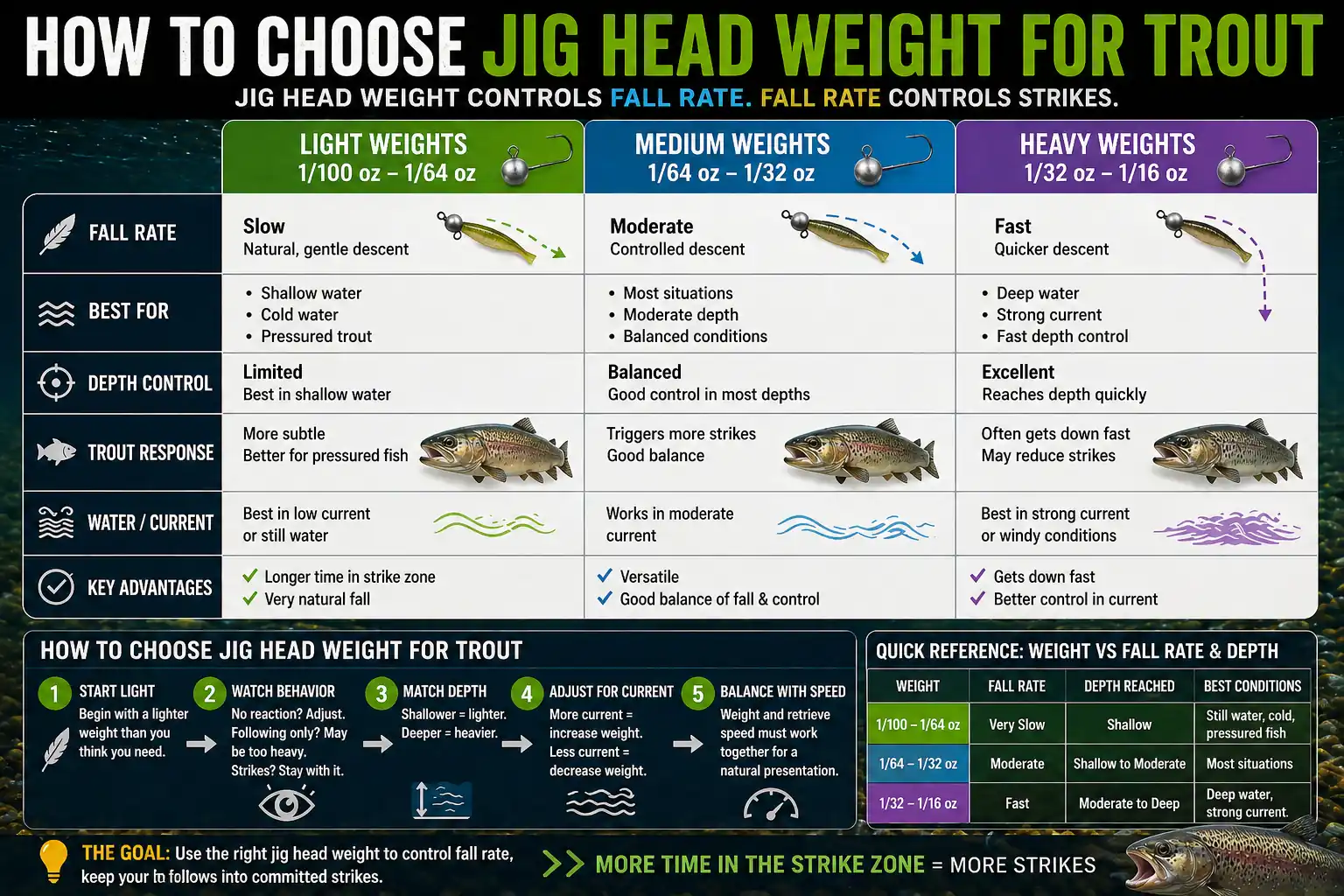
How to Choose Jig Head Weight for Trout
Jig head weight for trout controls fall rate — too heavy drops past trout, too light never reaches them, and the correct weight keeps your bait in the strike zone.
(The Complete System for Fall Rate Control)
Choosing the correct jig weight for your trout setup is one of the most important decisions you can make. Most anglers choose weight based on habit, guesswork, or what “feels right.” But jig head weight does something far more important: it controls fall rate — and fall rate controls whether trout strike or refuse.
If your jig head weight is wrong: trout may follow but not bite, your bait may never reach feeding depth, and the presentation may look unnatural. Understanding how to pick the right trout jig weight means you stop guessing and start controlling results.
This guide is part of a complete trout fishing system that explains how fall rate, speed, visibility, and material work together. → Start with the complete trout fishing system
Jig Head Weight for Trout: Why It Matters
Jig head weight directly determines how fast your bait sinks, how long it stays in the strike zone, and how natural the presentation looks. If too heavy → bait drops unnaturally fast. If too light → bait never reaches the fish. This is why jig head weight often matters more than lure color.
How Jig Head Weight Controls Fall Rate
Fall rate is the speed your bait sinks through the water. Trout react strongly to how a bait falls because natural prey rarely drops quickly — most forage drifts or moves slowly. If your bait falls too fast, trout follow but do not commit. If too slow, trout never engage. → See: Retrieve Speed for Trout Fishing
The 3 Core Weight Ranges for Trout
1. Light Weights (1/100 oz – 1/64 oz)
Best for: Shallow water, cold conditions, pressured fish. Advantages: Slow natural fall, longer time in strike zone, better for subtle presentations. Limitations: Difficult in current, less depth control.
2. Medium Weights (1/64 oz – 1/32 oz)
Best for: General conditions, moderate depth, balanced presentation. Advantages: Controlled fall rate, versatile, works in most situations. This is the most commonly effective range.
3. Heavy Weights (1/32 oz – 1/16 oz+)
Best for: Deep water, strong current, fast depth control. Advantages: Reaches depth quickly, better control in moving water. Limitations: Reduces natural movement, shorter strike window.
How to Choose Jig Head Weight for Trout (Step-by-Step)
- Step 1 — Start Lighter Than You Think: Most anglers use weights that are too heavy. Start light and increase only if necessary.
- Step 2 — Watch Trout Behavior: No reaction → adjust depth or speed. Follow but no strike → weight likely too heavy. Quick strikes → weight is correct. → See: Why Trout Follow But Don’t Bite
- Step 3 — Match Water Depth: Shallow water → lighter weight. Deeper water → heavier weight. But depth alone is not enough.
- Step 4 — Adjust for Current: Stronger current → increase weight. Still water → decrease weight.
- Step 5 — Balance with Retrieve Speed: Heavy weight + fast retrieve → unnatural. Light weight + slow retrieve → natural. → See: Retrieve Speed for Trout Fishing
Signs Your Jig Head Weight Is Wrong
- Too Heavy: Bait drops quickly past fish, trout follow but do not strike, movement looks stiff or unnatural.
- Too Light: Bait never reaches strike zone, poor depth control, ineffective in current.
- Correct Weight: Bait stays in strike zone, natural fall, trout commit instead of following.
How Water Conditions Change Jig Head Weight
- Cold Water: Trout move less, prefer slow presentations. Use lighter weights with slower fall rate.
- Warm Water: Trout more active, faster presentations possible. Use slightly heavier weights with controlled fall.
- Clear Water: Trout inspect longer. Use lighter weights and more natural presentation.
- Stained Water: Reduced visibility. Use slightly heavier weights for improved control and contact.
Jig Head Weight vs Soft Plastic Performance
Weight interacts with your bait material. Softer plastics work better with lighter weights and allow natural movement. Firmer plastics may require slightly more weight but have less natural collapse. Weight and material must be balanced together. → See: How Softness Affects Hookup Ratio
Common Mistakes
- Using the same weight everywhere
- Choosing weight based only on depth
- Ignoring current speed
- Adjusting color instead of weight when fish follow but don’t bite
- Fishing too heavy in pressured water
The Real Pattern
Most anglers struggle because they treat jig head weight as a minor detail. In reality: weight controls fall rate — and fall rate controls strike behavior. If trout are not committing, the issue is often weight, not lure choice.
Frequently Asked Questions About Jig Head Weight for Trout
What’s the best all-around jig head weight for trout?
1/64 oz to 1/32 oz covers most situations — controlled fall rate, versatile across depths, and forgiving if conditions change mid-session. Start here and adjust lighter or heavier based on what trout tell you.
How do I know if my jig head is too heavy?
Trout will follow the bait without striking, and the fall will look stiff or unnaturally fast. That combination is the clearest sign to drop down in weight before changing anything else.
Does water clarity change what weight I should use?
Yes. In clear water, trout inspect longer, so lighter weights and a more natural fall work better. In stained water, a slightly heavier weight helps you maintain contact and control since visibility is already reduced.
Should I change weight or retrieve speed first?
Weight first. Fall rate has more influence on whether trout commit than retrieve speed does, and a heavy weight fished slowly still falls unnaturally fast. Get the weight right, then fine-tune speed.
Can jig head weight fix a bait that isn’t getting strikes?
Often, yes. Most anglers reach for a color change when trout aren’t committing, but weight — not color — is usually the real problem. If fish are following without striking, try a lighter head before switching baits entirely.
Summary
Choosing the correct jig head weight for trout is not about preference — it is about control. Too heavy: unnatural, reduced strikes. Too light: ineffective, poor depth control. Correct weight: natural movement, consistent bites. When you understand how to select the right jig weight for trout, you gain control over depth, presentation, and strike conversion.
To understand how jig head weight fits into the full approach, see the → complete trout fishing guide
Recommended Next Reads
- Retrieve Speed for Trout Fishing
- Why Trout Follow But Don’t Bite
- How Water Clarity Changes Trout Vision
- How Softness Affects Hookup Ratio