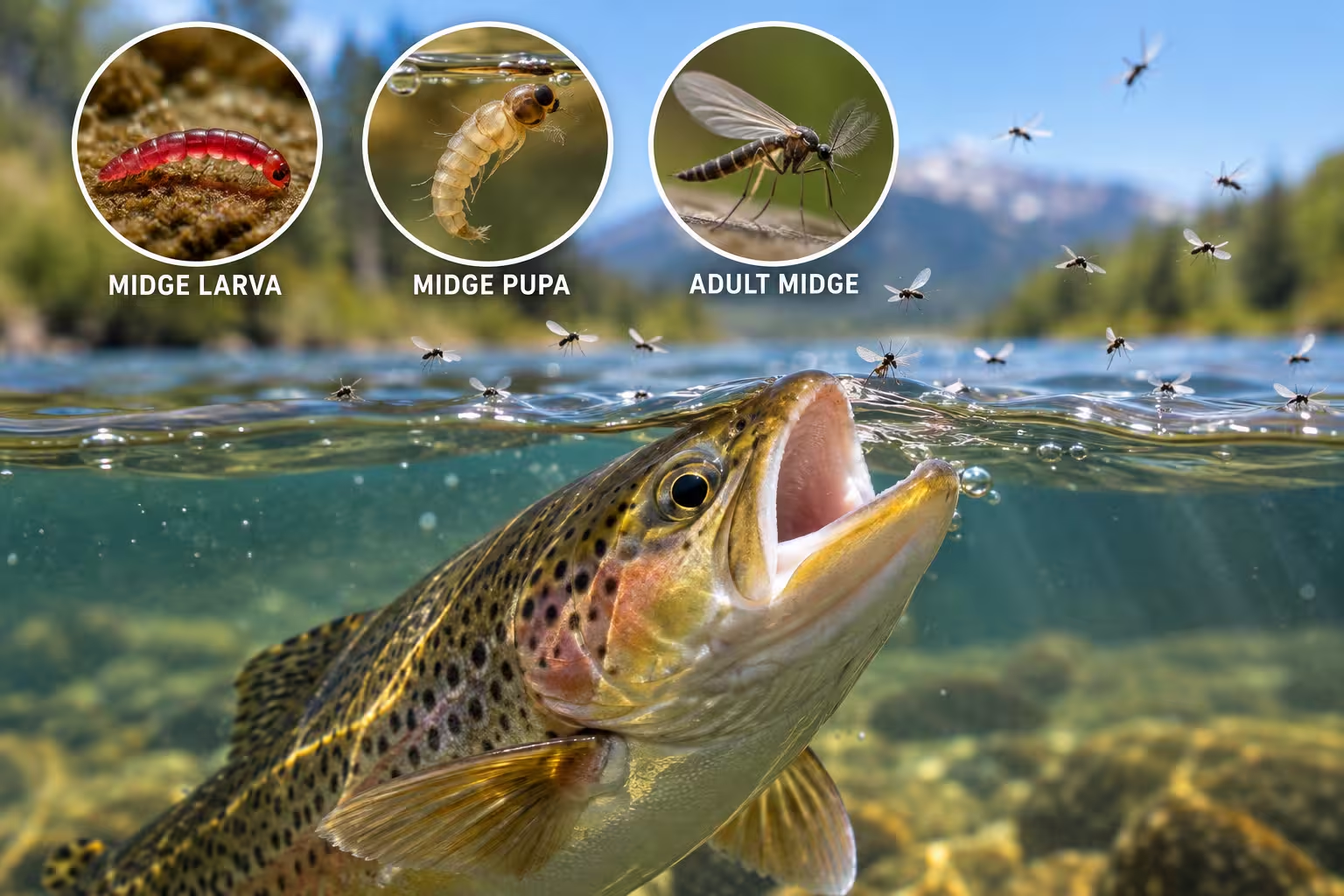
Best Water Temperature for Trout: The Science Behind Why Temperature Controls Everything
The best water temperature for trout is the single most important factor determining where trout hold, how actively they feed, how much oxygen is available, and ultimately how successful your fishing will be. Most anglers know that water temperature matters for trout fishing. Far fewer understand exactly why it matters, what is happening inside the fish at each temperature range, and how those biological facts connect directly to when, where, and how you should fish. This article covers all of it — the science behind the numbers, explained plainly — so that a thermometer becomes one of the most useful tools in your bag rather than a piece of gear you own but rarely use.
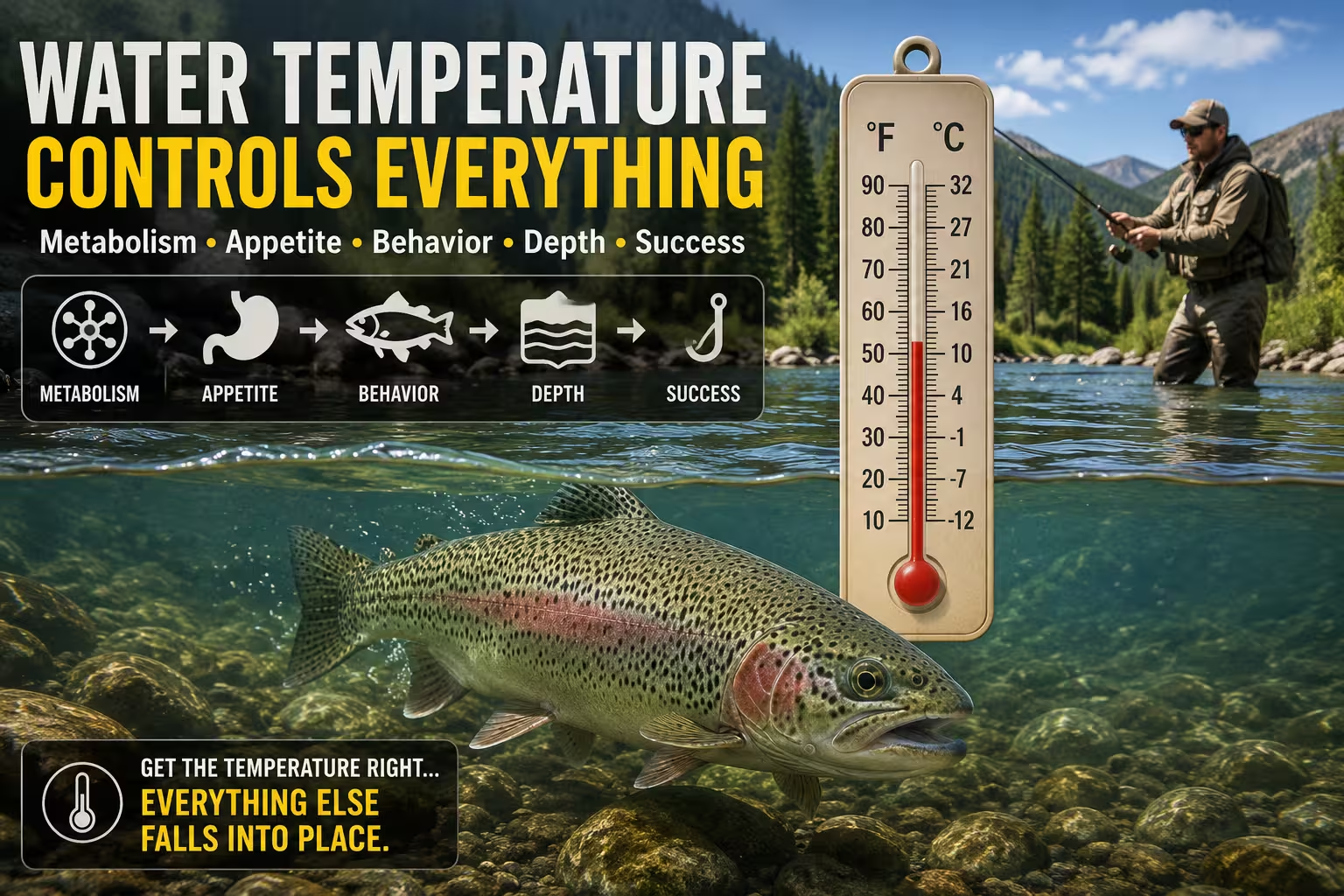
Temperature is not just one factor among many that affects trout. It is the master variable. It controls metabolism, which controls appetite, which controls feeding behavior, which controls where the fish holds in the water column, which controls whether your bait gets eaten. Light, pressure, season, and moon phase all play roles — but temperature is the dial that sets the baseline everything else works against. Get the temperature wrong and the other variables barely matter. Get it right and the fishing becomes predictable.
This also connects directly to the question of when to fish. If you have read our post on the best time of day to catch trout, you already know that time-of-day patterns are real and consistent. What that post does not fully explain is why those windows exist. The answer, almost always, is temperature. The morning and evening feeding windows in summer exist because those are the coolest parts of the day. The midday winter window exists because that is when the water is warmest. Once you understand the temperature biology, the time-of-day patterns stop being rules you memorize and start being things you can predict from first principles.
Why Trout Are Cold-Water Fish: The Biology
Trout are ectotherms, which means they cannot regulate their own body temperature. Their internal temperature matches the water around them, and because their body temperature determines how fast their biochemical reactions run, the water temperature controls almost everything about how the fish functions.
Every enzyme in a trout’s body — the molecules that drive digestion, muscle contraction, immune response, and neural processing — operates within a specific temperature range. Too cold and the enzymes slow down or stop. Too warm and they begin to malfunction or denature. The range at which a trout’s enzymes run efficiently is narrow, and it sits well below the comfortable range for warm-water species like bass or catfish. This is not a preference the fish has developed. It is fundamental biochemistry, built into the animal at the molecular level.
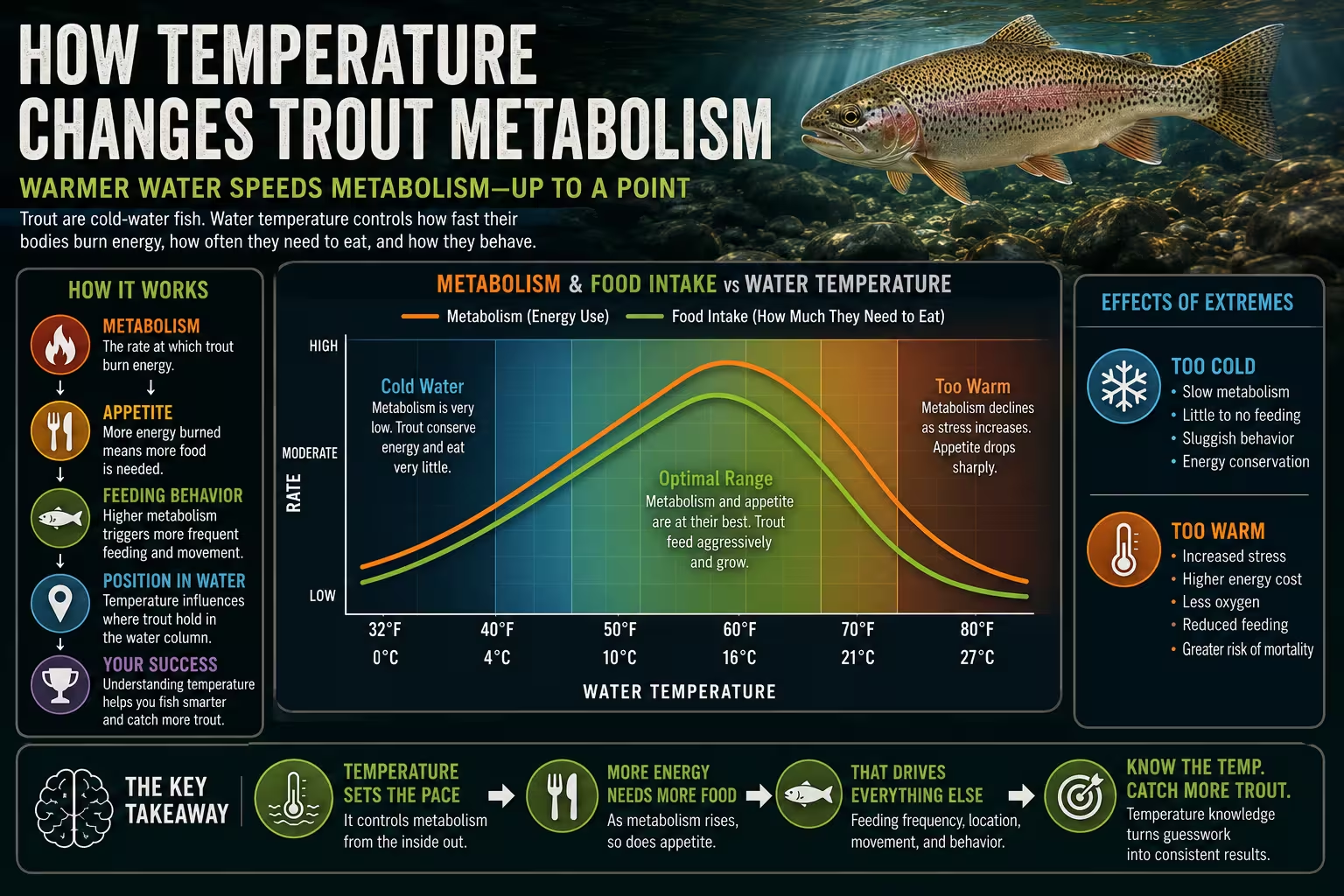
The practical consequence is that a trout’s appetite, its willingness to expend energy chasing prey, its ability to hold against current, and even its immune function are all temperature-dependent. A fish sitting in cold water is a fish with a slow metabolism burning minimal energy, requiring little food, and moving as little as possible. A fish in warm water is a fish under physiological stress, diverting energy to survival functions rather than feeding, and often holding in the most oxygenated water it can find regardless of where the food is. A fish in the optimal range is a fish feeding aggressively, using maximum metabolic capacity, and behaving in the most predictable and catchable manner it will all year.
The Temperature Ranges: What Happens at Each Level
Understanding the specific ranges — and what is biologically occurring at each — is what turns temperature data into fishing strategy.
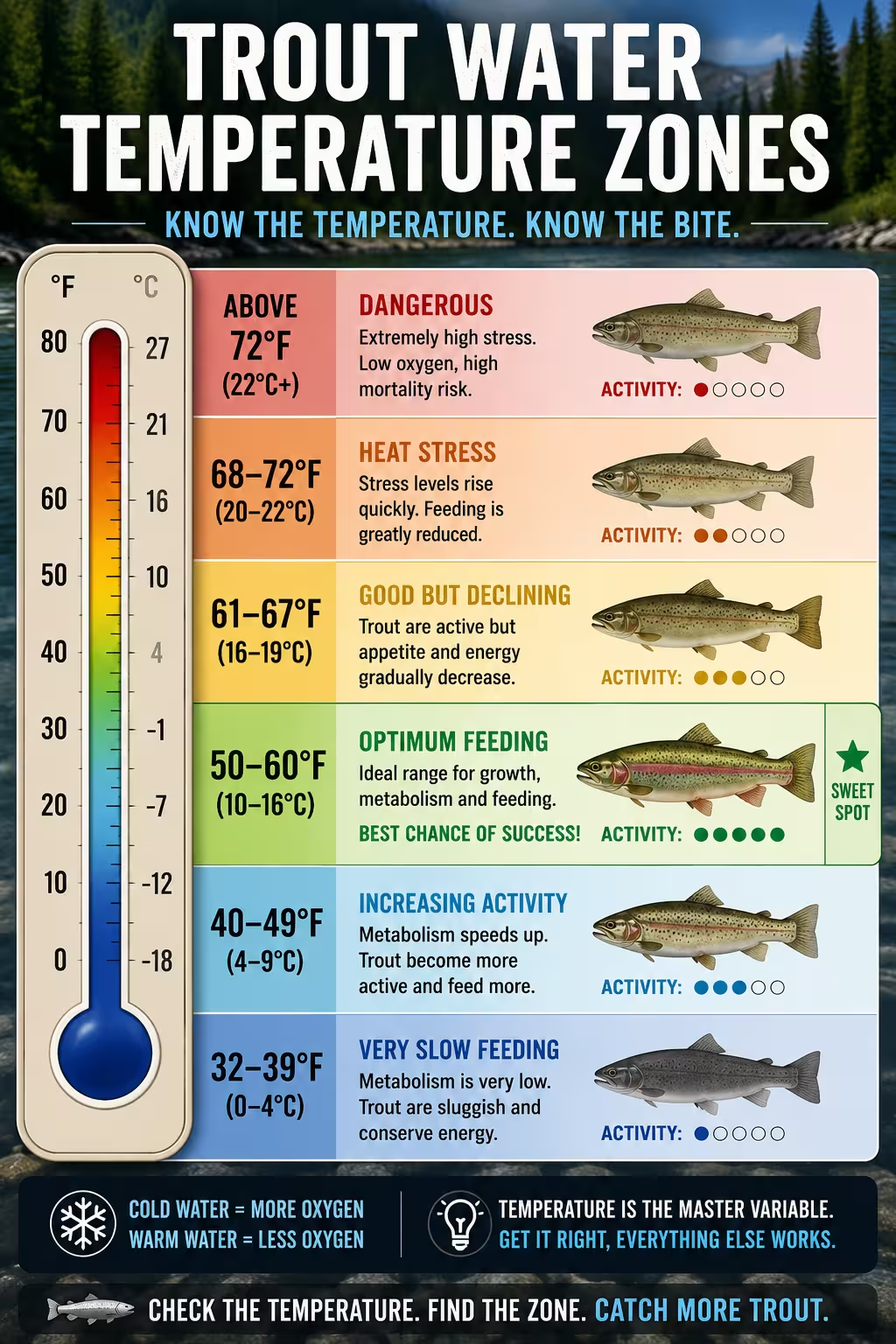
Below 40°F — Cold Stress and Sluggish
At the low end of winter, rainbow trout metabolism drops to its minimum. Digestion slows dramatically; a trout that eats a moderate meal in 40°F water may take two to three times longer to process it than the same meal consumed at 55°F. Because the fish needs less energy when its metabolism is sluggish, it needs less food, and therefore feeds less frequently and with less urgency. It will still eat — a fish that refused every opportunity in winter would not survive — but the feeding windows are shorter, the bites lighter, and the willingness to chase moving prey is minimal.
Anglers who fish winter trout correctly fish slow. Very slow. A soft plastic that produces well at 58°F with a steady retrieve will need to be fished almost dead-drift at 38°F because the fish’s strike response — the speed at which it decides to commit and closes on the bait — has slowed along with everything else. This is why retrieve speed is one of the most temperature-sensitive variables in trout fishing. A fast retrieve in cold water does not just fail to attract fish; it actively prevents the fish from catching the bait even if it is interested.
At the extreme low end, below roughly 35°F, trout can enter a state close to torpor and may become essentially uncatchable regardless of bait choice or presentation.
40°F to 50°F — Recovering Metabolism, Midday Feeding
As water warms through this range, metabolism accelerates and the fish becomes progressively more active. This is the winter-to-early-spring transition window, and it is where the midday feeding pattern is most pronounced. The water is coldest at dawn and has been warming through the morning hours by the time the afternoon arrives, so peak feeding activity tracks the daily temperature peak — usually 1:00 to 3:00 PM on cold, clear winter days when the sun has had maximum time to work on the water.
An important nuance: even within a body of water, temperature is not uniform in winter. South-facing banks and shallower flats warm fastest on sunny days and can read two to four degrees warmer than the main channel or deep pools. Trout follow that warmth. A fish that was holding in deep water at 10:00 AM may slide up onto a shallow, sun-warmed flat by 1:00 PM — not because it moved far, but because that flat is now two degrees closer to comfortable. A thermometer and awareness of where the sun hits the water first will consistently put you in the right spot before the fish arrive.
50°F to 65°F — The Prime Zone
This is the sweet spot, and it is worth understanding exactly why. Within this range, a rainbow trout’s metabolic enzymes are running at or near their optimum efficiency. The fish can digest food quickly, which means it is hungry again sooner. Its muscles function at full capacity, which means it can hold efficiently against current and chase prey actively. Its nervous system responds at full speed, which means strike response is fastest and the fish is most willing to commit to a bait with conviction rather than tapping and following.
At the lower end of this zone, around 50°F to 55°F, feeding is steady but deliberate. As the water climbs toward 60°F and into the low 60s, feeding activity often becomes aggressive and opportunistic — this is when trout will chase moving presentations, hit with authority, and hold in the most accessible feeding lanes in the water. For most anglers fishing spring and fall, this range represents the days when everything clicks: the fish are where they should be, feeding when they should be, and eating with commitment rather than caution.
The upper end of this range, 60°F to 65°F, is still comfortable for the fish but represents a region where you need to start paying attention to warming trends. A stream sitting at 63°F on a warm spring afternoon is fine; that same stream climbing toward 68°F by late afternoon on a hot May day is approaching the stress zone and the fish will know it before you do.
65°F to 70°F — The Stress Zone
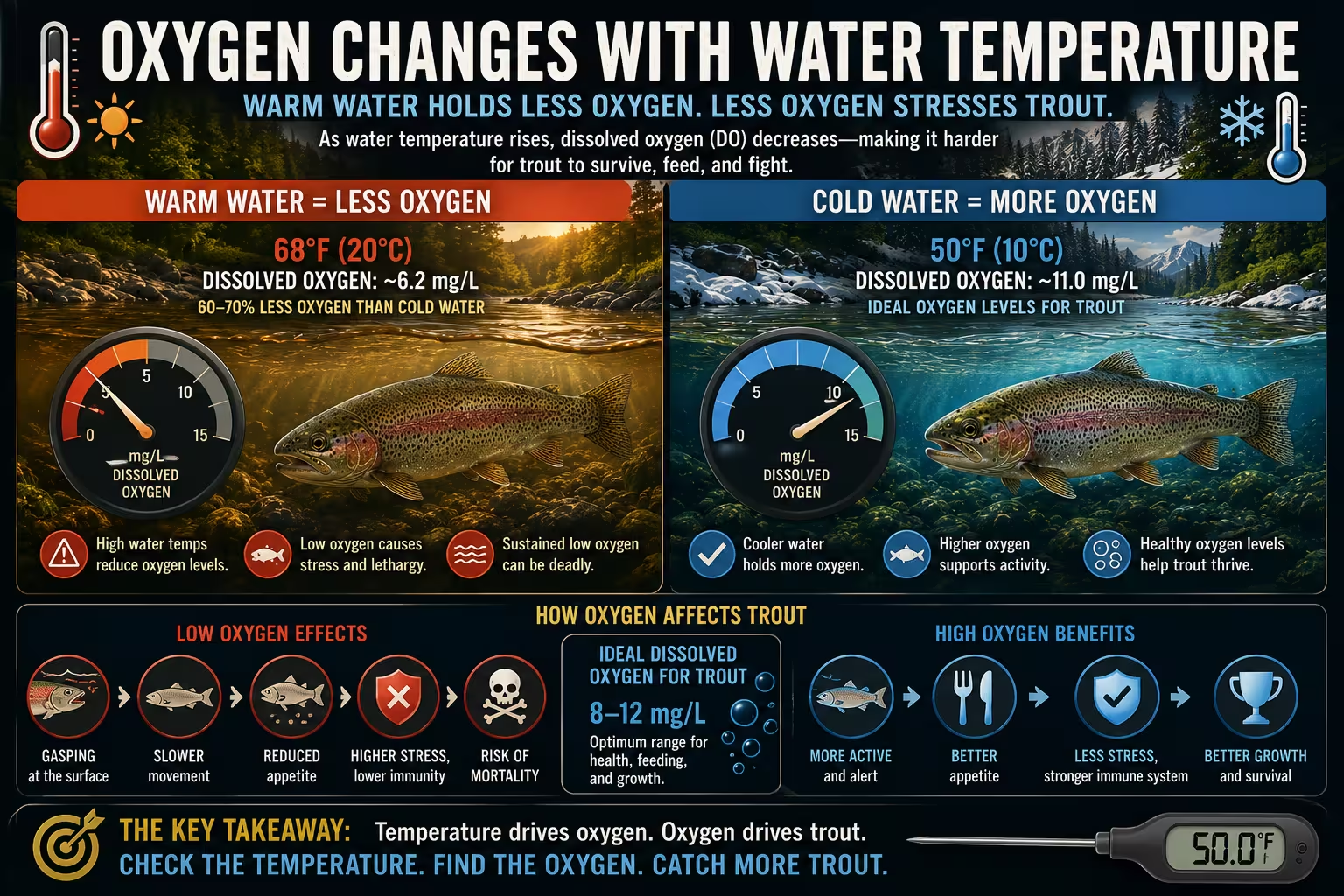
Above 65°F, rainbow trout begin experiencing measurable physiological stress. This is not a behavioral preference — the fish would not “rather” feed in cooler water if it had a choice, because its biology is actually deteriorating at these temperatures. Cortisol (the stress hormone) levels rise, immune function begins to be compromised, and the fish starts prioritizing oxygen acquisition over feeding.
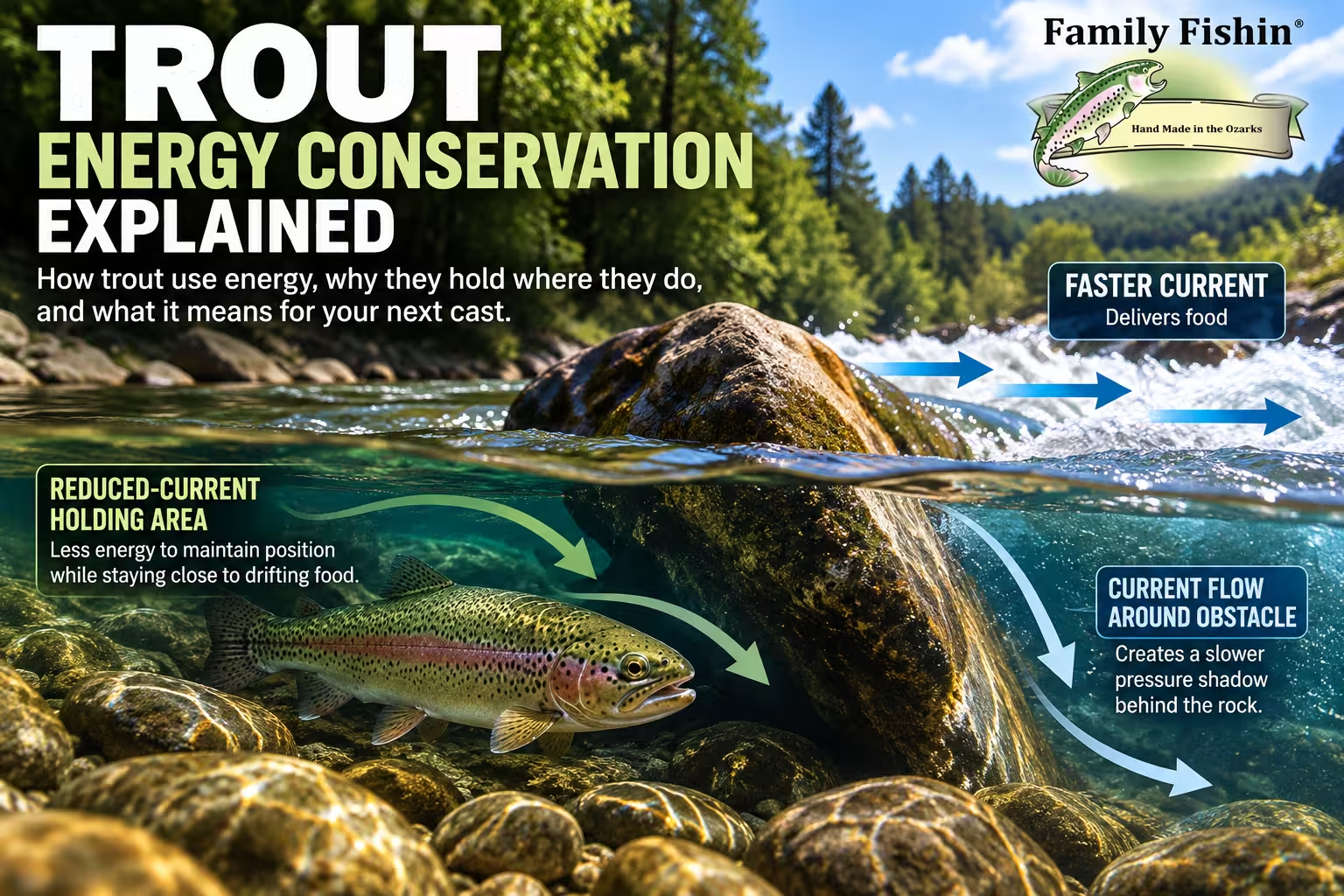
The oxygen-temperature relationship is critical and often overlooked. Warm water holds significantly less dissolved oxygen than cold water — this is a physical property of water, not a biological one. A trout in 68°F water is dealing with both elevated metabolic oxygen demand (because a warmer metabolism burns oxygen faster) and reduced oxygen availability in the water itself. Large fish, which have higher absolute oxygen requirements than small ones, are hit hardest and earliest by this double pressure. This is why large trout are often the first fish to stop feeding and seek the coldest, most oxygenated water available when summer temperatures climb — spring seeps, deep pools with cold inflow, tailouts of riffles where dissolved oxygen is highest.
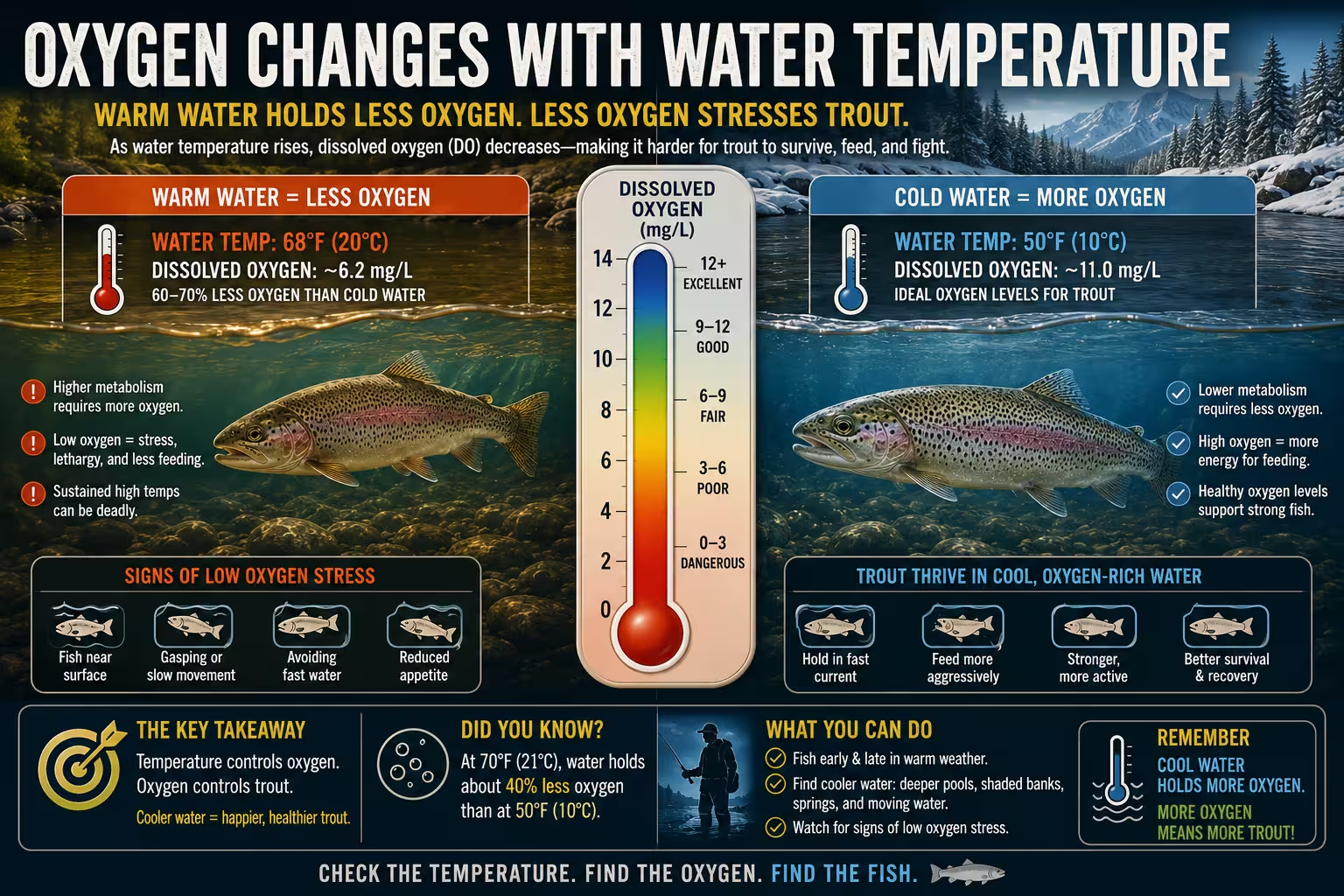
Fishing the stress zone is not impossible, but the adjustments are significant. Moving water oxygenates faster than still water, so the fish you will find feeding in summer warmth are in current, not pools. Early morning, when the water has had all night to cool, is the most reliable window. And the fish that remain willing to eat in warm conditions are often the smaller, more metabolically tolerant individuals — which is why summer midday trout fishing tends to produce numbers of small fish rather than size.
Above 70°F — The Danger Zone
Rainbow trout are severely stressed above 70°F and can begin dying when temperatures approach and exceed 75°F, particularly if exposure is prolonged. At these temperatures the fish is not feeding; it is surviving. The biochemistry of protein denaturation sets in — the same process that turns a raw egg white opaque when heated — and it is occurring in the fish’s own enzymes and tissues.
This has a practical implication beyond catch rates: catch-and-release fishing in water above 68°F can kill trout even when the fish swims away, because the physiological stress of being caught on top of existing heat stress can push the fish past its recovery threshold. Many responsible anglers and fisheries managers treat 68°F as the line above which releasing a caught fish cannot be assumed safe, and some waters have regulations that reflect this. If you care about the fishery you are fishing, a thermometer and the willingness to stop fishing or switch species when the water gets too hot is part of the equation.
Brown Trout, Brook Trout, and Species Differences
The ranges above apply primarily to rainbow trout, which are the most widely stocked and fished species in most of the country. The other common trout species have somewhat different tolerances, and understanding the differences matters if you fish mixed-species water.
Brown trout are meaningfully more heat-tolerant than rainbows. They can tolerate temperatures into the low-to-mid 70s with less severe stress than a rainbow experiences at the same temperature, and they feed more willingly in the upper 60s. This is why in a mixed-species stream during summer, the brown trout often occupy warmer, slower reaches while rainbows concentrate in the coldest, most oxygenated upstream sections. It is also why large brown trout have a reputation as nocturnal feeders in summer — they are active in warm-water conditions that have shut rainbows down, and they feed after dark when temperatures drop and low light gives them a predatory advantage.
Brook trout sit at the other end of the spectrum. They are the most cold-tolerant of the three common species and the most heat-sensitive, with an optimal range that runs roughly 5°F colder than rainbows. Brook trout in the upper 60s are stressed where a rainbow might still be feeding comfortably. This is why brookies are most consistently found in cold headwater streams, spring-fed tributaries, and high-elevation water — not as a habitat preference, but as a thermal necessity.
How Temperature Controls Where Trout Hold in the Water Column
Temperature does not just affect whether trout feed — it affects where they are in the water column, which determines where you should be presenting your bait.
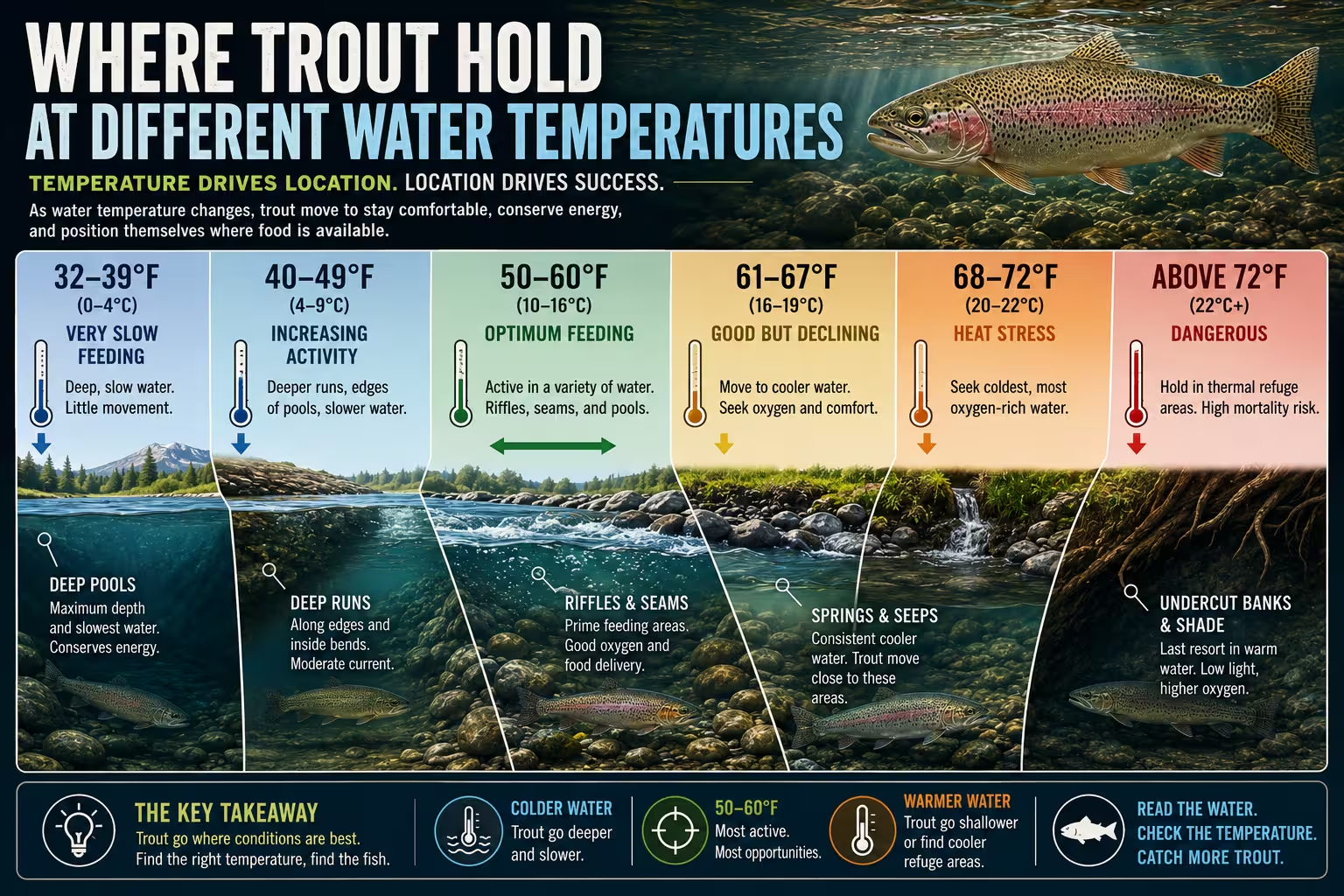
In cold water, trout sink. A metabolically sluggish fish in 40°F water burns the least energy by sitting near the bottom in slow water, and that is exactly where it will be. Presentations that stay deep and move slowly — or do not move at all — are the ones that reach fish in these conditions.
As water warms through the prime range, trout move up and spread out. They hold in the midwater column in current seams, along depth transitions, and at the heads and tails of pools where food concentrates. This is the most classic and recognizable trout feeding behavior — the fish anglers imagine when they picture “fishing for trout.”
In warm summer water, the position changes again. Trout in warm conditions seek the most oxygenated water available, which is found at the surface of turbulent water (riffles, runs, waterfalls) where gas exchange with the atmosphere is highest. They also seek cold-water inputs — spring seeps, tributary confluences, shaded sections — even if those locations are not ideal feeding positions. A fish that is holding at the mouth of a cold spring inlet in July is not there because that is where the food is. It is there because that is where the oxygen is. Fishing a drift through that cold-water plume, even if the main channel looks better from a food-delivery standpoint, will consistently outperform fishing away from it.
Temperature and the Time-of-Day Pattern
This is where the two topics connect, and it is worth being explicit about the mechanism.
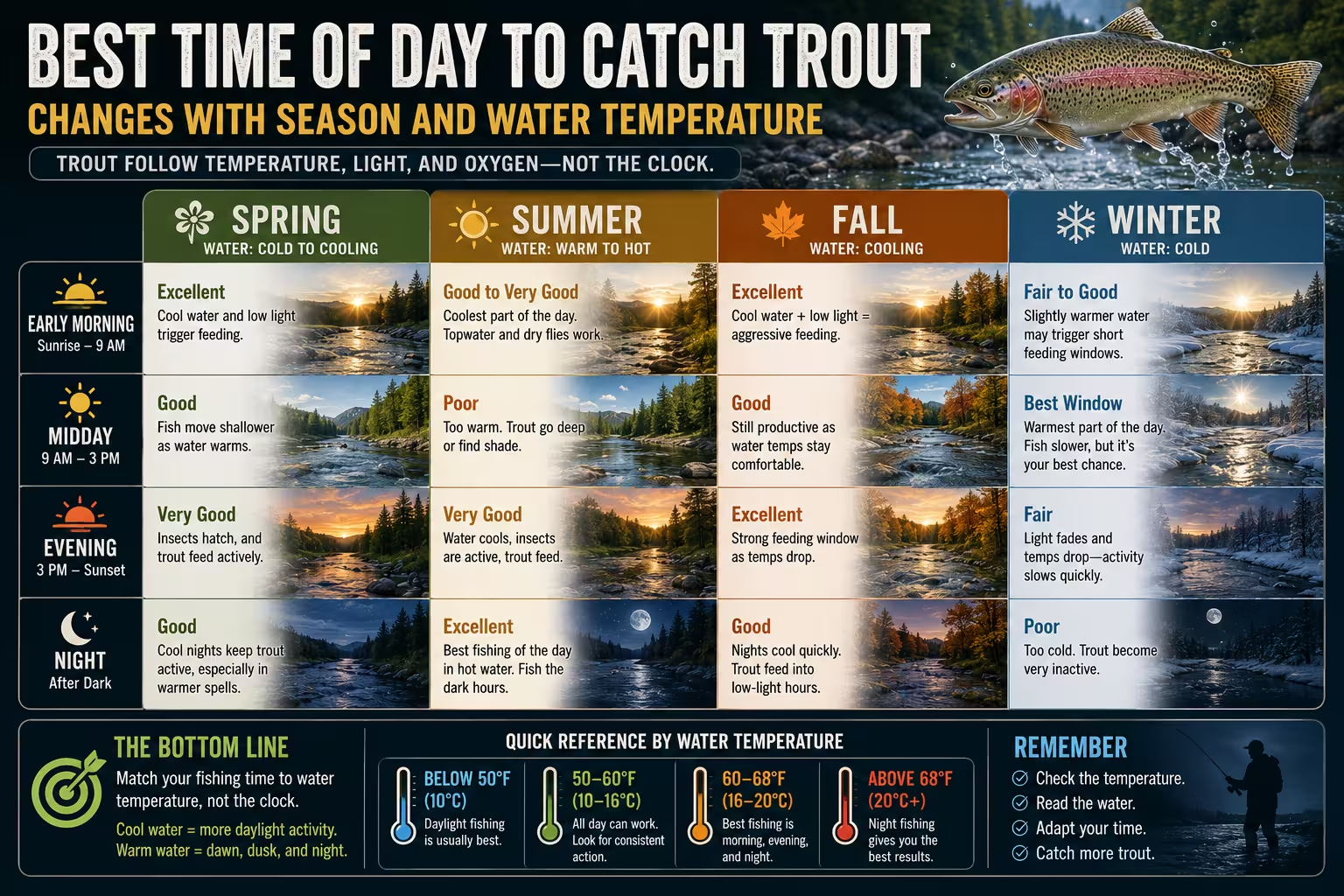
The reason early morning and late evening are the best times to fish for trout in summer is not primarily about light — though light matters for other reasons covered in our post on why big trout feed at different times. It is primarily about temperature. Summer mornings are cool because the water has been losing heat to the night air for eight or more hours. Summer evenings are cooler than midday because the sun has stopped adding heat and temperatures are falling from the daily peak. Those are the hours the water is closest to comfortable, and therefore the hours the fish are feeding.
The winter reversal — midday being the best window in cold weather — follows exactly the same logic. In winter, dawn temperatures are the coldest of the twenty-four-hour cycle because the water has been losing heat all night with no sun to replace it. By early afternoon, the sun has added enough heat to push the water a few degrees warmer and metabolisms respond. The fish feed in the warm window and become sluggish again as temperatures drop toward evening.
A stream thermometer makes this explicit rather than intuitive. When you read 52°F at 7:00 AM on a June morning and again at 11:00 AM when it has already climbed to 61°F, you can feel the fishing window closing in real time. When you read 42°F at dawn in December and 48°F at 1:00 PM, you can feel it opening. That six or seven degree swing within a single day is often the difference between a fish that will eat and one that won’t.
Seasonal Temperature Patterns and When to Fish
The daily temperature cycle sits inside a larger seasonal pattern, and understanding both lets you plan not just when to arrive at the water each day but which weeks of the year deserve your most serious effort.
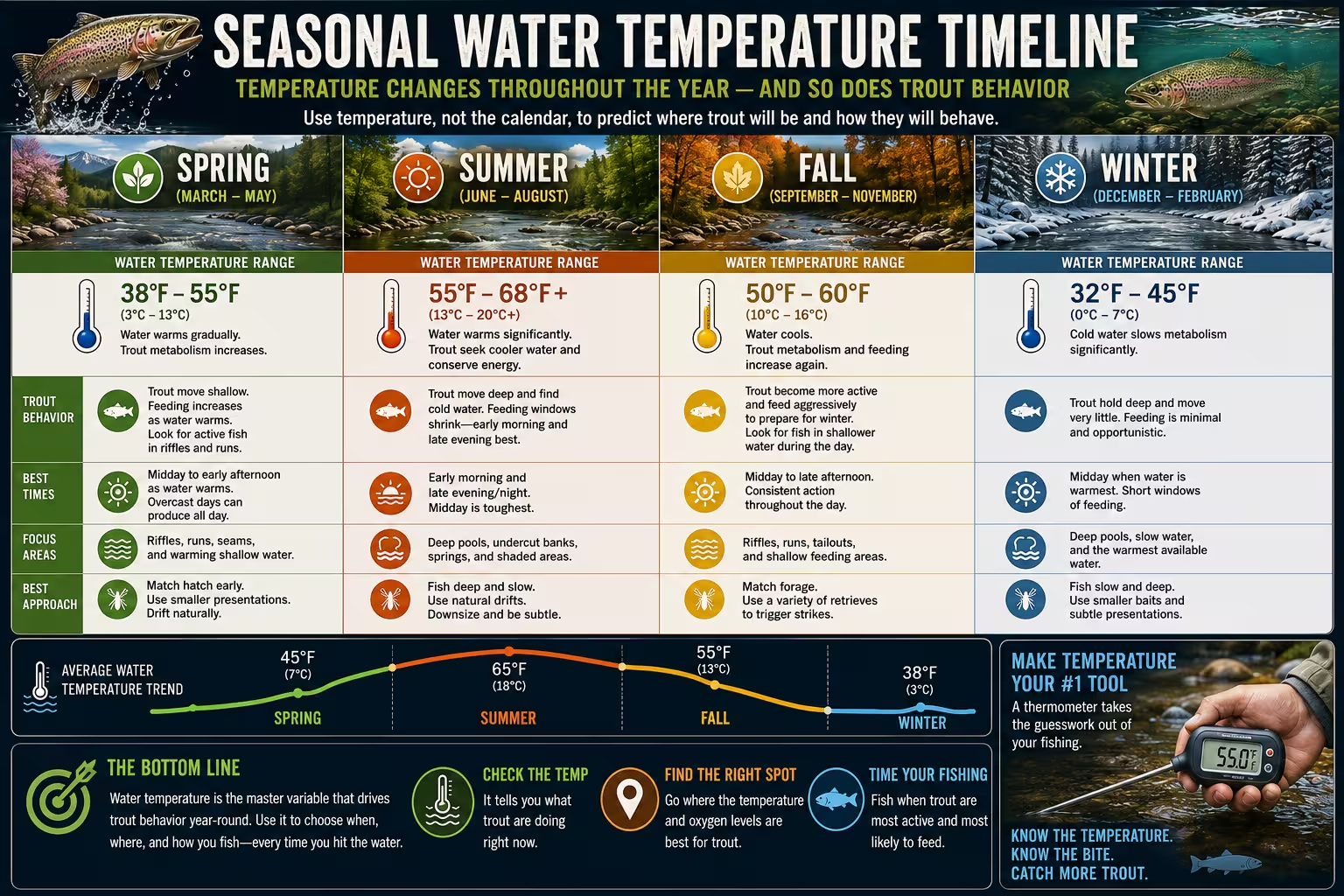
Spring is the most productive season for many anglers, and temperature is the reason. As water climbs through the 50s in March and April, metabolism is accelerating, the fish are hungry after a winter of reduced feeding, and insect hatches are beginning. The daily temperature swings are wide enough that mornings can still be slow while afternoons produce well. Stocking programs are typically in full swing. The fish are in the most catchable range they will occupy until fall, and they have not yet been pressured through a full season.
Summer compresses the feeding window sharply. On most freestone streams and stocked waters that are not spring-fed, midday water temperatures in July and August routinely reach or exceed 68°F, pushing the productive fishing into the first two hours of daylight and the hour before full dark. On tailwaters — rivers fed by cold dam releases — summer temperatures stay in the prime range around the clock, which is why tailwaters produce summer fish through the middle of the day when comparable natural streams are effectively dead. If you are fishing natural water in summer, a thermometer will tell you exactly when to stop. Above 68°F, you are fishing against the fish’s biology.
Fall mirrors spring in reverse. As water cools back through the 60s and into the 50s in September and October, the feeding window widens again, the fish are aggressive in advance of winter, and the days when you can fish the middle of the day without fighting warm-water shut-down return. Fall is often underrated because the weather is less reliably pleasant and some anglers have put their gear away — but the fishing is excellent, and the fish will tell you so.
Winter requires the midday strategy described above. The key adjustment is abandoning the habits of other seasons — do not show up at dawn expecting a summer-style feeding burst. On a cold winter morning in Missouri, 7:00 AM water might read 38°F. By 1:00 PM on a sunny day it may be 46°F. That eight degrees is the entire difference between fishing and not fishing. Sleep in, arrive at the water late morning, and fish hard through the warmest hours of the afternoon.
Practical Tools: Using a Thermometer on the Water
A quality stream thermometer is one of the highest-return gear investments in trout fishing. It costs almost nothing and changes the way you read water.
The basic protocol is simple: take a reading when you arrive, take another after an hour, and take one when the fishing changes — either getting better or worse. Over a season, you will build an accurate mental model of which temperatures produce which behavior on your specific water. You will know that 54°F in April means one thing and 54°F in October means something slightly different (because the seasonal trend matters — fish feeding temperature while climbing toward summer behave differently than the same temperature in a cooling fall trend). You will know your water’s typical daily temperature swing and be able to predict whether the afternoon will fish better or worse than the morning.
For presentation, the practical adjustments by temperature range are straightforward. In cold water below 48°F, slow everything down — retrieve, drift speed, fall rate — and fish deeper. In the prime range of 52°F to 62°F, fish the full water column with normal presentations and let the fish tell you where they are. In warm water above 65°F, focus on current, depth transitions, any cold-water inflows, and the earliest and latest hours of the day. Above 68°F on natural water in summer, consider whether you are doing more harm than good by fishing at all, particularly on wild or high-quality stocked water.
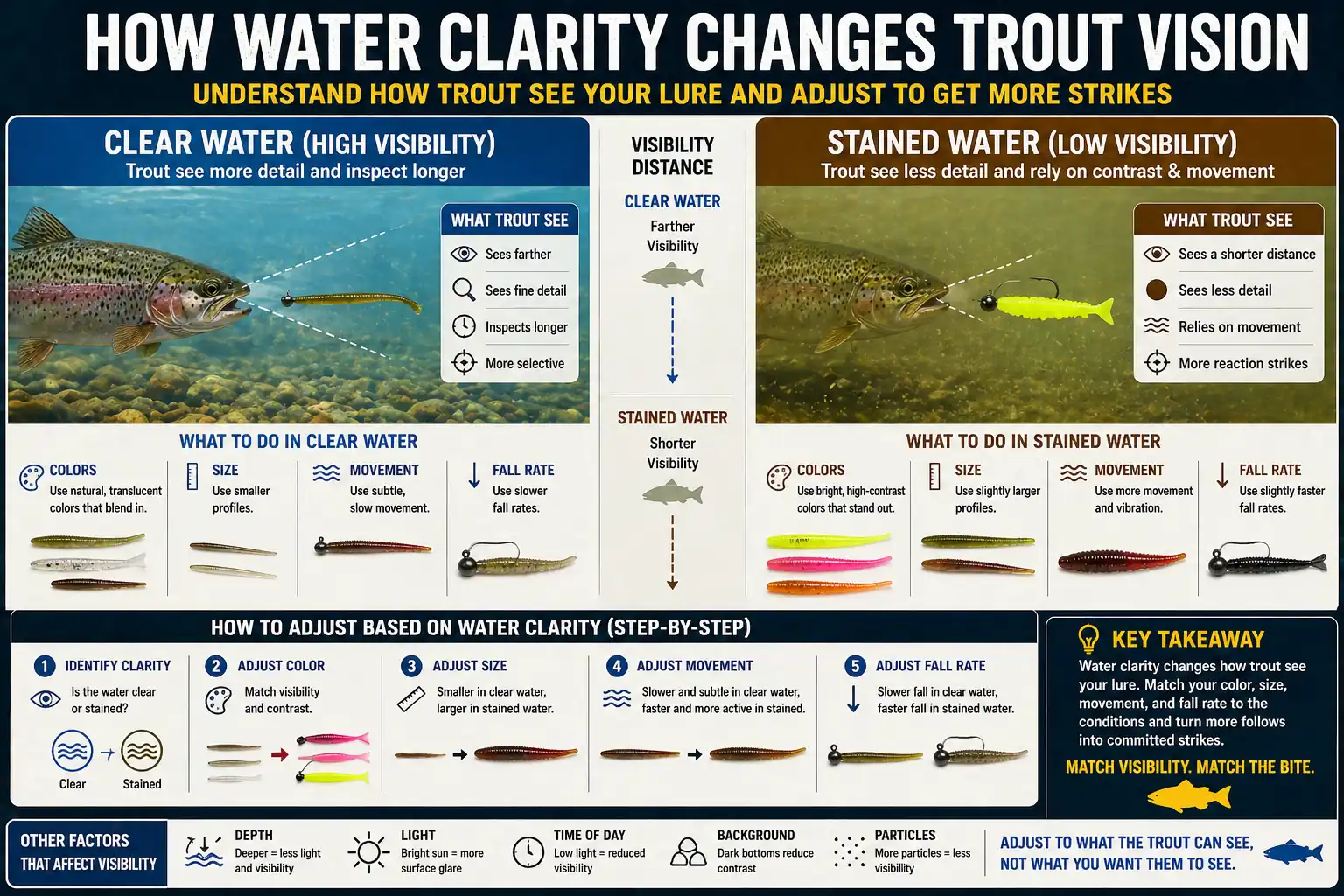
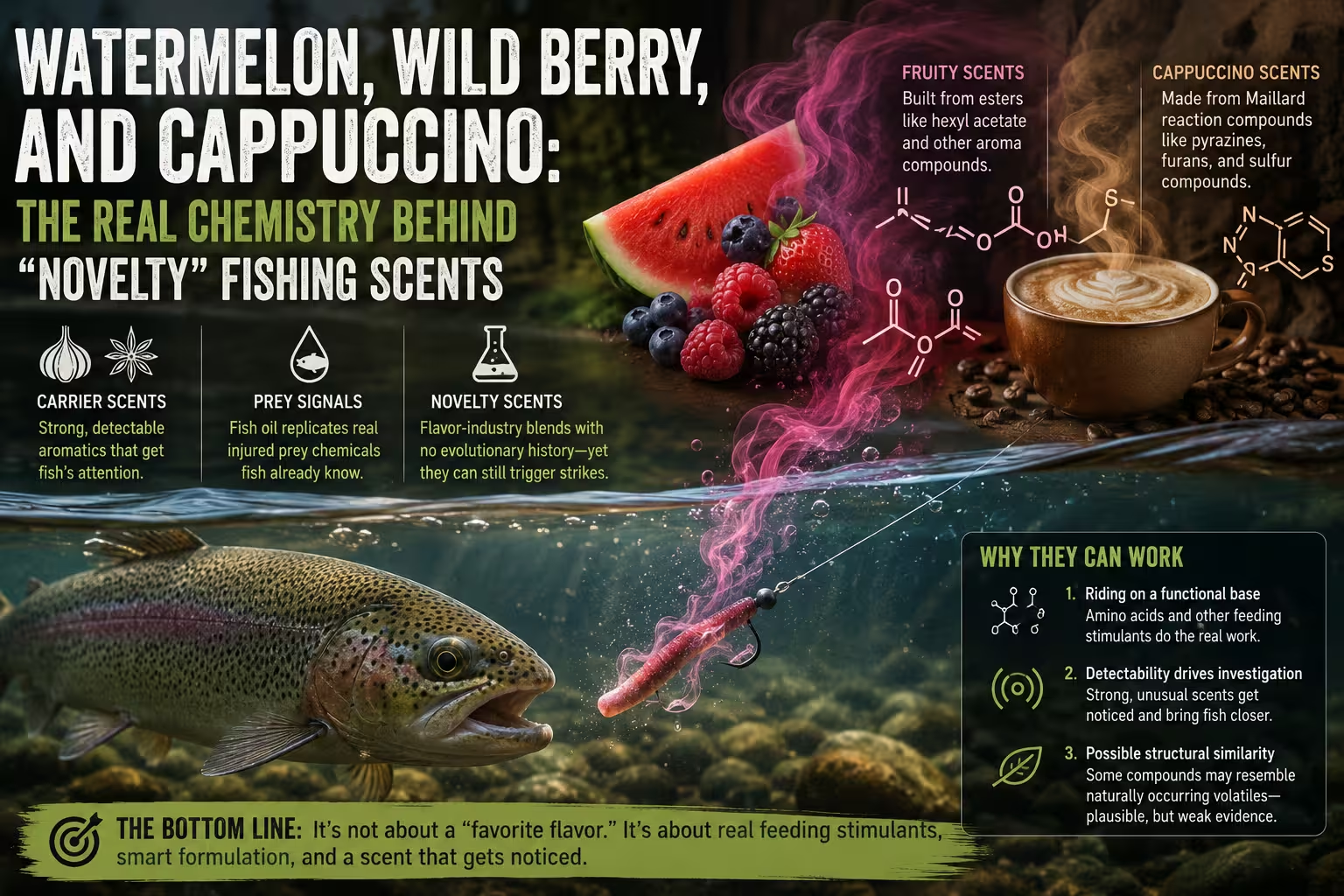
For bait and lure selection, cold water favors presentations that move slowly or not at all — the natural fall of a soft plastic on a light jig head, a dead-drifted worm, an egg under a bobber. As temperatures warm through the prime range, more active presentations become more effective because the fish can and will chase. Our garlic-scented ribbed trout worms work across the full temperature range, but the rigging and retrieve adjust with conditions — slower fall and nearly static presentation in cold water, more active retrieve as temperatures climb through the 50s.
Temperature and Stocked Trout: An Important Nuance
Stocked trout and wild trout are the same species with the same thermal biology, but stocked fish often behave differently within a given temperature window because their conditioning affects their feeding triggers. A recently stocked fish relies heavily on scent because that is how it was trained to find food in the hatchery. A wild fish is a visual, behavioral predator.
What this means in practice is that stocked fish are often somewhat more tolerant of marginal temperature conditions — not because they are biologically different, but because they are conditioned to respond to scent even when metabolism is partially suppressed by cold water. A garlic-scented soft plastic will produce bites in 44°F water on recently stocked fish that would be nearly impossible to catch on unscented hardware at the same temperature. The scent cuts through the suppressed metabolism in a way that a moving lure cannot. As water warms and the fish’s visual and strike response come fully online, the presentation advantage shifts toward natural movement and correct color selection.
For the full breakdown of how timing, temperature, and behavior interact for stocked fish specifically, see When Stocked Trout Actually Eat: Feeding Windows, Timing, and Trigger Conditions. That post covers the 24-to-72-hour post-stocking behavior cycle in detail and connects it directly to time-of-day feeding patterns — a natural companion to what you just read here.
The One Rule
If there is a single rule to carry from everything above, it is this: find the temperature window and fish it.
Not a specific spot. Not a specific bait. Not a specific time on the clock. The temperature window. When the water is between 50°F and 65°F, that is when trout eat with purpose, and everything else — time of day, bait choice, presentation — matters most because you are fishing a fish that is ready to feed. Outside that range, the biology is working against you, and the adjustments you make to overcome it are compensations for a problem that the thermometer already told you existed.
A stream thermometer costs less than a pack of bait and makes every other decision more informed. Use it every trip. Over time it will tell you things about your specific water that no article can — because it will be recording the actual conditions of the water you actually fish.
Frequently Asked Questions
What is the best water temperature for trout fishing?
The best water temperature for rainbow trout fishing is 50°F to 65°F. Within this range, trout metabolism is at peak efficiency — the fish digest food quickly, hold current well, and strike with full commitment. Feeding is most aggressive from the mid-50s to the low 60s. Outside this range, activity drops off significantly in both directions.
What water temperature is too warm for trout?
Rainbow trout begin experiencing physiological stress above 65°F. Feeding drops sharply above 68°F, and prolonged exposure above 70°F can be lethal. Above 68°F, catch-and-release fishing carries real mortality risk even when the fish swims away, because the combined stress of capture and warm water can exceed the fish’s recovery threshold.
What water temperature is too cold for trout?
Trout can survive near freezing, but feeding becomes very limited below 40°F. Below 35°F, trout may enter a near-torpor state and are nearly uncatchable. Between 40°F and 50°F, trout will eat but require very slow, deep presentations matched to their suppressed metabolism.
Why do trout stop biting in summer midday?
Midday summer water is warmest and lowest in dissolved oxygen — the two conditions most stressful to trout. Their metabolism is overloaded by heat while the water holds less oxygen to support it. Feeding stops because the fish’s energy is diverted to survival. The bite returns at dawn and dusk when water has cooled. This is the same biological reason the best time of day to catch trout shifts completely by season.
Why is winter trout fishing best in the afternoon?
Water is coldest at dawn in winter — all night with no sun produces the daily low. By early to mid afternoon, solar warming pushes temperatures a few degrees warmer, which is enough to accelerate trout metabolism meaningfully and trigger feeding. The midday to early afternoon window in winter is the equivalent of the summer dawn window: the most comfortable temperature of the day for the fish.
Does water temperature affect what bait to use for trout?
Yes, significantly. In cold water below 48°F, scent-based presentations — like our garlic-scented ribbed trout worms — outperform movement-based lures because suppressed metabolism slows strike response. As water warms into the prime range, natural fall and subtle movement become equally or more important than scent. Lure color also shifts with temperature because the light conditions that accompany temperature changes affect how fish perceive color — see Best Trout Worm Colors for Each Season for the full seasonal color breakdown.
Do brown trout and brook trout have the same temperature preferences as rainbows?
No. Brown trout tolerate warmer water than rainbows — they remain active into the low 70s and often occupy warmer stream sections in summer that rainbows have vacated. Brook trout are the most cold-sensitive of the three common species, with an optimal range roughly 5°F colder than rainbows. On mixed-species water in summer, location and temperature together tell you which species you are likely to find where.