When Stocked Trout Actually Eat: Feeding Windows, Timing, and Trigger Conditions
When stocked trout actually eat is not constant — feeding windows shift with hours since stocking, time of day, and fishing pressure, and matching your timing to those windows matters more than any single bait choice.
When Stocked Trout Actually Eat: Feeding Windows Explained
Part 5 — Feeding Windows, Timing Patterns, and Trigger Conditions
This article is part of our complete trout system. For a full breakdown of bait selection, presentation, and performance, see Best Soft Plastics for Trout: Complete Guide to Color, Rigging & Performance.
1. When Stocked Trout Eat Is Not Constant
Stocked trout do not feed continuously. Even when fish are present and detectable, they will only feed during specific windows. Core Principle: Catch rate is determined more by timing than bait choice once location is correct.
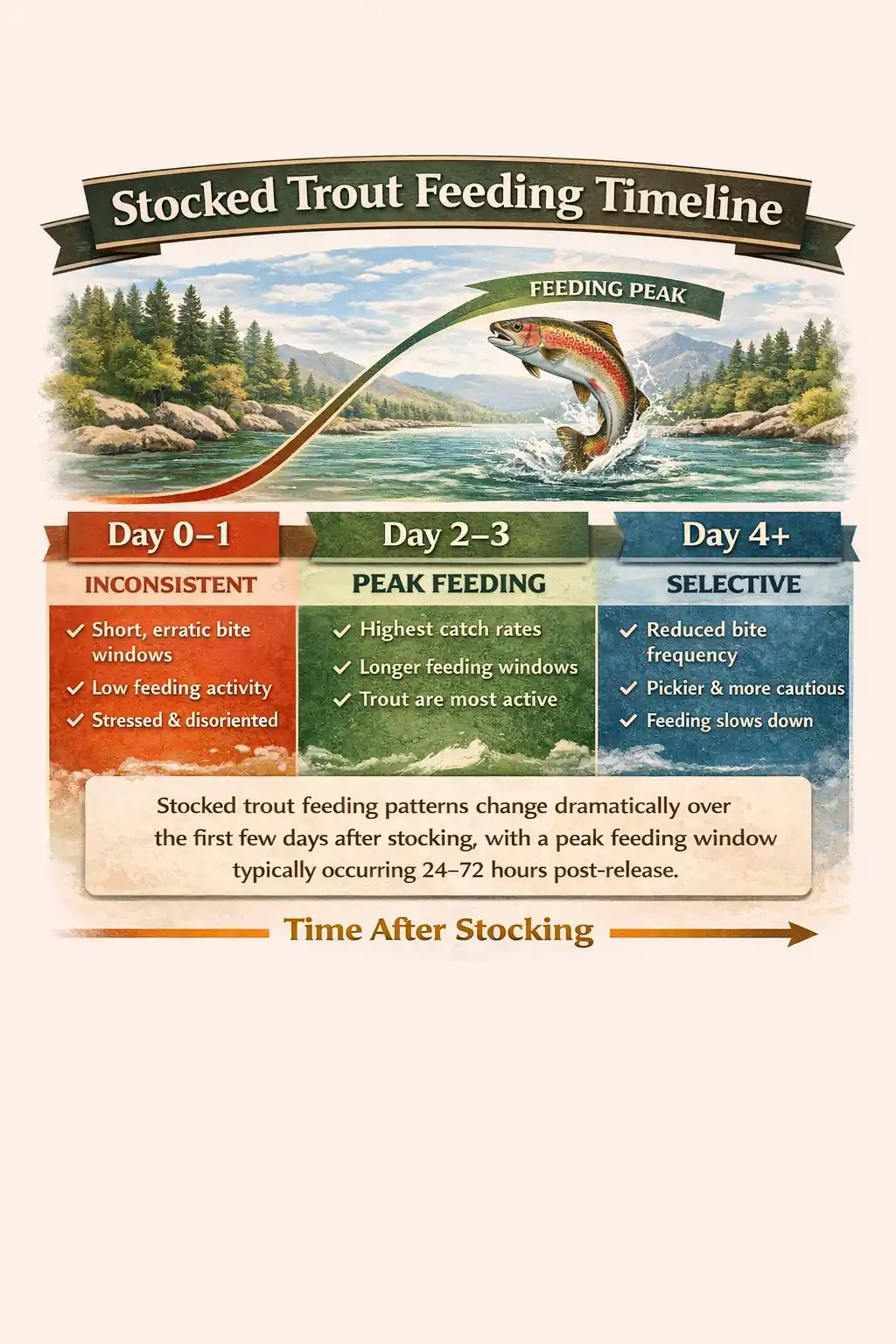
2. The First 24 Hours: Unstable Feeding
Immediately after stocking: feeding is inconsistent, fish are reactive not actively searching, and bite windows are short and unpredictable. Why: stress reduces feeding drive, disorientation delays normal behavior, energy is conserved rather than spent chasing food.
Strategy: Use stationary scent-based bait, expect inconsistent bites, stay patient. Key Adjustment: Do not interpret low activity as absence of fish — fish may be present but not actively feeding.
This is exactly where the garlic-scented Ribbed Trout Worm earns its keep: it holds in place and keeps working a scent trail instead of relying on movement those still-stressed fish aren’t ready to chase.
3. Peak Feeding Window: 24–72 Hours
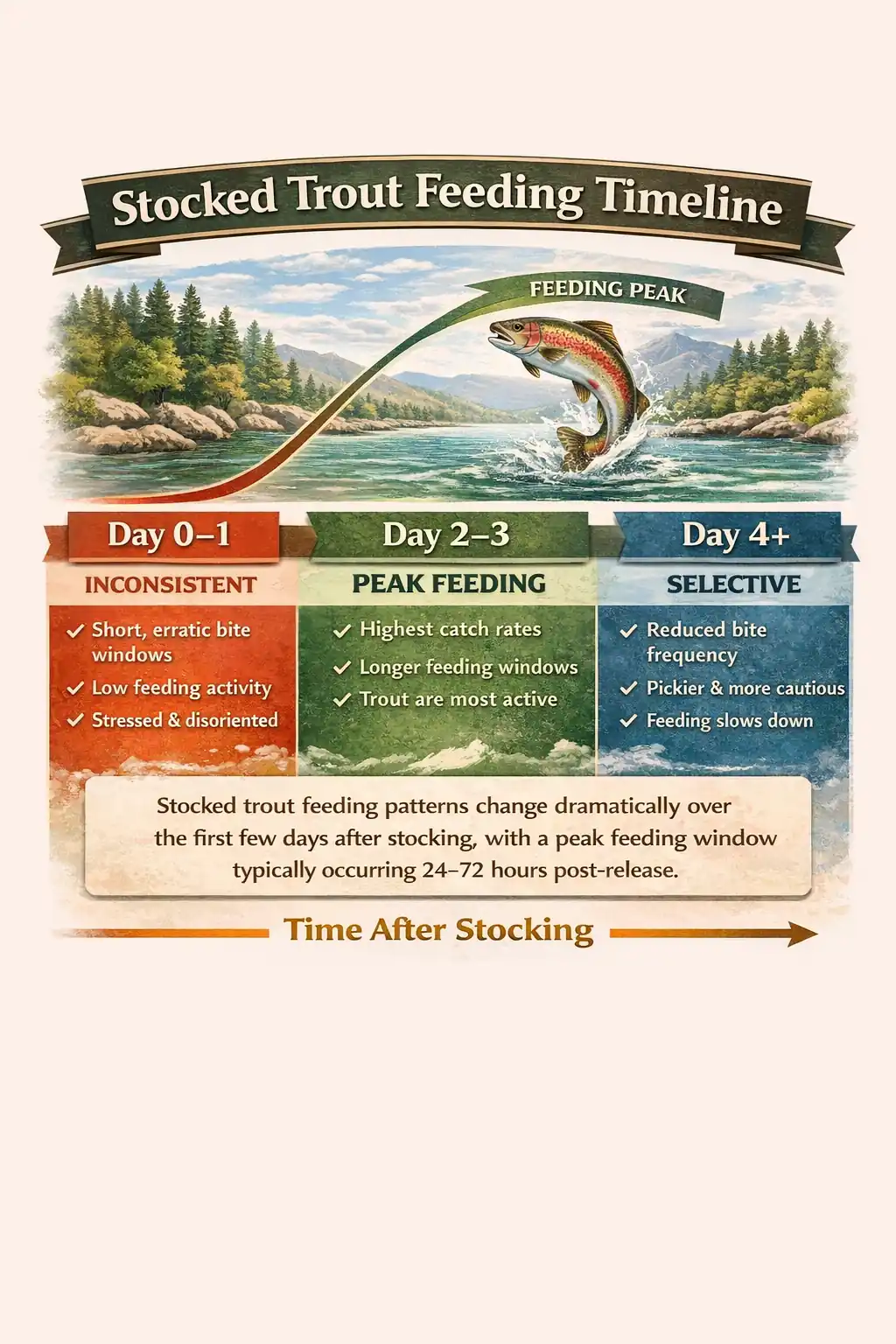
After initial adjustment: feeding becomes more consistent, fish begin to explore, and competition increases. Why this is the best window: fish regain stability, hunger increases, conditioning still influences feeding.
- Highest Probability Period: Day 2 and early Day 3 after stocking
- Strategy: Combine scent and subtle movement, increase coverage slightly, adjust depth and location more actively
- Key Insight: This is the period where bait still works and lures begin to work
4. Time-of-Day Feeding Patterns
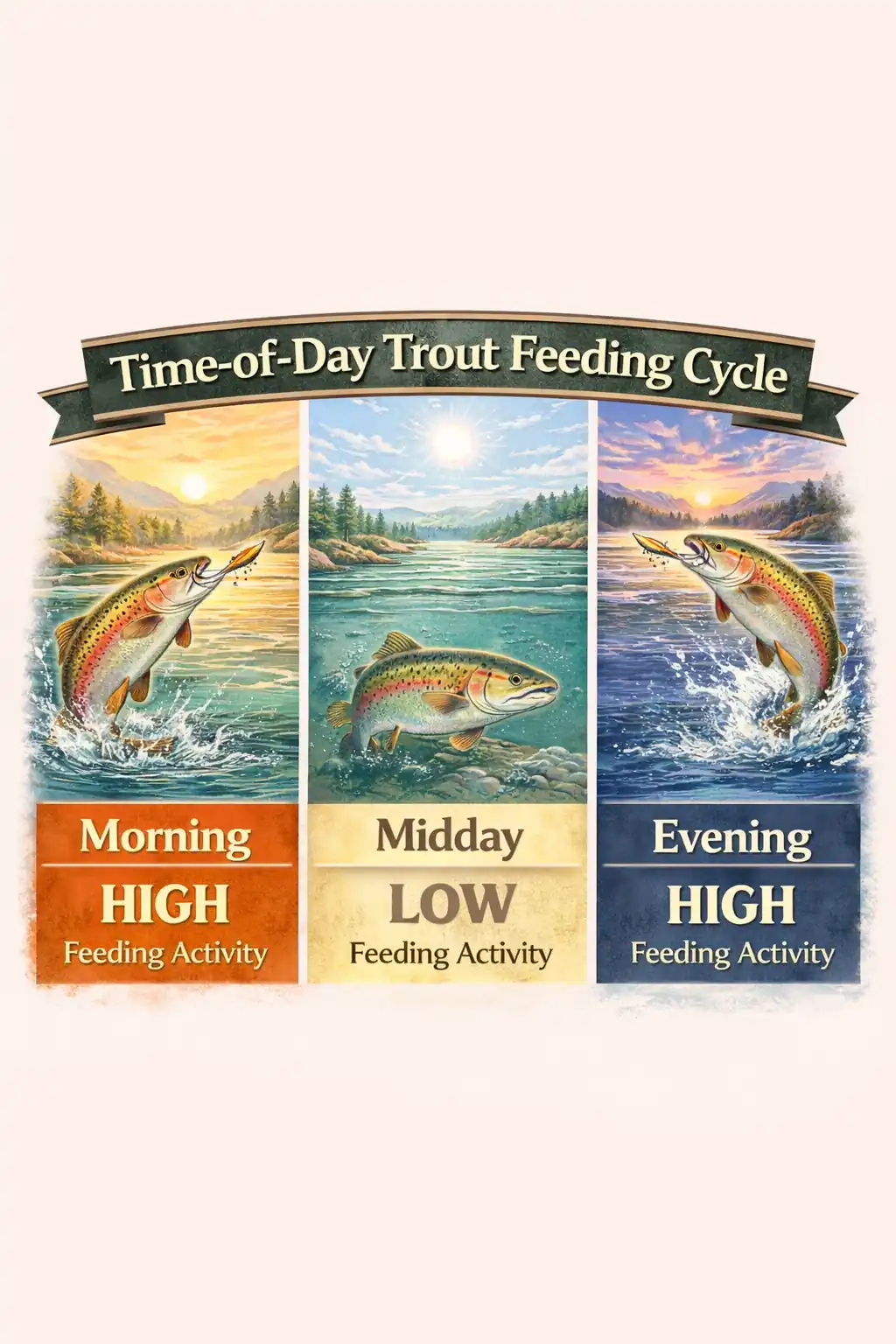
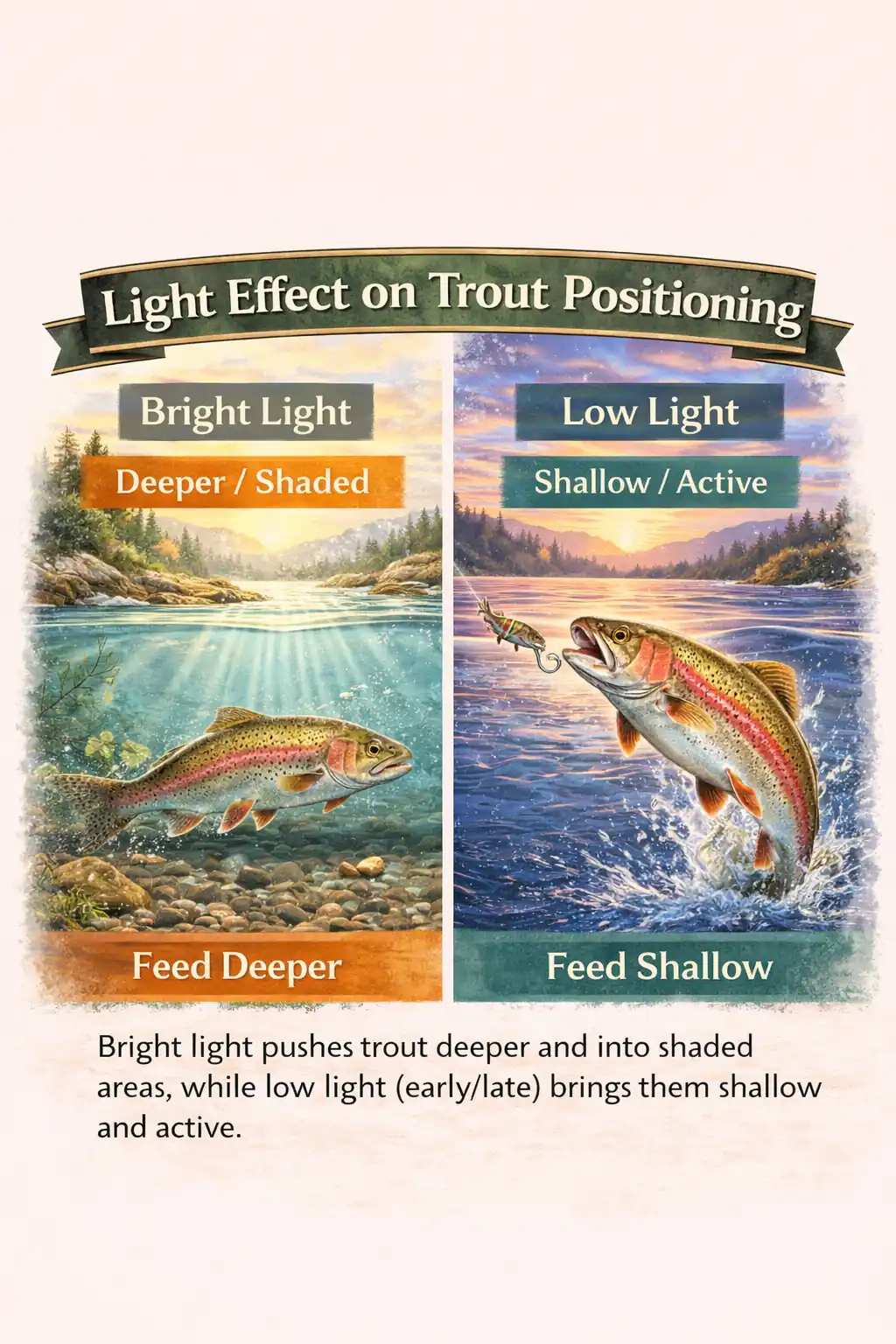
- Morning (Sunrise → Mid-Morning): Increased activity, movement toward shallower water, higher feeding probability. Lower light reduces caution, cooler temps increase comfort. Fish shallow with light movement or stationary bait.
- Midday (Late Morning → Afternoon): Reduced feeding, fish move deeper or inactive. Increased light penetration and visibility increases caution. Slow down, fish deeper or shaded areas.
- Evening (Late Afternoon → Sunset): Feeding increases again, fish move shallower. Return to shallow zones, increase movement slightly.
- Night: Reduced reliance on vision, increased reliance on scent. Use strong scent, minimal movement.
5. Stocking Schedule Impact
- Immediately After Stocking: Fish concentrated, feeding inconsistent
- Day After Stocking: Feeding stabilizes, highest catch rates
- Multiple Days After: Fish spread out, become selective
If you know stocking time: fish within 24–48 hours. Indicators of recent stocking: high fish density, aggressive but inconsistent bites, fish visible near surface.
6. Fishing Pressure Timing
- Weekend: High pressure, reduced feeding after initial hours
- Weekday: Lower pressure, more consistent feeding
- Daily Pressure Cycle: Early morning = low pressure, better bite | Midday = high pressure, reduced bite | Evening = pressure drops, improved bite
Common Mistake: Fishing only during high-pressure periods suppresses feeding windows. Shift fishing times, not just tactics.
7. Weather and Environmental Triggers
- Overcast: Reduced light penetration, increased feeding activity. Fish more aggressively, increase movement slightly.
- Bright Sun: Increased visibility, increased caution. Downsize bait, slow presentation, fish deeper.
- Wind: Moves food sources, oxygenates water. Fish wind-blown banks, target moving water areas.
- Temperature Changes: Sudden drops reduce feeding. Stable conditions improve consistency.
8. Feeding Window Duration
Most feeding windows are short: 30 minutes to 2 hours. You must be in the right place before the window opens and maintain consistent presentation. Common Mistake: Leaving too early — the feeding window may not have started yet. Stay longer in productive areas and adjust presentation before relocating.
9. Recognizing Active vs Inactive Fish
- Active Fish: Visible movement, surface disturbances, multiple bites in short period → increase efficiency, maintain consistent presentation
- Inactive Fish: No visible movement, occasional light taps → slow down, increase scent, reduce movement
10. Timing System
- Identify Time Since Stocking: 0–24 hrs = inconsistent | 24–72 hrs = peak | 72+ hrs = selective
- Identify Time of Day: Morning/evening = high probability | Midday = low probability
- Evaluate Pressure: High pressure = reduced feeding | Low pressure = increased feeding
- Adjust Strategy: Match activity level and environmental conditions
11. Common Failure Points
- Fishing at the wrong time — ignoring feeding windows
- Overfishing dead periods — midday without adjustment
- Ignoring pressure effects
- Leaving too early and missing the feeding window
Key Takeaways
- Feeding is controlled by timing, not constant behavior
- Best window is typically 24–72 hours after stocking
- Morning and evening outperform midday
- Pressure and light conditions strongly affect feeding
- Short feeding windows require patience and positioning
Previous Article: Where Stocked Trout Actually Feed
Next Article: Part 6 — How Trout Behavior Changes After the First Week