How Dissolved Oxygen Affects Trout: The Science Behind the Bite Window
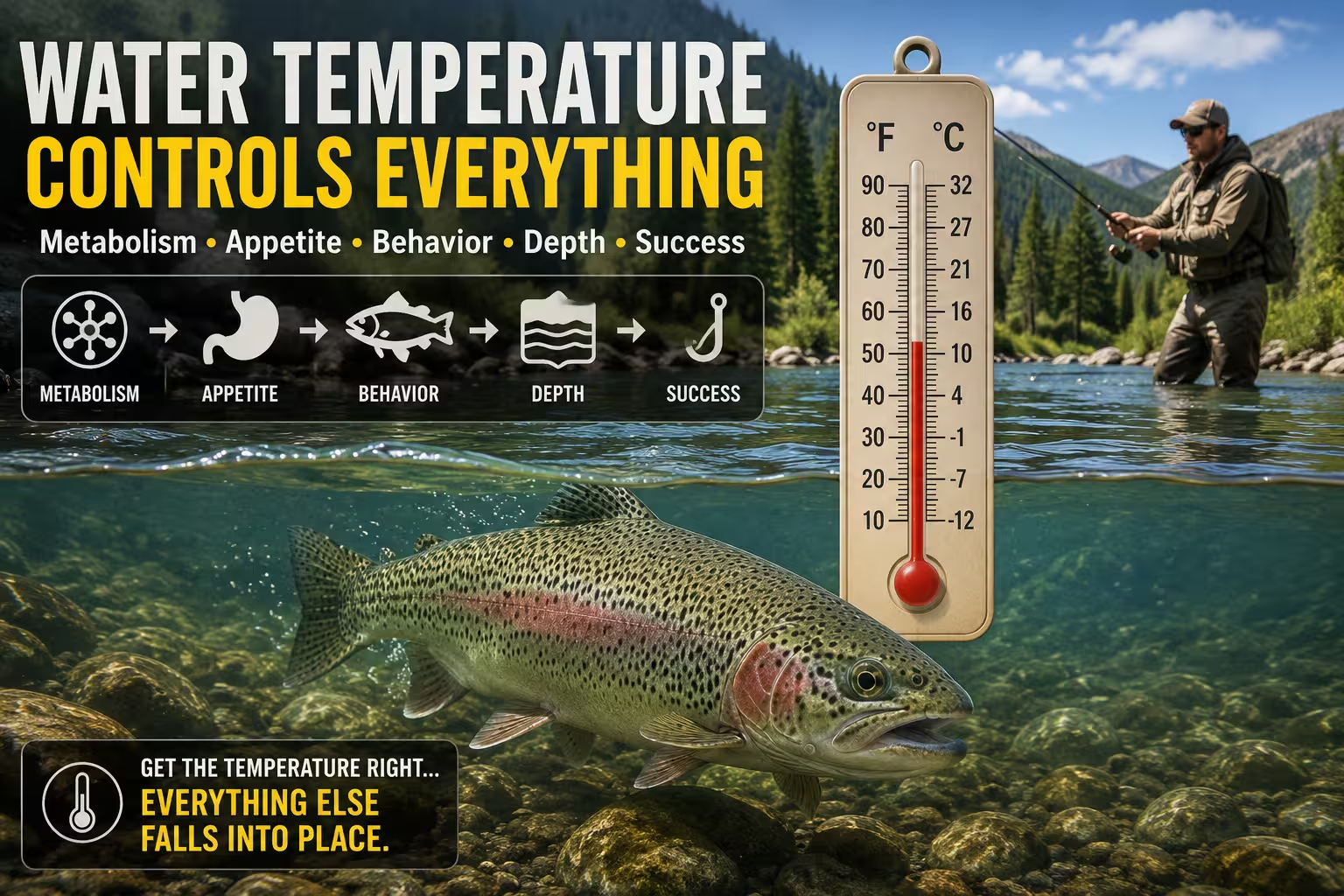
Dissolved oxygen for trout is one of the most important factors controlling feeding activity, metabolism, and where fish hold throughout the day. Water temperature gets most of the attention in trout fishing science, and it deserves it. But temperature does not work alone. It is inseparable from a second variable that controls trout behavior just as directly and is even less visible to the angler standing in the current: dissolved oxygen.
Every serious trout angler should understand dissolved oxygen — what it is, what controls it, what happens inside a fish when it drops, and how it connects to the time-of-day feeding patterns that determine when your best fishing hours actually are. Once you understand both variables together, the logic behind dawn, dusk, riffles, cold springs, and winter midday bites stops being a set of rules to memorize and becomes a system you can read off the water itself.
This post is a companion to our guide on best water temperature for trout and connects directly to the time-of-day patterns covered in when stocked trout actually eat. Read all three and the picture is complete.
Dissolved Oxygen for Trout: Why It Matters
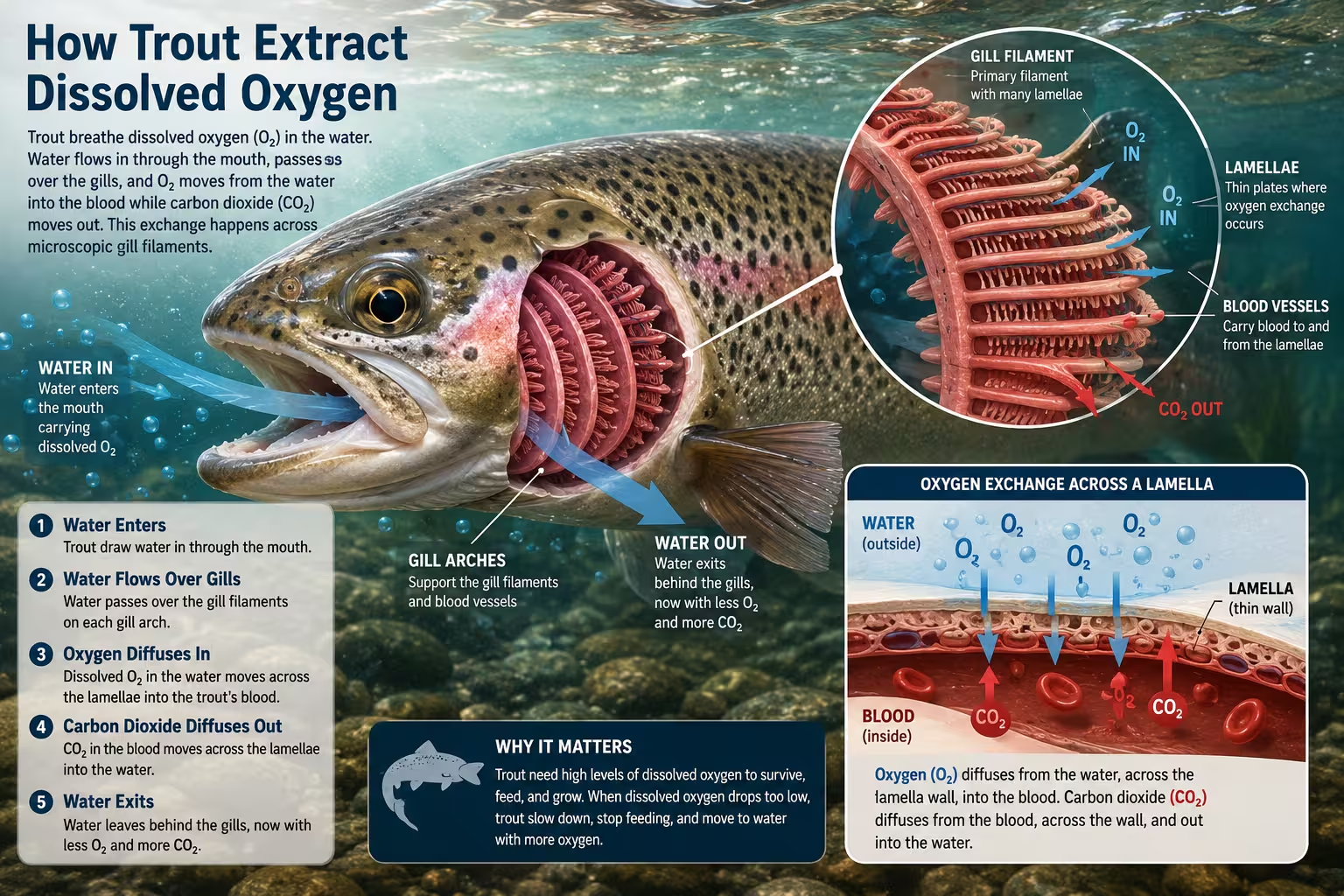
Dissolved oxygen (DO) is exactly what it sounds like: oxygen molecules (O₂) that have dissolved into water from the atmosphere and from photosynthesis by aquatic plants and algae. Fish cannot breathe atmospheric air the way mammals do. A trout extracts dissolved oxygen from the water through its gills — water passes across the gill filaments, oxygen moves across the membrane into the bloodstream, and carbon dioxide moves the other way out. If the oxygen dissolved in the water drops low enough, the fish suffocates. Not because there is no air, but because there is not enough O₂ in the water itself.
Dissolved oxygen is measured in milligrams per liter (mg/L), also called parts per million (ppm). Fully saturated cold water holds roughly 14 mg/L at 32°F. Fully saturated water at 70°F holds only about 9 mg/L. The same water, no oxygen removed, just warmer — and it holds 36% less dissolved oxygen. That physical fact is the foundation of almost everything that follows.
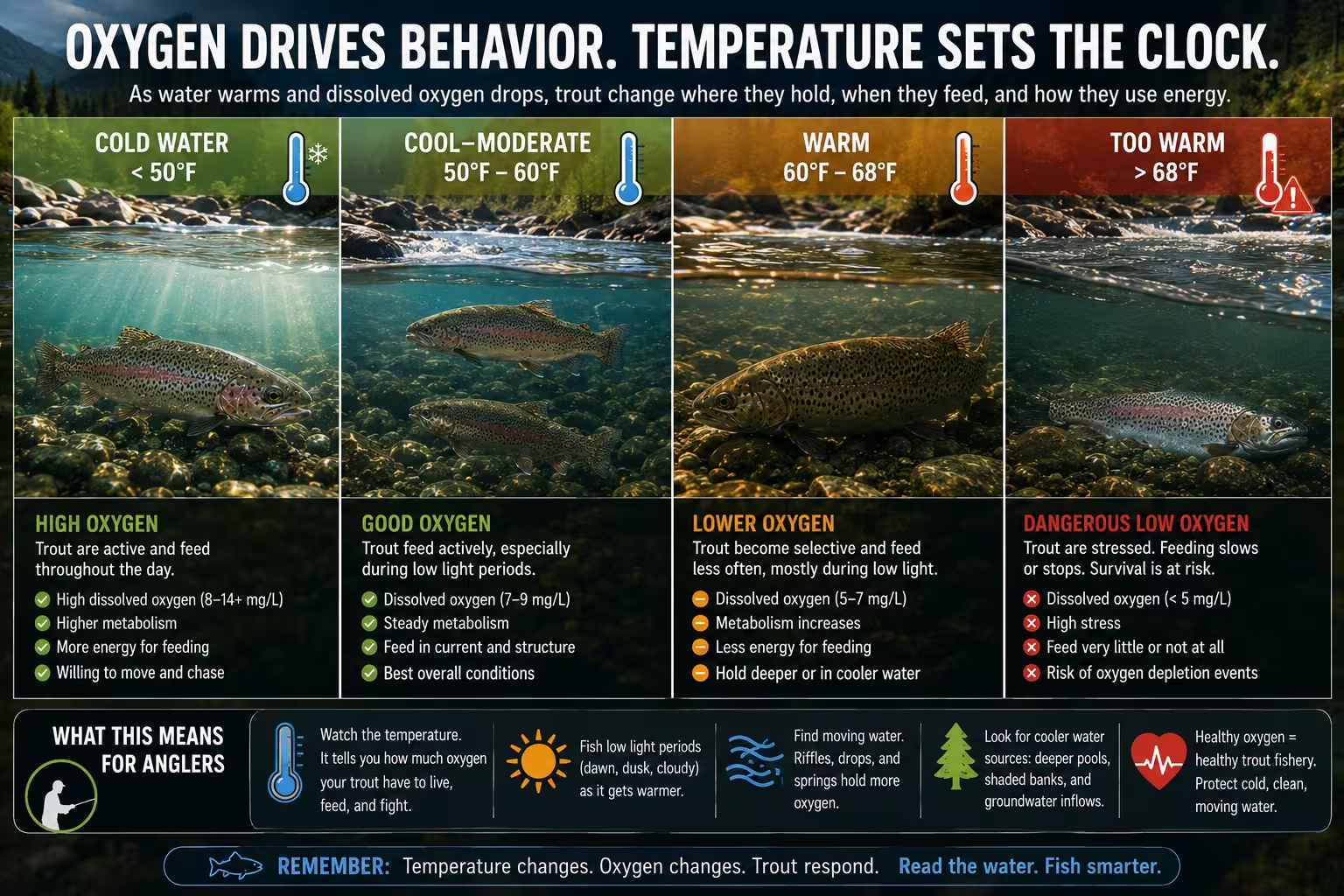
Rainbow trout require a minimum of roughly 6 mg/L to maintain basic body functions. They feed and grow best at 9 mg/L and above. Below 6 mg/L, feeding stops and the fish prioritizes oxygen acquisition. Below 4 mg/L, survival is at risk. These are not behavioral preferences — they are physiological thresholds determined by how much oxygen the fish’s tissues, organs, and metabolic processes require to function.
The Temperature-Oxygen Connection: Why They Always Move Together
The most important thing to understand about dissolved oxygen is that you cannot separate it from temperature. They move in opposite directions simultaneously, and that simultaneous movement is what drives so much of trout behavior.
Here is the mechanism in plain terms: when water warms, it holds less dissolved oxygen. This is a property of physics — warmer water molecules move faster and are less able to keep gas molecules dissolved. At the same time, a warmer trout has a higher metabolic rate and therefore burns oxygen faster. So as temperature rises, the fish needs more oxygen while the water delivers less. The gap between supply and demand widens from both ends at once.
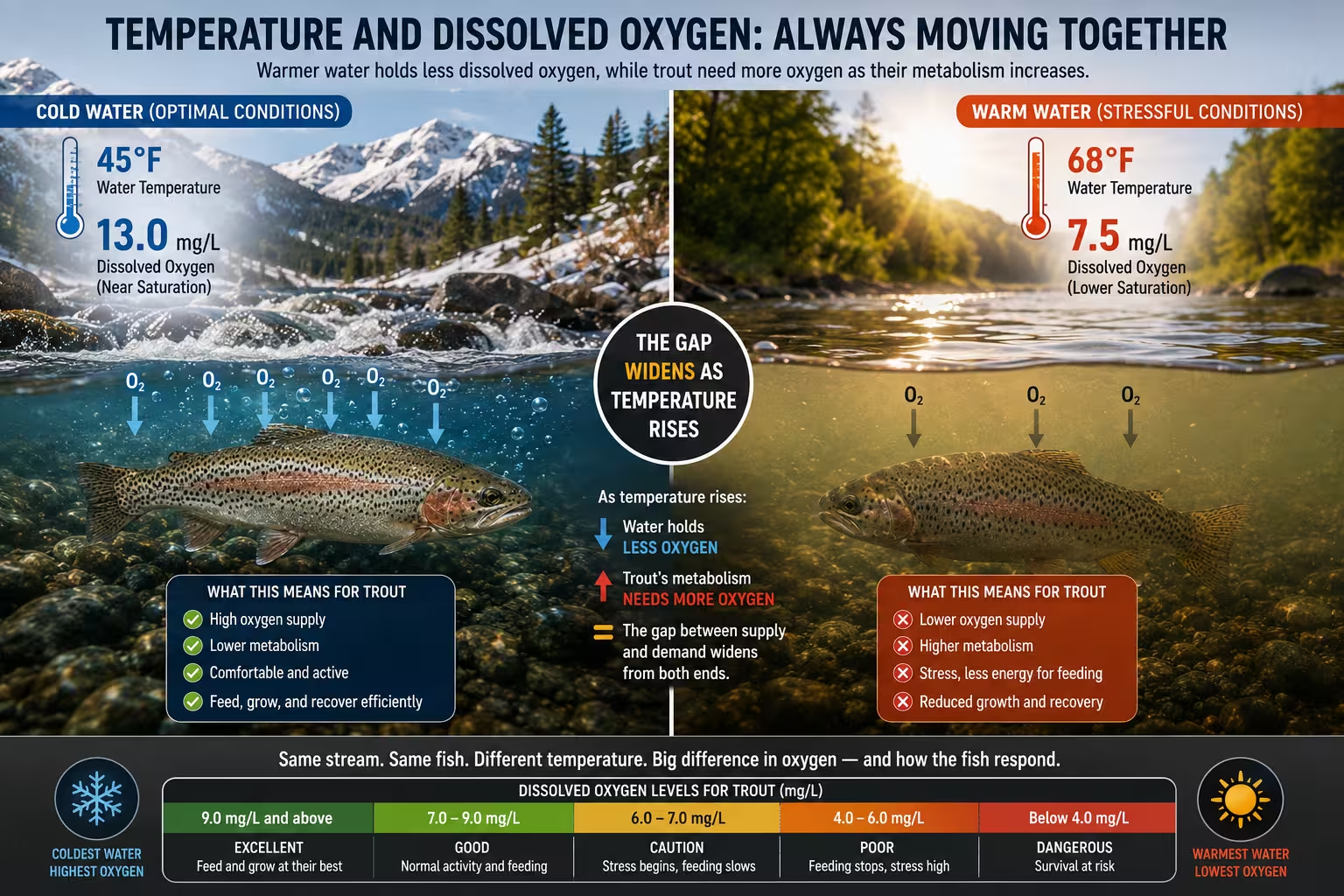
When temperatures reach into the upper 60s Fahrenheit, that gap becomes critical. A large trout in 68°F water with 7.5 mg/L dissolved oxygen — which sounds like it should be enough — may actually be oxygen-stressed because its elevated metabolism is consuming oxygen faster than its gills can extract it from the water at that saturation level. A smaller trout in the same water handles it better because its absolute oxygen demand is lower. This is exactly why large fish are first to shut down feeding in warm water, and why summer midday fishing tends to produce only smaller fish even when large fish are present. The large fish have gone to where the oxygen is; the small fish can still cope.
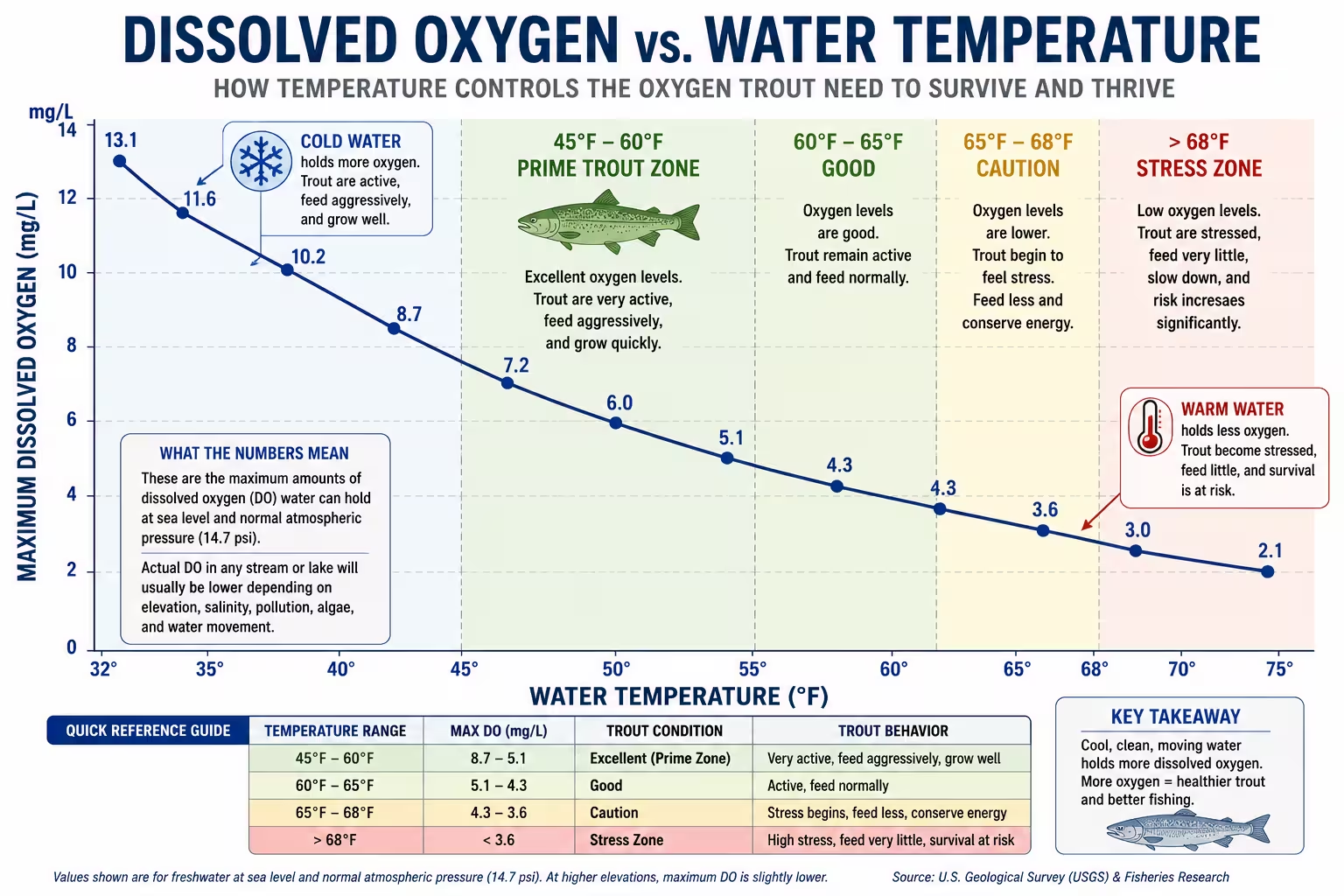
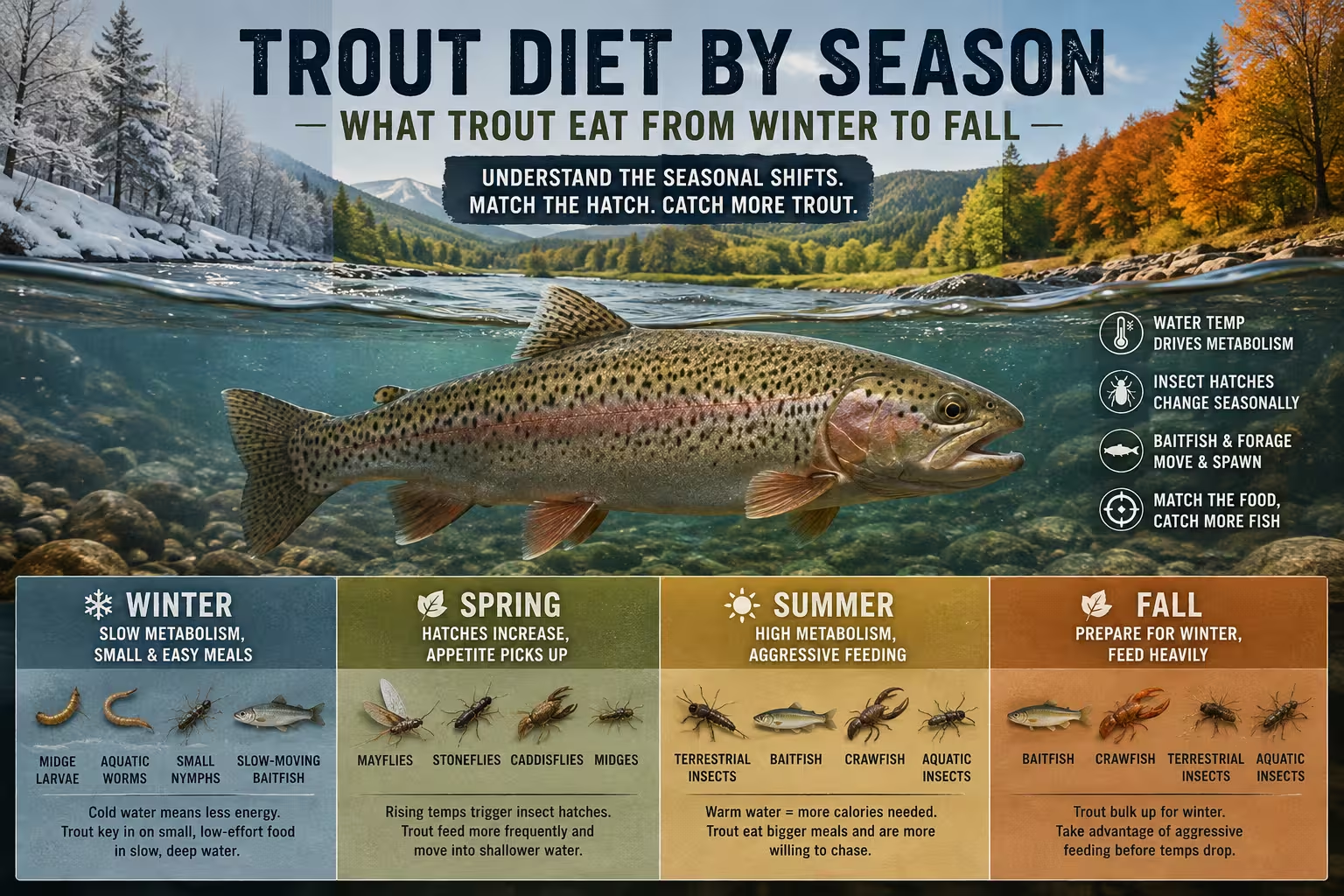
The reverse is equally important. When water cools in fall and winter, it holds more oxygen. A cold-water trout with 13 mg/L of dissolved oxygen for trout available has ample supply even for an elevated metabolic demand — and in cold water its metabolic demand is suppressed anyway, so the surplus is even larger. This is one of the reasons why fall fishing can be excellent: water temperatures are dropping back through the prime feeding range and dissolved oxygen is simultaneously rising, both variables moving in a favorable direction at once.
What Controls Dissolved Oxygen in a Stream
Understanding what adds and removes oxygen from water is what lets you read a piece of water for DO without a meter.
Aeration from turbulence is the primary source of dissolved oxygen in moving water. Every time water breaks over a rock, drops through a riffle, or churns at the head of a pool, it is mixing with the atmosphere and absorbing oxygen. Riffles, rapids, waterfalls, and runs are oxygenation machines. Still water — flat pools, backwaters, slow-moving lakes — exchanges far less oxygen with the atmosphere and tends toward lower DO, especially when warm.
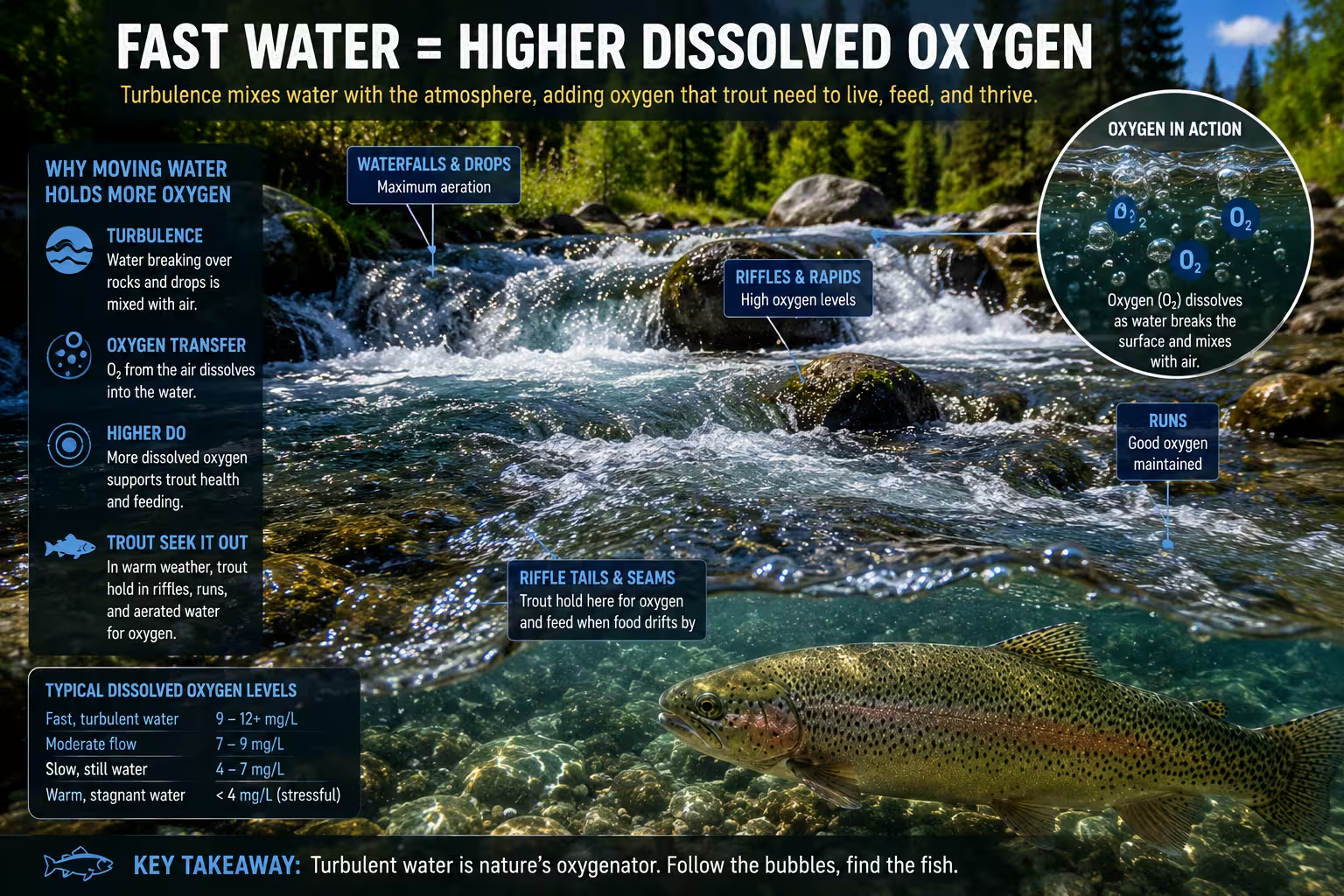
This is why trout in summer heat concentrate in riffles and runs rather than pools, even though pools look like better holding water. They are chasing oxygen, not just cooler temperature. The riffle may be warmer than the deep pool in some cases, but the DO in the riffle is higher because the surface is constantly breaking and exchanging gas. A fish holding in the riffle tail in July is making a physiological calculation, not a feeding decision. Catching it requires presenting a bait in moving water where the fish is forced to be.
Water temperature controls the saturation ceiling. Cold water can hold more oxygen; warm water holds less, even at full saturation. A fully aerated cold stream in January may read 13-14 mg/L. The same stream in August, fully aerated, may only reach 8-9 mg/L at peak afternoon temperature. Full aeration means different things at different temperatures.
Photosynthesis and plant respiration matter more in still water than in streams but are worth understanding. Aquatic plants and algae produce oxygen during the day through photosynthesis, which is why pond and lake DO is often highest in the afternoon after a full day of sunlight. At night, those same plants switch to respiration and consume oxygen, which is why pre-dawn DO in still water is at its daily low. In warm, shallow, weed-filled water, this daily DO swing can be dramatic — sometimes the difference between fish feeding freely and fish gasping at the surface. It is one of the reasons late-night trout fishing in ponds and lakes during warm weather can fail completely even when temperatures are comfortable.
Biological oxygen demand (BOD) is the oxygen consumed by decomposition — bacteria breaking down organic matter in the water and on the bottom. High BOD is associated with eutrophic water (rich in nutrients and decaying matter), algal blooms that die and decompose, and stagnant conditions. Put simply: dirty, stagnant, warm water runs out of oxygen fastest. Clear, cold, moving water maintains it best.
Altitude reduces the oxygen available to dissolve. Water at 8,000 feet elevation may be fully saturated but hold 15-20% less dissolved oxygen than fully saturated water at sea level, simply because the partial pressure of atmospheric oxygen is lower at altitude. High-elevation streams can feel like premium trout habitat — cold, clear, and pristine — while still being DO-limited. This is one reason why high-altitude trout fisheries sometimes do not support the fish densities that their temperature alone would suggest they should.
What Happens Inside a Trout When DO Drops
When dissolved oxygen falls below the comfort range, the fish responds in a sequence of behaviors that any observant angler can recognize.
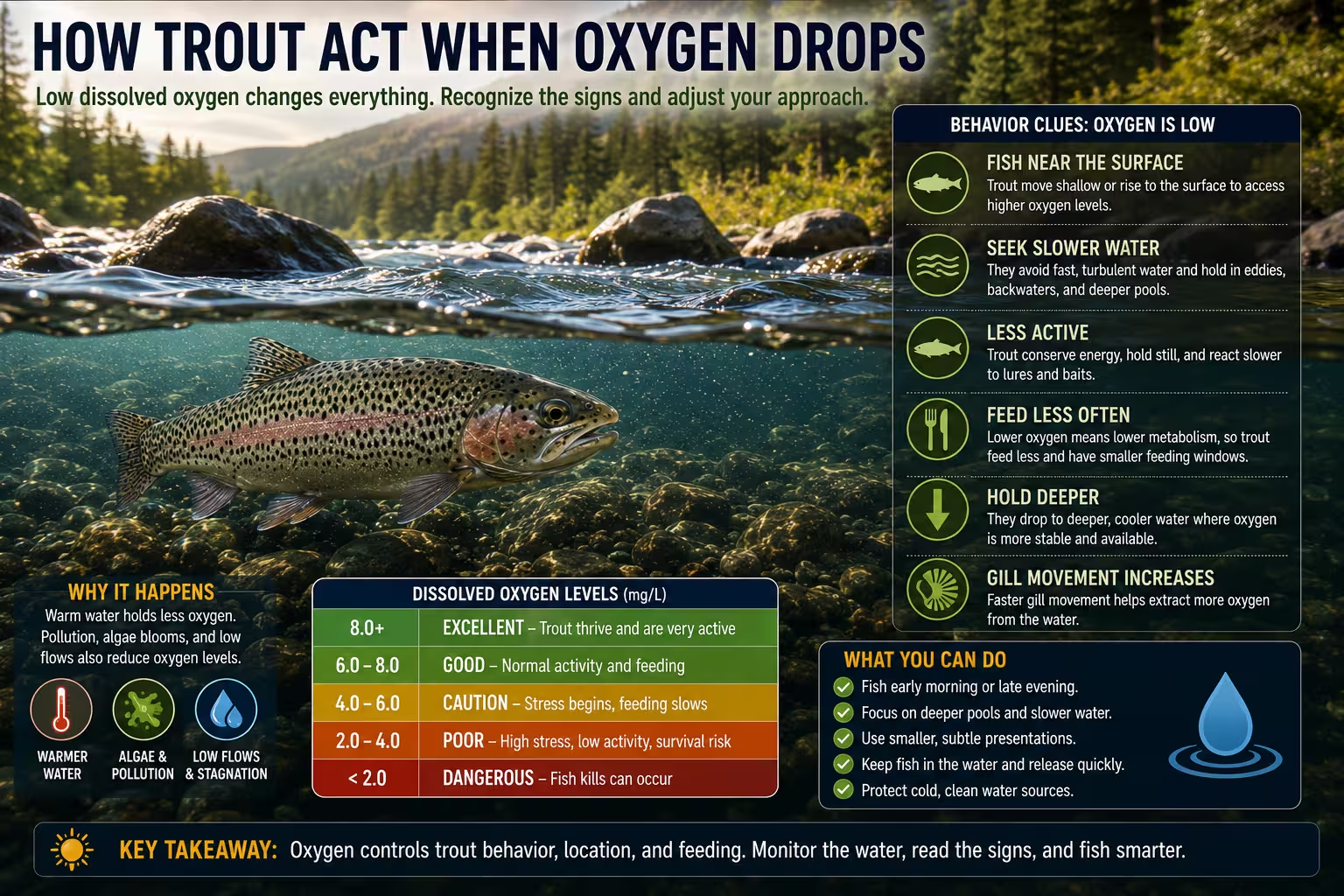
The first response is positional adjustment. The trout moves toward higher-DO water. In a stream this means moving to riffles, to the surface of turbulent runs, or to cold-water inflows (cold water holds more oxygen and inflows are usually more oxygenated than the main body of warm summer water). In a lake or pond it means moving to the shallows near aerating waves, to the thermocline boundary where cold and warm water meet, or to any tributary inlet. A trout that appears to be in a “wrong” location — shallow water in summer, turbulent water that seems too fast to hold fish comfortably — is often there because the DO is right, not despite the other conditions.
The second response is reduced feeding. This is the response anglers notice most. When a fish is oxygen-stressed, its digestive system slows or shuts down entirely. Digestion itself consumes significant oxygen — breaking down a meal requires metabolic energy and therefore O₂. A fish that cannot comfortably oxygenate its resting metabolism is not going to take on the additional oxygen demand of digesting food. Feeding stops. The fish is present, alive, and theoretically catchable, but it is not eating and will not eat regardless of what you put in front of it.
The third response, in severe cases, is surface behavior. A trout gulping at the surface is not feeding on surface insects — it is trying to access the thin, most oxygenated layer of water at the air-water interface. This is a stress sign, not a feeding opportunity. If you see trout porpoising or rolling at the surface without rising to identifiable insects, check the water temperature. If it is above 68°F and the fish are not rising to a visible hatch, you are looking at oxygen stress.
The Overnight Oxygen Drop and the Dawn Bite
This is the mechanism behind one of the most reliable patterns in trout fishing: the dawn bite.
In warm weather, dissolved oxygen in most trout water follows a predictable daily cycle. During the day, photosynthesis adds oxygen and surface aeration keeps it reasonable. As temperatures climb toward the afternoon peak, DO drops toward its daily low — warm water holds less, and the combined metabolic demand of all the fish, insects, bacteria, and plants consuming oxygen through the day reduces the supply further.
After dark, temperatures begin to fall. The water’s oxygen-holding capacity increases as it cools. Photosynthesis stops (no light), removing that oxygen demand, and respiration by plants adds a small load — but crucially, the temperature drop is often fast enough in summer that the rising saturation capacity outpaces the plant respiration demand. Dissolved oxygen climbs through the night as the water cools.
By dawn, two things are simultaneously true: the water is at its coolest temperature of the twenty-four-hour cycle and at its highest dissolved oxygen level of the day. Both variables — temperature and DO — are simultaneously at their most favorable for trout feeding. This is not coincidence. It is physics. And it is why dawn produces such consistent and reliable feeding activity in summer, not just for trout but for most cold-water species.
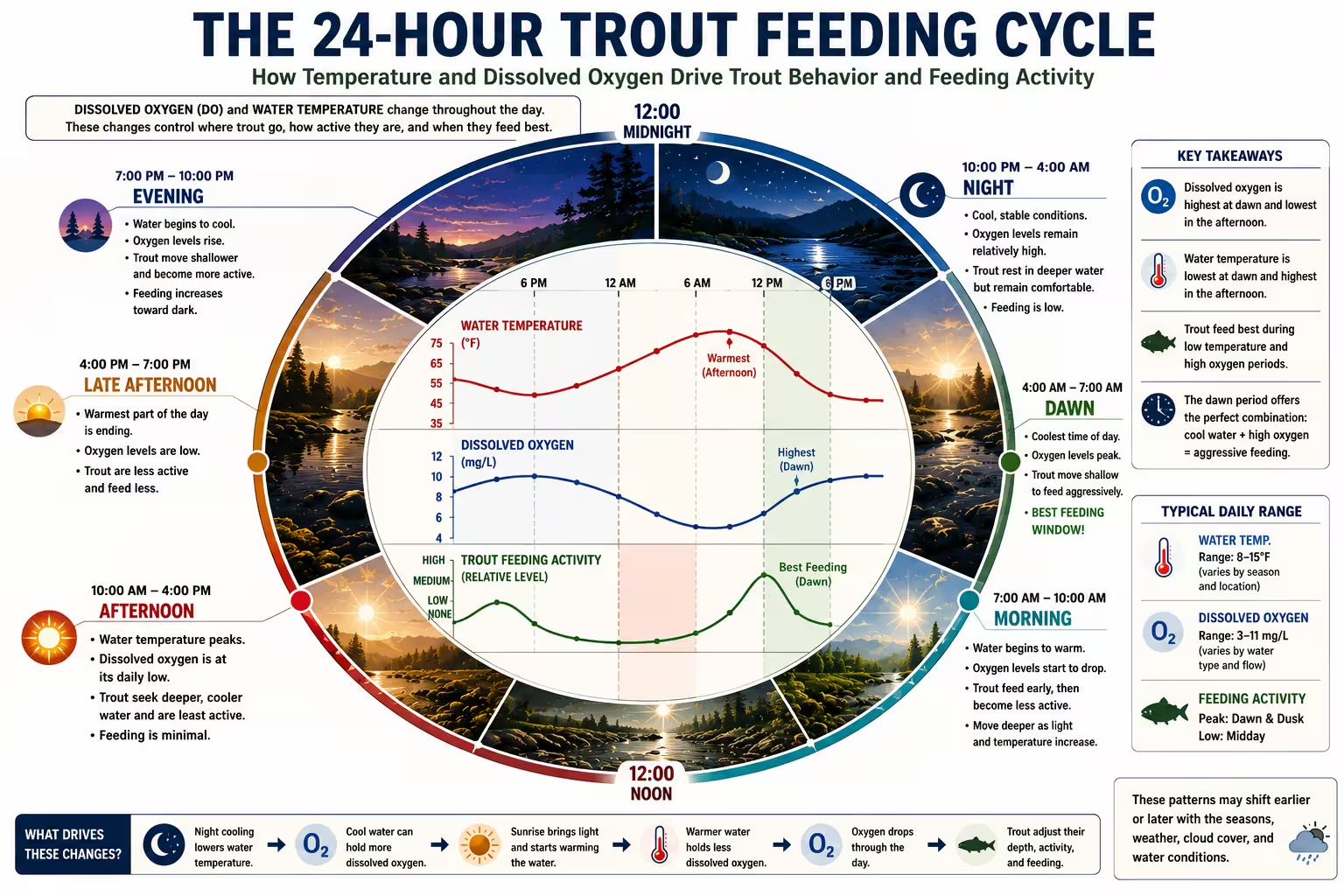
The flip side is why the summer afternoon is often dead. By 2:00 PM on a hot day, the water is at its warmest and its dissolved oxygen is at its lowest. Temperature and DO have simultaneously hit their worst values of the day. The fish shut down not for one reason but for two, acting in concert. No amount of bait selection or presentation finesse overcomes this when both variables are working against the fish’s physiology at once.
Understanding this mechanism also explains why the dawn bite can fade faster than expected when overnight temperatures stay high. On a hot, humid night when air temperatures barely drop below 75°F, the stream loses much less heat than usual, and the dawn DO recovery is shallower. The morning bite window is shorter and the fish are less active. Anglers who rely on the dawn window all summer without monitoring conditions are fishing a rule of thumb rather than a mechanism, and on the nights when the mechanism does not deliver a recovery, they will be confused by a poor morning bite they did not see coming.
How DO Creates the Best Fishing Locations Year-Round
Apply the oxygen science to reading water and it becomes a reliable location tool across every season.
Summer: The best locations are the most oxygenated — riffles, runs, the heads of pools directly below fast water, and anywhere cold water enters the main current. Deep pools in warm weather are often the worst locations despite being the most visually appealing. They hold fish, but fish that are not feeding because DO is lowest in still, warm, deep water. Fish the broken water, the seams at riffle tails, and any tributary confluence where cold, oxygenated water mixes into the main channel.
Winter: Dissolved oxygen is uniformly high because cold water is saturated throughout the system. DO is no longer the limiting variable — temperature is. Fish are not chasing oxygen; they are seeking the warmest available water to push their suppressed metabolism closer to the feeding range. This means south-facing banks that catch winter sun, shallower flats that warm faster on clear cold days, and the warmest time of the day (typically early to mid afternoon). The DO-chasing behavior of summer reverses entirely. You follow the warmth, not the aeration.
Spring and fall: Both variables are in favorable ranges simultaneously and holding there for more of the day. This is why these are the most forgiving and productive seasons. The fish are not compromising between temperature and DO — both are good, often for most of the daylight hours. Feeding windows are longer, fish distribute more evenly through the water column, and presentations that would fail in summer or winter work with regular reliability. These are the seasons to put in serious time on the water.
Tailwaters: Dam-release tailwaters hold consistently cold water year-round, which means consistently high dissolved oxygen year-round. This is why tailwaters fish well through the middle of summer days when every natural stream in the same region is effectively dead. The cold release keeps temperature and DO both inside the prime range around the clock. It also means tailwater trout can and do feed at any hour of the day — the time-of-day patterns that govern freestone streams apply much less on tailwaters, where biology allows the fish to spread feeding more evenly through the day.
DO, Riffles, and Bait Presentation
The oxygen science changes where you present your bait, not just where you find fish. A trout holding in a riffle for oxygen reasons is holding in fast, turbulent water — water that creates special presentation challenges.
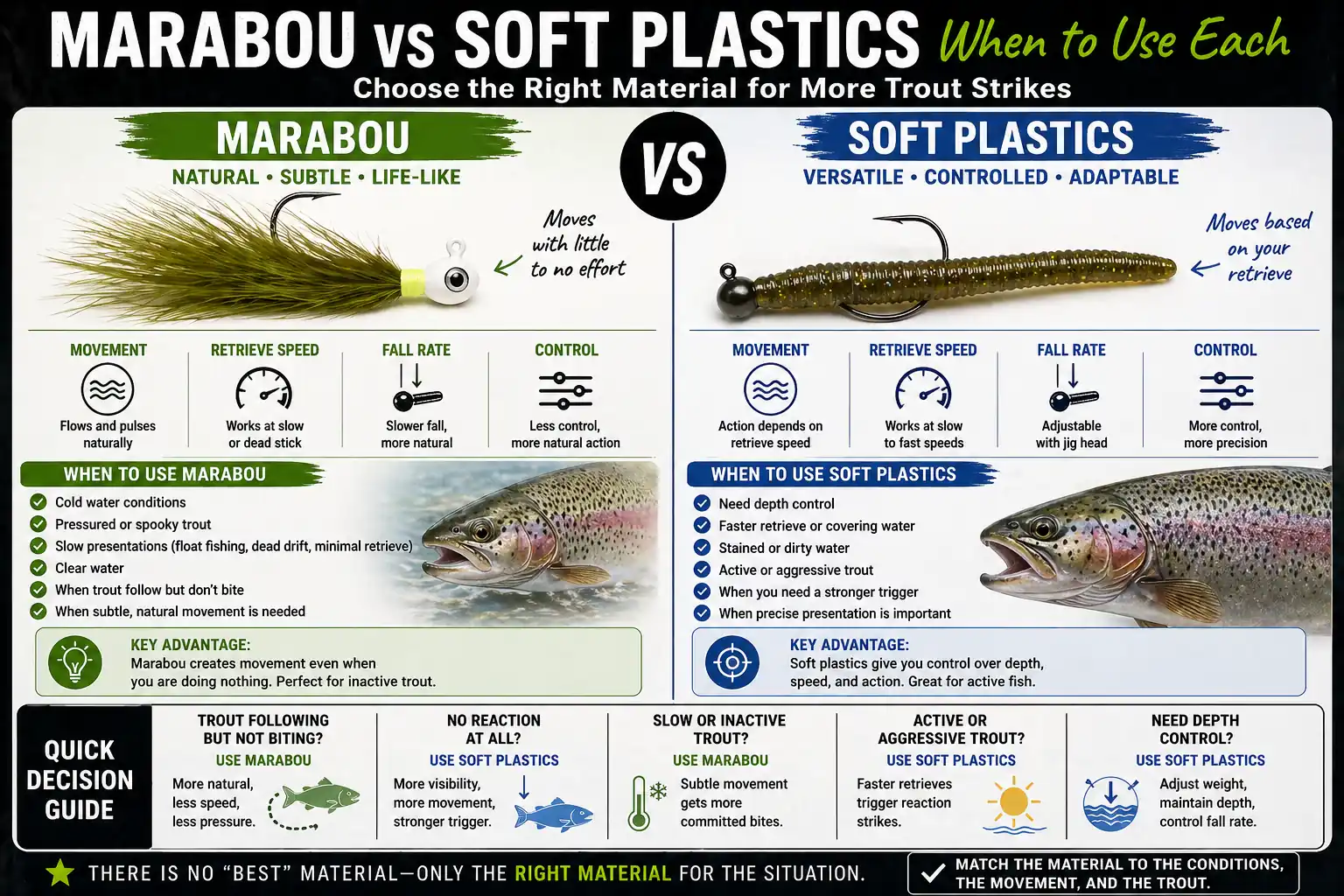
In high-DO riffle water, baits need to get down through the turbulence and into the fish’s holding zone, which is usually just off the bottom or in the lower third of the water column where current is slower. A light jig head that drifts naturally through the seams at riffle edges is often more effective than a heavier head that drops too fast and drags unnaturally across the bottom. Our garlic-scented ribbed trout worms rigged on a 1/80 oz head will drift through riffle water in a way heavier presentations cannot, staying in the strike zone long enough for a fish that is positioned for oxygen but willing to eat if the bait passes close enough naturally.
The scent component also matters in riffle water. Fast water disperses scent rapidly, but it also carries scent downstream through a wider column than still water does. A garlic-scented bait entering a riffle at the head puts a scent plume through the entire run below it — which is exactly where the fish are holding. Still-water presentations rely on the fish finding the bait visually. Riffle presentations benefit from the scent reaching fish before the bait is even in view.
A Field Checklist: Reading DO Without a Meter
A DO meter is useful but not necessary for applying this science on the water. The following observations give you reliable DO information without instruments.
Water temperature tells you the saturation ceiling. Above 65°F, maximum possible DO is dropping and the margin for error shrinks. Above 70°F, even fully aerated water may be insufficient for large trout.
Water movement tells you actual DO relative to that ceiling. Fast, broken, turbulent water is closer to saturation than slow, flat water at the same temperature. A riffle in 65°F water has more DO than a pool in 65°F water.
Time of day in warm weather predicts the daily DO cycle. Dawn is the high point. Mid-afternoon is the low. The further into summer and the hotter the overnight temperatures, the more pronounced this swing.
Fish behavior tells you when DO has become the limiting variable. Trout in riffles when the pools look better. Trout near surface in warm, still conditions with no hatch. Trout stacked at a cold-water inflow regardless of whether there is any food there. Fish gulping or rolling at the surface in warm, calm water. All of these are oxygen signals, not feeding signals.
Water color and clarity correlate with BOD. Dark, tannic water in still conditions, algal blooms, and visibly decaying plant matter all signal high biological oxygen demand and potentially low DO. Clear, cold, moving water signals the opposite.
Tying It All Together: Temperature, Oxygen, and Time of Day
The best time of day to catch trout is not an arbitrary rule. It is the hour when temperature and dissolved oxygen are simultaneously closest to the trout’s optimal range. In summer, that hour is dawn — coldest water, highest DO, both variables at their daily best. In winter, that hour is early to mid afternoon — warmest water of a cold day, and DO is uniformly high regardless of time so temperature becomes the only variable that moves. In spring and fall, both variables are in range for most of the day, so the window is wide and forgiving.
Once you understand both mechanisms, you can stop following the clock and start following the conditions. A warm, humid August night that fails to cool the water means dawn DO recovery is shallow and the morning bite will be poor — even though the calendar says fish at dawn in summer. A cold, clear February afternoon when the sun has been hitting a south-facing bank for four hours may push a shallow flat to 50°F while the main river reads 43°F — and that flat will fish for a two-hour window before the sun drops and the temperature falls back. No rule of thumb captures that. But the underlying science does.
For the complete picture on how temperature sets the feeding windows, see our post on best water temperature for trout. For how these windows play out specifically with stocked fish in the days after stocking — when behavior is conditioned by hatchery life rather than pure survival biology — see when stocked trout actually eat. The three posts together form a complete system for understanding why trout feed when they feed and how to put yourself on the water at the right moment.
Frequently Asked Questions
What is dissolved oxygen and why does it matter for trout fishing?
Dissolved oxygen (DO) is oxygen gas (O₂) that has dissolved into water. Trout extract it through their gills to breathe — without it, they suffocate. Trout feed best at 9 mg/L and above, slow feeding below 7 mg/L, and stop feeding entirely below 6 mg/L. Low dissolved oxygen shuts down the bite regardless of bait, presentation, or time of day.
Why is fishing best in riffles during summer?
Riffles constantly mix water with the atmosphere, maintaining higher dissolved oxygen than still pools. In summer heat, pools become warm and oxygen-depleted while riffles stay better oxygenated. Trout are not necessarily feeding in riffles — they are holding there for oxygen. Presenting a natural-drifting bait like a garlic-scented ribbed trout worm through riffle seams puts you on fish that pools will not hold in summer.
Why is dawn the best time to fish for trout in summer?
Dawn is when water temperature is at its daily low and dissolved oxygen is at its daily high — both variables simultaneously at their most favorable for trout. Water cools all night, raising its oxygen-holding capacity. By dawn, temperature and DO have hit their best values of the day. This is the scientific reason behind the rule. For the full breakdown, see when stocked trout actually eat and best water temperature for trout.
Why does trout fishing die in the summer afternoon?
By mid-afternoon, water temperature has peaked and dissolved oxygen has hit its daily low. Both variables are simultaneously at their worst for trout. Large fish are most affected because their absolute oxygen demand is highest. This is the direct mechanism behind the time-of-day pattern — it is not about light or angler pressure; it is about temperature and oxygen working against the fish’s physiology together.
What does it mean when trout are rolling or surfacing in warm weather with no hatch?
This is an oxygen distress signal, not a feeding behavior. Trout gulping or rolling at the surface in warm, still water are trying to access the thin, oxygen-rich layer at the air-water interface. The fish are not rising to food. Water temperature above 68°F combined with this behavior means DO has dropped to a stressful level. Stop fishing and check the temperature. Fishing stressed trout in these conditions causes real harm, especially with catch-and-release.
Why do tailwaters fish well all day when other streams shut down in summer?
Tailwaters receive cold water from deep in a reservoir, released at the dam’s base. That cold water holds high dissolved oxygen year-round and keeps temperatures within the trout’s prime feeding range even in August. Because both temperature and DO stay favorable through the day, the trout do not have a compressed morning-and-evening window — they can and do feed at any hour. This is why tailwater fishing defies the time-of-day rules that govern natural freestone streams.
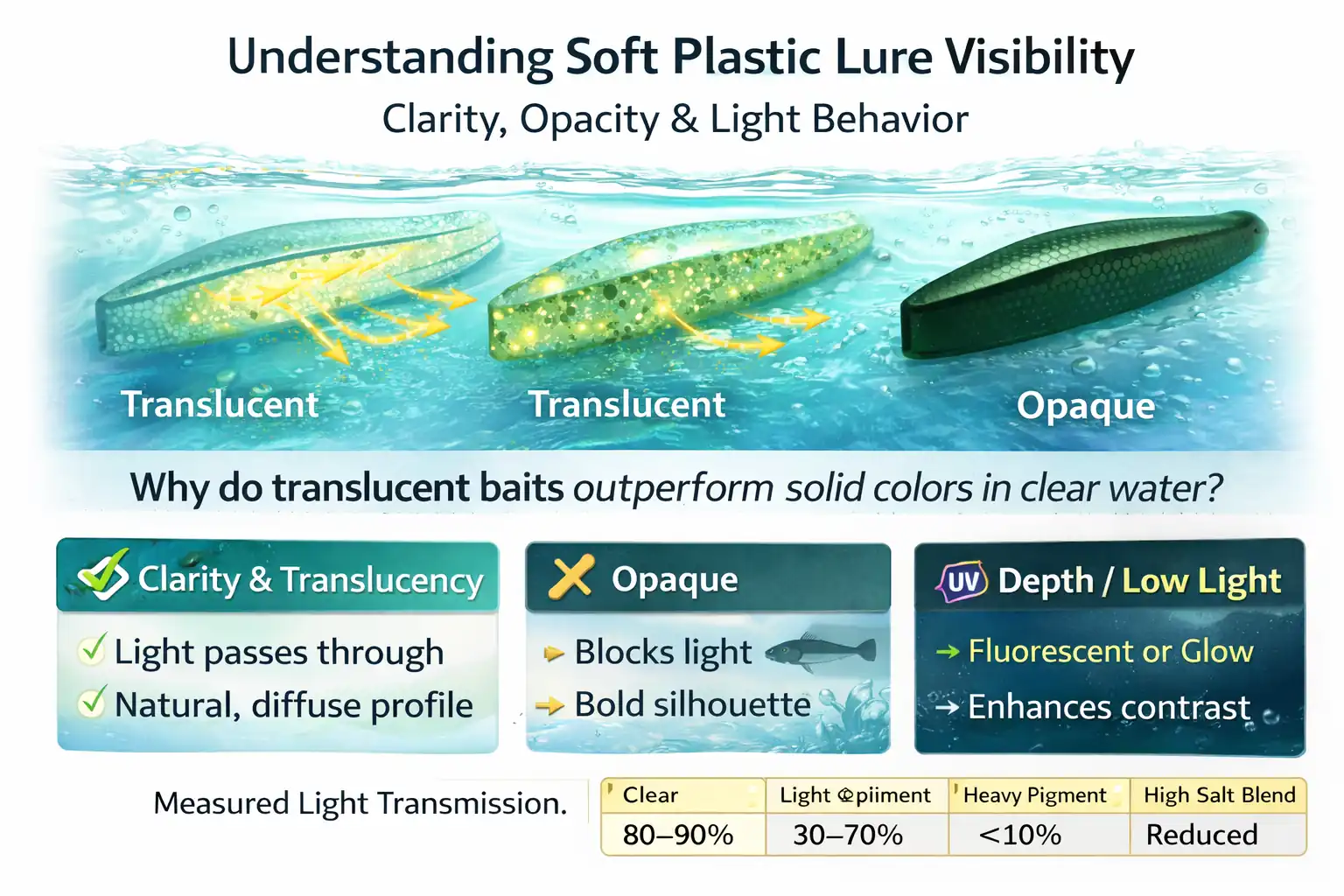
How does dissolved oxygen affect lure and bait selection?
In low-DO conditions, trout metabolism and strike response are suppressed. Even a willing fish may not chase a fast-moving lure because it cannot afford the oxygen cost of a high-speed pursuit. Slow, natural presentations — a soft plastic on a light jig head drifting naturally, or an egg pattern under a bobber — get more bites in marginal-oxygen conditions than active retrieves do. Scent becomes more important because it allows the fish to locate the bait without expending the energy of a visual chase. For seasonal color and presentation adjustments, see best trout worm colors for each season.