Part 7 — Soft Plastic Lure Selection System: How to Choose Baits That Consistently Catch Fish
A soft plastic lure selection system beats guessing every time — depth and strike zone first, then movement, then profile, and color only to confirm a decision you’ve already made.
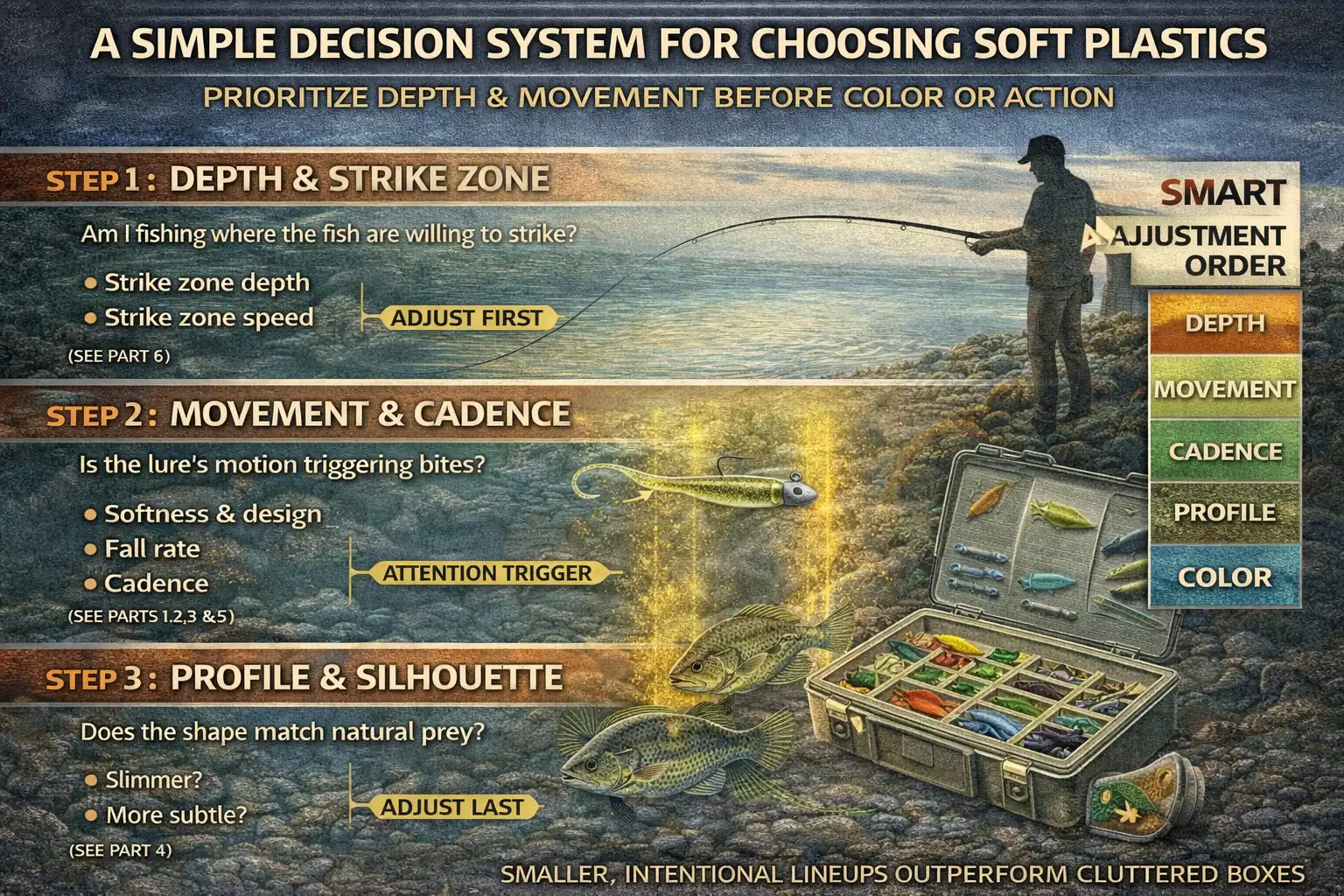
Soft Plastic Lure Selection System: The Decision Order
A soft plastic lure selection system removes guesswork by prioritizing depth, movement, profile, and color in the correct order.
At this point in the series, one thing should be clear: fish don’t respond to lures randomly. They respond to systems — even if anglers don’t always recognize them. Color, action, profile, fall rate, speed, cadence, and depth all matter — but not equally, and not all at once. The key is knowing which variable to prioritize first, based on conditions.
Step 1 — Start With Depth and Strike Zone
Before anything else, ask: Am I fishing where the fish actually are?
If the lure is above the strike zone, below the strike zone, or moving past fish too quickly — nothing else matters. Depth is the foundation. Always adjust depth before changing color or action. → See Part 6 — Lure Depth and Strike Zone
Step 2 — Choose the Right Movement First
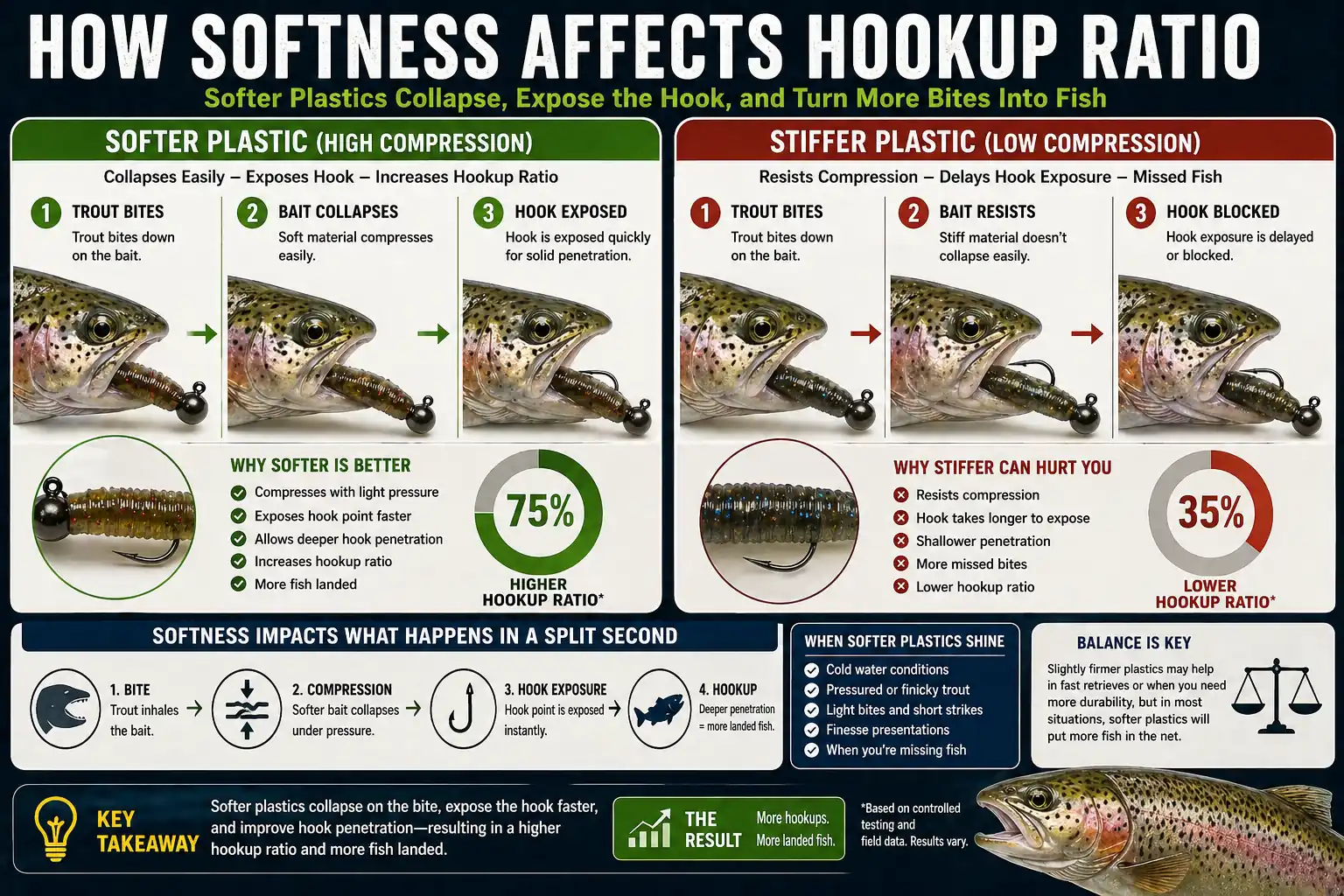
Once the lure is in the strike zone, movement becomes the primary trigger. Focus on: tail design, plastic softness, fall rate, retrieve speed, and cadence. Movement gets the lure noticed. If fish are not reacting at all, the issue is almost always movement, not color.
Step 3 — Match Profile and Silhouette to Conditions
After movement draws attention, fish evaluate shape. Ask: Is the profile too thick? Is the silhouette too aggressive? Does this match natural prey size? In clear or pressured water, reducing profile often works better than changing color. → See Part 4 — Lure Profile and Silhouette
Step 4 — Use Color for Confirmation, Not Attraction
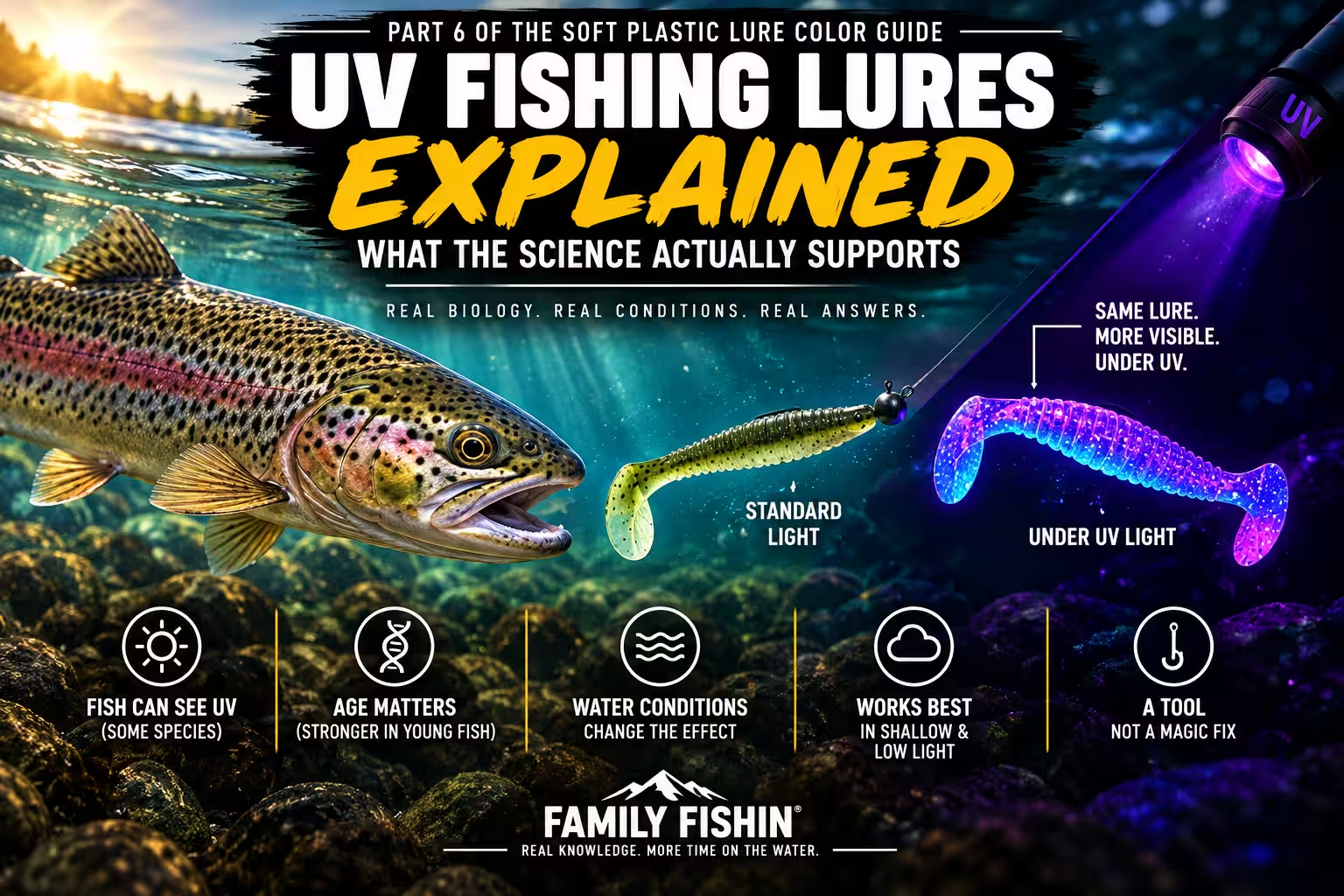
Color comes last, not first. At this stage, color improves visibility, adds realism, and helps fish commit. Prioritize contrast over exact color, natural tones in clear water, and strong contrast in low visibility. If fish follow but don’t strike, adjust profile or cadence before swapping colors.
The Most Common Mistake Anglers Make
Changing color repeatedly without fixing depth, movement, profile, or cadence. This creates the illusion of experimentation without solving the real problem. Most successful adjustments are small, not dramatic.
The Decision Order (Save This)
When fish aren’t biting, adjust in this order:
- Depth
- Movement
- Cadence
- Profile
- Color
Why Fewer Lures Often Catch More Fish
You don’t need dozens of colors or endless designs. A small, intentional lineup that covers different depths, different movement styles, different profiles, and a few contrast levels will outperform a cluttered box almost every time. Consistency beats variety.
Final Thought
Fish don’t care about color names. They don’t care about trends. They care about what they can detect, recognize, and intercept. Design — and fish — with the fish in mind, and results become far more consistent.
Previous: Part 6 — Lure Depth and Strike Zone Explained
Frequently Asked Questions About Choosing Soft Plastic Lures
What should I decide first when picking a soft plastic lure?
Depth and strike zone come first, before you even think about bait style. If your presentation isn’t reaching the zone where fish are actually holding, nothing about movement, profile, or color will matter — depth control has to be right before anything else.
Why does color come last in the decision order?
Because color confirms a presentation rather than creating one. Depth, movement, and profile determine whether fish even encounter and consider your bait — color just fine-tunes visibility once those bigger factors are already correct. Leading with color skips the decisions that actually matter most.
Is it better to carry more lure options or fewer, well-chosen ones?
Fewer, well-understood lures usually outperform a huge, unfocused collection. Knowing exactly how a handful of baits behave at different depths, speeds, and in different water conditions lets you make fast, confident decisions — rather than second-guessing which of twenty options to try next.
What’s the most common mistake anglers make selecting soft plastics?
Leading with color or bait style instead of depth and movement. Anglers often pick a lure because they like how it looks, then try to force it to work at the wrong depth or with the wrong retrieve — instead of starting from what the water and fish actually require.
How many soft plastics should I actually carry on the water?
Enough to cover a range of depths, fall rates, and profiles — not enough to spend more time deciding than fishing. A tight rotation of proven baits you understand deeply beats a tackle box full of options you’ve never really tested against real conditions.
Does this selection system apply to jigs as well as plain soft plastics?
Yes — the same order applies whether you’re fishing a plain soft plastic, a jig-and-plastic combo, or a marabou jig. Depth and strike zone still come first, movement and profile still follow, and color still only confirms the choice rather than driving it.