Part 4 — Lure Profile and Silhouette: Why Shape Matters More Than Color in Clear Water
Lure profile and silhouette matter more than color in clear water — the outline a fish sees against the light often decides whether it commits, long before color enters the equation.
Lure Profile and Silhouette: Why Shape Closes the Strike
Once a fish notices a lure’s movement, the next thing it evaluates is shape. Before color, before fine detail, fish see profile and silhouette — the outline a bait creates against its background. In clear water and pressured conditions, this outline often determines whether a fish commits or turns away. Two lures with identical action and color can get very different responses simply because their shape looks right — or wrong — to the fish.
What Is Lure Profile?
Lure profile is the overall shape and thickness of a bait as seen from different angles underwater. Profile includes: body thickness, length-to-width ratio, shape when viewed from the side, and shape when viewed head-on. Fish don’t see a lure the way anglers do from above. They usually see it from the side, from below, or at an angle against light — making silhouette extremely important.
What Is Silhouette?
Silhouette is how a lure’s profile appears in contrast to its background. A fish may not see color clearly, but it can easily detect: a dark shape against bright water, a thin shape against a light bottom, or an unnatural outline that doesn’t match prey. Silhouette is especially critical in clear water, shallow water, bright conditions, and pressured fisheries.
Thin vs Thick Profiles
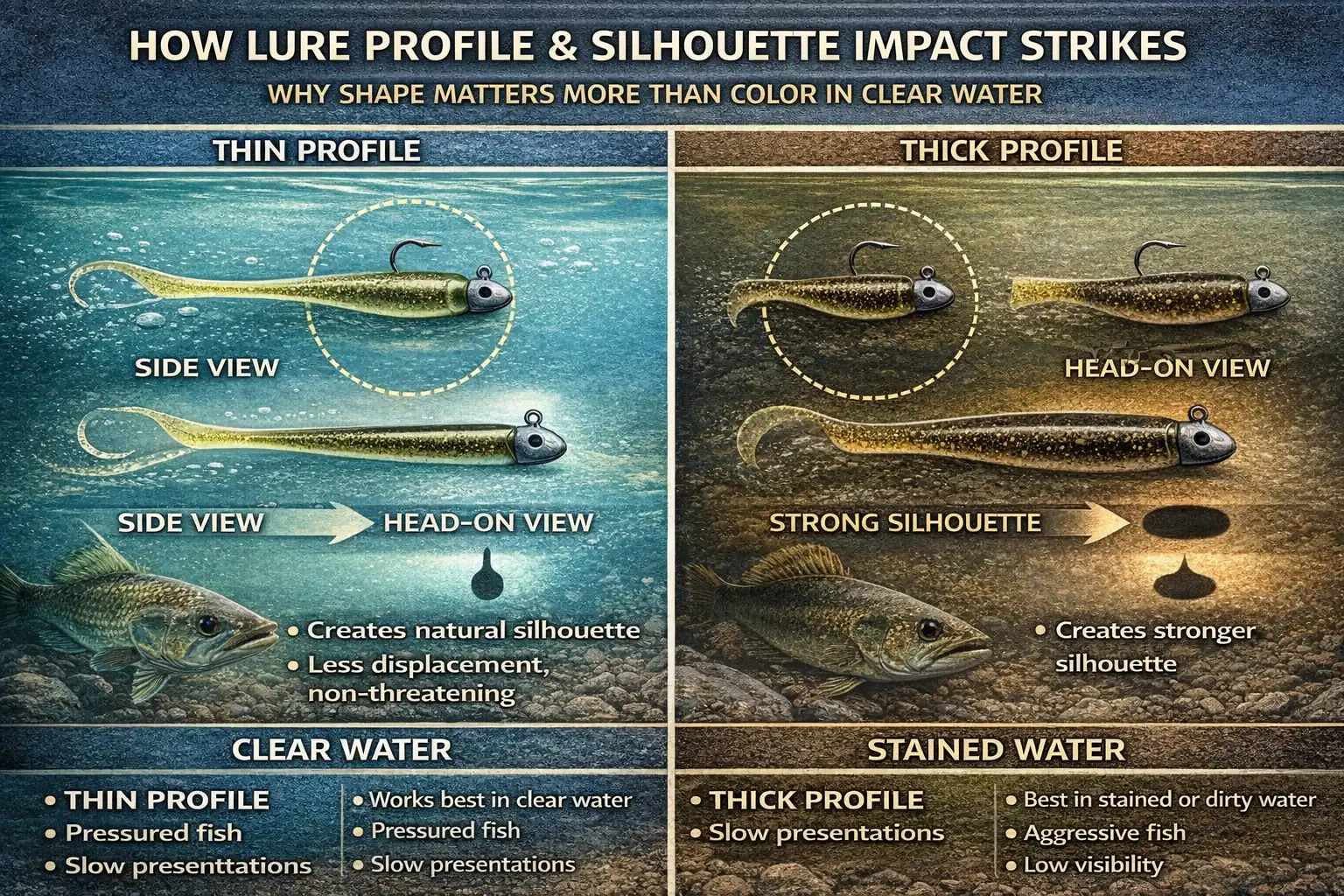
- Thin Profiles: Subtle visual presence, less water displacement, natural non-threatening appearance. Best when water is clear, fish are pressured or inspecting closely, presentations are slow or vertical. Thin profiles often get fewer follows but higher-quality strikes.
- Thick Profiles: Stronger silhouette, more visual presence, increased displacement. Best when water is stained, light is low, or fish are aggressive. In clear water, thick profiles can look bulky or unnatural when fish have time to inspect.
Why Profile Matters More in Clear Water
Clear water gives fish time to track the lure, evaluate its shape, and compare it to natural prey. In these conditions small profile differences matter, overly bulky shapes raise suspicion, and natural silhouettes outperform flashy designs. This is why downsizing profile often works better than changing color when fish follow but don’t strike. → See: Why Trout Follow But Don’t Bite
Side View vs Head-On View
Anglers think about how a lure looks from the side — but fish frequently approach from behind or below. A lure that looks good from the side may appear too wide head-on or look unnatural from below. Well-designed plastics maintain a consistent natural silhouette from multiple angles, increasing strike confidence.
Profile, Not Detail, Closes the Strike
Fine details like color flakes, minor markings, or exact color shades matter far less than shape, proportion, and overall outline. If the silhouette doesn’t look right, fish often refuse — even if everything else is correct. This explains many “they followed but wouldn’t eat” scenarios. → See: Why Trout Follow But Don’t Bite
Practical Takeaway
- Thin profiles excel in clear, pressured water
- Thicker profiles help in low visibility and aggressive conditions
- Silhouette often matters more than color detail
- When fish hesitate, reduce profile before changing colors
Previous: Part 3 — Soft Plastic Fall Rate Explained
Next: Part 5 — Scent Retention & Material Chemistry
Frequently Asked Questions About Lure Profile and Silhouette
What’s the difference between lure profile and silhouette?
Profile refers to the overall shape and thickness of a bait — thin versus thick, straight versus curved. Silhouette is what that shape looks like from the fish’s viewpoint, especially from below against light. Two baits with similar profiles can have very different silhouettes depending on how they’re rigged and how light hits them.
Should I choose a thin or thick profile for clear water?
Thinner profiles generally read as more natural in clear water, where trout have time to inspect a bait closely and are more likely to key in on an unnaturally bulky shape. Thicker profiles have their place in stained water or when targeting more aggressive, less selective fish.
Does the angle a fish sees my bait from matter?
Yes — a side view and a head-on view of the same bait can look completely different to a trout. A profile that looks convincing from the side might present a thin, unconvincing silhouette head-on, which is part of why retrieve angle and presentation direction affect strike rates.
Does profile matter as much once water gets stained?
Less so — in stained water, contrast and vibration tend to matter more than fine silhouette detail, since trout are relying less on close visual inspection and more on detecting movement and outline at closer range. Profile still matters, just less than it does in clear water.