Part 3 — Soft Plastic Fall Rate Explained: How Softness, Salt, and Density Control Movement
Soft plastic fall rate explained simply: softness, salt, and density all control movement together, and weight alone can’t fix a fall rate that’s wrong for cold water or a pressured fish.
Soft Plastic Fall Rate Explained: Softness, Salt, and Density
Most anglers notice how a soft plastic moves horizontally. Fewer pay attention to how it falls. In cold water especially, fall rate often determines whether a fish commits — or ignores the bait entirely. And fall rate is controlled less by weight than by plastic softness, salt content, and density. Two baits with the same jig head can sink very differently.
Why Soft Plastic Fall Rate Matters in Cold Water
Cold water slows fish metabolism. Fish still feed, but they prefer short strike windows, slow controlled movement, and easy opportunities. A bait that falls too fast exits the strike zone quickly and forces fish to chase. A bait that falls slowly stays visible longer, looks vulnerable, and gives fish time to commit. This is why fall rate becomes more important as water temperatures drop.
Plastic Softness: Movement vs Control
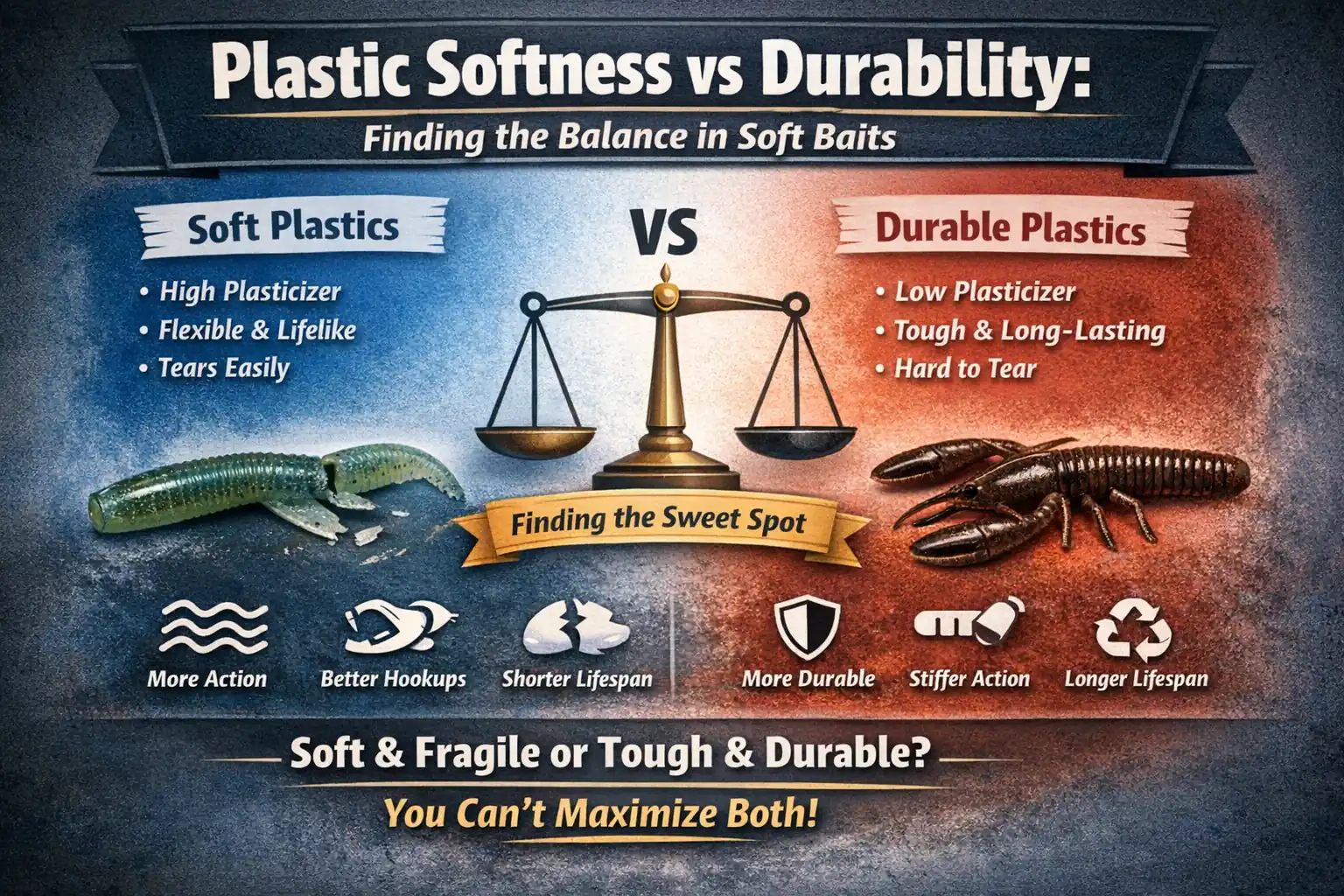
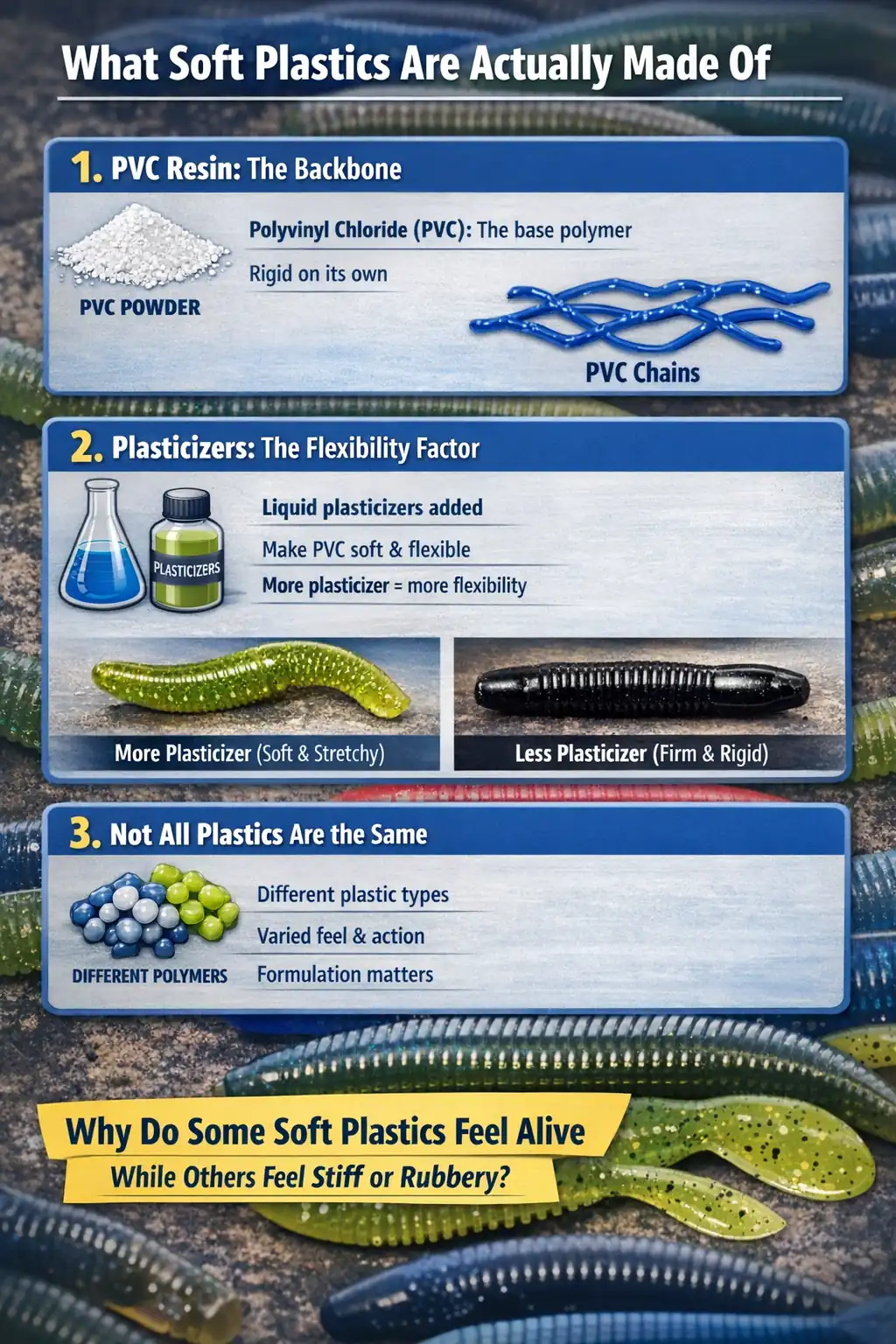
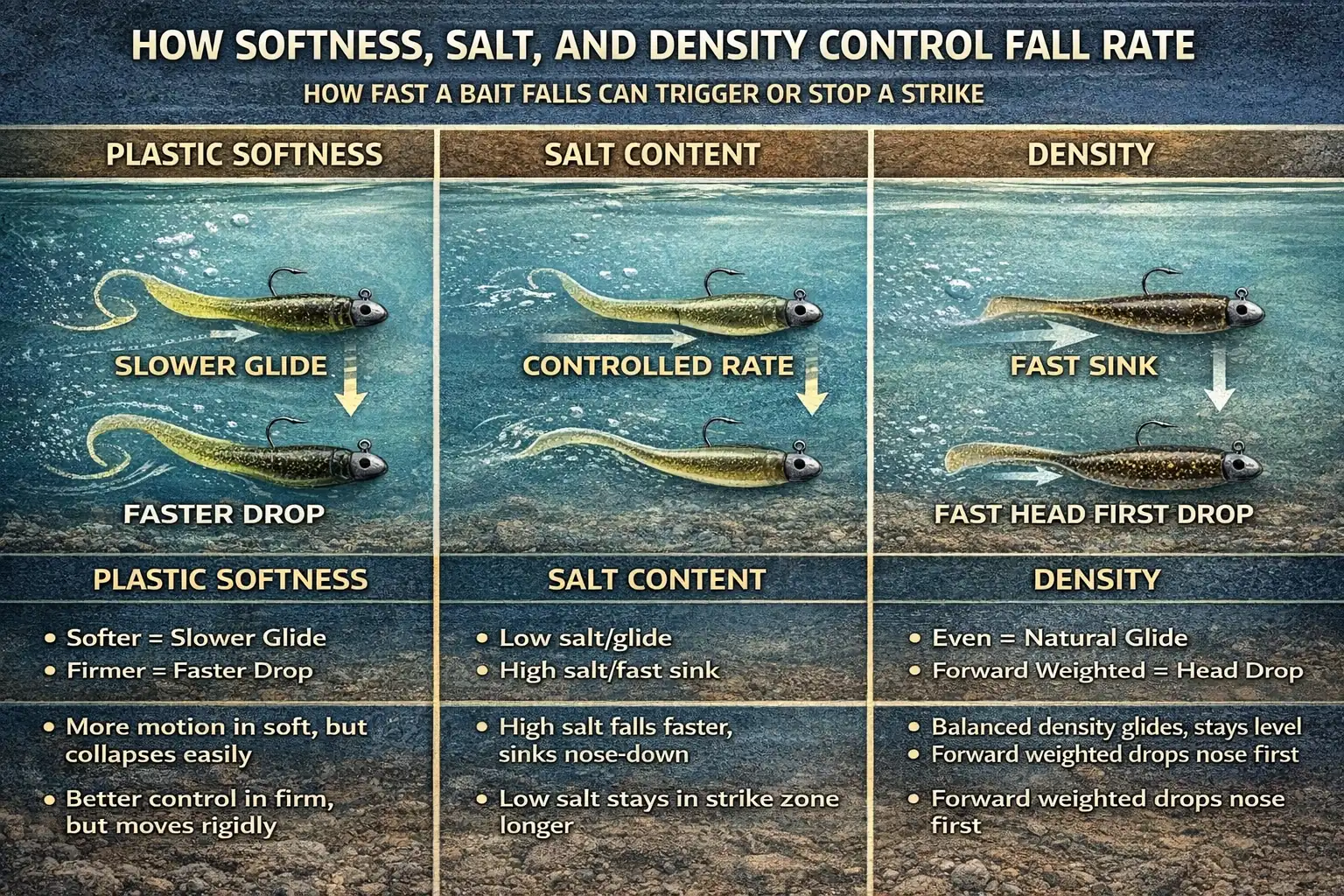
- Softer Plastics: Bend and flex easily, move with minimal current, look alive at slow speeds. Excellent for cold water and close inspection — but can collapse on the fall if too soft.
- Firmer Plastics: Hold shape better, resist water pressure, fall more directly. Better profile definition and more control in current — but require more movement to activate and can look rigid in cold water.
Salt Content: Weight Without Looking Heavy
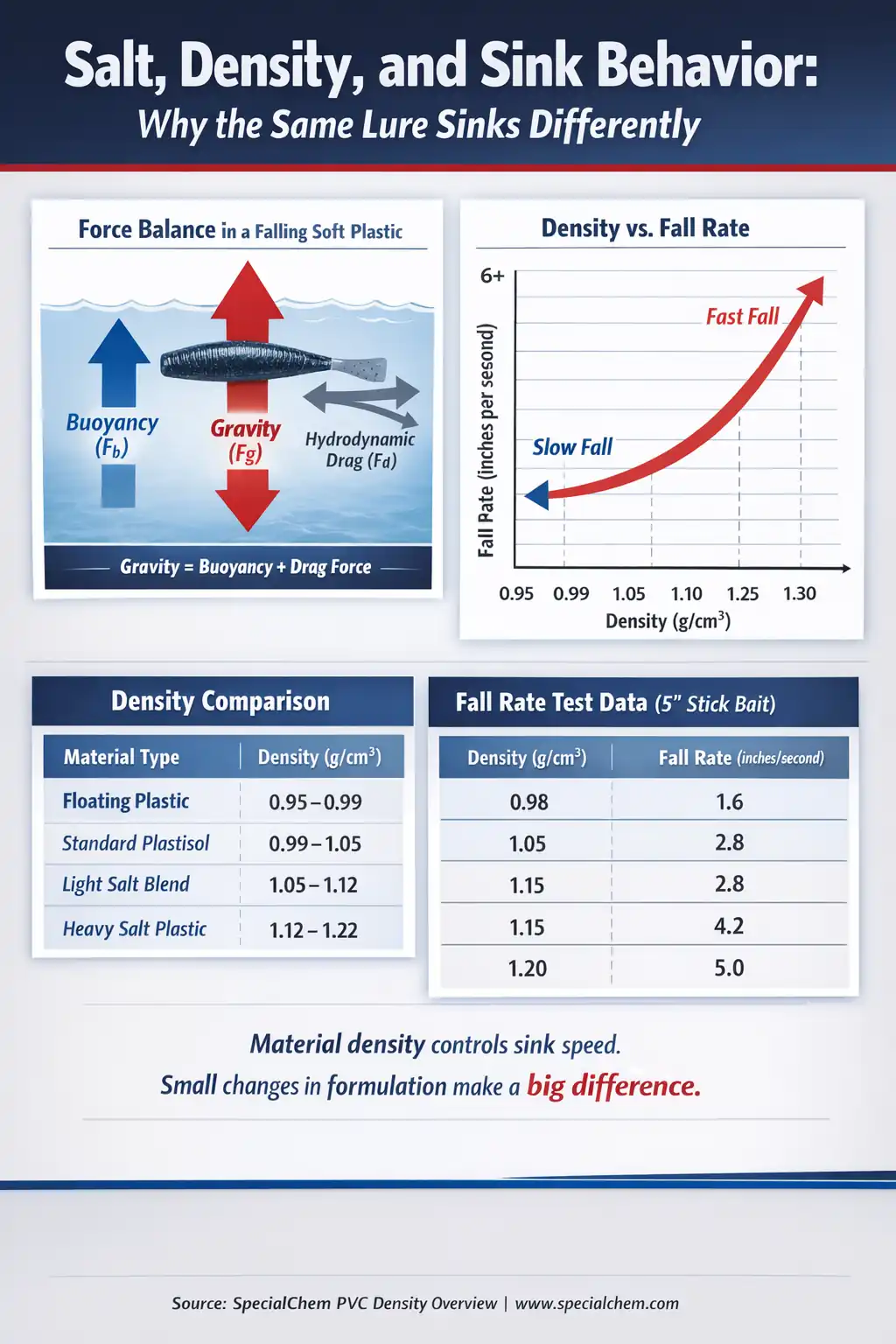
- High-Salt Plastics: Sink faster, feel heavier to fish, often fall nose-down. Effective when fish are aggressive or depth control is critical — but in cold water, too much salt can pull the bait out of the strike zone and reduce glide.
- Low-Salt or No-Salt Plastics: Sink slowly, glide or hover, stay in the strike zone longer. Excel when fish are suspended, presentations are vertical, or fish are following but not committing.
Density: The Hidden Variable
Density is how mass is distributed through the bait — not just how heavy it is. Two baits can weigh the same but behave very differently underwater. Density affects whether the bait glides or drops, how stable it is on the fall, and whether it rolls, flutters, or stalls. A well-balanced plastic falls evenly, maintains its profile, and looks controlled and intentional. This is why some baits feel “dead” even when the design looks good — the internal balance isn’t right.
Why Weight Alone Doesn’t Fix Fall Rate
Many anglers try to fix fall-rate problems by changing jig head weight, adding split shot, or switching rods. While weight matters, it doesn’t change how the plastic interacts with water. If the plastic collapses, drops too fast, or loses profile — no amount of weight adjustment will fully fix it. Fall rate is a design problem, not just a rigging problem.
Practical Takeaway
- Softer plastics move easily but must maintain shape
- Lower salt allows slower, more controlled falls
- Balanced density creates glide and stability
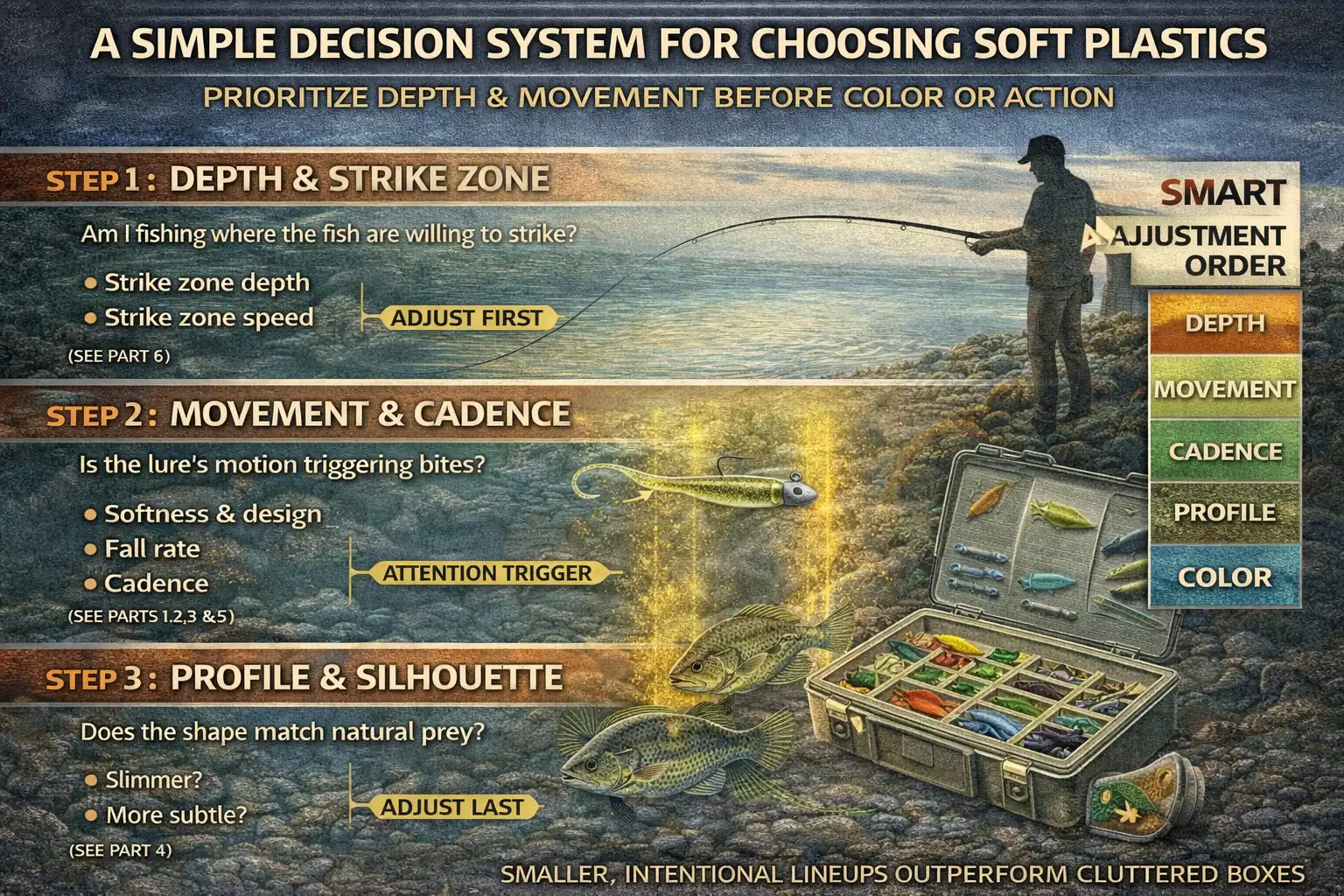
- Fall rate often matters more than retrieve speed in cold water
When fish follow but won’t strike, pay attention to how the bait behaves between movements — not just when it’s moving. → See: Why Trout Follow But Don’t Bite
Previous: Part 2 — Tail Design: Why Shape Controls Movement More Than Retrieval
Next: Part 4 — Lure Profile and Silhouette
Frequently Asked Questions About Soft Plastic Fall Rate
Why doesn’t a heavier jig head always fix a slow fall rate?
Because jig head weight is only one part of the equation — the plastic’s own softness, salt content, and density all affect how it falls too. A heavier head paired with a soft, buoyant plastic can still fall slower than expected, since the bait itself resists sinking.
Why does fall rate matter more in cold water specifically?
Cold water slows trout metabolism, meaning fish are less willing to chase a fast-falling bait and more likely to commit to something that drops slowly and stays in range longer. Getting fall rate right matters everywhere, but the margin for error shrinks considerably in cold water.
How can I test a bait’s fall rate before fishing it?
Drop it in still water — a bucket, sink, or calm shoreline — and watch how it falls. A bait that spirals erratically or drops too fast to track visually will behave the same way in the water column when trout are watching, so this simple test tells you a lot before you ever cast.
Does fall rate matter for retrieve fishing, or only vertical jigging?
It matters for both. On a retrieve, fall rate affects how the bait behaves between rod movements and on the pause; on a vertical presentation, it’s the entire action. Either way, a fall rate mismatched to conditions makes the bait look unnatural regardless of how you’re fishing it.