How Softness Affects Hookup Ratio
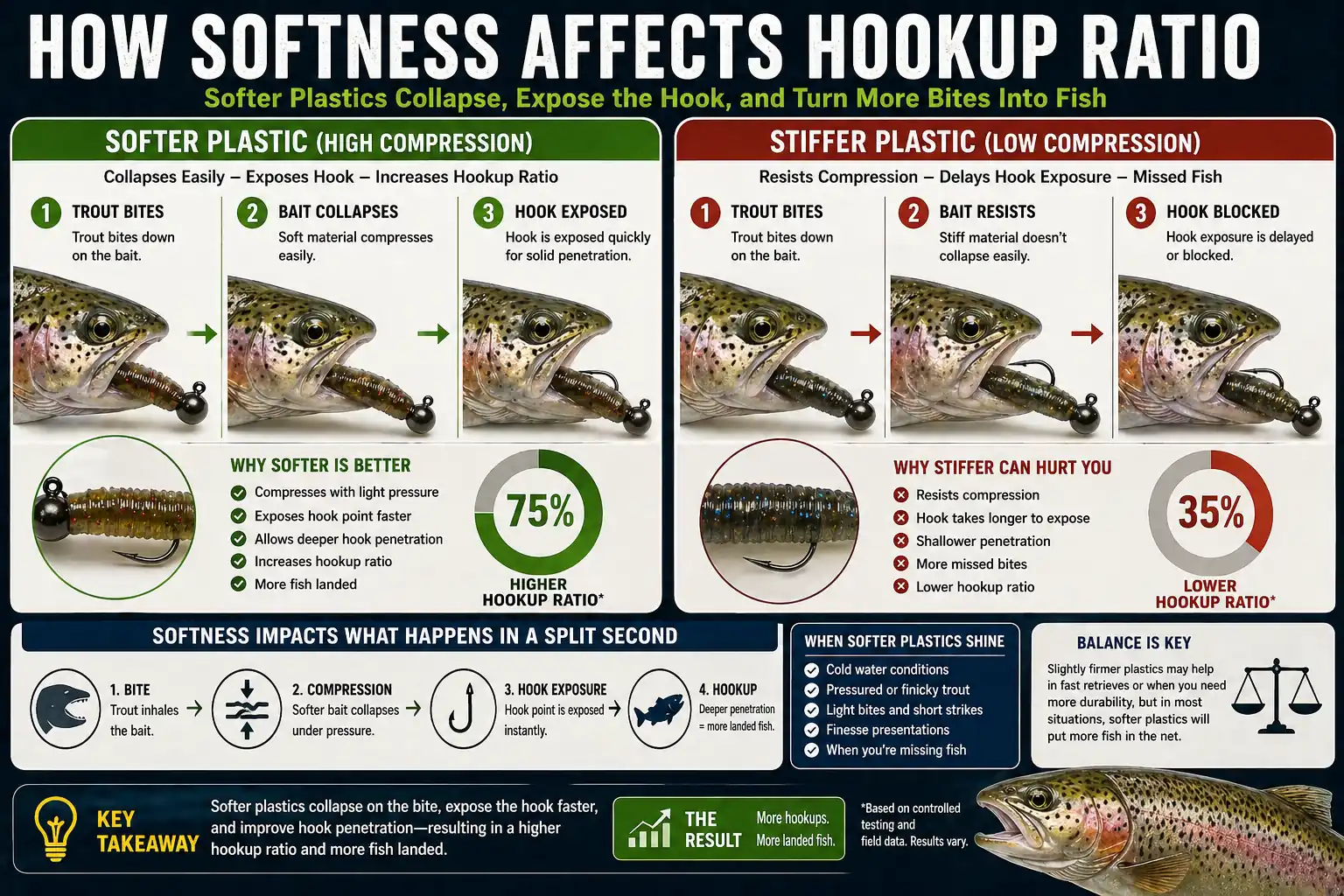
How softness affects hookup ratio comes down to this: softer plastics collapse on the bite and expose the hook faster, increasing hookup ratio compared to stiffer baits that resist compression.
(Why Material Matters More Than Most Anglers Realize)
Most anglers focus on color, size, and jig head weight — but ignore a critical factor that directly determines whether a fish gets hooked: material softness. Softness affects what happens after the strike: whether the hook penetrates, how easily the bait collapses, and how long the fish holds on.
If your bait is too stiff: trout may strike but not get hooked, bites feel light or missed, and hookup ratio drops. Understanding how softness affects hookup ratio allows you to turn more bites into landed fish.
This guide is part of a complete trout fishing system that explains how material, size, fall rate, and presentation work together. → Start with the complete trout fishing system
What Is Hookup Ratio?
Hookup ratio is the percentage of bites that result in a hooked fish. A high hookup ratio means efficient hook penetration and solid strikes. A low hookup ratio means missed fish, short strikes, and poor bait performance.
How Softness Affects Hookup Ratio
Softness controls how easily a bait compresses when a trout bites.
- Soft Materials: Collapse easily, expose the hook quickly, allow deeper bites. Result: higher hookup ratio.
- Stiff Materials: Resist compression, block hook penetration, reduce hook exposure. Result: more missed strikes.
Why Trout Behavior Makes Softness Critical
Trout often bite lightly, inspect before committing, and spit quickly. This means you have very little time to set the hook. If the bait does not collapse instantly, the hook never reaches the fish.
Softness vs Hook Exposure
- Soft Baits: Compress on contact, expose hook immediately.
- Stiff Baits: Delay exposure, require more pressure. In many cases, trout do not apply enough force.
| Softness Level | Effect on Hookup Ratio |
|---|---|
| High Softness | Better hook penetration, higher conversion rate, more landed fish |
| Low Softness | More missed fish, short strikes, poor performance in pressured conditions |
When Softer Plastics Perform Best
- Cold Water: Trout are less aggressive. Soft baits require less force and improve hookups.
- Pressured Trout: Fish become cautious. Soft materials feel more natural and increase hold time.
- Light Bites: When strikes are subtle, softness becomes critical.
When Slightly Firmer Plastics Can Help
- Fast Retrieve Situations: Firmer plastics hold shape better and maintain action at speed.
- Durability Needs: Soft baits tear more easily. Firmer baits last longer.
Tradeoff: Softer = better hookup. Firmer = better durability.
Softness vs Fall Rate
Softness also affects fall behavior. Softer plastics fall slower with more natural movement. Firmer plastics fall faster with less natural action. → See: How to Choose Jig Head Weight for Trout
Softness vs Size and Profile
Softness changes how a bait behaves at different sizes. Large soft baits collapse easily. Small stiff baits can feel rigid. This means size and softness must be balanced. → See: Best Trout Worm Size (When Size Matters)
Softness vs Material Choice (Marabou vs Plastics)
Marabou is always soft with natural movement and high conversion. Soft plastics vary in softness but allow more control. → See: Marabou vs Soft Plastics for Trout
How to Choose the Right Softness (Step-by-Step)
- Step 1 — Observe the Bite: Missing fish → too stiff. Solid hookups → correct.
- Step 2 — Adjust Material: Switch to softer plastic when missing strikes.
- Step 3 — Match Conditions: Cold/pressured → softer. Aggressive/fast → slightly firmer.
- Step 4 — Balance With Other Variables: Softness must align with size, weight, and speed.
Signs Your Bait Is Too Stiff
- Frequent missed bites
- Fish bumping without hooking
- Short strikes
Signs Your Bait Softness Is Correct
- Solid hookups
- Deeper hook placement
- Fewer missed fish
Common Mistakes
- Choosing durability over performance
- Ignoring missed strikes as a softness signal
- Not adjusting material softness between sessions
- Focusing only on color when hookup ratio drops
The Real Pattern
Most anglers think: missed fish = bad hookset. In reality: material softness is often the limiting factor. If fish are biting but not getting hooked, softness is likely the problem.
Frequently Asked Questions About Softness and Hookup Ratio
How can I tell if my bait is too stiff?
Watch for fish bumping the bait without getting hooked, short strikes where the fish lets go almost immediately, or missed bites that felt solid but produced nothing. That combination is the clearest sign your material is resisting compression instead of collapsing on the bite.
Does softness matter more than hook sharpness?
They work together, not against each other. A sharp hook still needs to be exposed to penetrate — if a stiff bait blocks that exposure, sharpness alone won’t fix the missed strikes. Check softness first if you’re confident your hooks are in good condition.
Can I make a firm bait softer, or do I need to switch materials?
You need to switch materials. Softness is a property of the plastic itself, set during manufacturing — there’s no reliable way to soften a bait after the fact without damaging its structure or action.
Is a softer bait always the right choice?
No. Softer plastics improve hookup ratio but tear more easily and can lose shape during a fast retrieve. In situations demanding durability or maintained action at speed, a slightly firmer plastic is the better trade-off, even at some cost to hookup ratio.
Summary
Material softness is one of the most important — but overlooked — factors in trout fishing. Softer plastics increase hookup ratio and improve strike conversion. Firmer plastics increase durability and maintain structure. The key is balance. When you understand how softness affects hookup ratio, you turn more bites into landed fish.
To understand how material softness fits into the full approach, see the → complete trout fishing guide
Recommended Next Reads
- How to Choose Jig Head Weight for Trout
- Best Trout Worm Size (When Size Matters)
- Retrieve Speed for Trout Fishing
- Marabou vs Soft Plastics for Trout
- How Water Clarity Affects Trout Fishing