Best Trout Worm Colors for Stocked Trout (Clear Water & Pressure Guide)
Stocked trout behave differently than wild fish. They’re raised on feed, dumped into pressured water, and immediately exposed to artificial lures. Because of that, color selection becomes more predictable — and more important.
Why Color Matters More for Stocked Trout
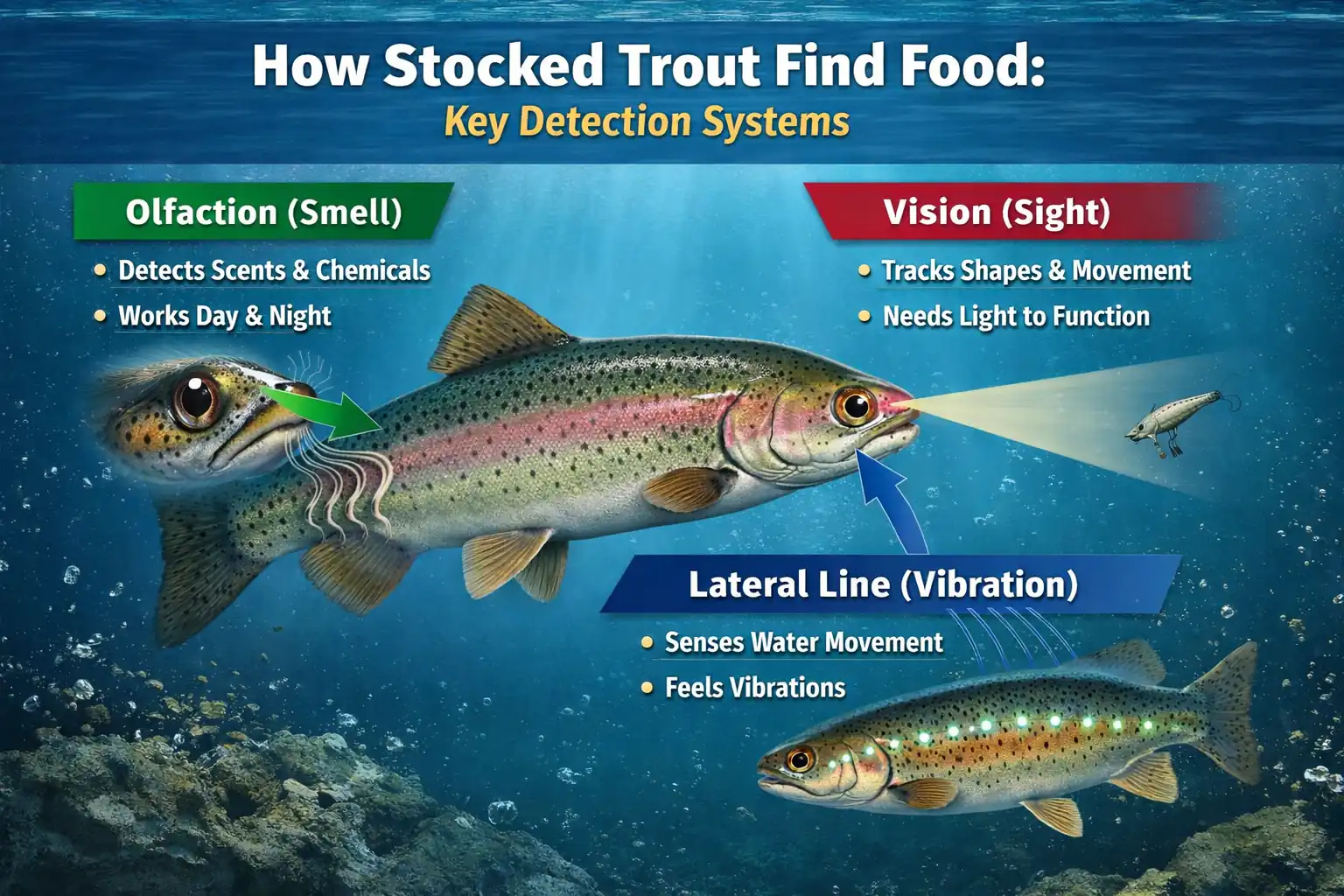
Stocked trout are conditioned to look up and react quickly, often feed in open water, and can become lure-shy within days. Unlike wild trout that key heavily on natural forage, stocked fish often react to flash, UV brightness, high contrast, and familiar pellet-like tones. Color choice can determine whether you get follows or actual commitments.
Best Trout Worm Colors in Clear Water
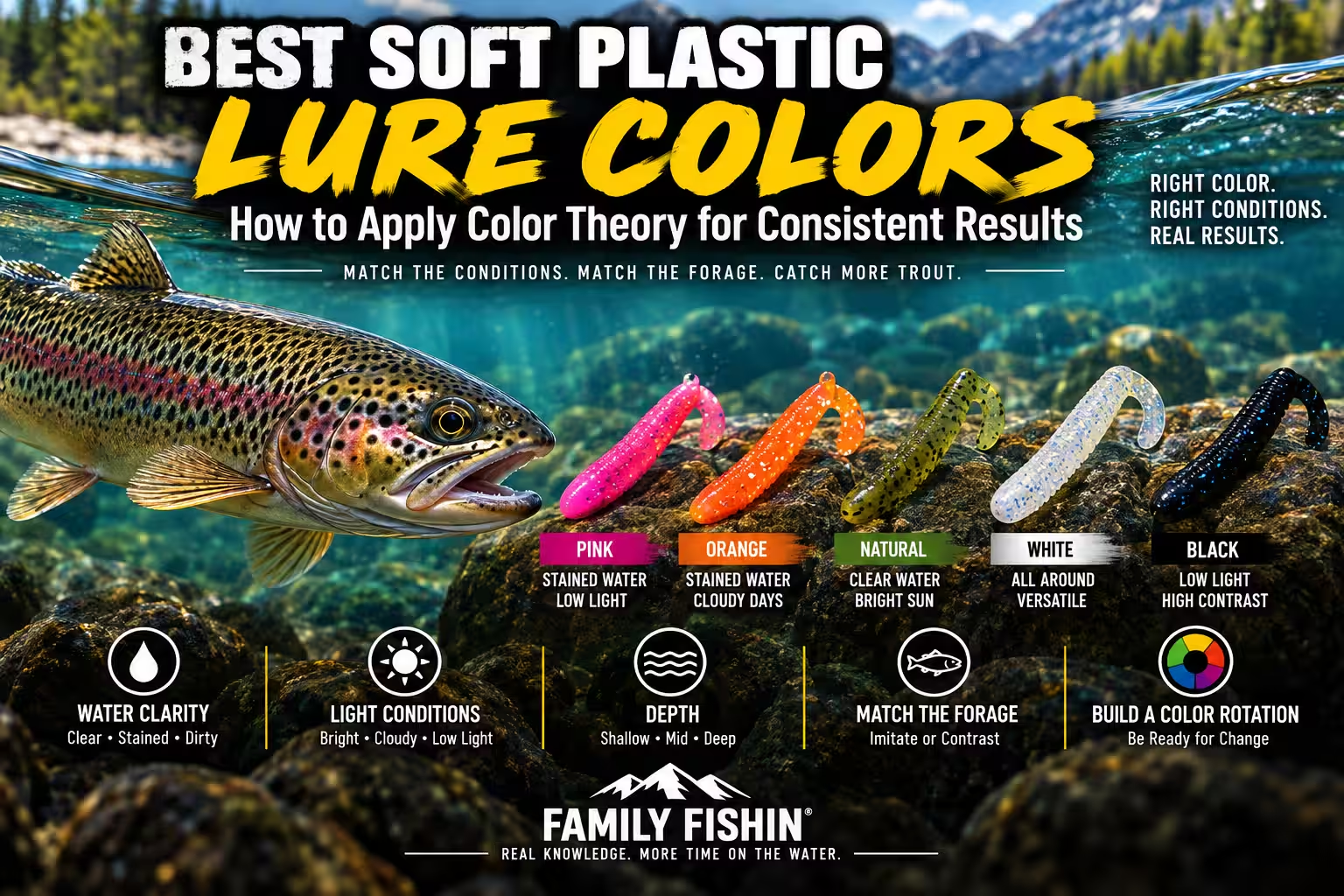
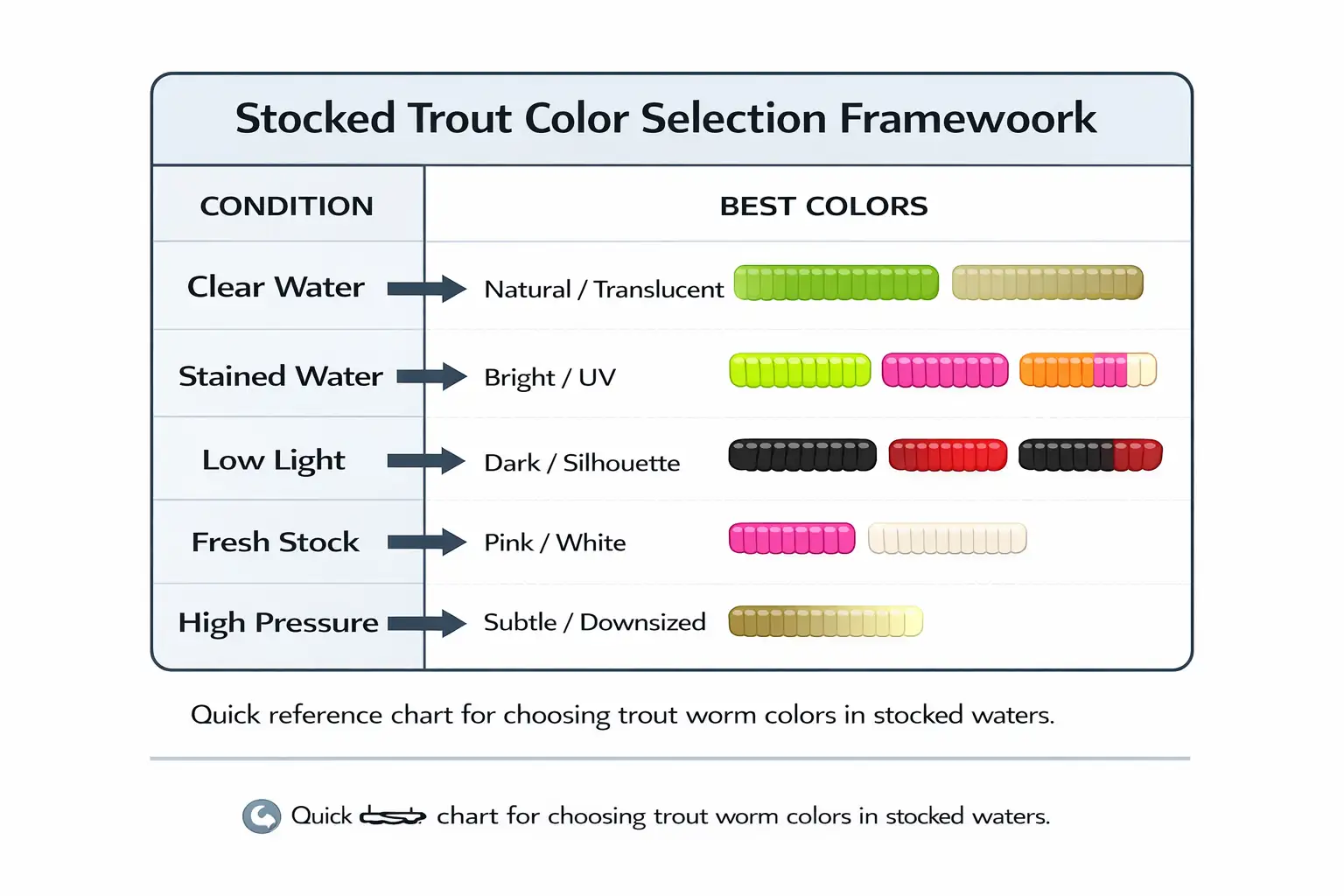
In freshly stocked, clear ponds or streams, trout can see extremely well. Top Colors: Pink, White, Peach, Light Natural (translucent brown or olive). Pink and white mimic hatchery feed visibility. Natural translucent tones resemble emerging forage. Light colors remain visible without overpowering cautious fish. If fish are cruising slowly, downsizing to subtle shades often increases bite-to-follow ratio.
Best Trout Worm Colors in Stained Water
After rain, runoff, or heavy fishing pressure, visibility drops. In low visibility, contrast becomes more important than exact shade — fish detect silhouette before fine color detail. Top Colors: Chartreuse, Orange, Bright Pink, Two-tone contrast (orange/white or chartreuse/white). Chartreuse and orange create short-wave brightness. Two-tone worms provide contrast and flash. Subtle natural tones often disappear in stained conditions.
Low-Light & Cold-Water Conditions
Top Colors: Black, Nightcrawler brown, Red, Black/Red two-tone. Dark silhouettes stand out against the surface. Red penetrates shallow water well before fading at depth. Two-tone combinations add reaction contrast. When fish are lethargic, silhouette matters more than flash.
How Pressure Changes Color Preference
- Day 1–2 after stocking: Bright pink and white dominate
- Day 3–5: Fish begin rejecting loud colors — natural and translucent shades improve
- After heavy pressure: Contrast and subtle presentation outperform aggressive brightness
Rotating colors instead of changing lure profile often keeps bites steady.
Quick Color Selection Framework
- Start bright in fresh stocking or stained water
- Switch to natural tones if fish follow but don’t commit
- Use dark silhouette colors in low light
- Rotate every 10–15 casts if activity slows
Most anglers change location too quickly — often the fix is a color adjustment first.
The Pattern
- Bright for visibility
- Natural for pressure
- Dark for silhouette
- Two-tone for contrast
Understanding when to rotate between those categories is what separates random luck from consistent production. → See the complete trout fishing system