How Water Clarity Affects Trout Fishing (And How Trout See Your Lure)
Understanding how water clarity affects trout fishing is critical because it determines how trout see your lure and whether they commit or refuse. Water clarity is one of the most important factors in trout fishing. It directly controls how trout see your bait, how long they inspect it, and whether they commit or refuse.
Most anglers adjust color randomly. The correct approach is to understand how water clarity changes trout vision — and adjust the full presentation accordingly. When you do this correctly: your bait becomes visible at the right distance, your presentation looks natural, and trout commit instead of following.
This guide is part of a complete trout fishing system that explains how visibility, size, fall rate, and movement work together. → Start with the complete trout fishing system
How Water Clarity Affects Trout Fishing
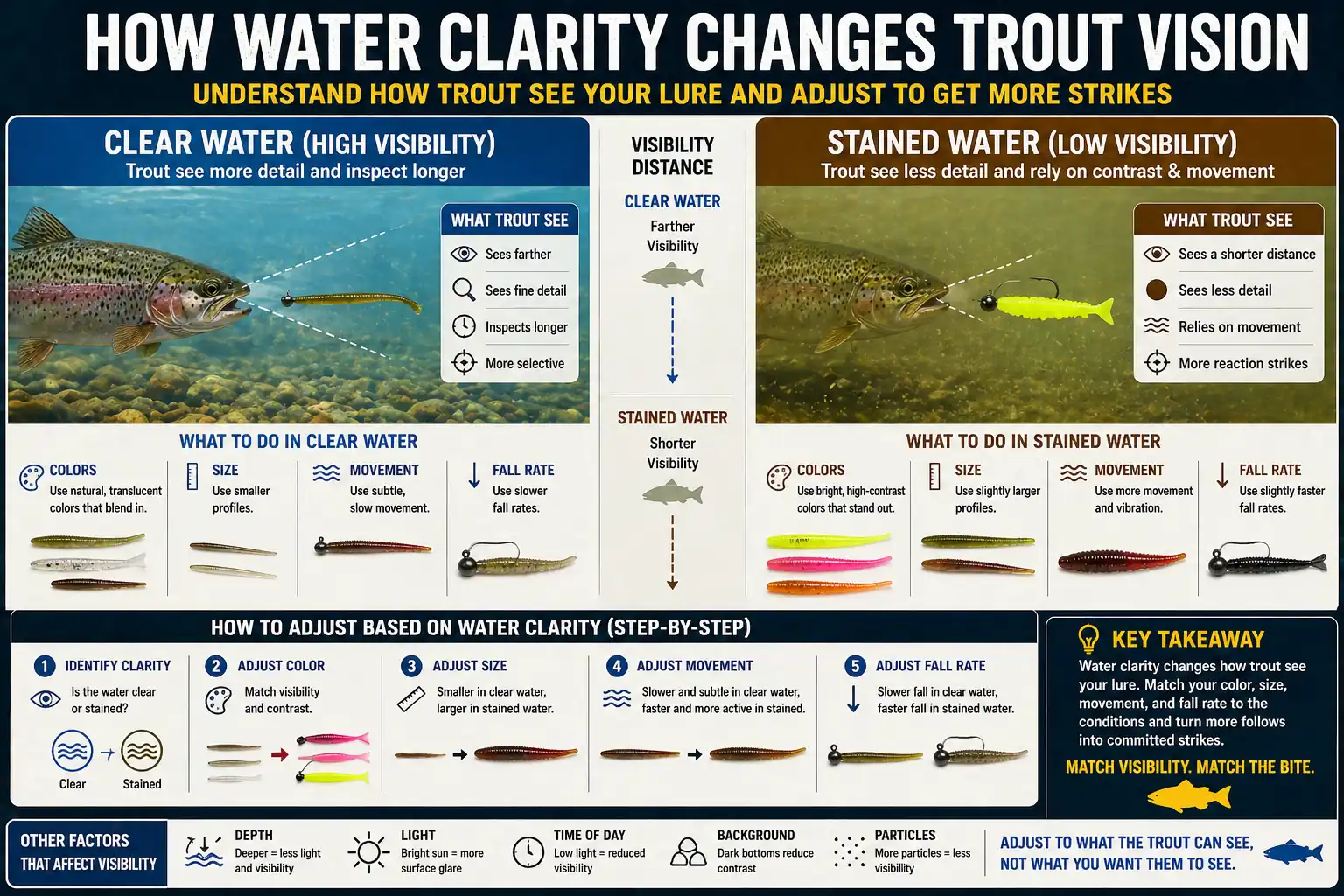
Trout rely heavily on sight. But what they see changes based on light penetration, suspended particles, depth, and background contrast. As water clarity changes: colors shift, visibility range changes, and detail perception increases or decreases. This directly affects how trout respond to your bait.
Clear Water: High Visibility, High Inspection
In clear water, trout see farther, detect fine details, and inspect longer — making them more selective.
Common Mistake: Using bright colors, oversized baits, and unnatural movement. These stand out too much.
Best Approach in Clear Water: Use natural, translucent colors, reduce size and profile, and slow down presentation. In high visibility, trout reject anything that looks unnatural.
Stained Water: Reduced Visibility, Increased Reaction
In stained water, visibility distance is reduced, detail is limited, and contrast becomes more important. Trout rely more on silhouette, movement, and vibration.
Common Mistake: Using subtle, natural colors. These become invisible.
Best Approach in Stained Water: Increase contrast, use brighter colors, and slightly increase bait size. In low visibility, trout need to detect your bait before they can evaluate it.
How Water Clarity Changes Strike Behavior
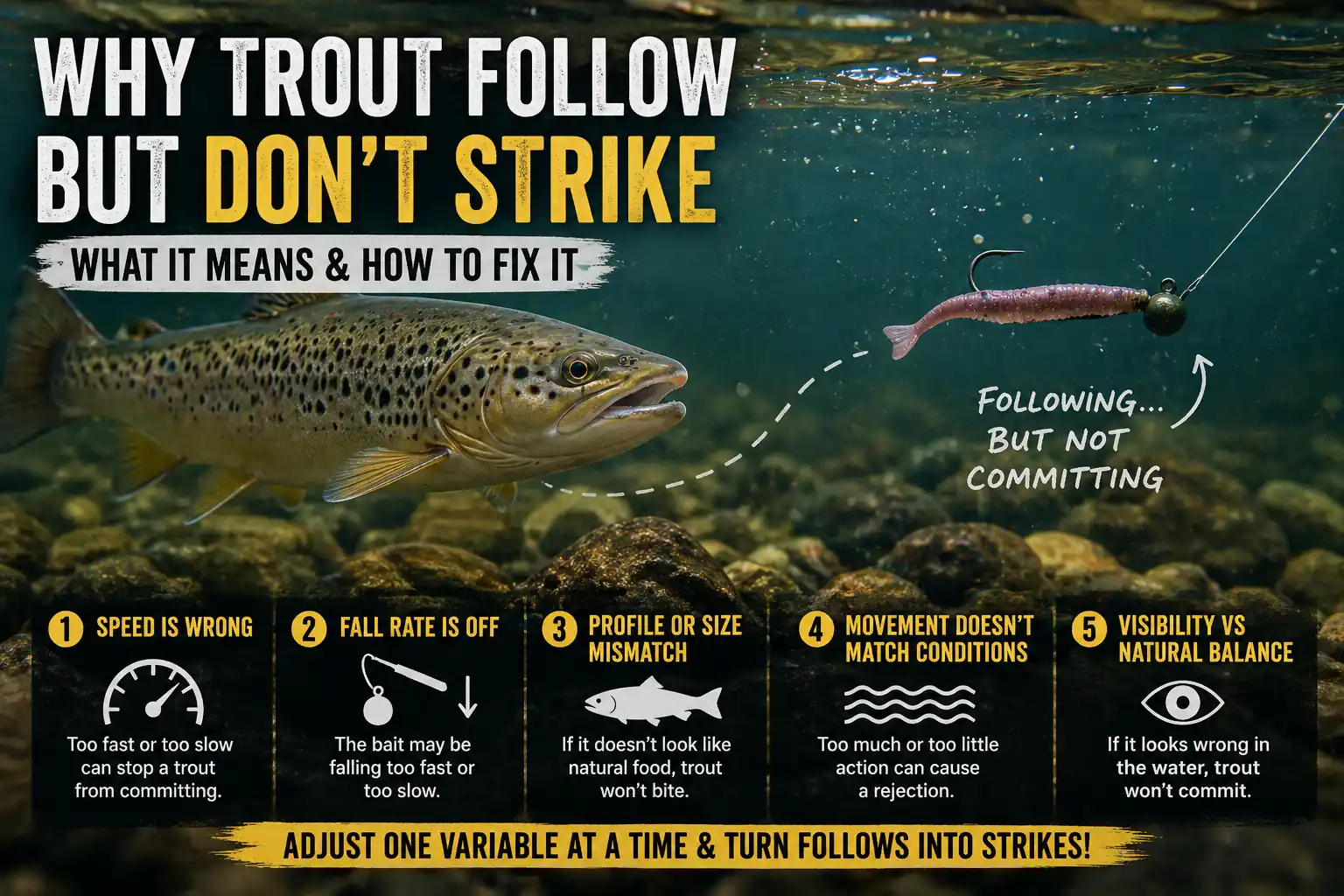
- Clear Water: Trout follow longer, inspect closely, more refusals. → See: Why Trout Follow But Don’t Bite
- Stained Water: Trout react faster, less inspection, more reaction strikes.
How Depth Affects Visibility
Even in clear water, depth reduces visibility. As depth increases, light decreases, colors fade, and contrast becomes critical. Red disappears first. Darker tones remain visible longer. This means deeper water often behaves like stained water — adjust accordingly.
How to Adjust Based on Water Clarity (Step-by-Step)
- Step 1 — Identify Clarity: Clear → high visibility. Stained → low visibility.
- Step 2 — Adjust Color: Clear water → natural, translucent. Stained water → bright, high contrast.
- Step 3 — Adjust Size: Clear water → smaller. Stained water → larger. → See: Best Trout Worm Size
- Step 4 — Adjust Movement: Clear water → subtle. Stained water → more aggressive. → See: Retrieve Speed for Trout Fishing
- Step 5 — Adjust Fall Rate: Clear water → slower. Stained water → slightly faster. → See: How to Choose Jig Head Weight for Trout
Water Clarity vs Lure Material
- Clear Water Best: Marabou or soft plastics with subtle movement. → See: Marabou vs Soft Plastics for Trout
- Stained Water Best: Soft plastics with stronger profiles and higher contrast.
Common Mistakes
- Using bright colors in clear water
- Using subtle colors in stained water
- Ignoring depth changes in clear water
- Adjusting only one variable (color) instead of the full system
The Real Pattern
Most anglers think color is the main factor. In reality, water clarity determines how trout see everything. If trout are following but not striking → too visible/unnatural. If not reacting → not visible enough.
Frequently Asked Questions About Water Clarity and Trout Fishing
How do I tell if water is “clear” or “stained” for trout fishing purposes?
If you can see the bottom clearly in 2 to 3 feet of water and make out details on your lure at that depth, treat it as clear water. If visibility drops to a foot or less, or the water has a visible tint, treat it as stained and adjust color and size up accordingly.
What’s the single biggest mistake anglers make with water clarity?
Only adjusting color and leaving everything else the same. Clarity should also change your bait size, movement, and fall rate — a bright color on an oversized, fast-moving bait in clear water still gets refused, because size and movement are just as visible as color.
Does water clarity change throughout the day?
Yes, especially after rain, wind, or heavy boat traffic that stirs up sediment. Check clarity periodically during a session rather than assuming it’s the same as when you started, particularly after a storm or on a day with fluctuating conditions.
How does depth interact with water clarity?
Even clear water loses visibility with depth as light penetration decreases. Red fades first, followed by other warm colors, while darker tones stay visible longer. This means fishing deep in clear water can call for the same adjustments you’d make in stained water near the surface.
Should I always use bright colors in stained water?
Generally yes, but bright alone isn’t enough — contrast and size matter just as much. A bright color that blends into a similarly bright background won’t stand out. Pair brightness with a stronger silhouette and slightly larger profile for the best results in low visibility.
Summary
Water clarity changes how trout see your bait and how they decide to strike. Clear water requires subtle, natural, precise presentations. Stained water requires visible, bold, high-contrast presentations. When you understand how water clarity changes trout vision, you stop guessing color and start controlling visibility.
To understand how water clarity fits into the full approach, see the → complete trout fishing guide
Recommended Next Reads
- Best Trout Worm Size (When Size Matters)
- Retrieve Speed for Trout Fishing
- How to Choose Jig Head Weight for Trout
- Marabou vs Soft Plastics for Trout