3 Best Ways to Rig and Fish a Trout Worm for Stocked Trout
3 best ways to rig and fish a trout worm cover the range from simple to technical — the inline rig, the San Juan method, and the wacky rig each shine in different conditions.
3 Best Ways to Rig and Fish a Trout Worm
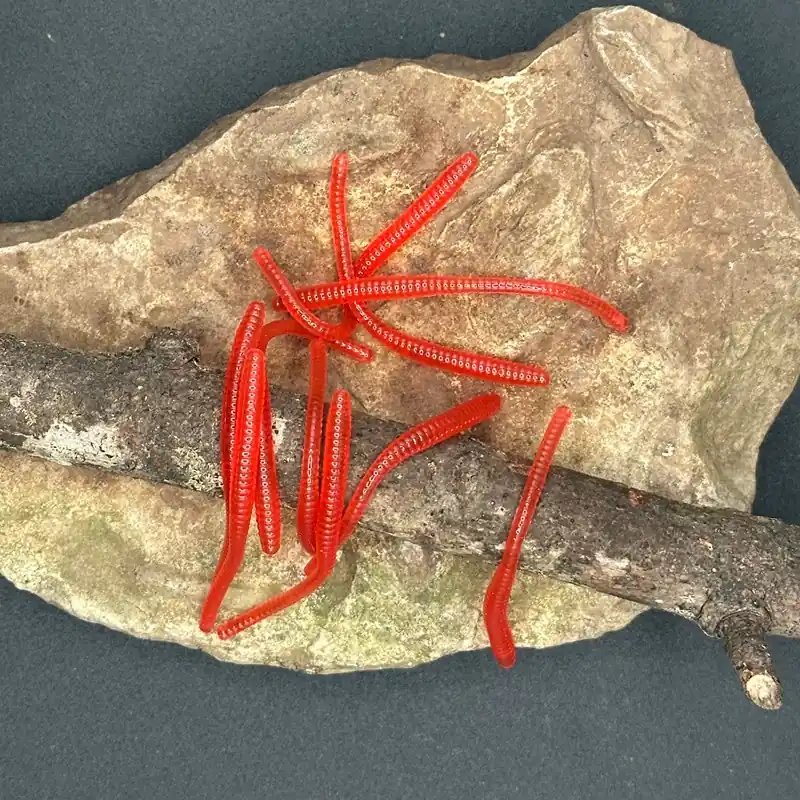
Trout worms are one of the most effective soft plastics for stocked and pressured trout. The way you rig the worm dramatically changes how it moves, falls, and triggers bites. Below are three proven methods.
Recommended hook: Size 10 Aberdeen hook for all three methods. All rigs can be bottom fished or fished under a float.
Terminal Tackle Setup
Add a 3/0 split shot 8–12 inches above the hook — add more split shots depending on current. If fishing under a float, attach the float above the split shot to fish at the desired depth.
Method 1: The Inline Rig
The inline method keeps the worm straight along the hook shank. Start the hook at the head of the worm and run it through so the worm is parallel to the shank. Cover the hook eye with the worm. This is the most natural horizontal presentation and works well on a dead drift under a float.
Tip: If you are getting strikes but not hooking them, try cutting a small amount off the tail. Note that cutting the tail will reduce some of the action.
Method 2: The San Juan Method
Very similar to the inline method but instead of starting the hook at the head, start it further down in the body. This changes the fall angle and the way the worm hangs under the hook — effective for fishing the worm in current where a slightly different posture triggers more strikes.
Method 3: The Wacky Rig
Hook through the middle of the worm. On the fall, both ends of the worm flutter naturally, creating a highly appealing action that works especially well on pressured or hesitant stocked trout. This method is particularly effective when trout are following but not committing. → See: Why Trout Follow But Don’t Bite
Which Method to Use When
- Inline: Best for natural drift presentations, dead still water, clear water with cautious fish
- San Juan: Best in current, when fish want a different fall angle
- Wacky: Best for pressured or reluctant fish, vertical fishing, when fish follow but won’t commit
→ See: Retrieve Speed for Trout Fishing
→ Complete Trout Fishing System
Frequently Asked Questions About Rigging a Trout Worm
Which trout worm rig should a beginner start with?
The inline rig is the simplest and most forgiving starting point — straightforward to tie, easy to understand, and effective across a wide range of conditions before you need to worry about more technical presentations.
What is the San Juan method best suited for?
The San Juan method is well suited for a more compact, natural-looking presentation, often favored in clear or pressured water where a subtler profile helps convert cautious, selective trout that have already seen more obvious rigs.
When should I use a wacky rig instead of the other two methods?
A wacky rig creates a distinctive falling and quivering action as both ends of the worm move independently, which can trigger strikes from fish that aren’t responding to a more traditional presentation. It’s a good option to try when the inline and San Juan rigs have stopped producing.
Do I need different terminal tackle for each rigging method?
Some adjustment is usually needed — hook size and placement change between methods to preserve the worm’s natural action for each specific rig. Using the same setup across all three methods without adjustment often means one or more of them won’t perform as intended.
Do these three rigging methods work with any trout worm, or specific ones?
All three generally work with most standard trout worms, though a softer, more flexible worm tends to show more natural action across all three methods than a stiffer one. The ribbed trout worm’s softness and ribbed body make it a strong match for each of these rigs.
Should I switch rigging methods mid-session if I’m not getting bites?
Yes — if one method isn’t producing after a fair trial, switching to a different rig changes the worm’s action and profile without requiring a completely different bait. This is an easy adjustment to make streamside compared to overhauling your entire setup.
Which rig is best for stocked trout specifically, right after stocking?
The inline rig’s straightforward, natural presentation tends to work well right after stocking, when trout are feeding readily and don’t yet require a highly technical approach. Save the San Juan or wacky methods for once fish have settled in and become more selective.
Can I combine elements of these rigs, or should I pick just one?
Each method is really its own distinct presentation rather than interchangeable pieces — mixing hook placement between methods usually just compromises the specific action each rig is designed to produce. Fish one method fully before switching to the next rather than blending them.