Fishing Lure Color Contrast Explained: Why Fish Strike Some Soft Plastic Colors and Ignore Others
Part 2 of the Soft Plastic Lure Color Guide Series
Understanding fishing lure color contrast is one of the most important skills anglers can develop when selecting soft plastic lure colors.
Many anglers spend countless hours debating lure colors. Entire tackle aisles are filled with hundreds of shades, laminates, flakes, translucent finishes, and custom patterns. Yet one of the most important factors in lure visibility is often overlooked entirely.
What Is Fishing Lure Color Contrast?
A fish does not see a lure the same way you see it in a tackle box. Underwater, visibility changes constantly. Water clarity shifts from day to day. Light intensity changes throughout the day. Depth filters color. Wind creates shadows and glare. Sediment scatters light. Vegetation creates dark backgrounds. Sand creates bright backgrounds.
All of these factors influence one simple question:
Can the fish separate your lure from its surroundings?
If the answer is no, the exact color of the lure often becomes irrelevant.
This is why a black soft plastic can sometimes outfish a bright chartreuse bait in muddy water. It is why subtle natural colors often outperform loud colors in clear water. It is why anglers who understand contrast consistently make better lure-color decisions than anglers who simply switch colors at random.
Understanding fishing lure color contrast helps explain why some soft plastic colors stand out instantly while others disappear into the background.
In many situations, contrast matters more than the specific color, although visibility can also come from brightness, UV reflectance, and movement.
What Is Contrast?
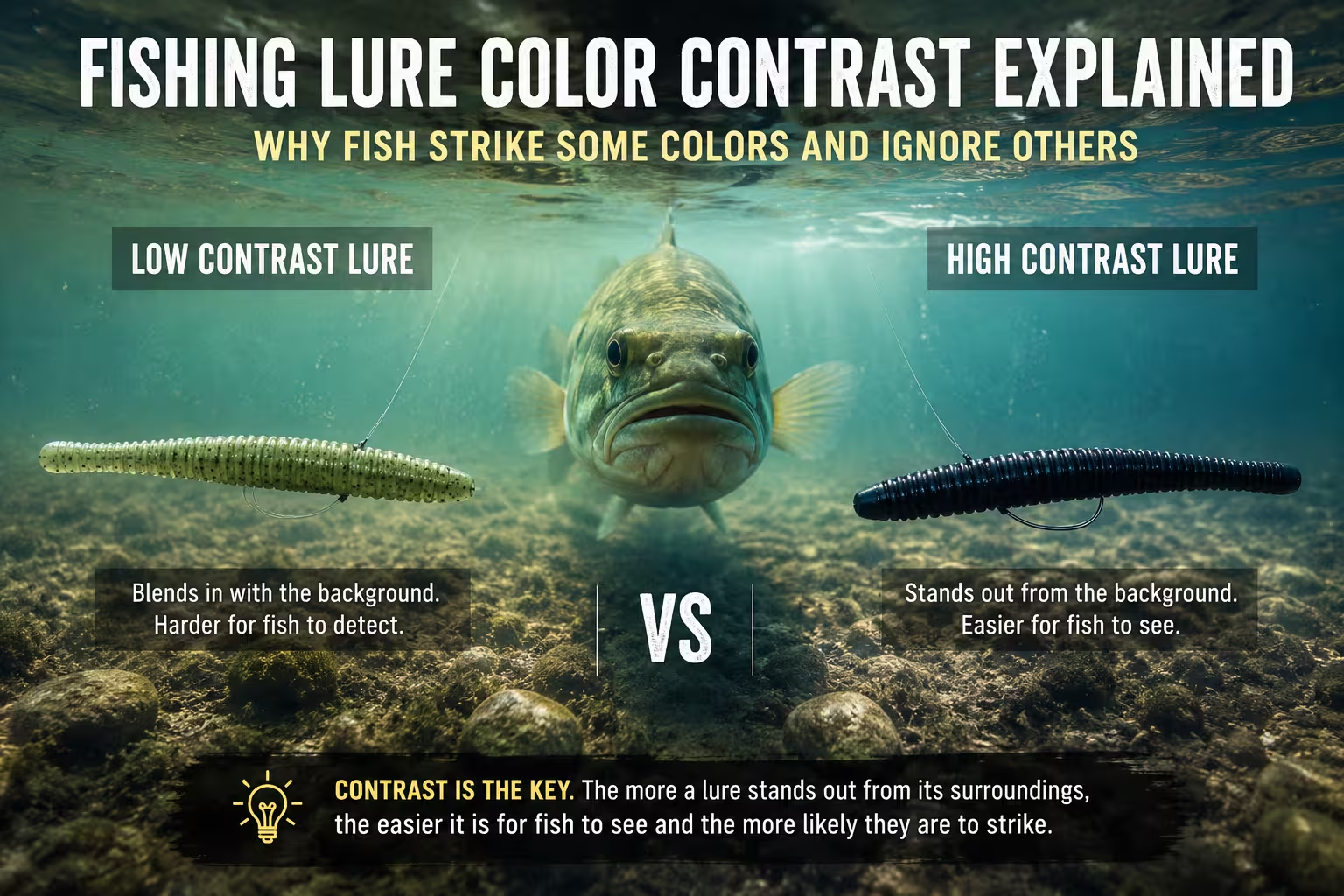
Contrast is the visual difference between an object and its background.
The greater the difference, the easier the object is to see.
Imagine placing a black object on a white table.
The object stands out immediately because the contrast is high.
Now place a gray object on a slightly darker gray table.
The object becomes harder to distinguish because the contrast is lower.
The same principle applies underwater.
Fish must constantly separate potential food items from everything around them:
- Rocks
- Weeds
- Sand
- Mud
- Shadows
- Open water
- Suspended debris
A lure that creates strong contrast becomes easier to detect.
A lure that creates little contrast may blend into its surroundings.
Neither outcome is automatically good or bad.
Sometimes visibility is the goal.
Sometimes realism is the goal.
The key is understanding which one matters most under current conditions.
Contrast Is Not the Same Thing as Color
One of the biggest misconceptions in fishing is assuming color and contrast are the same thing.
They are not.
Color describes the hue of an object.
Contrast describes how strongly that object stands out from its background.
For example:
- A black lure may create extremely high contrast.
- A chartreuse lure may create moderate contrast.
- A translucent green pumpkin lure may create low contrast.
The actual visibility depends on the surrounding environment.
A black lure against a bright sky creates tremendous contrast.
A black lure buried inside dark vegetation may create very little.
This is why there is no universally best color.
There are only colors that create appropriate contrast for specific conditions.
Why Fish Notice Contrast Before Color
Fish evolved in an environment where detecting movement, shape, and silhouette often matters more than identifying exact colors.
Predators must quickly identify prey.
Prey species must quickly identify predators.
In both cases, rapid detection is critical.
Contrast helps make that possible.
Before a fish determines exactly what an object is, it must first detect that the object exists.
That initial detection is often driven by:
- Motion
- Silhouette
- Contrast
Only after detection does detailed inspection occur.
Think about seeing a bird fly overhead.
You notice movement first.
Then shape.
Then details.
Fish frequently work the same way.
A bass does not necessarily identify every scale pattern on a baitfish before deciding to strike.
It first notices movement and separation from the background.
Contrast helps create that separation.
This is especially important in conditions where visibility is limited.
As visibility decreases, fish increasingly rely on silhouette and contrast rather than precise color recognition.
The Three Types of Contrast Anglers Need to Understand
Most anglers think contrast simply means dark versus light.
In reality, several different forms of contrast affect lure visibility.
Brightness Contrast
Brightness contrast refers to the difference between light and dark.
Examples include:
- Black versus white
- Dark purple versus pale yellow
- Solid black versus translucent smoke
This is often the most important form of contrast in fishing.
Even when color information becomes limited, brightness differences frequently remain visible.
This is one reason black lures continue to work so well in dirty water.
Color Contrast
Color contrast occurs when two colors differ significantly from one another.
Examples include:
- Blue and yellow
- Green and red
- Orange and black
These combinations can create highly visible patterns when sufficient light is available.
However, color contrast becomes less important as visibility decreases.
If fish cannot clearly distinguish colors, brightness contrast often becomes the dominant factor.
UV Contrast
Some lure materials reflect ultraviolet light differently than surrounding objects.
This creates another layer of contrast that may increase visibility under certain conditions.
UV contrast is not magic.
It does not automatically produce more strikes.
However, under the right conditions, it can make a lure easier to detect.
This topic is covered more deeply in Part 6 of this series.
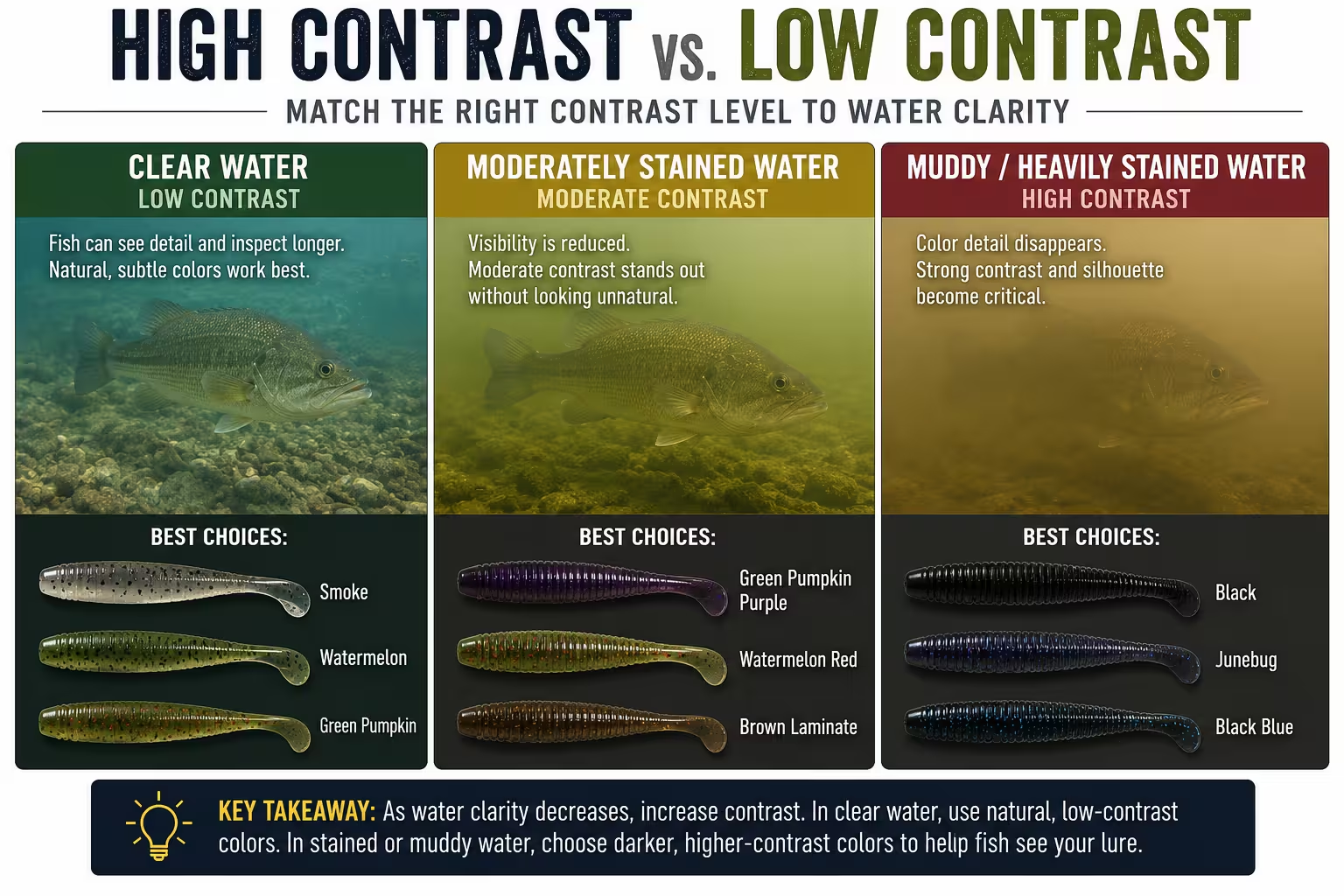
How Water Clarity Changes Fishing Lure Color Contrast
Water clarity is one of the most important factors affecting contrast.
The same lure can perform completely differently depending on how clear the water is.
Clear Water
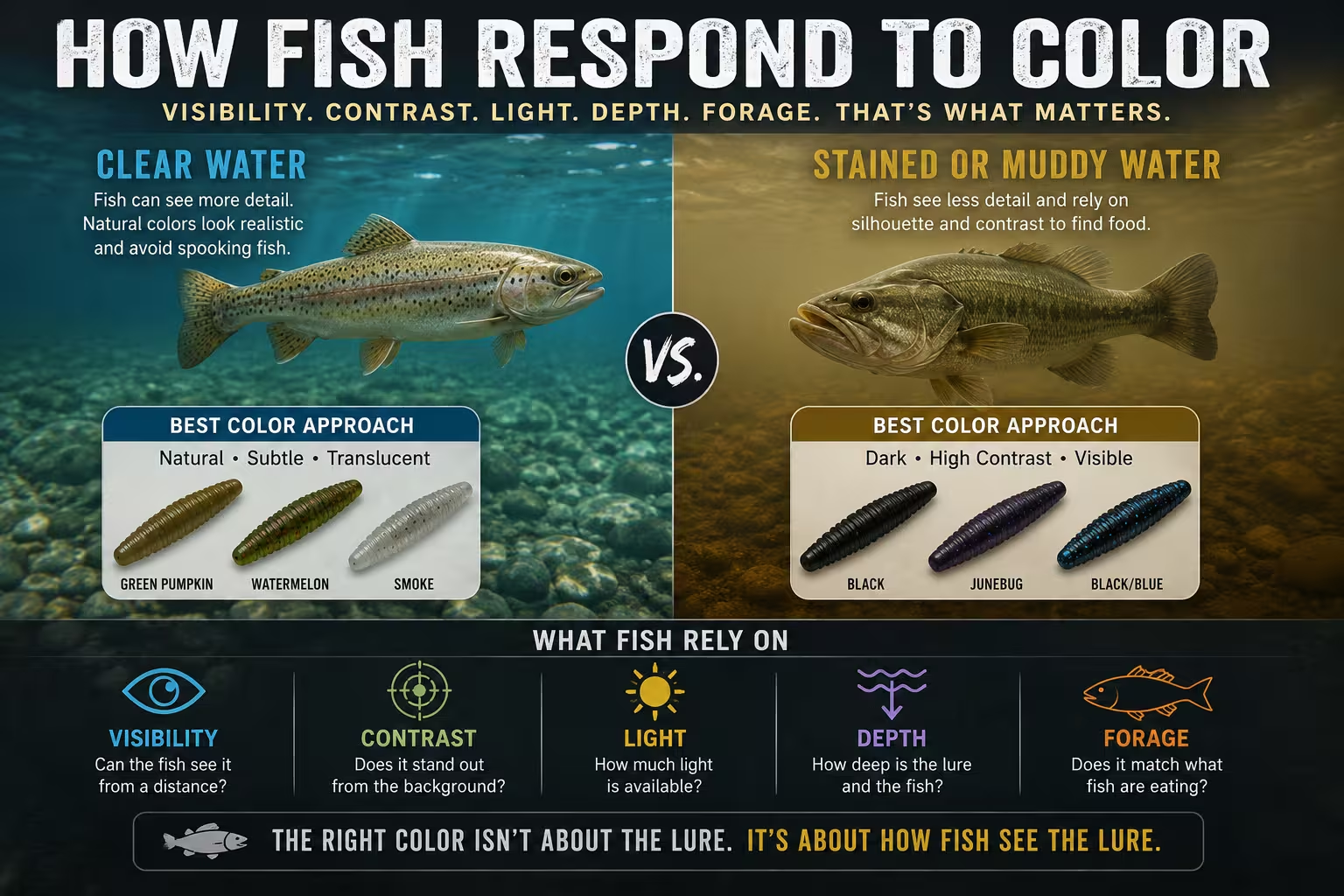
In clear water, fish can see more detail.
They can inspect a lure from greater distances.
They often have more time to evaluate whether something looks natural.
Because of this, lower-contrast colors frequently excel.
Examples include:
- Watermelon
- Smoke
- Green Pumpkin
- Natural baitfish colors
These colors blend naturally into the environment while remaining visible enough to attract attention.
Excessive contrast can sometimes appear unnatural in extremely clear conditions.
Moderately Stained Water
As visibility decreases, contrast becomes increasingly important.
Fish lose some ability to inspect fine details.
Lures must become easier to locate.
This is where colors like:
- Junebug
- Black Blue
- Dark Green Pumpkin
- Black Neon
often begin outperforming subtler colors.
Muddy Water
In muddy water, visibility becomes extremely limited.
Color details may become severely limited.
Silhouette often becomes the dominant visual cue.
Fish often rely primarily on:
- Shape
- Vibration
- Movement
- Contrast
This is why dark colors frequently dominate muddy-water fishing.
A strong silhouette is often easier to detect than a bright color that blends into the surrounding haze, although highly visible colors such as chartreuse, white, orange, and UV-enhanced lures can also be effective under certain conditions.
How Light Changes Fishing Lure Color Contrast
Water clarity is only part of the equation.
Light availability also affects how contrast behaves.
Bright Sunlight
Bright conditions increase overall visibility.
Fish can inspect details more easily.
Natural colors often become more effective.
Subtle presentations frequently outperform extreme contrast.
Overcast Conditions
Cloud cover reduces available light.
Contrast becomes more important.
Fish may need stronger visual separation to detect a lure.
Early Morning
During low-light periods, silhouettes often become more important than exact color.
Dark profiles frequently excel.
Evening
As daylight fades, visibility decreases.
Many successful evening anglers transition toward darker or higher-contrast presentations.
Night Fishing
At night, contrast often matters almost entirely through silhouette.
Color itself may contribute very little.
The lure simply needs to create a detectable outline against available light.
Why Black Often Outperforms Bright Colors
One of the most persistent myths in fishing is that bright colors are always easier for fish to see.
At first glance, the idea seems logical.
Chartreuse is bright.
White is bright.
Fluorescent orange is bright.
Surely those colors must be easier to detect than black.
Underwater, however, visibility does not work the same way it does in the air.
Fish are often looking upward toward available light. This creates a bright background behind the lure. Against that bright background, a dark lure can create a much stronger silhouette than a bright lure.
Imagine looking at a bird flying across a bright sky.
You do not see every feather.
You see a dark outline.
That outline is contrast.
The same principle applies underwater.
A black lure blocks light and creates a strong silhouette. A bright lure may allow more light to pass around it or blend into surrounding brightness.
This is why black frequently excels in:
- Muddy water
- Deep water
- Night fishing
- Heavy cloud cover
- Low-light conditions
The fish is not necessarily seeing “black.”
The fish is seeing a highly visible object that clearly separates itself from the surrounding environment.
This explains why black worms, black jigs, black creature baits, and black soft plastics continue producing fish year after year despite countless new color innovations.
The lure remains easy to detect.
Visibility often beats color.
Visibility, Contrast, and Why Bright Colors Sometimes Win
One of the biggest mistakes anglers make is assuming that visibility and contrast are always the same thing.
They are related, but they are not identical.
Contrast is one way a lure becomes visible. Visibility is the broader goal.
A fish cannot strike a lure it cannot easily detect, but fish may detect a lure for several different reasons:
- Strong silhouette
- Strong contrast
- Brightness
- UV reflectance
- Movement
All of these factors can make a lure easier to find.
This distinction explains why anglers often catch fish using completely different colors under seemingly similar conditions.
For example, black frequently excels in muddy water because it creates a strong silhouette. Against available light, a black lure often forms a bold outline that fish can easily detect even when color details disappear.
However, dark colors are not the only way to create visibility.
Bright colors such as chartreuse, pink, orange, and white often perform extremely well across multiple species, including trout, crappie, bass, walleye, and panfish.
At first glance, this seems to contradict contrast theory.
It doesn’t.
These colors create visibility through a different mechanism.
Instead of standing out primarily through silhouette, bright colors reflect available light and attract attention. In conditions where enough light is present, these colors can become highly visible even when they produce less silhouette contrast than a dark lure.
This is why one angler may succeed with a black lure while another succeeds with chartreuse under similar conditions.
The fish are responding to visibility.
The lures are simply achieving that visibility in different ways.
Neither approach is automatically superior.
The best choice depends on:
- Water clarity
- Available light
- Background conditions
- Fish behavior
- Fishing pressure
The common factor is not the color itself.
The common factor is that the fish can easily locate, track, and identify the lure.
Ultimately, fish do not care whether a lure is called Green Pumpkin, Junebug, Bubblegum Pink, Pearl White, or Chartreuse Pepper.
What matters is whether the lure stands out enough under current conditions to be noticed and confidently struck.
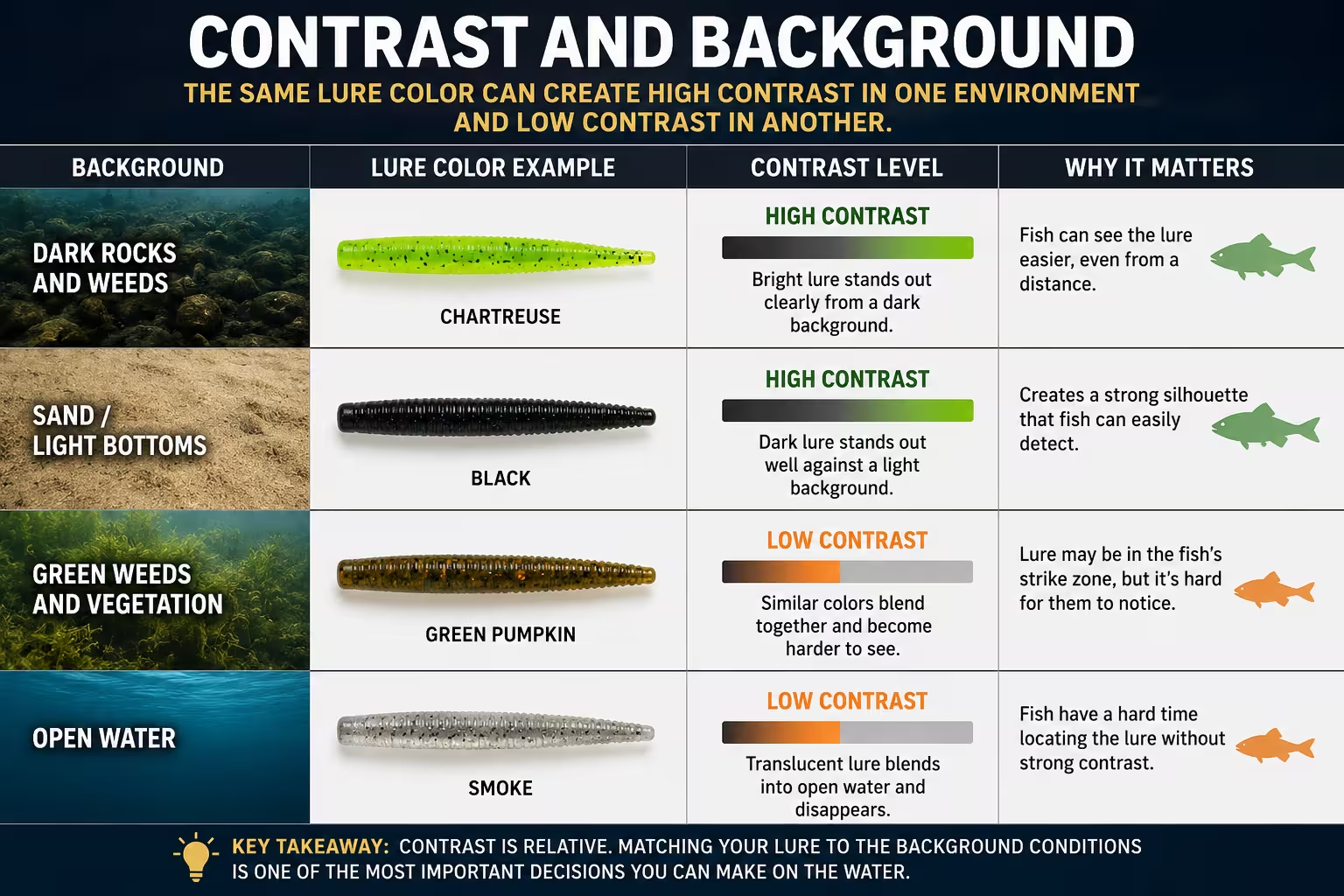
Contrast Is Relative
Another common mistake is thinking certain colors automatically create high contrast.
In reality, contrast is always relative to the background.
A black lure may create tremendous contrast against a bright sky.
The same black lure may create very little contrast against a dark weed bed.
Likewise, a white lure may stand out dramatically over dark vegetation but blend into a bright sandy bottom.
This is why there is no universally best color.
A lure’s visibility is determined not only by its color, but by the environment surrounding it.
Successful anglers evaluate the entire picture:
- Water clarity
- Available light
- Background color
- Depth
- Fish behavior
Only then do they decide which color will provide the right amount of visibility.
Contrast and Background
A lure does not exist in isolation.
It exists against a background.
The same lure can create dramatically different contrast depending on what lies behind it.
This is one reason why a lure that works perfectly one day can struggle the next despite no changes in color.
The background changed.
Sand Bottoms
Light-colored sand creates a bright background.
Dark lures often stand out extremely well.
Examples:
- Black
- Junebug
- Black Blue
- Dark Purple
These colors create strong separation from the pale bottom.
Dark Mud Bottoms
Dark mud reduces the effectiveness of some dark lures.
Here, moderate contrast may become more important.
Examples:
- Green Pumpkin
- Watermelon Red
- Brown Laminates
These often separate better than pure black.
Vegetation
Heavy weed growth creates dark surroundings.
Dark lures can sometimes disappear against the vegetation.
Brighter or moderately contrasting colors may become easier to locate.
Examples:
- White
- Chartreuse
- Green Pumpkin Chartreuse
- Pearl
Open Water
Open water creates one of the strongest contrast environments in fishing.
Fish frequently view prey against the brighter water column above.
This is one reason many pelagic predators are so effective at locating silhouettes.
Contrast becomes highly visible.
The lesson is simple:
Never evaluate lure color by itself.
Always evaluate lure color relative to the background where the fish will see it.
Contrast, Motion, and Strike Triggers
Contrast does more than increase visibility.
It also improves motion detection.
Fish are extremely sensitive to movement.
Many predatory fish possess visual systems specifically designed to detect moving objects.
When a lure moves through the water, contrast helps define that movement.
A highly contrasting lure often creates:
- A clearer outline
- A stronger silhouette
- Easier motion tracking
This is especially important during reaction strikes.
Reaction strikes occur when a fish has little time to analyze the lure.
Instead of carefully inspecting the bait, the fish responds immediately.
In these situations:
Visibility matters.
Contrast matters.
Movement matters.
Fine color details often matter much less.
This is why reaction baits frequently succeed using strong contrast patterns.
The fish notices the lure quickly and commits before detailed inspection occurs.
Contrast essentially helps the fish find the lure faster.
The faster the lure is found, the greater the opportunity for a strike.
Contrast and Fishing Pressure
Fishing pressure changes how fish respond to visibility.
Fish in heavily pressured environments often become conditioned to seeing common lure presentations.
In clear water especially, excessive contrast can sometimes become a disadvantage.
A highly visible lure may attract attention but also trigger caution.
This is where lower-contrast colors frequently shine.
Natural colors often allow a lure to remain visible without appearing overly aggressive or unnatural.
Examples include:
- Smoke
- Green Pumpkin
- Watermelon
- Natural shad colors
- Subtle laminates
The fish can still detect the lure.
The lure simply appears less threatening.
Many anglers mistakenly assume a lack of bites means they need more visibility.
In reality, they may need less.
Understanding when to reduce contrast can be just as important as understanding when to increase it.
A Real-World Contrast Example
Understanding contrast becomes easier when you compare real fishing situations.
Imagine four anglers fishing four completely different bodies of water.
Clear Mountain Stream
The water is exceptionally clear, and trout have plenty of time to inspect a lure.
A subtle color such as Smoke, Watermelon, or Natural Minnow often produces the best results because it appears realistic without creating excessive contrast.
Stained River
Visibility is reduced and fish have less time to inspect a lure.
Colors such as Junebug, Black Blue, and Dark Green Pumpkin become easier to detect and often outperform subtle natural colors.
Crappie Fishing Around Docks
Fish are holding around shaded structure with moderate water clarity.
Bright colors such as Chartreuse, Pink, and White frequently excel because they remain highly visible and easy to track.
Night Fishing
Color becomes far less important.
A solid black lure often creates the strongest silhouette against available light and allows fish to detect the lure more easily.
Each situation requires a different approach.
The anglers who consistently catch fish are not choosing colors based on personal preference. They are choosing colors based on visibility.
Common Contrast Mistakes
Mistake #1: Choosing Colors in the Tackle Shop
Store lighting has almost nothing in common with underwater conditions.
A color that looks incredible under fluorescent lighting may perform poorly in actual fishing conditions.
Always evaluate colors based on water conditions, not packaging appeal.
Mistake #2: Assuming Bright Means Visible
Brightness and visibility are not the same thing.
Many anglers automatically reach for chartreuse in poor visibility conditions.
Sometimes black provides a stronger silhouette and greater detectability.
Mistake #3: Ignoring Water Clarity
Water clarity should influence every color decision.
The same lure that excels in clear water may become nearly invisible in stained water.
Always evaluate clarity before selecting a lure color.
Mistake #4: Ignoring Background
Lure color and background work together.
What stands out against sand may disappear against weeds.
Always consider what lies behind the lure from the fish’s perspective.
Mistake #5: Constant Color Changes
Many anglers switch colors repeatedly without understanding why.
Instead of asking:
“What color should I use?”
Ask:
“What level of contrast do I need?”
This often produces better decisions.
A Fishing Lure Color Contrast Selection Framework
If you are unsure where to begin, start with this framework.
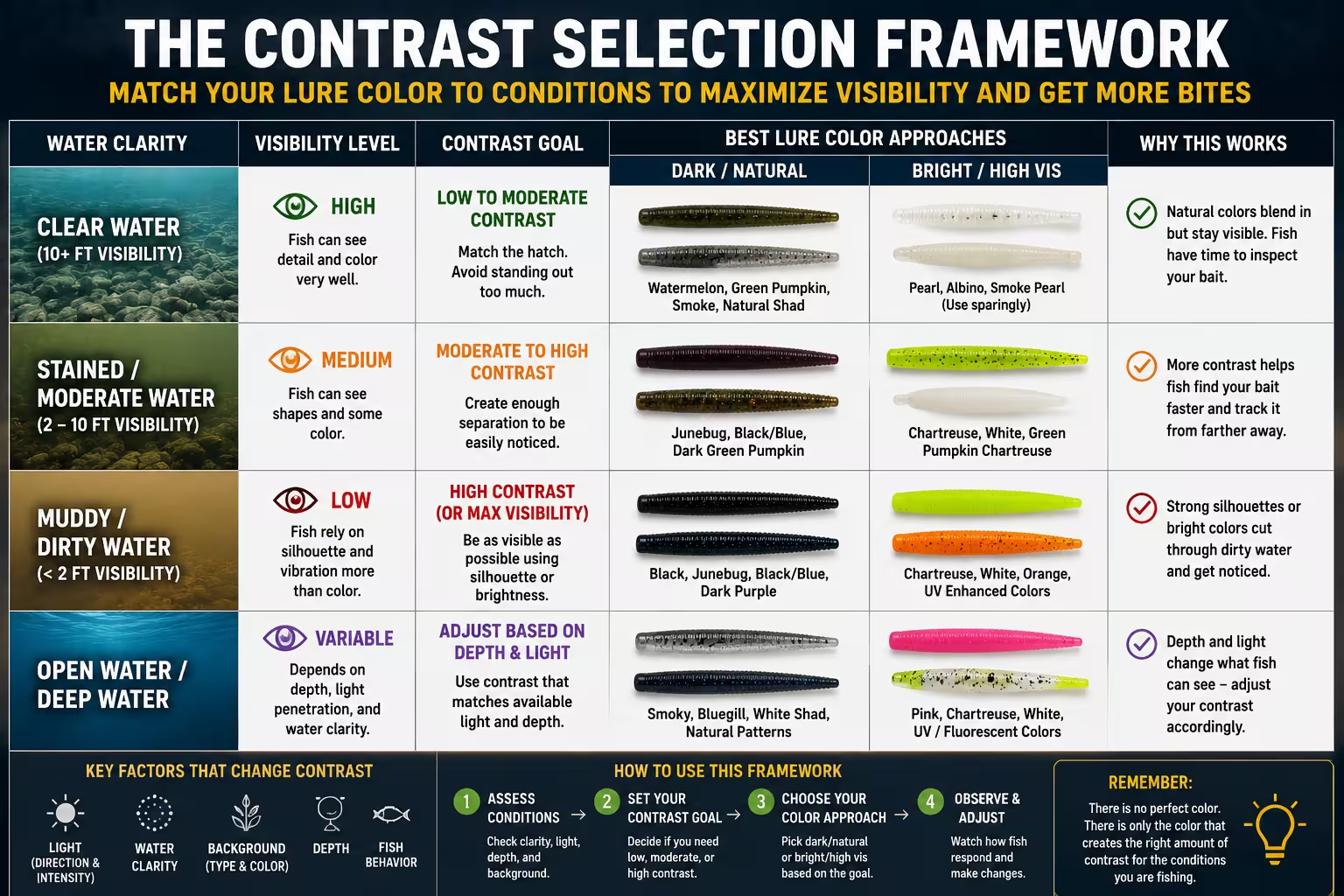
Clear Water
Use lower-contrast, natural colors.
Examples:
- Watermelon
- Smoke
- Green Pumpkin
- Natural baitfish colors
Goal:
Natural appearance.
Lightly Stained Water
Use moderate contrast.
Examples:
- Green Pumpkin Purple
- Watermelon Red
- Natural laminates
- Brown combinations
Goal:
Balance visibility and realism.
Stained Water
Increase contrast.
Examples:
- Junebug
- Black Blue
- Dark Purple
- Strong laminates
Goal:
Improve detection.
Muddy Water
Goal:
Maximize visibility
Dark Silhouettes
• Black
• Junebug
• Black Blue
• Dark Purple
Bright Visibility Colors
• Chartreuse
• White
• Orange
• UV-enhanced colors
Both approaches can work depending on available light, background conditions, and fish behavior.
Frequently Asked Questions
Is black really the best color for muddy water?
Often, but not always. Black creates one of the strongest silhouettes available, but bright colors such as chartreuse, white, orange, and UV-enhanced colors can also perform extremely well when they create greater visibility under existing conditions.
Do fish see contrast better than color?
In many situations, yes. As visibility decreases, fish increasingly rely on contrast and silhouette rather than precise color recognition.
Is high contrast always better?
No. High contrast improves visibility but can sometimes appear unnatural in clear water and heavily pressured fisheries.
What is the best contrast level for clear water?
Generally, lower contrast. Natural colors often appear more realistic while remaining visible enough for fish to locate.
Does UV increase contrast?
Sometimes. UV-reflective materials can create additional visibility under certain conditions, but their effectiveness depends on water clarity, depth, and available light.
Are two-tone laminates better than solid colors?
Not necessarily. Laminates often create additional contrast, which can be beneficial in certain situations. However, effectiveness still depends on matching contrast levels to current conditions.
Why does my favorite color stop working?
Conditions change. Water clarity, light levels, depth, and fish behavior all influence how much contrast is needed. The color itself may not have become ineffective—the environment may have changed.
The Bottom Line
Fishing lure color contrast is often more important than the specific color itself.
Fish cannot strike a lure they cannot easily detect. Detection may come from contrast, brightness, UV reflectance, movement, or a combination of these factors.
As visibility decreases, contrast becomes increasingly important because fish rely more heavily on silhouette, motion, and separation from the background.
High-contrast colors excel in stained water, muddy water, low-light conditions, and situations where visibility is limited.
Low-contrast colors excel in clear water, bright conditions, and environments where fish closely inspect a presentation.
The most successful anglers do not simply ask:
“What color should I use?”
They ask:
“How much contrast do I need?”
That single question often leads to better lure selection, greater consistency, and more fish in the boat.
Previous: Part 1: How Fish Respond to Color: A Soft Plastic Lure Color Guide
Next: Part 3: Why Lure Colors Change Underwater – How Depth and Light Affect Soft Plastics
About Family Fishin
Family Fishin is a family-owned fishing tackle company dedicated to designing, testing, and producing high-quality fishing lures — inspired by generations of fishing tradition and driven by a passion for innovation. Every product is developed with one goal in mind: helping anglers spend more time doing what they love, catching fish and creating memories on the water.