Why Lure Colors Change Underwater: The Science of Depth, Light, and Color
Part 3 of the Lure Color Science Series
Lure colors underwater rarely look the same as they do in your hand. As light passes through water, different wavelengths are absorbed, scattered, and filtered, changing how fish see every lure beneath the surface. Understanding lure colors underwater helps anglers make better decisions about color selection, depth, and presentation.
- A Red Worm Isn’t Always Red
- Color Doesn't Exist Without Light
- What Color Really Is
- Why Lure Colors Underwater Depend on Light
- Water Is Not Actually Transparent
- Absorption: The Real Reason Colors Disappear
- Why Red Disappears First
- The Underwater Death of Color
- Absorption Is Only Half the Story
- Absorption vs. Scattering
- What Causes Scattering?
- Why Muddy Water Looks Muddy
- Why Stained Water Is Different From Muddy Water
- Why Oceans Are Blue
- Why Every Lake Has Its Own Color Filter
- Why Most Underwater Color Charts Are Wrong
- Freshwater and Saltwater Are Different Optical Worlds
- Following a Lure Through the Water Column
- The Real Lesson So Far
- Green pumpkin remains one of the most dependable lure colors underwater because it retains useful visibility across many lighting conditions.
- Why Black Often Outperforms Bright Colors
- The Silhouette Effect
- Why Chartreuse Dominates Stained Water
- Why Blue and Purple Shine in Deep Water
- Why White Behaves Differently
- Metallic Finishes Play by Different Rules
- Glitter Is More Than Decoration
- Translucent and Opaque Plastics Are Not the Same
- Why Lure Colors Matter Less Than Most Anglers Think
- Contrast Is Often More Important Than Color
- How Fish See Lure Colors Underwater
- Fish Eyes and Human Eyes Are Similar—But Not Identical
- Rods and Cones: The Two Systems Behind Fish Vision
- Why Colors Matter Less in Low Light
- Can Fish See Color?
- The UV Vision Surprise
- Bass, Trout, and Walleye Don't See the Same World
- What Does a Fish See at Depth?
- Viewing Angle Changes Everything
- The Biggest Myth About Fish Vision
- Choosing Lure Colors Underwater for Real Conditions
- The Real Lesson of Underwater Color
- Frequently Asked Questions
- Why do lure colors change underwater?
- What color disappears first underwater?
- Why do red lures still catch fish?
- What colors stay visible deepest?
- Does water clarity affect lure color?
- Can fish see color?
- Can fish see ultraviolet light?
- Is color the most important factor in lure selection?
- The Bottom Line
- About Family Fishin
A Red Worm Isn’t Always Red
Tie on a bright red worm in your garage and it’s unmistakably red.
Drop that same lure twenty feet into the water and the fish may not see red at all.
The lure itself hasn’t changed. The plastic is still the same color it was when it came out of the package. What changed is the light reaching it.
This simple fact sits at the center of one of the most misunderstood topics in fishing. Anglers spend enormous amounts of time debating lure colors, yet relatively few understand that fish rarely see those colors the same way we do above water.
Water is not just a transparent medium. It is a powerful optical filter. As sunlight travels through it, different wavelengths are absorbed at different rates. Some colors disappear quickly. Others survive much deeper. Some become muted. Others remain visible. By the time a lure reaches depth, it may look completely different from the color printed on the package.
This is why anglers often swear by colors that seem odd at first glance. It’s why red worms continue catching fish even after red light disappears. It’s why chartreuse is one of the most successful lure colors ever created. It’s why blue and purple remain effective in deep water. And it’s why black can sometimes outperform every bright color in the box.
Understanding why lure colors change underwater isn’t just about choosing better colors. It’s about understanding how fish experience the underwater world.
To understand that, we first need to understand what color actually is.
Color Doesn’t Exist Without Light
Most people think of color as a fixed property of an object. A green pumpkin worm is green pumpkin. A red craw is red. A black jig is black.
But technically, that is not how color works.
Color is not something an object creates by itself. Color is the result of light interacting with an object and then reaching an eye. Without light, there is no visible color.
Imagine placing a bright red worm inside a completely dark room. The lure still contains the pigments that normally make it appear red, but there is no light available for those pigments to reflect. Without reflected light reaching your eye, the color information simply does not exist.
This matters because every lure color depends on the light available around it. A lure does not generate its own color. It reflects certain wavelengths of light and absorbs others. When those wavelengths disappear, the visible color disappears with them.
What Color Really Is
Sunlight appears white, but white sunlight is actually a mixture of many different wavelengths of visible light. When those wavelengths are separated, they create the familiar rainbow: red, orange, yellow, green, blue, indigo, and violet.
Each of those colors corresponds to a different wavelength. Red occupies the longer end of the visible spectrum, while violet occupies the shorter end. The visible spectrum ranges from roughly 700 nanometers at the red end down to about 400 nanometers at the violet end.
Everything we see is created from these wavelengths.
A red lure appears red because it reflects red wavelengths and absorbs most of the others. A blue lure appears blue because it reflects blue wavelengths. A green lure appears green because it reflects green wavelengths.
The lure is not generating those colors. It is simply reflecting selected wavelengths back toward the viewer.
That distinction becomes extremely important underwater. If the surrounding water removes certain wavelengths before they ever reach the lure, the lure can no longer reflect them. And if the lure cannot reflect those wavelengths, neither fish nor anglers can see them.
Why Lure Colors Underwater Depend on Light
The moment sunlight strikes the water’s surface, it begins to change. Above the water, sunlight contains the full visible spectrum. Below the surface, that spectrum immediately starts to shrink as water begins filtering and removing certain wavelengths.
Every foot of water absorbs a little more light. Every foot changes the balance of wavelengths available. And with every additional foot of depth, the visual world experienced by fish becomes slightly different.
A useful way to think about water is as a giant optical filter positioned between the sun and your lure. Unlike a camera filter that affects all colors equally, water is highly selective. Some wavelengths are removed quickly, while others survive much longer. As depth increases, the underwater environment gradually loses portions of the visible spectrum, causing colors to change, fade, and eventually disappear.
The deeper light travels, the fewer wavelengths remain available, and the fewer colors fish can potentially see.
Water Is Not Actually Transparent
This idea surprises many anglers because water appears clear. In reality, water is not perfectly transparent from an optical standpoint. No natural material is.
Every substance absorbs some amount of light, and water is particularly effective at doing so. In fact, the reason the ocean appears blue is largely because water absorbs other wavelengths more efficiently than blue wavelengths.
If water were truly transparent, the ocean would appear colorless. Instead, water continuously removes portions of the visible spectrum, changing the appearance of everything beneath the surface. Every fish, rock, weed bed, and lure exists within this constantly shifting light environment.
Whether you’re fishing a farm pond, a river system, or the middle of Lake Erie, the water is continually filtering the light around your lure.
Absorption: The Real Reason Colors Disappear
The process responsible for this filtering is called absorption.
When light encounters water molecules, some of its energy is absorbed and converted into tiny amounts of heat. Once that energy has been absorbed, it is effectively gone. It cannot be reflected, recovered, or used to illuminate objects farther below the surface.
As sunlight penetrates deeper into the water column, more and more wavelengths are absorbed. Over time, entire portions of the visible spectrum become unavailable.
What makes this process especially important is that water does not absorb all wavelengths equally. Some wavelengths are removed quickly, while others persist much longer. This uneven absorption creates the predictable sequence in which underwater colors disappear.
Why Red Disappears First
Among the visible colors, red occupies the longest wavelengths, and those wavelengths are the least effective at penetrating water. As depth increases, red light is absorbed faster than any other visible color.
This does not mean a red lure suddenly becomes invisible. In fact, that is one of the most common misconceptions in fishing.
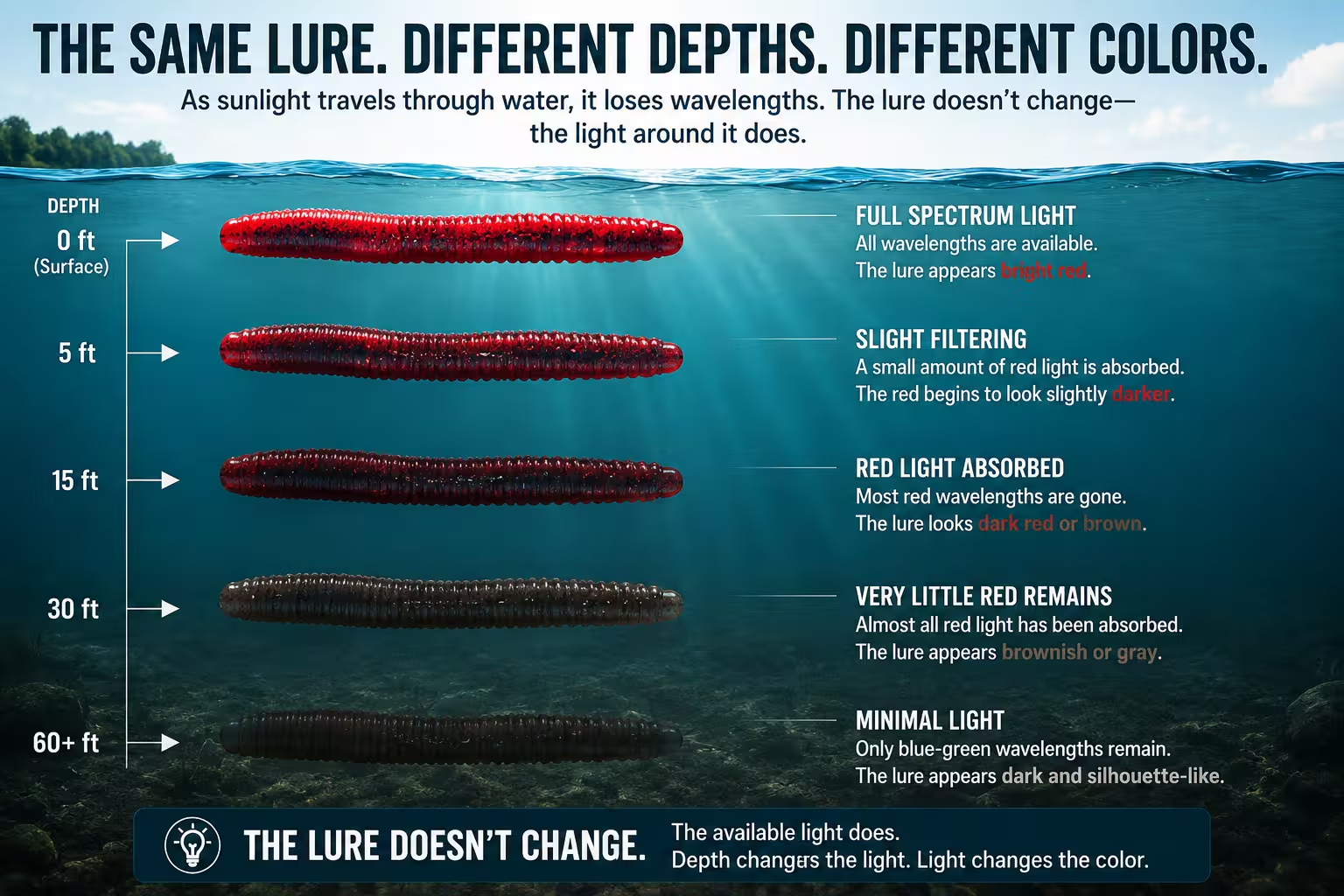
Imagine a red worm sitting twenty feet below the surface. The pigments in the lure are still capable of reflecting red light, but there is very little red light left in the environment to reflect. The water has already removed much of it.
The lure itself has not changed. The available illumination has.
As red wavelengths disappear, the lure gradually loses its vivid red appearance and begins to look darker. Depending on the conditions, it may appear dark brown, dark gray, or nearly black. This is why red lures often continue catching fish at depths where anglers assume the color should no longer work.
The fish is not necessarily seeing a bright red lure. Instead, it may be seeing a dark object that creates useful contrast against its surroundings.
This distinction is important. Red does not vanish. It simply loses the light required to appear red.
The Underwater Death of Color
As depth increases, colors disappear in a generally predictable sequence. Red is usually the first to fade, followed by orange and yellow. Green tends to survive longer, while blue and violet penetrate deeper than most other visible wavelengths.
The exact depths vary dramatically depending on water clarity, suspended particles, weather conditions, and available sunlight. The sequence, however, remains relatively consistent.
A useful way to visualize this process is as a slow-motion sunset occurring underwater. Near the surface, the full spectrum is available. As you descend, portions of that spectrum are gradually removed. The underwater world becomes increasingly dominated by the wavelengths that survive. The diagram below shows how the exact same red soft plastic can appear dramatically different as depth increases and red wavelengths are removed from the underwater environment.
Eventually, very little color information remains. At that point, fish rely more heavily on brightness, contrast, silhouette, and movement than on precise color distinctions. This is one reason lure color often becomes less important at extreme depths than many anglers assume.
Before we can fully understand what fish see, however, we need to examine another process that shapes underwater visibility. Absorption explains why colors disappear, but it is only half of the story.
The other half is scattering, and in many fishing situations it can influence visibility just as much as depth itself.
Absorption Is Only Half the Story
If absorption were the only process affecting light underwater, understanding lure color would be relatively straightforward. Colors would disappear at predictable depths, lakes would behave similarly, and the color-depth charts found online would be far more accurate than they actually are.
But that isn’t how underwater visibility works.
In reality, what fish see is controlled by two separate processes: absorption and scattering. Most anglers are familiar with absorption because it explains why certain colors disappear with depth. Far fewer anglers consider scattering, even though it often has just as much influence on underwater visibility.
A simple way to understand scattering is to compare a flashlight beam in clear air to one shining through fog. In clear air, the beam travels in a relatively straight line. In fog, the light is still present, but it is bounced and redirected in countless directions. The beam becomes less focused, visibility decreases, and details become harder to see. The same thing happens underwater.
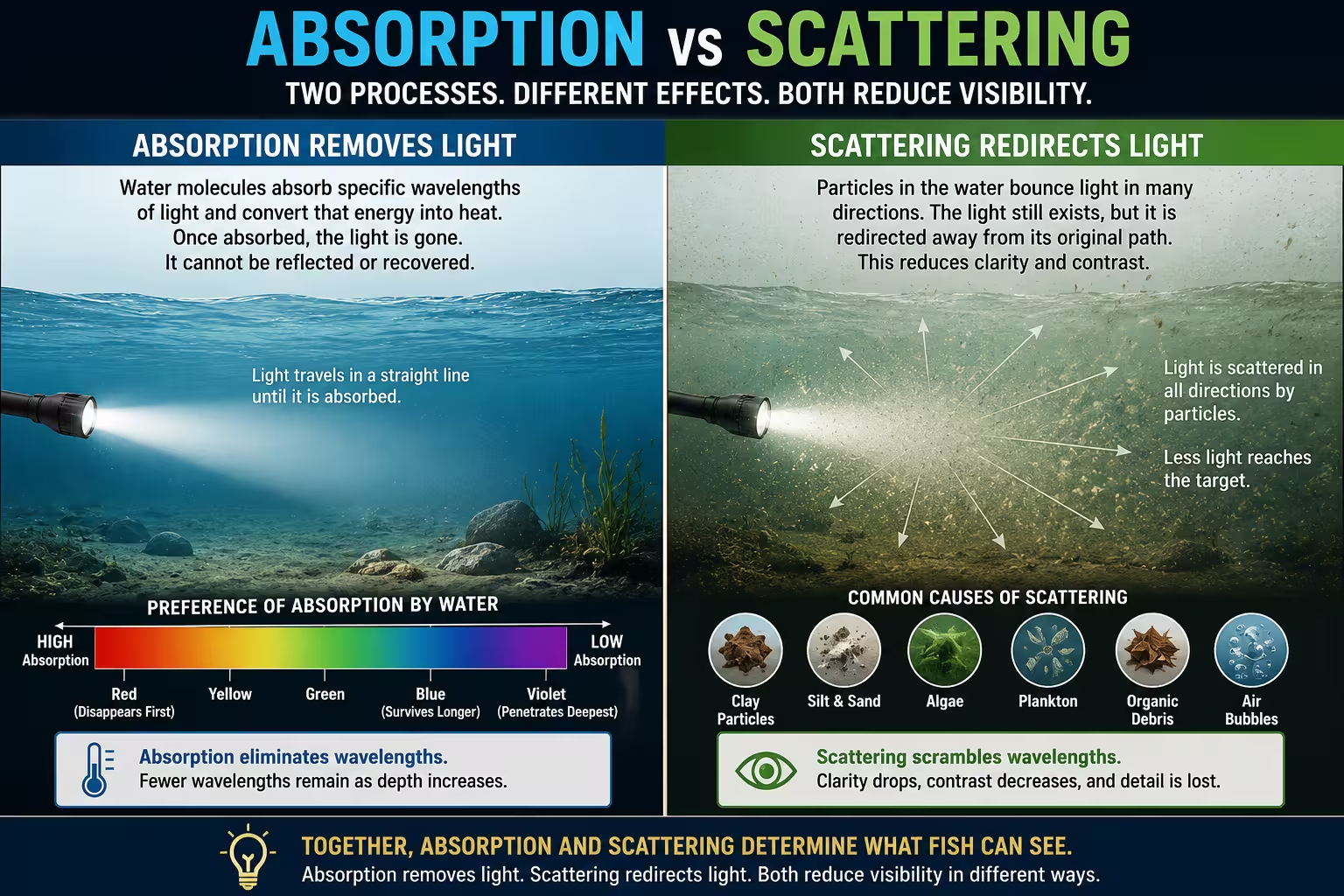
While absorption removes light from the environment, scattering redistributes it. Together, these two processes determine how much light survives, which wavelengths remain available, and how clearly fish can see objects beneath the surface.
Absorption vs. Scattering
Although both processes reduce visibility, they do so in very different ways.
Absorption occurs when water molecules capture light energy and convert it into heat. Once a wavelength has been absorbed, it is effectively gone. It can no longer contribute to the image seen by a fish.
Scattering works differently. The light still exists, but instead of traveling directly toward a lure or a fish’s eye, it is redirected by particles suspended in the water. Light may be scattered upward, downward, sideways, or back toward the surface. The result is a loss of clarity rather than a loss of light itself.
An easy way to remember the difference is that absorption removes light, while scattering scrambles it. Both reduce visibility, but for completely different reasons.
What Causes Scattering?
Natural water is filled with materials capable of scattering light. Clay, silt, sand, algae, plankton, organic debris, dissolved organic matter, and even tiny air bubbles all interact with incoming sunlight.
The more particles present, the greater the amount of scattering that occurs. This is why two bodies of water can receive the same sunlight and have the same depth, yet offer dramatically different visibility.
A crystal-clear mountain lake and a muddy river may be exposed to identical weather conditions, but the amount of suspended material in the water creates completely different optical environments. As a result, fish in those environments experience light very differently.
Why Muddy Water Looks Muddy
Many anglers assume muddy water appears dark because insufficient sunlight is entering the water. In most cases, that isn’t true.
There may be plenty of sunlight available, but the light is being scattered so aggressively that it cannot travel far in a useful direction. A good comparison is trying to see through a snowstorm. The problem isn’t a lack of light; the problem is that the light is bouncing off countless particles and creating visual confusion.
Muddy water behaves much the same way. Fish may still experience adequate brightness, but they lose clarity. Fine detail becomes difficult to distinguish, colors become less reliable, and contrast begins to matter more. Under these conditions, silhouette often becomes more important than precise color.
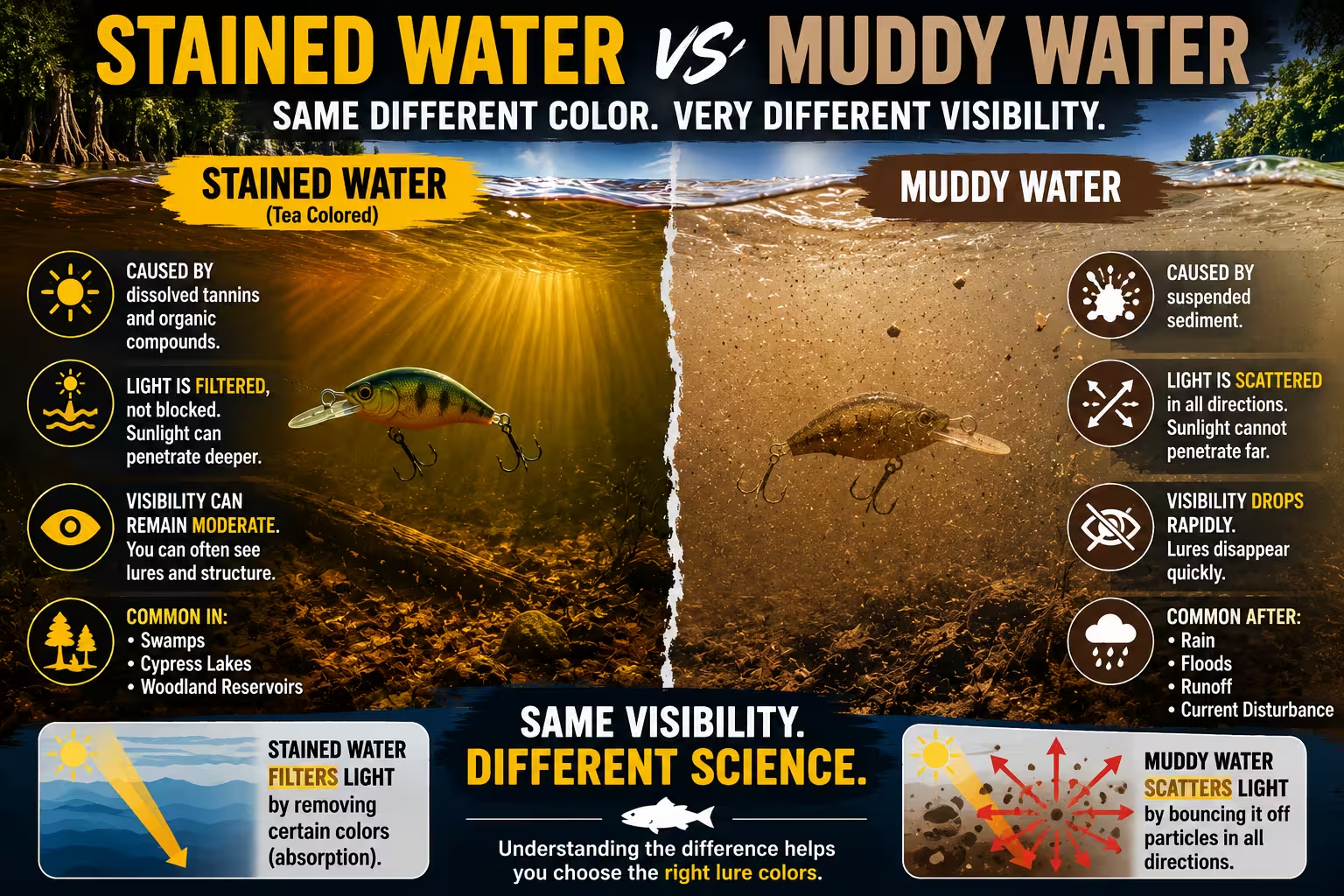
Why Stained Water Is Different From Muddy Water
Although anglers often use the terms interchangeably, stained water and muddy water are not the same thing.
Muddy water is typically caused by suspended mineral particles such as clay, silt, and fine sediment. These particles create heavy scattering and rapidly reduce visibility.
Stained water, on the other hand, is often caused by dissolved organic compounds such as tannins from decaying vegetation, leaf litter, and organic runoff. Rather than scattering large amounts of light, these compounds selectively absorb certain wavelengths.
This is why many tannic lakes appear brown, amber, or tea-colored. The water itself acts as a colored filter, changing the spectrum of light available underwater. As a result, lure colors can behave very differently in stained water than they do in muddy water, even when visibility appears similar.
Two lakes may offer the same viewing distance, yet produce completely different color environments because the available light has been altered in different ways.
Why Oceans Are Blue
One of the most familiar examples of underwater color filtering is the ocean itself.
Most people know the ocean is blue, but few stop to consider why. The answer is the same reason lure colors change underwater. Water absorbs longer wavelengths more readily than shorter wavelengths.
As sunlight travels through large volumes of water, red wavelengths are absorbed first, followed by orange and much of the yellow portion of the spectrum. Blue wavelengths survive longer, eventually becoming the dominant color remaining.
Contrary to popular belief, the ocean is not primarily blue because it reflects the sky. Sky reflection contributes to its appearance, but the dominant reason is selective light absorption within the water itself.
The same process that colors the ocean blue is continuously altering the appearance of every lure beneath the surface.
Why Every Lake Has Its Own Color Filter
Many anglers would like a simple chart showing exactly how deep each color remains visible. Unfortunately, nature does not cooperate.
Every body of water has its own optical fingerprint. Water clarity, suspended sediment, algae concentration, dissolved organic matter, sun angle, cloud cover, and surface conditions all influence how light behaves underwater.
As a result, neighboring lakes can produce dramatically different color environments. A red lure that loses much of its redness at ten feet in one reservoir may retain useful color significantly deeper in another.
The order of color loss remains relatively consistent, but the rate at which colors disappear can vary enormously. Understanding the sequence is far more valuable than memorizing specific depth numbers.
Why Most Underwater Color Charts Are Wrong
Most underwater color charts contain a useful idea wrapped in misleading precision.
These charts often show red disappearing at one depth, orange at another, and yellow at yet another. While the general sequence is correct, the specific depths are rarely universal.
In muddy floodwater, red wavelengths may effectively disappear within a few feet of the surface. In exceptionally clear water, useful red light may persist much deeper. The exact numbers depend entirely on local conditions.
The real lesson is not that red disappears at a specific depth. The real lesson is that red disappears before orange, orange disappears before yellow, and yellow disappears before green. Once you understand that progression, you can begin thinking about lure color in terms of available light rather than arbitrary depth measurements.
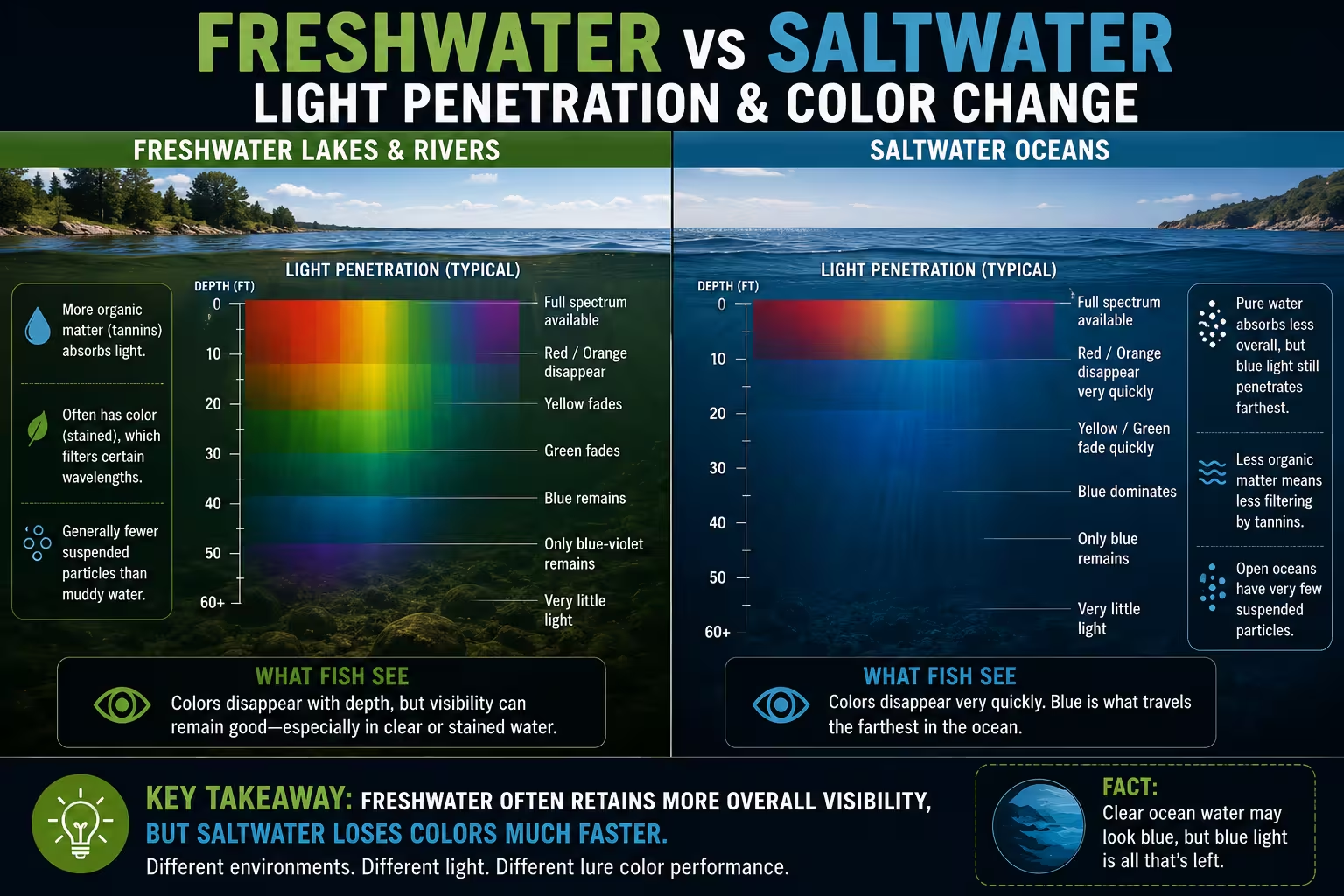
Freshwater and Saltwater Are Different Optical Worlds
Saltwater and freshwater anglers often talk about lure color as though the same rules apply everywhere. They do not. Open ocean, reservoirs, rivers, ponds, and tannic lakes all filter light differently, which means the same lure color can behave differently from one body of water to another.
In open ocean water, clarity is often high and blue wavelengths dominate the underwater environment. Light penetration can be exceptional, which is one reason blue, purple, silver, and natural baitfish colors perform so well in many offshore situations.
Reservoirs often behave differently. They may contain algae, suspended sediment, and organic matter that alter the available light. Instead of a clean blue environment, many reservoirs shift toward green or green-brown light. In that setting, lure colors interact with a very different background than they would offshore.
Rivers create another problem. Flowing water often carries suspended sediment, especially after rain, runoff, or current changes. Scattering becomes more important, visibility drops, and contrast may matter more than subtle color differences.
This is why a lure color that excels offshore may perform very differently in a river system or stained reservoir. The fish did not change. The light changed.
Following a Lure Through the Water Column
To understand how this works in practice, imagine a bright chartreuse soft plastic beginning its descent through the water. At the surface, it is illuminated by nearly full-spectrum sunlight, so the lure can display its complete color. Every major reflective wavelength is still available.
A few feet down, very little may appear to change. The lure still looks bright, and enough light remains for its color to stay recognizable. As it continues deeper, however, the long wavelengths begin disappearing first. Red is reduced, then orange, then yellow. The available light becomes increasingly compressed toward greens, blues, and shorter wavelengths.
At that point, the lure is no longer being illuminated by the same sunlight it experienced at the surface. Eventually, only the wavelengths that survive at depth remain available for the lure to reflect. The bait itself has not changed, but the lighting has changed dramatically.
Because color is reflected light, the lure’s appearance changes with the light around it. What an angler sees beside the boat and what a fish sees at depth may be completely different. That single idea explains more about lure color selection than almost any fixed color chart.
The Real Lesson So Far
Most anglers say depth changes lure colors. More precisely, depth changes the light, and the changed light changes the lure’s appearance. That distinction matters.
Once you understand that water is constantly filtering, absorbing, and scattering light, lure color stops being a fixed property. Instead, underwater color becomes an interaction between sunlight, water clarity, depth, viewing angle, and the lure itself.
That is where color selection becomes more useful. Some colors survive the filtering process better than others. Some lose visibility quickly. Others remain effective across a wider range of conditions. A few colors have become legendary because they sit in the useful middle ground between visibility, contrast, and realism.
The best example is green pumpkin.
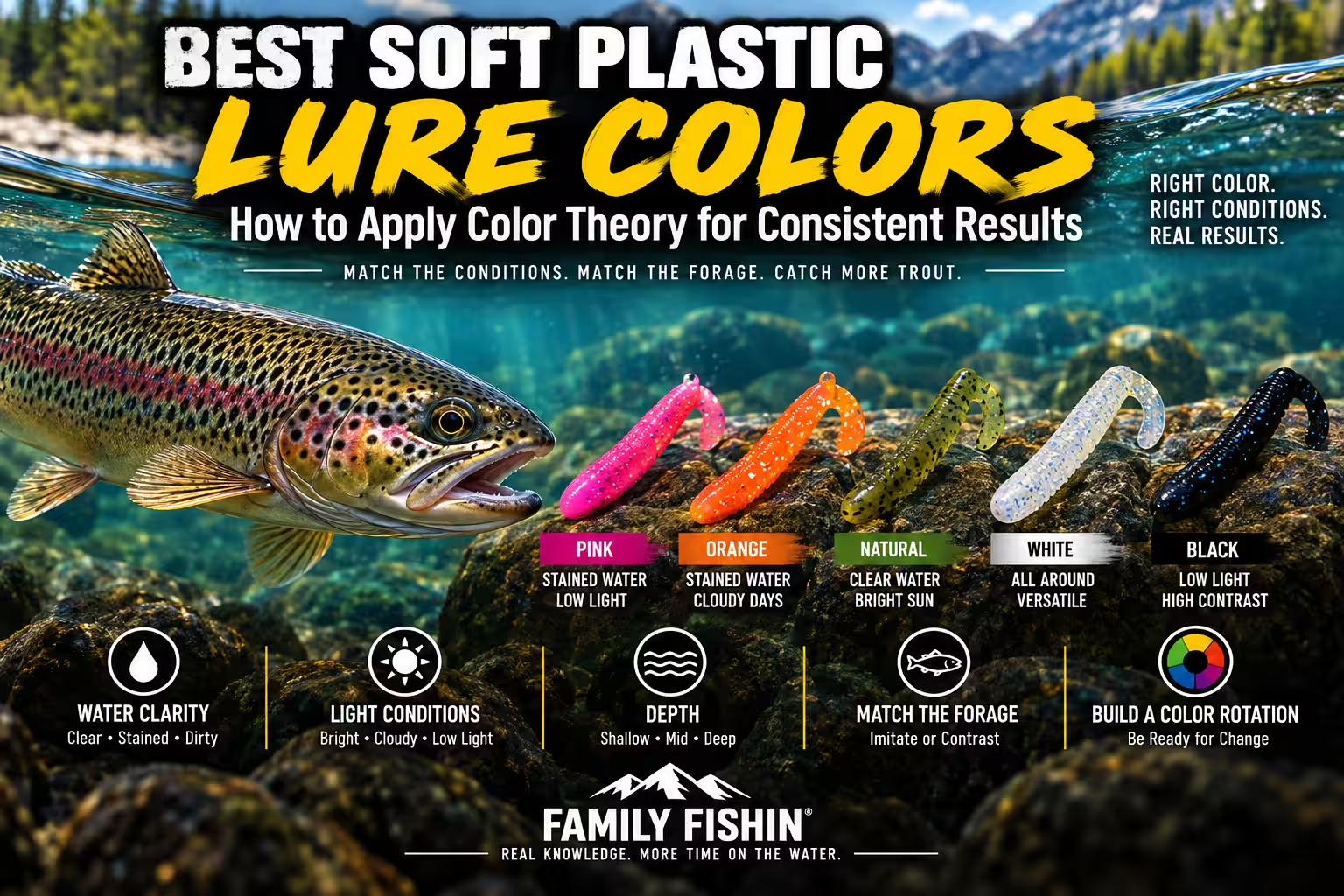
Green pumpkin remains one of the most dependable lure colors underwater because it retains useful visibility across many lighting conditions.
Ask experienced bass anglers to name the safest color choice in soft plastics and one answer comes up again and again: green pumpkin.
The important thing about green pumpkin is that it does not dominate any single category. It is not the brightest color, the darkest color, the most visible color, or the most realistic color in every situation. Its strength is that it lives in the middle.
Green pumpkin sits in a useful part of the visible spectrum and retains practical visibility across a wide range of underwater conditions. It remains recognizable in shallow water, moderately deep water, clear water, stained water, bright sun, and overcast conditions. Most lure colors excel in narrower windows. Green pumpkin performs reasonably well in many of them.
That versatility is what made it one of the most successful lure colors ever created. The lesson is not that green pumpkin is magic. The lesson is that a color that survives many lighting conditions can be more valuable than a color that is perfect in only one. Few lure colors have earned the reputation of Green Pumpkin. Its effectiveness comes not from excelling in one condition, but from performing reliably across almost all of them.
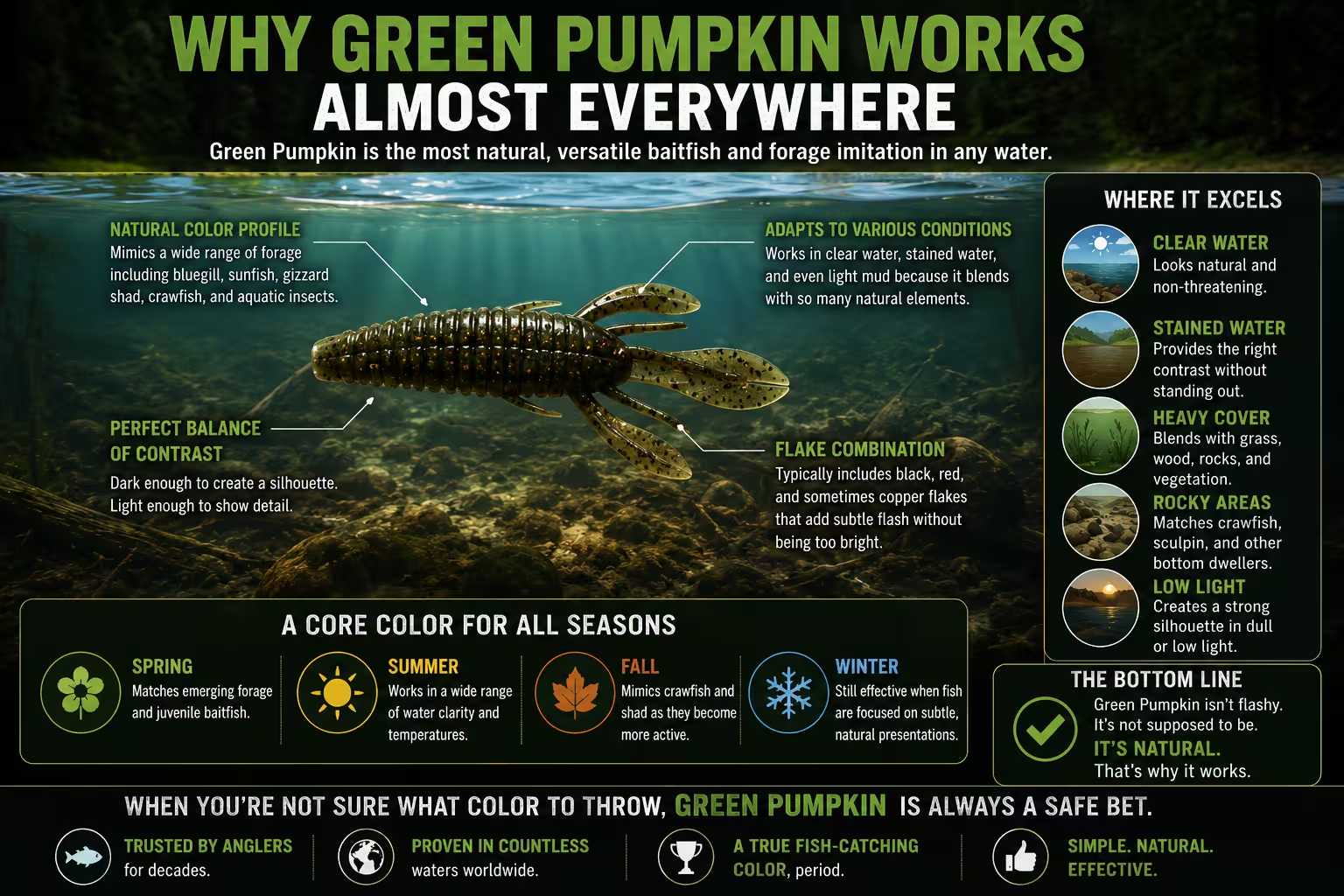
Green Pumpkin is not the brightest, darkest, or most visible lure color. Its strength is versatility, allowing it to remain effective when conditions change.
Why Black Often Outperforms Bright Colors
Many anglers assume black should disappear underwater because it reflects very little light. On the surface, that seems logical. If colors become less visible as light disappears, shouldn’t black become less visible too?
In many situations, the opposite happens.
As underwater light becomes increasingly limited, fish rely less on color and more on contrast. Contrast is simply the difference between an object and its background, and few colors create a stronger contrast than black.
Imagine looking upward from beneath the surface. The water above is often brighter than the water below, creating a naturally illuminated background. Against that brighter backdrop, a black lure produces a strong silhouette that can be easy for fish to detect. Even when color information is limited, fish can still recognize shape, movement, and profile.
This is why black worms, black jigs, and black buzzbaits remain highly effective in muddy water, deep water, low-light conditions, and night fishing. They are not succeeding because fish are attracted to the color black itself. They are succeeding because black creates a bold, easily detected silhouette. Among all lure colors underwater, black often creates the strongest silhouette when light becomes limited. Many anglers assume bright colors are easier for fish to see. In reality, black often creates the strongest visual signal because it produces a bold silhouette that stands out against available light.
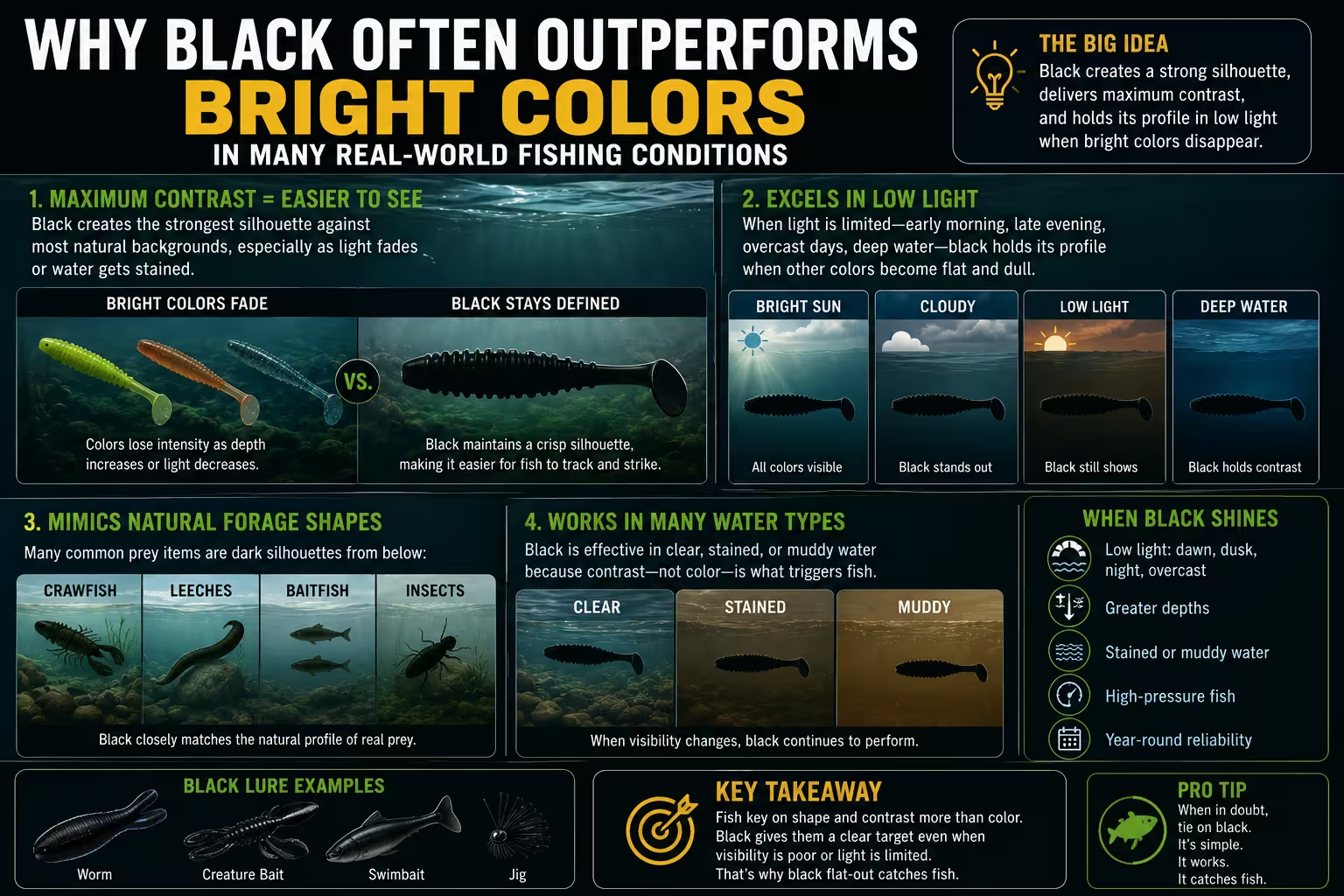
Black is not effective because it is bright. It is effective because it remains visible when contrast becomes more important than color.
The Silhouette Effect
One of the biggest misconceptions in fishing is that fish identify lures primarily by color. In reality, color is only one piece of a much larger visual puzzle.
Fish also use shape, motion, flash, contrast, size, and overall profile when identifying potential prey. As light levels decrease, these non-color cues become increasingly important. Eventually, color information can become so limited that silhouette and contrast dominate what the fish sees.
A useful comparison is a bird flying across a sunset. You do not identify the bird because you can see its exact colors. You recognize it because you can see its outline against the brighter sky. Fish often rely on the same principle underwater.
At sufficient depth, in muddy water, or during low-light periods, a lure’s silhouette may contribute more to detection than its precise color. This does not mean color stops mattering. It means color only matters within the limits imposed by the available light. As available light decreases, fish rely less on color and more on the information that remains visible. In many situations, a lure’s silhouette becomes its most important visual feature.
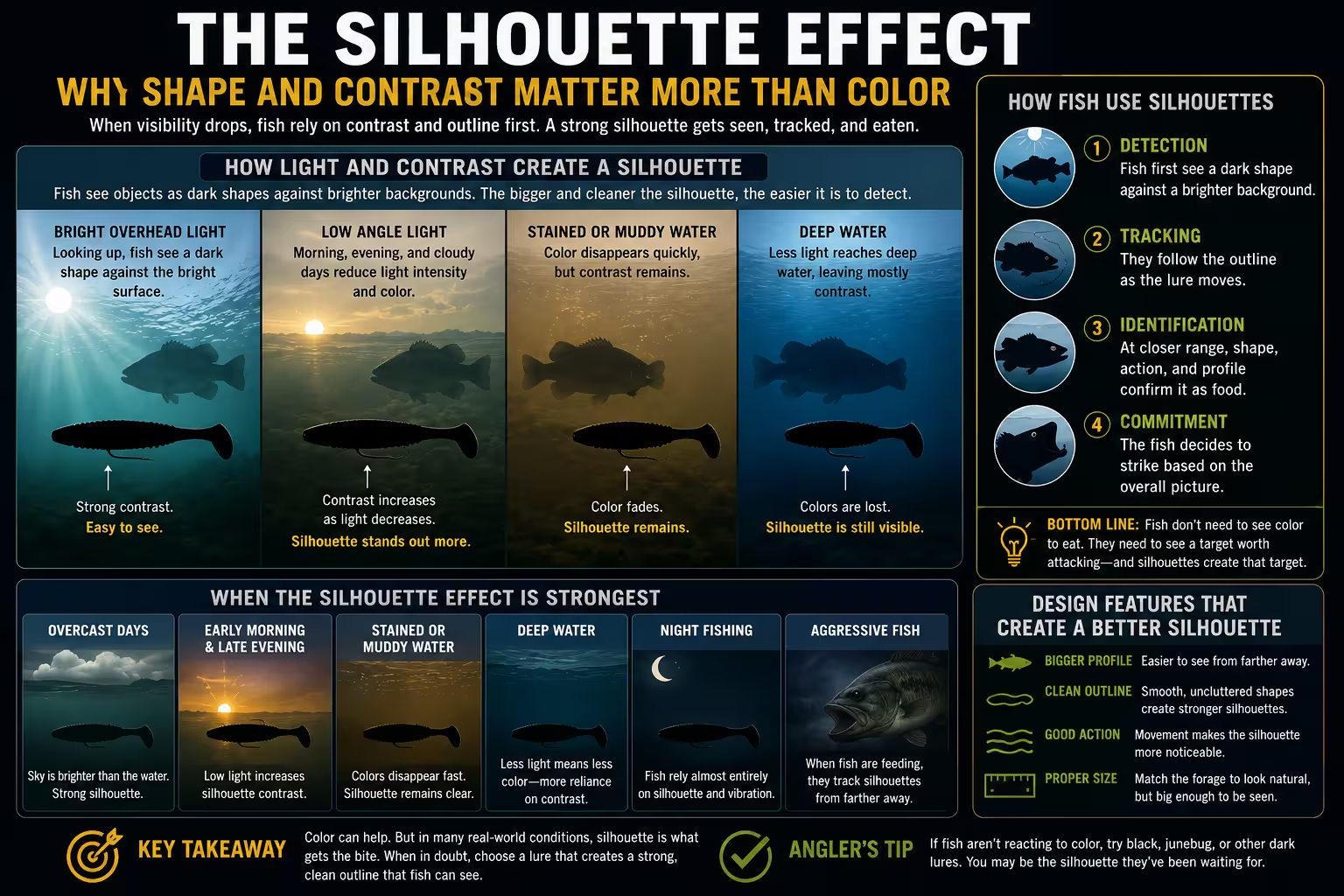
Fish cannot strike what they cannot detect. When color fades, silhouette, contrast, and movement often become the primary signals that trigger a response.
Why Chartreuse Dominates Stained Water
If green pumpkin is the king of versatility, chartreuse is the king of visibility.
There is a reason chartreuse appears in virtually every tackle store and remains one of the most popular lure colors ever created. It is designed to be noticed. While many natural colors focus on blending into the environment, chartreuse does the opposite by standing apart from its surroundings.
Its effectiveness comes from a combination of high brightness, strong contrast, and exceptional visibility. Many chartreuse formulations also incorporate fluorescent pigments, allowing them to absorb ultraviolet light and re-emit it as visible light. This can make chartreuse appear unusually bright under the right conditions.
The result is a color that remains highly noticeable when water clarity decreases and visibility becomes more challenging. This is why chartreuse tails, chartreuse accents, and chartreuse soft plastics have become staples in stained-water fishing. The goal is not realism. The goal is making the lure easier for fish to detect.
Few lure colors have earned the reputation of chartreuse. Its success comes from one simple advantage: when visibility becomes limited, fish can often see it when they struggle to see other colors.
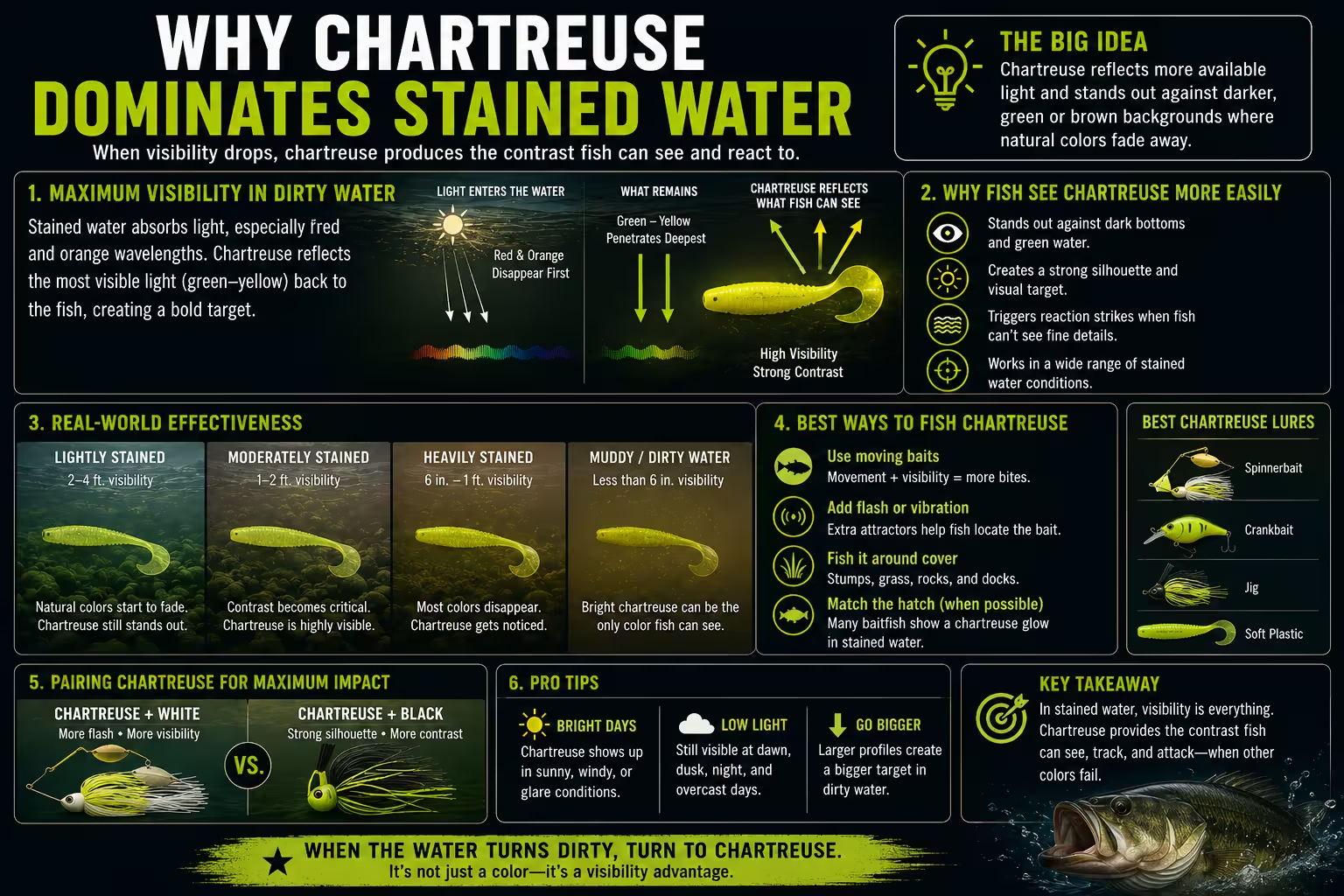
Chartreuse is not designed to look natural. It is designed to be seen, making it one of the most reliable choices whenever water clarity begins to decline.
Why Blue and Purple Shine in Deep Water
As depth increases, the underwater light environment changes dramatically. Longer wavelengths such as red, orange, and yellow are absorbed relatively quickly, while shorter wavelengths penetrate much deeper.
Because blue and violet wavelengths survive longer, colors that reflect those wavelengths often maintain useful visibility at greater depths. This helps explain why blue and purple have become reliable deep-water lure colors.
Many anglers discover this through experience before they ever learn the science behind it. Purple worms continue catching fish. Blue jigs remain productive. Blue-flake trailers stay visible when other colors begin to fade.
The reason is straightforward. As depth increases, the available light becomes increasingly dominated by the wavelengths that blue and purple lures reflect. The fish may not see the exact shade printed on the package, but these colors often retain visibility longer than colors dependent on wavelengths that have already been absorbed.
As sunlight travels deeper through the water column, the available spectrum becomes increasingly limited. Blue and purple benefit because they reflect wavelengths that survive longer than many other colors.
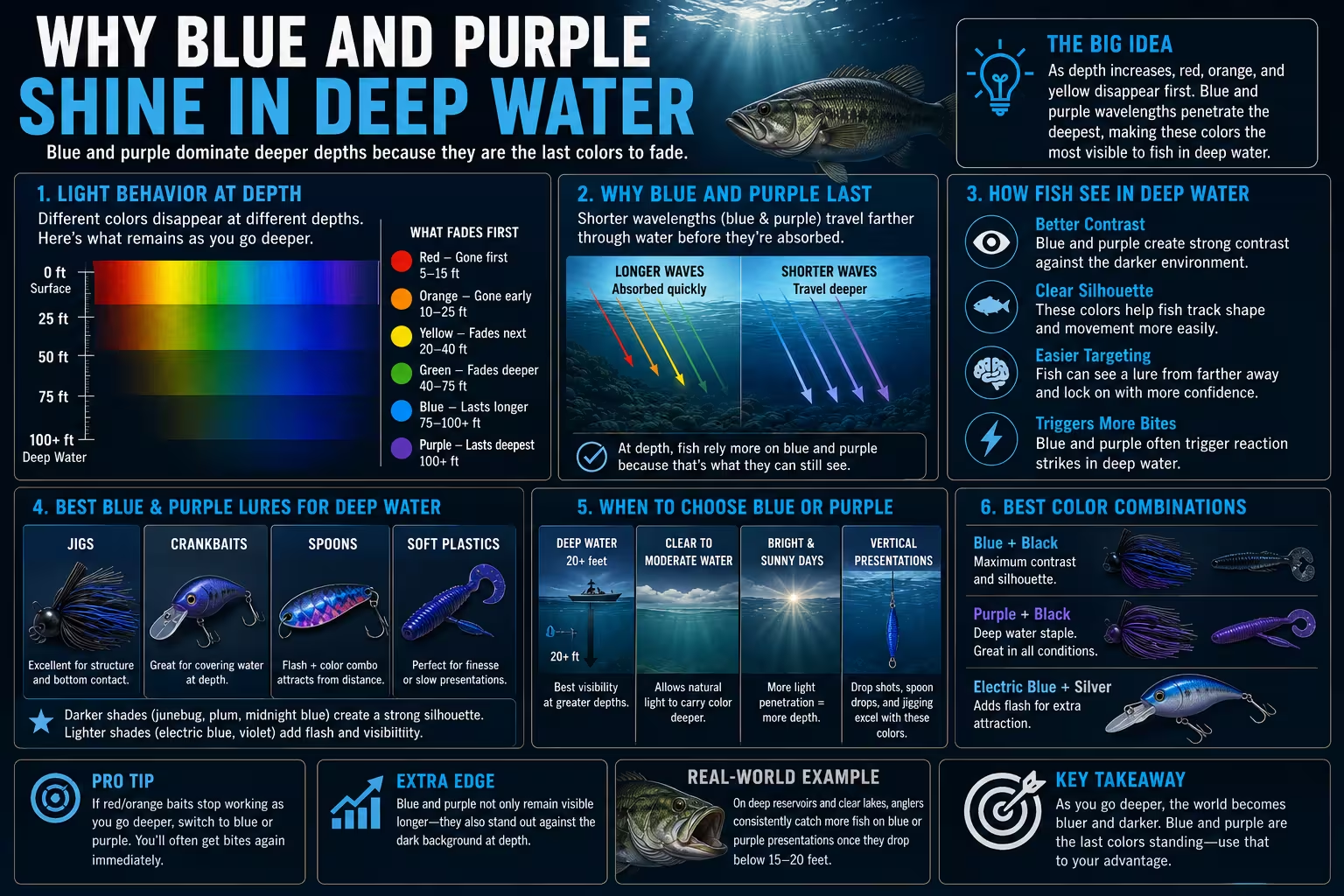
The fish may not see the exact shade printed on the package, but blue and purple often remain visible because they work with the wavelengths that still exist at depth.
Why White Behaves Differently
White occupies a unique position among lure colors because it does not depend on reflecting a narrow portion of the spectrum. Instead, a white lure reflects a broad range of available wavelengths.
As certain wavelengths disappear with depth, a white lure does not suddenly lose a specific color the way a red or orange lure might. Instead, it gradually becomes dimmer as the overall amount of available light decreases.
This broad reflectivity makes white remarkably versatile. It can imitate baitfish effectively, remains visible under a wide range of conditions, and often performs across surprisingly large depth ranges.
The tradeoff is that white depends heavily on available illumination. As light levels become extremely low, colors that create stronger silhouettes and contrast often begin outperforming it. In bright or moderately lit conditions, however, white remains one of the most versatile and widely effective lure colors available. White occupies a unique place in lure design because it behaves more like a reflector than a traditional color. That allows it to remain effective across a wider range of conditions than many anglers realize.
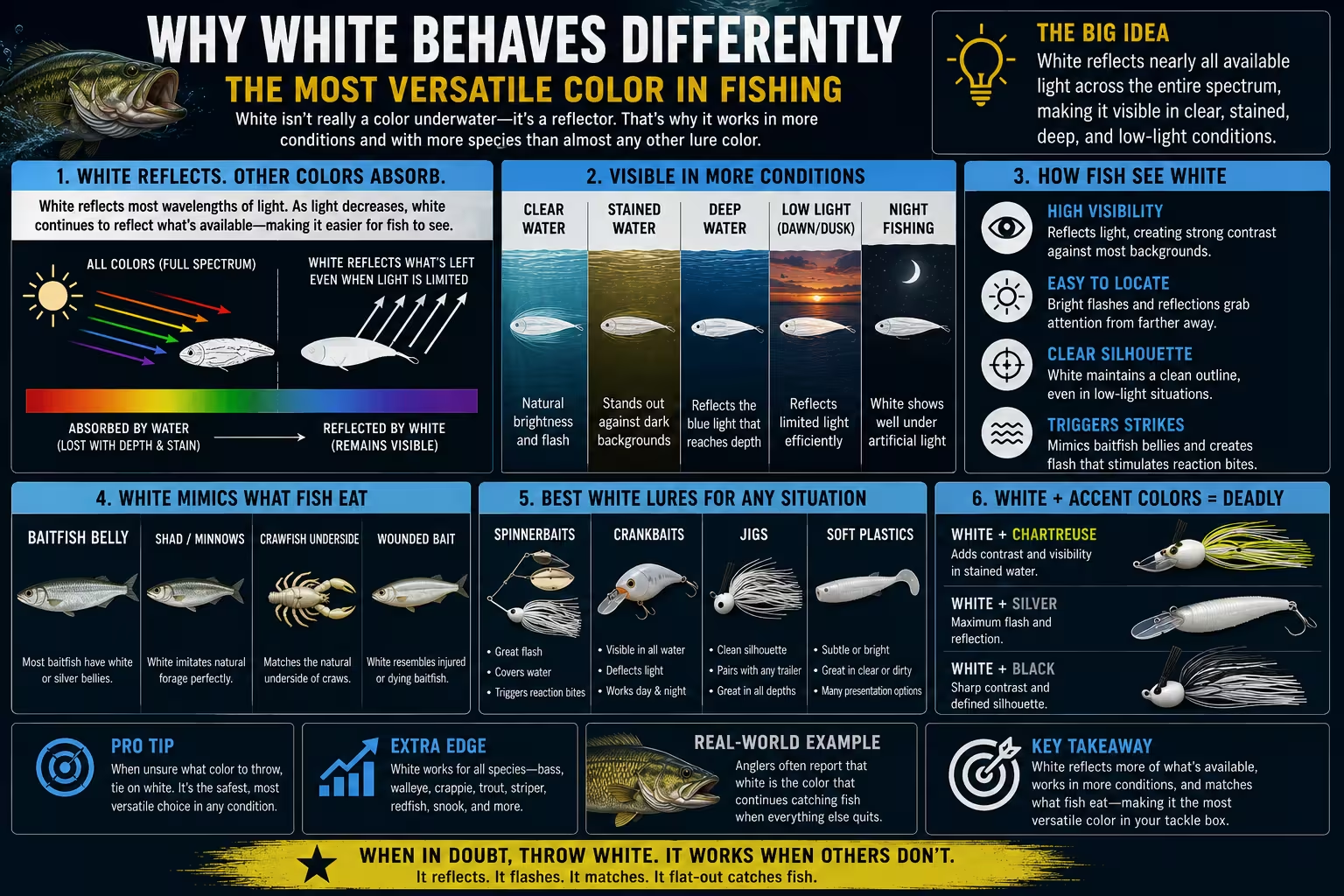
While many colors depend on specific wavelengths to remain visible, white works by reflecting whatever light is available, making it one of the most versatile lure colors ever created.
Metallic Finishes Play by Different Rules
Most lure colors rely on pigments, which work by absorbing certain wavelengths of light and reflecting others. Metallic finishes operate differently. Rather than selectively reflecting specific colors, metallic surfaces behave more like tiny mirrors, reflecting whatever light strikes them.
This creates flash, which is not the same thing as color. A silver blade, chrome finish, or metallic flake can attract attention even when color information is limited because it reflects available light with far greater intensity than most pigments. As the lure moves, these reflections create sudden bursts of brightness that can be seen from a considerable distance.
This is one reason spinnerbaits, spoons, blade baits, and metallic lure finishes have remained effective for generations. They are not relying solely on color. They are exploiting reflected light to create visibility and attract attention in situations where color alone may be less important. Most lure colors work by reflecting specific wavelengths of light. Metallic finishes operate differently, creating flash and reflection that can attract fish even when color plays a smaller role.
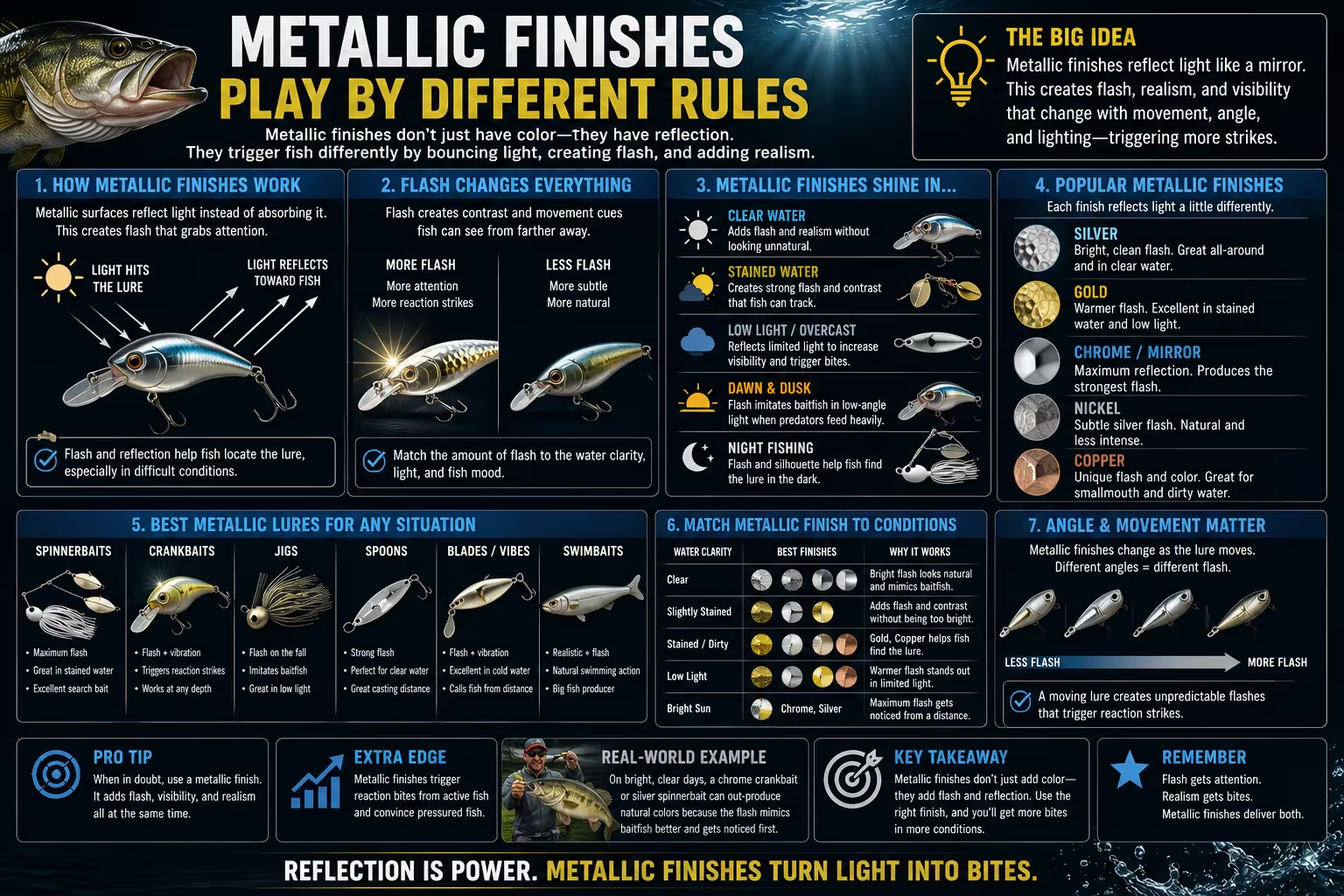
A metallic lure does not simply add color. It creates a moving reflection that changes with every shift in angle, light, and lure movement.
Glitter Is More Than Decoration
Many anglers think of glitter as a cosmetic feature, but it serves a practical optical purpose. Each glitter flake acts as a tiny reflective surface, catching and redirecting light as the lure moves through the water.
Those brief flashes can imitate the visual cues produced by baitfish scales, small prey movements, or other natural sources of reflected light. Rather than creating a single bright reflection, glitter produces numerous small flashes that constantly change as the lure moves and rotates.
Different glitter colors can produce different effects. Silver glitter reflects a broad range of available light and often creates the brightest flash. Gold glitter tends to emphasize warmer tones, while blue glitter can remain effective deeper in the water column where shorter wavelengths dominate.
The effectiveness of glitter has little to do with making a lure look attractive to anglers. Its real value lies in adding additional visual signals that help fish detect and track the lure.Many anglers think glitter is added for appearance, but its real purpose is far more practical. Each reflective flake creates tiny flashes that help a lure stand out underwater.
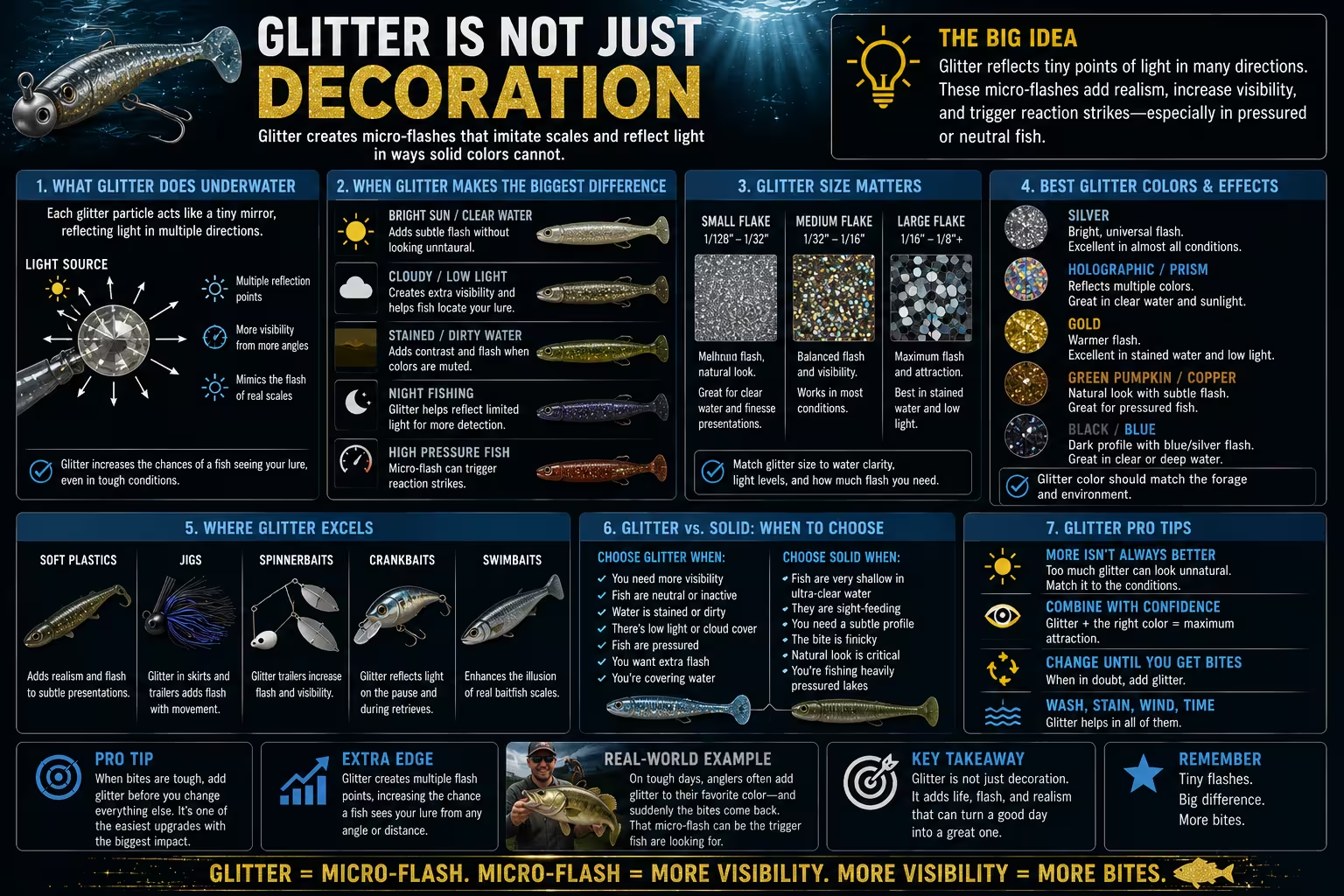
A single glitter flake may seem insignificant, but thousands of micro-reflections working together can dramatically increase a lure’s visibility and realism.
Translucent and Opaque Plastics Are Not the Same
Transparency is one of the most overlooked aspects of lure color. Two lures can contain identical pigments and still appear dramatically different underwater if one is opaque and the other is translucent.
An opaque lure reflects most of its appearance from the surface of the bait. A translucent lure allows light to penetrate into the body before reflecting back out, creating a softer, more natural appearance that often resembles the way many living aquatic organisms interact with light.
This is one reason translucent plastics frequently perform well in clear water, bright conditions, and heavily pressured fisheries. Their appearance tends to be more subtle and natural, making them less visually aggressive than highly opaque colors.
Opaque colors, on the other hand, often excel when maximum visibility, silhouette, or contrast is needed. Neither approach is inherently superior. They simply solve different visibility problems and perform best under different conditions. Color is only part of the equation. The way a lure handles light can dramatically change how natural, visible, or convincing it appears underwater.
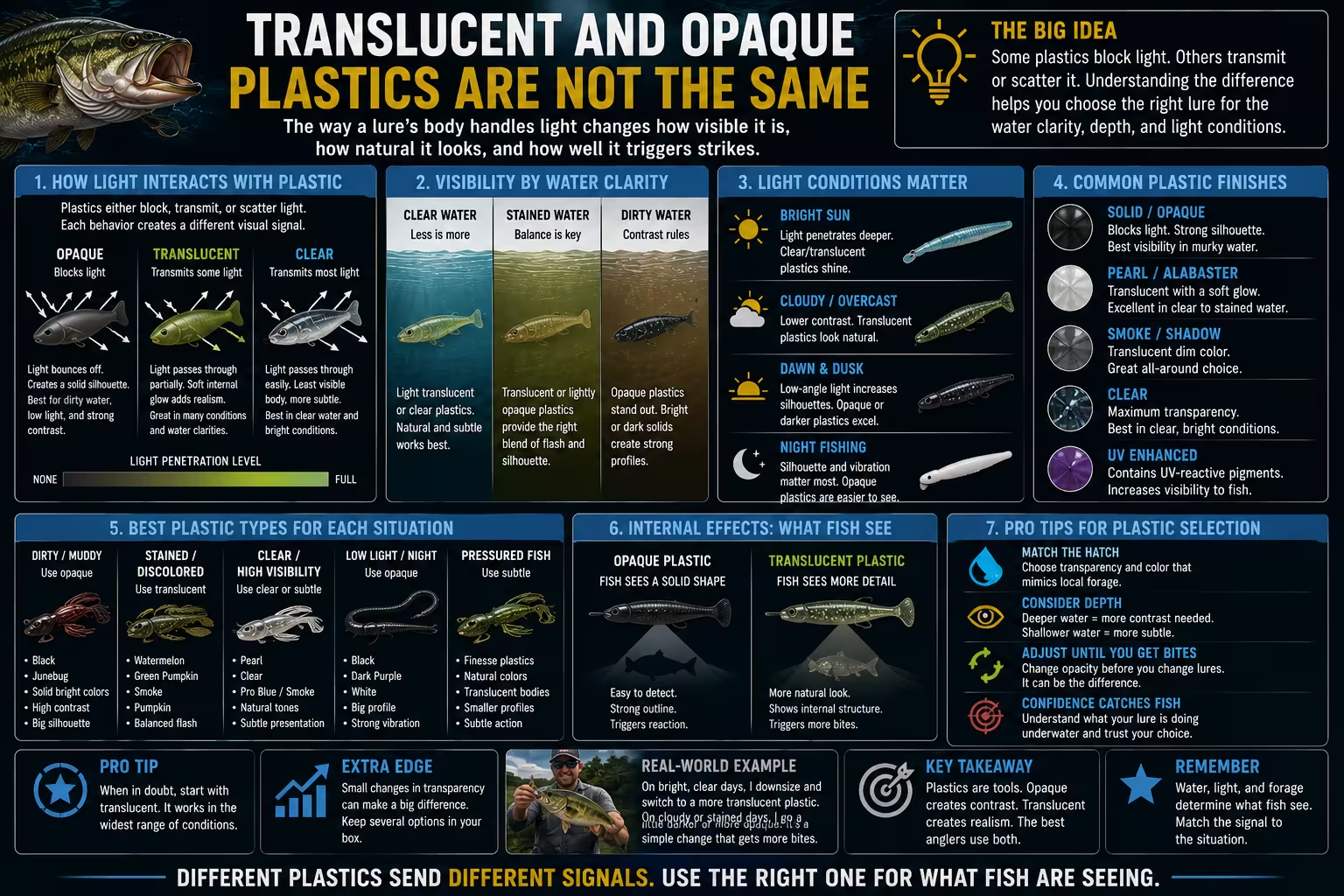
Many anglers focus on color while overlooking transparency. In some situations, changing from opaque to translucent can have a bigger impact than changing colors altogether.
Why Lure Colors Matter Less Than Most Anglers Think
This idea often surprises anglers because so much attention is placed on color selection. The reality is that color matters, but usually not as much as many people assume.
Before color can influence a fish’s decision, several other things must happen first. The fish has to detect the lure, notice it, recognize it as something worth investigating, and ultimately decide whether to approach or strike. At every stage of that process, factors other than color are already at work.
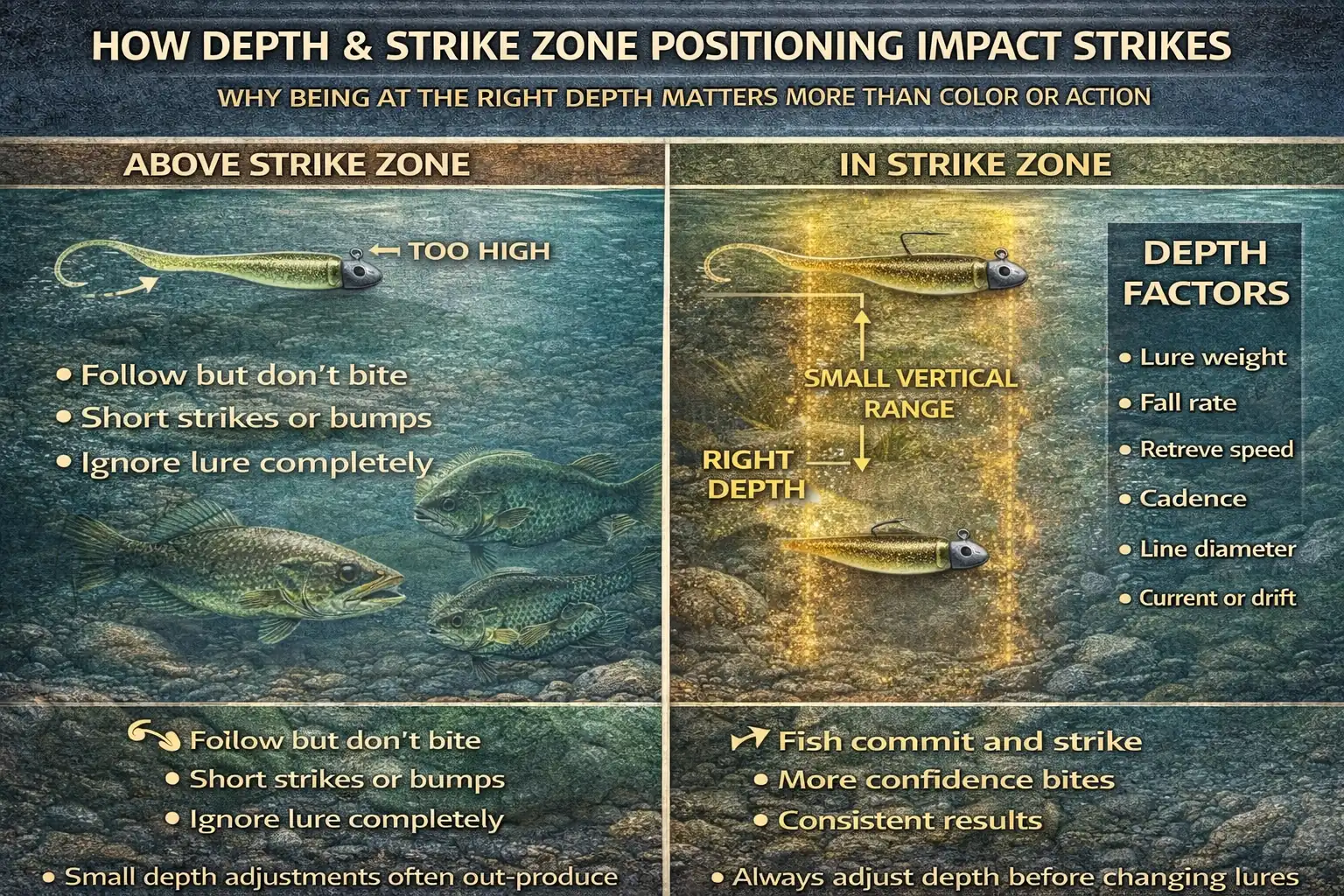
Location, depth, presentation, retrieve speed, lure action, profile, and contrast frequently have a greater influence on success than the exact shade of a lure. This helps explain why anglers often catch fish on several different colors during the same outing. In many situations, fish are responding more strongly to visibility, movement, or presentation than to subtle differences in hue.
None of this means color is unimportant. It simply means color exists within a much larger system. The most successful anglers understand that lure color is rarely the first problem to solve. More often, it is a refinement that helps optimize an already effective presentation.
Contrast Is Often More Important Than Color
If there is one concept that explains more fishing success than any single color recommendation, it is contrast. Fish can only react to what they can detect, and detection depends heavily on how clearly a lure stands out from its background.
A lure that blends perfectly into the surrounding water, bottom, weeds, or sky may be difficult to notice, even if its color is technically visible. A lure that creates a sharp contrast may attract attention even when its exact color is less important. This is why black works well in muddy water, chartreuse stands out in stained water, white performs around baitfish, and dark colors remain effective at night. Each one creates useful contrast in a specific visual environment.
The most successful anglers often choose colors not because they look attractive in the package, but because they remain visible against the background the fish is using. Understanding contrast turns lure color selection from guesswork into strategy.
Once you understand how water changes light, the next question becomes just as important: what does the fish’s visual system actually do with the light that survives?
How Fish See Lure Colors Underwater
Lure colors do not exist in isolation. Every lure sits inside an underwater environment where light is constantly being filtered, absorbed, scattered, and modified. But understanding the light is only half the story. The other half is understanding the viewer.
It does not matter what light reaches the lure if the fish cannot detect it. This is where many discussions about lure color go wrong. Anglers often assume fish see the same underwater world humans imagine from above the surface. In reality, fish evolved in a completely different visual environment. Their eyes were built for water. Ours were built for air.
Fish Eyes and Human Eyes Are Similar—But Not Identical
At a basic level, fish eyes work much like human eyes. Light enters through the front of the eye, the lens focuses that light onto the retina, and specialized cells in the retina convert the incoming light into electrical signals. The brain then turns those signals into an image.
The basic design is similar across vertebrates, but the details vary enormously. Different fish species evolved in different environments, including crystal-clear mountain streams, muddy rivers, deep lakes, coastal estuaries, and open ocean. Because each environment filters light differently, each species faces a different visual problem.
That is why a trout does not see exactly what a bass sees, a bass does not see exactly what a walleye sees, and none of them see the underwater world exactly the way humans do.
Rods and Cones: The Two Systems Behind Fish Vision
Like humans, fish rely on two primary types of light-sensitive cells in the retina: rods and cones. Each serves a different purpose, and understanding how they work helps explain why color can be critically important under some conditions and nearly irrelevant under others.
Rods are specialized for low-light vision. They are extremely sensitive to light and allow fish to see during dawn, dusk, at night, and in deeper water where illumination is limited. The tradeoff is that rods provide very little color information. Instead, they excel at detecting brightness, contrast, and movement.
Cones serve the opposite role. They are responsible for color vision and function best when sufficient light is available. Cones allow fish to distinguish between different wavelengths of light and perceive color differences within their environment. The brighter the conditions, the more useful cones become and the more color information a fish can process.
This creates an important transition in the underwater world. As light levels decrease, fish gradually rely less on color and more on brightness, movement, silhouette, and contrast. The same basic shift occurs in human vision. In bright daylight, color is easy to distinguish. In near darkness, shapes and movement remain visible long after color information has faded.
Why Colors Matter Less in Low Light
A simple way to understand this is to think about walking through your house in the middle of the night. You can still recognize furniture, doorways, and other objects. You can see shapes and detect movement, but accurately identifying colors becomes much more difficult.
Fish experience a similar transition underwater. As available light decreases, their ability to distinguish subtle color differences declines. At the same time, contrast, silhouette, brightness, and motion become increasingly important sources of information. This is one reason debates about the exact shade of a lure often become less meaningful in deep water, muddy water, or low-light conditions.
That doesn’t mean color stops mattering entirely. It means the fish may not be relying on color as heavily as anglers assume. Under some conditions, a lure’s visibility and contrast may contribute more to detection than its precise color.
Can Fish See Color?
The short answer is yes. Most sportfish can see color, and this is well supported by scientific research. The more interesting questions are which colors they can see, how accurately they can distinguish them, and how those abilities change under different lighting conditions.
The answers vary by species. Many fish possess multiple types of cone cells, allowing them to detect different portions of the visible spectrum. Some species likely see a range of colors similar to humans, while others may be more sensitive to certain wavelengths. Some fish can even detect portions of the spectrum that humans cannot see.
The important takeaway is that fish are not color-blind. However, they do not necessarily experience color the same way humans do. Their visual systems evolved in underwater environments where light is constantly being filtered, absorbed, and scattered. As a result, fish perceive color through a very different visual world than the one anglers experience above the surface.
The UV Vision Surprise
One of the most interesting discoveries in fish vision research is that some fish can detect ultraviolet (UV) light. Humans cannot see UV light, so to us it is completely invisible. For certain fish species, however, ultraviolet wavelengths may be part of the visual information they use to navigate their environment, locate prey, and identify objects in the water.
Researchers have documented UV sensitivity in a variety of fish species, particularly during specific stages of their development. That doesn’t mean every fish sees UV equally, nor does it mean UV-enhanced lures automatically outperform conventional lures. What it does mean is that the underwater world may contain visual information that anglers cannot directly observe.
This possibility is one reason UV-reflective lures have gained popularity. The theory is straightforward: if a fish can detect ultraviolet reflections and some prey items reflect UV light, then a UV-reflective lure may create additional visibility or contrast. Whether that advantage is meaningful depends on the species, water conditions, depth, and the amount of UV light available. The practical benefits are still debated, but the underlying science behind UV sensitivity in fish is well established.
Bass, Trout, and Walleye Don’t See the Same World
One of the biggest mistakes anglers make is treating fish vision as though every species sees the world the same way. In reality, different fish evolved in different environments, and their visual systems reflect those differences.
Bass are highly visual predators that often hunt in conditions where visibility is relatively good. Their vision is well suited for tracking movement, detecting prey, and distinguishing visual details. Because of this, color, contrast, and motion can all play important roles in how a bass locates and evaluates a lure.
Trout frequently live in clear-water environments where subtle visual cues are easier to detect. Their vision is highly refined for spotting prey, and color can become particularly important when visibility is high and fish have time to inspect potential food items.
Walleye occupy a different niche. They are famous for feeding during low-light periods and in conditions where visibility is limited. Their eyes are exceptionally efficient at gathering available light, allowing them to function effectively at dawn, dusk, and in deeper water. As a result, brightness, contrast, and silhouette often become more important than fine color distinctions.
The important takeaway is that there is no single “fish vision.” Different species evolved different solutions because they live in different optical environments. A lure color that excels for one species or habitat may not perform the same way in another.
What Does a Fish See at Depth?
This is where many anglers unintentionally make a faulty assumption. They imagine the fish sees the lure exactly as it appears in their hand, on a tackle shop shelf, or in a product photograph.
It doesn’t.
By the time light reaches a lure at depth and reflects back toward a fish, it has already been altered by the water. Some wavelengths have been absorbed, others have been scattered, and the remaining light may look very different from the sunlight available above the surface. As a result, the fish is not seeing the original color as it appeared out of the water. It is seeing whatever information remains after the underwater environment has filtered and reshaped the light.
Imagine a blue worm sitting thirty feet underwater. The fish does not see the package artwork, the tackle shop display, or the promotional photograph used to sell the lure. It only sees the wavelengths of light that survived the journey through the water. By the time light reaches the lure—and then reflects back toward the fish—it has already been altered by depth, water clarity, viewing angle, and the surrounding environment.
As a result, the lure a fish sees can be very different from the lure an angler sees above the surface. The deeper the lure travels, the more filtered the available light becomes, and the more the lure’s appearance changes with it.
Viewing Angle Changes Everything
Depth is only part of the story. The angle from which a fish views a lure can be just as important.
A fish looking upward experiences a different visual environment than a fish looking sideways, and a fish looking downward experiences yet another. This happens because light travels through different amounts of water depending on the viewing angle, changing both the quantity and quality of the light that reaches the fish.
Consider a bass positioned beneath a lure. The lure may be silhouetted against a bright surface or sky, making contrast far more important than color. In that situation, the fish may detect the lure primarily as a dark shape rather than a specific color.
Now imagine the same bass viewing that lure horizontally through clear water. In this case, more color information may be available, allowing the fish to distinguish details that were invisible in the silhouette scenario.
The lure itself has not changed. The light environment and viewing geometry have. This is one reason simple rules about lure color often fail. Real underwater environments are dynamic, and fish are constantly viewing lures from different positions and under different lighting conditions.
The Biggest Myth About Fish Vision
One of the most persistent myths in fishing is that fish cannot see color. The opposite claim—that color is everything—is equally misleading.
The truth lies somewhere in between.
Most sportfish can see color, but color is only one part of the visual information they use to identify and track prey. Fish also rely heavily on contrast, motion, shape, flash, brightness, and overall profile. Which of these cues matters most depends on the conditions.
In bright, clear water, color may play a significant role because enough light is available for fish to distinguish subtle differences between lures. In muddy water, contrast often becomes more important because much of the color information has been lost. At night, silhouette and movement may become more important than either color or contrast.
Because of this, the most useful question is not whether color matters. The better question is: how much does color matter under these specific conditions?
Choosing Lure Colors Underwater for Real Conditions
Understanding underwater light and fish vision gives anglers a more practical way to choose lure colors. The goal is not to find one perfect color for every situation. The goal is to match the lure’s visibility, contrast, and realism to the water conditions the fish are actually experiencing.
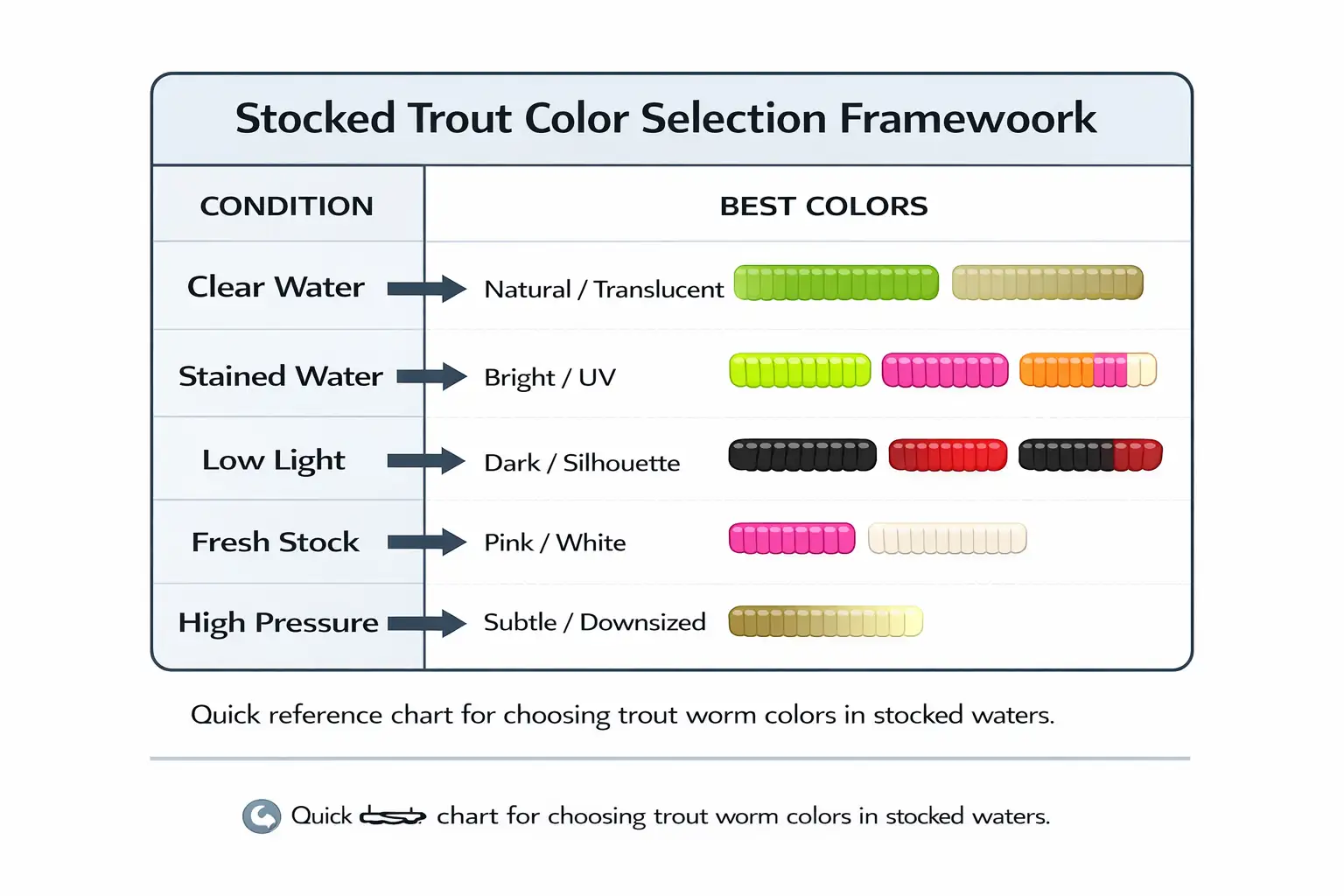
In clear, shallow water, natural colors usually excel. Fish have enough light to inspect the lure more closely, so subtle colors such as green pumpkin, watermelon, smoke, and natural baitfish patterns often look more believable. In these conditions, the goal is usually realism rather than maximum visibility.
In deep, clear water, colors that survive depth become more valuable. Blue, purple, and fluorescent accents often remain useful because shorter wavelengths penetrate deeper than red, orange, and yellow. At depth, visibility becomes more important, and colors that still reflect available light can stand out better than colors that have already lost their illumination.
In stained water, contrast and visibility become more important than subtle realism. Chartreuse, black, black-and-blue, and fluorescent colors can help a lure stand out when the water filters and scatters light. These colors are not always natural-looking, but they give fish a stronger visual target in conditions where muted colors may disappear.
In muddy water, silhouette often matters more than color. Black, junebug, and strong contrast patterns can produce better visibility because they create a clearer outline against the surrounding water. When fine color detail is lost, fish are more likely to respond to shape, movement, vibration, and contrast.
At night, color becomes secondary. Profile and contrast become the main visual cues. Black frequently performs extremely well because it creates a strong silhouette against the limited light available from the moon, sky glow, dock lights, or nearby surface brightness.
The Real Lesson of Underwater Color
The biggest mistake anglers make is focusing on what a lure looks like in their hand.
Fish never see a lure the way an angler sees it in a tackle box or holding it in hand. By the time a lure reaches a fish, the light illuminating it has already been altered by the water around it. Depth removes certain wavelengths, water clarity changes how light travels, and the fish’s own visual system further influences how that lure appears.
This is why lure color is not a fixed property. A lure’s appearance is the result of an ongoing interaction between the lure itself, the available light, the water it is moving through, and the fish viewing it. Change any one of those variables and the lure can appear dramatically different.
The most successful anglers understand this relationship. Rather than choosing colors based solely on how they look above water, they choose colors based on the conditions the fish are experiencing below the surface. Once you understand how light, water, and fish vision work together, lure color selection becomes less about guesswork and more about making informed decisions.
Frequently Asked Questions
Why do lure colors change underwater?
Water absorbs and scatters light as depth increases. Because different wavelengths disappear at different rates, lure colors change as the available light changes.
What color disappears first underwater?
Red wavelengths are generally absorbed first, followed by orange and yellow. The exact depth depends on water conditions.
Why do red lures still catch fish?
Even after red light disappears, a red lure often appears dark and creates useful contrast against its surroundings.
What colors stay visible deepest?
Blue, violet, and some ultraviolet wavelengths typically penetrate deeper than red, orange, and yellow wavelengths.
Does water clarity affect lure color?
Yes. Water clarity often has as much impact as depth. Muddy and stained water can dramatically alter how colors appear.
Can fish see color?
Most sportfish can see color, although the specific colors and conditions vary by species.
Can fish see ultraviolet light?
Some fish species can detect ultraviolet wavelengths that humans cannot see, which is one reason UV-reflective lures became popular.
Is color the most important factor in lure selection?
Usually not. Location, presentation, depth, action, and contrast often influence success more than precise lure color.
The Bottom Line
Lure colors change underwater because water is constantly filtering light. As depth increases, some wavelengths disappear while others survive, altering the colors available for lures to reflect. Water clarity, scattering, depth, viewing angle, and fish vision all influence what a fish ultimately sees.
The result is that fish rarely see the same lure color anglers see above water. A red worm may become dark. A chartreuse bait may remain highly visible. A black lure may stand out through silhouette alone. Understanding these changes transforms lure color from a matter of guesswork into a matter of physics.
In the previous article, we explored how contrast influences lure visibility. Next, we’ll dive deeper into fish vision itself, examining how different species process color, motion, brightness, and ultraviolet light beneath the surface.
About Family Fishin
Family Fishin is a family-owned fishing tackle company dedicated to designing, testing, and producing high-quality fishing lures — inspired by generations of fishing tradition and driven by a passion for innovation. Every product is developed with one goal in mind: helping anglers spend more time doing what they love, catching fish and creating memories on the water.