Color-Changing Lures: How Photochromic Lures (Sun-Activated) Actually Work
Photochromic lures can look completely different depending on the sunlight. Pull a certain kind of soft plastic out of a shady tackle box and it looks pale, almost washed out. Hold it in the sun for a few seconds and it blooms into a vivid color. Move it back into shade and it fades again. That’s not a gimmick paint job — it’s photochromic pigment, the same technology in eyeglasses that darken outdoors and clear up inside. It’s a genuinely cool effect with a real, specific use on the water, and also some honest limitations worth knowing before you chase it. Here’s how sun-activated color-change baits work and where they fit.
You’ve Already Seen This: Transition Lenses
The fastest way to understand photochromic lures is glasses. Transition (photochromic) eyeglass lenses are clear indoors and darken automatically in sunlight, then clear again when you go back inside. They’re doing exactly what a photochromic lure does: responding to the UV light in sunlight by changing color, and reversing in its absence. Same chemistry, same trigger. So when you picture a color-changing bait, picture your buddy’s sunglasses lenses — pale in the shade, colored in the sun, switching on their own.
Where Photochromic Fits in the Effect-Pigment Family
“Color-changing” and “UV” and “glow” get tangled together constantly, so here’s the whole family lined up by what triggers them:
- Glow (phosphorescent): stores light, then emits its own glow in the dark. (Covered in the glow-in-the-dark lures.)
- Fluorescent: converts UV/short light into bright visible light, but only while it’s lit. (Covered in the fluorescent lures post.)
- Photochromic: changes color when UV light hits it, and reverts in shade. Triggered by light. (This article.)
- Thermochromic: changes color with temperature, not light. Triggered by heat. (Covered in thermochromic lures.)
The clean way to keep them straight: glow makes light, fluorescent amplifies light, photochromic changes color with light, and thermochromic changes color with heat. This post is the light-triggered color-changer.
How Photochromic Lures Actually Work
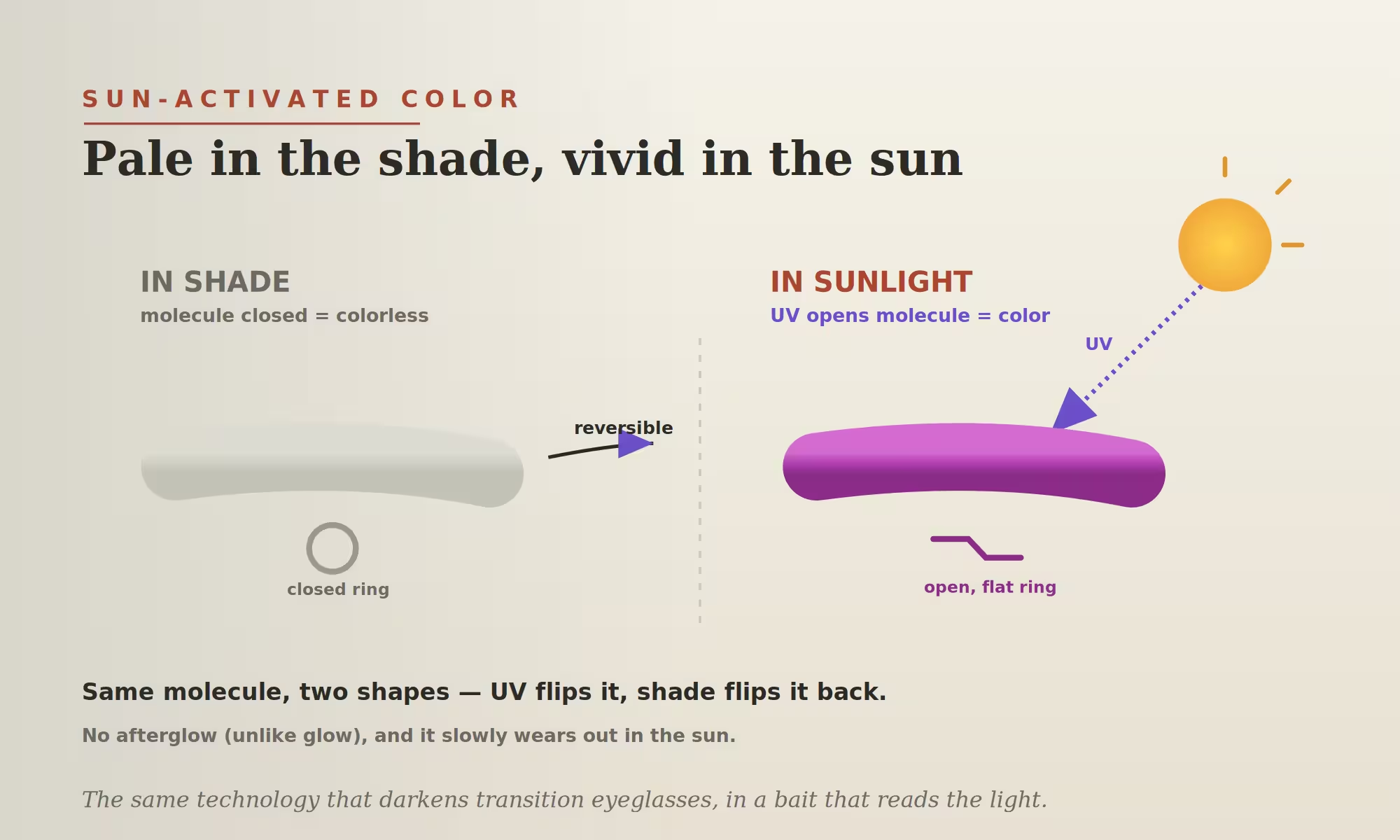
The effect comes from a single molecule that can take two different shapes — and the two shapes are different colors. The common photochromic molecules (with names like spiropyran and naphthopyran) have a closed, folded form that’s colorless and an open, flattened form that’s colored.
Here’s the switch. In its resting state, the molecule is folded up at a single “hinge” carbon, and that fold keeps its two halves electronically separate — so it can’t absorb visible light, and it looks clear. When UV light hits it, the energy breaks a specific bond at that hinge and the ring opens up. Now the molecule flattens out, its two halves connect electronically, and electrons can spread across the whole flat structure. That spread-out electron system can absorb visible light — so the molecule now has a color. UV light literally reshapes the molecule from a colorless folded form into a colored flat one.
Take the UV away — step into shade, or bring the bait indoors — and the molecule relaxes back: the bond reforms, it folds up again, and the color disappears. For the common types, this reversal happens on its own (driven by ordinary warmth) with no special trigger needed. So the cycle is simple: UV opens it and color appears; no UV, it closes and color fades. Over and over, reversibly.
If you want the proper name for the trick: the colorless folded form is the “spiro” form, and the colored open form is called merocyanine. The whole effect is just the molecule flipping between spiro (clear) and merocyanine (colored) — a tiny, reversible structural shape-change you can watch happen with your eyes. Nothing is added or removed; the same molecule simply changes shape, and the shape determines the color.
A Quick History
Photochromism isn’t new — scientists noticed certain compounds changing color in light back in the 1800s. But it became a household thing with photochromic eyeglass lenses, which went from early glass versions to the fast, plastic “transition” lenses most people recognize today. That eyewear demand drove decades of chemistry aimed at faster switching, deeper colors, and longer life — the same molecule families (especially naphthopyrans) that now show up in color-change inks, novelty products, and the occasional fishing lure. So a color-changing bait is riding on technology perfected to darken your sunglasses.
How Fast, and How Reversible
The switching is reasonably quick. Color develops within a few seconds to perhaps half a minute of strong UV/sun exposure, and fades back over seconds to a few minutes once the UV is gone (the fade is usually slower than the coloring). The most common photochromic types used in consumer products revert thermally — meaning they clear themselves in the shade automatically, no second light or trigger required. So in practice: cast into the sun and it colors up; drop it into a shaded pocket or down deep and it fades. It’s a continuous, automatic response to how much UV is reaching the bait.
Not All Photochromics Are Equal
There are a few different molecule families, and they trade off against each other — worth knowing because it explains why some color-change products are better than others:
- Spiropyrans and spirooxazines color up fast and are common and affordable, but they tend to fade quickly and wear out (fatigue) faster. The spirooxazines switch especially fast but fade fast too.
- Naphthopyrans give deeper, richer colors and are the workhorse of photochromic eyeglasses, but can leave a faint residual tint after fading and are a bit more complex.
- Diarylethenes and fulgides are the exotic, high-end families — extraordinarily fatigue-resistant (some survive tens of thousands of cycles) and very stable, but expensive and specialized.
There’s also a deeper split in how they reverse. T-type photochromics (spiropyrans, spirooxazines, naphthopyrans) revert thermally — they clear themselves in the dark on their own, which is what you want for a lure. P-type photochromics (diarylethenes, fulgides) are photochemically reversible — they need a different wavelength of light to switch back and otherwise stay put, which makes them incredibly stable but less “automatic.” For fishing, you want a T-type that resets itself in the shade.
What Colors Can It Do?
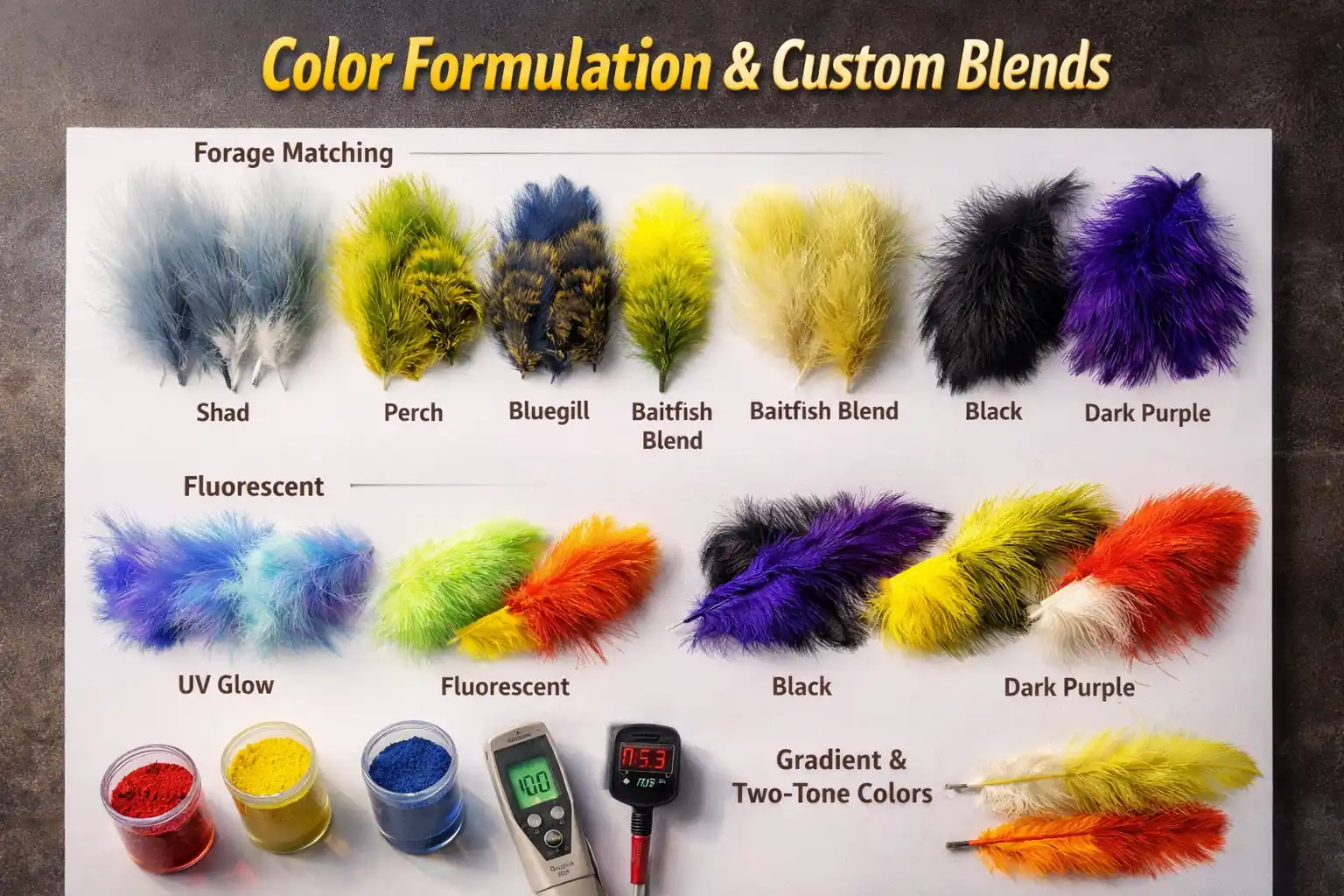
Photochromic effects come in two flavors. The classic is clear-to-color: the bait looks pale or translucent in shade and blooms into a vivid color (pink, purple, blue, etc.) in the sun. The other is color-to-color, built by combining a normal fixed pigment with a photochromic one — so the bait is, say, a soft natural tone in the shade that shifts to a louder two-tone in the sun as the photochromic layer kicks in on top of the base. That second approach is often the more useful for fishing, because the bait is never invisible — it just changes character between low and high light, which is exactly the behavior you’d want as it moves between shallow sun and shaded or deeper water.
The Genuinely Cool Fishing Angle
This automatic response to changing light conditions is what makes photochromic lures unique among effect pigments. Here’s why this isn’t just a novelty. UV light is strongest at the surface and in bright sun, and it drops off as you go deeper or into shade or stained water. A photochromic bait responds to exactly that. So you can build a bait that:
- Shows color in bright sun and shallow water, where UV is abundant — and automatically fades toward clear as it sinks deep or the light dims, where UV runs out.
- Changes between a sunny flat and a shaded bank on its own, no swapping baits.
- Goes from one look to another as clouds come and go.
That’s a lure that automatically matches itself to the light condition — vivid and visible up shallow in the sun, naturally subdued down deep where a subtler look often wins. Whether fish reward that is its own question (and a matter of conditions and the perception science in the color series), but the behavior is real and genuinely different from any fixed-color bait: the bait reads the light and adjusts.
Clear Water Helps It; Stained Water and Cold Change the Timing
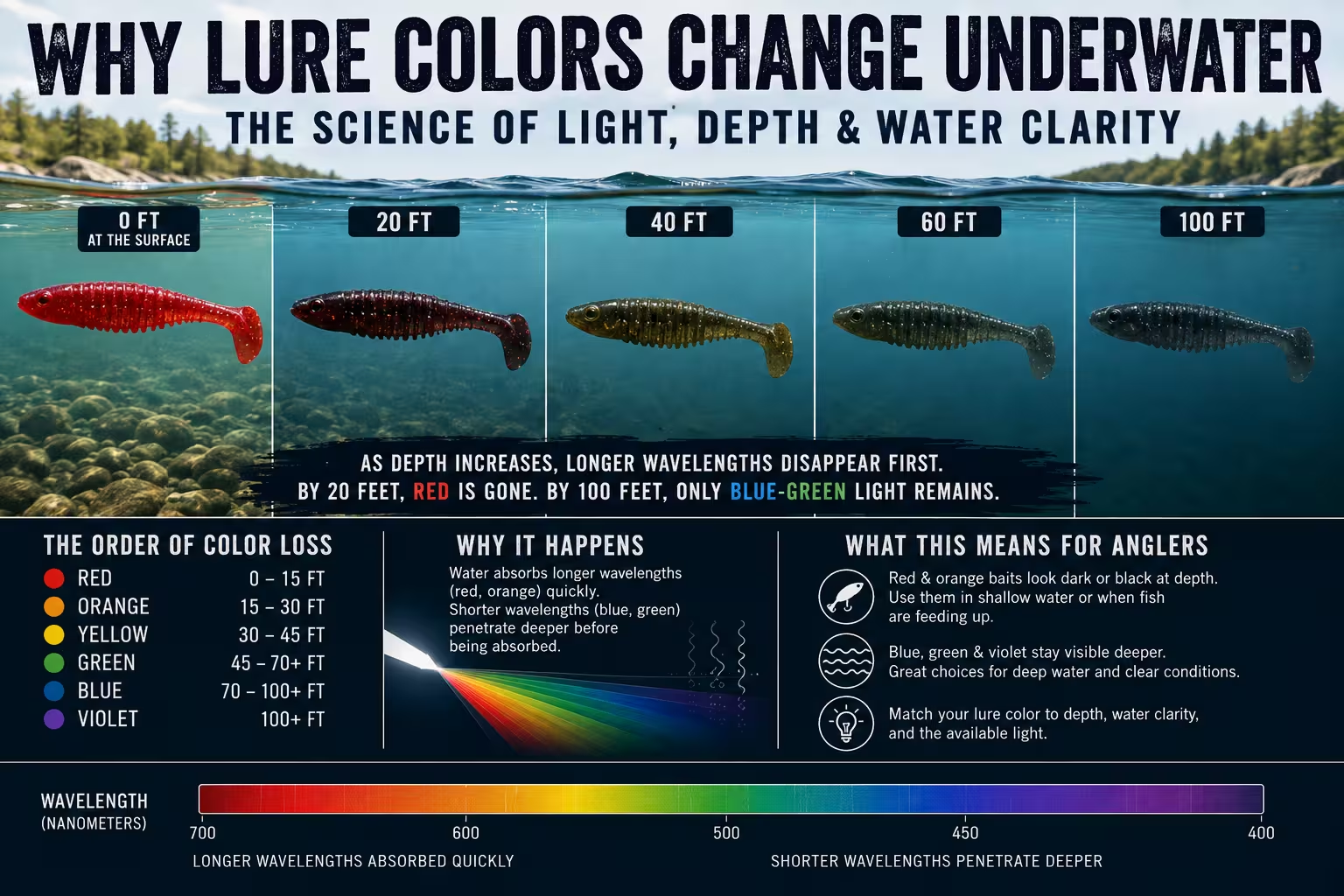
Two water factors shape how a photochromic bait actually behaves. First, water clarity controls how deep the effect reaches. UV penetrates clear water surprisingly well (short wavelengths go deepest), so in clear water a photochromic bait can stay colored fairly deep before fading. In stained or muddy water, UV is filtered out near the surface, so the bait reverts to its pale state quickly as it sinks — it’ll only show color right up top. So the same bait behaves differently depending on clarity, which is either a feature or a frustration depending on how you think about it.
Second, temperature changes the fade speed. Because the common (T-type) photochromics revert using ordinary heat, they fade faster in warm water and slower in cold. In cold winter water a photochromic bait will hold its sun-triggered color noticeably longer after dipping into shade; in warm summer water it snaps back to clear faster. It’s a small thing, but it means the bait’s behavior shifts with the season — and it’s a neat preview of the next effect, where temperature isn’t a side factor but the whole trigger (see thermochromic lures).
Stacking It With Other Effects
Because photochromic only changes color, it can ride on top of the other effects. Pair it with a glow element and you get a bait that changes color in the sun and glows when it’s truly dark — covering bright, shaded, and lightless conditions in one lure. Combine it with a fixed fluorescent base and the bait has a loud baseline that shifts character in sun. These combinations are exotic and fiddly to make (you’re stacking fragile, finicky additives), but they show why effect pigments are best understood as a toolkit you can layer, not single-use tricks.
The Honest Catch: Photofatigue and Heat
The limited lifespan of the pigment is one reason photochromic lures remain a specialty product. Now the part that keeps photochromic baits niche rather than mainstream, and you should know it going in. Photochromic pigments are organic molecules, and that makes them fragile in two ways that glow and most pigments aren’t:
- They wear out in sunlight (photofatigue). The same UV that triggers the color change also slowly destroys the molecules over many cycles. So a photochromic bait’s color-change effect isn’t permanent — after a season of repeated sun exposure, the switching gets weaker and eventually quits. It’s a consumable effect, not a forever one. (Some advanced photochromic chemistries resist fatigue far better, but they’re exotic and expensive.)
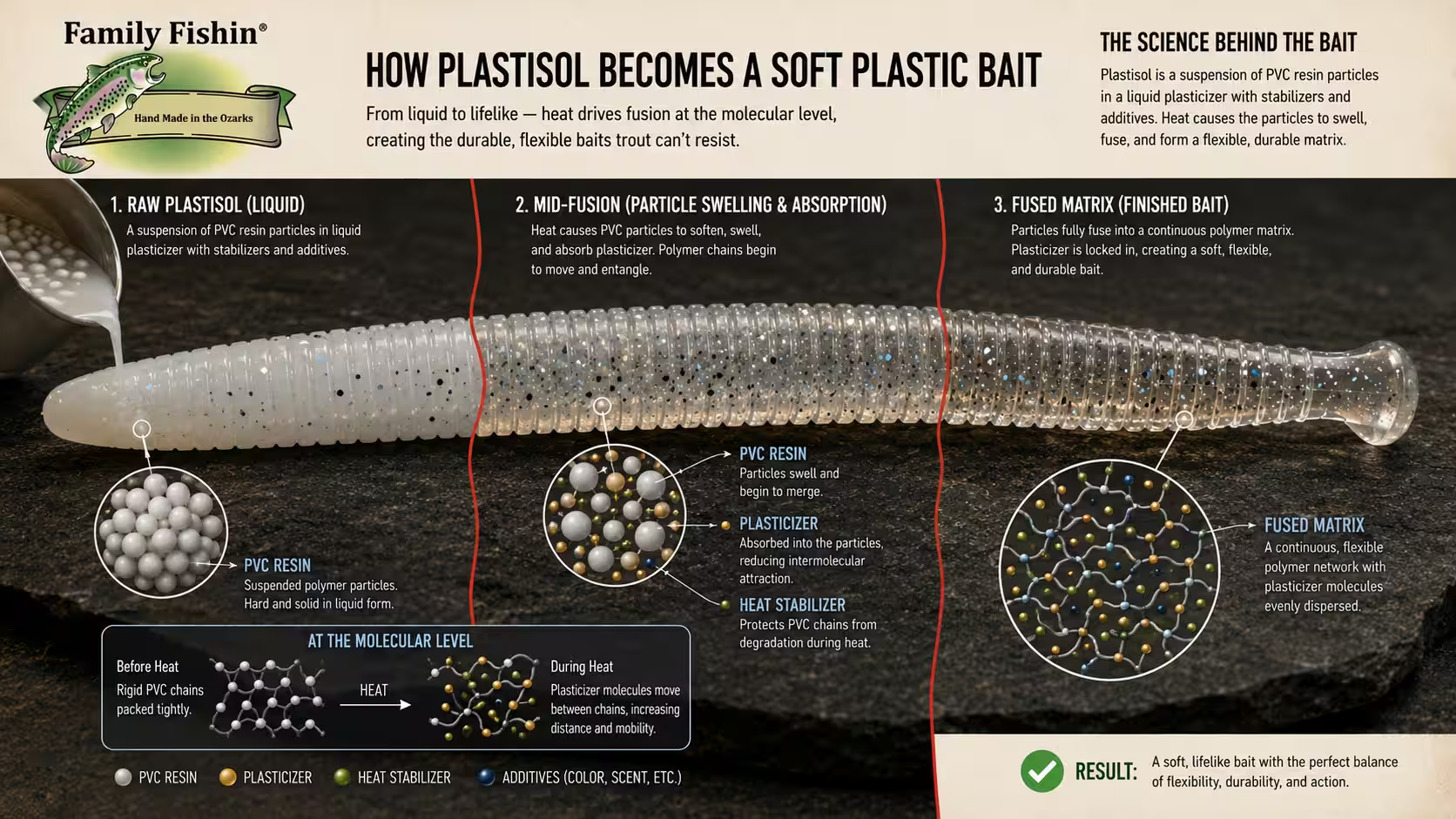
- They’re heat-sensitive, which fights the pouring process. Plastisol has to be fused at high temperature, and that heat can damage or destroy delicate photochromic molecules. This makes them genuinely hard to pour with — they usually have to be microencapsulated (sealed in tiny protective shells) and added carefully, and even then they’re touchier than a normal pigment.
Add in that photochromic pigment is more expensive than ordinary colorant, and you can see why it’s a specialty effect rather than a staple. It’s a real, working technology — just a fussy, finite, premium one.
For the Pourer: Working With Photochromic Pigment
Most photochromic lures rely on microencapsulated pigments to protect the color-changing molecules. If you want to try it, go in with realistic expectations:
- Use microencapsulated photochromic pigment made for plastics, and follow its temperature limits closely — overheating kills the effect (and you’ll never see it work). This is the opposite of glow pigment, which shrugs off heat; photochromic is the fragile one.
- Add it as cool as the process allows and avoid prolonged high heat. Some pourers add delicate additives toward the end / at the lowest workable temperature.
- Build on a clear or translucent base so the color change is visible — burying it in opaque plastic hides the effect.
- Expect a limited lifespan. Tell yourself (and any customer) up front that the color-change effect fades with sun exposure over time. That’s the nature of the material, not a defect.
- Don’t expect glow-like robustness. If you want a durable, heat-proof, long-lived effect, glow pigment is the tougher choice; photochromic trades durability for its unique trick.
When Photochromic Lures Are Worth Using
Photochromic is a specialty play, and honesty serves you better than hype here:
- As a sun/depth-responsive bait — the legitimately interesting use, where you want the bait to be loud shallow-and-sunny and subtle deep-and-shaded, automatically.
- As a novelty or premium product — a color-changing bait has real shelf and demo appeal; people are drawn to watching it change in their hand in the sun.
- For matching fast-changing light — sun-and-clouds days where the bait adjusts itself.
It’s not the tool when you need durability, dark-water performance (that’s glow), low-light amplification (that’s fluorescent), or a cheap reliable workhorse. Think of photochromic as the clever specialist of the effect-pigment family — a real trick with a real cost.
Triggering It On Demand (and Why It Won’t Stick)
Here’s a trick that connects back to glow: since UV light is what activates a photochromic bait, you can trigger the color yourself with a UV flashlight — the same tool you’d use to charge glow baits. Hit a photochromic bait with UV and it colors up on command, even in the shade or before a night cast. But here’s the crucial difference from glow: photochromic color is not stored. The moment the UV stops and the bait sits in low light, it starts fading right back to clear — it doesn’t hold the color the way a charged glow bait holds its glow. So a UV zap gives you a temporary color you’ll watch drain away over the next minute or two, not a lasting effect. That’s the fundamental divide one more time: glow banks light and spends it slowly in the dark; photochromic only wears its color while the UV is actually on it.
Buying Photochromic Lures
If you’re buying rather than pouring, go in with clear eyes:
- Test it in real sun before you trust it. Marketing photos make the change look dramatic; reality varies. Take it outside, watch how strongly and quickly it actually shifts.
- Expect a limited life. Because of photofatigue, a color-change bait is a wasting asset — it’ll switch less and less over a season of sun. That’s normal; don’t expect it to last like a regular bait.
- Know what’s triggering it. A true photochromic changes with sunlight/UV (clear in shade, colored in sun). If a “color-change” bait changes with temperature instead, that’s thermochromic — a different effect with different uses.
- Treat it as a specialty, priced like one. It costs more and does one clever thing. Buy it for that trick, not as an everyday workhorse.
How to Test It at the Bench
- The sun test. Take the bait from shade into direct sunlight and time how long until full color, then back into shade and time the fade. Strong sun (or a UV flashlight) drives it fastest. This confirms it’s working and shows you the switching speed.
- The UV-source check. A UV/black light triggers it indoors — handy for demoing the effect and for confirming the pigment is alive without waiting on the weather.
- The fatigue test. Leave the bait cycling in sunlight (a sunny windowsill) for a few weeks, then compare its color-change strength to a fresh one kept in the dark. You’ll see the photofatigue trade-off directly — and learn roughly how long the effect lasts for your pigment.
- The pour-survival check. After pouring, test immediately — if it won’t change color at all, the heat likely killed it, and you need a lower process temperature or better-protected (encapsulated) pigment.
Diagnose It
- Won’t change color at all — either the pigment was cooked during pouring (heat-killed), or there’s not enough UV reaching it (deep shade, heavily tinted base, or an opaque base hiding it).
- Changes, but slowly or weakly — normal for some types, or an early sign of fatigue; stronger UV speeds it up.
- Used to change, now doesn’t — photofatigue. The molecules have worn out from sun exposure. Expected eventually; faster with heavy sun.
- Colors up but won’t fade back — unusual; some types revert slowly, but a stuck color can mean a degraded pigment or the wrong chemistry for the use.
Quick Reference: Four Effect Pigments, Four Triggers
The effect-pigment family is easiest to keep straight by what sets each one off:
- Glow (phosphorescent) — trigger: stored light. Charge it, and it emits its own glow in total darkness. For night and lightless deep.
- Fluorescent — trigger: light hitting it right now. Converts UV/short light to bright visible light, instantly, no afterglow. For stained and deep daylight.
- Photochromic — trigger: UV light. Changes color in sun, reverts in shade. For sun-vs-shade and shallow-vs-deep response. (This post.)
- Thermochromic — trigger: temperature. Changes color with heat, not light. (Next post.)
Two of them are about making or amplifying light (glow, fluorescent) and two are about changing color in response to a condition (photochromic to light, thermochromic to heat). Once you know the trigger, you know the tool — and you know which one a “UV” or “color-change” label on a package is actually talking about.
Frequently Asked Questions About Photochromic Lures
What are photochromic lures?
Photochromic lures contain special pigments that change color when exposed to ultraviolet (UV) light. In bright sunlight they become more colorful, and in shade or low-UV conditions they gradually return to a lighter or less colorful state.
How do photochromic lures work?
Photochromic lures work because certain molecules physically change shape when struck by UV light. The new shape absorbs visible light differently, causing the lure to display a different color. When UV exposure decreases, the molecules return to their original shape and the color fades.
Are photochromic lures the same as color-changing lures?
Usually yes. Most fishing products marketed as color-changing lures use photochromic pigments that respond to sunlight and UV exposure. However, some color-changing lures use thermochromic pigments, which change color with temperature instead of light.
Are photochromic lures the same as fluorescent lures?
No. Fluorescent lures convert UV light into visible light, making them appear brighter. Photochromic lures change from one color state to another when exposed to UV light. One increases brightness; the other changes color.
Are photochromic lures the same as glow-in-the-dark lures?
No. Glow-in-the-dark lures store light and continue glowing after the light source is removed. Photochromic lures do not store light. They simply change color while UV light is present and fade back when UV exposure decreases.
Do photochromic lures work underwater?
Yes. However, the effect depends on how much UV light reaches the lure. In clear water, UV can penetrate relatively deep, allowing the color change to remain visible. In stained or muddy water, UV is filtered out much more quickly, causing the lure to fade toward its low-light color state.
How quickly do photochromic lures change color?
Most photochromic lures begin changing color within seconds of UV exposure. Full color development may take several seconds to half a minute, depending on the pigment, UV intensity, water conditions, and lure construction.
Can I activate photochromic lures with a UV flashlight?
Yes. A UV flashlight can trigger the same color change that sunlight produces. However, unlike a glow lure, the color is not stored. Once the UV source is removed, the lure gradually returns to its original color.
Do photochromic lures fade over time?
Yes. Repeated exposure to UV light slowly breaks down the photochromic molecules in a process called photofatigue. Over time the color-changing effect becomes weaker and may eventually disappear.
Are photochromic lures difficult to make?
They can be. Photochromic pigments are sensitive to heat and can be damaged during the plastisol pouring process. Most successful formulations use microencapsulated pigments and careful temperature control.
When should I use photochromic lures?
Photochromic lures are most useful when light conditions change frequently, such as moving between sunny and shaded areas, fishing varying depths, or dealing with changing cloud cover. Their ability to automatically adjust their appearance makes them a unique specialty lure.
Do photochromic lures catch more fish?
The color-changing effect is real and scientifically proven. Whether it increases catch rates depends on the species, water clarity, fishing pressure, light conditions, and presentation. Photochromic lures should be viewed as a specialized visibility and presentation tool rather than a guaranteed fish-catching advantage.
The Bottom Line
Photochromic lures change color because a light-sensitive molecule physically reshapes itself under UV — folding closed and colorless in shade, springing open and colored in sun — exactly like transition eyeglasses. That makes for a genuinely clever bait that can read the light and adjust, loud in shallow sun and subtle in the deep or shade. The honest trade-offs are that the molecules wear out with sun exposure, they’re heat-sensitive and tricky to pour, and they cost more — so photochromic is a specialty effect, not a workhorse. Used where its automatic sun-and-depth response actually earns its keep, though, it’s a trick nothing else in the tackle box can do.
Photochromic’s heat-triggered cousin — color that changes with temperature instead of light — is covered in thermochromic lures. Its effect-pigment siblings, glow and fluorescent, are in the glow-in-the-dark lures and the fluorescent lures post, and the plastisol you’d load any of them into is on the the Science of Plastisol hub.
About Family Fishin
Family Fishin is a family-owned fishing tackle company dedicated to designing, testing, and producing high-quality fishing lures — inspired by generations of fishing tradition and driven by a passion for innovation. Every product is developed with one goal in mind: helping anglers spend more time doing what they love, catching fish and creating memories on the water.
Tags: #color changing lures #photochromic #soft plastics #lure making #UV lures #DIY lures #smart lures