Part 6 — Lure Depth and Strike Zone Explained: Why Positioning Matters More Than Color or Action
Lure depth and strike zone matter more than most anglers realize — a perfect color and action mean nothing if your bait never actually reaches the water column trout are holding in.
Lure Depth and Strike Zone: Positioning Over Everything Else
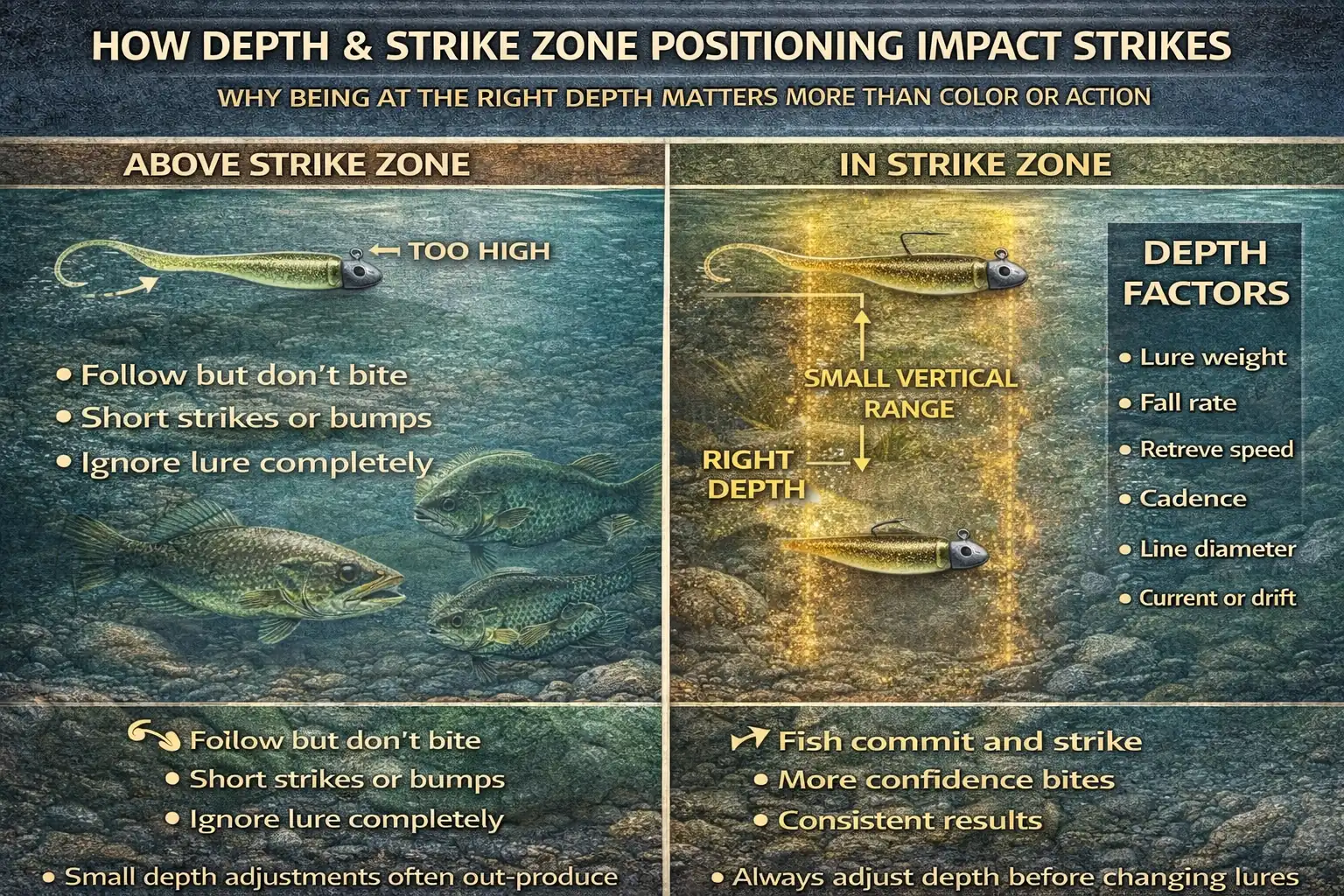
A perfect lure does nothing if it’s not in the strike zone. Lure depth and strike zone determine whether a fish will react at all — most strikes occur within a very narrow vertical window. Fish don’t roam randomly. They hold at specific depths and react within very small vertical windows. Many missed opportunities happen not because of color, action, or profile — but because the lure simply passes above or below where fish are willing to strike.
What Is the Strike Zone?
The strike zone is the vertical and horizontal area where a fish is willing to react to a lure. It is influenced by water temperature, light penetration, oxygen levels, fishing pressure, and fish energy level. In cold or pressured water, the strike zone often shrinks dramatically.
Why Depth Matters More Than Most Anglers Think
Fish rarely move far vertically to eat. In many situations fish may rise only a few inches or drop slightly downward — but will not chase far up or down. A lure that looks perfect but runs just outside the strike zone will be ignored.
Depth mistakes often look like: lots of follows with no bites, fish marking on electronics but not striking, short strikes or bumps, and fish reacting only on the drop.
Shallow vs Deep Holding Fish
- Shallow Fish: More light-sensitive, more pressure-aware, more selective. Respond best to precise depth control, slower presentations, and natural silhouettes.
- Deep Fish: Rely more on contrast, movement, and vertical positioning. More likely to strike during the fall, on lift-and-drop presentations, or when a lure enters their level precisely.
Vertical vs Horizontal Strike Zones
Not all strike zones are the same shape. Some fisheries favor horizontal zones (cruising fish) and others vertical zones (holding fish). Vertical presentations often outperform horizontal retrieves when fish are suspended, water is cold, or pressure is high. This is why small depth changes can suddenly produce bites.
Depth Control Is a System — Not One Variable
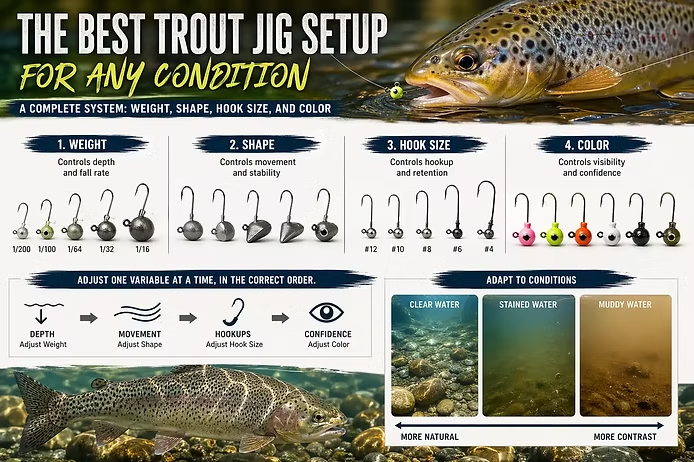
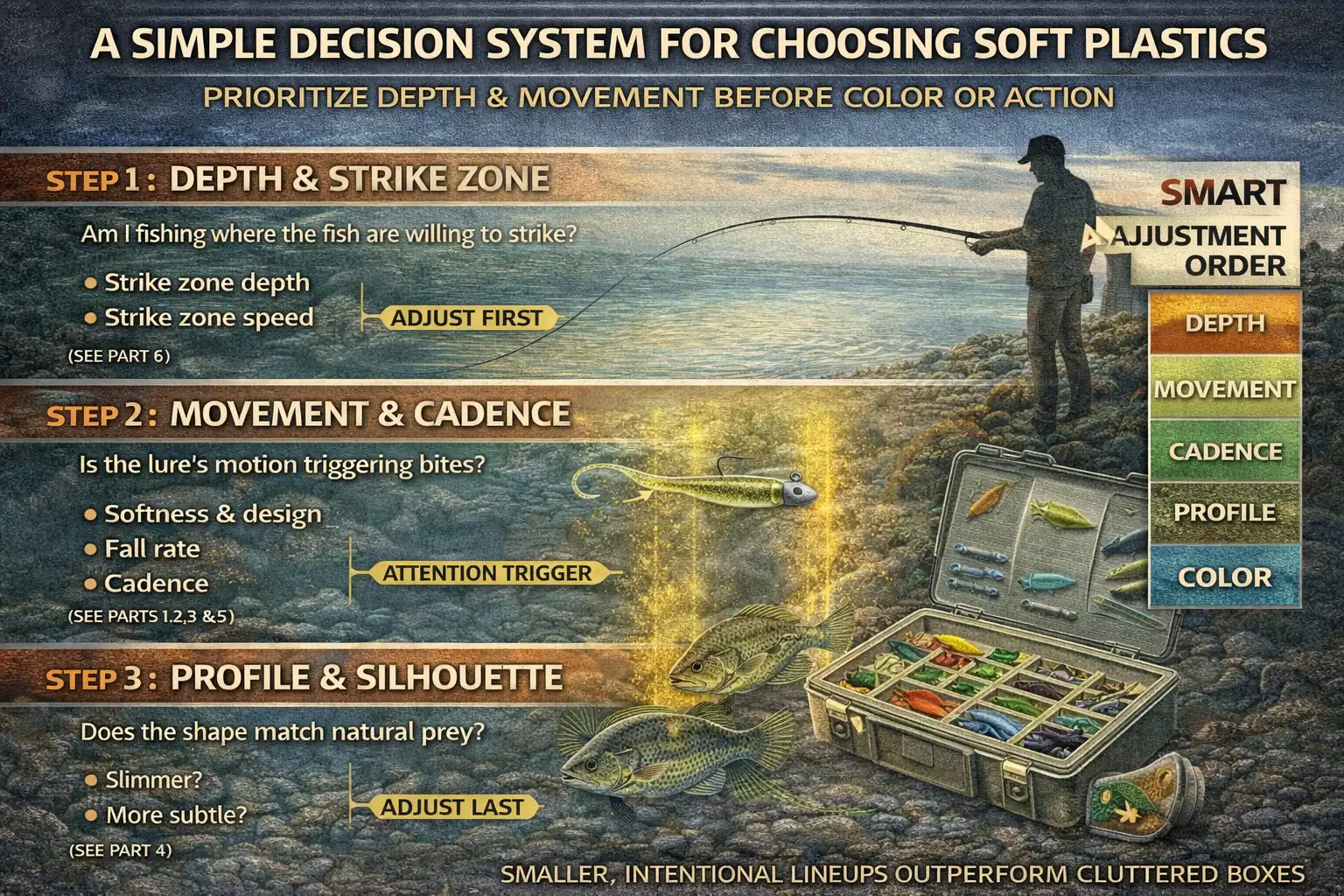
Depth is affected by: lure weight, fall rate, retrieve speed, cadence, line diameter, and current or drift. Changing only color while ignoring depth leads to frustration. Depth is the framework. Everything else is secondary.
Common Angler Mistake
Fishing where the lure looks good to the angler — not where fish are actually holding. If fish aren’t biting: adjust depth before changing color, adjust depth before changing action, adjust depth before switching lures. Most breakthroughs come from small depth corrections, not big gear changes.
Practical Takeaway
- Fish strike within narrow vertical windows
- Depth control often matters more than lure appearance
- Being slightly too high or low kills effectiveness
- Adjust depth first when fish don’t commit
If your lure isn’t at their level, nothing else matters.
Next: Part 7 — Soft Plastic Lure Selection System
Frequently Asked Questions About Lure Depth and Strike Zone
How do I know what depth trout are actually holding at?
Start by testing a range of depths methodically rather than guessing once and sticking with it. Shallow-holding fish are common early after stocking or in cooler water, while pressured or established fish often sit deeper — watch for follows or short strikes as a signal you’re close but not quite in the zone.
What’s the difference between a vertical and horizontal strike zone?
A vertical strike zone is a specific depth band fish are holding at, regardless of horizontal position — common in open water or under a float. A horizontal strike zone is a specific area, like a current seam or structure edge, where fish hold regardless of depth. Knowing which one you’re fishing changes how you present a bait.
Why do anglers keep changing lures instead of adjusting depth?
It’s a common instinct to blame the bait when results are slow, but depth is usually the bigger issue. Changing colors or styles while fishing the wrong depth just cycles through baits that were never going to work in that position — adjusting depth first is almost always the more productive move.
Does strike zone change throughout the day?
Yes — light, temperature, and pressure all shift through the day, and trout reposition in response. A depth that produced in the morning can go quiet by afternoon, so re-checking depth periodically rather than assuming it stays fixed is worth the extra effort.
How does depth control connect to jig head weight?
Jig head weight is one of your main tools for controlling depth and how fast you reach the strike zone. Too light and you never get down to holding fish in current or deeper water; too heavy and you blow through the zone before trout even see the bait. → See: How to Choose Jig Head Weight for Trout