Part 5 — Best Jig Head Color for Trout
The best jig head color for trout is determined by light penetration, water clarity, reflectivity, and underwater contrast—not simply by choosing a favorite color. Understanding how trout see a lure helps anglers select the right jig head color for every fishing condition.
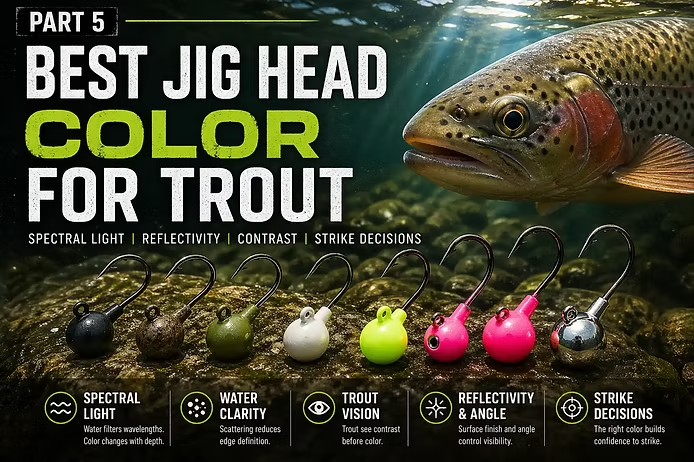
(Spectral Light, Reflectivity, and Strike Decision Mechanics)
Light, water clarity, and reflectivity determine how jig head color appears to trout—making contrast and visibility more important than color alone.
Introduction
Choosing the painted jig head color for trout is not about picking a favorite color—it is about understanding how light, water, and perception interact.
Most anglers simplify color selection to:
- clear water = natural
- dirty water = bright
That approach ignores how trout actually see.
In reality, the best jig head color for trout depends on:
- spectral light transmission
- water clarity and scattering
- reflectivity and surface finish
- viewing angle
- contrast against background
The best painted jig head color for trout is the one that produces the correct visual signal under the conditions you are fishing.
Best Jig Color Selection for Trout
The trout jig head color is not a fixed choice.
It is the color that allows the fish to:
- detect the lure
- separate it from the background
- commit to the strike
This is controlled more by:
- contrast
- brightness
- reflectivity
than by the named color itself.
A. What Color Actually Does
Color does not affect:
- movement
- fall rate
- hydrodynamics
Color affects:
- visibility
- contrast
- perception
Key Principle
Color influences the final decision—not the initial detection.
B. Spectral Light Transmission in Water
Water removes wavelengths as depth increases:
- red disappears first
- orange and yellow fade
- green and blue persist
Implication
As depth increases:
- color accuracy decreases
- contrast becomes dominant
Key Principle
The deeper the water, the less color matters and the more contrast matters.
C. Scattering and Water Clarity
Water clarity controls how light behaves through:
- absorption
- scattering
Clear Water
- sharp edges
- high detail
Stained Water
- reduced clarity
- softened edges
Key Principle
In stained water, contrast boundaries matter more than color identity.
As water clarity decreases, light penetration drops and contrast becomes more important than color, directly influencing the best jig head color for trout.
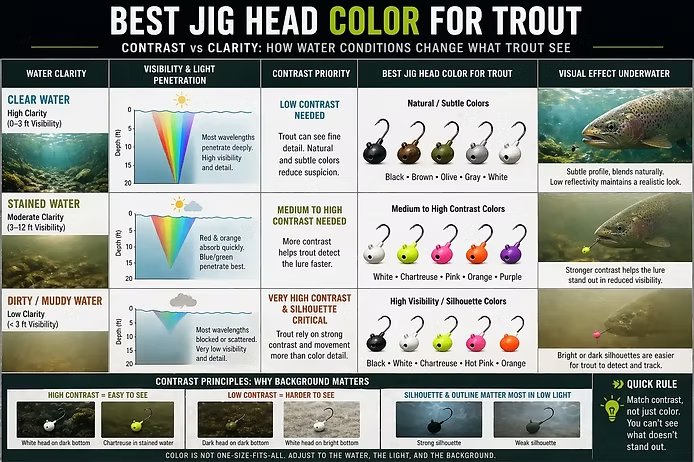
depends on water clarity, light penetration, and underwater contrast—not personal preference. This Family Fishin infographic explains which jig head colors work best in clear, stained, and muddy water using fish vision and light science.
D. Trout Vision Priority
Trout process visual input in this order:
- movement
- contrast
- silhouette
- brightness
- color
Key Principle
A high-contrast lure outperforms a perfectly colored low-contrast lure.
E. Hue vs Value vs Contrast
Color includes:
- hue (color name)
- value (light vs dark)
- contrast (background separation)
Key Principle
Trout respond to contrast structure more than color labels.
F. Reflectivity and Angle of Light
Surface finish controls how light is reflected.
Matte
- low reflectivity
- consistent
Gloss
- moderate reflectivity
- dynamic
Metallic
- high reflectivity
- angle dependent
Key Principle
Reflectivity determines whether the color is visible to the fish.
G. Background Contrast
A lure is always viewed against:
- bottom
- sky
- suspended particles
Key Principle
The background determines whether the jig head color will actually work.
H. Jig Head Color vs Bait Color
The bait body dominates.
The jig head:
- influences the front of the presentation
- adds contrast
Key Principle
The smaller the bait, the more important jig head color becomes.
I. Trigger vs Reassurance Colors
Trigger Colors
- high visibility
- aggressive
Reassurance Colors
- subtle
- natural
Key Principle
Trigger colors attract attention. Reassurance colors close the strike.
J. Why Fish Follow But Do Not Strike
If fish follow:
- detection is correct
- movement is acceptable
The issue becomes:
- confidence
Adjustment
- reduce reflectivity
- reduce contrast
- simplify color
Key Principle
Color adjustments solve commitment problems—not detection problems.
K. Painted vs Unpainted Heads
Unpainted
- subtle
- low reflectivity
Painted
- higher visibility
- stronger contrast
Key Principle
Paint controls visibility, not movement.
L. Advanced Selection System
Step 1
Confirm:
- weight
- shape
- presentation
Step 2
Start neutral
Step 3 Adjust
Not visible
→ increase contrast
Visible but not hit
→ reduce contrast
Final Rule
The best jig head color for trout is adjusted last—but refined precisely.
M. Custom Color Control
Because you pour and paint your own heads:
You can control:
- contrast
- reflectivity
- brightness
Key Principle
Custom color allows precision control of perception without changing movement.
N. Best Jig Head Color for Trout (Final Conclusion)
The jig head color for trout is not one specific color.
It is the color that:
- is visible under current light conditions
- provides correct contrast
- matches background
- creates confidence in the fish
SUMMARY
- Color is filtered by water
- Contrast matters more than hue
- Reflectivity controls visibility
- Trout prioritize movement first
- Color refines the final decision
ACTION CHECKLIST
Before fishing:
- start with neutral color
If fish do not see bait:
- increase contrast
If fish follow but do not strike:
- reduce reflectivity
Before changing color:
- confirm weight, shape, and presentation
Understanding the best painted jig head color for trout is only one part of the system. Color refines visibility and contrast—but it works best when combined with the right weight, hook size, and shape.
If you have not read the earlier parts, start here:
Best Jig Head Shapes for Trout (Part 4) Learn how shape controls movement, stability, and direction in the water.
A FAQ section like this will reinforce the article’s main points, target long-tail search queries, and work well with your FAQ schema.
Frequently Asked Questions
What is the best color for trout?
There is no single best jig head color for trout. The correct color depends on water clarity, light penetration, background contrast, and how visible the lure appears to the fish. In clear water, natural colors often work best, while stained or muddy water may require higher-contrast colors.
Does jig head color really matter when trout fishing?
Yes, but not as much as weight, shape, and presentation. Jig head color helps trout distinguish the lure from its surroundings after it has already detected movement. Color refines the strike decision rather than creating it.
What jig head color works best in clear water?
In clear water, subtle colors such as black, brown, olive, gray, and white usually appear more natural. These colors produce realistic contrast without overwhelming the fish with excessive brightness or reflectivity.
What jig head color works in stained water?
Moderately bright colors such as white, chartreuse, pink, orange, or purple often perform well because they create additional contrast as water clarity decreases. The goal is to improve visibility without producing an unnatural appearance.
What color jig head should I use in muddy water?
In very muddy water, trout rely heavily on silhouettes and strong contrast rather than accurate color perception. Black, white, and high-visibility colors often outperform subtle shades because they are easier for fish to detect.
Does the color of the jig head matter more than the soft plastic bait?
Usually no. The soft plastic body makes up most of the lure’s visible profile and generally has a greater influence on appearance. The jig head mainly affects the front of the presentation and becomes more important when fishing with very small baits.
Are painted jig heads better than unpainted jig heads?
Not necessarily. Painted jig heads increase visibility and contrast, while unpainted lead heads often produce a more subtle appearance with lower reflectivity. The better choice depends on the fishing conditions rather than the paint itself.
Does water depth change the best jig head color?
Yes. As depth increases, red and orange wavelengths disappear first, while blue and green penetrate farther. Because color fades with depth, contrast and silhouette become increasingly important in deeper water.
Should I change jig head color if trout are following but not biting?
Possibly. If trout consistently follow without striking, they have already detected the lure. Reducing reflectivity, lowering contrast, or switching to a more natural color may help build confidence and encourage the fish to commit.
What should I change before switching jig head colors?
Always confirm that jig weight, jig head shape, hook size, and presentation are correct before changing color. These factors have a much greater influence on trout behavior than color alone. Color should be used as the final adjustment after the rest of the system has been optimized.
Next in the Series
How to Choose the Best Trout Jig Setup for Any Condition
In the next part, we will bring everything together into a complete system, including:
- how to combine weight, shape, hook size, and color
- how to adjust based on water conditions and fish behavior
- how to troubleshoot when fish are not committing