How Deep Should You Set a Bobber for Trout?
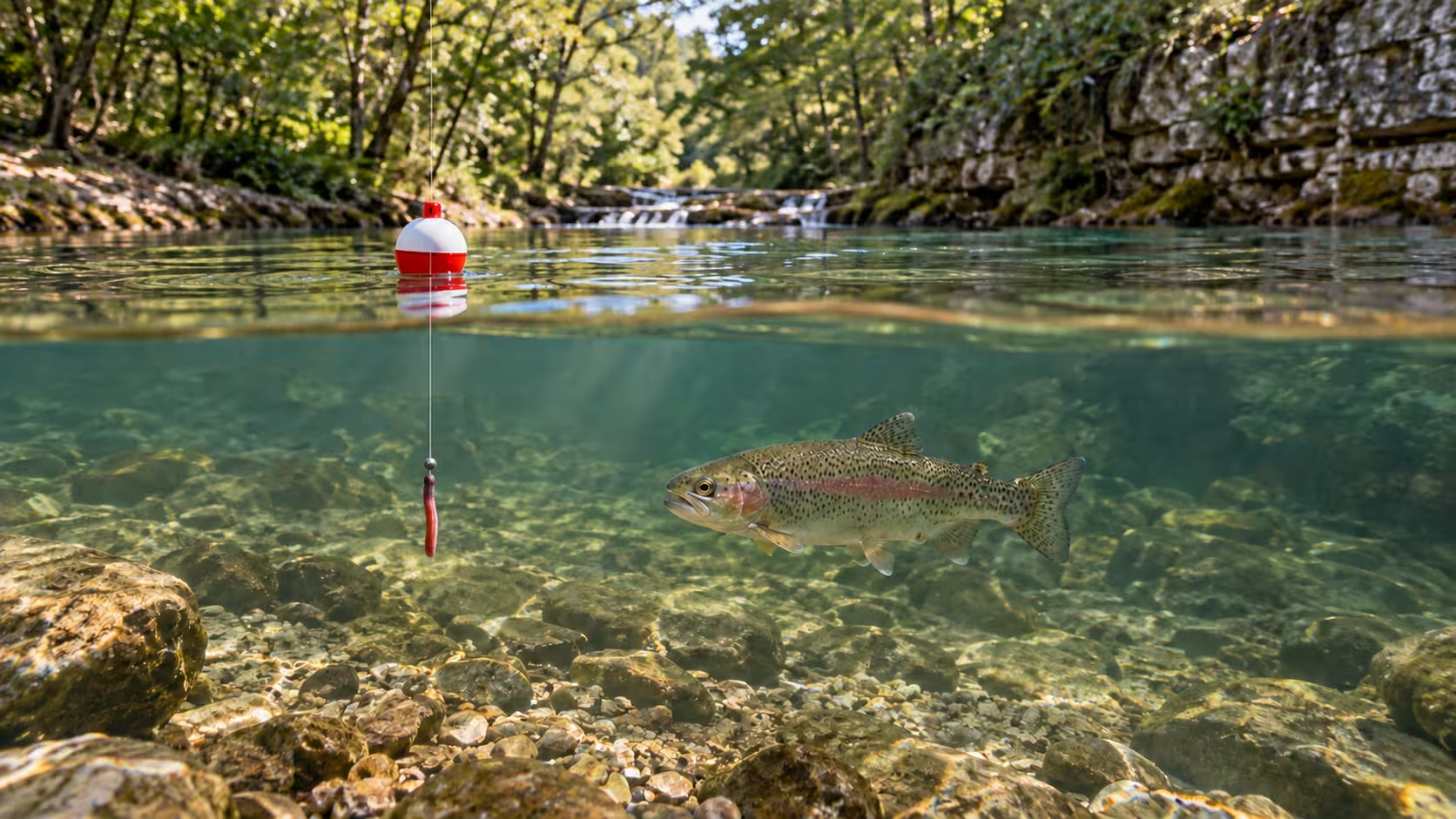
Choosing the right bobber depth for trout is one of the simplest ways to keep your bait where fish are actually feeding. The short answer is this: for most stocked trout start with your bait suspended about 1 to 3 feet below the surface, then adjust deeper or shallower in small steps until you find the level where trout are actually holding.
That answer is useful, but it is not complete.
The best bobber depth for trout depends on water depth, light, temperature, current, fishing pressure, stocking stage, and whether trout are feeding near the surface, suspended in the middle of the water column, or holding close to bottom. A bobber is not just a strike indicator. It is a depth-control tool. If the depth is wrong, the rest of the setup can be right and still fail.
Many trout anglers choose the right bait, the right hook, the right color, and the right spot, then lose fish because the bait is riding six inches above the fish or dragging a foot below them. Trout do not always move far to eat. In cold water, pressured water, or bright conditions, a trout may only shift a short distance to intercept food. That means the bait has to be placed in the feeding lane, not just somewhere in the same general area.
This is why bobber depth matters so much.
If you recently read our guide to float fishing for trout and comparing bobber types, this article is the next step. Choosing the float is only part of the system. The bigger question is how deep to set it once you are actually on the water.
The Main Rule: Fish the Depth Trout Are Using, Not the Bottom
The most common mistake in bobber fishing for trout is assuming the bait should be near bottom.
Sometimes that is true. Often it is not.
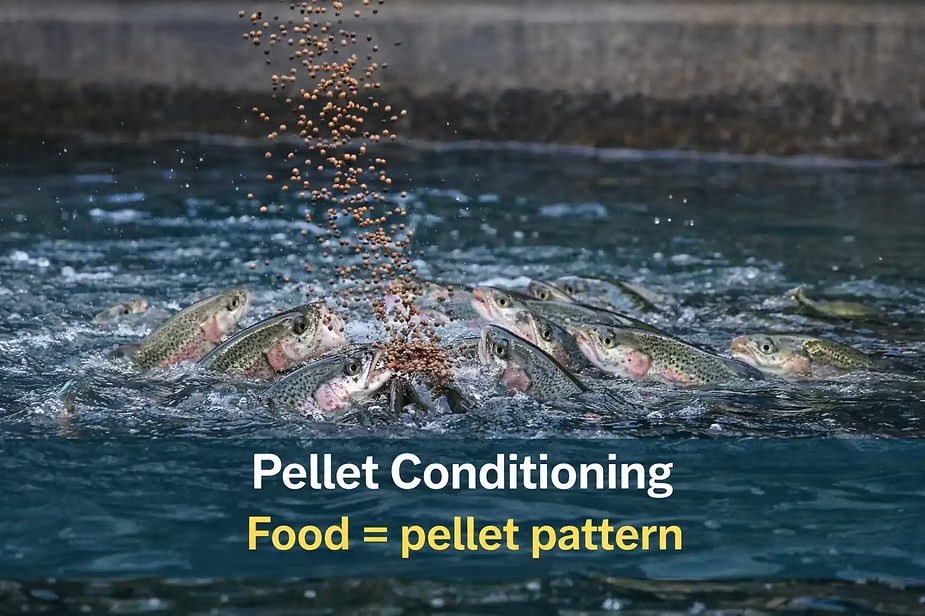
Freshly stocked trout, especially rainbow trout raised in hatcheries, commonly suspend in the upper to middle part of the water column. They are used to food falling from above, open-water feeding, and holding in confined raceway conditions. When they are released into ponds, lakes, or trout park streams, they do not immediately behave like wild bottom-oriented fish. They often cruise, suspend, and hold at comfortable depths before gradually spreading out.
That is why a bait set 1 to 3 feet below a bobber can outfish a bait resting on bottom, even when the water is 6, 8, or 10 feet deep.
This connects directly with the behavior discussed in Where Stocked Trout Actually Feed. Stocked trout are not evenly distributed through the entire water body, and they are not always positioned on bottom. They often hold closer to shore and higher in the water column than anglers expect.
The goal is not to set your bobber based only on the total depth of the water.
The goal is to set your bobber so the bait passes through the strike zone.
A Simple Starting Depth Chart for Trout Bobbers
Use these starting points as a first adjustment, not a final rule.
| Situation | Starting Bobber Depth |
|---|---|
| Freshly stocked pond or lake | 1 to 3 feet |
| Clear pond with visible cruising trout | Match the fish depth, usually 1 to 4 feet |
| Trout park stream with moderate current | 1.5 to 3 feet, then adjust to drift naturally |
| Deep pool or tailwater edge | 3 to 6 feet, depending on fish position |
| Bright midday conditions | Start 2 to 4 feet, then go deeper if needed |
| Low light, morning, evening, or overcast | Start 1 to 3 feet |
| Cold water and inactive fish | Start near the fish and slow down; often 2 to 5 feet |
| Stained water after rain | Start shallower than you think, 1.5 to 3 feet, because trout may move up to detect food |
The important part is adjustment. Your starting depth only gets you into the conversation. The fish tell you where the real depth is.
Why Trout Depth Changes During the Day
Trout depth is not fixed. A trout that is willing to feed two feet below the surface at sunrise may slide deeper by late morning. A fish that holds low under bright sun may move back up when clouds roll in. In moving water, trout may shift slightly up, down, or sideways depending on current speed, food drift, and pressure from anglers.
Light is one of the biggest drivers.
In low light, trout can often move shallower because they feel less exposed. Early morning, late evening, cloudy skies, and shaded banks can all bring trout higher in the water column. During bright sun, especially in clear water, trout often become more cautious. They may move deeper, hold closer to cover, or avoid obvious presentations.
Water temperature also matters.
Trout are cold-water fish, but cold does not automatically mean shallow. In winter or very cold water, trout may hold where they can conserve energy. In ponds and lakes, that may be a comfortable mid-depth zone. In streams, it may be a slower current seam or deeper pocket. In warmer conditions, trout may use cooler, more oxygenated water, shade, springs, current, or deeper areas.
Fishing pressure changes depth too.
If anglers repeatedly cast, wade, hook fish, splash floats, or retrieve baits through the same lane, trout often slide away from the disturbance. Sometimes they move deeper. Sometimes they move sideways. Sometimes they hold in the same area but become less willing to rise. A bobber rig gives you a way to adjust without completely changing spots.
Start Shallow, Then Work Down
When you do not know the depth trout are using, it is usually better to start slightly shallow and work down.
There are two reasons.
First, a bait suspended above a trout can still be seen. Trout naturally feed upward in many situations, especially stocked trout conditioned to food falling from above. A bait below the fish may be harder for them to detect, especially in stained water or when they are not actively searching.
Second, starting shallow helps avoid dragging bottom, collecting moss, snagging, and creating an unnatural presentation. A bobber rig that constantly bumps bottom is not really suspended. It becomes a poor bottom rig with a float attached.
A good adjustment system looks like this:
- Start at 1.5 to 2 feet in ponds, lakes, or slow water.
- Make several casts through the most likely holding area.
- If there are no bites, move the bobber stop 6 to 12 inches deeper.
- Repeat until you find bites, see fish react, or begin touching bottom.
- Once you find the zone, fine-tune in smaller increments.
Small adjustments matter. Moving from 2 feet to 3 feet can completely change the presentation. Moving from 3 feet to 5 feet may take the bait out of the active lane.
How to Know Your Bobber Is Set Too Shallow
A bobber set too shallow does not always look wrong from shore. The float may drift beautifully, the bait may look natural, and the setup may feel correct. But the trout may be holding below it.
Signs your bobber may be too shallow include:
- Trout are visible below your bait and do not rise.
- You see follows but no commitment.
- Nearby anglers fishing slightly deeper are getting bites.
- Fish roll or flash below your float.
- Bites happen only when the bait swings deeper at the end of the drift.
- Trout strike during the sink before the bobber fully settles, then stop.
That last clue is important. If trout bite while the bait is falling but ignore it once it reaches the bobber-set depth, the bait may be passing through the correct zone on the way down and then stopping too high.
The fix is simple: move the bobber stop deeper in small steps.
Do not jump from 2 feet to 6 feet immediately. Move to 2.5 feet, then 3 feet, then 3.5 feet. The strike zone may be narrow.
How to Know Your Bobber Is Set Too Deep
A bobber set too deep creates a different set of problems.
Signs your bobber may be too deep include:
- The float drags, leans, or stalls repeatedly.
- The bait collects moss, leaves, or bottom debris.
- You snag often.
- The float dips slowly in the same places every cast.
- The bait swings unnaturally behind the float in current.
- Trout are visibly cruising above the bait.
- You get bumps but few clean takedowns.
In moving water, setting too deep can cause the weight or bait to touch bottom while the surface current pulls the float downstream. This creates drag. Instead of drifting naturally, the rig angles, hesitates, and pulls the bait in a way that looks wrong.
In still water, too much depth can place the bait below suspended trout. This is especially common with freshly stocked fish. Anglers set their bait near bottom because the pond is deep, but the trout are cruising three feet down.
The fix is to shorten the depth until the bait drifts cleanly and stays above debris.
Bobber Depth in Stocked Trout Ponds
Stocked ponds are where bobber depth mistakes show up fast.
Many public ponds are deeper than they look, but stocked trout often use the upper part of the water column, especially soon after release. If fish were recently stocked, begin close to shore and start shallow. A depth between 1 and 3 feet is often a better first choice than putting bait on bottom.
Pay attention to visible fish. If trout are cruising just under the surface, do not set your bait five feet down because the pond is deep. Set the bait at or slightly below the cruising level. Trout feeding upward can intercept it.
Also pay attention to distance from shore. In many stocked waters, trout may hold within the first 5 to 30 feet from the bank. If you cast too far and set too deep, you may be fishing under and beyond the most active fish. Fish the close water first.
A strong stocked-pond starting setup is:
- Small fixed float or slip float.
- Size 8 to 12 hook, depending on bait size.
- Light split shot, only enough to control the bait.
- Bait suspended 1.5 to 3 feet down.
- Short to medium casts parallel to shore when possible.
If no bites come after several good casts, change depth before changing bait.
Bobber Depth in Trout Streams and Current
Current changes everything.
In a pond, bobber depth is mostly about suspending bait at the level trout are using. In current, bobber depth also controls drift. The bait needs to move naturally with the current, usually slightly above bottom or through the lane where trout are holding.
Trout in streams often hold in slower water next to faster water. They want food delivered by current without spending too much energy fighting that current. That means the best drift is often along seams, current breaks, pocket edges, and softer lanes.
When fishing a bobber in current, start by estimating the depth of the lane you want to fish. Then set the bait slightly shallower than bottom. If the run appears 3 feet deep, you might start with the bait 2 to 2.5 feet below the float. If you constantly touch bottom, shorten up. If the drift looks clean but you get no response, deepen gradually.
A good stream rule:
Set the bait deep enough to enter the feeding lane, but shallow enough to drift without dragging.
Dragging is the enemy. A dragging rig moves slower than the surface current, pulls at odd angles, and often looks unnatural. If the float is leaning upstream, hesitating, or repeatedly dipping in the same spot, the bait or weight may be catching bottom.
For stream trout, bobber depth is not just about inches. It is about drift quality.
Bobber Depth for Pressured Trout
Pressured trout may not move far to eat.
That is the whole game.
When trout are fresh, aggressive, or competing, they may rise several feet to intercept bait. When they are pressured, cautious, or inactive, they often require a more precise presentation. The bait needs to pass close, slow, and naturally.
This is where bobber fishing can be powerful. A float lets you hold a soft plastic, egg, worm, nymph, jig, or bait at a controlled level and keep it there longer than a fast retrieve would.
The adjustment should be methodical:
- Find the likely holding lane.
- Start at a reasonable depth.
- Watch for follows, flashes, bumps, and float movement.
- Adjust depth before making a major bait change.
- Reduce movement if trout inspect but refuse.
This connects with the ideas in Why Trout Follow But Don’t Bite. A follow is information. If trout are seeing the bait but not committing, the problem may be depth, speed, fall rate, profile, or movement. Under a bobber, depth is one of the easiest variables to adjust.
Slip Bobber vs Fixed Bobber: Which Controls Depth Better?
Both work, but they solve different problems.
A fixed bobber is simple. It clips or pegs onto the line at a set distance above the hook. It works well for shallow presentations, short casts, kids, beginners, and situations where trout are only 1 to 4 feet down.
A slip bobber is better when you need deeper settings or cleaner casting. The line slides through the float until it hits a bobber stop. This lets you fish deeper water without having several feet of line hanging below the float during the cast.
For trout, fixed floats are excellent when:
- Water is shallow.
- Trout are cruising high.
- You are fishing close.
- You need quick depth changes.
- Kids or beginners are fishing.
Slip floats are better when:
- Water is deeper than 4 feet.
- You need longer casts.
- Wind makes fixed floats hard to manage.
- You want precise depth control.
- You are fishing deep pools, docks, tailwaters, or drop-offs.
If your entire presentation is 1 to 3 feet deep, a fixed bobber is often enough. If you need to fish 5, 6, or 8 feet down, a slip bobber becomes much more practical.
Weight Placement Affects True Fishing Depth
The depth between bobber and hook is not always the same as the depth your bait actually fishes.
Weight placement changes that.
If your split shot is close to the hook, the bait drops quickly and hangs more directly under the float. If the split shot is far above the hook, the bait may drift, rise, swing, or fall more naturally depending on current and bait buoyancy.
For trout, a common setup is to place a small split shot 6 to 12 inches above the hook. That gives the bait enough weight to sink and stay controlled without pinning it unnaturally.
But do not use more weight than needed.
Too much weight can pull the bait below the fish, reduce natural movement, and make the float overly sensitive to bottom contact. Too little weight can keep the bait from reaching the target depth, especially in current or wind.
The right weight is the lightest amount that lets the bait reach and hold the intended zone.
Bait Buoyancy Changes Bobber Depth
Different baits behave differently below a float.
A floating bait may rise above the hook, especially if lightly weighted. A dense soft plastic may hang lower. A jig head will pull the presentation down and create a more vertical angle. A natural worm may flutter, twist, or ride differently depending on current. Dough bait may float, sink slowly, or suspend depending on formula and hook size.
This matters because your bobber setting might say 3 feet, but the bait may not be exactly 3 feet down.
If you use floating bait with a leader and split shot, the bait may rise slightly above the weight. If you use a jig under a float, the jig head usually defines the lower point of the rig. If you use a soft plastic on a plain hook, the bait may fall more slowly and respond more to current.
This is one reason the best trout anglers adjust based on results instead of only measuring depth.
The float setting is a starting point. The bait’s actual behavior underwater is what trout respond to.
How Wind Changes Bobber Depth and Drift
Wind can help or hurt float fishing.
A light chop can make trout less cautious in clear water. Wind can push surface food, move warmer or cooler water, and create subtle movement in a bait suspended under a float. In still ponds, wind can give life to a bait even when you are barely moving it.
But wind can also drag the bobber faster than the bait should move.
When the surface moves faster than the water below, the bobber may pull the bait upward or sideways. This changes the effective depth. A bait set at 3 feet may ride higher because the float is dragging it through the water.
If wind is pulling your float too fast:
- Use a slimmer float with less surface resistance.
- Add just enough weight to keep the bait down.
- Cast slightly upwind and let the rig settle.
- Fish wind-blown banks where trout may already be feeding.
- Shorten the cast for better line control.
Wind is not automatically bad. But it makes line control and float choice more important.
Bobber Depth After Rain or Runoff
After rain, trout behavior depends on how much the water changed.
Light rain, gentle runoff, and slightly stained water can improve fishing. Worms, insects, and other food may wash into the system. Light levels drop. Trout may become less cautious. In those conditions, a bait suspended 1.5 to 3 feet down can be very effective, especially near inflows, soft edges, and current seams.
Heavy rain is different. Fast rising water, mud, debris, and strong current can push trout into softer edges and protected water. In that case, depth may matter less than finding fishable water where trout can hold without burning energy.
The key after rain is visibility and control.
If the water is only slightly stained, trout may move shallower and feed more confidently. If the water is heavily dirty, scent, silhouette, and slower presentations become more important. Bobber rigs can help because they keep bait in place and allow scent to build instead of constantly pulling the bait away.
For more on why worms become important around rain and runoff, see Why Trout Eat Worms.
Bobber Depth for Dead Sticking
Dead sticking under a float is one of the most overlooked trout presentations.
The idea is simple: suspend the bait at the correct depth and let it do very little. Current, wind, line tension, and the bait’s natural softness provide the subtle movement. The angler avoids overworking it.
This can be effective when trout will not chase.
Depth is critical. If the bait is motionless but two feet above inactive trout, they may never move to it. If it is below them or buried in debris, they may never see it. Dead sticking magnifies depth mistakes because each cast takes more time.
A good dead-stick bobber setup should:
- Hold the bait slightly above the fish.
- Use minimal weight.
- Allow natural movement.
- Avoid dragging bottom.
- Stay in the strike zone long enough for trout to approach.
This pairs naturally with the ideas in Dead Sticking Fishing Guide: How to Catch Trout When They Won’t Chase.
How Long Should You Wait Before Changing Depth?
Do not change depth after one cast unless you clearly know something is wrong.
Give each setting enough time to prove itself. In a small pond or visible trout situation, that may be three to five good casts. In a stream drift, it may be several clean passes through the same seam. In cold or pressured water, it may take longer because trout are slower to respond.
But do not sit on one depth all day either.
A practical rule:
If you have made 5 to 10 good presentations through likely water with no bites, no follows, no float movement, and no visible interest, adjust depth before changing your entire setup.
Depth changes should be small at first. Six inches can matter. Twelve inches can matter a lot. If you move too far at once, you may jump right over the strike zone.
What If You Can See Trout?
Visible trout are a gift, but they can also fool you.
If you can see trout cruising, set the bait slightly above or at their level, not below them. Trout often feed upward more comfortably than downward. A bait slightly above the fish gives them a natural interception angle.
If you see trout follow but turn away, the depth may be close but the presentation may be wrong. Try one of these adjustments:
- Slow the drift or retrieve.
- Reduce weight.
- Shorten the bait profile.
- Change color only after depth and movement are tested.
- Set the bait slightly higher if fish follow from below.
- Set the bait slightly lower if fish rise but stop short.
Clear water makes trout easier to see, but it also makes them more selective. That is when subtle changes in depth and movement matter most.
The Best Bobber Depth for Kids and Beginners
For kids and beginners, keep the system simple.
In stocked ponds or trout park areas, start with a small fixed bobber and set the bait 18 to 30 inches below the float. That depth is easy to cast, easy to watch, and often close enough to where freshly stocked trout are cruising.
Avoid setting the bait too deep for beginners. A long leader below a fixed bobber becomes hard to cast, tangles more often, and creates frustration. If deeper water is needed, switch to a slip bobber instead of making a fixed rig awkward.
For a beginner, the first goal is not technical perfection. It is a rig that casts cleanly, drifts naturally, and keeps bait where trout can find it.
Common Bobber Depth Mistakes
Setting the bait on bottom by default
Bottom is not always wrong, but it should not be automatic. Stocked trout often suspend. Pressured trout may hold slightly above bottom. Stream trout may feed in a lane, not on the substrate itself.
Changing bait before changing depth
Many anglers swap colors, scents, or lure styles when the real problem is that the bait is one or two feet away from the fish.
Fishing too deep in fresh stockings
Newly stocked trout often hold higher and closer than anglers expect. Start shallow and close before fishing deep and far.
Ignoring drift quality
In current, a natural drift matters as much as depth. A rig that drags bottom or pulls sideways often gets ignored.
Using too much weight
Heavy weight may make the rig easier to cast, but it can ruin the presentation. Use the lightest weight that controls the bait.
Not adjusting throughout the day
Morning depth may not be midday depth. Cloud depth may not be bright-sun depth. Trout move, and your bobber setting should move with them.
A Simple On-the-Water Bobber Depth System
If you want one system to follow, use this:
- Start close before casting far.
- Start shallow before fishing deep.
- Set the bait 1.5 to 3 feet down in stocked still water.
- In current, set the bait just above the bottom or feeding lane.
- Make several clean presentations.
- Adjust depth by 6 to 12 inches.
- Watch the float, line, fish behavior, and bottom contact.
- Change bait only after depth and drift have been tested.
This system keeps you from guessing. It also keeps you from making the most common mistake in trout fishing: changing everything except the one variable that is actually wrong.
Final Thoughts
So, how deep should you set a bobber for trout?
Start 1 to 3 feet deep for most stocked trout in ponds, lakes, and slow water. In streams, set the bait deep enough to enter the feeding lane but shallow enough to drift naturally without dragging. In deeper pools, bright sun, cold water, or pressured conditions, work deeper in small increments until the bait reaches the level trout are using.
The exact number matters less than the adjustment process.
Bobber fishing is not passive fishing. Done well, it is one of the most precise ways to control depth, speed, and presentation. The float shows you what is happening. The trout show you what needs to change.
If the bait is too high, go deeper.
If it drags, go shallower.
If trout follow but refuse, adjust movement and depth before blaming the bait.
The best bobber depth is the one that keeps your bait in front of trout long enough for them to eat it.
Frequently Asked Questions
How deep should I set my bobber for stocked trout?
For most stocked trout in ponds, lakes, and slow water, start with the bait 1 to 3 feet below the bobber. Freshly stocked trout often suspend in the upper part of the water column, so fishing directly on bottom can miss active fish. Adjust deeper in 6 to 12 inch steps if you do not get bites.
Should trout bait be on the bottom or suspended?
It depends on where the trout are holding, but suspended bait is often better for stocked trout, especially soon after stocking. Many stocked trout cruise or suspend 1 to 4 feet below the surface. Bottom presentations can work when trout are feeding low, but they should not be the automatic starting point.
What is the best bobber depth for trout in a pond?
In a stocked pond, start around 18 inches to 3 feet deep. If trout are visible, match their depth and keep the bait slightly above them. If the pond is deeper and fish are not visible, gradually work down until you find the strike zone.
What is the best bobber depth for trout in a stream?
In streams, set the bait deep enough to drift through the feeding lane but shallow enough to avoid dragging bottom. In a 3 foot run, you might start with the bait around 2 to 2.5 feet deep. If the float drags, shorten the depth. If the bait rides too high, deepen it slightly.
Is a slip bobber better than a fixed bobber for trout?
A fixed bobber works well for shallow trout fishing, especially 1 to 4 feet deep. A slip bobber is better for deeper water, longer casts, and more precise depth control. If your leader below a fixed bobber becomes hard to cast, switch to a slip bobber.
How often should I change bobber depth?
If you make 5 to 10 good presentations through likely trout water with no bites, adjust depth before changing bait. Move the bobber stop in small increments, usually 6 to 12 inches at a time. Trout may be holding in a narrow band.
Why does my bobber keep going under but I do not hook fish?
Your bait may be dragging bottom, catching debris, or getting tapped by small fish. It may also be set too deep. Shorten the depth slightly and watch whether the float drifts more naturally. If trout are short-striking, check hook size, bait size, and how the bait is rigged.
Why are trout ignoring bait under my bobber?
The bait may be at the wrong depth, moving unnaturally, too large, too bright, or outside the trout’s holding area. Adjust depth first, then drift speed, weight, and bait profile. If trout are following but not biting, the fish are giving you feedback that one part of the presentation is wrong.
How much weight should I use under a trout bobber?
Use the lightest amount of weight that gets the bait to the target depth and keeps it controlled. A small split shot placed 6 to 12 inches above the hook is a common starting point. Too much weight can make the bait fall unnaturally or drag below the fish.
Should I set my bobber deeper in bright sun?
Often, yes. Bright sun can push trout deeper or make them more cautious, especially in clear water. Start slightly deeper than you would in low light, but still adjust based on fish behavior. Shade, current, and water temperature can change the pattern.
Should I fish shallower when it is cloudy?
Cloud cover can reduce light penetration and make trout more comfortable feeding higher in the water column. In overcast conditions, morning, evening, or light rain, start shallower and watch for cruising fish.
What depth should kids use when bobber fishing for trout?
For kids, start simple: set a small fixed bobber 18 to 30 inches above the hook in stocked ponds or slow water. This depth casts easily, tangles less, and often puts bait near cruising stocked trout. If fish are deeper, use a slip bobber rather than making the fixed rig difficult to cast.