Why Trout Spit the Hook Before You Feel It: The Science of Short Strikes
Trout short strikes are one of the biggest reasons anglers miss fish. What feels like a light bite is usually a trout taking the bait, evaluating it, and rejecting it before you can react. Every trout angler knows the feeling: a tap, maybe two, then nothing. No weight, no pull, just a rod tip that twitched and a bait that comes back untouched — or worse, comes back with the tail bitten clean off. It’s easy to write this off as a “light bite” or a fish that “wasn’t really committed.” That explanation is wrong, and it’s costing you fish. In most cases, that trout didn’t miss your bait. It caught it, tested it, and spit it out — a full decision cycle that happened faster than your hand could react. Understanding how that decision gets made, in what order, and what a trout is actually testing for, is the difference between fishing blind and fishing with a plan.
The Strike Isn’t One Decision — It’s Two
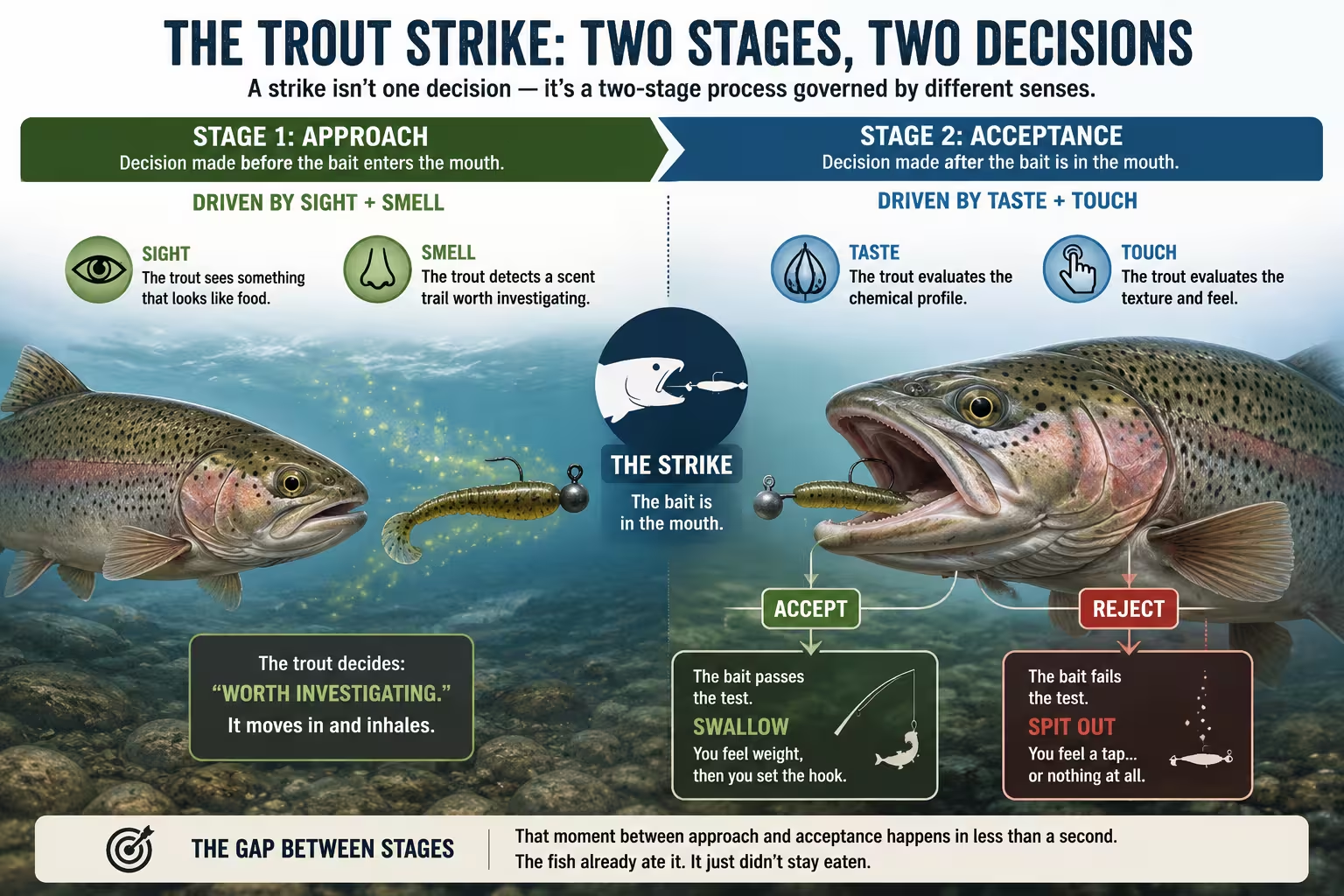
Anglers tend to think of a strike as a single event: the fish wants it or it doesn’t. In reality, a trout’s take runs through two separate stages, governed by two separate sensory systems, and they don’t happen at the same time.
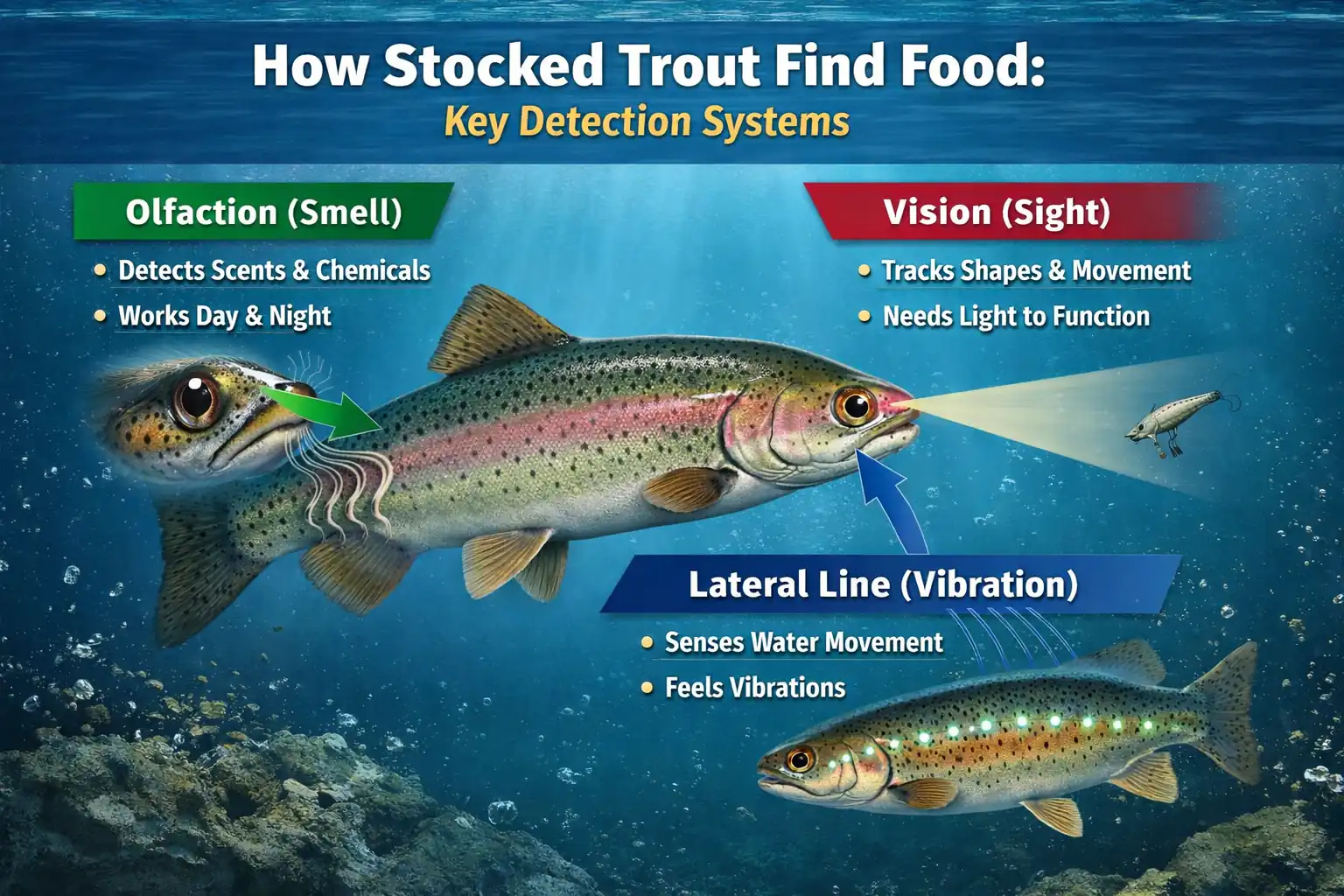
Stage one is the approach. This is driven mainly by sight and smell — the trout sees or smells something that resembles food from a distance and decides it’s worth investigating. This is the stage most anglers spend all their time optimizing: color, profile, scent trail, retrieve speed.
Stage two is the acceptance. This happens only after the bait is already in the fish’s mouth, and it’s governed by a completely different set of senses — taste and touch — deciding, in real time, whether to hold on or eject. This second stage is where almost every short strike actually happens, and it’s the stage most fishing advice ignores entirely, because it’s invisible from the bank. You only ever see stage one. Stage two happens inside the fish’s mouth, out of sight, in well under a second.
The gap between those two stages is where anglers lose fish they never technically missed. The fish already ate it. It just didn’t stay eaten.
Taste Does Most of the Work — and It’s More Sensitive Than You’d Guess
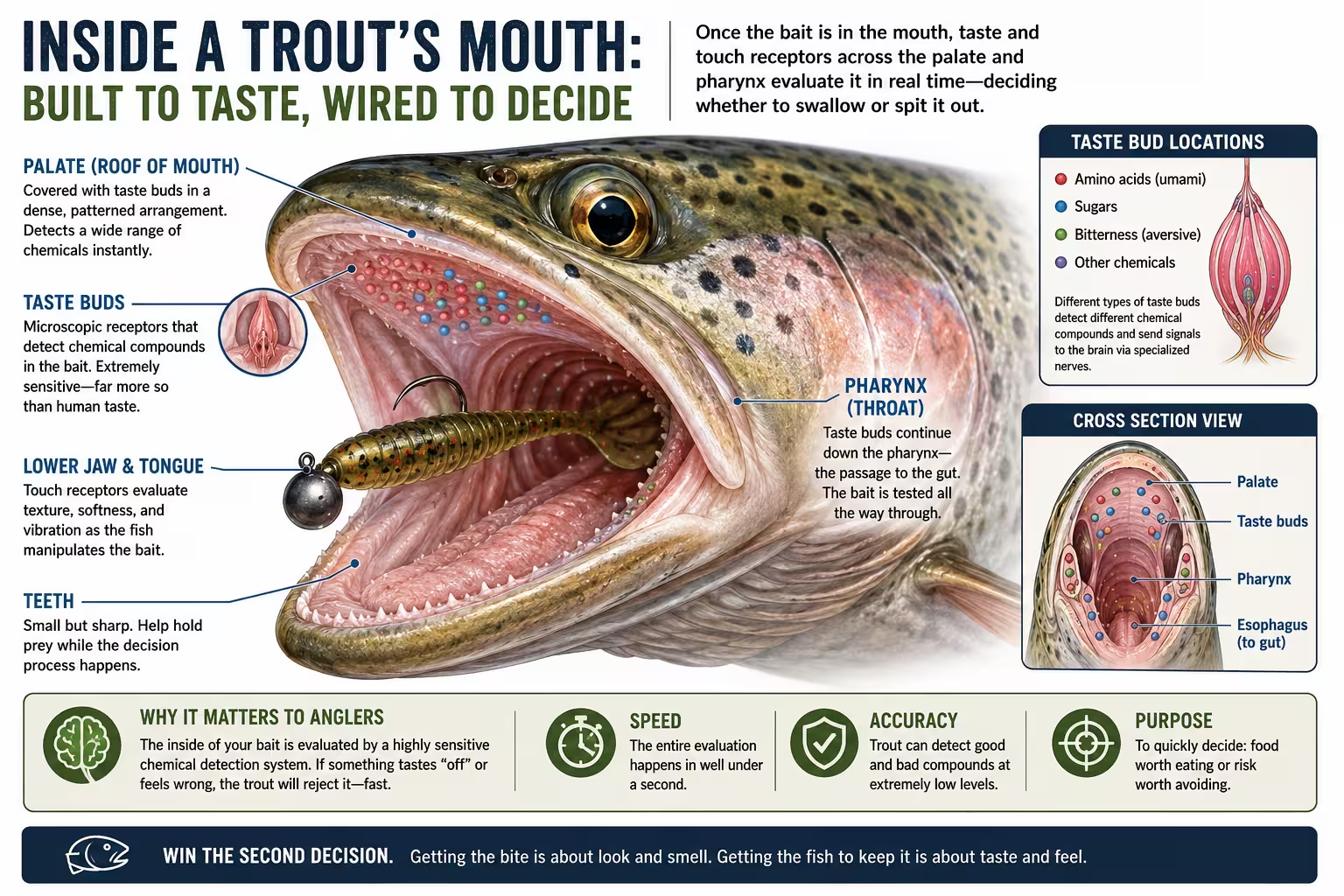
Trout have a genuinely sophisticated sense of taste, and it isn’t limited to the tongue. Taste buds are distributed across the roof of the mouth — the palate — as well as through the pharynx, the passage food travels through on its way to the gut. Research specifically on rainbow trout has mapped this palatal taste system in detail: taste buds are spread across the palate in a dense, structured pattern, wired directly into dedicated gustatory nerves that feed back to the brain almost instantly.
What makes this system genuinely powerful isn’t just its location — it’s its sensitivity. Fish taste systems in general are measurably more sensitive than mammalian taste, with detection thresholds for some compounds sitting at concentrations low enough that a human couldn’t perceive them in a swimming pool. In rainbow trout specifically, controlled feeding studies have shown clear, measurable palatability responses to different chemical compounds — sugars, for instance, trigger a distinctly positive feeding response, meaning trout aren’t just detecting “food or not food” in a binary sense. They’re running something closer to a graded chemical evaluation, ranking a substance somewhere between attractive and repellent based on its exact chemical makeup.
That’s a critical distinction for anglers, because it means the inside of your bait matters as much as the outside. A lure can look and smell perfect on the approach, get inhaled, and still get rejected in under a second if it fails the taste test once it’s actually in the fish’s mouth.
This is why scent that’s infused throughout a bait — not just coated on the surface — outperforms surface-only scent over the course of a fishing day. Surface scent gets the fish to eat. Infused scent is what gets it to keep the bait in its mouth long enough for you to feel the take and set the hook.
Aversive Chemoreception: The System Built to Say “No”
There’s a flip side to the positive taste response, and it’s arguably more important for tackle design than the positive side is. Fish have a dedicated chemical detection system specifically evolved to identify and reject noxious or defensive compounds — bitter alkaloids, toxins, and other chemical defenses that real prey species use to avoid being eaten. This system, sometimes called aversive chemoreception, exists precisely because a huge amount of what’s available to eat in the wild is chemically defended in some way, and a fish that swallows the wrong thing pays for it.
This matters directly for soft plastic bait design, because plasticizers, mold-release residue, preservatives, and manufacturing chemicals can register on this same detection system as a “noxious” signal — not because the fish recognizes the specific compound, but because its chemical profile trips the same generalized alarm built to flag defended prey. A bait that smells fine to a human nose can still carry a manufacturing chemical signature that reads as a warning sign to a trout’s aversive taste system the instant it’s in the mouth. This is a large part of why scent quality and bait formulation matter beyond just “does it smell like garlic” — a bait needs to pass a chemical inspection that’s actively hunting for reasons to say no, not just clear a low bar of “not obviously bad.”
Conditioned Taste Aversion: Why a Bait That Worked All Spring Stops Working
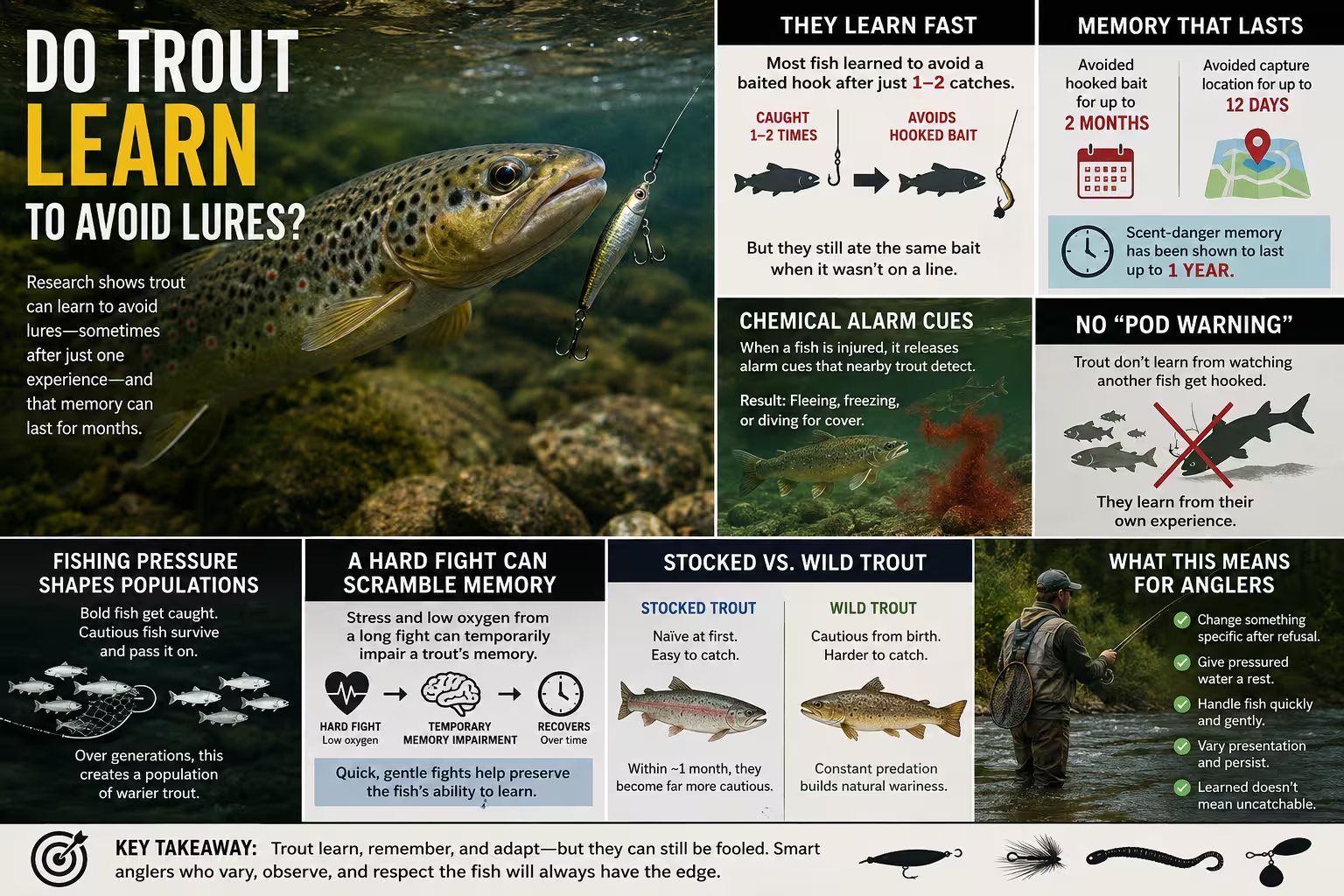
There’s a second layer to the taste system that matters even more on water that gets fished hard over a season: fish, like most animals, can form a strong, lasting aversion to a specific taste after just one or two negative experiences tied to it. This is the same basic learning mechanism behind why most animals — humans included — can develop a lifelong dislike of a food after a single episode of getting sick from it. In a fishing context, a trout doesn’t need to get “sick” in a literal sense for this to apply; a hookset, a fight, and a release paired with a specific taste and texture combination is enough to build a lasting negative association with that exact chemical and physical signature.
This is a very different mechanism from the visual pattern recognition and pressure-avoidance behavior that governs how trout respond to color, shape, and retrieve speed on heavily fished water. That’s a sight-and-experience-based caution system. This is a taste-and-memory-based rejection system, and it means a specific bait formulation — not just a specific color or profile — can individually “burn out” on a piece of water over the course of a season, even while a nearly identical-looking bait with a different scent and plastic formulation keeps producing. Anglers who notice a bait “just stopped working” after weeks of success are frequently running into this exact mechanism, not a change in fish behavior overall.
The practical implication is that scent and plastic formulation benefit from the same kind of rotation principle anglers already apply to color and lure style — not because trout are getting collectively smarter about a brand, but because individual fish in a pressured population are accumulating specific taste-based aversions, one bait chemistry at a time.
Trout vs. Catfish: Why Some Fish Taste More Than Others
It’s worth understanding where trout sit relative to other freshwater species, because it explains why “use more scent” isn’t universally the same advice across species. Catfish are the extreme case in freshwater fishing — their barbels carry an exceptionally dense concentration of taste buds, essentially turning their whiskers into taste organs that let them evaluate food before it’s anywhere near the mouth. That’s an evolutionary adaptation to feeding in murky, low-visibility water where taste has to substitute for sight almost entirely.
Trout aren’t built that way. Their taste system is concentrated in the mouth and pharynx rather than external sensory barbels, which means taste plays its dominant role later in the feeding sequence — after a strike, rather than before one. Sight and smell still do the heavy lifting of getting a trout to commit to a strike in the first place; taste’s job is almost entirely about what happens in the following half-second. That’s precisely why bait formulation problems in trout fishing show up as short strikes and torn baits rather than as a fish that never investigates at all — the investigation stage is working, the acceptance stage is where things break down.
Texture Is the Second Check, Not the First
Taste isn’t acting alone. Fish feeding behavior runs through a sequence of senses on the way to a swallow, and touch — the physical feel of an object in the mouth — is the last checkpoint before a fish commits to keeping something down. This is a secondary system, not a co-equal one: taste drives most rejection decisions, but an object that feels obviously wrong — too hard, too rigid, an unnatural shape pressing against the roof of the mouth — can trigger rejection on its own, even if the taste signal was neutral or positive.
This is where hard, dense, or overly stiff soft plastics work against you on pressured water. A bait that tastes right but feels like a foreign object — because it’s too firm, doesn’t compress naturally, or has a hook riding in a position that creates an unnatural pressure point — gives a fish a second reason to eject it, on top of anything taste alone might have flagged. Softer, more compressible plastics that mimic the give of real prey reduce the chance that the texture checkpoint fires a rejection independent of taste.
The mouth isn’t the only place this happens, either. The exposed metal of a hook point, the stiffness of a wire keeper, or a jig head riding at an unnatural angle inside the bait can all register as texture red flags well before the fish’s teeth or palate ever reach the plastic itself. Rigging that buries the hook point cleanly and lets the plastic sit and move naturally on the hook shank isn’t just about hookset mechanics — it’s about not tripping the texture checkpoint before taste even gets a vote.
Put simply: taste gets you most of the way to a hookset. Texture is what finishes the job or blows it at the last second.
Why Trout Short Strikes Happen So Fast
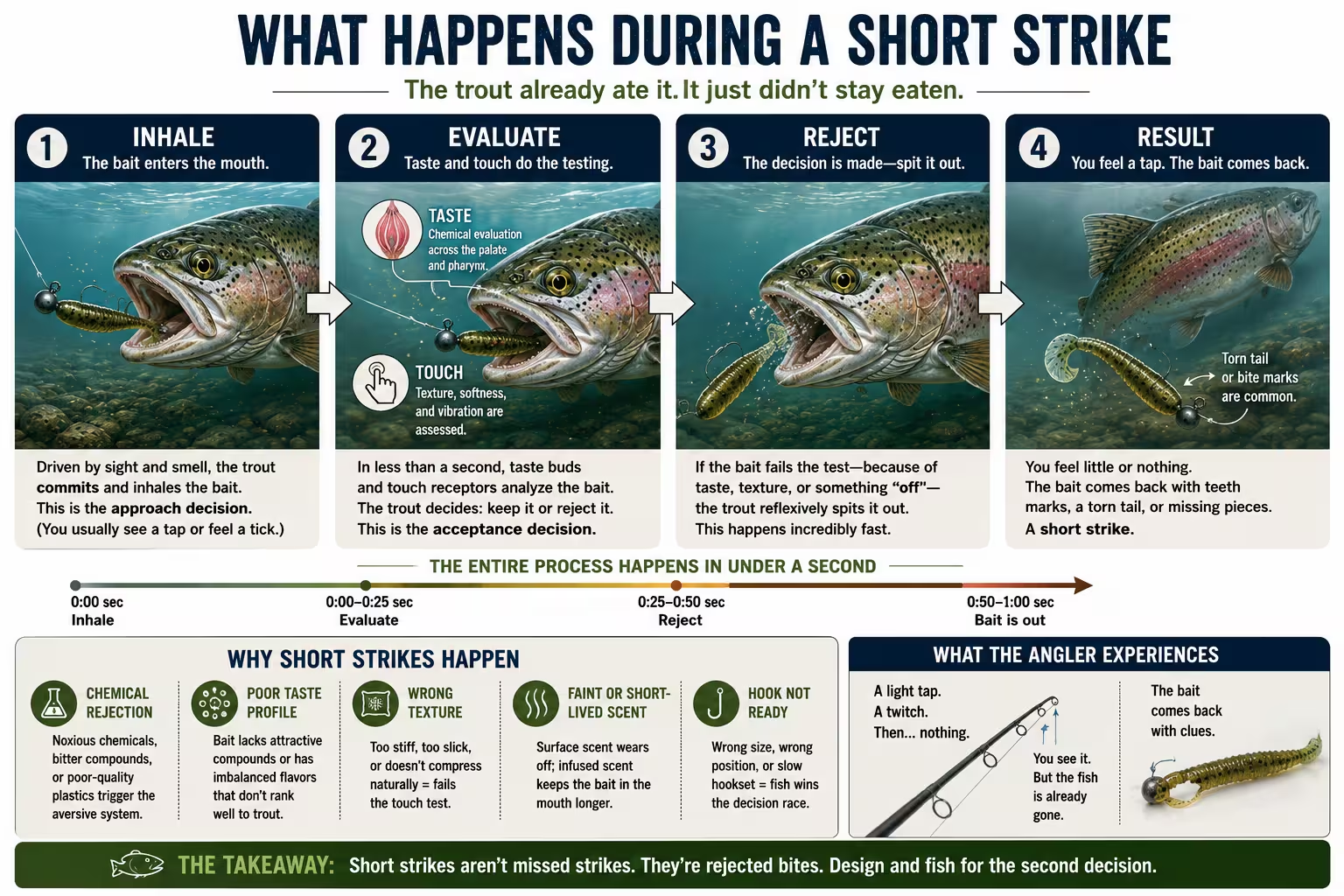
The speed of this reject cycle isn’t an accident — it’s a dedicated reflex, not a slow, deliberate decision. In fish that have been studied closely for this behavior, taste and touch signals from the mouth feed directly into a reflex system that can trigger sorting and rejection movements automatically, without needing to route through slower, more deliberate decision-making. Food that fails the test gets physically pushed out, fast, the same way you’d instinctively spit out something that tasted wrong before you consciously registered why.
For an angler, this explains a lot of confusing on-the-water experience: the “bite” that never turns into a hookset, the bait that comes back with a nick or a tear but no fish, the day where you had “activity” all afternoon but nothing to show for it. In most of those cases, there was no missed hookset to speak of. There was a full strike, a taste-and-texture test, and a reject — completed before your reaction time could ever catch up to it.
What a Nipped or Torn Bait Is Actually Telling You
Anglers who pull in a bait with a chewed tail or a torn section almost always read that as a near-miss — the fish “just missed it.” Given everything above, that’s usually the wrong read. Damage like that is far more consistent with a full take, a taste-and-texture evaluation, and a physical reject that involved the fish’s teeth clamping down before the sorting reflex pushed the bait back out. The fish had it. It decided against it, and the damage is the evidence of that decision, not of a failed attempt to get it.
This distinction matters because it changes what you should adjust. A near-miss suggests a presentation problem — wrong retrieve, wrong depth, fish not committing to the approach at all. A taste-and-texture reject suggests the approach is working fine and the problem is entirely in what happens after the strike — meaning the fix is in bait formulation, softness, and scent penetration, not in how you’re fishing it.
What This Means for Presentation
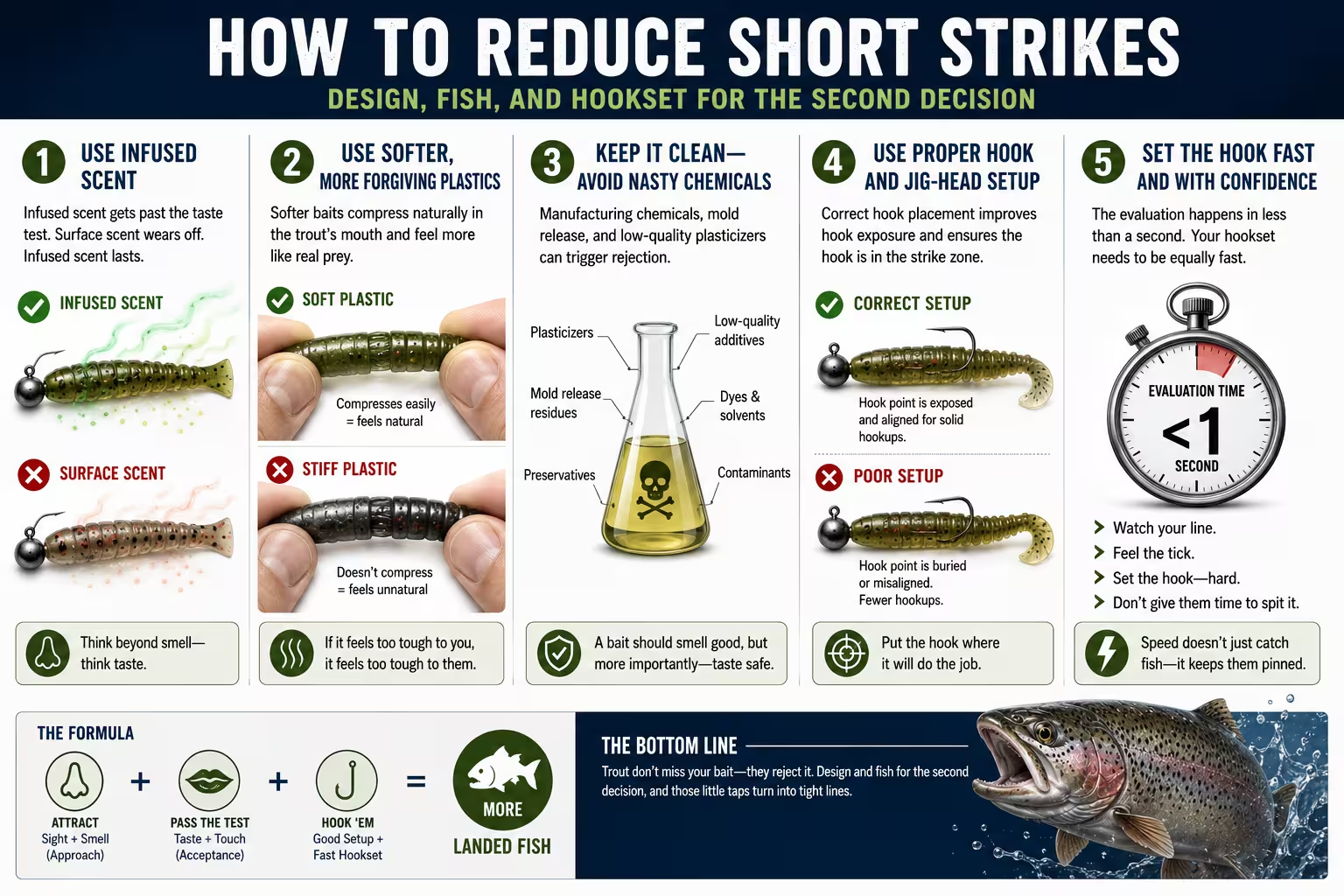
Once you accept that most short strikes are a taste-and-texture rejection rather than a missed bite, a few practical adjustments follow directly:
- Scent needs to be in the bait, not just on it. Surface-applied scent wears off fast and only influences the approach stage. Scent worked into the plastic itself keeps delivering a positive taste signal for the entire time the bait is in the fish’s mouth — exactly the window where rejection decisions get made.
- Softer plastics buy you time. A bait that compresses naturally under bite pressure is less likely to trip the texture checkpoint, giving the taste signal more time to do its job before the fish decides to spit it.
- Hook and rigging position affects more than hookset mechanics. A hook point, keeper, or jig head that creates an unnatural pressure point or exposes hard material inside the mouth can trigger a texture-based rejection on its own, independent of how the bait tastes.
- Clean manufacturing matters as much as scent additives. Residual plasticizers or processing chemicals can trip the same aversive detection system built to flag noxious prey, undermining an otherwise well-scented bait before taste ever gets a fair evaluation.
- Set faster than feels natural on light bites. Because the reject cycle is a fast reflex, not a slow decision, there’s often a smaller window than anglers assume between “fish has it” and “fish is done with it.” On light taps, especially on pressured water, treating every tap as a now-or-never window beats waiting to feel a full pull that may never come.
None of this replaces good presentation on the approach — sight and smell still have to get a fish interested in the first place. But once you understand that the actual decision to keep or reject a bait happens after the strike, not before it, it becomes clear why two anglers using visually identical baits can have completely different hookup ratios on the same water, the same day.
FAQ
Are short strikes usually a missed bite, or something else?
In most cases, they’re not missed at all — the fish took the bait, tested it with taste and touch, and rejected it in a fraction of a second, before the take could register as a full bite on the rod.
Is it taste or texture that makes a trout spit a bait?
Primarily taste. Chemical cues detected by taste buds in the mouth and pharynx are the dominant factor in the decision to swallow or reject food. Texture is a real, secondary checkpoint — an object that feels obviously wrong can trigger rejection on its own — but taste does most of the deciding.
Where are a trout’s taste buds located?
Not just on the tongue. Trout have taste buds distributed across the palate (roof of the mouth) and through the pharynx, wired to dedicated nerves that relay chemical information back to the brain almost instantly.
What is “aversive chemoreception” and why does it matter for bait?
It’s a chemical detection system fish use to identify and reject toxic or defensive compounds in prey. Manufacturing residues in soft plastic — plasticizers, mold-release agents, preservatives — can trip this same alarm even if a bait smells fine to a human, undermining bait acceptance before taste gets a fair chance.
Does scent on the outside of a bait matter if taste happens inside the mouth?
Both matter, but for different stages. Surface scent draws a fish in during the approach. Scent infused through the bait keeps delivering a taste signal for as long as the bait stays in the mouth, which is the window where most rejection decisions actually happen.
Why does bait softness affect hookup rates?
A stiff or overly firm bait is more likely to feel unnatural against the roof of the mouth, which can trigger a texture-based rejection independent of taste. Softer, more compressible plastics reduce that risk and give the taste signal more time to work.
What does it mean when a bait comes back torn or nipped with no fish hooked?
It almost always means a full strike happened, not a near-miss. The fish took it, evaluated it by taste and touch, and physically rejected it — the damage is evidence of that decision process, not of a failed attempt to eat it.
Why does the reject happen so fast?
Taste and touch signals in the mouth feed into a reflex system that can trigger rejection automatically, without slow, deliberate decision-making — similar to an instinctive spit reaction. That’s why the reject cycle is often faster than an angler’s reaction time.
Should I change how I set the hook based on this?
On light taps, especially on pressured water, it’s often better to treat the first tap as the only chance you’ll get, rather than waiting to feel a stronger pull that may never come — because the fish may have already made its decision and ejected the bait.
Why does a bait that worked all spring suddenly stop producing?
This is often conditioned taste aversion, not a change in overall fish behavior. A hookset and release paired with a specific taste-and-texture combination can build a lasting negative association with that exact bait chemistry, even while a differently formulated bait keeps working on the same water.
Do all fish rely on taste the same way trout do?
No. Catfish, for example, have taste buds concentrated on external barbels, letting them evaluate food before it reaches the mouth in low-visibility water. Trout concentrate taste in the mouth and pharynx, so taste plays its biggest role after a strike rather than before one — which is why formulation problems in trout show up as short strikes rather than fish that won’t investigate a bait at all.