Trout Catch-and-Release: What Actually Keeps Fish Alive
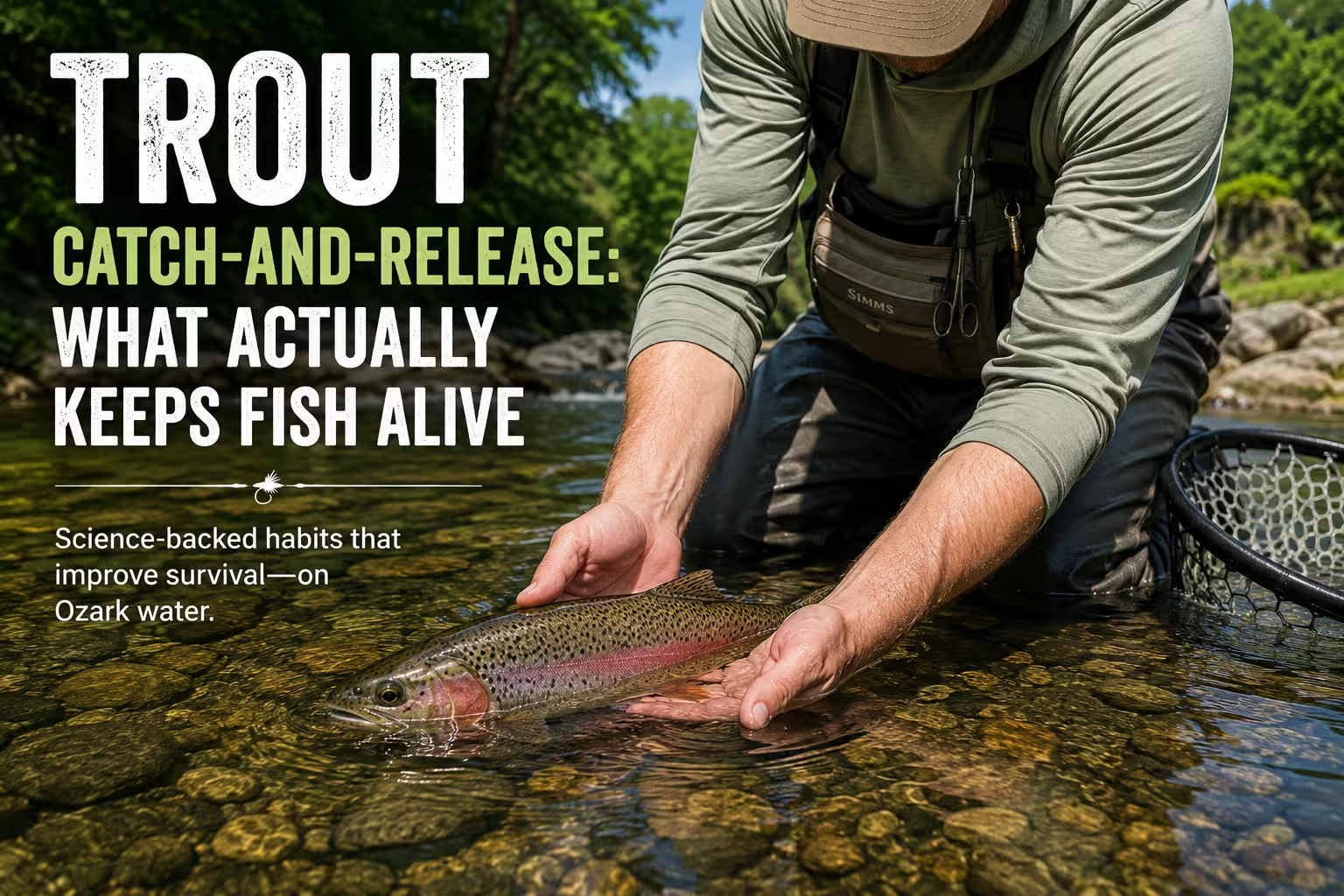
Trout catch and release is one of the best tools anglers have for protecting fisheries, but many common handling practices still kill fish after they’re released. Every angler says they practice catch-and-release. Far fewer know which of their habits actually help the fish and which ones just feel like they help. The difference matters more than most people think — fisheries research over the last two decades has put real numbers on how handling time, air exposure, water temperature, and hook choice affect whether a released trout survives the next 24 hours. This is a rundown of what that research actually shows, and how to apply it on Ozark water.
Why Trout Catch and Release Isn’t Automatically Safe
There’s a common assumption that if you release a fish, it swims away and lives. That’s not guaranteed. Landing, handling, and releasing a trout is a physiological event — the fish experiences exhaustion, oxygen debt, and a stress-hormone spike from the fight itself, on top of whatever happens once it’s out of the water. Stack enough of those stressors together and a fish can swim off looking fine and still die hours or days later from the cumulative load. That delayed mortality is the part anglers can’t see, which is exactly why it gets underestimated.
The good news: the research is consistent on what drives that mortality up or down, and almost all of it comes down to angler behavior — not luck.
The Two Biggest Factors: Air Exposure and Water Temperature
If you only change two things about how you release fish, make it these.
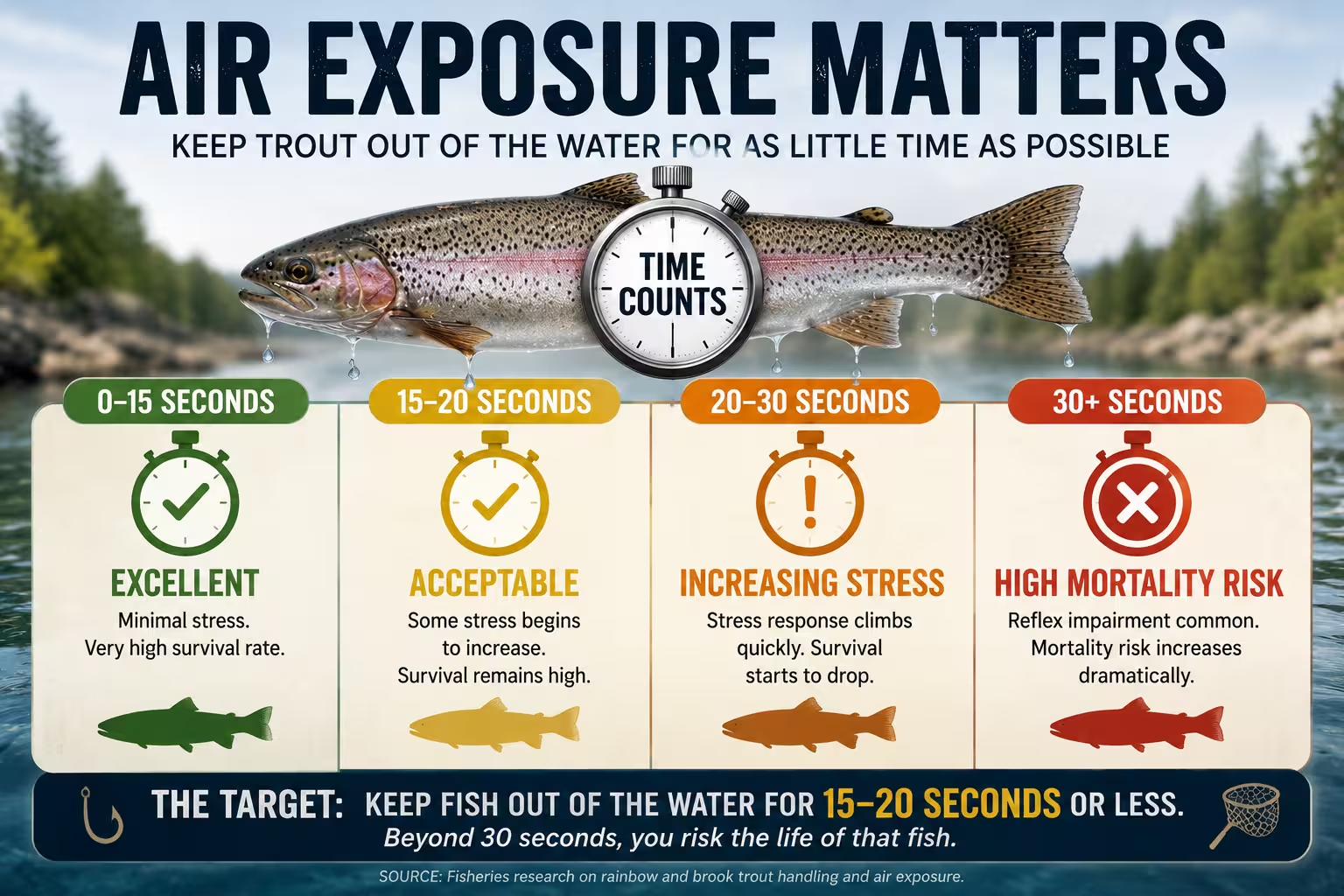
Air exposure. Every minute a trout spends out of the water, its gills can’t pull oxygen and its stress response climbs. Fisheries researchers studying rainbow trout found survival dropped sharply the longer a fish was held in the air after exertion — fish handled without air exposure survived at very high rates, but survival fell substantially once fish were held out of the water for even 30 seconds, and it kept dropping the longer they were held. Separate field studies of brook trout found that air exposure beyond about 30 seconds, especially paired with warm water, was strongly linked to reflex impairment — things like loss of balance and slow righting reflex — which in turn predicted whether the fish lived.
The practical target repeated across catch-and-release research: keep fish out of the water for 15–20 seconds, and treat anything past 30 seconds as a real risk to that fish’s survival. That’s shorter than most anglers think. If you’re fumbling with forceps, posing for a photo, or trying to unhook a fish that swallowed the bait, you’ve likely blown well past the safe window without realizing it.
Water temperature. Trout are cold-blooded, so water temperature controls everything about how hard a released fish can recover. Research and fisheries agencies across trout country converge on a similar picture:
- Trout feed and fight normally in the roughly 45–65°F range.
- Stress starts climbing noticeably as water passes into the mid-60s.
- Most conservation-minded guidance recommends stopping catch-and-release fishing for rainbow, brook, and cutthroat trout around 66–68°F, with brown trout tolerating a couple degrees warmer.
- Above 70–75°F, mortality risk climbs fast, and prolonged exposure to water in the high 70s can be lethal on its own, independent of angling.
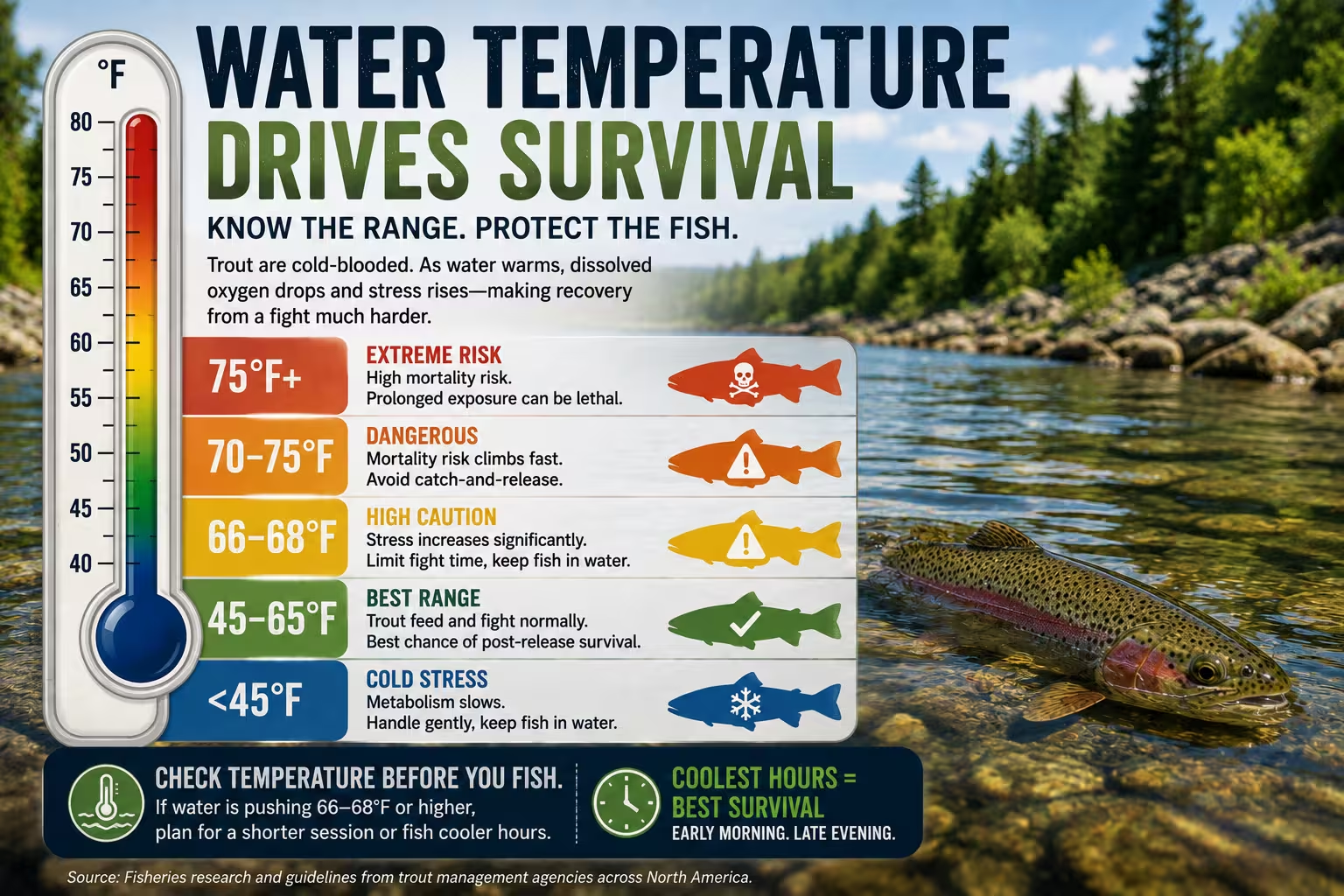
The mechanism is straightforward: warm water holds less dissolved oxygen. A trout that just fought hard needs more oxygen to recover, not less — so the worse the water’s oxygen supply, the worse its odds. This is exactly why so many trout fisheries (including here in the Ozarks) shift to flies-only, catch-and-release-only rules during the hottest stretch of summer or the coldest stretch of winter — the fishery managers are directly responding to this research.
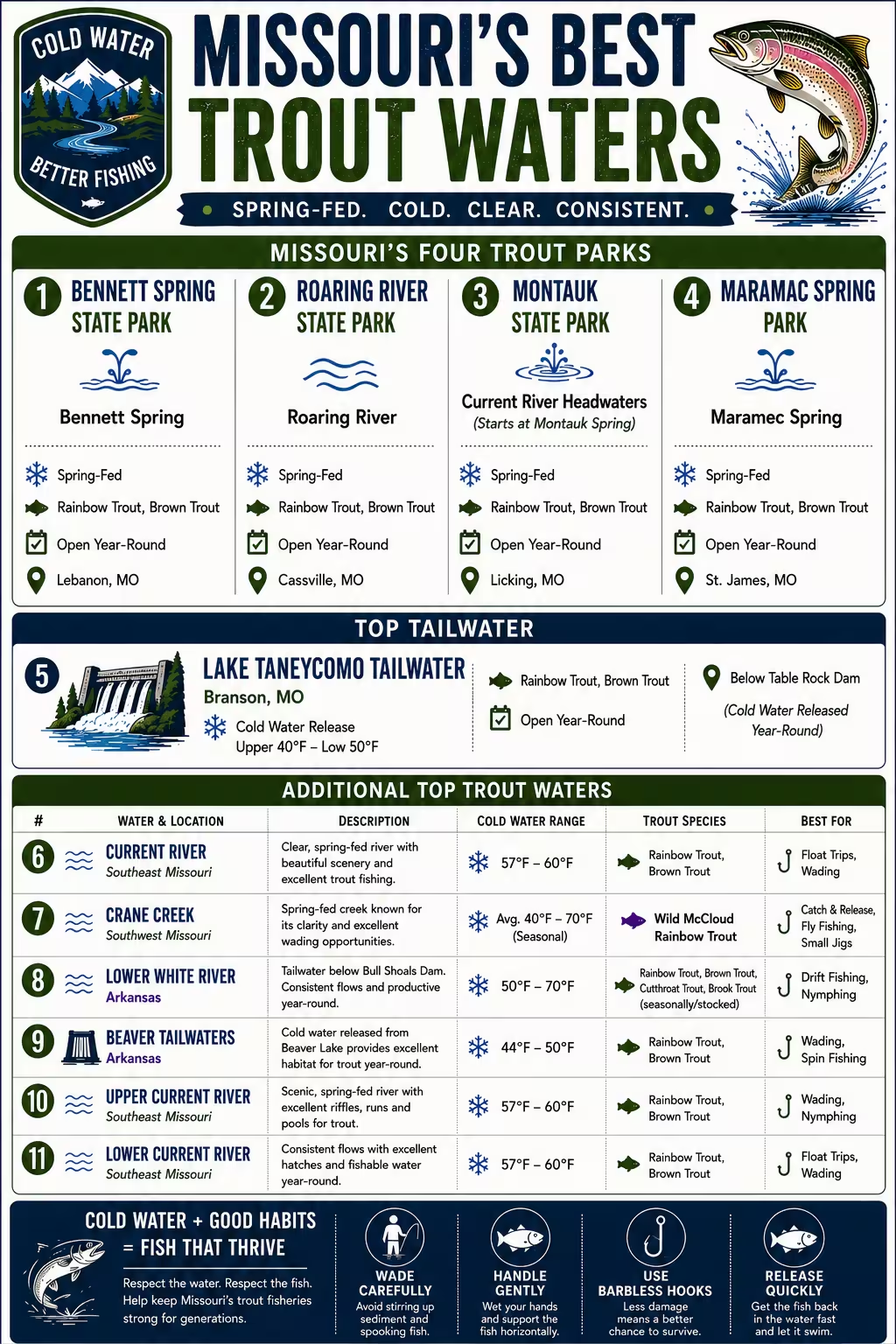
On Ozark water specifically: the spring-fed streams that make up Missouri’s best trout fisheries — Bennett Spring, Roaring River, Montauk, Maramec Spring, and the tailwater below Table Rock Dam at Lake Taneycomo — run cold and stable most of the year because they’re spring-fed rather than purely surface-runoff streams (see our Missouri Trout Fishing Guide for a breakdown of each water). That’s a real advantage for catch-and-release survival compared to a freestone stream that heats up hard in July. Water temperature and dissolved oxygen move together — pair this with our best water temperature for trout guide before you head out. Carry a stream thermometer anyway. Don’t guess.
Hook Choice Changes Everything
The type of hook and lure you’re using has a direct, measurable effect on how easily a fish can be released — and on how likely it is to be hooked somewhere dangerous in the first place.
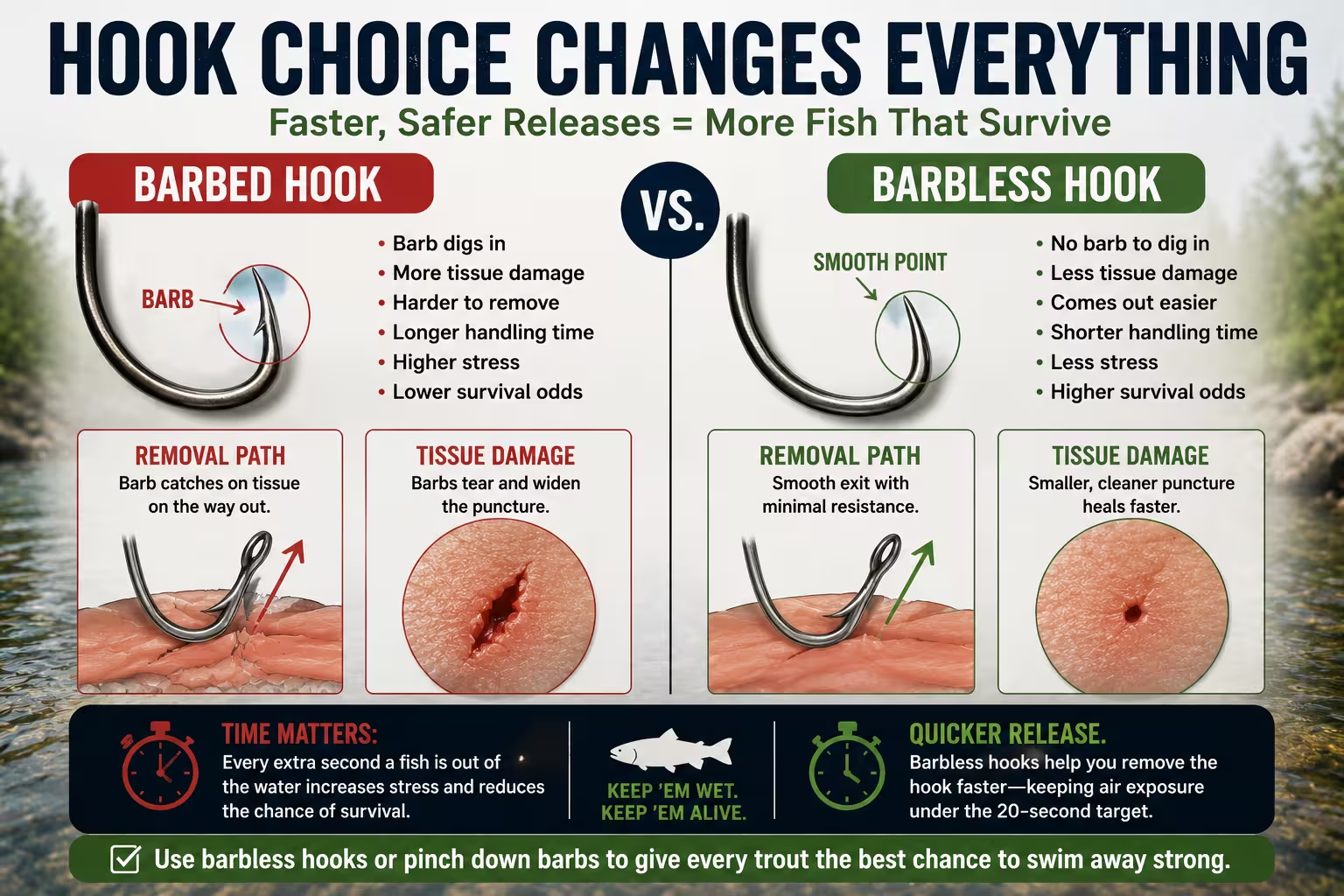
Barbless vs. barbed. Barbless hooks (or barbed hooks with the barb pinched down) come out faster, which directly shortens both handling time and air exposure — the two biggest levers in this whole conversation. A barbed hook that’s lodged in the jaw might take an extra 20–30 seconds of wiggling to remove; that’s the entire margin fisheries researchers say you have before survival starts dropping. See our fishing hook anatomy guide for how barb design affects removal, and our guide to best hook size for trout jigs for matching hook size to the fish you’re targeting.
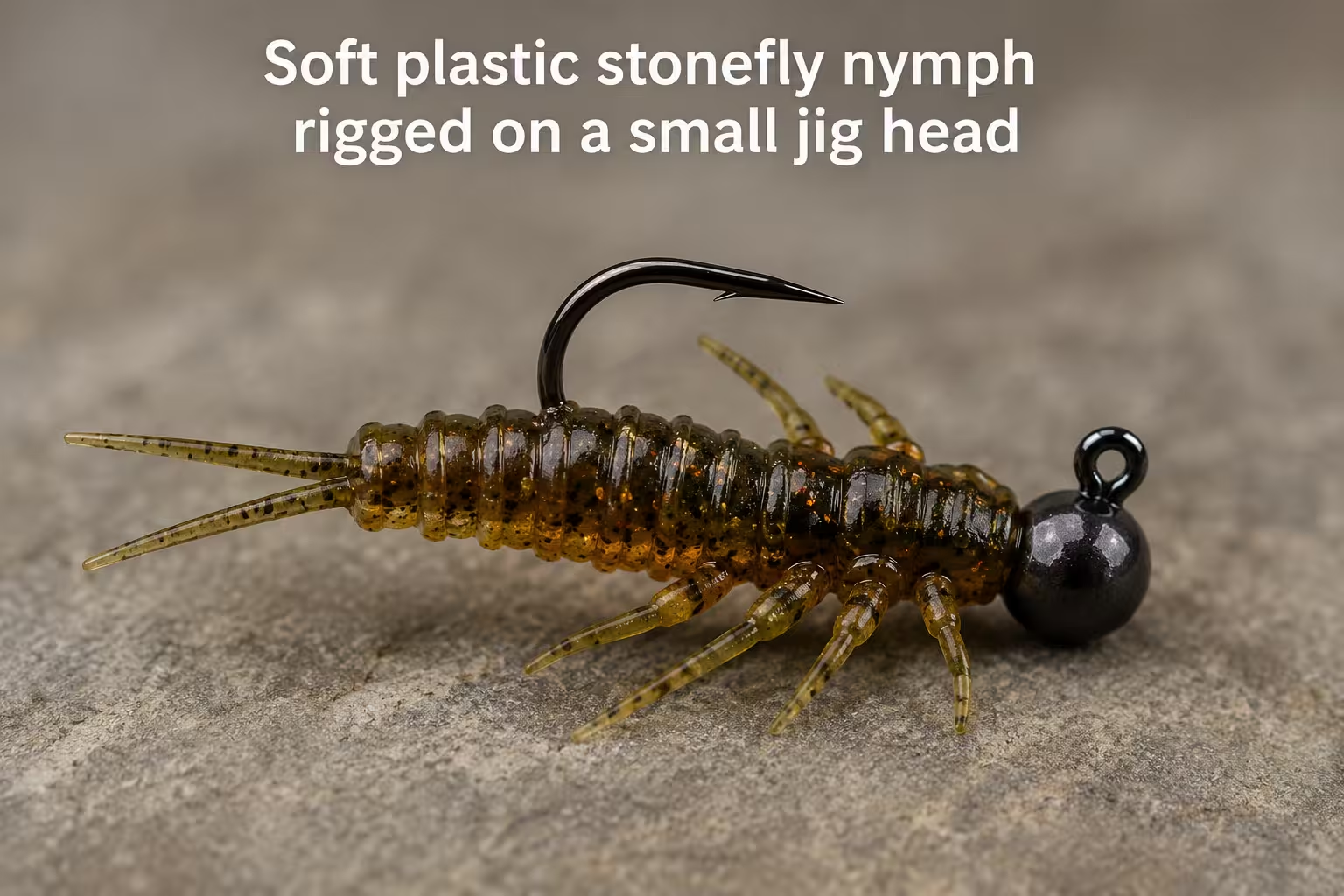
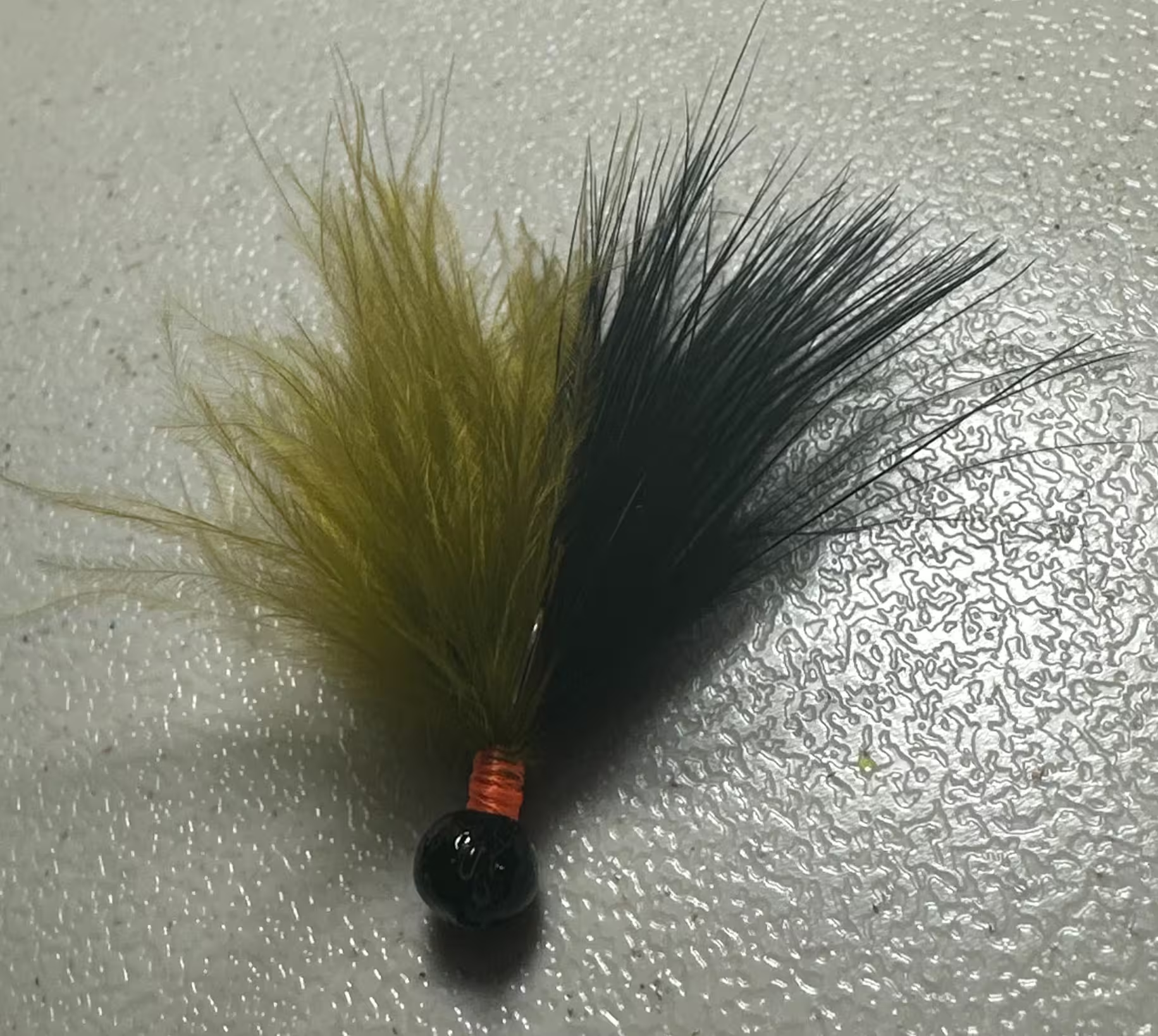
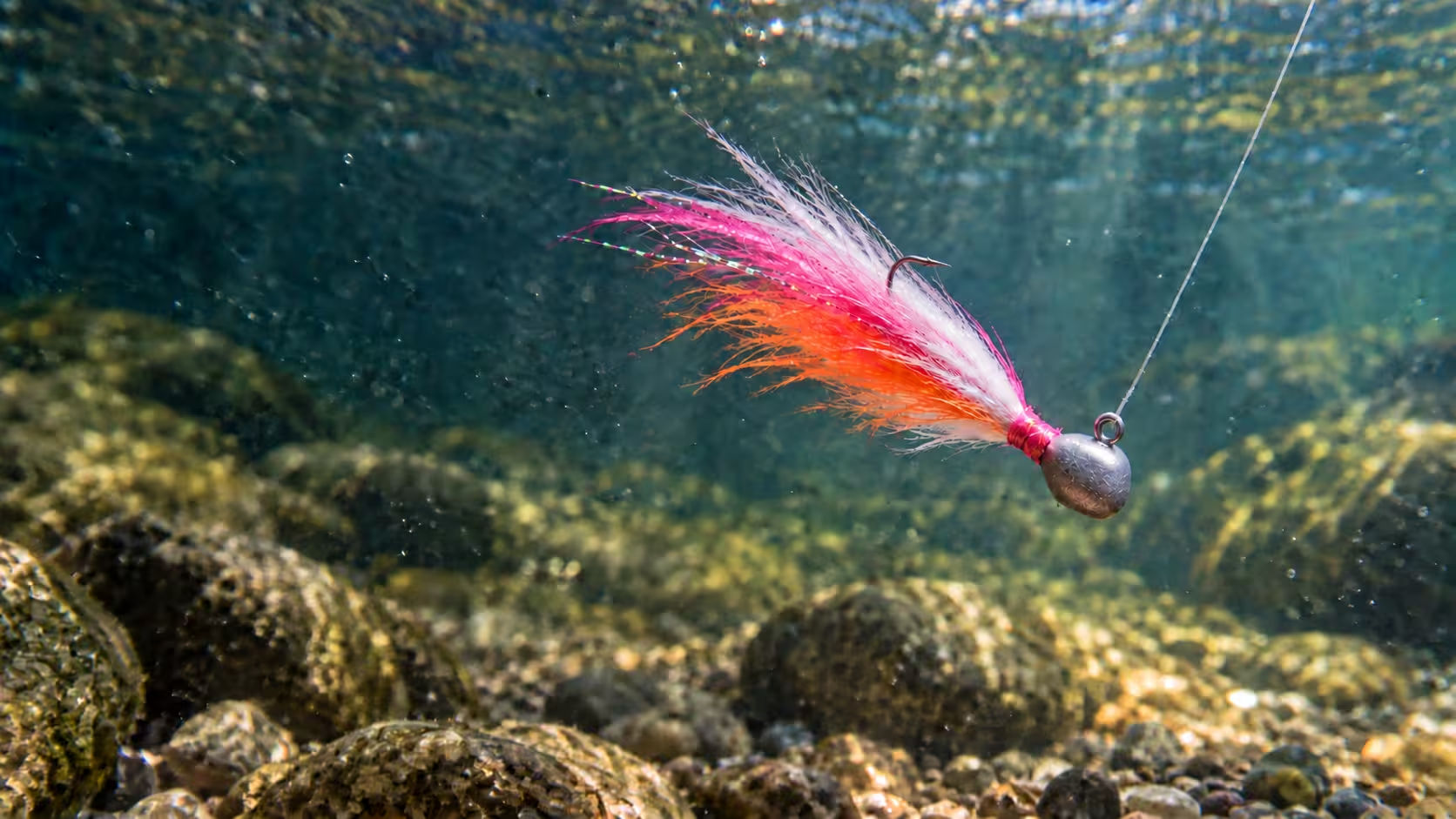
Deep hooking. Fish that swallow bait or a lure often get hooked in the gills or gut instead of the jaw — a much more serious injury. Slower, more subtle presentations (like natural bait or scented soft plastics fished on a dead drift) tend to get taken deeper and held longer before the angler feels the bite, compared to actively worked jigs and lures where the strike is usually immediate and the hookset comes fast — our post on how softness affects hookup ratio covers this in more depth. If you’re targeting a river or section where you plan to release everything you catch, moving to actively fished marabou jigs — set on the take rather than left to sit — meaningfully cuts down on deep hooking versus a static bait presentation. Matching your retrieve speed to the take also helps you feel the strike sooner.
If you’re fishing bait rigs, our guide on how to rig a trout worm covers rigging choices that affect how deep a fish takes the hook.
If a fish is hooked deep anyway: don’t dig for it. Cutting the line as close to the hook as possible and releasing the fish with the hook still in place has a better survival outcome than prolonged attempts to remove it, based on the same handling-time logic above. Most hooks corrode or work free on their own well before they cause lasting harm; a torn gill arch or punctured gut from a forced removal usually will not heal.
Landing and Handling: The Part Most Anglers Get Wrong
Land fish quickly. A prolonged fight burns through a trout’s energy reserves and floods its system with lactic acid, on top of whatever air-exposure and hook-related stress comes next. Undersized tackle that turns every fish into a five-minute fight does more cumulative damage than most anglers give it credit for. Match your line and rod to the water and fish size so you can land fish efficiently, not so you can brag about the fight.
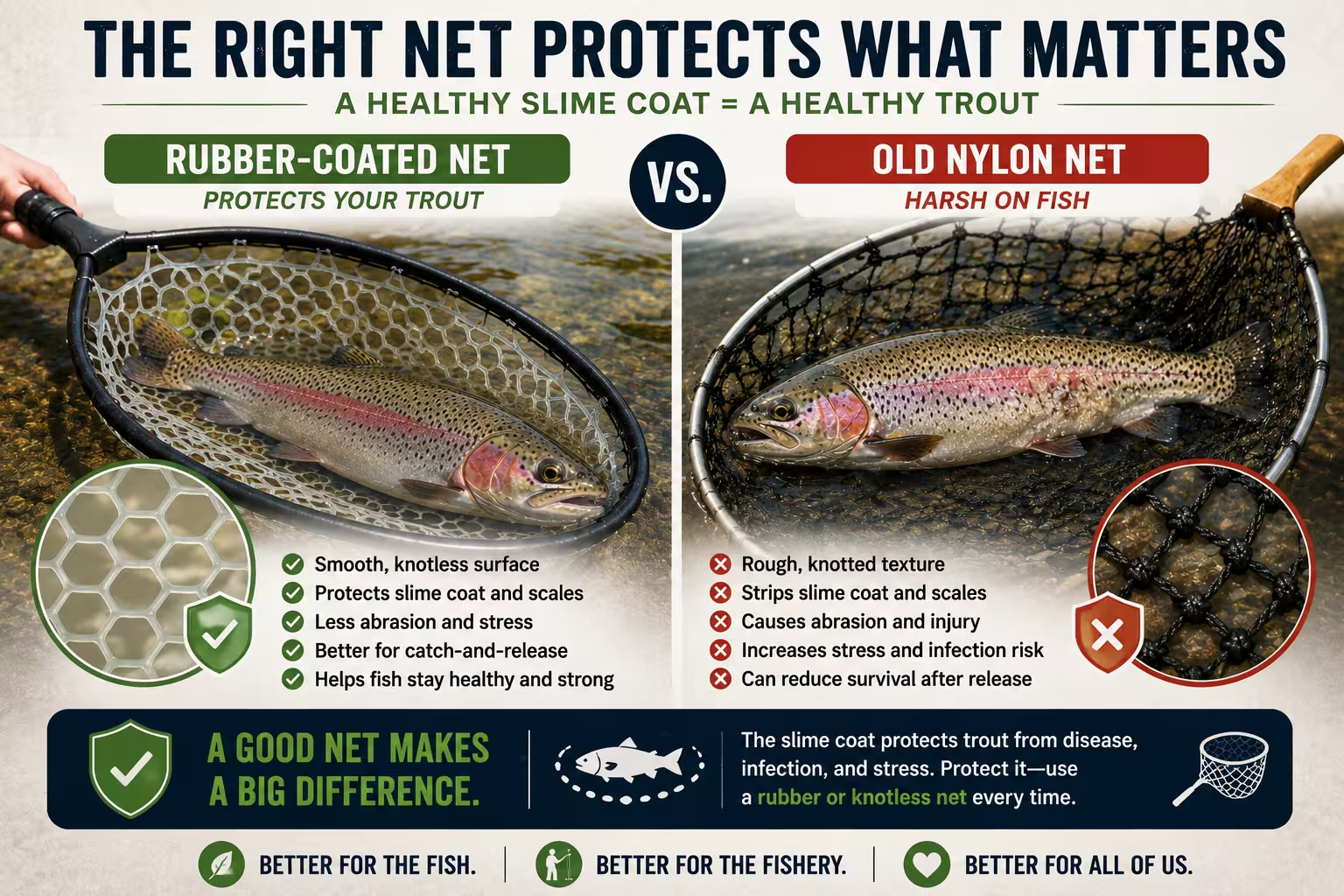
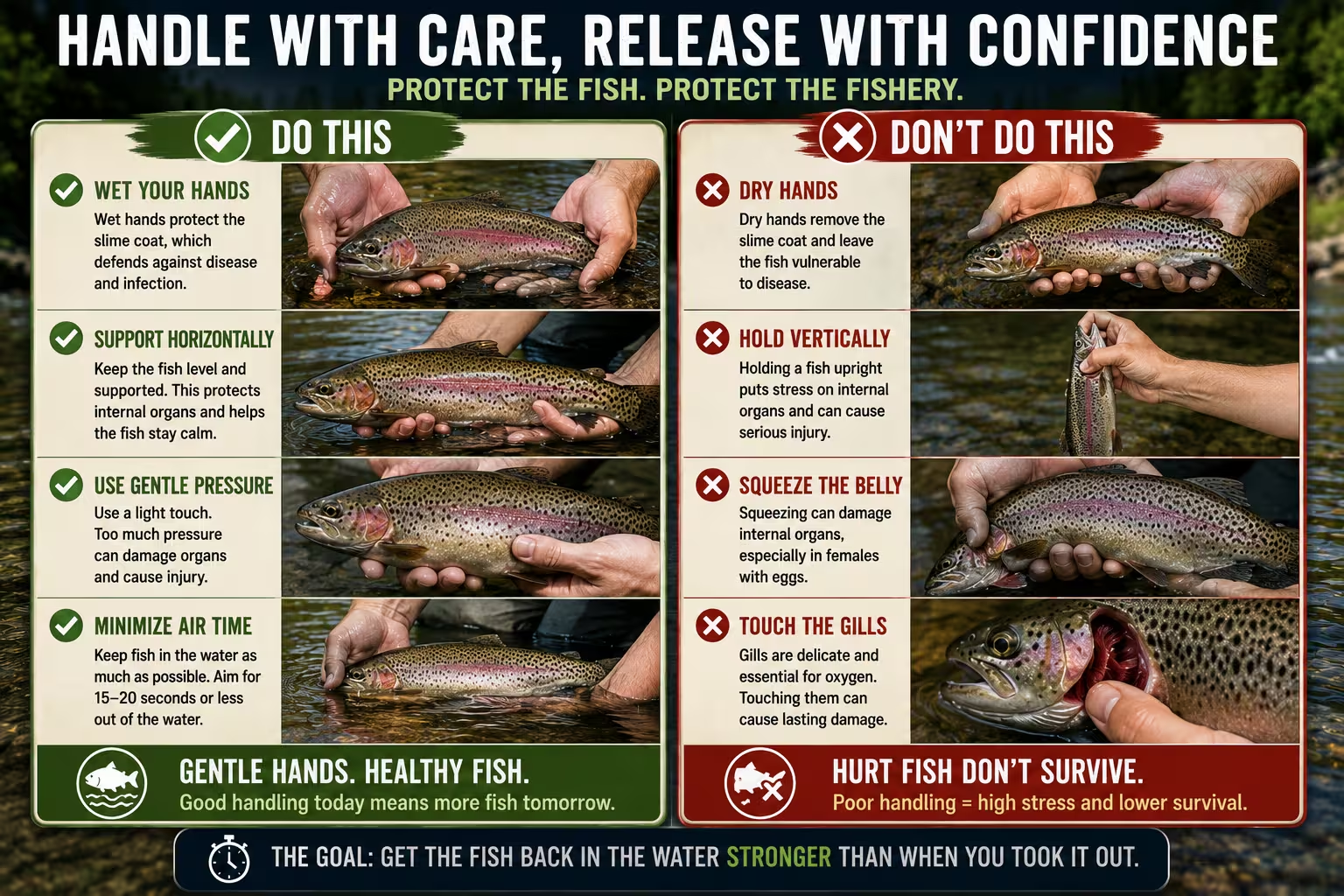
Use a proper net. A rubber-coated or knotless mesh net protects the slime coat and scales far better than cotton or hard nylon mesh — abrasion from a rough net strips the mucous layer that protects trout from infection, and that damage doesn’t show up as an obvious wound but still affects survival. If you land fish by hand instead, wet your hands first; dry hands and dry cloth remove far more of that protective slime layer than people expect.
Keep the fish in the water. The single highest-leverage habit in this entire list is doing hook removal, and photos if you take them, with the fish still submerged or only lifted for a couple of seconds at a time. “Fish in the water, camera ready first” beats “fish out of the water while you get your camera ready” every time. Set up the photo before you lift the fish, not after.
Never touch the gills, and avoid squeezing the belly. Gill filaments are thin and delicate tissue responsible for all of the fish’s oxygen exchange — even light contact can damage them permanently. Squeezing around the belly of a trout you’re holding for a photo can injure internal organs, particularly in females carrying eggs.
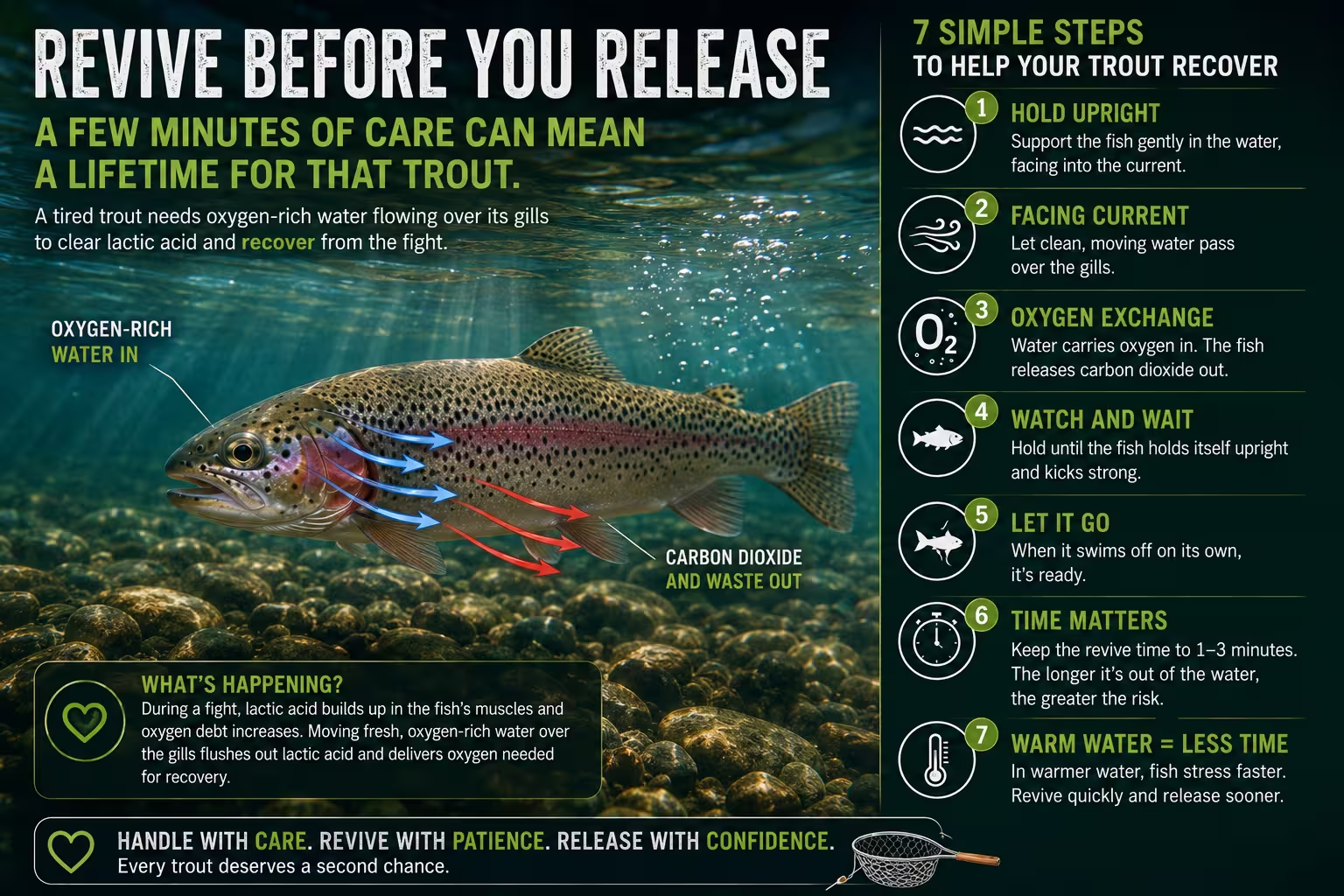
Revive before release, don’t just drop it. If a fish looks sluggish or can’t hold itself upright, don’t just release it and hope. Hold it upright in the water, facing into moderate current if there is any, until it kicks free on its own. In slower or stillwater sections, gently moving the fish forward and back lets water pass over the gills and speeds recovery. A fish that swims off under its own power the moment you let go had a real chance; a fish you have to nurse back for a minute or two was closer to the edge than it looked.
Putting It Together: A Practical Ozark Trout C&R Routine
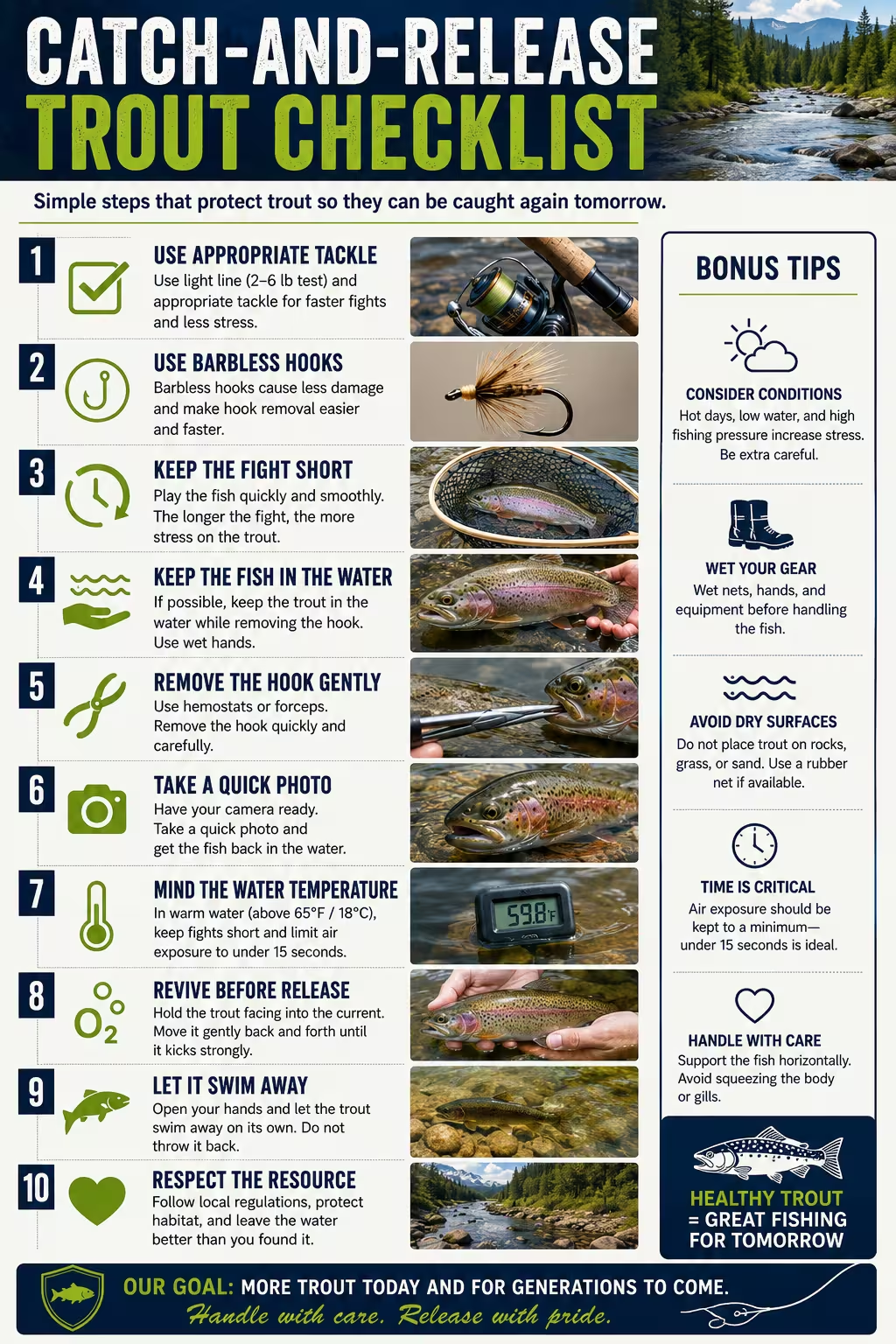
- Check water temperature before you start fishing. If it’s pushing 66–68°F or higher, plan for a shorter session or switch to early morning when the water’s coolest.
- Use barbless hooks, or pinch the barbs down, on whatever you’re throwing — jig, fly, or soft plastic.
- Fight fish efficiently. Don’t underspool yourself just to make a small trout feel bigger.
- Have your net wet and ready before you set the hook, not after.
- Keep the fish in the water for the hookset removal whenever the hook location allows it.
- If you want a photo, get your camera ready first, then lift the fish for a few seconds, tops.
- If a fish is hooked deep, cut the line instead of digging for the hook.
- Revive fish facing into current before letting go, and watch it swim off before you move on.
None of this requires special gear beyond a decent net and a pair of forceps or hemostats you probably already carry. What it requires is treating the release the same way you’d treat the cast and the hookset — as a skill worth doing right, not an afterthought once the fish is already in hand.
Trout Catch and Release: Common Questions
Do scented soft plastics hurt catch-and-release survival?
Not directly — scent itself isn’t the issue. The risk is indirect: scented baits and natural bait tend to get taken deeper and held longer before an angler feels the strike, which raises the odds of a gut or gill hook instead of a lip hook. Fishing scented soft plastics with an active retrieve, rather than letting them sit static, keeps strikes closer to the same immediate-hookset pattern you get with jigs and lures.
Is it safe to catch-and-release trout in winter?
Generally yes, and often safer than summer — cold water holds more dissolved oxygen, which is the main thing a fought trout needs to recover. The added risk in winter is air exposure: in freezing air temperatures, a wet fish’s gills and skin can be damaged by cold or even start to freeze in seconds. Keep winter releases fast and keep the fish in the water as much as possible.
Can I still take a photo of my fish?
Yes — the guidance isn’t “no photos,” it’s “get the camera ready before you lift the fish.” Keep the fish in or just above the water, take the shot in a couple of seconds, and get it back under. A fish held up for a 30-second photo session is in the same risk window as one held for a slow hook removal.
What if the trout is bleeding from the gills?
Gill bleeding is a serious sign — that tissue is where the fish exchanges oxygen, and heavy bleeding there is one of the strongest predictors of post-release mortality across fisheries research. If regulations allow harvest and you have no realistic path to release, keeping that fish is usually the better outcome than releasing one that’s unlikely to survive anyway. If you must release it, minimize handling further and let it go immediately.
Do I need special gear to practice good catch-and-release?
No. A rubber or knotless landing net, a pair of forceps or hemostats, and hooks that are barbless or pinched down cover almost everything the research points to. The rest is technique — quick fights, wet hands, minimal air time — not equipment.
Does it matter if I’m fishing a stocked trout park versus a wild trout stream?
The core practices don’t change, but the stakes differ. In stretches with wild or holdover fish — like sections of Lake Taneycomo or the upper reaches below Missouri’s trout parks — a fish that dies from poor release technique is a genuine loss to a self-sustaining population. In heavily stocked water, the population is replenished regardless, but the same technique still determines whether that individual fish gets caught again by the next angler in line.
Why This Matters Beyond the Individual Fish
Missouri’s trout fisheries — especially the four trout parks and Lake Taneycomo — depend on a mix of hatchery stocking and, in some stretches, wild and holdover fish that survive multiple seasons (see stocked vs. wild trout for how the two differ in behavior and handling). Every trout that’s released and actually survives is one that can be caught again, grow larger, and in wild-reproducing stretches, contribute to natural reproduction. Poor release practices don’t just cost the individual angler a fish story — over a season, across thousands of anglers, they measurably shrink the population of larger, older fish that make a fishery worth returning to. Good release technique is one of the few things an individual angler fully controls that adds up to a real difference in fishery quality over time.