The Chemistry Behind Garlic Scent: How Amino Acids Trigger a Trout Feeding Reflex
Garlic scent for trout doesn’t work the way most anglers assume. A trout runs a molecule through a biochemical lock-and-key system that either fires a feeding reflex or doesn’t — and that system explains exactly why garlic scent works, and why it works even better paired with the right amino acids.
1.Smell Isn’t One Sense — It’s Two
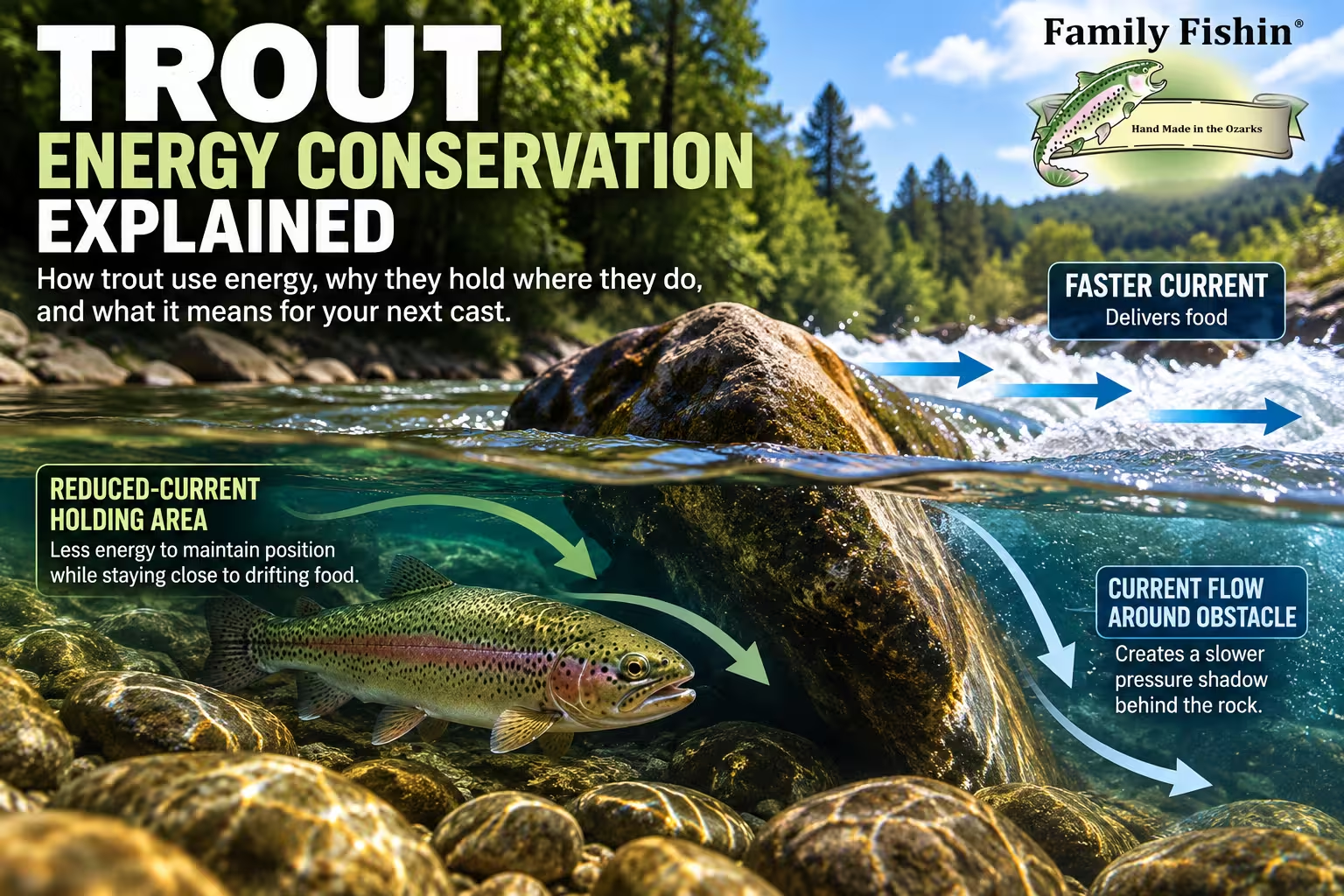
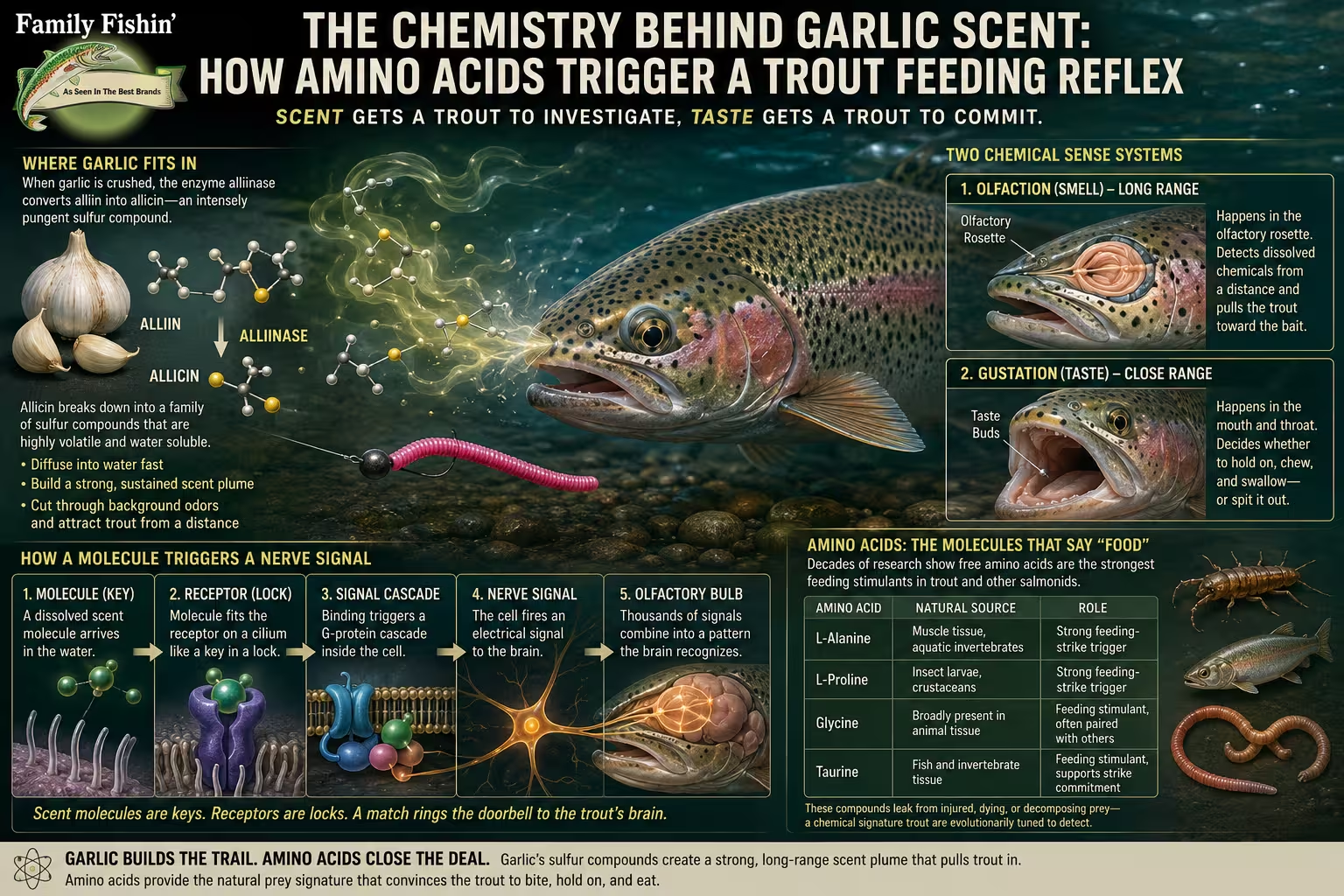
Anglers usually talk about “scent” as a single thing. Biologically, a trout is running two separate chemical-detection systems, and they do different jobs.
- Olfaction (smell) happens in the nose — technically the olfactory rosette, a folded pad of tissue tucked in a pit on the snout that water flows through as the trout swims. It detects dissolved chemicals from a distance, before the bait is anywhere near the mouth. This is the long-range system: it pulls a trout toward a bait’s general location.
- Gustation (taste) happens in the mouth and throat (the oropharyngeal cavity), on taste buds that only fire when something is actually inside the mouth. This is the close-range system: it’s the final check that decides whether to hold on, chew, and swallow, or spit the bait back out.
Core principle: scent gets a trout to investigate. Taste gets a trout to commit. A bait that only works on one of these systems will get followed and rejected far more often than one built to satisfy both.
2.How a Single Molecule Triggers a Nerve Signal
Here’s the part that sounds complicated but is actually a simple mechanical idea once you strip the jargon out.
Every olfactory nerve cell in a trout’s nose is covered in tiny hair-like structures called cilia, and each cilium is studded with receptor proteins — think of them as differently shaped locks. A dissolved scent molecule floating past is a key. When a molecule happens to be the right shape to fit a particular receptor, it binds, and that triggers a chain reaction inside the cell (a G-protein signaling cascade, the same general class of switch your own nose and eyes use) that ends with the nerve cell firing an electrical signal.
That signal travels straight to the olfactory bulb in the brain, where signals from thousands of receptor cells get combined into a single pattern — the trout’s read on “what is this, and where is it coming from.” No conscious thought required. It’s closer to a reflex arc than a decision.
The plain-language version: scent molecules are keys, receptors are locks, and a match triggers a doorbell that rings straight into the trout’s brain. Different molecules fit different locks — which is exactly why some scents barely register and others fire the system hard.
3.Amino Acids: The Molecules That Actually Say “Food”
Not every dissolved chemical rings that doorbell equally hard. Decades of feeding-stimulant research in salmonids (the trout and salmon family) point to one class of molecule as the strongest, most consistent trigger: free amino acids — the small building-block molecules that make up protein.
A handful show up again and again as potent feeding stimulants in trout and related species:
| Documented feeding-stimulant amino acids | ||
| Amino acid | Natural source | Role |
| L-alanine | Muscle tissue, aquatic invertebrates | Strong feeding-strike trigger |
| L-proline | Insect larvae, crustaceans | Strong feeding-strike trigger |
| Glycine | Broadly present in animal tissue | Feeding stimulant, often paired with others |
| Taurine | Fish and invertebrate tissue | Feeding stimulant, supports strike commitment |
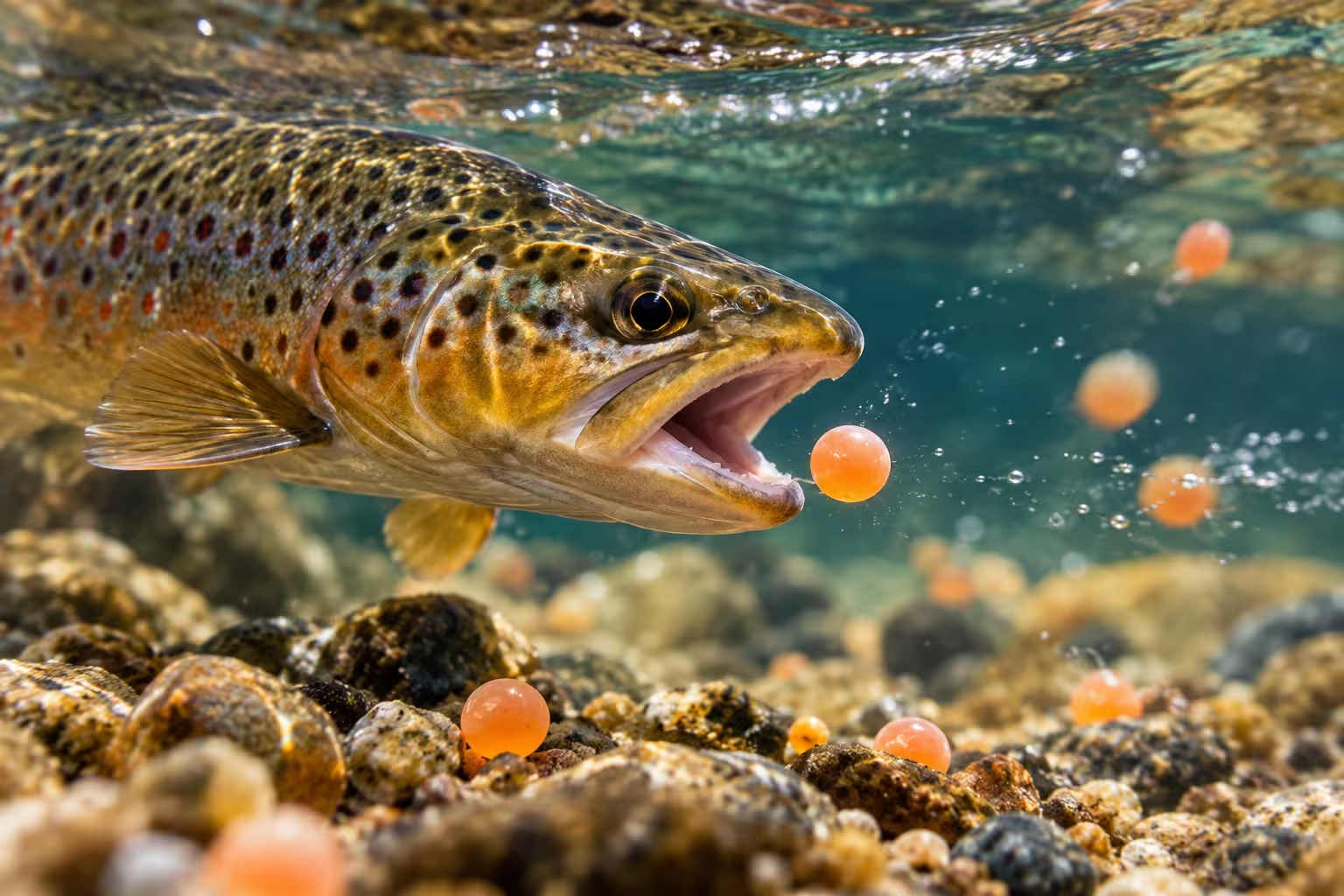
These molecules are exactly what leaks out of any injured, dying, or decomposing prey item — a nymph torn loose from the streambed, a minnow struggling, a worm broken by current. A trout’s olfactory system is tuned to detect them because, across its entire evolutionary history, that specific chemical signature has meant one thing: an easy meal is nearby. Trout can detect some of these compounds at concentrations of a few parts per billion — a dilution so faint that if you scaled it to a swimming pool, it would be less than a teaspoon.
4.Garlic Scent for Trout: Where It Actually Fits In
Garlic is not a natural trout food, and raw garlic is not sitting in a trout’s evolutionary chemical vocabulary the way amino acids are. What garlic brings to the table is different, and just as useful.
Whole garlic is nearly odorless. The moment a garlic cell is crushed, an enzyme called alliinase comes into contact with a compound called alliin and rapidly converts it into allicin — an intensely pungent, sulfur-based compound. Allicin is unstable and quickly breaks down further into a family of related sulfur compounds, which is why garlic’s smell shifts and intensifies over time rather than staying constant.
Two properties make those sulfur compounds unusually effective as a fishing scent carrier:
- High volatility and water solubility — they diffuse into water fast and keep diffusing, building a strong, sustained plume rather than a weak one that dissipates in minutes.
- Distinctiveness — sulfur compounds are chemically potent triggers across a wide range of animal olfactory systems, which is exactly why the smell is so noticeable standing over the tackle box, and why it cuts through background water chemistry (mud, algae, other scent competing for the same water column) more effectively than a milder compound would.
Tactical adjustment: because garlic’s strength is plume-building and distance detection rather than a natural “prey signature,” it performs the olfaction job — pulling a trout in from range — exceptionally well. That’s precisely why it’s most effective layered onto a bait shape and texture the trout’s gustatory system can then confirm as food once it’s in the mouth. This is the working theory behind why a garlic-scented soft plastic like the Ribbed Trout Worm — garlic plume for the approach, worm shape and texture for the bite-and-hold — outperforms a garlic scent applied to a shape or texture that doesn’t hold up under a taste check.
Common mistake: assuming more scent always means more strikes. Overloading a bait can build a plume so strong it becomes an unnatural, out-of-place signal in the water — actual prey doesn’t announce itself at that concentration. A consistent, moderate scent trail reads as authentic; an overwhelming one can make fish hesitate on the taste-check step even after the smell pulled them in.
5.Why a Motionless Bait Builds a Better Scent Trail Than a Moving One
Scent doesn’t spread through water the way it spreads through air. In flowing water, the dominant transport mechanism isn’t simple diffusion (molecules slowly spreading on their own) — it’s turbulent advection, meaning scent gets torn into long, thin, twisting filaments and carried by current and micro-turbulence. Research on aquatic chemotaxis (how animals navigate using scent) has found that animals don’t track a smooth, steadily-increasing gradient toward the source. They track the intermittent structure of the plume — the on-again, off-again pattern of filaments crossing their nose — to work out direction.
A bait that’s reeled steadily through the water shreds its own plume before it has time to form a coherent trail. A bait that’s allowed to sit disturbs the water less and lets a stable, followable filament structure develop downstream of it — which is exactly the structure a trout’s olfactory system is built to track.
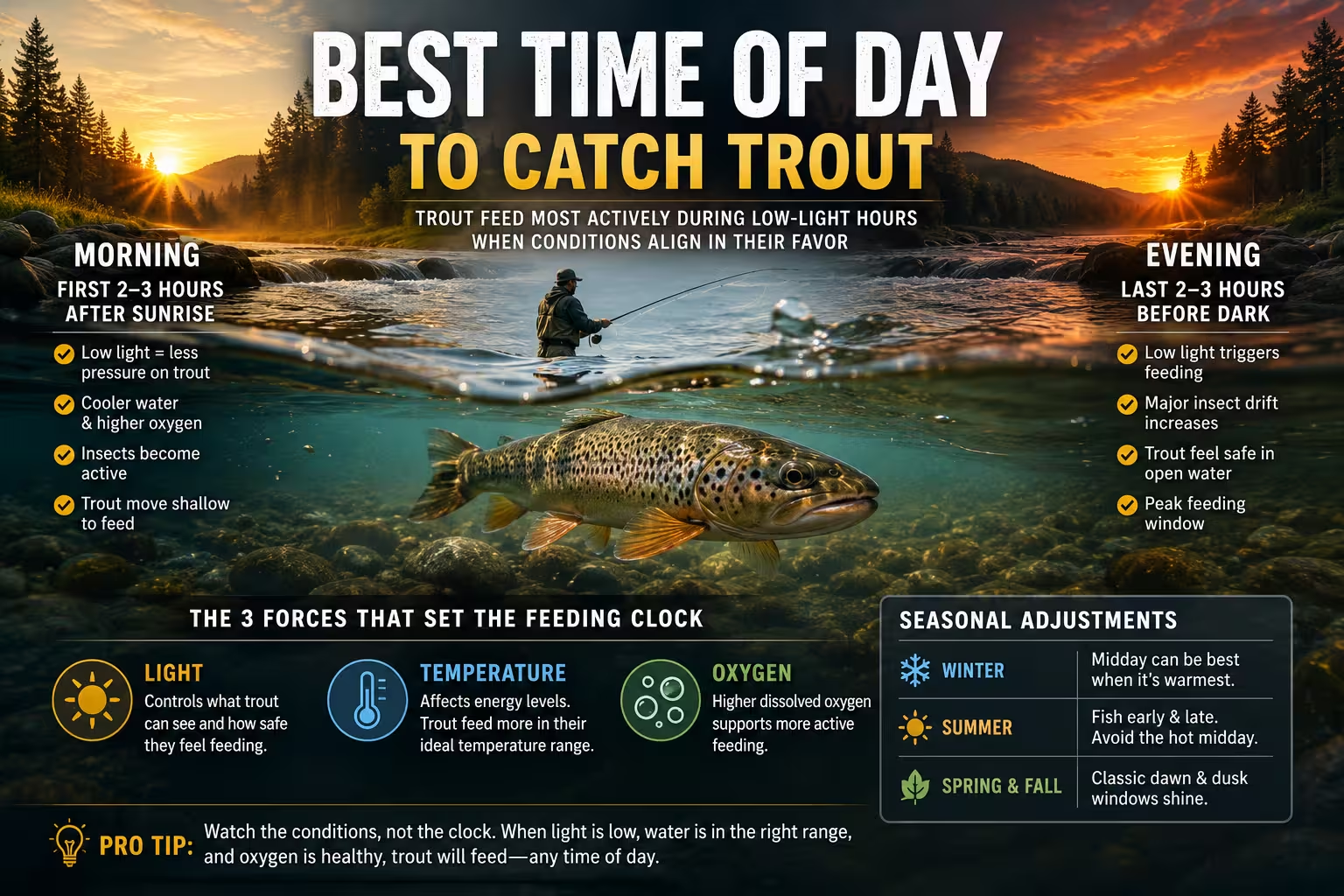
Tactical adjustment: in cold water or low light, when a trout’s decision-making is already running slow, giving a garlic-scented bait time to sit and build a real plume matters more than movement. This is the same underlying physics behind slow, dead-sticked presentations working better than fast retrieves in those conditions — the bait needs time to build a trail worth following.
6.The Two-Step Model, Put Together
| Olfaction vs. gustation | |||
| Step | System | Job | What it’s checking |
| 1 — Approach | Olfaction (nose) | Detect and follow the plume from a distance | “Is there food-like chemistry nearby, and where?” |
| 2 — Commitment | Gustation (mouth) | Confirm on contact | “Does this actually taste like food? Hold or reject?” |
A bait built for only step one gets follows and refusals. A bait built for both steps gets follows that convert into strikes the trout actually holds onto — which matters practically, since a longer hold gives more time to set the hook before the fish spits it back out.
7.Common Mistakes
- Treating scent as one thing, when olfaction (pulling fish in) and gustation (getting fish to hold on) are separate systems that both need to be satisfied
- Assuming a stronger scent is always better — concentration matters, and overload can work against you at the taste-check stage
- Reeling steadily through water when a stationary presentation would let a real scent plume develop
- Ignoring water temperature’s effect on this whole system — cold water slows a trout’s nerve signal processing the same way it slows everything else metabolically, so scent needs more time to do its job
- Reapplying scent constantly instead of choosing a bait, like a pre-scented soft plastic, that releases scent consistently over the whole presentation
Key Takeaways
- Trout run two separate chemical-detection systems: olfaction (smell, long range, pulls fish toward the bait) and gustation (taste, close range, decides whether to hold on)
- Free amino acids — alanine, proline, glycine, taurine — are the strongest documented feeding-stimulant molecules in trout and related species, because they mimic the chemical signature of injured or dying prey
- Garlic scent for trout isn’t a natural food signal — its value is that its sulfur compounds (allicin and related molecules) are highly volatile and water-soluble, building a strong, sustained, easily detected plume
- Scent moves through water as broken filaments carried by current, not a smooth gradient — a stationary bait builds a more trackable trail than a constantly moving one
- The most effective scent strategy satisfies both systems: a strong plume to draw a trout in, and a shape/texture that holds up under a taste check to convert that approach into a held strike
Frequently Asked Questions
Why does garlic scent for trout actually work?
Garlic itself isn’t part of a trout’s natural diet, but the sulfur compounds released when garlic is crushed (primarily allicin and related molecules) are highly volatile and water-soluble. That makes them exceptionally good at building a strong, long-lasting, easily detected scent plume — which pulls trout in from a distance even though the compound itself isn’t a “food” signal.
Do fish actually have taste buds?
Yes. Trout have taste buds in the mouth and throat (the oropharyngeal cavity) that are separate from the nose. Smell operates at a distance and draws a trout toward a bait; taste only activates once something is already in the mouth, and determines whether the trout holds on or spits the bait back out.
What smells actually attract trout the most?
The strongest documented feeding-stimulant compounds in trout and other salmonids are free amino acids — particularly alanine, proline, glycine, and taurine — because they match the chemical signature released by injured, dying, or decomposing prey. Carrier scents like garlic work by building a strong, detectable plume that helps those signals, or the bait carrying them, get noticed from farther away.
How sensitive is a trout’s sense of smell?
Extremely. Trout can detect some feeding-stimulant compounds at concentrations of just a few parts per billion — far below what a human could perceive by smell in air, and comparable to detecting a teaspoon of a substance dissolved in a swimming pool.
Does moving a scented bait make it work better or worse?
Generally worse, especially in cold water or low light. Steady movement breaks up the scent plume before it can form a stable, followable trail. Letting a scented bait sit gives the plume time to develop the filament structure a trout’s nose is actually built to track.