Part 2 — How to Dye Marabou Feathers: Dye Chemistry Made Simple (But Accurate)
Dye marabou feathers chemistry is the half of the process most anglers skip past — pH, temperature, and fixation are what actually decide whether color bonds permanently or washes out.
Dye Marabou Feathers Chemistry: What Actually Controls the Bond
Understanding material control is only half of how to dye marabou feathers correctly. The second half is chemistry.
Marabou is a protein fiber. That means dye does not “coat” it — dye bonds to it. If pH, temperature, or fixation is wrong, color may look correct at first but fail in durability, softness, or movement. This section explains the chemistry clearly, without fluff, so results are repeatable.
1. Types of Dyes for How to Dye Marabou Feathers Correctly
Not all dyes behave the same on protein fibers.
Acid Dyes (Recommended Standard)
Acid dyes are specifically designed for protein fibers such as wool, hair, and feathers. Why they work: bond through ionic attraction to keratin, penetrate internally, produce stable wash-fast color, allow controlled strike rate. For anyone serious about how to dye marabou feathers professionally, acid dye is the standard.
Fabric Dyes (Conditional Use)
Some fabric dyes contain acid-compatible components. Others are designed for cotton (cellulose fibers). When they fail: weak bonding, surface-level coloration, rapid fade after rinse, uneven penetration. If the dye is not labeled for wool or protein fibers, bonding will be inconsistent.
Natural Dyes (Limitations)
Natural dyes can color feathers but bond strength varies, pH control is less precise, color repeatability is low, and lightfastness may be limited. They are acceptable for experimentation but not for production-grade results.
2. How to Dye Marabou Feathers with pH Control
pH determines how acid dye bonds to keratin. Acid dyes require an acidic environment to attach properly to protein fibers.
Target pH Range
- Target range: 4.0–5.0 | Optimal bonding: 4.2–4.5 | Acceptable drift: ±0.3
- Below 3.5: Dye strikes too quickly, outer barbs darken first, uneven penetration risk
- Above 5.5: Weak bonding, pale interior fibers, reduced durability
Vinegar vs Citric Acid (For Lowering pH)
- Vinegar: Easy to source, variable concentration, slight odor during heating
- Citric Acid (Preferred): More precise control, cleaner adjustment, preferred for production batching
For Raising pH
Baking Soda (Sodium Bicarbonate) — Recommended: Mild alkaline, easy to control, widely available, low risk of overshooting. How to use: dissolve ⅛ teaspoon in warm water separately, add solution slowly to dye bath, stir gently, re-test pH after 30–60 seconds. Never add powder directly to the bath.
Soda Ash (Sodium Carbonate) — Use with Caution: Stronger than baking soda, raises pH faster, easy to overshoot, more appropriate for cellulose dyes. If used, dilute heavily before adding.
What Not to Use: Strong bases (lye, drain cleaner, ammonia), undiluted alkaline solutions, large additions at once. Protein fibers are sensitive — rapid pH swings can cause uneven dye strike, fiber stress, dull color, and reduced softness.
Important: When should you raise pH? Only if pH dropped below target range (4.0–5.0), dye struck too fast, or interior penetration appears uneven. In most cases when learning how to dye marabou feathers, you are lowering pH — not raising it.
Water Quality: Use Distilled Water Only
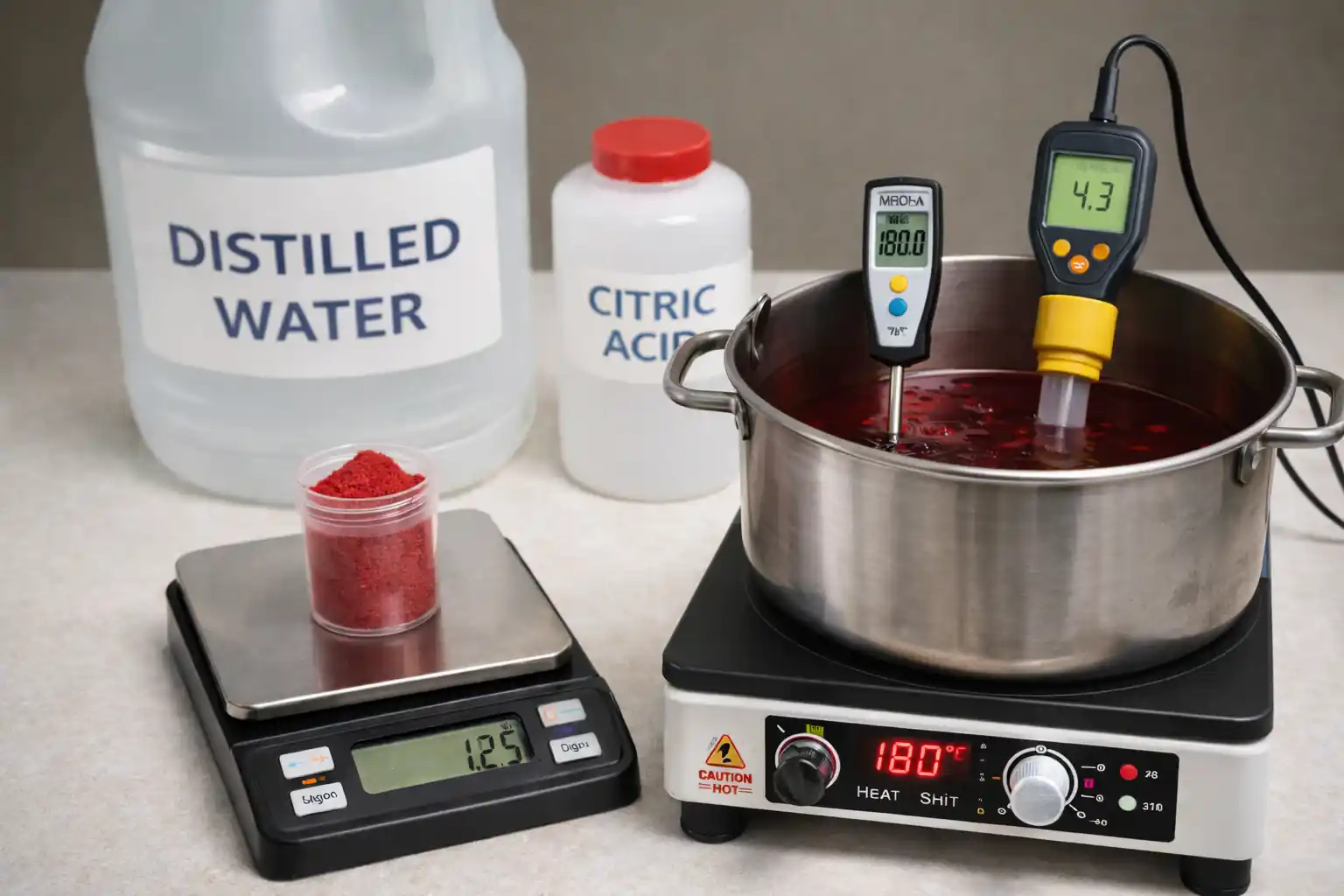
Use distilled water only for dye baths and pH adjustments. Tap water often contains calcium, magnesium, iron, and dissolved minerals that interfere with ionic bonding, alter effective pH, cause inconsistent strike rates, and produce dull or muddy color tones.
Distilled water provides stable baseline chemistry, predictable pH behavior, consistent dye bonding, and cleaner brighter color development. For serious builders and production work, distilled water removes an unnecessary variable from the process.
3. How to Dye Marabou Feathers: Temperature Control Standards
- Recommended range: 170–180°F (77–82°C) | Tolerance once stabilized: ±2°F | Maximum allowable swing: 4°F
- Below 160°F: Weak bonding, pale color, poor wash fastness
- Above 185°F: Protein denaturation, fiber stiffening, reduced pulsing action
- Boiling is not acceptable
When Heat Damages Fibers
Keratin begins structural breakdown at excessive temperatures. Signs of cooked feathers: reduced separation, slight stiffness when dry, loss of natural collapse, flat presentation in water. Heat control directly preserves movement.
4. Fixation Process in How to Dye Marabou Feathers
Fixation is where dye stops moving and becomes permanently bonded. Without full fixation: color may appear correct but bleed later, interior fibers remain pale, and long-term durability decreases.
How Dye Bonds to Protein Fibers
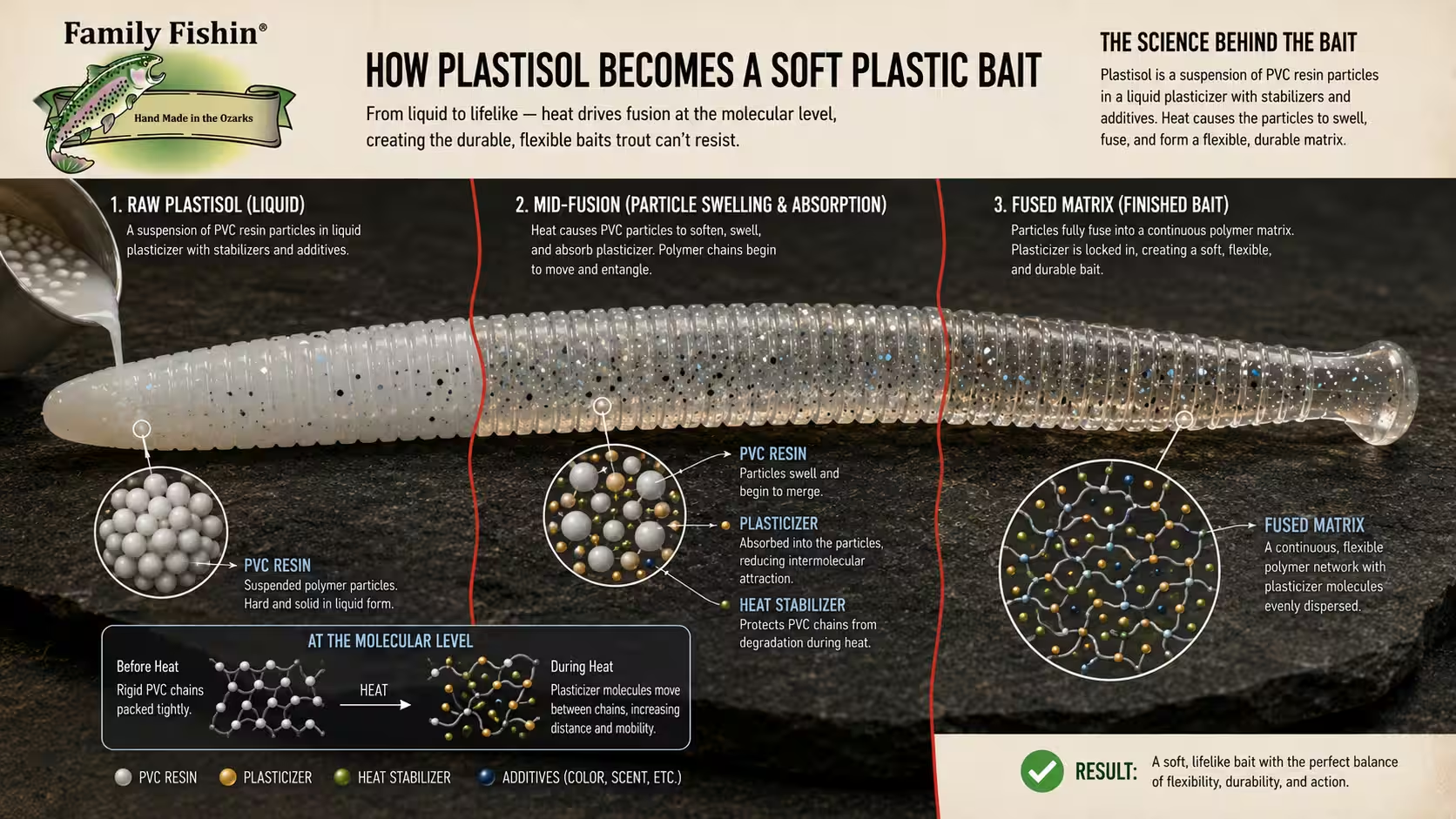
Acid dyes attach to positively charged amino groups in keratin under heat and acidic conditions. Three variables must align: correct pH, stable temperature, and adequate dwell time.
- Typical bonding duration: 20–40 minutes | Allowable variance: ±5 minutes
- Thin stems may fix faster than thick stems
- Excess dwell time increases stiffness risk without improving depth
How to Test for Full Fixation
- Visual: Dye bath becomes noticeably lighter, minimal free dye remains, feather tone appears uniform stem to tip
- Rinse test: Rinse in warm water 30 seconds — no visible bleed, no noticeable fade. If bleeding occurs, bonding was incomplete.
5. Equipment Setup for Consistent Results
Minimum required: Stainless steel dye pot, digital thermometer (±1°F accuracy), digital pH meter or reliable test strips, gram scale for dye measurement, stirring utensil (non-reactive), timer.
Recommended: Dedicated heating source with fine adjustment and batch log sheet recording feather grade, stem classification, water volume, dye weight, acid amount, starting pH, final pH, target temperature, maximum temperature reached, and time at bonding temperature. Consistency is built through measurement.
Why Chemistry Matters When Learning How to Dye Marabou Feathers
Properly dyed marabou pulses under minimal rod movement, maintains fiber separation, displays consistent tone, and holds durability after repeated use. Improper chemistry produces dull or muddy tones, causes stiff barbs, reduces breathing action, and leads to inconsistent jig performance.
Learning how to dye marabou feathers is not about brightness. It is about controlled bonding that preserves structure and movement. Consistency is not achieved by guesswork — it is measured.
Before you attempt any chemical control, make sure your material foundation is correct. In Part 1 — Understanding Marabou Before You Dye It, we covered feather grading, stem thickness classification, degreasing temperature bands, rinsing standards, and saturation benchmarks. Those structural controls determine whether the chemistry in this section will work properly. If you have not reviewed that material, start there first.
Next — Part 3: Step-By-Step Professional Dyeing Process