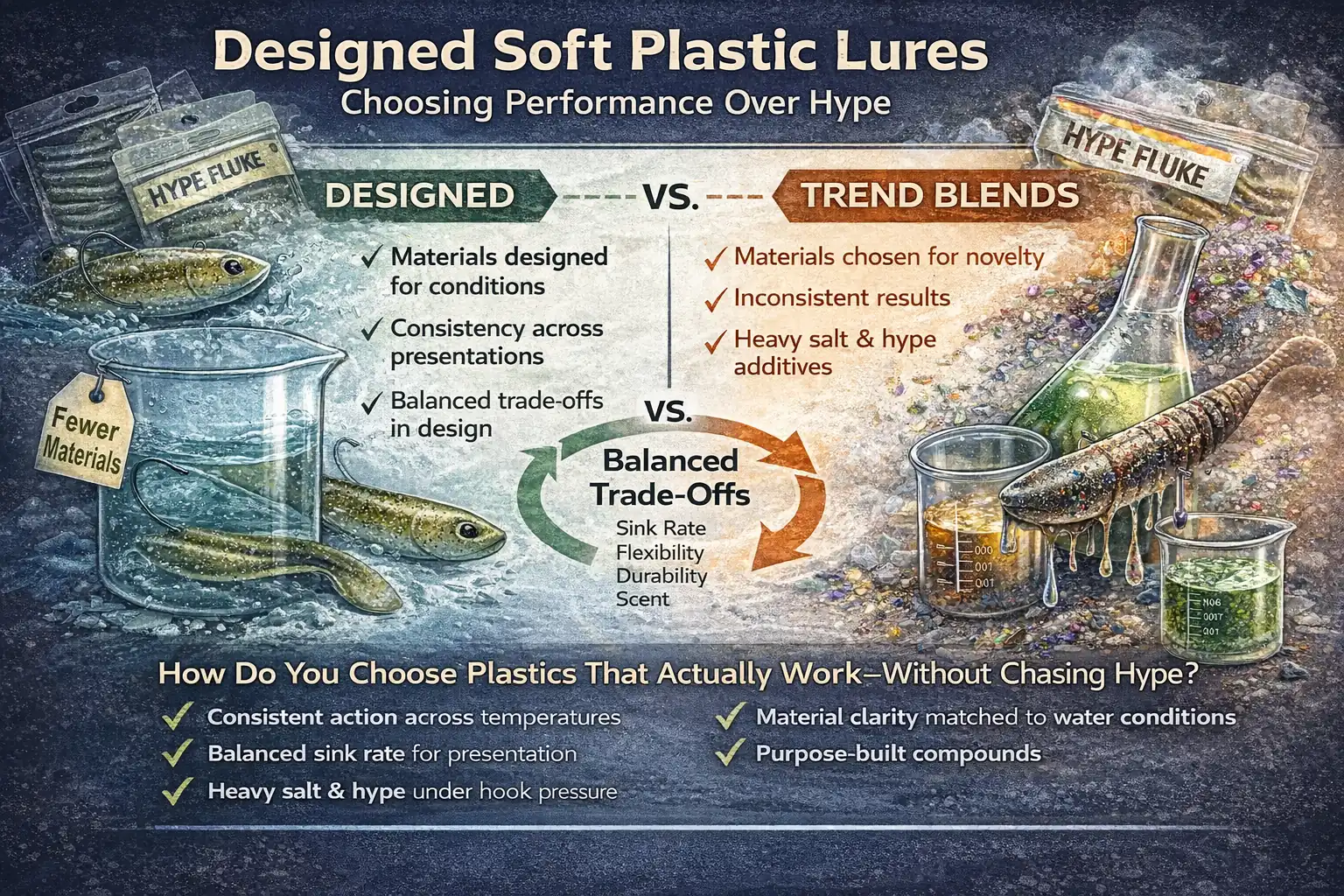
Part 7 — Designed Soft Plastic Lures: Choosing Performance Over Hype
Designed soft plastic lures are built around target outcomes rather than novelty — fewer materials chosen deliberately, not endless blends chasing the next trend.
Designed Soft Plastic Lures: Performance Over Hype
How Designed Soft Plastic Lures Outperform Trend Blends
Executive Summary
Most soft plastic trends focus on novelty — new blends, extreme softness, heavy salt, or flashy additives. But performance is not built on excess. Designed soft plastic lures are built around purpose: matching material properties to how and where the bait will actually be fished. Fewer intentional compounds often outperform endless variations because each material variable affects sink rate, flexibility, durability, scent retention, and action. Purpose-driven design wins over trend chasing.
How Designed Soft Plastic Lures Start With Target Outcomes
Designed soft plastic lures begin with a target outcome — not a marketing claim. Before choosing softness, salt load, or pigment level, you define: water clarity, water temperature range, retrieve speed, target species pressure, and hook style and rigging method.
Every material choice shifts performance. More salt increases sink rate but reduces flexibility. More plasticizer increases action but can reduce durability. More pigment increases visibility but reduces light transmission. When design starts with purpose, trade-offs are intentional. When design starts with hype, trade-offs are accidental.
Why Fewer Materials Often Outperform Endless Blends
Too many blends create inconsistency. A small number of purpose-built compounds allows controlled performance, predictable flexibility, repeatable sink behavior, reliable durability, and stable scent retention. Variation for its own sake does not equal innovation. Most anglers don’t need 20 material blends. They need the right compound for the condition.
How to Evaluate Plastics Critically
Instead of asking “What’s new?” ask:
- Does this plastic maintain action in cold water?
- Is sink rate controlled — or just heavy from excess salt?
- Is softness engineered — or just over-plasticized?
- Does durability match the intended hook style?
- Is scent retention built into the compound or only surface applied?
Real-world example: If a bait feels ultra-soft in the package but goes rigid at 50°F, it was optimized for showroom feel — not water temperature. If a bait sinks fast but tears easily, salt may be masking poor structural balance. Performance shows up in conditions, not in marketing copy.
Designed soft plastic lures show consistent behavior across temperatures and presentations. Trend-driven plastics often perform well only in narrow scenarios. Marketing changes every season. Material behavior does not.
How Do You Choose Plastics That Actually Work — Without Chasing Hype?
Choose by performance variables, not trends. Look for: consistent action across temperature ranges, balanced sink rate for the presentation, structural integrity under hook pressure, material clarity matched to water conditions, and compounds designed for a purpose — not a label.
Engineering Conclusion
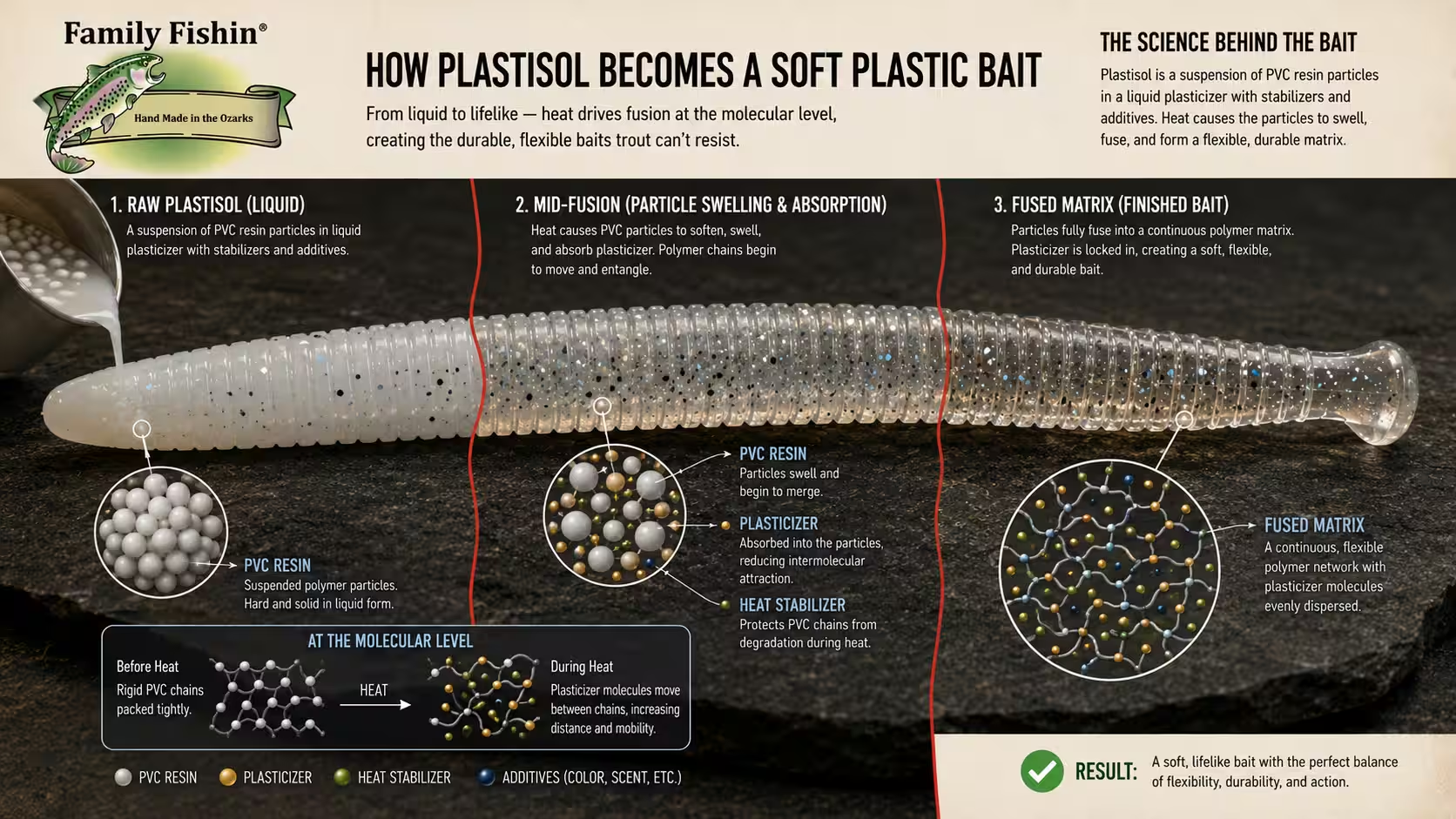
Designed soft plastic lures are built around trade-offs — not buzzwords. Every variable inside plastisol affects another. Sink rate changes fall angle. Salt affects clarity and flexibility. Plasticizer affects action and durability. Purpose-driven compounds account for those relationships before the mold is ever poured.
When a plastic performs across seasons and conditions, it is not luck. It was engineered that way.
If you haven’t read Part 6 — Soft Plastic Cold Water Performance, review it next. A bait that moves perfectly at 70°F can stiffen and lose vibration at 45°F if the compound wasn’t designed for that shift. Temperature changes flexibility — and flexibility changes results.
Frequently Asked Questions About Designed Soft Plastic Lures
Why would fewer materials outperform a more complex blend?
Every additional material or additive is a trade-off, not a free improvement — more salt can mean less natural movement, more scent can mean faster wear. A lure designed around a specific outcome uses only what actually serves that outcome, rather than stacking features because they sound impressive on packaging.
How do I evaluate a soft plastic critically instead of just trusting marketing?
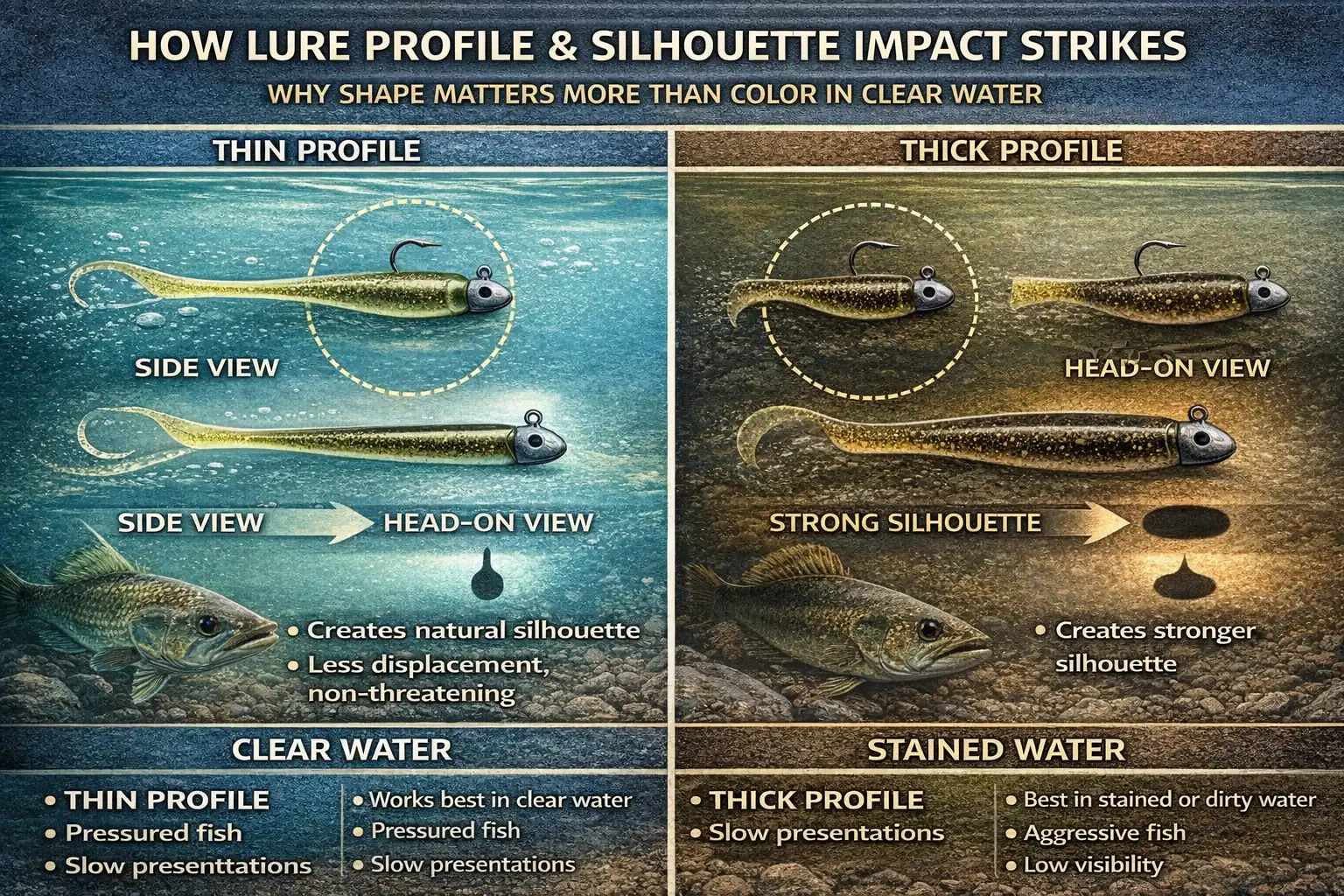
Judge it against a specific outcome: does the material’s softness, density, and profile actually match the presentation you’re fishing? A bait marketed as “premium” that doesn’t match your fall rate, water clarity, or target species needs isn’t actually the better choice for your situation.
Does a more expensive soft plastic always perform better?
Not necessarily. Price often reflects marketing, packaging, and novelty additives more than it reflects genuine performance for a given presentation. A simpler, well-designed bait matched correctly to conditions frequently outfishes a more expensive one that wasn’t built with your specific situation in mind.
What’s the biggest mistake anglers make when choosing soft plastics?
Chasing the newest trend blend instead of asking whether a bait’s design actually fits their fishing situation. A designed lure built for a specific purpose — a specific fall rate, water clarity, or species behavior — will consistently outperform a trendy bait that wasn’t built with any particular outcome in mind.