Trout Diet by Season: What Trout Eat From Winter to Fall
If you’ve ever fished the same stretch of water in April and again in August and come home with completely different results using the same lure, you already know that trout diet by season can change dramatically. Trout don’t eat the same way year-round. Their diet shifts with water temperature, insect hatches, and metabolism — and understanding those shifts is one of the fastest ways to catch more fish.
This guide breaks down what trout eat in every season, why their feeding habits change, and how to match your presentation to what’s actually available in the water at that time of year. Whether you’re fishing live bait, flies, or soft plastics, the underlying principle is the same: trout are opportunistic feeders that key in on whatever food source is most abundant, most accessible, and most worth the energy it takes to chase. Learning what that food source is at any given point in the year is the foundation everything else in this series builds on — from individual forage species like minnows and crawfish to the aquatic insects that make up so much of a trout’s year-round diet.
Why Trout Diet by Season Changes Throughout the Year
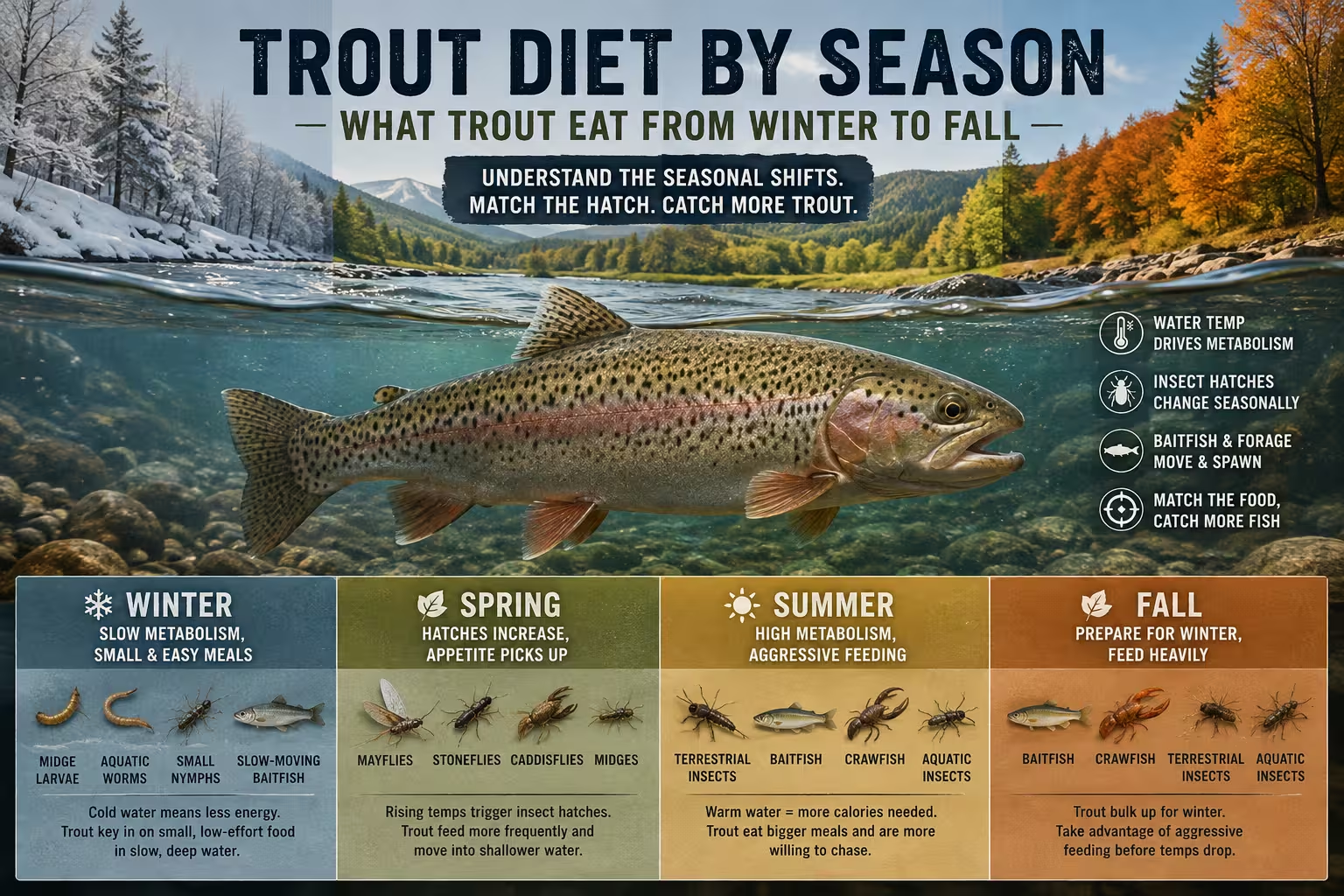
Trout are cold-blooded. That single fact explains almost everything about how their feeding habits shift throughout the year. Unlike a mammal, a trout can’t regulate its own body temperature — it matches the water around it. As water temperature rises and falls, so does the trout’s metabolic rate, and metabolic rate determines how much food a trout needs and how aggressively it will chase a meal.
In cold water, a trout’s metabolism slows dramatically. It doesn’t need to eat much, and it won’t waste energy chasing fast-moving prey when an easy, low-effort meal will do. In warm water, the opposite happens — metabolism climbs, the trout needs more calories to sustain itself, and it becomes far more willing to move, chase, and strike aggressively.
Layered on top of metabolism is food availability. Aquatic insect hatches — mayflies, caddisflies, stoneflies, midges — follow their own seasonal calendars, often tied closely to water temperature. Terrestrial insects like grasshoppers and ants are only in the water at all when they’re active on land nearby, which means summer and early fall. Baitfish spawn and migrate at specific times. Crawfish become more active as water warms. None of this is random, and none of it holds steady across twelve months.
The result is a predictable, repeating cycle. Once you understand what’s driving it, you can walk up to a piece of water in any month and have a strong idea of what’s actually on a trout’s menu — before you ever tie on a lure.
It’s also worth noting that species and habitat add another layer on top of this seasonal pattern. Brown trout tend to be more opportunistic and more willing to eat larger prey — including other fish — than rainbows of similar size. Brook trout, especially in smaller freestone streams, lean more heavily on aquatic and terrestrial insects year-round simply because that’s what’s available in their water. Cutthroat trout in lake systems often key in on baitfish and zooplankton far more than their river-dwelling cousins. And trout living in nutrient-rich tailwaters — where water temperature stays more stable year-round — show less dramatic seasonal shifts than trout in a freestone stream that swings from near-freezing in January to warm and low by August. The seasonal patterns below hold true broadly, but always read your specific water first.
Winter: Slow Metabolism, Small and Easy Meals
Winter is the season most anglers get wrong, mainly because they assume trout stop feeding altogether. They don’t — they just feed far less often, and on far smaller, lower-effort prey.
With water temperatures often sitting in the high 30s to low 40s, a trout’s metabolism drops to a crawl. Chasing a fast-swimming baitfish across a pool burns more energy than the meal is worth. Instead, trout key in on food that requires almost no effort to eat: midge larvae and pupae, small aquatic worms, tiny nymphs drifting naturally in the current, and the occasional slow-moving baitfish holding in deep, slack water.
Midges are the unsung heroes of winter trout diet. They’re active nearly year-round, even hatching on the surface during warm winter afternoons, and their larvae are almost always available subsurface. A trout conserving energy in a deep winter pool will happily sip midge larvae all day rather than expend calories on anything larger.
Baitfish don’t disappear from the winter diet, but the dynamic changes. Trout won’t chase minnows through fast current in cold water — instead, they’ll ambush baitfish that are themselves sluggish and holding in the same slow, deep water the trout are using to conserve energy. This is why winter presentations that sit low and move slow consistently out-produce anything fast or erratic.
The practical takeaway: winter trout want small, slow, and subtle. Downsizing your presentation and slowing your retrieve to match the trout’s reduced metabolic demand is the single biggest adjustment to make this time of year.
Time of day matters more in winter than most anglers realize. Water temperature typically peaks in the early-to-mid afternoon during winter, after the sun has had hours to warm the surface — and that modest bump can be enough to trigger a short, worthwhile feeding window. Fishing from roughly 11am to 3pm on a winter outing, rather than dawn or dusk, will consistently put you in front of more active fish. Look for slow, deep pools and the tailouts of runs where current speed drops — trout will stack up in exactly the kind of water that lets them hold position without burning energy, and that’s where winter presentations need to be delivered.
Depth is just as important as speed in winter. A presentation that’s drifting a foot above where the fish are actually holding might as well not exist — a winter trout conserving energy is not going to rise several feet through cold water for a meal it doesn’t need. Getting a nymph, small streamer, or subtle soft plastic down into the strike zone and keeping it there through a slow, natural drift will out-produce almost anything fished higher in the water column.
Spring: The Feeding Frenzy Begins
As water temperatures climb out of the winter range and into the mid-40s and beyond, everything changes. Spring is when a trout’s diet transitions from survival mode to active, opportunistic feeding — and it happens fast.
Two things drive spring feeding: rising metabolism and the first major hatches of the year. Mayflies and caddisflies begin emerging as water temperatures stabilize, often triggering the kind of visible, aggressive surface feeding that fly anglers wait all winter for. Stonefly nymphs, which have been developing on the stream bottom for months, become increasingly active as well, making them a reliable subsurface target even before hatches begin in earnest.
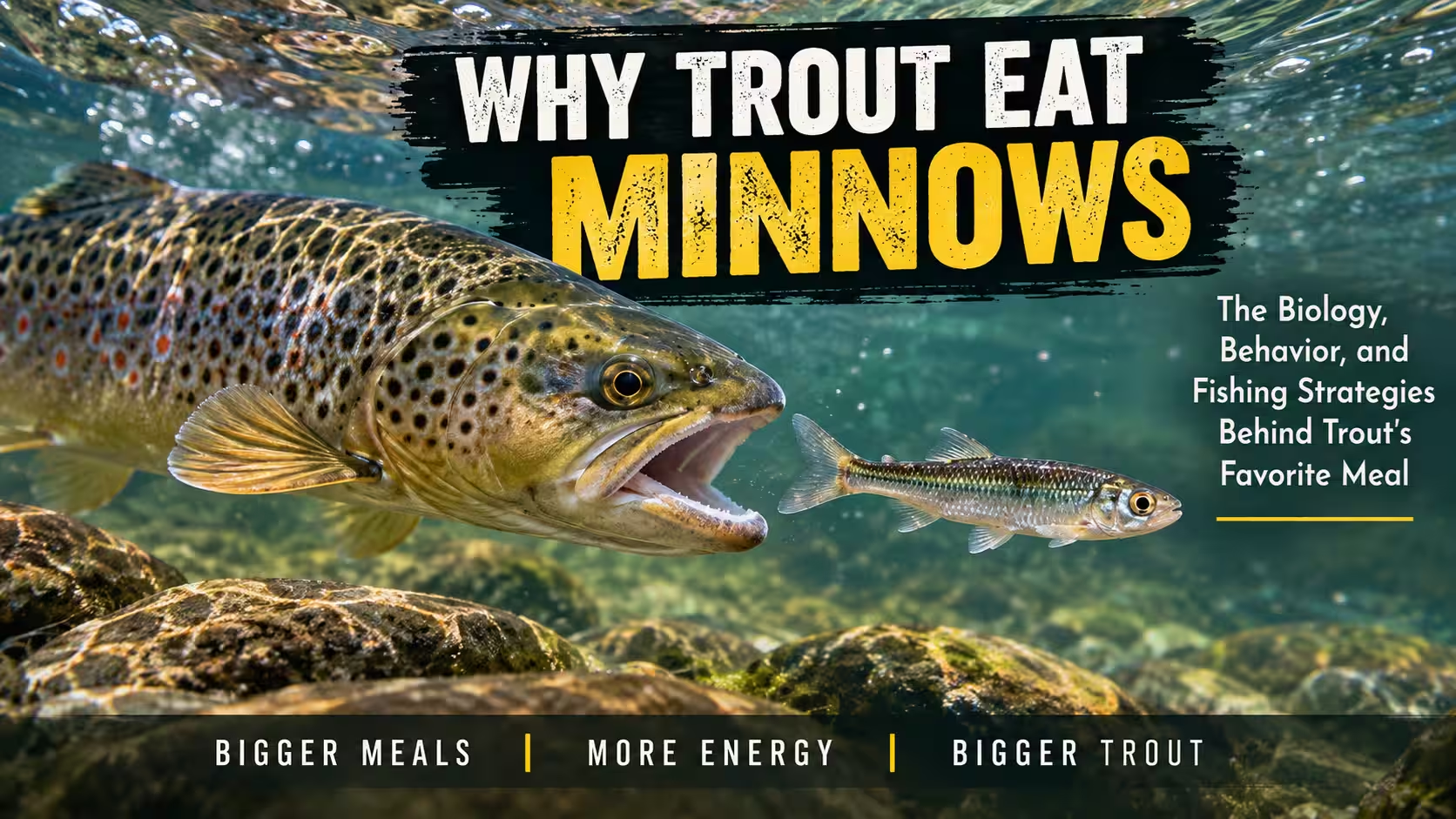
Baitfish activity also picks up dramatically in spring. Many minnow species spawn in the spring, moving into shallower water and tributaries — and trout key in on this migration hard. A trout that spent all winter nibbling on midges will happily switch to chasing minnows the moment easy, calorie-dense meals become available in numbers. Understanding why trout eat minnows helps explain this shift: baitfish offer larger trout a calorie-rich meal that can justify the energy required to pursue and capture them.
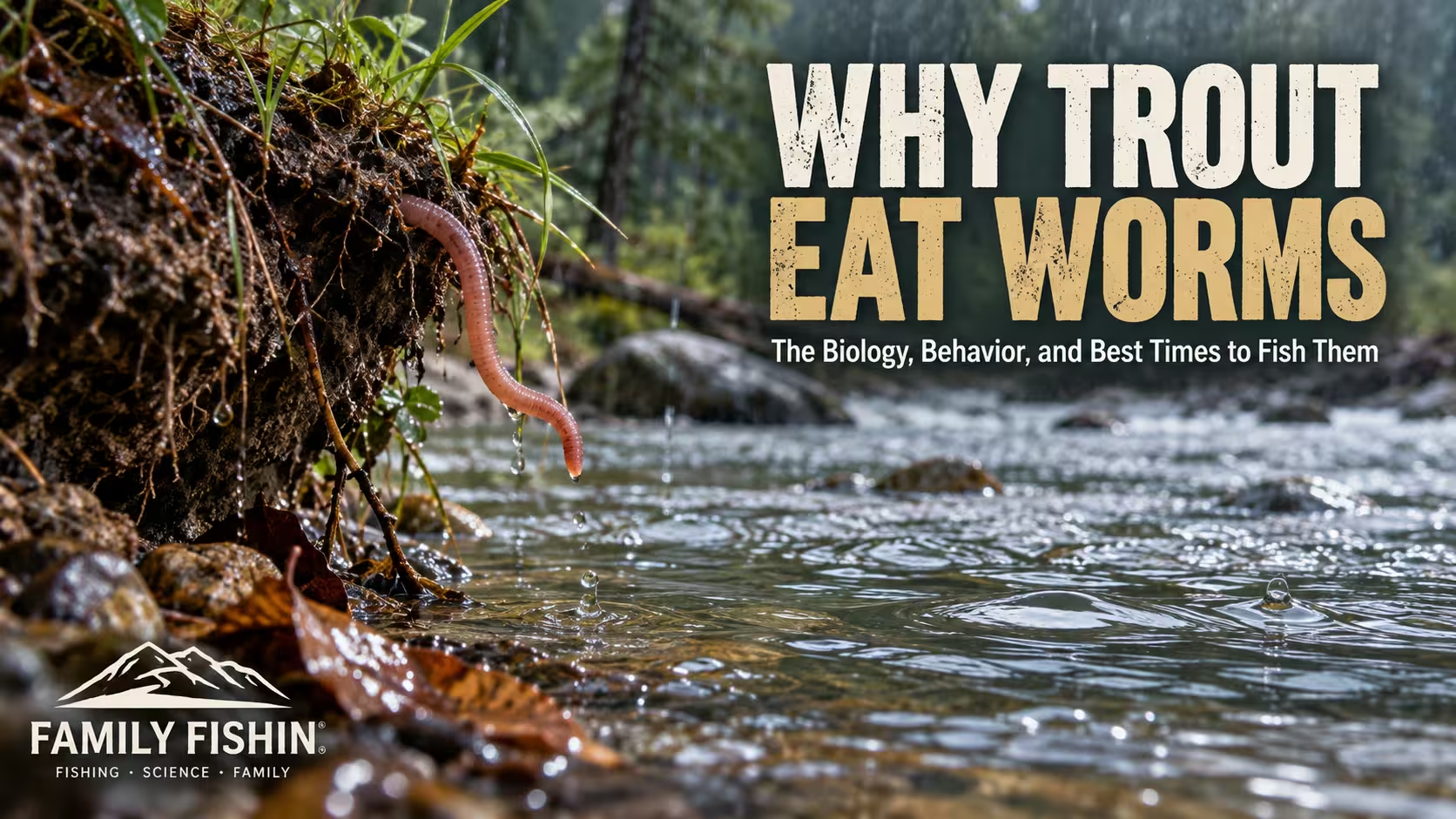
Crawfish begin emerging from winter dormancy as water warms, though they won’t become a dominant food source until later in the season. Worms, washed into the water by spring rains and runoff, are also an important and often underrated food source this time of year — a trout cruising a stained, high-water stream after a spring storm is very likely keying in on worms tumbling through the current.
The overall pattern in spring is expanding options. Trout go from a narrow winter diet to a much broader one, and they become noticeably more willing to move and strike aggressively as their metabolism climbs. This is the season to diversify your approach — carrying options that cover nymphs, baitfish patterns, and worm imitations will consistently out-fish anglers who stick to just one presentation.
Runoff and water clarity add a wrinkle to spring fishing that doesn’t exist in the same way during other seasons. Snowmelt and spring rain can blow a river out, turning clear water stained or muddy for days at a time. Rather than shutting feeding down, high, off-color water often triggers exactly the kind of opportunistic feeding described above — trout can’t rely on sight alone to find food, so they lean more heavily on vibration, movement, and scent. This is when a bulkier profile, a brighter color, or added scent can make a real difference, since the fish are locating a meal by more than eyesight.
Early spring and late spring fish very differently, too. Early spring — when water is still cold and hatches are just beginning — behaves more like an extension of winter, with trout still favoring smaller, slower presentations. By late spring, with water temperatures well established and multiple hatches overlapping, feeding activity resembles the aggressive, opportunistic pattern that carries into summer. Treating “spring” as a single, uniform stretch is a common mistake — the first half and second half of the season often call for noticeably different approaches.
Summer: Peak Metabolism, Peak Opportunity
By summer, water temperatures are at or near their yearly high, and a trout’s metabolism is running at full speed. This is the season of maximum food demand — but it’s also the season where trout become the most selective about when they feed, largely due to temperature stress and light conditions.
Terrestrial insects take center stage in summer. Grasshoppers, ants, beetles, and crickets are all active on the banks and regularly end up in the water, especially on windy days or along grassy, overhanging banks. Grasshoppers in particular become a major protein source from mid-summer into early fall — a single hopper is a large, calorie-rich meal that’s well worth a trout’s effort to chase down. Brown trout, in particular, show a strong preference for terrestrial insects during this stretch.
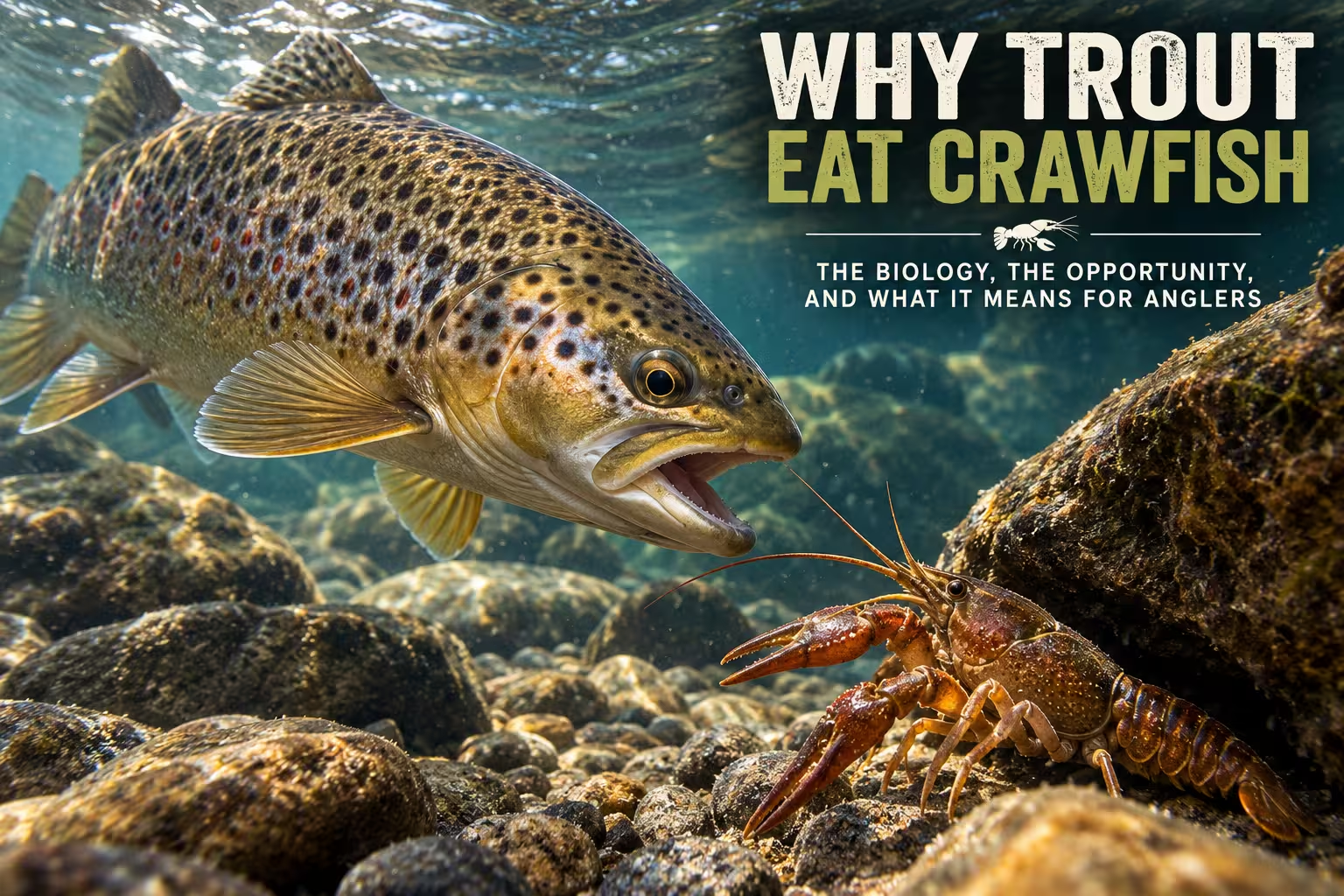
Crawfish activity peaks in summer as well. Warm water accelerates their movement and molting cycles, and trout — especially larger, more predatory fish — will actively hunt crawfish along rocky bottoms and undercut banks. A trout that has grown large enough to prioritize efficiency over frequency often shifts a meaningful portion of its diet toward crawfish and baitfish during the warmer months, since a single crawfish or minnow delivers far more calories than a mouthful of insects.
Aquatic insect activity doesn’t disappear, but it shifts. Caddisflies remain active through the summer, often producing strong evening hatches. Scuds — freshwater crustaceans that thrive in nutrient-rich, weedy water — become an important and consistent food source in spring-fed streams and tailwaters where summer water temperatures stay cooler.
The complication in summer is timing. As water temperatures rise, especially in the afternoon, trout feeding activity often shifts to early morning, late evening, and overnight, when water is coolest and oxygen levels are highest. Fishing the right food source at the wrong hour of the day will still produce a slow day. Matching both the seasonal diet and the daily feeding window matters more in summer than in any other season.
There’s a real risk in summer that anglers tend to overlook: heat stress. Once water temperatures climb into the high 60s and beyond, trout become physiologically stressed, and feeding activity can shut down almost entirely regardless of how much food is available. In heavily pressured or marginal trout water, this is the season to fish early, fish late, and consider leaving fish alone entirely once water temperatures cross into dangerous territory — a trout caught and released in overheated, low-oxygen water has a meaningfully lower survival rate than the same fish caught in cooler conditions.
Where summer water stays cool enough to keep trout comfortable — spring creeks, tailwaters, high-elevation streams, and deep, spring-fed lakes — the feeding window widens considerably, and midday activity can remain strong all season. This is one of the clearest examples of how location changes the seasonal pattern: the same calendar month can mean a shut-down bite on one river and consistent, all-day feeding on another, purely based on water temperature stability.
Streambank vegetation plays a bigger role in summer than any other season, since it’s the source of the terrestrial insects driving so much of the diet. A grassy bank with overhanging brush is doing more than providing shade — it’s actively feeding fish. Grasshoppers, beetles, and ants regularly fall from bankside vegetation, and trout position themselves tight to the bank specifically to intercept that steady trickle of terrestrial protein. Presentations fished tight to structure and grassy banks will consistently out-produce the same lure fished down the middle of the river in summer.
Fall: The Pre-Winter Push
Fall triggers one of the most aggressive feeding periods of the entire year. As water temperatures begin dropping from their summer highs, trout sense the approaching winter and feed heavily to build the energy reserves they’ll need to survive the coming months of reduced metabolism.
This is prime baitfish season. Trout key in hard on minnows, sculpins, and other small fish in the fall, often striking baitfish imitations with far more aggression than they showed all summer. Sculpins, in particular, are a high-value target this time of year — they’re bottom-dwelling, protein-dense, and available in the same rocky, slow-current habitat trout use heavily as water cools.
Fall is also spawning season for brown trout and brook trout, which adds another dynamic to the diet: egg-eating. Trout — including the spawning fish themselves and the fish holding downstream of spawning activity — will key in on loose eggs drifting through the current. This is a highly seasonal, short-window food source, but where it’s in play, it’s one of the most effective the entire year.
Terrestrial insects taper off as the weather cools, but they don’t disappear immediately — a warm fall afternoon can still produce solid terrestrial activity, especially early in the season. Aquatic insects shift back toward the smaller end of the spectrum as fall progresses, with midges becoming increasingly important again as the season winds down toward winter.
The overall pattern in fall is urgency. Trout are transitioning from the abundance of summer to the scarcity of winter, and they know it. This is the season to fish larger, more calorie-dense presentations — streamers, baitfish imitations, and egg patterns — with confidence that trout are willing to commit to a bigger meal.
Aggression in fall shows up in behavior as much as in diet. It’s common to see trout — particularly large, territorial brown trout — strike out of what looks like aggression or territorial defense rather than pure hunger, especially near spawning areas. A streamer stripped aggressively through a run can trigger a reaction strike from a fish that isn’t necessarily looking for a meal at that exact moment, simply because the presentation reads as a threat or a competitor. This is part of why fall streamer fishing has a reputation for producing some of the largest trout of the year — it’s tapping into a different trigger than diet alone.
Water temperature in fall is a moving target, and that has real tactical implications. Early fall often still fishes like late summer, with terrestrial patterns and low-light feeding windows still productive. By late fall, as water temperatures approach winter lows, the bite compresses back down toward the small, slow presentations that define the winter pattern. Paying attention to where you are within the fall season — not just the calendar month — will tell you whether to fish big and aggressive or start scaling back down.
Matching Your Presentation to the Season
Understanding what trout eat each season is only half the equation — the other half is choosing a lure or fly that actually matches it. A few general principles hold true across the whole year:
Match the size to the metabolism. Winter and early spring call for smaller, more subtle presentations. Summer and fall support larger, more calorie-dense options, since trout are actively seeking bigger meals.
Match the color and profile to the natural forage. A crawfish pattern needs to move and sit like a crawfish — low, along the bottom, with a defined profile. A baitfish imitation needs the right silhouette and a retrieve that mimics a fleeing or injured minnow rather than a straight, mechanical retrieve.
Match the retrieve to water temperature. Cold water means a slow, subtle presentation. Warm water supports faster, more erratic movement that triggers a reaction strike from a trout with the metabolism to chase.
Match the depth to the season. Winter and cold-water fish hold deep and slow; warm summer water often pushes feeding activity toward the surface and banks during low-light hours, while midday summer fish retreat to deeper, cooler holding water.
This is exactly why having a range of soft plastic profiles on hand — matched to minnows, crawfish, worms, and nymphs — makes a bigger difference than any single “miracle lure.” A minnow-profile plastic fished slow and deep in January is doing a completely different job than the same shape fished with a fast, erratic retrieve along a summer bank — and neither will work as well doing the other’s job. Trout diet isn’t static, and neither should your tackle box be. Building a rotation around what’s naturally available each season, rather than a favorite lure that worked once, is the difference between a consistent season and a handful of lucky days.
It’s also worth keeping a simple seasonal checklist in mind before you head out. Ask three questions: What’s the water temperature telling me about the trout’s metabolism right now? What food sources are actually active in this water at this time of year? And what time of day will feeding activity be highest given the current temperature? Answering those three questions honestly, before ever making a cast, will do more for your catch rate than any single lure choice. The anglers who consistently outfish everyone else on a given piece of water aren’t doing so because they own a secret lure — they’re doing so because they’ve internalized this seasonal pattern well enough that it shapes every decision they make on the water, from where they walk in to what they tie on first.
Final Thoughts
A trout’s diet is never random — it’s a direct reflection of water temperature, metabolism, and whatever food source is most available at that moment. Winter calls for small and slow. Spring opens the door to a broadening diet and rising aggression. Summer peaks in metabolic demand but narrows the feeding window to the coolest hours of the day. Fall triggers an aggressive, calorie-driven push before winter sets back in.
Learn to read the season, and you’ll spend less time guessing and more time matching exactly what’s already working in the trout’s favor.
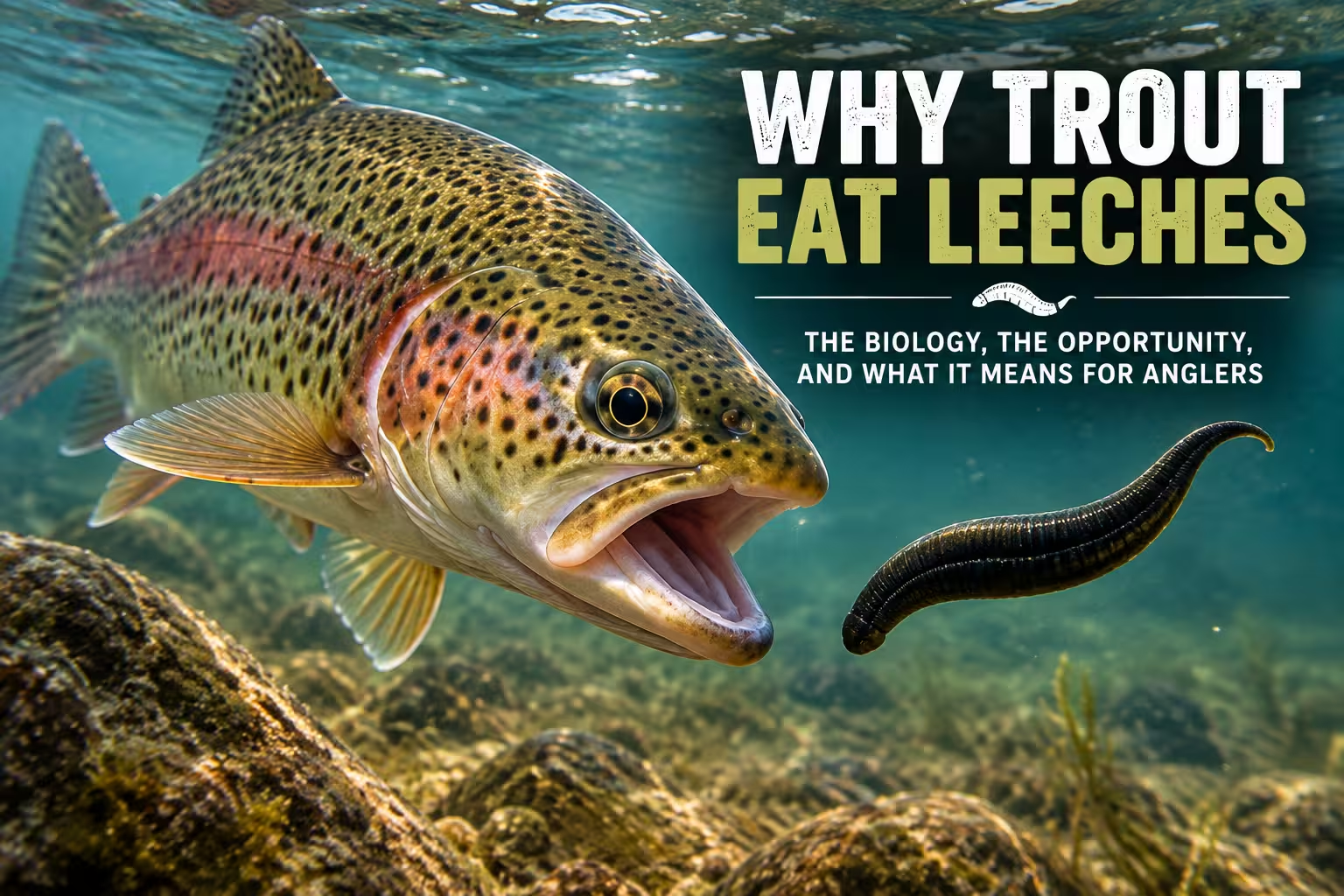
This overview is the starting point for the rest of this series. Each of the food sources touched on here — minnows, crawfish, leeches, worms, grasshoppers, and the full range of aquatic insects from mayflies to scuds — deserves a closer look at its own seasonal timing, behavior, and the presentations that imitate it most effectively. Understanding the big picture of how a trout’s diet moves through the year gives every one of those deeper dives more context, and turns a list of individual food sources into a single, connected picture of how trout actually feed, month after month, season after season.
Frequently Asked Questions
What do trout eat?
Trout eat aquatic insects (mayflies, caddisflies, stoneflies, midges, scuds), terrestrial insects (grasshoppers, ants, beetles), baitfish and sculpins, crawfish, leeches, worms, and — during spawning season — fish eggs. Exactly which of these dominates their diet at any given time depends on the season, water temperature, and what’s locally available.
What time of day do trout eat?
It depends on the season. In winter, trout feed most actively during the warmest part of the afternoon, roughly 11am to 3pm. In summer, the pattern flips — trout feed heaviest in early morning, evening, and overnight, when water is coolest. Spring and fall are more flexible, often producing good feeding activity throughout the day.
Do trout eat crawfish?
Yes. Crawfish are an important, high-calorie food source for trout, especially larger fish. Crawfish activity peaks in summer as warmer water speeds up their movement and molting cycles, and trout — including rainbow trout — actively hunt them along rocky bottoms and undercut banks during this period.
What do stocked trout eat?
Stocked trout are raised on hatchery pellets, so they initially key in on small, pellet-like shapes and colors. Within a few weeks in the wild, though, most stocked trout shift onto a natural diet of aquatic insects, baitfish, and whatever else is available in that water, following the same seasonal patterns as wild trout.
What do baby trout eat?
Newly hatched trout (fry) start by consuming their yolk sac, then transition to tiny aquatic insects, larvae, and zooplankton as they grow. Diet size scales up with the fish — small nymphs and midge larvae dominate early on, with baitfish and larger prey entering the diet only once a trout reaches a larger juvenile size.
Why does a trout’s diet change with the seasons?
Trout are cold-blooded, so water temperature directly controls their metabolism. Cold water slows metabolism and reduces food demand; warm water raises it. Food availability shifts seasonally too — insect hatches, baitfish spawns, and terrestrial insect activity all follow their own calendars — so a trout’s diet tracks both its own energy needs and whatever food source is most abundant at that time.