Why Trout Eat Minnows
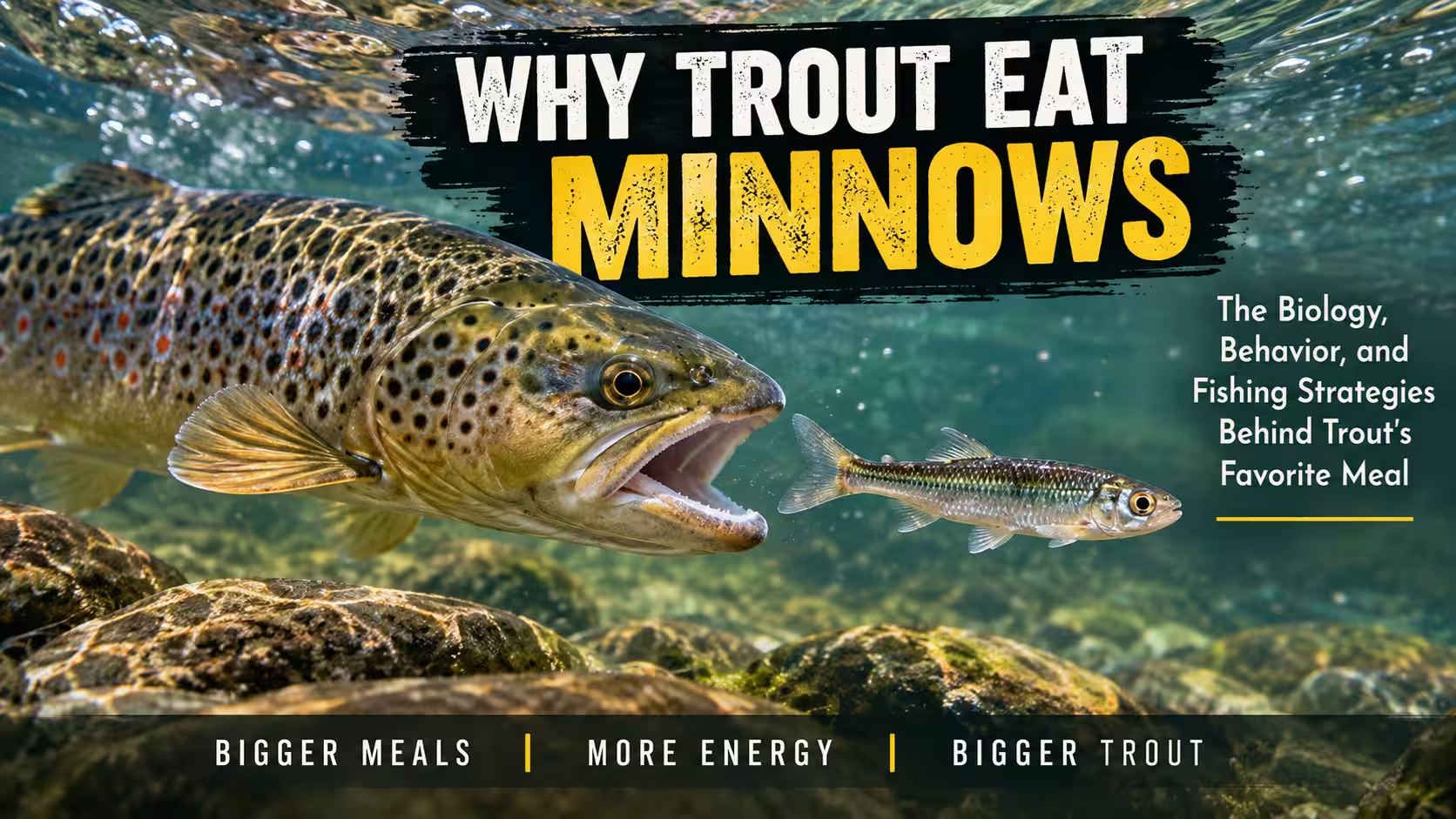
Ask any experienced trout angler what single lure category has caught the most trophy fish, and minnow imitations will almost always top the list. There’s a reason streamer fishing has a reputation for producing the biggest trout of the season, and it isn’t luck — it’s basic biology. Minnows and other baitfish represent one of the most efficient meals a trout can eat, and understanding why trout eat minnows explains not just what to throw, but when and how to fish it.
This post digs into the biology and behavior behind why trout target minnows, which species make up the bulk of that diet, and how to use that knowledge to fish baitfish imitations more effectively. If you haven’t already, it’s worth starting with our overview on how a trout’s diet shifts by season — the patterns below build directly on that foundation, since baitfish predation is one of the most seasonally dynamic parts of a trout’s feeding behavior.
Why Trout Eat Minnows: The Simple Math of Calories In vs. Calories Out
Every meal a trout eats costs energy to catch. A trout chasing down a fast-moving minnow burns real calories in the pursuit — accelerating, changing direction, fighting current. For that chase to make biological sense, the meal has to deliver more energy than it costs to catch.
This is where minnows win decisively over insects. A single mayfly or midge delivers a tiny fraction of the calories found in a 2 to 4 inch baitfish. A trout would need to eat dozens, sometimes hundreds, of small insects to match the caloric value of one minnow. For a trout large enough to reliably catch and swallow baitfish, insects simply stop being worth the effort at scale — the energy return per strike is far higher with a fish-based diet.
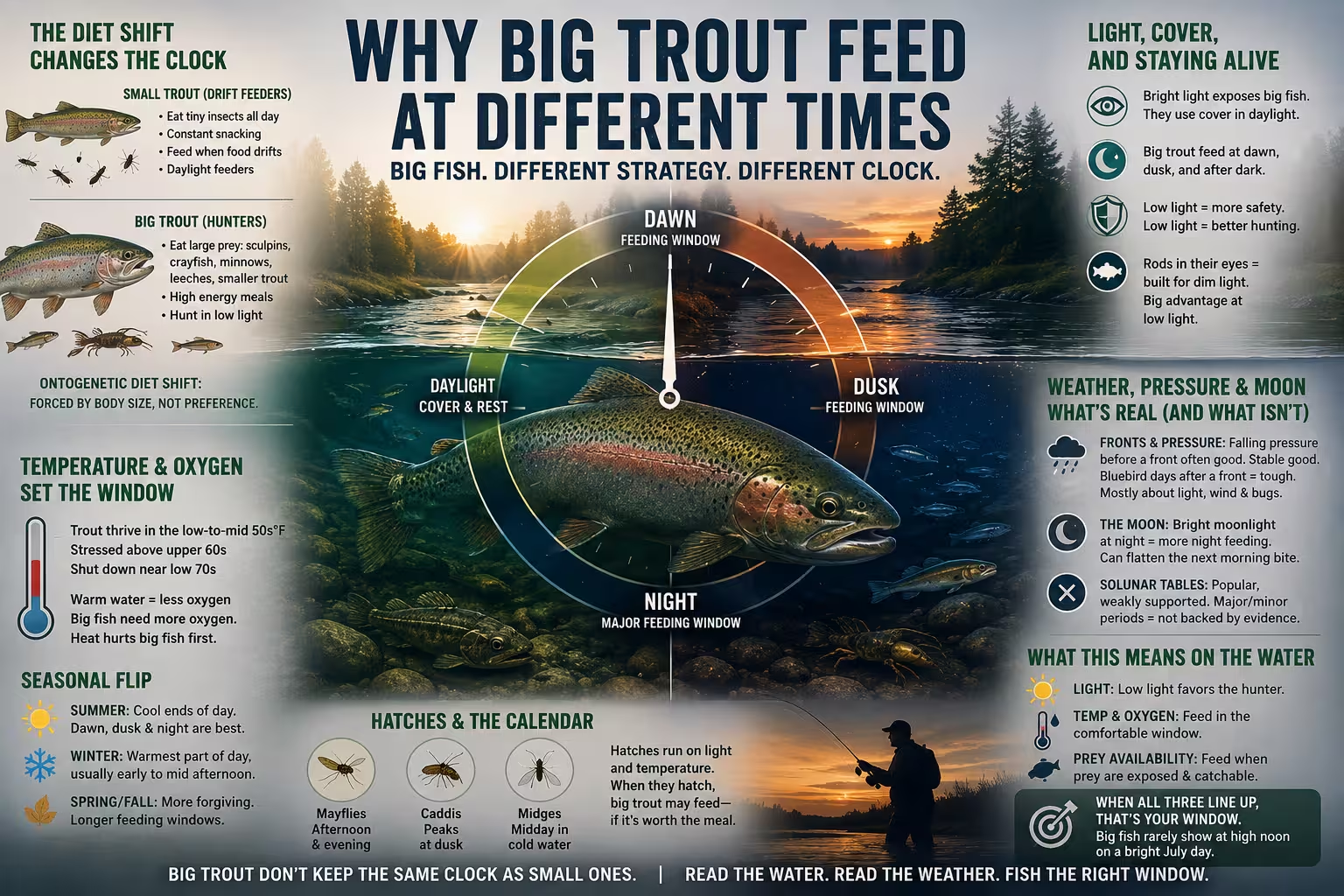
This is also why the size of the trout matters so much to this conversation. Smaller trout, with smaller mouths and less predatory capability, rely more heavily on insects because they physically can’t yet exploit baitfish efficiently. As a trout grows, its gape size increases, its predatory instincts sharpen, and minnows become an increasingly central part of its diet. This is a big part of why the largest trout in any given stream or lake are disproportionately piscivorous — fish-eating — compared to the smaller fish sharing the same water. A 20-inch brown trout didn’t get that large eating midges one at a time; it got there by prioritizing calorie-dense meals whenever they were available.
There’s a useful way to think about this shift: as a trout grows, the number of prey items required to sustain it shrinks, but the effort required per prey item rises. A four-inch trout can sustain itself comfortably picking off drifting nymphs all day, expending very little energy per meal. A sixteen-inch trout doing the same thing would need to eat almost constantly just to keep pace with its metabolic demands — the math simply stops working. Switching to baitfish resets that equation. One successful ambush on a three-inch sculpin can deliver more usable energy than an entire day of insect feeding, which is exactly why larger, more established trout increasingly orient their feeding lies and behavior around baitfish opportunities rather than insect drift lines. This shift in strategy, more than any single physical trait, is what separates a stream’s average fish from its trophy fish.
Which Minnow Species Actually Matter
“Minnow” is often used as a catch-all term, but the baitfish trout actually key in on vary by region and water type, and knowing the difference changes how you should fish.
Sculpins are one of the single most important baitfish in trout streams nationwide. They’re bottom-dwelling, slow, and don’t have a swim bladder, which means they spend their lives hugging the substrate rather than swimming freely in the water column. This makes them an easy, predictable target — trout know exactly where to find them and how they move, which is part of why sculpin-imitating streamers are such a consistent producer of large trout.
Dace, shiners, and chubs are common baitfish species in many freestone streams and rivers, typically found in slightly faster water and along current seams. Unlike sculpins, these species swim actively in open water, making them a higher-effort but often more visible target.
Sucker fry and juvenile trout themselves also show up in a trout’s diet in some systems, particularly where suckers spawn in large numbers or where a strong year class of young trout creates an abundant, easy target. Cannibalism among trout is more common than most anglers assume, especially among large, established fish holding prime feeding lies.
Stocked hatchery baitfish and small panfish round out the list in stillwater and reservoir systems, where trout often grow to trophy size specifically because of an abundant, calorie-dense forage base of small perch, shad, or other baitfish species stocked or naturally present in the lake.
Knowing which of these species actually populates your specific water — a quick look at what’s darting away from your feet in the shallows tells you a lot — should directly inform the profile, color, and size of the baitfish imitation you tie on.
It’s also worth understanding a little about how these baitfish species differ behaviorally, since that behavior shapes how trout hunt them. Sculpins, lacking a swim bladder, dart in short, low bursts along the bottom rather than swimming freely — which is why an effective sculpin imitation should hug structure and the streambed rather than swimming high in the water column. Dace and shiners, by contrast, hold in loose schools in open water and current seams, moving more fluidly and covering more water — an imitation meant to match these species benefits from a swimming retrieve through more open water rather than a bottom-hugging presentation. Matching not just the look of a baitfish but its natural swimming behavior is often the difference between a lure that gets follows and one that gets eaten.
When Baitfish Predation Peaks
While trout will eat minnows opportunistically at almost any time of year, baitfish predation isn’t evenly distributed across the calendar. A few periods stand out.
Fall is the single best-known window for aggressive baitfish predation. As trout feed heavily to build energy reserves ahead of winter, they shift toward the highest-calorie food sources available, and baitfish top that list. This is the season streamer anglers wait for all year, and for good reason — the combination of rising aggression, pre-winter feeding urgency, and often lower, clearer fall water makes for some of the most effective streamer fishing of the year.
Spring baitfish spawns create another strong window. Many minnow species spawn in spring, moving into shallow water, tributaries, and current seams in large numbers. This concentration of vulnerable, distracted baitfish is exactly the kind of opportunity a trout won’t pass up, and spring streamer fishing around these spawning migrations can be extremely productive.
Low-light periods — dawn, dusk, and overcast days — see elevated baitfish activity nearly year-round, since many baitfish species themselves are more active and more vulnerable during these windows. Trout know this, and low-light baitfish predation is a reliable pattern even outside the peak fall and spring windows.
Winter sees a real drop-off in aggressive baitfish chasing, for the same metabolic reasons covered in our overview on trout diet by season — but it doesn’t disappear. Trout will still ambush slow-moving, cold-stressed baitfish holding in the same deep, slack water the trout themselves are using to conserve energy. The presentation just needs to match that reduced aggression: slow, low, and subtle, rather than fast and erratic.
Summer tends to be the least consistent of the four seasons for baitfish predation, though it’s often the most misunderstood. During the heat of a summer afternoon, trout typically retreat to deeper, cooler water and become far less willing to chase anything, baitfish included. But the low-light windows at dawn and dusk can produce excellent baitfish activity even in the middle of summer, especially in water that stays cool enough to keep trout comfortable and willing to feed aggressively when the opportunity presents itself. The lesson across all four seasons is the same: baitfish predation tracks trout comfort and energy demand, not the calendar alone.
Predatory Behavior: How Trout Actually Hunt Minnows
Unlike a trout sipping an insect off the surface, hunting baitfish is an active, predatory behavior — and understanding how that hunt unfolds is critical to fishing a minnow imitation effectively.
Trout targeting baitfish typically rely on ambush rather than open pursuit. A trout will position itself along a current seam, behind structure, or in a shadow line, using the break in current to conserve energy while it waits for baitfish to pass within striking range. This is why presentations fished tight to structure — undercut banks, submerged logs, boulder pockets — consistently outperform the same lure fished down open, featureless water.
The strike itself is often triggered by an injured or fleeing profile. A baitfish swimming in a smooth, straight line reads as healthy and low-value; a baitfish darting erratically, pausing, or swimming with an irregular wobble reads as injured or vulnerable — and that irregularity is often exactly what triggers a reaction strike from a nearby trout. This is the biological basis behind the classic “strip, pause, strip” retrieve that experienced streamer anglers rely on. The pause mimics a moment of vulnerability, and that moment is frequently when the strike comes.
Larger trout, in particular, often follow a baitfish imitation for several feet before committing, watching for exactly this kind of vulnerability cue before expending the energy to strike. This is why speeding up a retrieve the moment you see a follow is usually the wrong move — a subtle change in speed or direction, rather than an outright sprint, is far more likely to trigger the commitment.
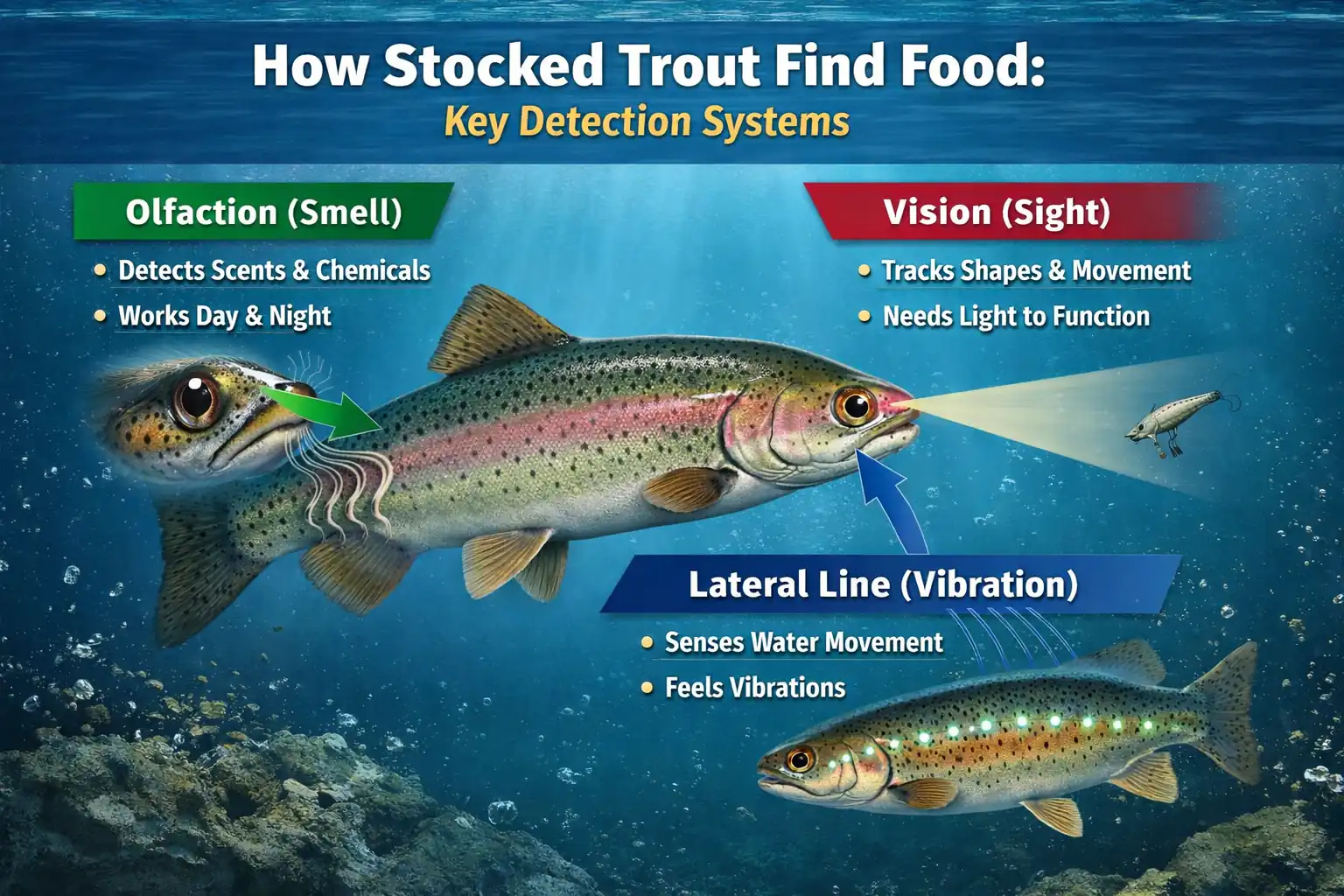
Water depth and light penetration also shape how this ambush behavior plays out. In shallow, clear water, trout can spot a baitfish — or an imitation — from a considerable distance, which gives them more time to assess and often more time to grow suspicious of anything that looks unnatural. In deeper or more turbid water, trout rely more on the vibration and silhouette of a passing baitfish than fine visual detail, meaning a lure’s action and profile matter more than exact realism. This is part of why the same streamer pattern can produce very differently depending on water clarity — not because the fish changed their preferences, but because the sensory information available to them changed.
Color, Flash, and Profile: What Actually Matters
Not every detail of a minnow imitation carries equal weight, and understanding which cues trout actually rely on helps prioritize what matters most in a lure or fly.
Profile and silhouette are the first thing a trout registers, especially from below where most strikes originate. A baitfish imitation with the right overall shape — body depth, tail profile, head size — will draw strikes even with an imperfect color match, while a perfectly colored lure with the wrong silhouette often gets ignored.
This is worth dwelling on, because it runs counter to how a lot of anglers shop for lures. It’s tempting to prioritize a realistic paint job or lifelike scale pattern, but from a trout’s typical viewing angle — looking up and out toward a passing baitfish silhouetted against the light from the surface — fine surface detail is far less visible than overall body shape and proportion. A sculpin-profile lure in the wrong color will often still get eaten by a trout keyed in on sculpins, while a beautifully painted lure with a baitfish-inappropriate body shape frequently gets ignored, even by an actively feeding fish.
Movement ranks close behind profile in importance. A soft plastic or fly that moves naturally in the water — with a swimming tail action or a lifelike undulation — will consistently outperform a static or stiff presentation, regardless of how realistic it looks sitting still in your hand.
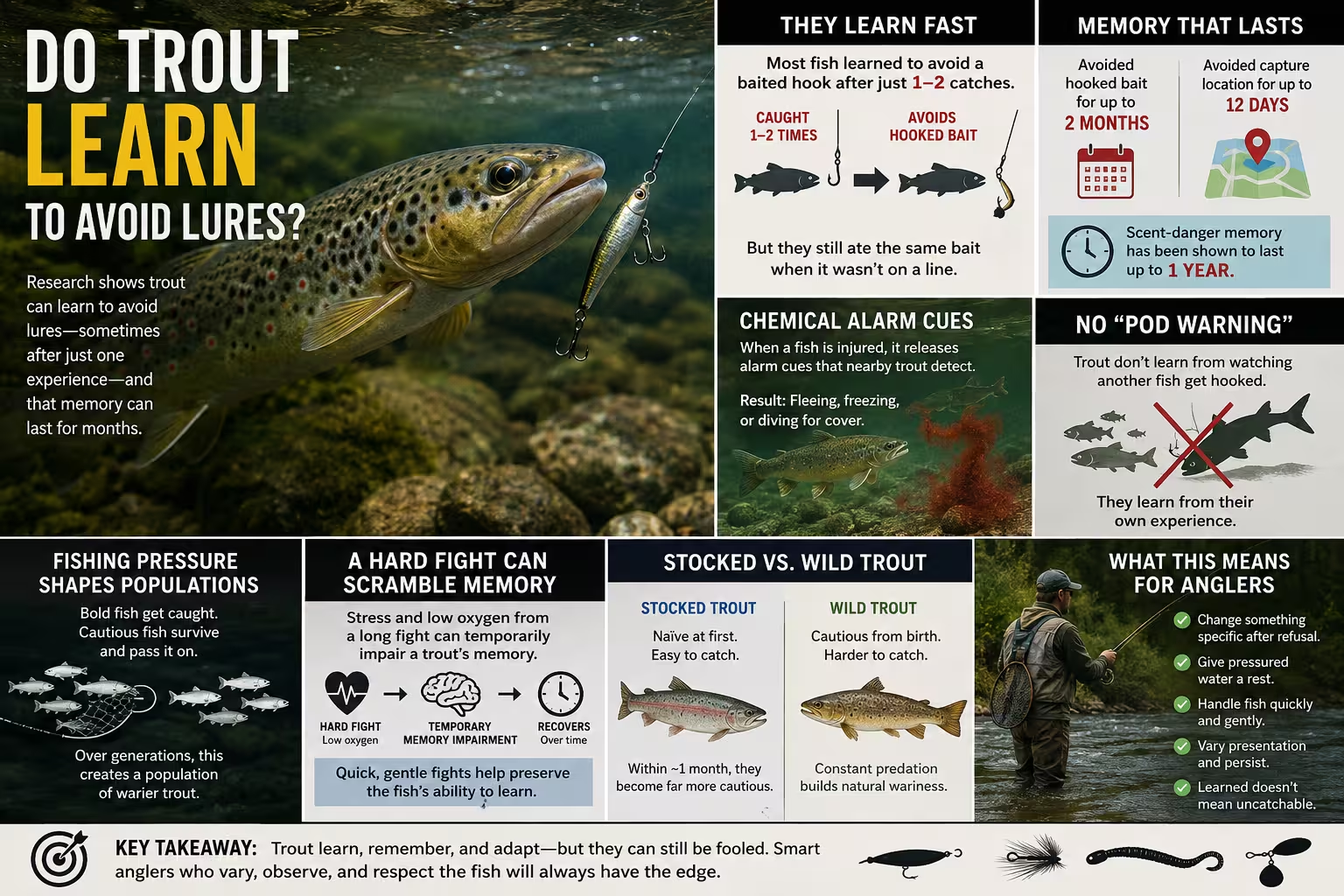
Flash plays a real but situational role. A little flash can mimic the light reflecting off a baitfish’s scales and help draw attention in stained or deeper water. Too much flash, particularly in clear, low, or heavily pressured water, can just as easily spook a wary trout rather than trigger a strike. Matching flash level to water clarity — more in stained water, less in gin-clear conditions — is a small adjustment that makes a real difference.
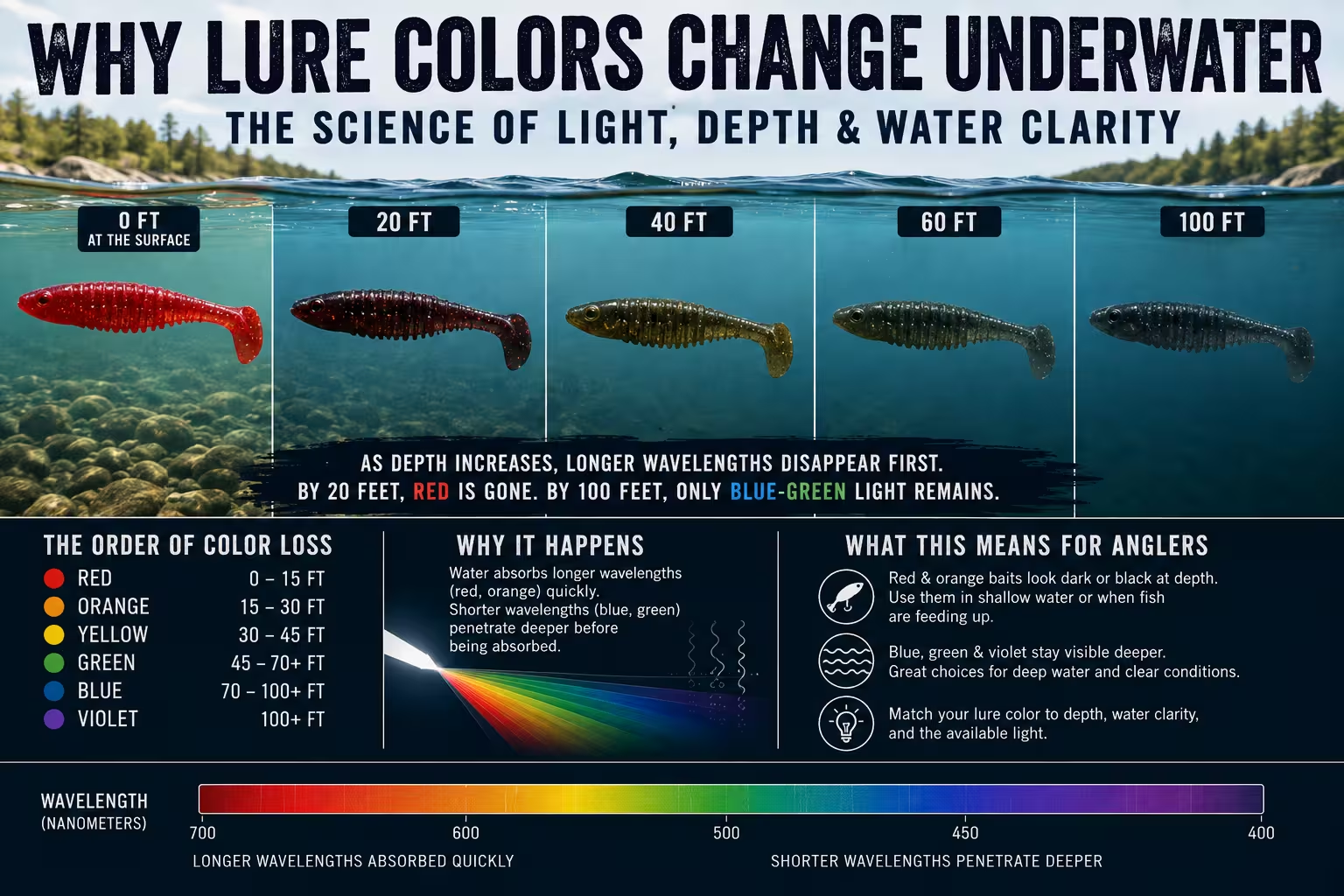
Color matters most as a general light/dark match rather than an exact species-specific replica. Natural, olive, and tan tones tend to match sculpins and most freestone baitfish species well, while white, silver, and chartreuse patterns tend to draw more attention in stained water or when imitating shad and shiner-type baitfish. Starting with a natural profile that roughly matches the baitfish present in your water, then adjusting based on water clarity and light conditions, is a far more reliable system than chasing an exact match.
Light conditions throughout the day also shift what a trout can perceive and respond to. Early morning and evening, with lower overall light, tend to favor darker silhouettes that stand out clearly against the sky when viewed from below — a trout’s typical vantage point when watching for prey overhead. Bright midday sun, particularly in clear water, tends to favor more natural, subdued tones that don’t look artificial under harsh, direct light. Overcast days sit somewhere in between and are often considered prime baitfish-fishing conditions precisely because the diffused light neither washes out natural colors nor creates the harsh shadow lines that can make an imitation look unnatural.
Size selection deserves its own consideration separate from color and profile. Trout, in most systems, show a fairly consistent preference for baitfish roughly proportional to their own body size — typically in the range of one-quarter to one-third of the trout’s length, though this varies by species and system. Fishing a baitfish imitation that’s dramatically oversized relative to the average trout in a given piece of water can actually reduce strikes, even from larger fish, simply because it falls outside the size range that water’s trout population is accustomed to encountering and pursuing. Matching size to the average baitfish forage in that specific water, rather than assuming bigger always means better, tends to produce more consistent results.
Fishing Baitfish Imitations Effectively
Putting all of this together, a few practical principles consistently improve results when targeting trout with minnow imitations.
Fish tight to structure rather than open water — undercut banks, submerged wood, current seams, and boulder pockets are where ambush predators actually hold and hunt. Vary your retrieve rather than settling into a single mechanical pace; strips of different length and speed, punctuated by pauses, do a far better job imitating a genuinely vulnerable baitfish than a steady, predictable retrieve. Match your presentation depth to the season and water temperature, keeping presentations low and slow in cold water and allowing for a faster, higher retrieve as water warms and trout become more willing to chase. And pay attention to the specific baitfish present in your water rather than defaulting to a generic pattern — a quick look at what’s actually swimming in the shallows will tell you more about size, color, and profile than any general rule of thumb. For anglers fishing soft plastics, a small minnow-profile bait such as our 1″ Black Minnow Soft Plastic Swimbait provides a compact baitfish profile that can be worked around current seams, boulder pockets, undercut banks, and other likely ambush points.
Angle and direction of retrieve matter more than most anglers give them credit for. A baitfish imitation cast upstream and stripped back with the current moves at an unnaturally fast pace relative to the real baitfish in that water, which can look erratic in a way that spooks rather than attracts. Casting across or slightly downstream and working the presentation through likely holding water at a pace closer to the current’s natural speed, then adding pauses and direction changes on top of that baseline, tends to produce a far more convincing imitation of a baitfish genuinely struggling against the flow.
Rod position and line control also play a bigger role with baitfish imitations than with most insect patterns. Keeping the rod tip low and close to the water surface allows for tighter, more direct control over the lure’s action, since less slack line has to be managed between strips. This tighter connection also means a better hookset when a strike does come — baitfish strikes tend to be sudden and committed, and a direct line connection is what converts that strike into a solidly hooked fish rather than a missed opportunity.
Finally, don’t overlook the value of covering water methodically rather than working a single run for an extended period. Because baitfish predation is fundamentally opportunistic and ambush-based, a trout that isn’t actively feeding at the moment your presentation passes through simply won’t respond, regardless of how well the retrieve is executed. Systematically working through likely holding water — undercuts, seams, drop-offs, and structure — and moving on after a reasonable number of quality presentations tends to out-produce anglers who camp on a single piece of water hoping to wear a fish down.
Frequently Asked Questions
Why do trout eat minnows instead of just insects?
Minnows deliver far more calories per strike than insects do, making them a far more energy-efficient meal, especially for larger trout. A trout would need to eat many dozens of small insects to match the caloric value of a single baitfish, so once a trout is large enough to reliably catch fish, its diet naturally shifts toward baitfish.
What kind of minnows do trout eat the most?
It depends on the water, but sculpins are one of the most consistently important baitfish across trout streams, thanks to their bottom-dwelling, slow-moving nature. Dace, shiners, chubs, and even juvenile trout also make up a meaningful part of the diet, depending on what’s naturally present in a given system.
Do bigger trout eat more minnows than smaller trout?
Yes. Larger trout have bigger mouths and stronger predatory instincts, making baitfish a more efficient and accessible food source. Smaller trout rely more heavily on insects simply because they aren’t yet physically equipped to hunt baitfish effectively.
When is the best time to fish minnow imitations for trout?
Fall is widely considered the best season, as trout feed aggressively on baitfish to build energy reserves before winter. Spring baitfish spawns and low-light periods — dawn, dusk, and overcast days — are also strong windows nearly year-round.
What retrieve works best for baitfish imitations?
A varied retrieve that mimics an injured or fleeing baitfish generally outperforms a steady, mechanical retrieve. Strips of different length and speed, with occasional pauses, mimic the kind of vulnerability that triggers a reaction strike far more effectively than uniform movement.
Does water clarity affect how trout respond to minnow imitations?
Yes. In clear, shallow water, trout get a longer look and rely more on fine visual detail, which can make them more selective and more easily spooked by anything unnatural. In stained or deeper water, trout rely more on vibration, silhouette, and flash, so profile and movement matter more than exact color or detail.
Do trout eat their own species?
Yes, cannibalism among trout does occur, particularly among large, established fish that hold prime feeding lies in systems with a strong year class of smaller trout. It’s less common than predation on other baitfish species but is a documented part of the diet of large, opportunistic trout.