Why Trout Eat Eggs (and When to Use Egg Patterns).
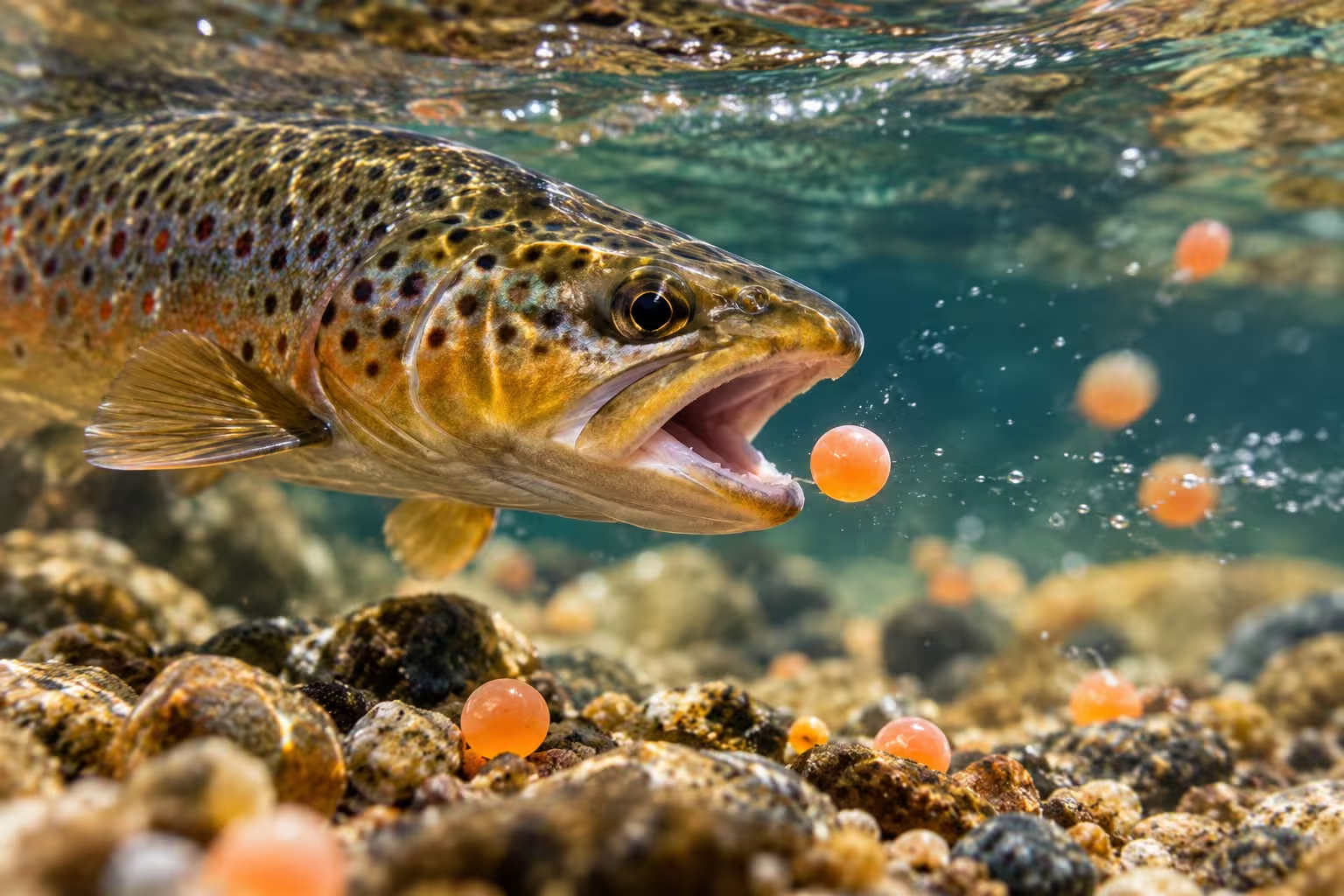
Every fall, on a stretch of stream where brown trout are spawning, anglers get a fascinating demonstration of why trout eat eggs—and how this simple food source can completely change their feeding behavior. A trout that has been picky all summer, refusing nearly everything but a tiny midge presented perfectly, suddenly sits behind a gravel bar and eats a small, round, orange-ish blob with no legs, no wings, no fins, and no escape instinct whatsoever. It doesn’t chase it. It doesn’t inspect it for long. It just tips up slightly and takes it, again and again. The blob is a trout egg, and for a few weeks of the year it is one of the most reliable, most concentrated, and most underappreciated food sources in the entire stream.
Eggs are strange as a food source. They aren’t insects, so they don’t follow a hatch chart. They aren’t baitfish, so they don’t flee. They aren’t terrestrial accidents like worms washed in by rain. They are the reproductive output of the trout’s own community, released into the current on a predictable seasonal schedule, and the trout have evolved to take advantage of every bit of it. Understanding why trout eat eggs explains why egg patterns are among the most effective flies ever tied, why egg-colored beads, jigs, and baits catch fish all year, and also why using them thoughtfully matters, because the same biology that makes eggs deadly is tied directly to the survival of the next generation of fish.
This post is part of our Trout Food Sources series, and it connects directly to two others. Our guide to redd spawning gravel explains where eggs come from and how trout build the nests that protect them. Our comparison of synthetic salmon eggs versus real eggs covers the lure side of the same story. This piece sits between them: the biology of why a trout wants an egg, the timing of when eggs are actually in the water, and how to fish an imitation in a way that matches what the fish is really doing.
What a Trout Egg Actually Is
A trout egg is a small, spherical package of stored energy. A typical rainbow, brown, or brook trout egg is roughly four to six millimeters across, which is somewhere around the size of a small pea or a large peppercorn. The exact size varies with the species, the size of the female, and the population, and larger females generally produce somewhat larger eggs. The color ranges from pale yellow to deep orange, depending on the species, the female’s diet, and the stage of development.
The color is not decorative. It comes largely from carotenoid pigments, a family of compounds that includes astaxanthin, which fish cannot make themselves and must obtain from their diet. Trout get carotenoids from the crustaceans they eat, the same pigment that turns the flesh of some trout pinkish-orange and gives crawfish and shrimp their color. A female that has been feeding heavily on scuds, crawfish, and other crustaceans deposits some of that pigment into her eggs. That is part of why egg color differs between fish and between streams, and it’s also why imitations that look the same to us can look different to a trout depending on the water they’re fished in.
Inside that sphere is a large store of yolk, which is mostly fat and protein. The yolk exists to feed the developing embryo for weeks or months until it hatches and begins absorbing the remaining yolk as an alevin. From a predator’s point of view, that makes an egg an unusually dense meal for its size: high in lipids, high in protein, and packaged in a thin, soft membrane that is easy to swallow whole.
Newly released eggs are soft and slightly sticky, but they take up water after fertilization and become firm and turgid, a process known as water hardening. Once hardened, an egg is a fairly durable little sphere that settles into the gravel of the redd. An egg that is dislodged before it is buried, or that is uncovered later, drifts with the current just above the stream bottom, tumbling and bouncing in the same zone where most trout hold. That is the moment an egg becomes food.
Where the Eggs in the Water Come From
If eggs were safely buried in gravel and left alone, trout wouldn’t have much access to them. They would be hidden. But the process of spawning, and the realities of a crowded stream, release more drifting eggs than most people realize.
The spawning act itself. As a female digs her redd, and then deposits eggs while the male fertilizes them, some eggs are inevitably swept downstream before they settle into the gravel. The current catches them in the moment of release. This is not a rare accident; it’s built into how spawning works, and trout, whitefish, suckers, and other fish stationed below a spawning pair routinely take advantage of it.
Digging up earlier redds. Late-spawning fish often dig on top of gravel that an earlier fish already used, a pattern known as superimposition. When she digs, the second female uncovers and dislodges eggs that were already buried, sending them drifting. In streams with limited good spawning gravel, where many fish compete for the same few riffles, this happens constantly. It is one of the reasons the downstream edge of a busy spawning area can be a feeding station.
Unfertilized and dead eggs. Not every egg lives. Eggs that were never fertilized, or that die during development, turn white and opaque, and they can be washed out of a redd by flow or by the movements of other fish. Healthy-looking eggs and dead eggs both end up in the drift.
Flooding and scouring. A high-water event during the incubation period can tear up gravel, uncover redds, and wash large numbers of eggs downstream all at once. This is bad for the next generation of fish, but good news for the opportunistic predators below.
Other species spawning. It’s not only trout. Suckers, whitefish, and other fish spawn in the same streams, sometimes at the same time, and their eggs are also on the menu. In many rivers, brown trout and brook trout spawn in the fall, while rainbow trout and cutthroat trout spawn in late winter to spring. That staggered calendar means that for much of the year, some species’ eggs are in the water for the other species to eat. A rainbow trout in the fall may be feeding on drifting brown trout eggs, and a brown trout in the spring may be eating rainbow eggs.
Salmon runs. In watersheds with salmon, such as parts of the Pacific Northwest, Alaska, and the Great Lakes tributaries, the amount of egg drift is on another scale entirely. Resident trout, char, and juvenile steelhead often gather below spawning salmon and feed heavily on drifting eggs, and ecologists treat the arrival of salmon as an important seasonal energy subsidy for the fish in those streams. The tradition of egg fishing is strongest in those fisheries for exactly that reason.
Why Trout Eat Eggs: The Case From the Fish’s Side
There’s a simple answer to why trout eat eggs, and it’s the same answer that explains most trout feeding behavior: it’s a very good deal in terms of energy.
High-calorie, zero-effort food
In our post on trout energy conservation, we cover the central principle of trout feeding: a trout takes food when the calories gained outweigh the calories spent getting it. A baitfish requires a chase, which burns energy and may fail. A fast insect may escape. An egg does neither. It drifts at the speed of the current, it doesn’t dodge, it doesn’t fight, and the trout doesn’t need to leave its holding position more than a few inches to take it. The energy cost per egg is close to zero, and the caloric return is high thanks to the fat in the yolk.
When the drift is dense, which is the case below an active spawning area, a trout can sit in one place and take dozens of eggs in a short period without moving. That’s about as efficient as feeding gets, which is why trout in these situations often become single-minded and why the bite can be so predictable.
A reliable, predictable drift
Trout hold in places where the current delivers food to them. Eggs, like most drifting food, concentrate in the same lies: seams, tail-outs, pockets behind boulders, and the slower edges of faster runs. A trout that has learned where eggs arrive will hold in those positions and wait. Because the eggs come from a known location (the redd) and travel in a known direction (downstream), the feeding stations are predictable in a way that a random insect drift isn’t.
A food that doesn’t trigger caution
A trout in clear, pressured water has learned to be suspicious of anything that moves unnaturally. An egg doesn’t move unnaturally, because it doesn’t move at all except as the water carries it. There is no wing to look wrong, no leg to twitch, no body that behaves strangely. A natural-looking egg drifting at the right speed on the right line is one of the least suspicious things a trout can see.
Nutritional value at the right time
Spawning is hard on trout. Fish put on weight in preparation for the spawn, and then use up a lot of stored energy in migration, nest-building, and courtship. Post-spawn trout are often thin and hungry, and eggs are a convenient source of fat and protein exactly when they’re needed. Even non-spawning fish in the same stream, such as juvenile trout and fish of other species, are looking to fatten up before winter, and drifting eggs fit that purpose.
Instinct and visual triggers
A trout’s strike decision comes from a few visual cues: shape, size, color, and motion. An egg is small, round, and colored in the yellow-to-orange range, and it moves at current speed along the bottom. Each of those cues is something trout have been selecting on for millions of years. Many biologists and anglers also believe scent plays a role, since eggs and the fluid around them release amino acids and other compounds that fish are highly sensitive to. We can say with confidence that fish have an extraordinary ability to detect dissolved amino acids; we can say less about exactly how much a given egg contributes to the strike decision, so treat scent claims about egg baits as likely helpful rather than proven.
Who Is Eating Whom: Cannibalism and Competition
It surprises some anglers to learn that trout will eat the eggs of their own species. Egg predation by trout, including on eggs of the same species, is well documented. Large trout stationed below a spawning pair will often feed on the eggs that pass them, even while the same fish may themselves be pre-spawn or post-spawn. The fish’s feeding instinct doesn’t distinguish between “this is my species’ egg” and “this is food.”
Nor is it only trout. Whitefish, suckers, sculpins, crayfish, and many other stream residents will eat eggs, and the pressure on a redd comes from all of them. This is why female trout bury their eggs in gravel and why redd site selection matters so much, a theme we explore in our post on redd spawning gravel. Burying is a defense against exactly the kind of predation we’re describing.
And the egg bite is competitive. In a stream with a dense drift, the most dominant fish often take the best positions, usually the head of a run or the best seam, and smaller fish are pushed to the margins. That’s why a good egg lie often holds a mix of sizes arranged by rank, and why larger fish often take the first eggs in the drift while smaller fish pick up what passes by.
When Eggs Are in the Water: The Calendar That Decides Everything
The single most important thing to understand about egg fishing is that egg patterns are most effective when eggs are actually in the water. Matching the calendar is the equivalent of matching the hatch, and it’s the part of the story that most anglers get wrong.
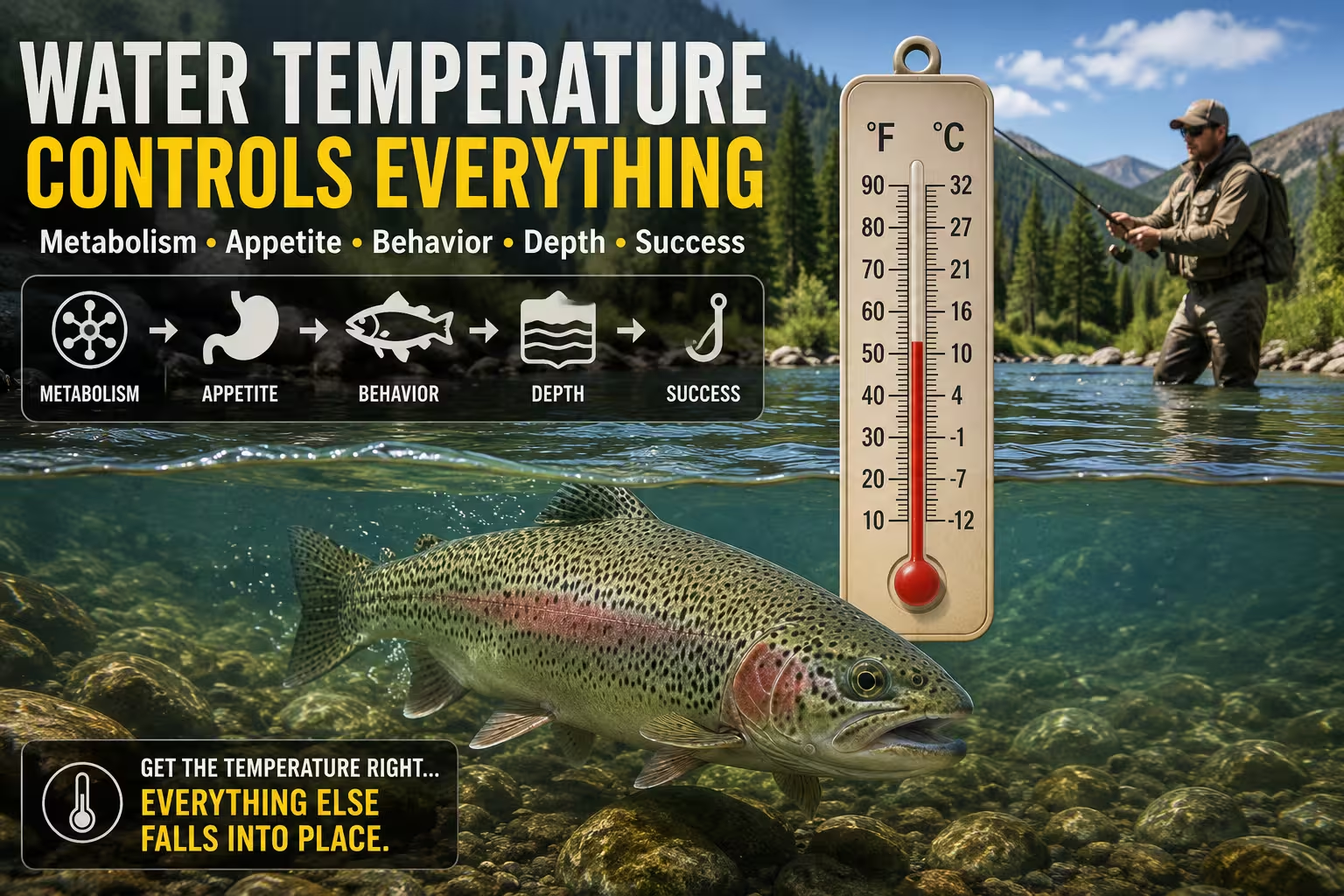
Fall (roughly October through December, depending on latitude and elevation). Brown trout and brook trout spawn in the fall, and so do some other species. As water temperatures drop into the range these fish use for spawning, they move to gravel riffles and tail-outs and begin building redds. Any trout in the same water, including rainbows and non-spawning browns, will be positioned to eat the eggs. This is the beginning of the classic egg season in much of the country. Water temperature matters a great deal here, and our guide to the best water temperature for trout explains the temperature ranges that trigger movement and feeding.
Winter. Eggs may still be drifting where spawning continues, and in some systems, fall-spawned eggs sit in the gravel through winter. Winter trout are slow and energy-conservative, and an egg pattern fished near the bottom, very slowly, can be an efficient way to present a meal that requires almost no effort to take.
Late winter through spring (roughly February through May). Rainbow trout, and in some regions cutthroat trout, spawn at this time, and the egg drift shifts to their redds. Brown trout in the same water may now be the ones feeding on the eggs. In regions with steelhead runs, this is peak egg season.
Summer. Natural egg drift is minimal in most trout streams. But egg patterns can still work, for reasons that have less to do with real eggs and more to do with the shape and color being a recognizable, attractive, low-effort food. Many anglers use an egg as a searching attractor in summer, though success is generally less predictable than during a natural drift.
Salmon seasons. In rivers with salmon runs, the schedule is dictated by the salmon, and the egg bite can be the dominant pattern for weeks.
These dates move with latitude, elevation, and the specific fishery. A tailwater with stable cold temperatures may have a different calendar than a high-elevation freestone stream. The best guide is local knowledge: ask at a local fly shop or check state fish and wildlife information on spawning timing for your water. If you see redds, or fish paired up on gravel, eggs are likely in the drift.
Stocked Trout, Pellets, and Why Eggs Work Even Where There Are No Natural Eggs
A great many anglers fish waters where trout don’t naturally reproduce, such as put-and-take ponds, stocked tailwaters, and trout parks. There are no redds and no natural egg drift, yet egg patterns and egg-colored baits still catch stocked fish consistently. Why?
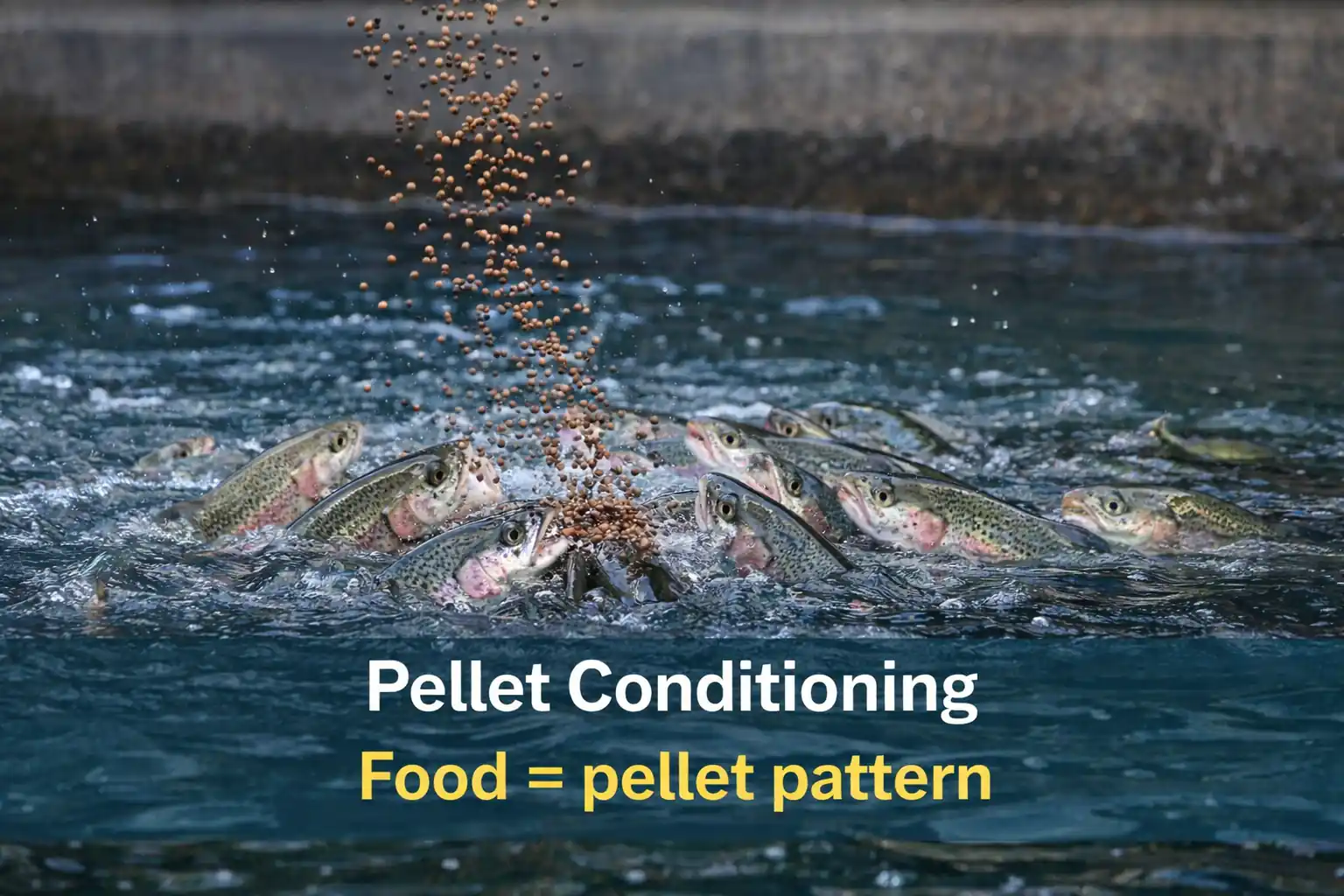
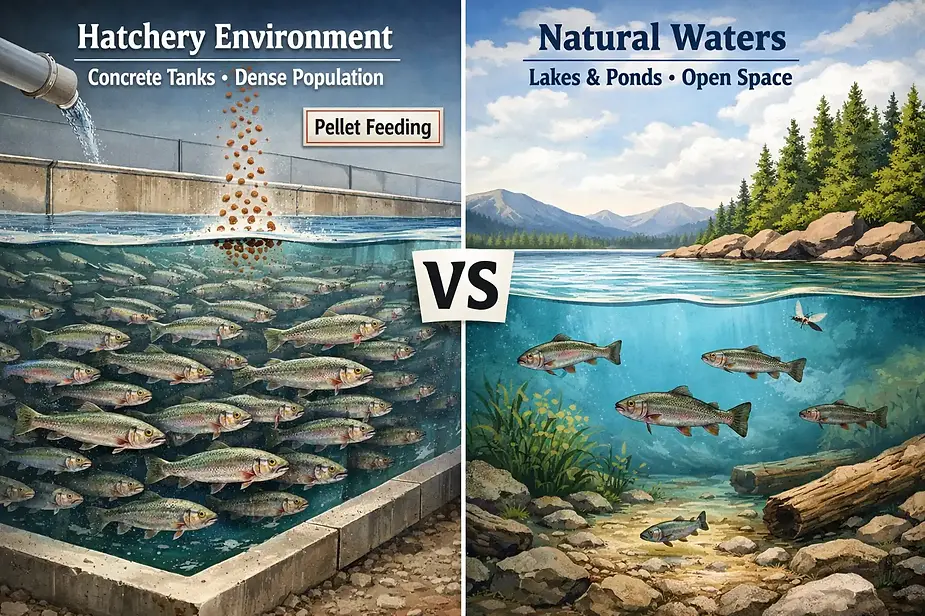
The answer is largely hatchery conditioning, which we cover in detail in our post on stocked trout feeding behavior. Hatchery trout are raised on pelleted feed, which is small, round, and usually tan, brown, or orange-tinted. A fish raised its entire life on small, round, sinking or floating food has learned to treat small, round, colorful objects as meals. An egg bead or a ball of orange-pink dough sits right inside that learned category. This is also a big part of why synthetic egg baits and dough baits have been so successful on stocked water, a theme we explore in our post comparing synthetic salmon eggs and real eggs.
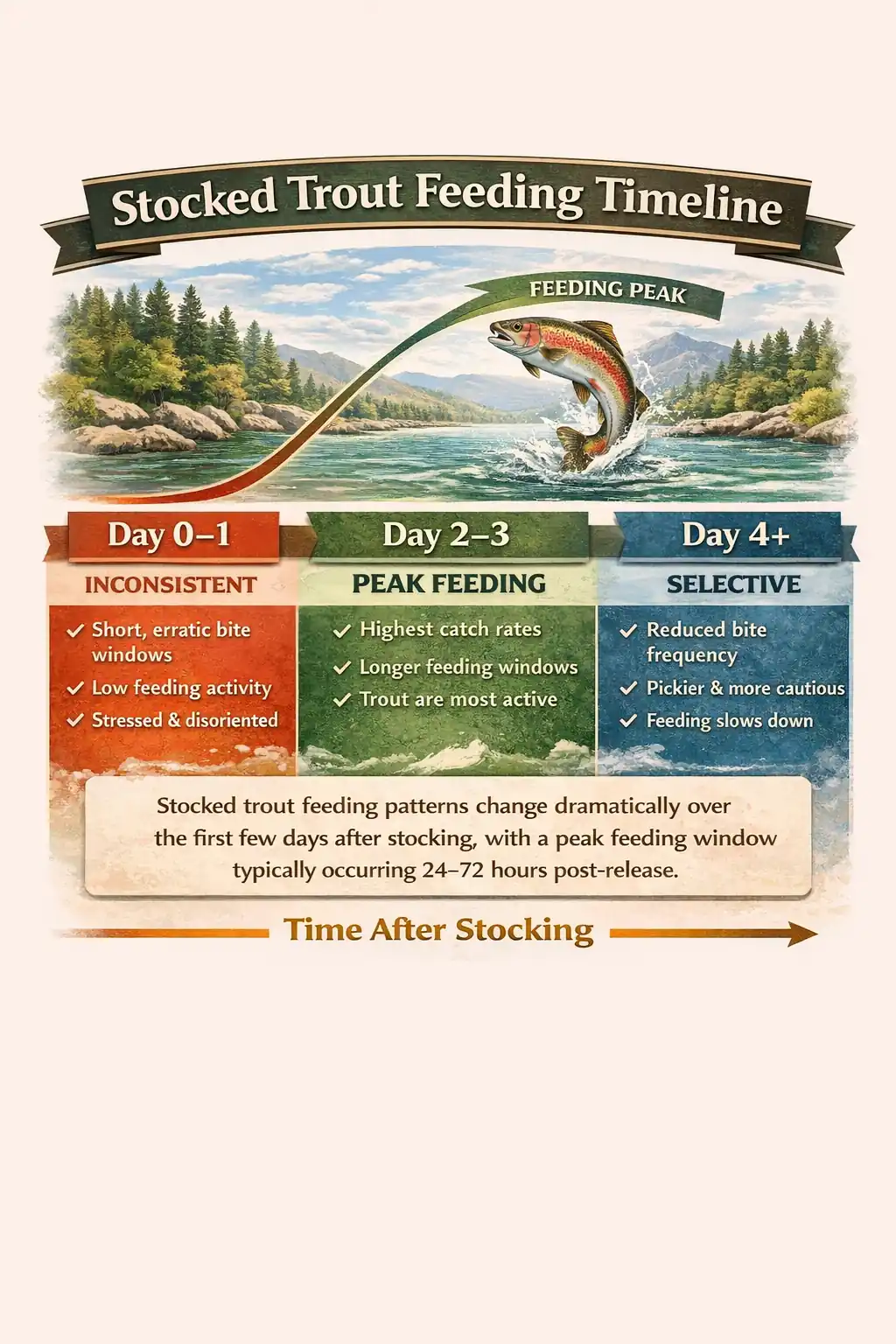
So in stocked water, the explanation shifts. The egg isn’t working because trout expect a spawn. It works because the shape, size, and color overlap with the pellet that these fish have been conditioned to eat. That has a practical implication: on stocked water, you don’t need to worry about egg season. An egg imitation can work any time, especially in the first days after stocking, as discussed in our guide to stocked trout fishing in the first 72 hours.
The Anatomy of an Effective Egg Imitation
Whether you’re tying flies, pegging beads, or choosing a bait, the same few characteristics determine whether an egg imitation looks right to a trout.
Size
A real trout egg is four to six millimeters, so most effective imitations fall in the range of roughly 4 to 8 millimeters. Beads in the 4- to 6-millimeter range are common for pressured or clear water, while larger 6- to 8-millimeter imitations are used where visibility is poor or fish are less selective. When in doubt, go smaller in clear water and larger in stained water. An imitation that’s too large can look unnatural and put down wary fish.
Color
Natural eggs range from pale cream and peach to yellow and deep orange. Fresh, healthy eggs are typically a translucent peach or orange; dead or unfertilized eggs turn opaque white. Imitation colors reflect this range: peach, light orange, salmon pink, cream, yellow, and chartreuse. As a starting point:
- Clear water: natural peach, pale orange, cream, or pale yellow.
- Stained or low-light water: brighter orange, hot pink, or chartreuse, which are more visible.
- When trout are focusing on dead or washed-out eggs: white or cream.
- When nothing is working: change color before you change anything else.
The same principles from our guide to water clarity and color apply: the clearer the water, the more important it is to stay close to natural tones.
Translucency and the “blood dot”
A natural egg is partly translucent, with a slight glow from within. Fly tiers try to capture this with materials like translucent yarn, glass or plastic beads, or hand-tied “blood dot” patterns, which add a small red or orange spot to suggest the embryo’s developing blood vessel. These details matter most in clear, slow water where trout have time to look closely.
Behavior in the water
The best egg imitation is one that moves like a real egg, which means a dead drift at the speed of the current, near the bottom, with no unnatural motion. A beautiful egg that drags, skates, or swings looks nothing like a drifting egg. Presentation matters at least as much as the pattern.
Egg Patterns by Gear Type
Fly fishing
Fly anglers have the widest range of egg imitations. Common styles include:
Yarn eggs and Glo Bugs. Tied with fuzzy egg yarn, tied into a rounded ball on a small hook. These are lightweight, inexpensive, and effective, and they have a soft, slightly translucent look that suits natural drifts.
Bead eggs. A plastic or glass bead on the hook, sometimes held in place by a small piece of tubing or a drop of glue. Beads sink quickly and have a hard, round shape that closely matches a real egg. They come in a wide variety of colors and sizes.
Realistic or translucent patterns. These use layered materials like UV resin, translucent chenille, or hand-painted details to capture a real egg’s glow and color.
Egg-sucking patterns. These combine an egg with a leech or woolly bugger style body, so the egg appears to be a bit of food attached to a larger meal. These are popular in steelhead and larger-trout fishing. If you’re curious about how leeches fit into a trout’s diet, our post on why trout eat leeches covers the biology behind the body style.
Egg flies are commonly tied on small, wide-gap hooks in the size 12 to 16 range, though sizes vary. A very common approach is to fish an egg as part of a two-fly rig: the egg as the attractor fly, with a small nymph a foot or so below it. The egg catches the trout’s attention and sometimes gets the eat itself, while the nymph picks up fish that are feeding on insects. This works because eggs and nymphs both drift near the bottom, and trout feeding in a drift lane will often take either.
Spin fishing with beads and small hooks
For spin anglers, a pegged bead is among the simplest and most effective egg rigs. A plastic bead is threaded onto the line and held in place with a small toothpick or a peg a short distance above the hook, so it appears to be a loose egg drifting just ahead of a bare hook. This lets you present a natural-looking egg without a bait that comes apart. Use a small, sharp hook sized to the bead, a light split shot to keep the rig near the bottom, and a drift that mimics the current’s speed. This pairs well with a fine, low-visibility line, as we discuss in our guide to choosing the best fishing line for trout.
Real and cured eggs, egg sacs, and dough baits
Where bait is legal, real or cured salmon or trout eggs, loose or tied into small mesh “spawn sacs,” are traditional and effective. Single eggs on a small hook are fished on a dead drift or under a float. Egg sacs bundle several eggs in a small bag of net material, which holds them together and gives off scent. Artificial egg-flavored baits and dough baits serve a similar purpose, particularly on stocked water, where they overlap with the pellet-conditioned feeding behavior described above.
Fishing a bait under a float with the egg suspended at the right depth works well in lakes and slow pools. Our guide on how deep to set a bobber for trout covers the depth side of that approach.
Jigs and soft plastics
A small jig in a peach, orange, or cream color can suggest an egg in the water, especially in cold water when trout are not chasing. A tiny jig fished with a slow, near-dead-drift presentation near the bottom can pick up fish feeding on drifting eggs and fish that would ignore a more active retrieve. In situations where natural eggs are not in the drift, a soft plastic worm drifted along the bottom, like our 2.95″ Round Trout Worm, covers the “easy, helpless food” category from a different angle, which is the same reason trout take eggs.
Where to Fish an Egg Pattern
Because egg drift is shaped by current and structure, there are a handful of positions where you’re most likely to find feeding trout.
Below spawning riffles and gravel bars. The most productive water is often immediately downstream of active spawning, in the run, seam, or tail-out where drifting eggs are carried. Trout stack up in these areas, sometimes in impressive numbers.
Tail-outs and the lip of pools. The shallow, accelerating water at the end of a pool concentrates drift, and fish hold here to intercept it.
Seams between fast and slow water. Eggs funnel along current seams, and trout stationed on the slow side can take them with minimal effort. We explain more about this in terms of how trout use structure in our look at current breaks.
Behind boulders and obstructions. These form small pockets of calmer water where a trout can hold while eggs drift past on either side.
Deeper runs and slots. When water is cold, trout sit lower and slower. An egg fished deep and slow in a run is often more productive than one fished in fast, shallow water.
The key is to fish at the level of the eggs, which is just above the bottom. A natural egg tumbles and bounces along the stream bed. If your imitation is a foot above the fish, it’s out of the zone. Add weight, use a heavier bead or tungsten, or adjust the position of your split shot until your rig ticks the bottom lightly. Be prepared to lose a bit of gear, since good egg water is often rocky, but a rig that never touches bottom is almost always too high.
Technique: Fishing an Egg So It Looks Like an Egg
Dead drift is the rule
An egg has no ability to swim, so any rig that drags, swings, or accelerates against the current will look wrong. Cast upstream and slightly across, let the rig sink, and follow it down with your rod tip, keeping slack to a minimum without pulling the egg off its natural line. Mending helps if you’re fly fishing. For spin gear, keep your rod tip high and steer the line so the rig moves at the speed of the water.
Watch for subtle takes
Trout take eggs gently. The bite can be as subtle as a slight hesitation in the drift, a tiny tick in the line, or a flash of white as a trout opens its mouth. An indicator or a bit of brightly colored line on the surface helps you detect the take. Set the hook at any unexplained pause, and don’t wait for a hard pull.
Keep the rig simple
The fewer unnatural features, the better. Skip large swivels, heavy leader, and oversized hooks. A small, sharp hook, a light leader, and just enough weight to reach the bottom is better than a rig with extra hardware. In clear water, scale everything down.
Adjust the weight constantly
Egg fishing is about depth, and depth changes with each spot. If you’re not occasionally ticking the bottom, add weight. If you’re hanging up constantly, remove some. Treat the weight as an active adjustment, not a fixed setting.
Change colors and sizes before changing spots
If you’ve found fish and they’ve stopped taking your egg, it often takes only a change in color or size to restart the bite. A switch from orange to peach, or from an 8-millimeter bead to a 5-millimeter, is a small change that can make a big difference.
Fishing Eggs Responsibly: The Ethical Side
This is the part of egg fishing that deserves more attention than it usually gets. The same biology that makes egg patterns effective is the reason you should think carefully about how and where you use them.
Stay off the redds. The most important rule is never to wade through spawning gravel. A redd contains eggs that may be only a few inches below the surface, and the weight of a boot can crush them. Learn to recognize redds, which show up as clean, light-colored patches of gravel, often with a depression upstream and a mound downstream, as we describe in our guide to redd spawning gravel. Walk around them, not across them.
Fish below the redds, not on them. The trout feeding on drifting eggs are generally downstream of the nest. You can fish for those fish without targeting the spawning pair or disturbing the nest.
Leave actively spawning fish alone. Fish on redds are doing the most important thing they do all year. Harassing them can cause them to abandon the nest, expose eggs to predators, or waste energy they need to survive the winter. Many anglers choose not to target spawning fish at all, and many fisheries have rules about it.
Check the regulations. Some waters close during spawning season, some restrict bait or require artificial lures only, and some have special rules about egg imitations or attractants. Rules differ widely between states and even between stream sections, so confirm the regulations for your specific water every season.
Handle fish carefully. Fall and spring fish are often heavy with eggs or milt and are physically stressed. Keep them in the water, handle them with wet hands, avoid squeezing, and revive them fully before release. Our guide to trout catch-and-release covers the practices that keep fish alive, and they matter even more for spawning fish.
Consider hook damage. Egg patterns are often small, and trout can swallow them deeply, especially with real bait. Use barbless or crimped hooks where appropriate, set the hook promptly, and use a gentle release.
None of this makes egg fishing off-limits. It’s a legitimate, long-standing, and effective method. It simply asks for a little more awareness than a casual afternoon of fishing a nymph, because the fish and the gravel you’re near are more vulnerable than usual.
Common Mistakes With Egg Patterns
Fishing them at the wrong time. An egg pattern in the middle of summer, in a stream with no spawning, is a gamble. It might work as an attractor, but you’re not matching anything the fish are expecting. Match the calendar first.
Fishing too high in the water column. If your egg is off the bottom, it isn’t where real eggs travel. Add weight.
Using eggs that are too big or too bright. Oversized, glowing eggs can spook fish in clear water. Start natural and scale up only if needed.
Dragging the drift. Any unnatural motion kills the effect. Mend, steer, and adjust until the egg travels at the speed of the water.
Standing in the wrong place. Wading through the water where you should be fishing, or standing directly on a redd, ruins both the habitat and the fishing. Fish from the bank or from a position that avoids spawning gravel.
Ignoring the rest of the food chain. Even in peak egg season, trout also eat nymphs, worms, and baitfish. If eggs aren’t working, drop a nymph below the egg or switch to another pattern. The egg is a tool, not a rule.
Skipping the regulation check. Special rules around spawning are common. Don’t assume.
Putting It Together: A Simple Egg Strategy
If you want a short framework to start with, here is one that covers most situations.
Step one: check the calendar. Is it fall, with brown and brook trout spawning? Is it late winter or spring, with rainbows spawning? Do you see redds, paired fish, or other signs of spawning activity? If yes, eggs are likely in the water.
Step two: find the drift. Look for the water just downstream of spawning gravel: tail-outs, seams, and runs where drifting food concentrates.
Step three: choose a natural imitation. Start with a 4- to 6-millimeter bead, a small yarn egg, or an egg-colored jig in a natural peach or pale orange. Go brighter if the water is stained.
Step four: fish it at the bottom, dead drift. Add weight until you tick the bottom, and keep the drift natural.
Step five: pair it with a nymph. A two-fly rig covers more feeding behavior.
Step six: protect the gravel. Stay off the redds, fish below them, leave active spawners alone, and release fish carefully.
Step seven: adjust. Change colors, size, and weight before changing locations.
In stocked water without natural spawning, skip the calendar and the redd rules, and treat the egg as a pellet-like food the fish already recognize.
Closing Thought
A trout egg is nature’s most efficient meal for a trout: calorie-dense, easy to catch, delivered right to the feeding lane, and entirely free of the caution an insect or baitfish might trigger. That’s why the egg bite can be some of the most reliable fishing of the year, and why the egg fly sits in nearly every serious trout angler’s box. But the same eggs represent the next generation of the fishery, and the gravel they sit in is one of the most important and most fragile pieces of the stream. Fish the drift below the redd, stay off the nest, match your imitation to the real thing, and release your fish with care. Done that way, egg fishing isn’t just effective. It’s a way of fishing that respects the cycle that makes the fishing possible in the first place.
Frequently Asked Questions
Do trout really eat eggs?
Yes. Trout eat eggs of their own species and others whenever eggs are drifting in the current, and they do it readily. Eggs are high in fat and protein, require almost no effort to catch, and arrive predictably below spawning areas. Egg predation is a normal part of stream ecology.
When is the best time to use egg patterns?
Egg patterns are most effective when eggs are naturally in the water: fall for brown and brook trout spawning, late winter through spring for rainbow and cutthroat spawning, and during salmon runs where they occur. Always match the local spawning calendar. In stocked waters, egg-colored baits can work year-round.
Why do stocked trout eat egg patterns when there are no natural eggs?
Hatchery trout are raised on small, round pellets, so small, round, orange or pink objects fall inside what they already recognize as food. An egg bead or dough bait overlaps with that conditioning, which is why egg imitations are productive on stocked waters at any time of year.
What size egg pattern should I use for trout?
Most effective imitations range from about 4 to 8 millimeters, close to the size of a real trout egg. Use smaller sizes, around 4 to 6 millimeters, in clear water and for pressured fish, and larger sizes in stained water or when fish are less selective.
What color egg pattern works best?
Natural peach, pale orange, and cream are good starting points, especially in clear water. Brighter orange, pink, or chartreuse can help in stained water or low light. White or cream imitates dead or washed-out eggs. If one color stops working, changing the color is often the quickest fix.
Where should I fish an egg pattern?
Fish downstream of spawning gravel, in tail-outs, current seams, behind boulders, and in deeper runs where drifting eggs concentrate and trout hold. Keep the egg near the bottom, since real eggs tumble along the streambed. Avoid wading through or fishing directly on redds.
Is it okay to fish egg patterns during the spawn?
It can be, but it requires care. Fish downstream of the redds, avoid wading through spawning gravel, and leave fish actively on redds alone. Some waters have closures, bait restrictions, or special rules during spawning, so check current regulations for the specific stream or section.
Is fishing with egg patterns considered cheating?
No. Egg imitation is a long-standing, legal method in most waters, and it simply matches a real food source. Some waters do have special regulations or local traditions, so check the rules, and consider whether your approach protects spawning fish and gravel.
Can I use egg patterns outside of spawning season?
Yes, though results are less predictable. Outside natural egg drift, egg patterns work as small, round, colorful attractors, and they work especially well on stocked fish that recognize round food. Many anglers fish them as the top fly in a two-fly rig with a small nymph below.
How do I rig an egg for spin fishing?
A common rig is a pegged bead: thread a plastic bead on the line, hold it in place with a toothpick or peg a short distance above a small hook, and add a light split shot to reach the bottom. Cast upstream, and let the bead drift naturally at the speed of the current.
Do trout eat dead or unfertilized eggs?
Yes. Dead and unfertilized eggs turn white and opaque and are washed into the drift, where trout take them as readily as live ones. A white or cream egg pattern is a useful option when fish are focused on washed-out eggs or when peach and orange stop working.
Do egg patterns harm spawning trout or the next generation?
The patterns themselves do not, but the way they’re used can. Wading through redds can crush eggs, and targeting fish on nests can stress them and cause them to abandon spawning. Fishing below redds, staying out of spawning gravel, handling fish carefully, and following local rules protect both the fish and the fishery.
About Family Fishin
Family Fishin is a family-owned fishing tackle company dedicated to designing, testing, and producing high-quality fishing lures, inspired by generations of fishing tradition and driven by a passion for innovation. Every product is developed with one goal in mind: helping anglers spend more time doing what they love, catching fish and creating memories on the water.
Post Tags: #trout food sources #trout eggs #egg patterns #spawning #bead eggs #redds #brown trout #rainbow trout #stocked trout #fishing biology