
Plastisol
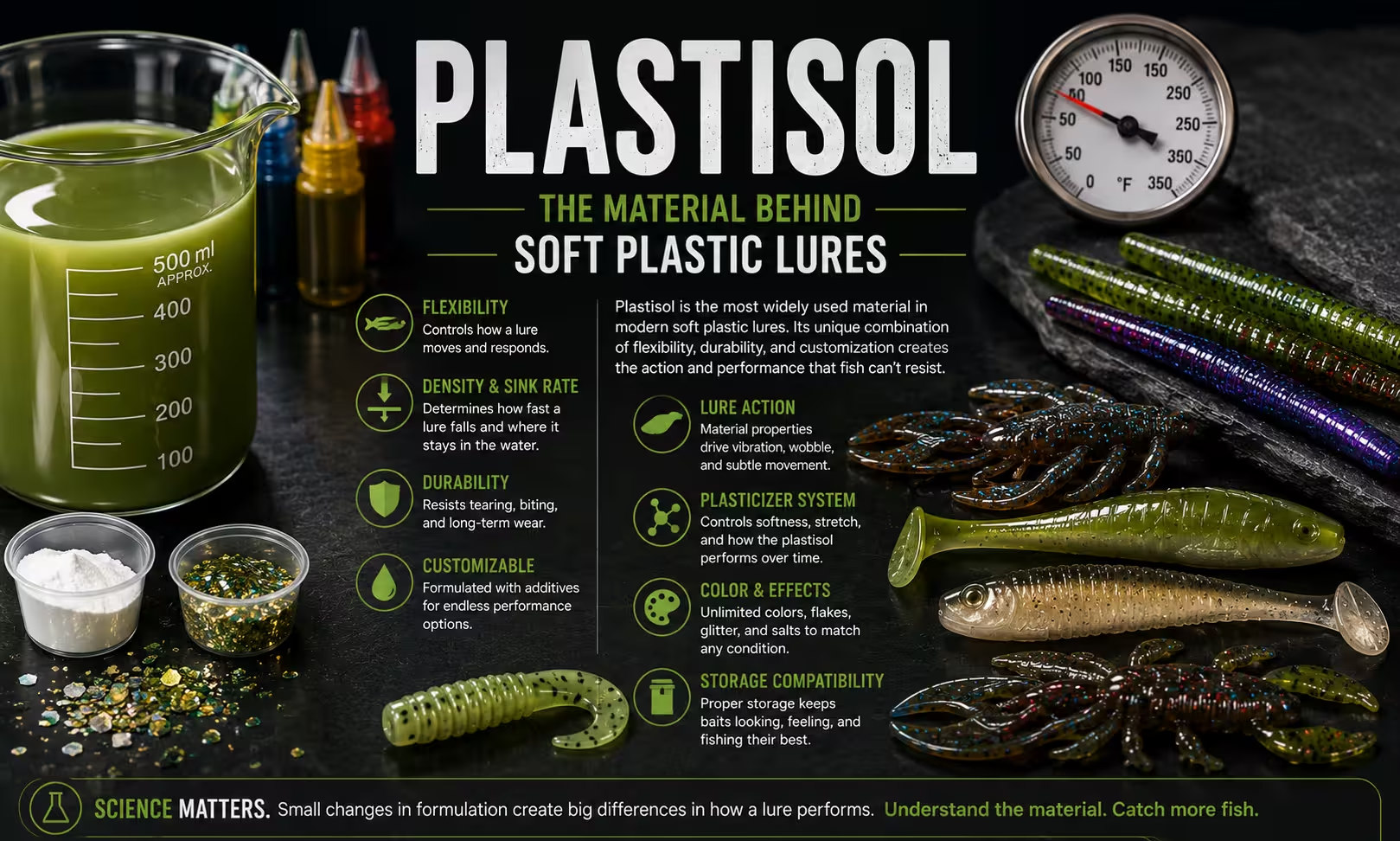
Understanding Plastisol
Plastisol is the most widely used material in modern soft plastic lure manufacturing.
From worms and grubs to swimbaits, creatures, tubes, and countless other designs, plastisol has become the foundation of the soft bait industry because it combines flexibility, durability, customization, and fish-catching action.
Although many soft plastic lures appear similar, small differences in plastisol formulation can dramatically affect how a lure moves, sinks, stretches, and performs in the water.
Understanding plastisol helps explain why different soft baits behave differently and why certain designs excel in specific fishing situations.
Why Plastisol Matters
The physical properties of plastisol influence:
- lure action
- flexibility
- sink rate
- buoyancy
- durability
- stretch resistance
- color retention
- fish response
Changes in softness, density, additives, and formulation can significantly alter lure performance.
Understanding these relationships is one of the foundations of soft plastic lure design.
Plastisol Topics
Explore the articles below to learn how plastisol influences soft plastic lure performance.
What You’ll Learn
- What Creates Soft Plastic Lure Action
- Why Soft Plastic Lures Bend
- Plasticizer Migration
- Storage Compatibility
- Density & Sink Rate
- Salt & Additives
- Durability & Wear
- Material Formulation
Explore Plastisol Articles
Select an article below to begin learning about plastisol and soft plastic lure performance.
How Softness Affects Hookup Ratio
Softer plastics collapse on the bite and expose the hook faster, increasing hookup ratio. A complete breakdown of how material softness affects strike conversion, with step-by-step adjustment guide.
Part 7 — Designed Soft Plastic Lures: Choosing Performance Over Hype
Designed soft plastic lures are built around purpose — not marketing trends. A complete breakdown of how to evaluate plastic compounds by performance variables rather than novelty claims.
Part 7 — Soft Plastic Lure Selection System: How to Choose Baits That Consistently Catch Fish
A soft plastic lure selection system removes guesswork. Adjust depth first, then movement, then cadence, profile, and color last — a simple repeatable decision order that consistently improves catch rates.
Part 6 — Soft Plastic Cold Water Performance: Why Baits Go Dead in Cold Water
Cold water stiffens plastisol and kills lure action. A complete breakdown of how temperature affects soft plastic flexibility, measured flexibility shift data, cold-water formulation design requirements, and FAQ.
Part 6 — Lure Depth and Strike Zone Explained: Why Positioning Matters More Than Color or Action
A perfect lure does nothing outside the strike zone. Depth control is the framework everything else is secondary — fish hold at specific depths and react within very narrow vertical windows.
Part 5 — Soft Plastic Scent Retention: Why Some Plastics Hold Scent Longer Than Others
Soft plastic scent retention is controlled by polymer structure and plasticizer content — not how much scent is added. Includes absorption vs retention breakdown, salt effects, measured retention comparison table, and when scent actually matters.
Part 4 — Soft Plastic Lure Visibility: Transparency, Opacity, and Light Behavior in Clear Water
Soft plastic lure visibility is controlled by light transmission — not color name. Haze vs pigment load data, clear vs stained water matrix, and FAQ on translucent vs opaque baits.
Part 4 — Lure Profile and Silhouette: Why Shape Matters More Than Color in Clear Water
Fish evaluate profile and silhouette before color. Thin profiles excel in clear pressured water; thick profiles help in stained conditions. Shape often determines commitment before color details matter.
Part 3 — Salt, Density, and Soft Plastic Lure Sink Rate: Why the Same Lure Falls Differently
Soft plastic sink rate is controlled by material density, not shape. Salt loading changes density, which changes the gravity-buoyancy-drag balance. Includes density comparison table, measured fall rate data, and FAQ.
Part 3 — Soft Plastic Fall Rate Explained: How Softness, Salt, and Density Control Movement
Fall rate is controlled by softness, salt, and density — not jig head weight. Why fall rate matters most in cold water, how each variable affects the fall, and why weight alone cannot fix a design problem.