Plastisol
Understanding Plastisol
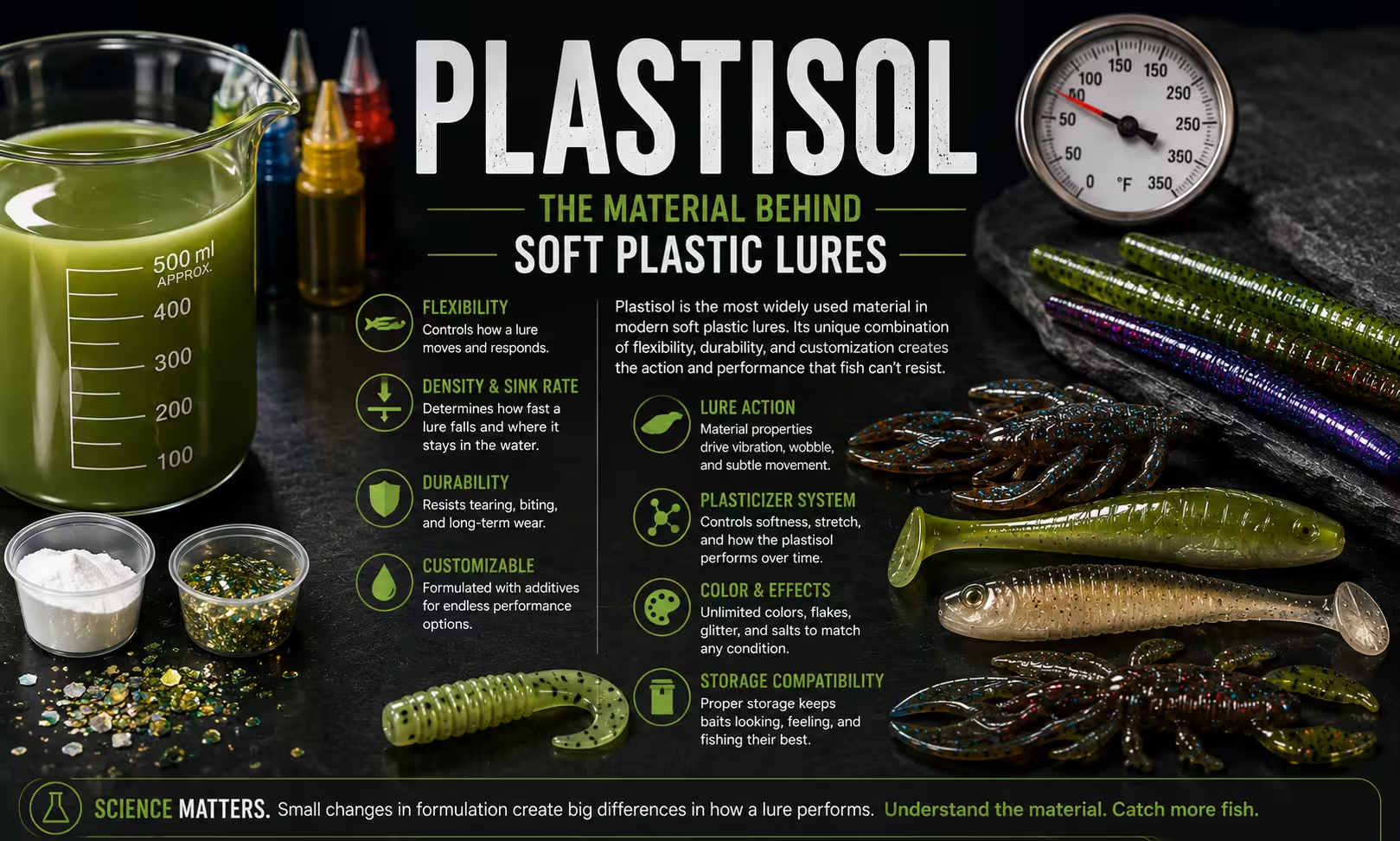
Plastisol is the most widely used material in modern soft plastic lure manufacturing.
From worms and grubs to swimbaits, creatures, tubes, and countless other designs, plastisol has become the foundation of the soft bait industry because it combines flexibility, durability, customization, and fish-catching action.
Although many soft plastic lures appear similar, small differences in plastisol formulation can dramatically affect how a lure moves, sinks, stretches, and performs in the water.
Understanding plastisol helps explain why different soft baits behave differently and why certain designs excel in specific fishing situations.
Why Plastisol Matters
The physical properties of plastisol influence:
- lure action
- flexibility
- sink rate
- buoyancy
- durability
- stretch resistance
- color retention
- fish response
Changes in softness, density, additives, and formulation can significantly alter lure performance.
Understanding these relationships is one of the foundations of soft plastic lure design.
Plastisol Topics
Explore the articles below to learn how plastisol influences soft plastic lure performance.
What You’ll Learn
- What Creates Soft Plastic Lure Action
- Why Soft Plastic Lures Bend
- Plasticizer Migration
- Storage Compatibility
- Density & Sink Rate
- Salt & Additives
- Durability & Wear
- Material Formulation
Explore Plastisol Articles
Select an article below to begin learning about plastisol and soft plastic lure performance.
The Science of Plastisol: How Soft Lures Are Engineered for Action
Soft plastic fishing lures are built on plastisol — a PVC resin and plasticizer system. Covers formulation components, non-phthalate plasticizers, example formulation ranges, fusion process, and how each variable controls on-water performance.
Part 2 — Plastic Softness vs Durability: The Trade-Off Nobody Explains
You cannot maximize softness and durability at the same time. A complete breakdown of the plasticizer ratio trade-off, why fragile baits often catch more fish, and application-specific optimization for different lure categories.
Part 2 — Soft Plastic Tail Design: Why Shape Controls Movement More Than Retrieval
Tail shape controls movement more than retrieve speed. A complete breakdown of curly, straight, and micro tail designs — when each works best, why baits overwork in cold water, and the real reason two baits behave differently at the same speed.
Part 1 — What Are Soft Plastic Fishing Lures Made Of? (PVC, Plastisol & Plasticizers Explained)
Soft plastic fishing lures are engineered PVC plastisol systems — not rubber. A complete breakdown of how PVC resin, plasticizers, and additives determine flexibility, density, and action.
UV Lures Explained: What UV Reflectance Is and When It Actually Works
UV can help — but only when understood correctly. Covers what UV reflectance is, which fish can see UV, when UV lures work, and when they don’t.