
Plastisol
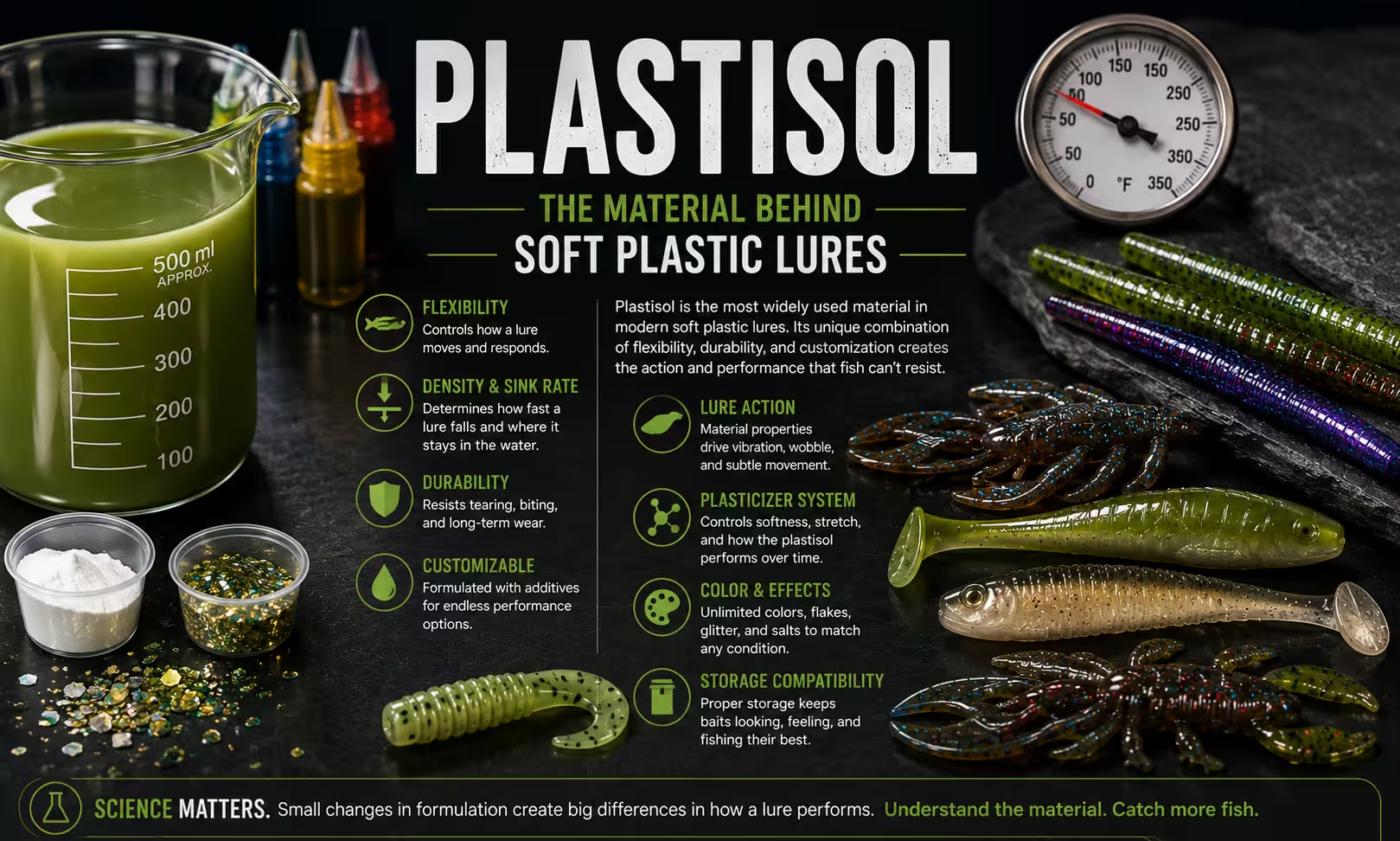
Understanding Plastisol
Plastisol is the most widely used material in modern soft plastic lure manufacturing.
From worms and grubs to swimbaits, creatures, tubes, and countless other designs, plastisol has become the foundation of the soft bait industry because it combines flexibility, durability, customization, and fish-catching action.
Although many soft plastic lures appear similar, small differences in plastisol formulation can dramatically affect how a lure moves, sinks, stretches, and performs in the water.
Understanding plastisol helps explain why different soft baits behave differently and why certain designs excel in specific fishing situations.
Why Plastisol Matters
The physical properties of plastisol influence:
- lure action
- flexibility
- sink rate
- buoyancy
- durability
- stretch resistance
- color retention
- fish response
Changes in softness, density, additives, and formulation can significantly alter lure performance.
Understanding these relationships is one of the foundations of soft plastic lure design.
Plastisol Topics
Explore the articles below to learn how plastisol influences soft plastic lure performance.
What You’ll Learn
- What Creates Soft Plastic Lure Action
- Why Soft Plastic Lures Bend
- Plasticizer Migration
- Storage Compatibility
- Density & Sink Rate
- Salt & Additives
- Durability & Wear
- Material Formulation
Explore Plastisol Articles
Select an article below to begin learning about plastisol and soft plastic lure performance.
Thermochromic Lures: How Temperature-Triggered Color Change Works
Temperature changes color. That is the entire idea behind thermochromic lures — and it sounds like a gimmick right up until you understand what is actually happening inside the bait, and when water temperature changes fast enough to matter on the water. This is the second article in the effect-pigment family covered on the Science…
The Science of Plastisol: Complete Guide to Soft Plastic Lure Materials
The science of plastisol explains much of what makes a soft plastic fishing lure behave the way it does—from softness and flexibility to color, action, durability, and special effects. Plastisol may look simple when it is poured into a mold, but the finished lure is the result of material chemistry, formulation choices, pigments, additives, heat,…
Color-Changing Lures: How Photochromic Lures (Sun-Activated) Actually Work
Same bait, two states — UV light flips a molecular switch that turns the color on, and shade turns it back off. Photochromic lures can look completely different depending on the sunlight. Pull a certain kind of soft plastic out of a shady tackle box and it looks pale, almost washed out. Hold it in…
Why Fluorescent Lures Pop So Hard (Fluorescent vs UV vs Glow, Sorted Out)
A fluorescent color cheats — it returns more visible light than fell on it by converting invisible light you can’t see. Fluorescent fishing lures can look almost lit from within. Hold a chartreuse worm or fire-tiger bait in sunlight and it appears brighter than a color has any business being. That effect isn’t glow-in-the-dark paint—it’s…
Glow-in-the-Dark Fishing Lures: How Glow Pigments Actually Work (and How to Use Them)
A glow bait is a light battery — you charge it with light, and it discharges as glow in the dark. Glow-in-the-dark fishing lures are deadly in deep water, night fishing, murky water, and the first gray light of dawn. But anyone who has used them knows the frustration: some glow baits blaze for hours,…
Why Plastisol Yellows, Smells, and Scorches (The Degradation Problem)
The color is a gauge. Clear is healthy; yellow is the warning; amber and brown mean the plastic is breaking down. Why plastisol turns yellow is one of the most common questions in soft plastic lure making. The answer lies in PVC degradation, heat stabilizers, and the release of hydrogen chloride gas when plastisol is…
Why Soft Plastic Baits Melt Together (and How to Store Them So They Don’t)
It isn’t heat — it’s chemistry. Touching the wrong two plastics is enough to turn a bait to mush at room temperature. You open the tackle tray after a few weeks and find a horror scene: two baits fused into one sticky, half-liquid blob, sometimes welded right to the bottom of the box. Proper soft…
What Actually Makes a Soft Plastic Lure “Come Alive” (The Science of Action)
Soft plastic lure action is what makes a bait look alive in the water. You can nail the color. You can match the shape to the forage perfectly. And a fish will still swim up, look at your bait, and turn away — while the same fish crushes a plainer-looking bait two casts later. The…
Why Soft Plastic Lures Bend the Way They Do (and How to Tune the Action)
When a tail bends, the outside stretches and the inside squeezes — and almost all of it happens at the thin hinge. Understanding soft plastic lure action begins with understanding how a lure bends. Every soft bait flexes according to its material properties, geometry, thickness, and hinge design. Here’s a thing that should bother you…
Why Soft Plastic Baits Tear (and How to Make Them Last)
Almost every time soft plastic baits tear, the damage starts at the hook hole and spreads through the body of the lure. You’ve seen it a hundred times. A great-feeling bait catches one fish, maybe two, and then it’s hanging off the hook in shreds. It didn’t wear out evenly. It didn’t dissolve. It tore…