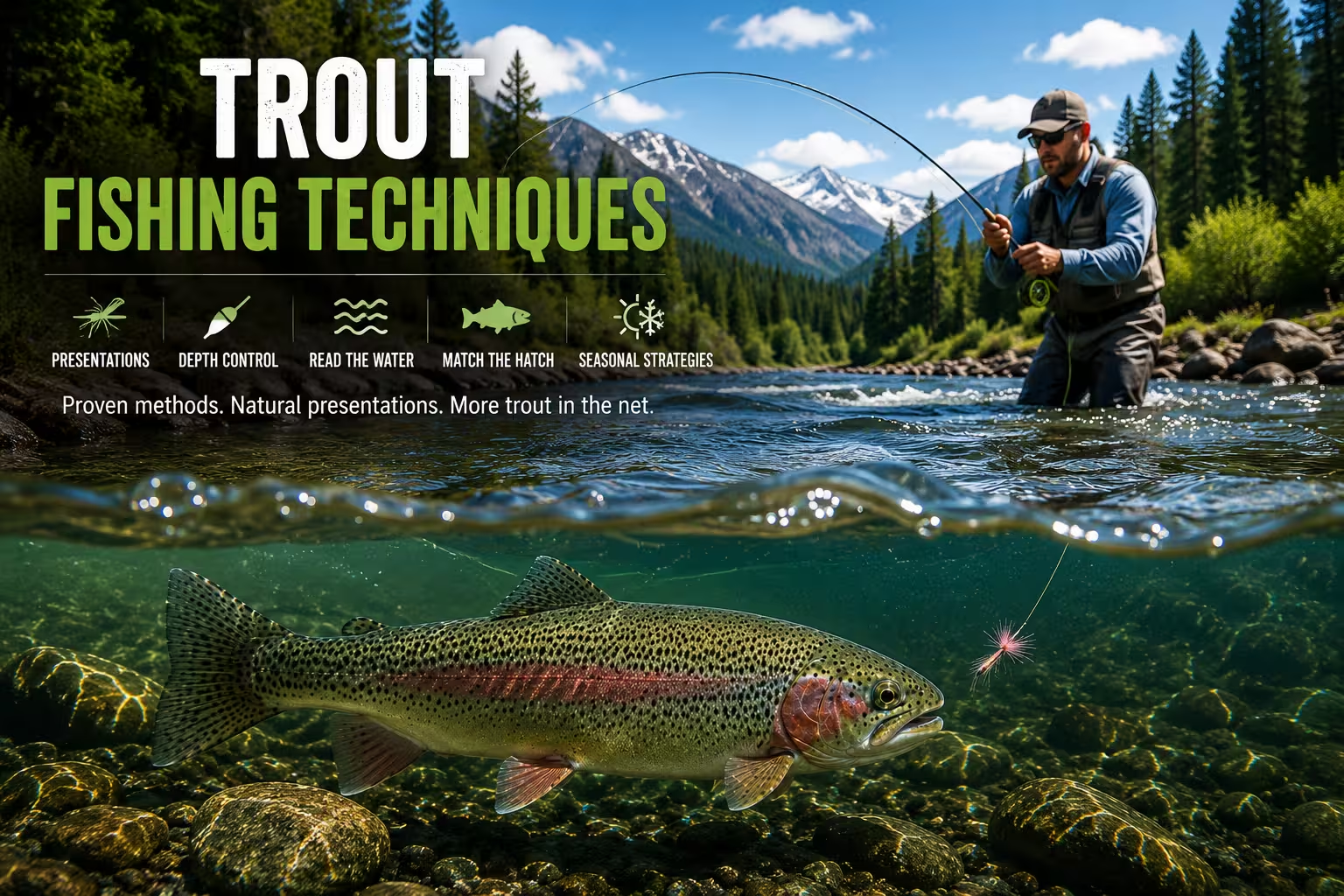
Trout Fishing Techniques
Mastering trout fishing techniques requires understanding how trout position, feed, react to current, and respond to changing environmental conditions.
Different techniques excel under different circumstances. Current speed, water temperature, depth, structure, fishing pressure, forage availability, and trout behavior all influence which presentation produces the most strikes.
Looking specifically for stocked or pressured trout? See our Best Trout Worm for Stocked Trout guide.
This section organizes proven trout fishing techniques into practical categories so anglers can quickly identify the right approach for the conditions they face on the water.
Explore detailed trout fishing technique guides covering lure presentations, rigging systems, seasonal strategies, retrieval methods, current seams, float fishing, jig fishing, finesse presentations, and trout-specific applications.
Click any article title below to read the full guide.
Trout Catch-and-Release: What Actually Keeps Fish Alive
Trout catch and release is one of the best tools anglers have for protecting fisheries, but many common handling practices still kill fish after they’re released. Every angler says they practice catch-and-release. Far fewer know which of their habits actually help the fish and which ones just feel like they help. The difference matters more…
How Dissolved Oxygen Affects Trout: The Science Behind the Bite Window
Dissolved oxygen for trout is one of the most important factors controlling feeding activity, metabolism, and where fish hold throughout the day. Water temperature gets most of the attention in trout fishing science, and it deserves it. But temperature does not work alone. It is inseparable from a second variable that controls trout behavior just…
Best Water Temperature for Trout: The Science Behind Why Temperature Controls Everything
The best water temperature for trout is the single most important factor determining where trout hold, how actively they feed, how much oxygen is available, and ultimately how successful your fishing will be. Most anglers know that water temperature matters for trout fishing. Far fewer understand exactly why it matters, what is happening inside the…
Best Time of Day to Catch Trout
The best time of day to catch trout is typically the first two to three hours after sunrise and the last two to three hours before dark. These low-light feeding windows align with how trout see, when aquatic insects become active, and when water temperature and dissolved oxygen create ideal feeding conditions. Understanding these three…
Why Big Trout Feed at Different Times
Big trout feeding times are very different from those of smaller trout. Small trout and big trout are not the same animal living two lives. They are the same species living two different survival strategies. The clock a nine-inch rainbow keeps has almost nothing to do with the clock a five-pound rainbow keeps, and the…
Watermelon, Wild Berry, and Cappuccino: The Real Chemistry Behind “Novelty” Fishing Scents
Novelty scents for trout include watermelon, wild berry, and cappuccino fishing scents. Unlike garlic or fish oil, these flavors are borrowed from the food industry rather than a trout’s natural prey, making the real science behind their effectiveness far more interesting than the marketing claims. 1. Why Novelty Scents for Trout Can Still Work The garlic and anise posts…
The Chemistry Behind Crawfish and Shrimp Oil: Why Crustacean Scent Runs on Betaine, Not Trimethylamine
Crawfish and shrimp oil for trout is one of the most scientifically supported natural scent categories because it contains high concentrations of betaine, glycine, and other compounds found in real crustacean prey. Fish oil’s signature comes from trimethylamine. Crustacean tissue runs on an almost entirely different chemistry — dominated by glycine and betaine instead —…
The Chemistry Behind Fish Oil Scent: Why Trimethylamine Is the Real “Dead or Dying Fish” Signal
The fish oil scent for trout works differently than garlic or anise. As fish tissue breaks down, trimethylamine (TMA) is released, creating a natural chemical signal that trout recognize as injured or dying prey. 1.Why the Fish Oil Scent for Trout Works Differently As covered in the garlic and anise chemistry breakdowns, both of those scents work as carrier…
The Chemistry Behind Anise Scent: How Anethole’s Oil Chemistry Changes the Scent Trail
Anise scent for trout works differently than garlic because its active compound, anethole, is oil-loving instead of water-loving. That unique chemistry allows anise scent to cling to the bait and create a slow, long-lasting scent trail that performs especially well during extended presentations. 1.Same Two Systems, Different Molecule As covered in our garlic scent chemistry breakdown,…
The Chemistry Behind Garlic Scent: How Amino Acids Trigger a Trout Feeding Reflex
Garlic scent for trout doesn’t work the way most anglers assume. A trout runs a molecule through a biochemical lock-and-key system that either fires a feeding reflex or doesn’t — and that system explains exactly why garlic scent works, and why it works even better paired with the right amino acids. 1.Smell Isn’t One Sense…