Trout Fishing Techniques
Mastering trout fishing techniques requires understanding how trout position, feed, react to current, and respond to changing environmental conditions.
Different techniques excel under different circumstances. Current speed, water temperature, depth, structure, fishing pressure, forage availability, and trout behavior all influence which presentation produces the most strikes.
Looking specifically for stocked or pressured trout? See our Best Trout Worm for Stocked Trout guide.
This section organizes proven trout fishing techniques into practical categories so anglers can quickly identify the right approach for the conditions they face on the water.
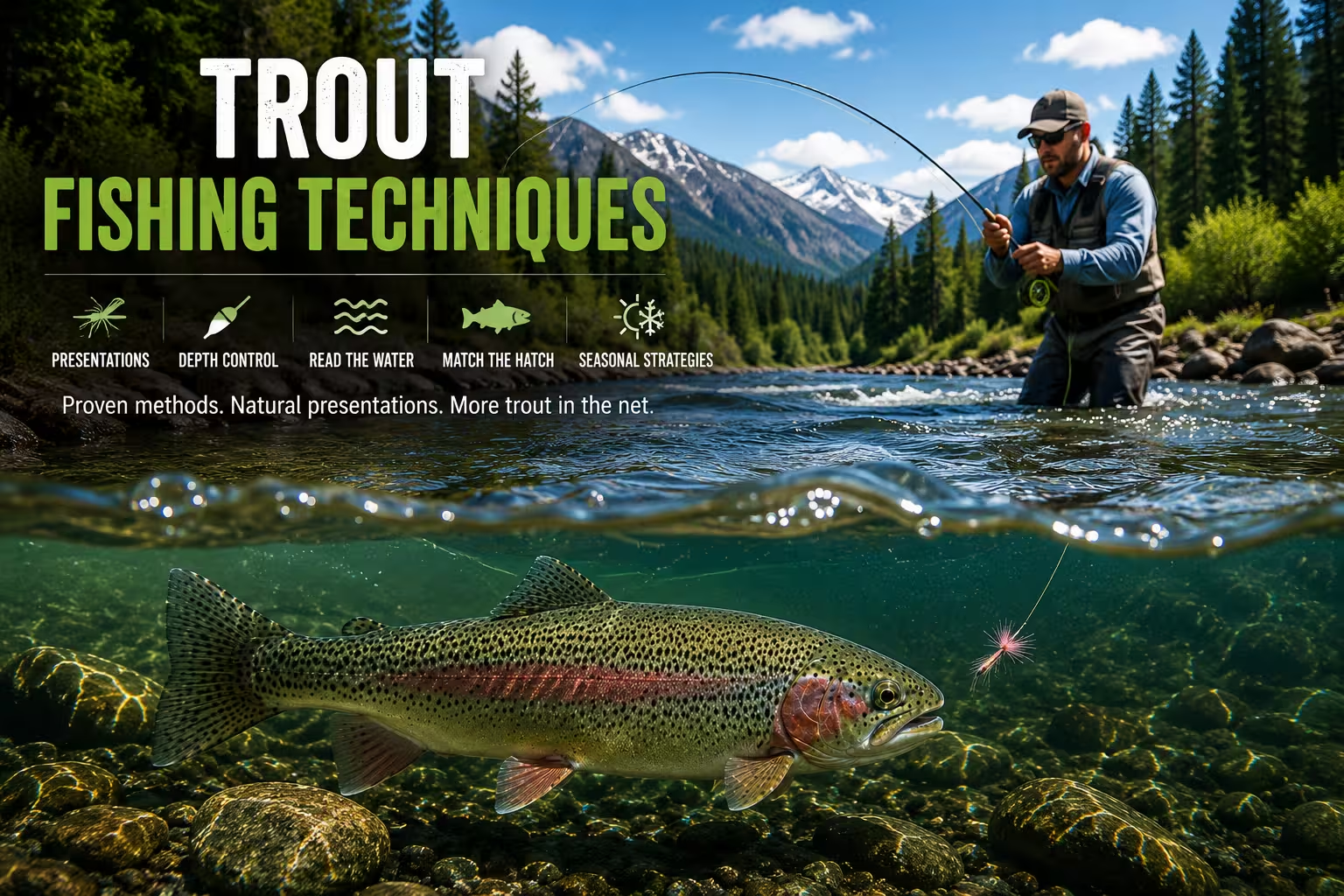
Explore detailed trout fishing technique guides covering lure presentations, rigging systems, seasonal strategies, retrieval methods, current seams, float fishing, jig fishing, finesse presentations, and trout-specific applications.
Click any article title below to read the full guide.
Best Hook Size for Trout Jigs
Hook size determines how efficiently trout are hooked and how securely they stay pinned. A complete mechanical and behavioral system covering bite geometry, penetration mechanics, retention under load, and the real-world hook size decision system.
Part 2 — How Jig Head Weight Affects Trout
Jig head weight controls fall rate, strike window, depth control, and drift behavior — the single most important variable in trout fishing. A complete system for measuring and selecting the correct weight for any condition.
Best Jig Heads for Trout (Complete System Guide)
The complete system for selecting jig heads for trout — weight, head shape, hook size, eye angle, and finish working together. Proven high-performance setups and a full FAQ covering every variable.
Missouri Trout Fishing Guide (2026): Best Rivers, Trout Parks, Baits & Local Tips
The complete Missouri trout fishing guide — Bennett Spring, Roaring River, Montauk, Taneycomo, Ozark streams, bait selection, color guide, slip bobber setup, and local tips from anglers based in Ozark, MO.
Why Trout Follow But Don’t Bite (And How to Fix It)
A trout that follows your bait is not a missed opportunity — it is a diagnostic signal. A complete step-by-step guide to identifying which variable is wrong and fixing it for consistent strikes.
How Softness Affects Hookup Ratio
Softer plastics collapse on the bite and expose the hook faster, increasing hookup ratio. A complete breakdown of how material softness affects strike conversion, with step-by-step adjustment guide.
How Water Clarity Affects Trout Fishing (And How Trout See Your Lure)
Water clarity controls how trout see your lure, how long they inspect it, and whether they commit or refuse. A complete system for adjusting color, size, movement, and fall rate to match any clarity condition.
Best Trout Worm Sizes (When Size Matters)
The best trout worm size changes with conditions. A complete guide to small, medium, and large profiles — plus the trimming technique that turns follows into strikes without changing baits.
Marabou vs Soft Plastics for Trout (When to Use Each for More Strikes)
Marabou and soft plastics behave differently in the water. A complete guide to matching the right material to conditions — cold water, pressured fish, depth control, and active feeding — for more consistent strikes.
How to Choose Jig Head Weight for Trout
Jig head weight controls fall rate — too heavy drops past trout, too light never reaches them. A step-by-step system for selecting the correct weight based on depth, current, temperature, and trout behavior.