Retrieve Speed for Trout Fishing: How It Changes Behavior
Retrieve speed directly controls trout behavior — too fast or too slow leads to missed strikes. A complete system for matching retrieve speed to temperature, pressure, and conditions.
Learn practical fishing techniques for trout, panfish, bass, and other species including finesse fishing, float fishing, lure presentation, rigging methods, ultralight tackle, and pressured fish strategies.
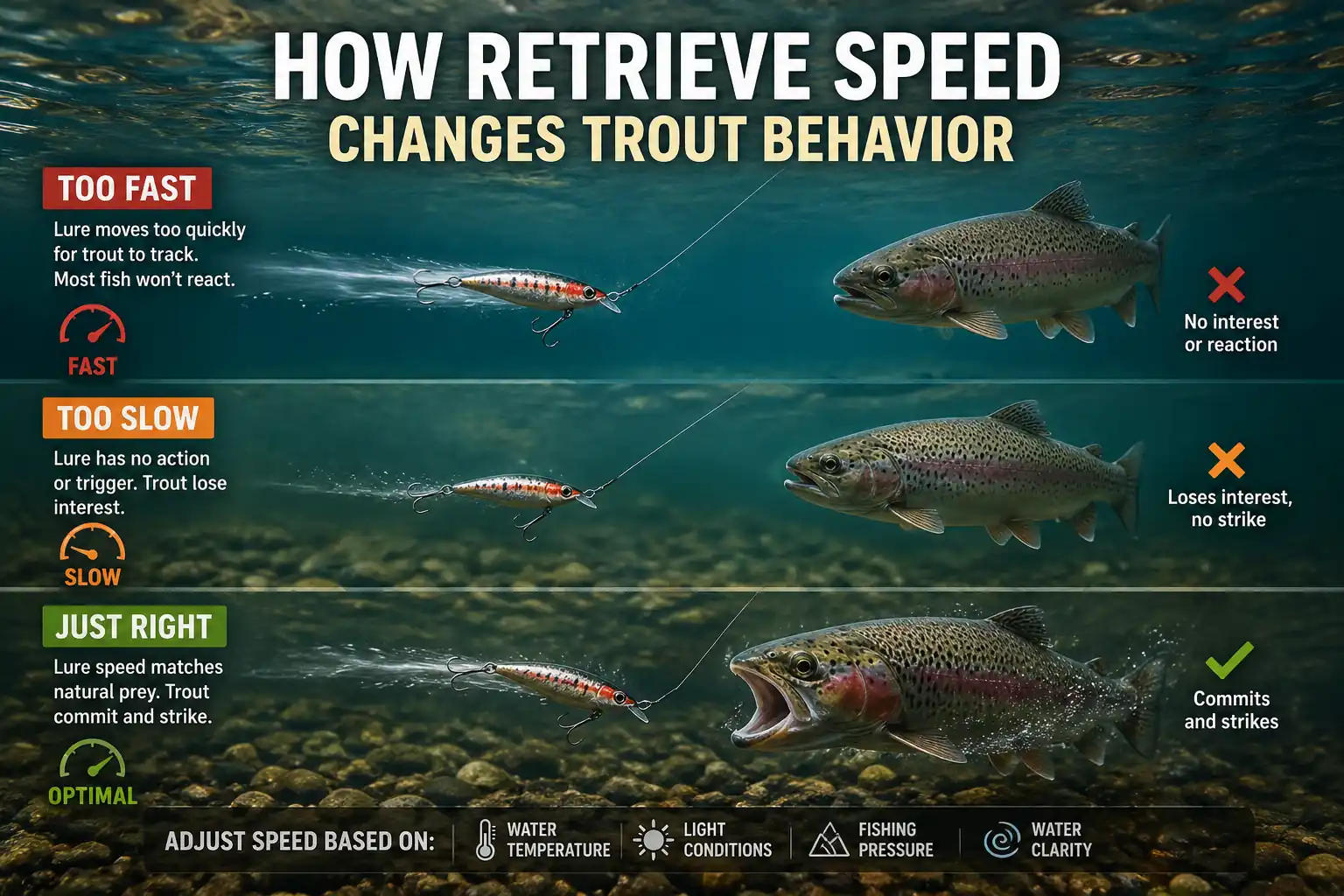
Retrieve speed directly controls trout behavior — too fast or too slow leads to missed strikes. A complete system for matching retrieve speed to temperature, pressure, and conditions.
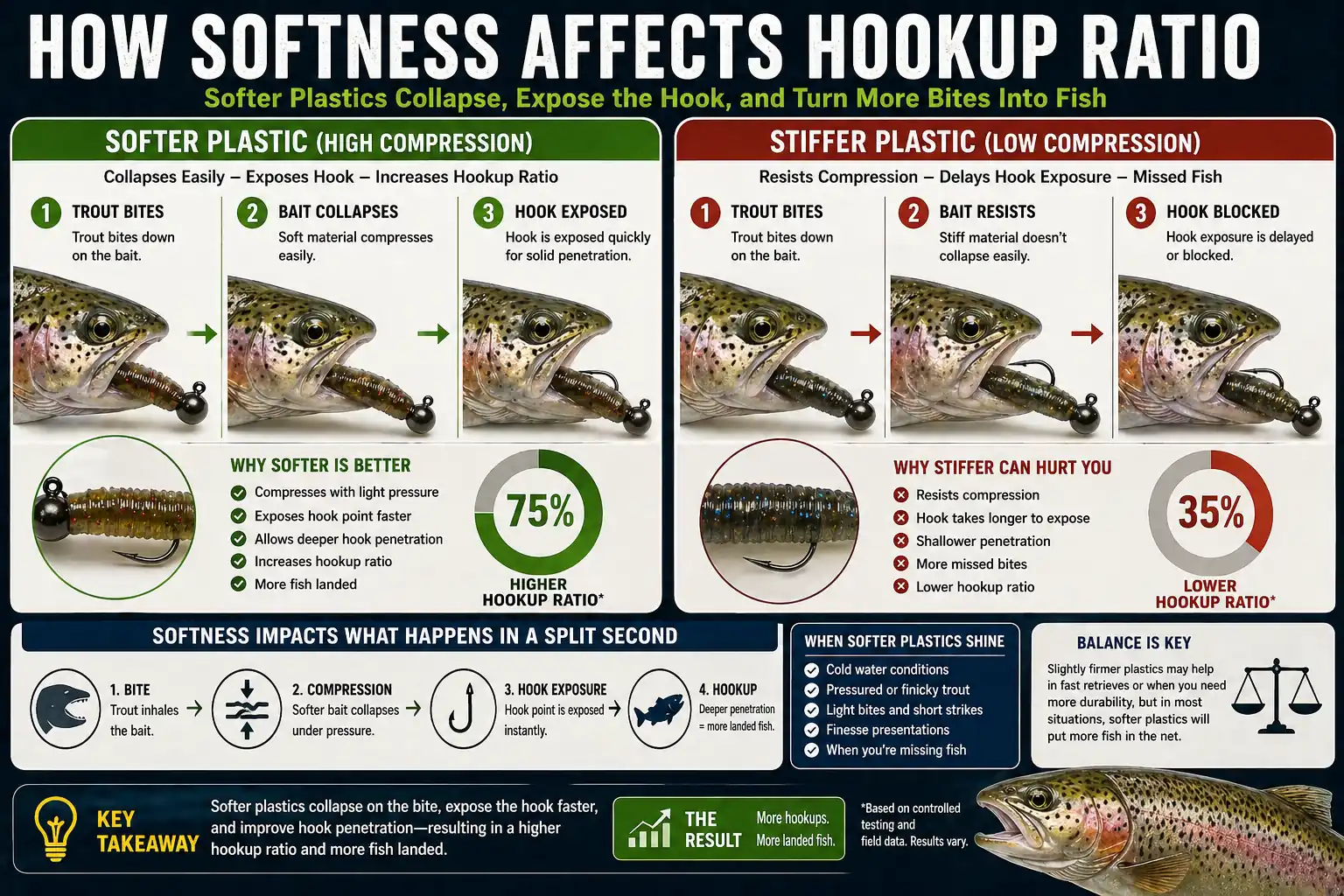
Softer plastics collapse on the bite and expose the hook faster, increasing hookup ratio. A complete breakdown of how material softness affects strike conversion, with step-by-step adjustment guide.
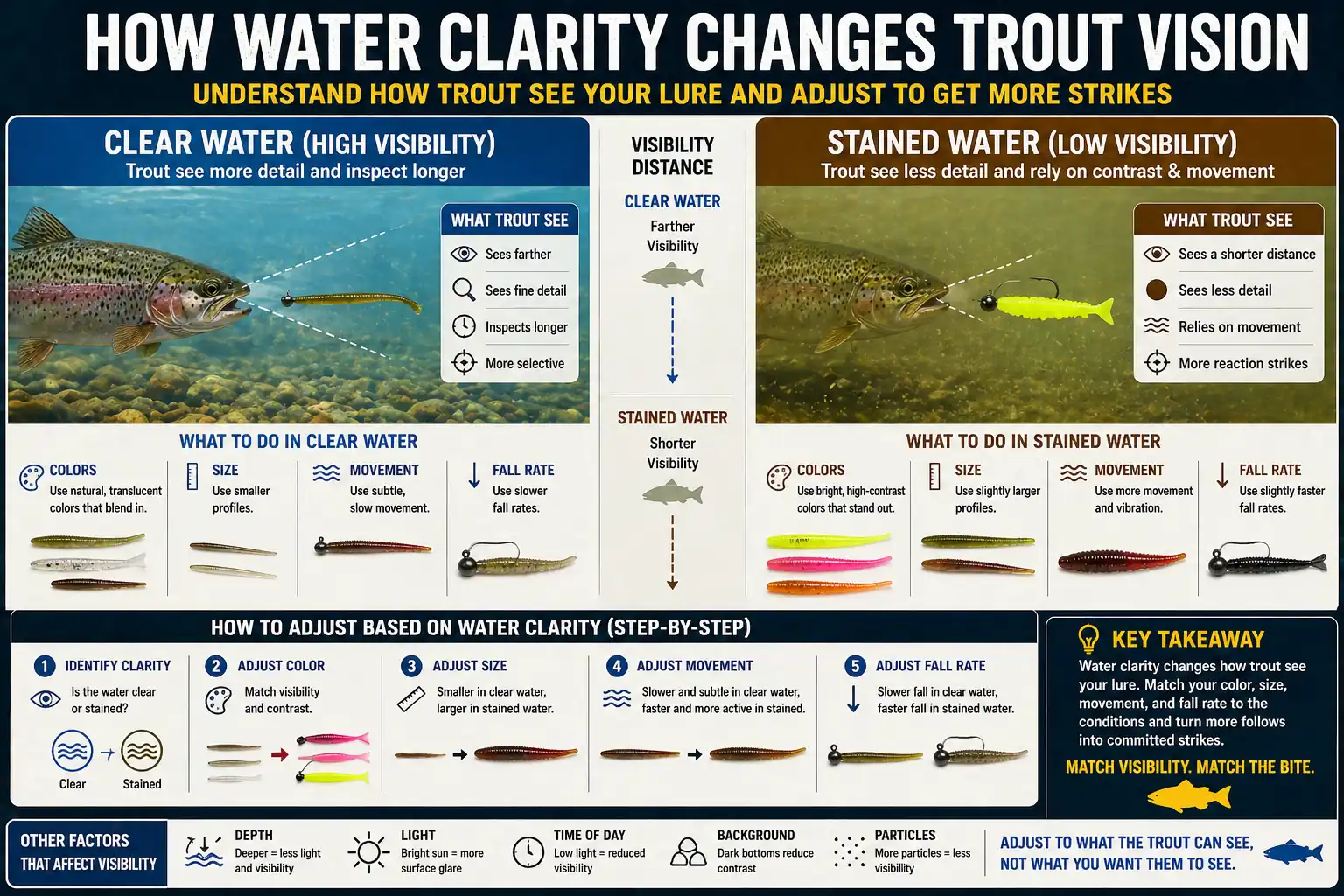
Water clarity controls how trout see your lure, how long they inspect it, and whether they commit or refuse. A complete system for adjusting color, size, movement, and fall rate to match any clarity condition.
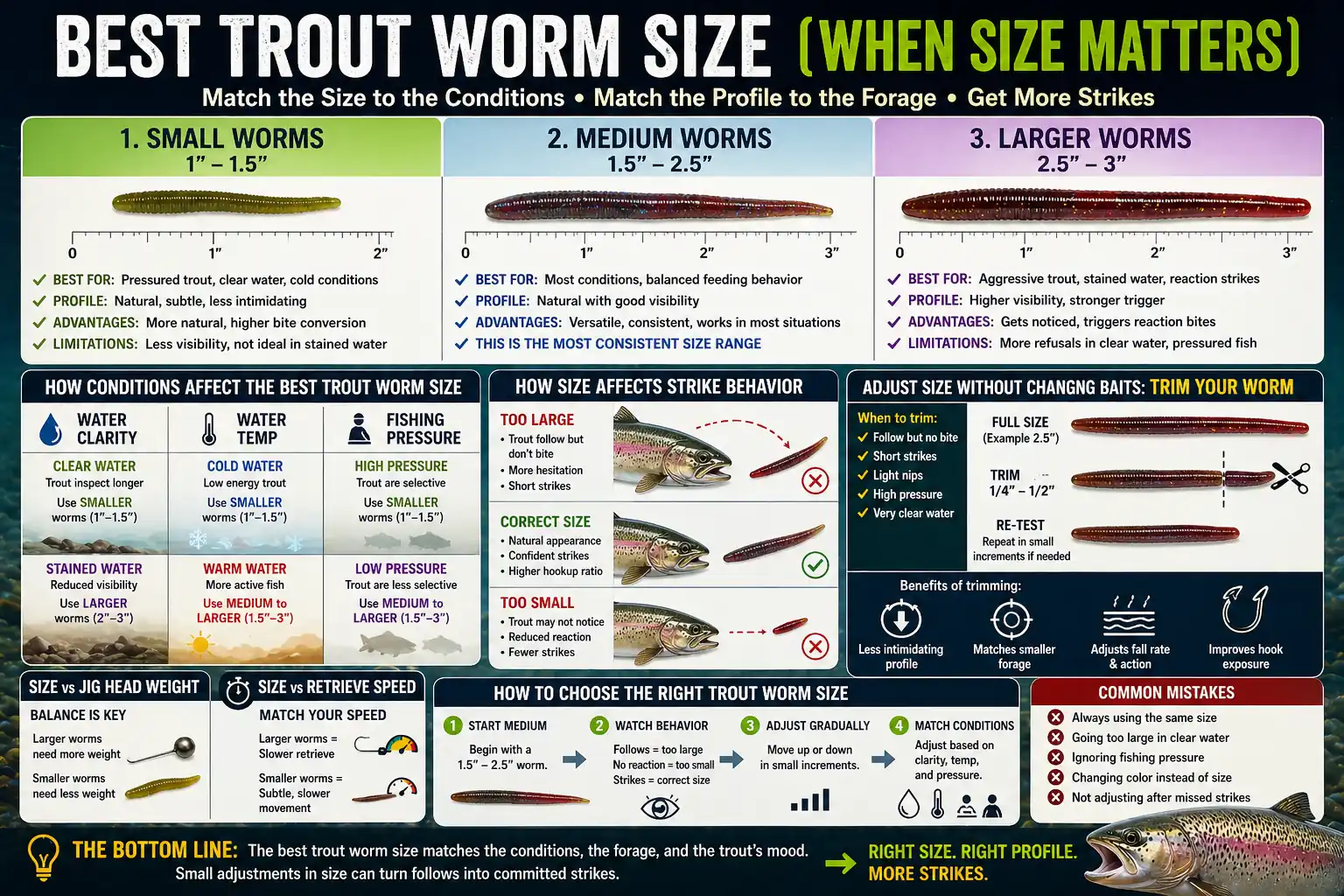
The best trout worm size changes with conditions. A complete guide to small, medium, and large profiles — plus the trimming technique that turns follows into strikes without changing baits.
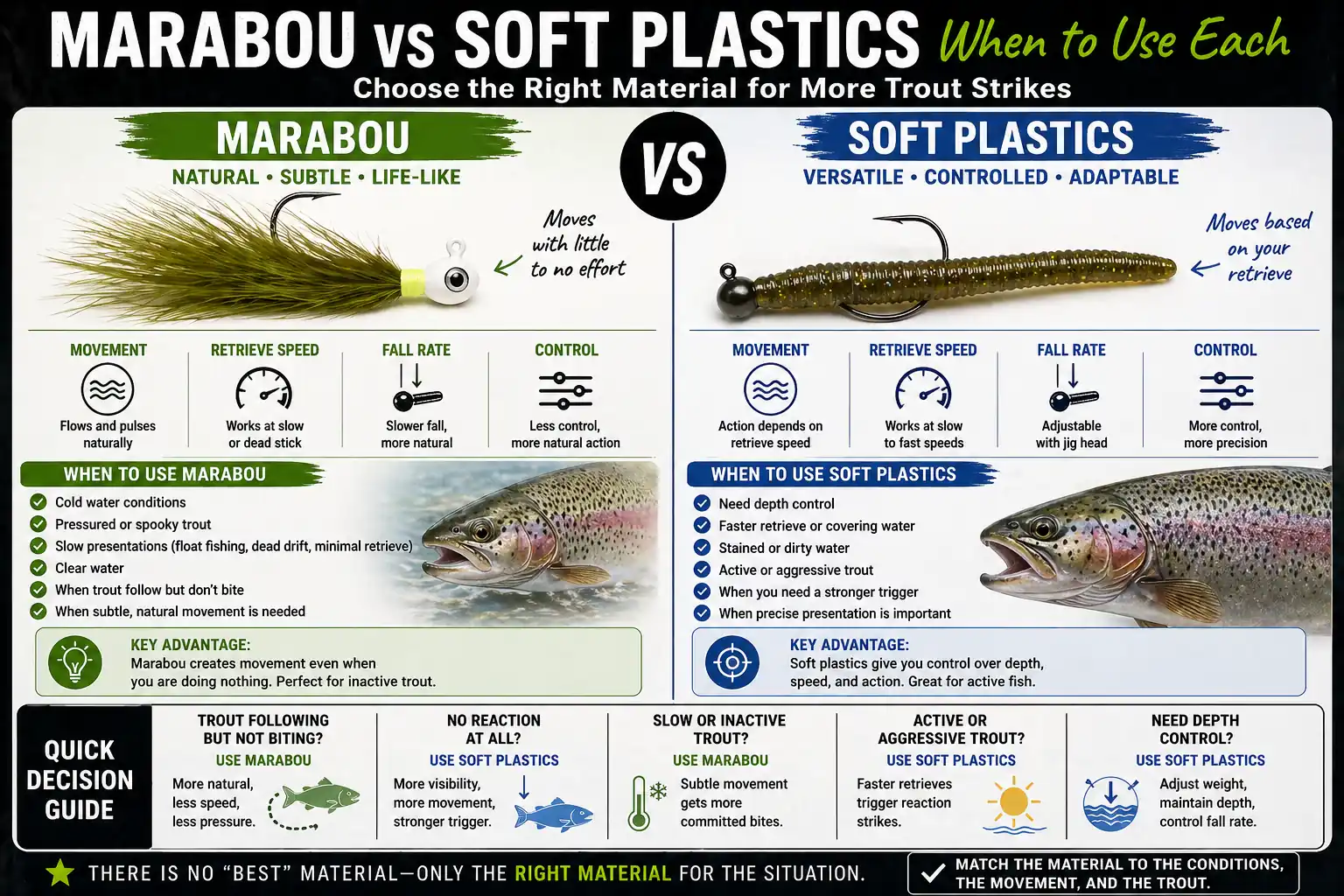
Marabou and soft plastics behave differently in the water. A complete guide to matching the right material to conditions — cold water, pressured fish, depth control, and active feeding — for more consistent strikes.
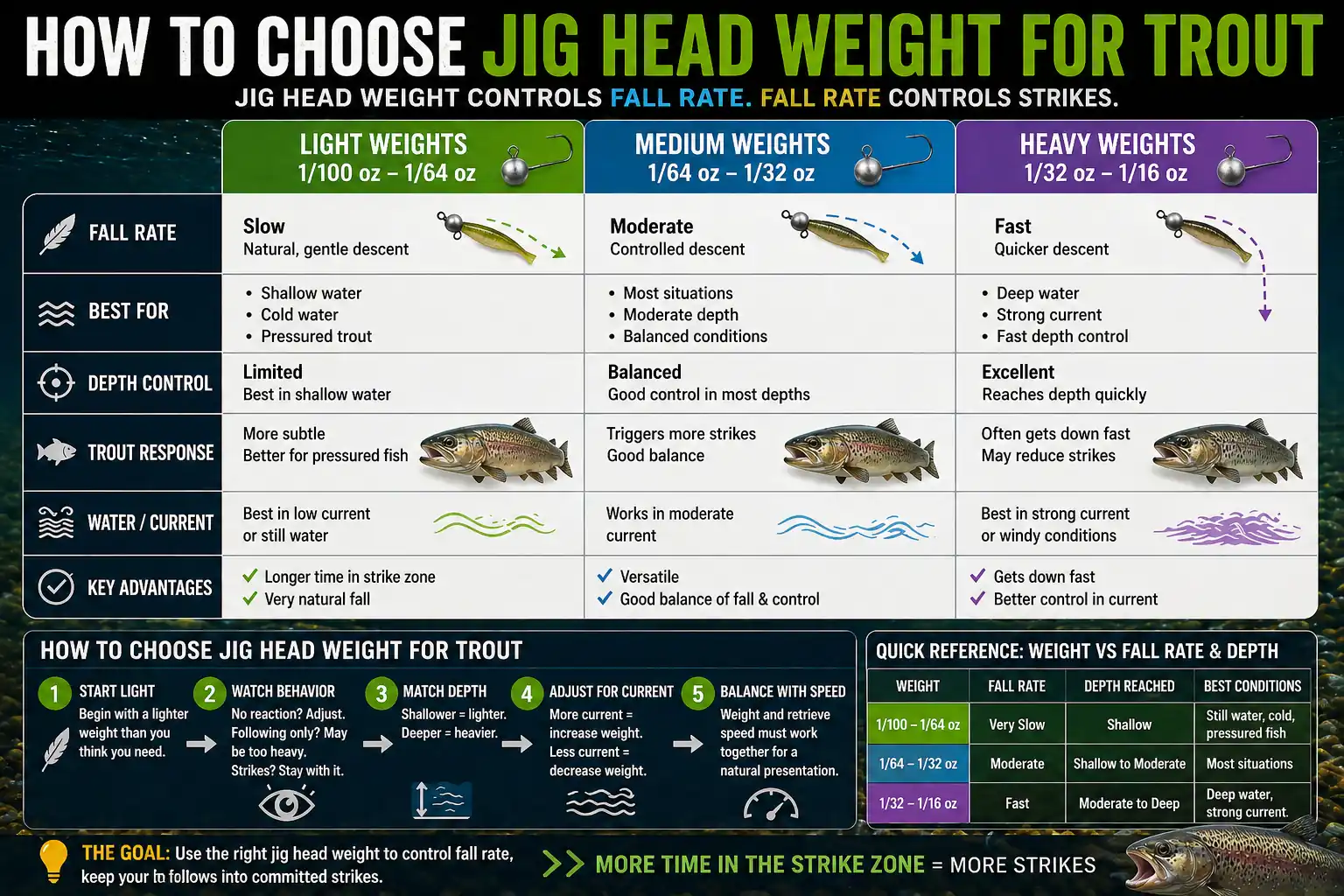
Jig head weight controls fall rate — too heavy drops past trout, too light never reaches them. A step-by-step system for selecting the correct weight based on depth, current, temperature, and trout behavior.
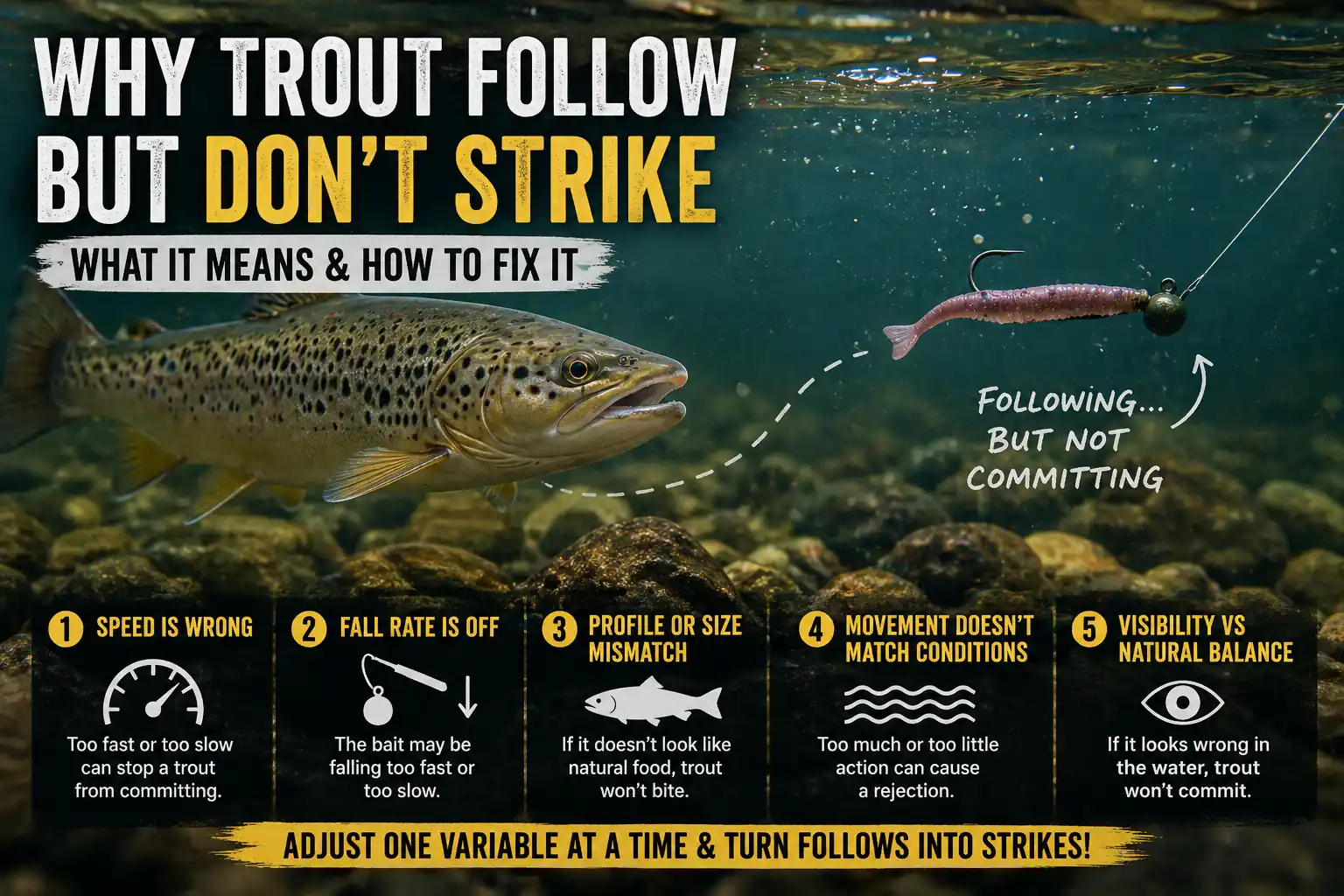
A trout that follows your bait is not a missed opportunity — it is a diagnostic signal. A complete step-by-step guide to identifying which variable is wrong and fixing it for consistent strikes.
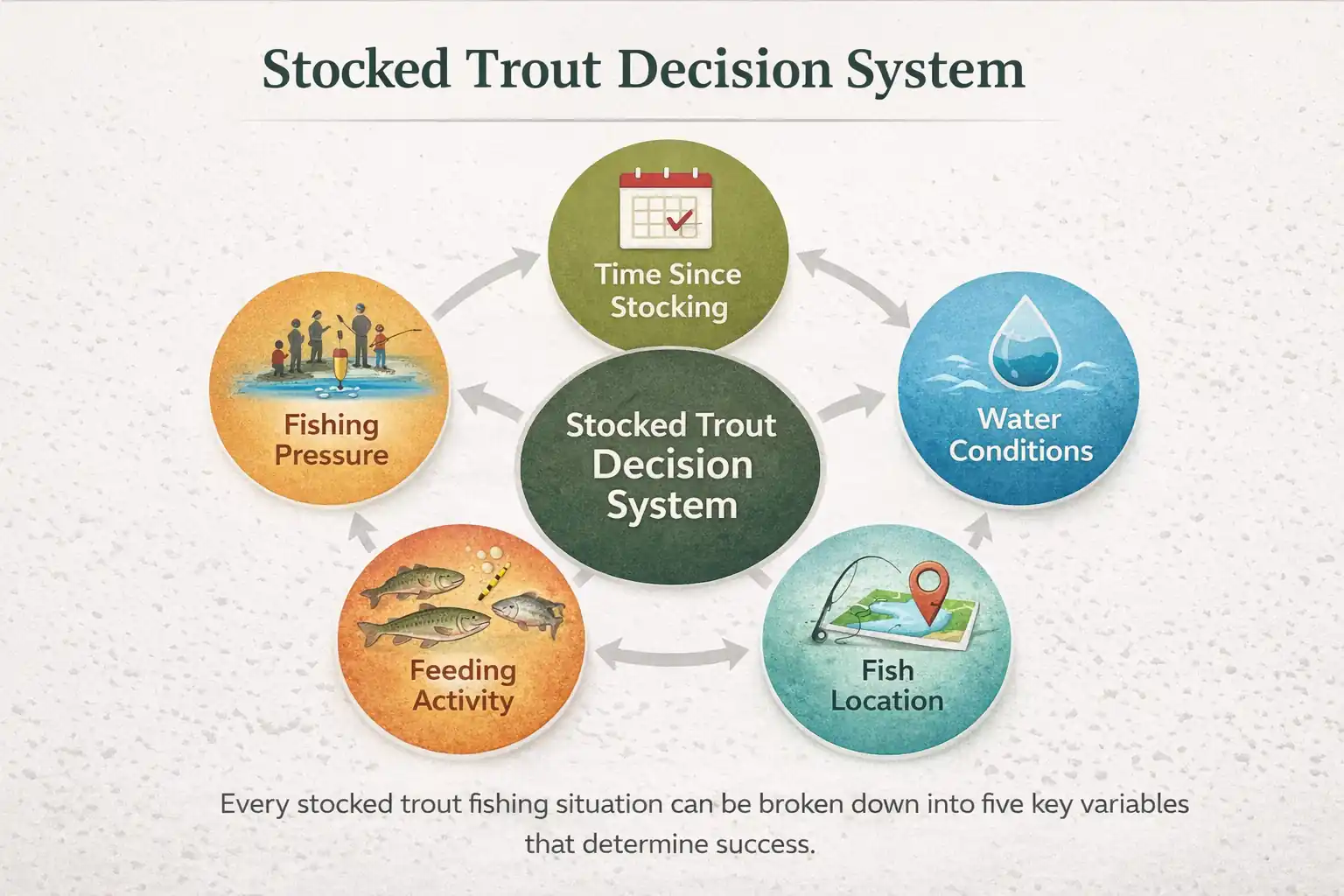
A condition-based five-variable framework for catching stocked trout consistently — time since stocking, water conditions, fish location, feeding activity, and fishing pressure evaluated in the correct priority order.
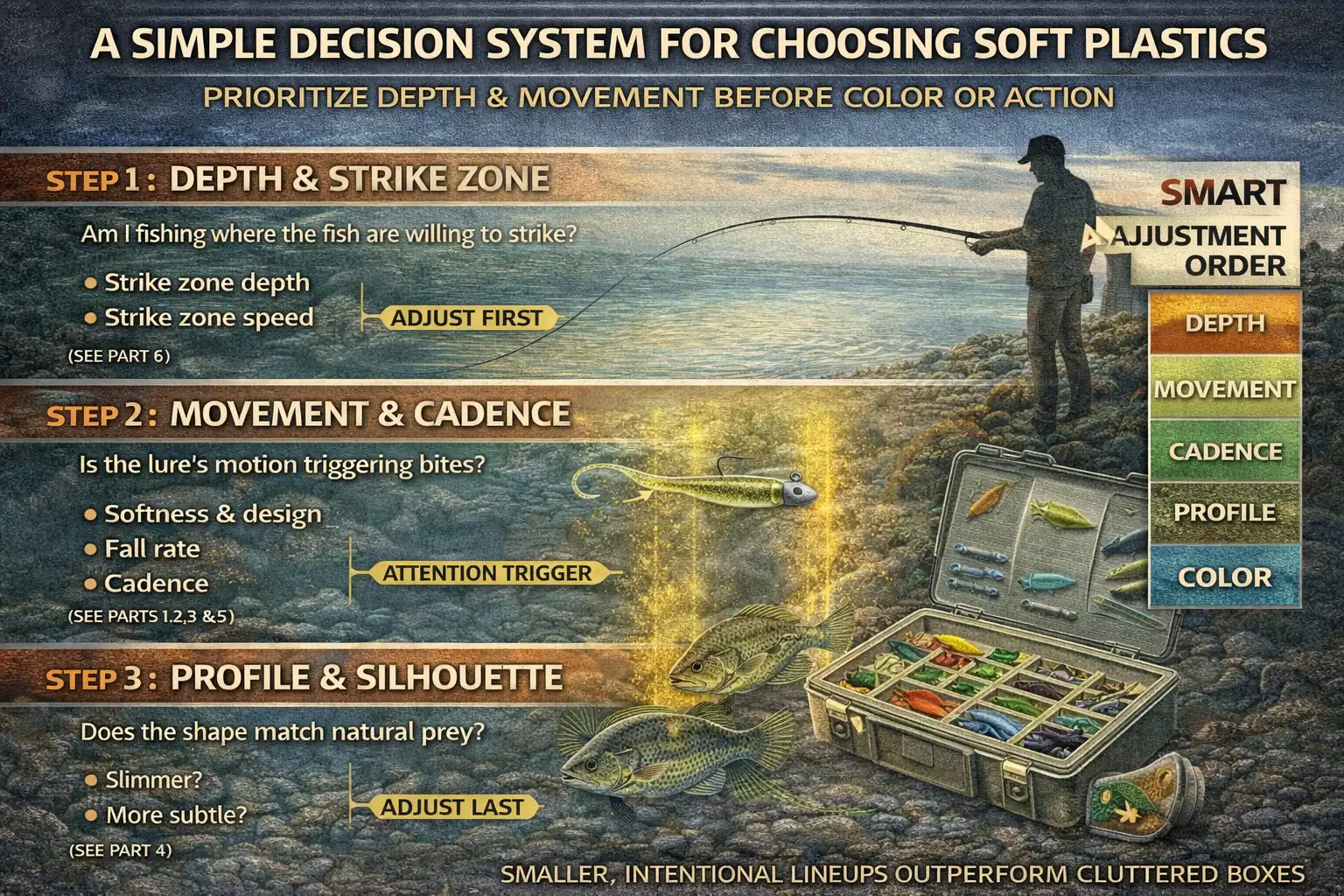
A soft plastic lure selection system removes guesswork. Adjust depth first, then movement, then cadence, profile, and color last — a simple repeatable decision order that consistently improves catch rates.
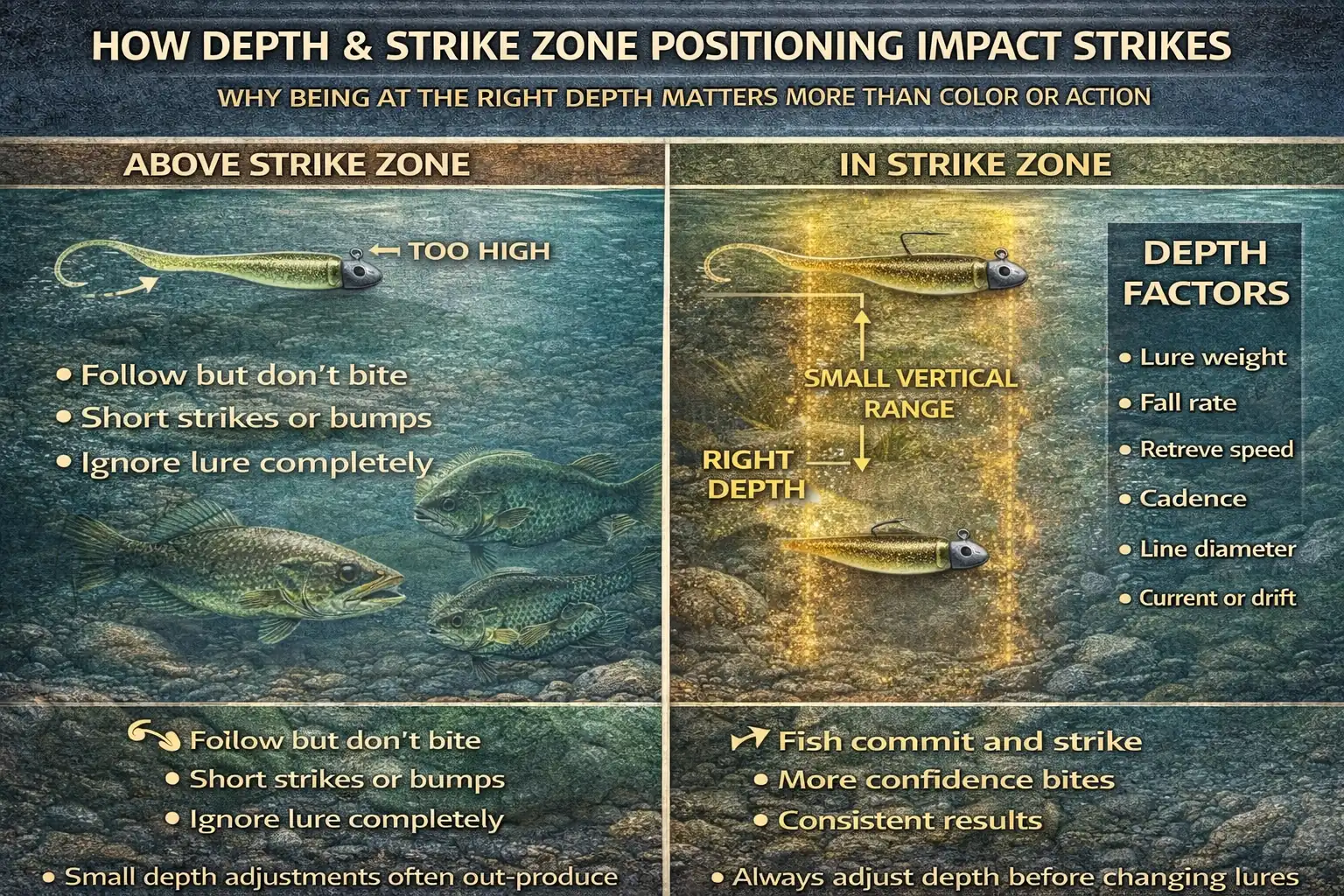
A perfect lure does nothing outside the strike zone. Depth control is the framework everything else is secondary — fish hold at specific depths and react within very narrow vertical windows.