Part 2 — Soft Plastic Tail Design: Why Shape Controls Movement More Than Retrieval
Soft plastic tail design controls movement more than retrieve speed does — curly, straight, and micro tails all behave differently at the exact same speed, water temperature, and jig head weight.
Soft Plastic Tail Design: Why Shape Controls Action
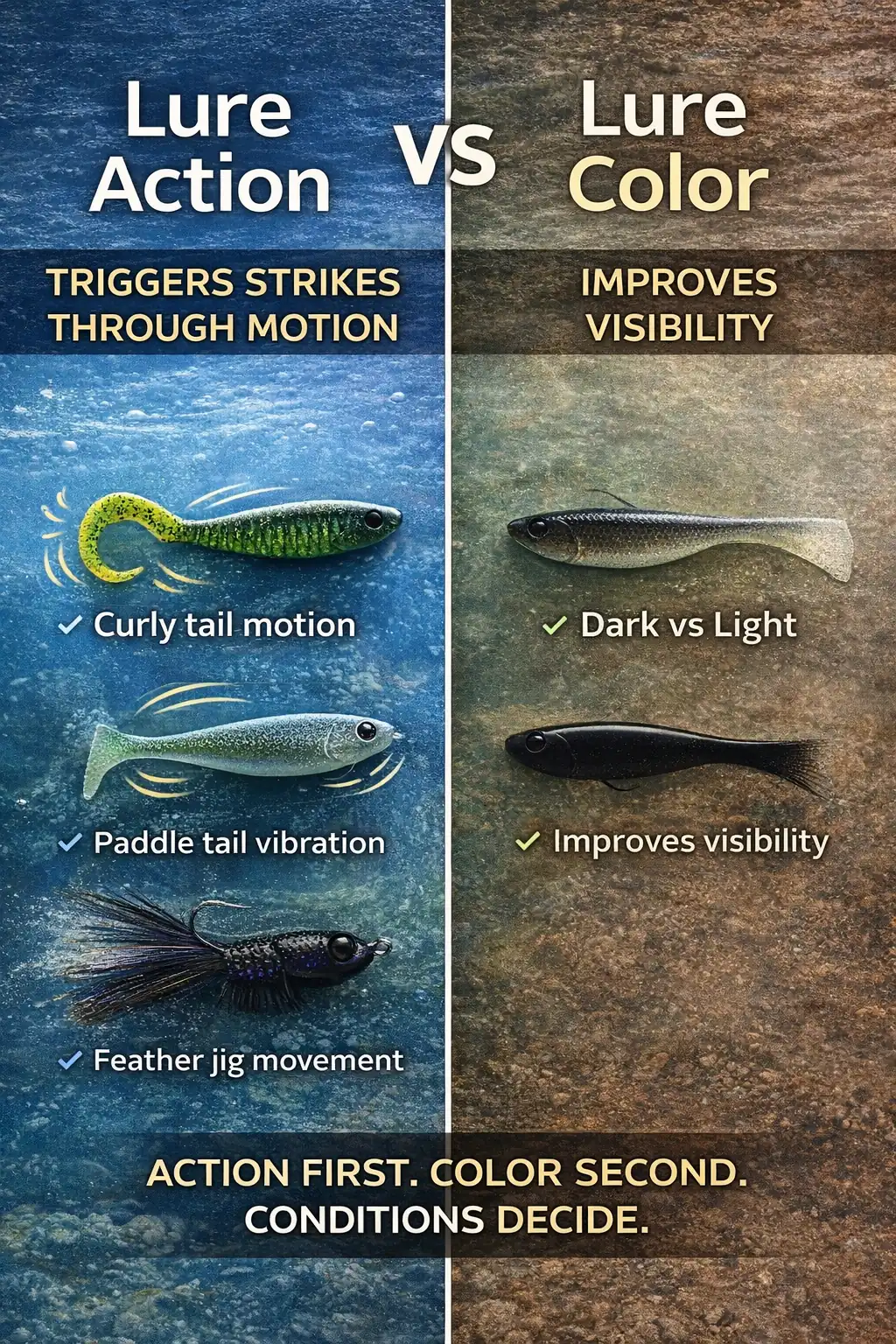
Most anglers assume lure action is controlled by how fast they retrieve. In reality, soft plastic tail design does far more to control movement than retrieve speed ever will. Two baits pulled at the exact same speed can behave completely differently underwater — and tail shape is usually the reason why.
Why Tail Design Matters
Water is dense. As a soft plastic moves, water resistance pushes against the bait and forces it to move, flex, and vibrate. The shape of the tail determines: how much water it displaces, how easily it starts moving, how aggressively it reacts to speed, and whether the movement looks natural or excessive. Fish often detect this movement before they ever see color.
The Three Common Tail Designs
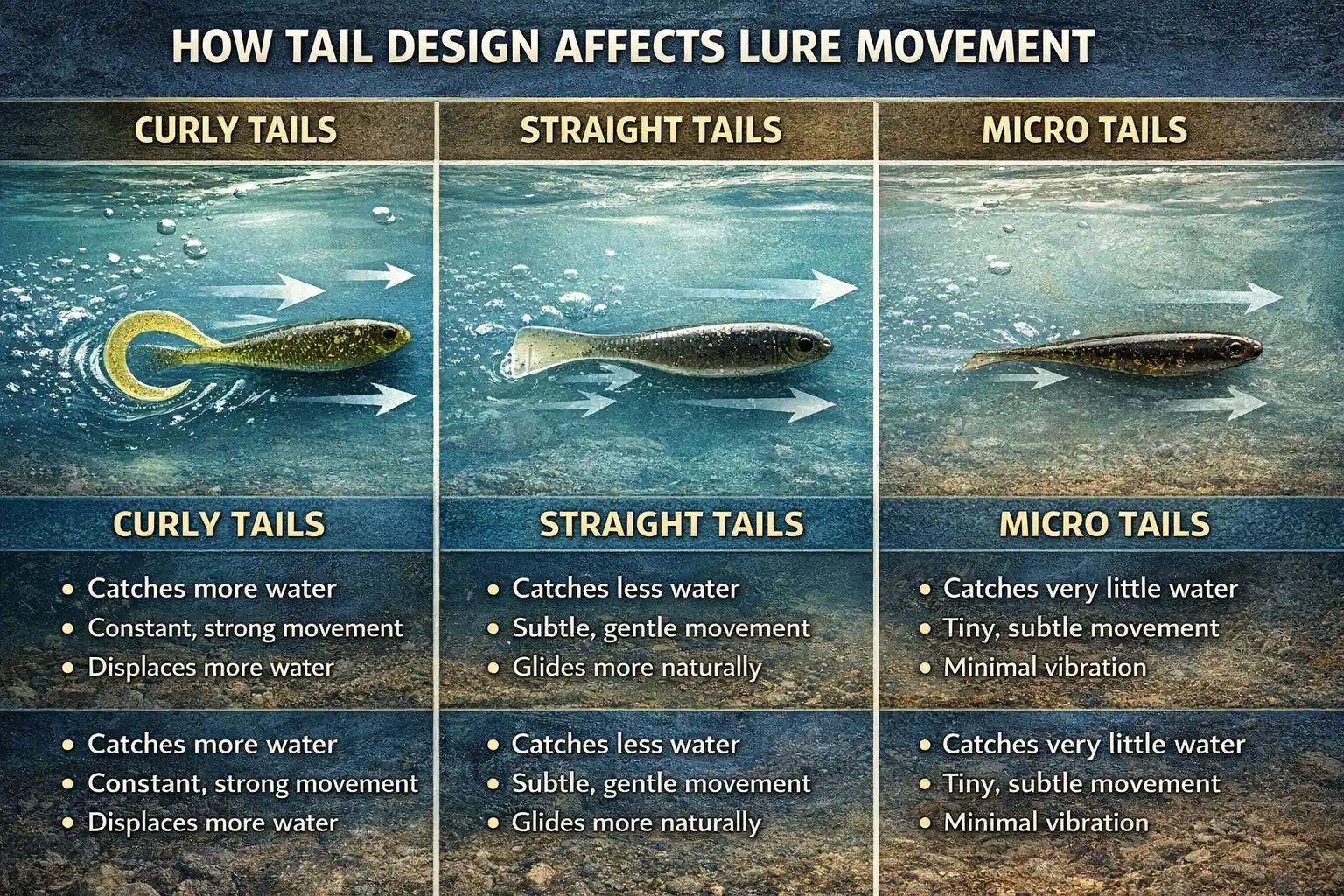
Curly Tails
Designed to catch water and move continuously. Begin moving at very slow speeds, create constant motion, displace a noticeable amount of water. Best for: Stained or dirty water, low visibility, active fish, reaction-style presentations. Cold water caution: Curly tails can move too much when fish are sluggish and inspecting closely — constant motion can look unnatural.
Straight Tails
Rely on subtle movement and water pressure, not built-in action. Minimal movement on a steady retrieve, respond to rod tip input, glide naturally on the fall. Best for: Cold water, clear water, pressured fish, slow controlled presentations. Straight tails give anglers control over when movement happens — often resulting in fewer follows but more committed strikes.
Micro Tails and Finesse Tails
Very small displacement, subtle vibration, movement triggered by drift or slight rod input. Best for: Extremely cold water, high fishing pressure, clear water with cautious fish, vertical or dead-drift presentations. Micro tails shine when fish are not chasing — only reacting when something looks exactly right.
Why Some Baits “Overwork” in Cold Water
Cold water slows fish metabolism. Fish still feed — but they don’t want to chase. When a bait moves constantly, vibrates aggressively, or displaces too much water, it can appear unnatural or even threatening. Overactive tails may cause short strikes, trigger follows without commits, or push fish away instead of drawing them in. In these situations, less movement often produces more bites. → See: Why Trout Follow But Don’t Bite
Why Two Baits Move Differently at the Same Speed
If two baits retrieved at the same speed behave completely differently, the difference is usually tail shape, tail size, or tail flexibility — not retrieve speed, rod choice, or line. Tail design controls how water reacts to the bait — and water controls movement.
Practical Takeaway
- Curly tails create constant action — excel in low visibility
- Straight tails offer controlled, natural movement — best for cold and clear water
- Micro tails shine when fish are pressured and selective
When a bait isn’t working, don’t just change color or speed. Ask whether the tail is doing too much — or not enough — for the conditions.
Previous: Part 1 — Soft Plastic Action Explained: Why Movement Triggers More Strikes Than Color
Next: Part 3 — Salt, Density, and Soft Plastic Lure Sink Rate
Frequently Asked Questions About Soft Plastic Tail Design
What’s the difference between a curly tail and a straight tail?
A curly tail kicks and vibrates with even minimal movement, creating a lot of visible action at slow speeds. A straight tail moves more subtly, relying on body undulation rather than a pronounced kick, which often reads as more natural in clear or pressured water.
Why do some baits “overwork” in cold water?
A tail design that produces strong action at normal speeds can look frantic and unnatural at the slow retrieve speeds cold water calls for. Curly tails are especially prone to this, since their action is tied closely to speed rather than happening passively.
When should I use a micro or finesse tail instead of a standard one?
Micro and finesse tails work best when subtlety matters most — pressured trout, very clear water, or situations where a bigger action is spooking rather than triggering fish. They trade visible action for a more natural, understated presentation.
Do two identical baits with different tails need different jig heads?
Not necessarily different heads, but expect different results from the same head — tail design affects how the bait moves as it falls and on the retrieve, independent of weight. Testing tail styles on the same jig head is actually a good way to isolate exactly what the tail itself is contributing.
Is one tail design objectively best for trout?
No — the best tail design depends on conditions and trout mood, not a fixed ranking. Active, aggressive fish often respond well to a curly tail’s pronounced kick, while cautious or cold-water fish usually respond better to the subtler movement of a straight or micro tail.