Why Trout Follow But Don’t Bite (And How to Fix It)
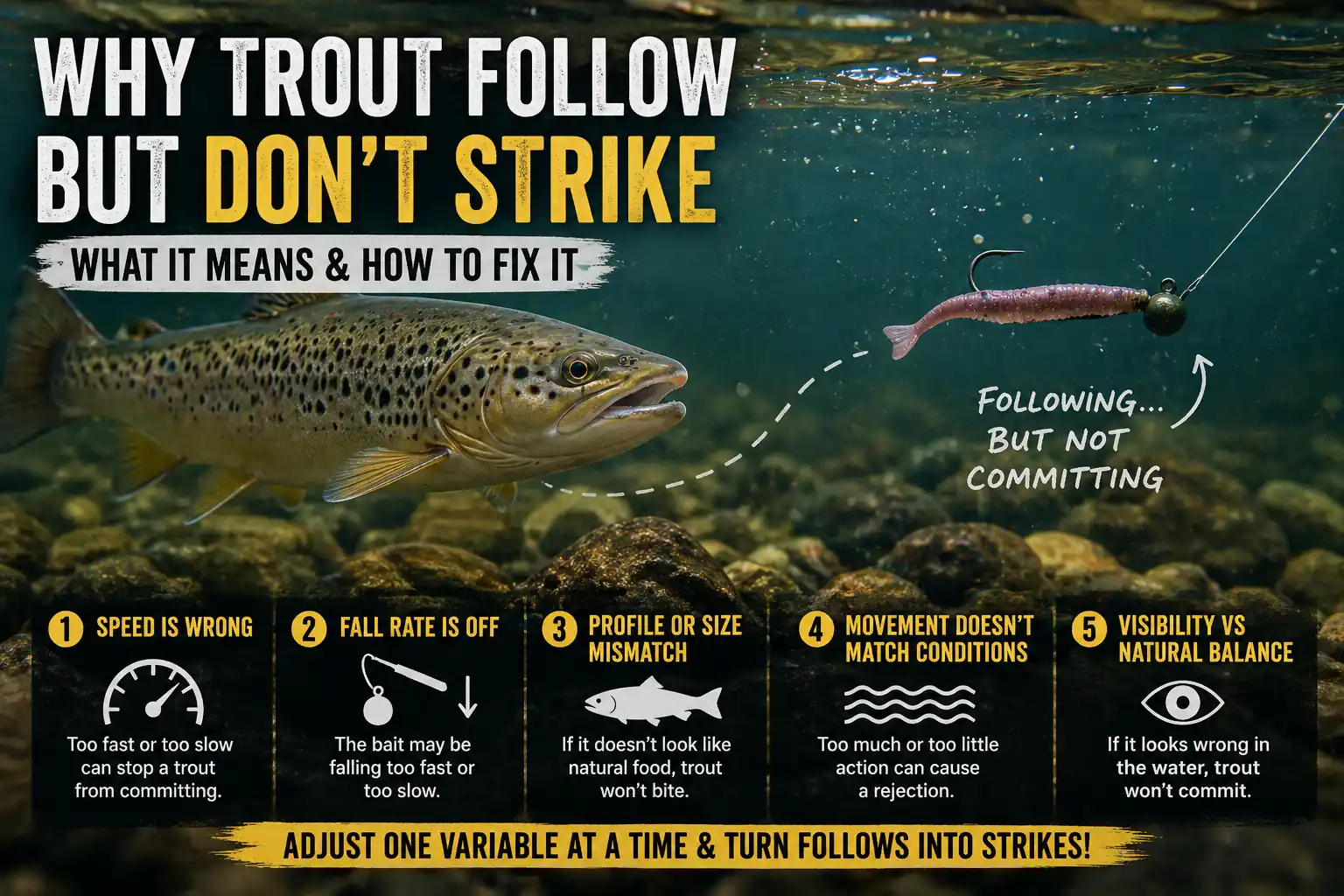
A trout that follows your bait is not a missed opportunity — it is a diagnostic signal. A complete step-by-step guide to identifying which variable is wrong and fixing it for consistent strikes.
Explore the science, behavior, feeding patterns, environmental adaptation, sensory systems, and movement of trout in natural and stocked waters. Learn how trout respond to pressure, water conditions, seasonal changes, forage availability, and presentation styles through practical fishing applications and biological understanding.

A trout that follows your bait is not a missed opportunity — it is a diagnostic signal. A complete step-by-step guide to identifying which variable is wrong and fixing it for consistent strikes.

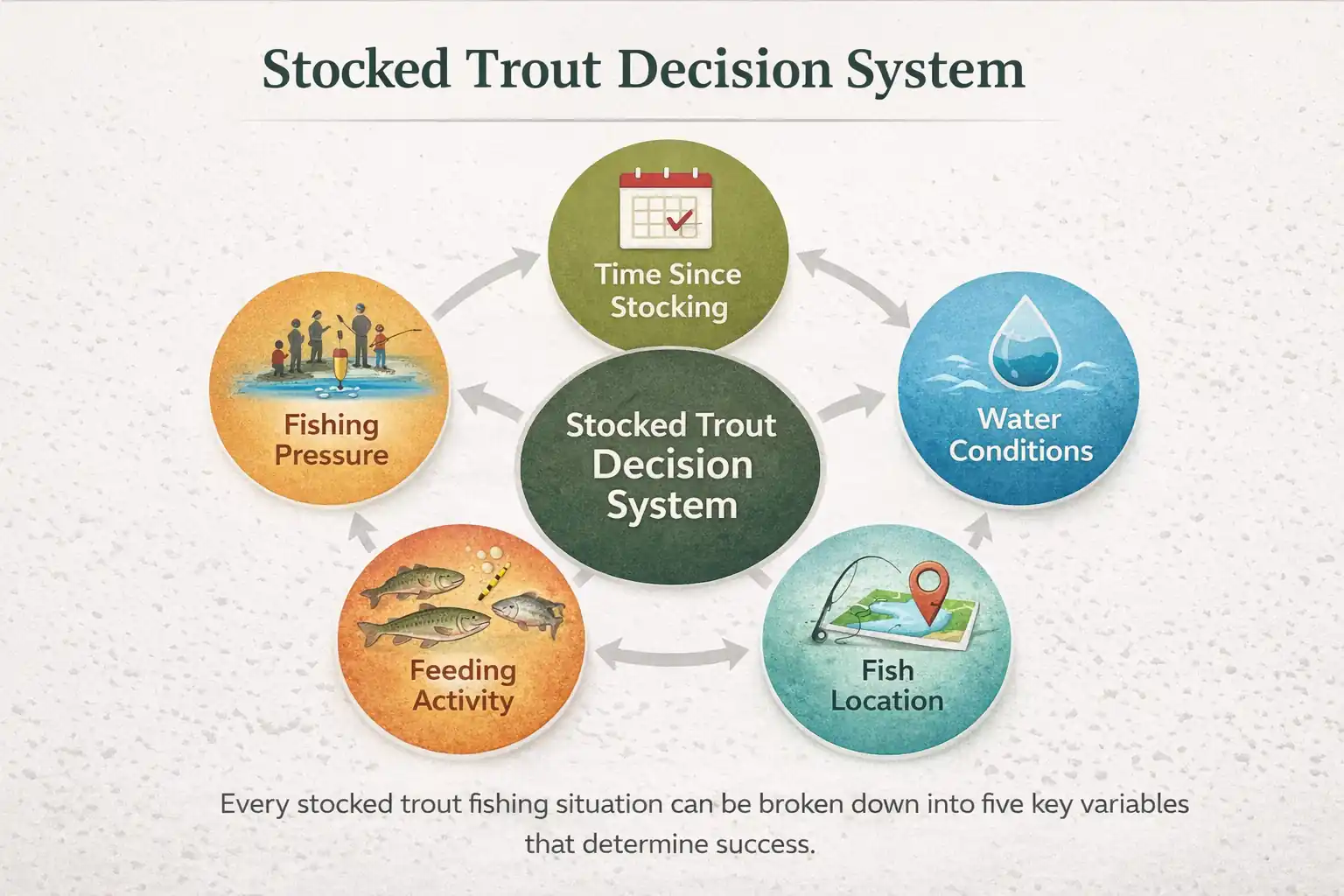
A condition-based five-variable framework for catching stocked trout consistently — time since stocking, water conditions, fish location, feeding activity, and fishing pressure evaluated in the correct priority order.

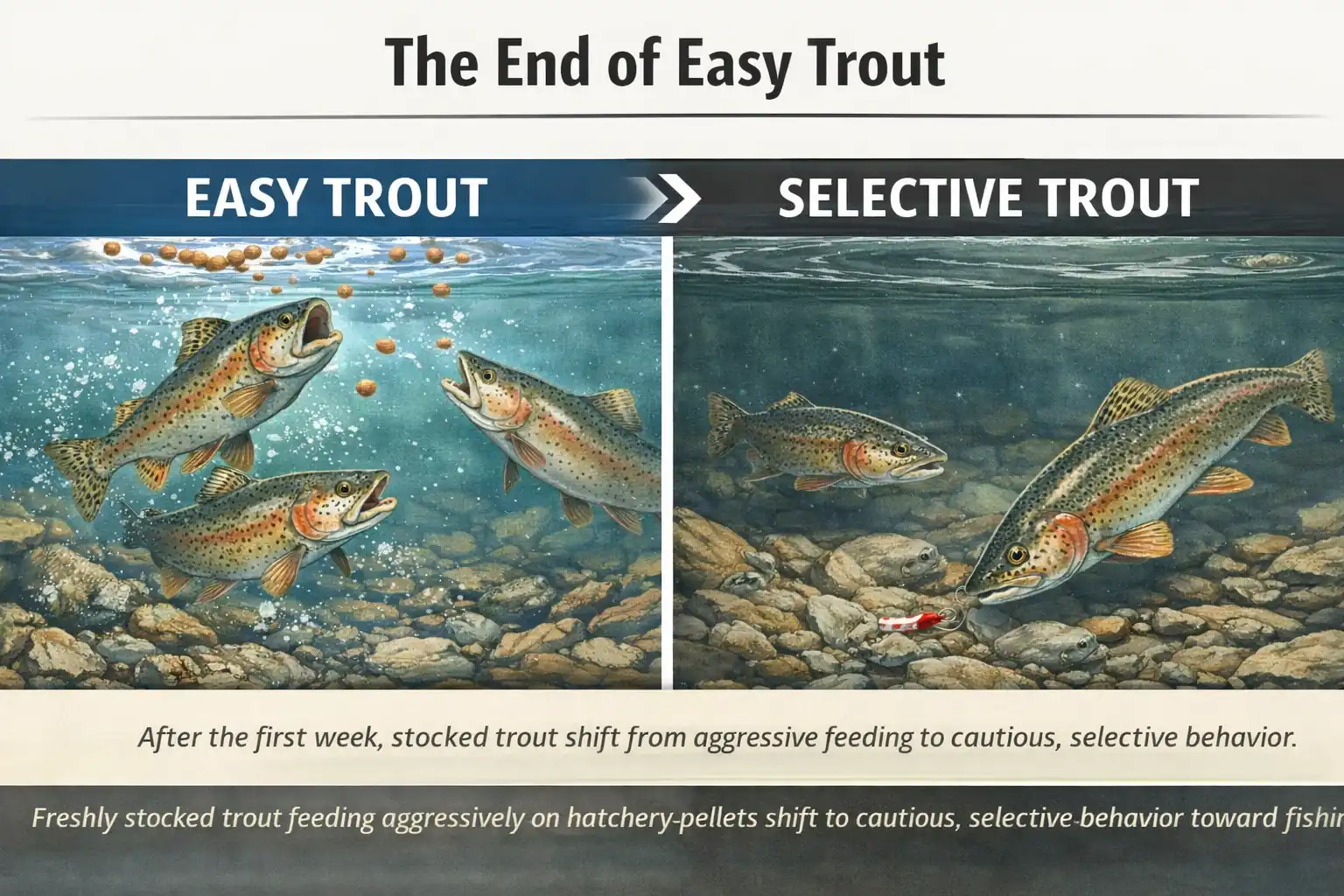
After the first week, stocked trout shift from recognition-based feeding to experience-based decision making. A complete guide to the 12 behavioral changes and how to adjust your presentation at each stage.

Stocked trout do not feed continuously — catch rate is determined more by timing than bait choice. A complete guide to feeding windows, time-of-day patterns, pressure timing, weather triggers, and the peak 24–72 hour window.

Stocked trout are location-dependent, not evenly distributed. A complete positioning guide covering stocking point effect, shoreline bias, depth control, holding vs cruising behavior, current positioning, and pressure-induced movement.

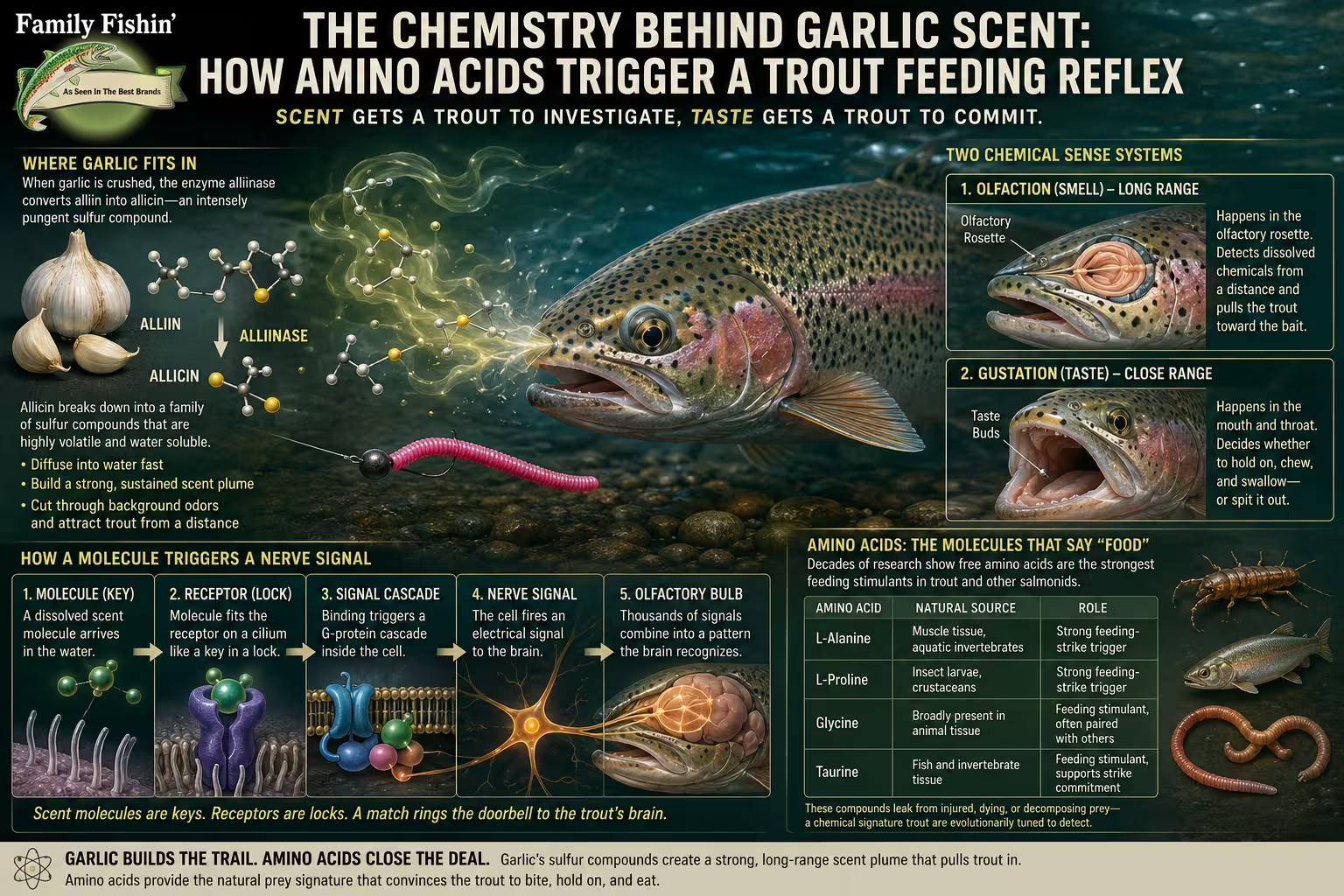
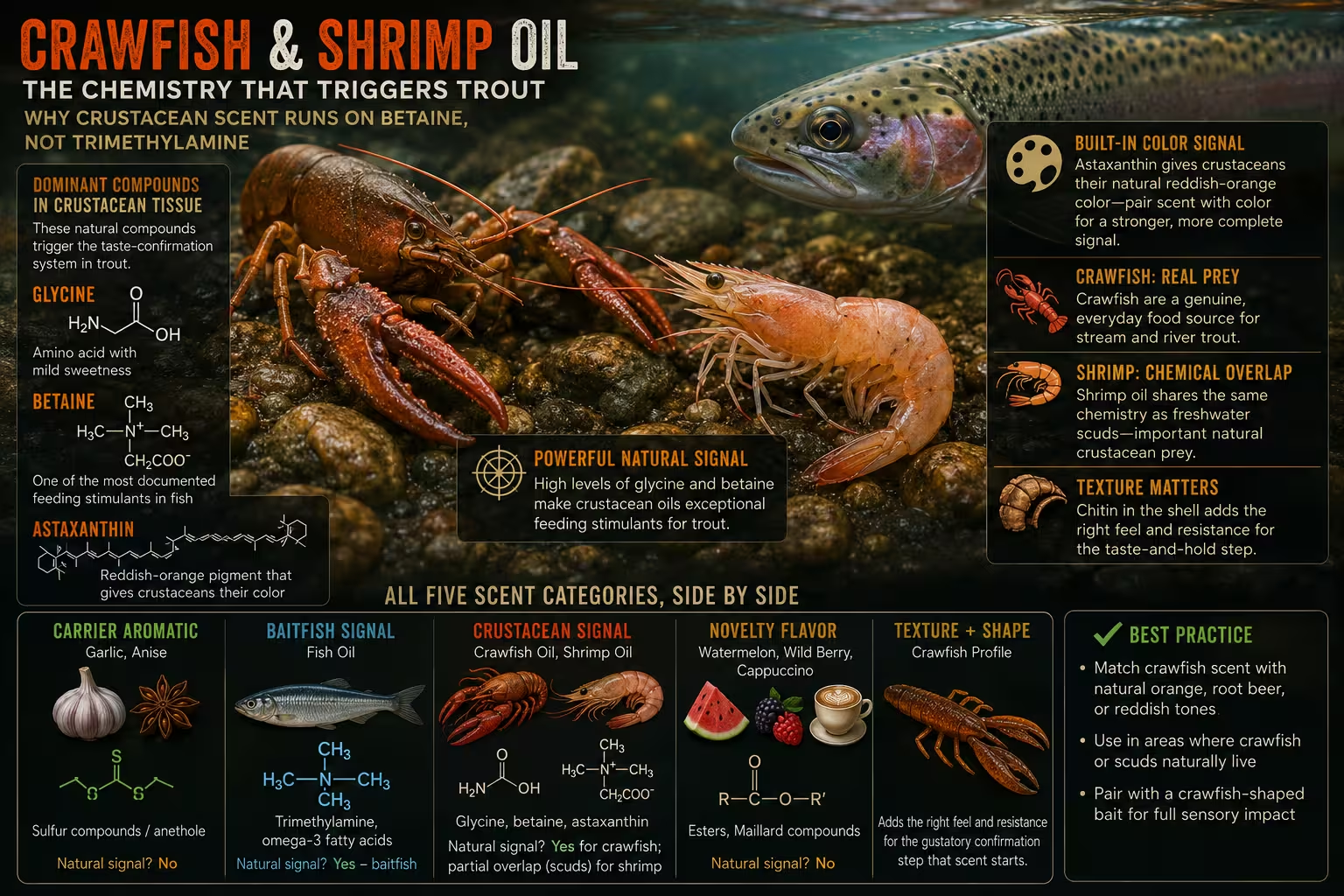
Stocked trout feed based on detection systems, not random behavior. A complete guide to smell, vision, and lateral line vibration — when each dominates and how to match your presentation to the correct sensory trigger.

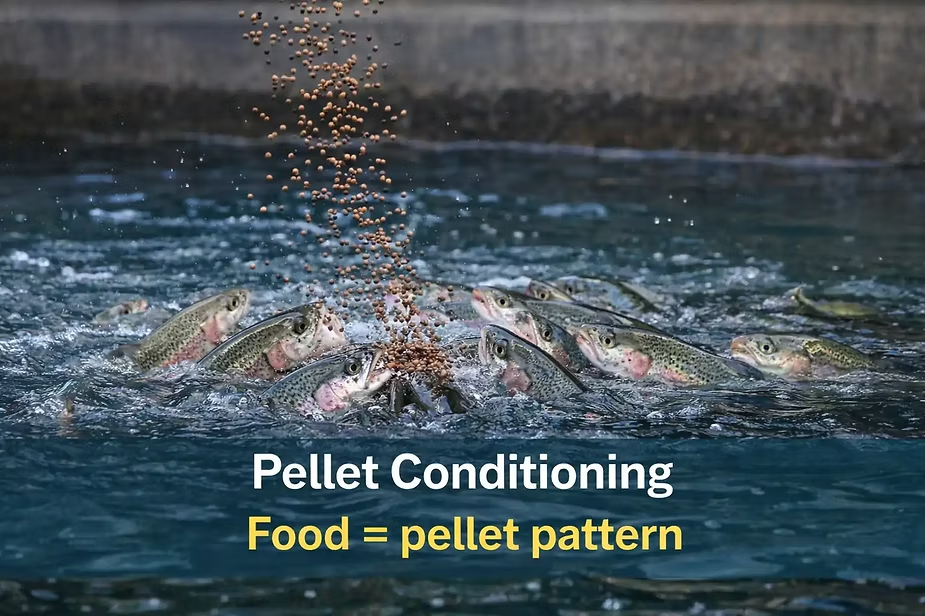
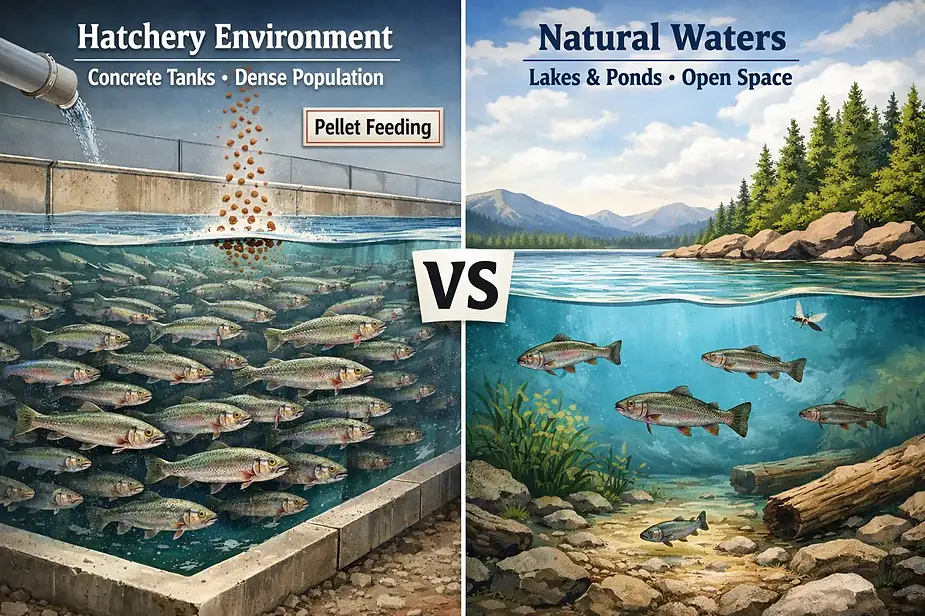
Stocked trout only recognize what they have been taught. A complete breakdown of pellet conditioning, shape recognition, texture, scent, movement, and the transition from recognition-based to exploration-based feeding.

Catching stocked trout in the first 72 hours follows predictable patterns. A complete system covering location, depth, movement vs stillness, the transition phase, and behavior timeline for each stage after stocking.