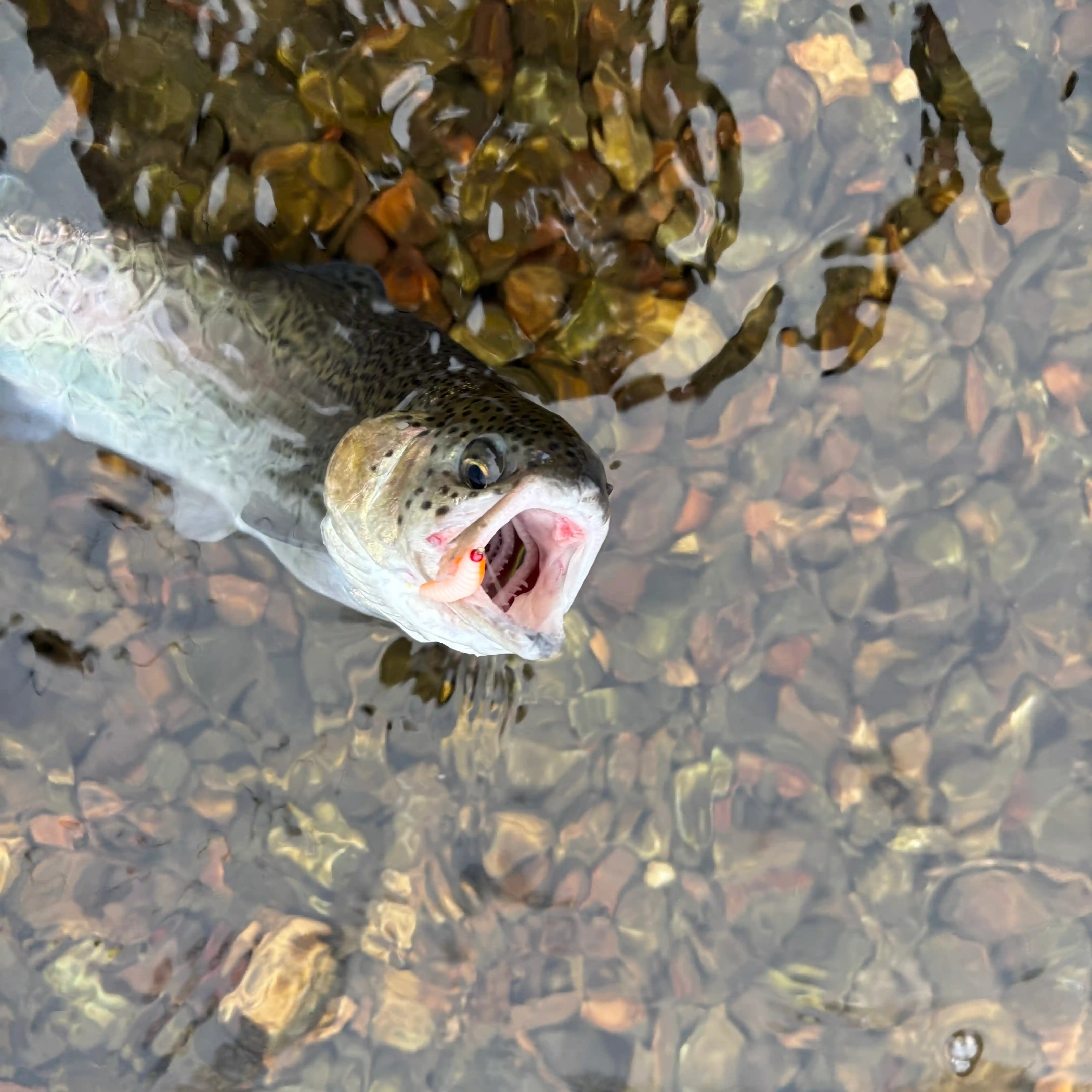
Dead Sticking Fishing Guide: How to Catch Trout When They Won’t Chase

How a nearly motionless presentation can catch pressured, inactive, and reluctant trout
Dead sticking fishing sounds almost too simple. Cast a lure into the water, let it settle into the right position, and do almost nothing.
For anglers accustomed to constantly reeling, jigging, twitching, or changing retrieves, that can feel wrong. Fishing usually seems like something we should actively do. If trout are not biting, the natural response is often to add more action—another twitch, a faster retrieve, a sharper hop.
Dead sticking takes the opposite approach.
Instead of forcing the lure to attract a trout through movement, dead sticking fishing removes much of the angler-created movement and allows current, water movement, the softness of the lure, and very small changes in line tension to provide the presentation.
That difference can matter when trout are following lures without striking, when fishing pressure is high, when water is clear, or when fish simply are not willing to chase a fast-moving target.
But dead sticking does not mean throwing a lure out and forgetting about it. Effective dead sticking is a controlled presentation. Depth, jig weight, line tension, lure position, current, and bite detection all still matter.
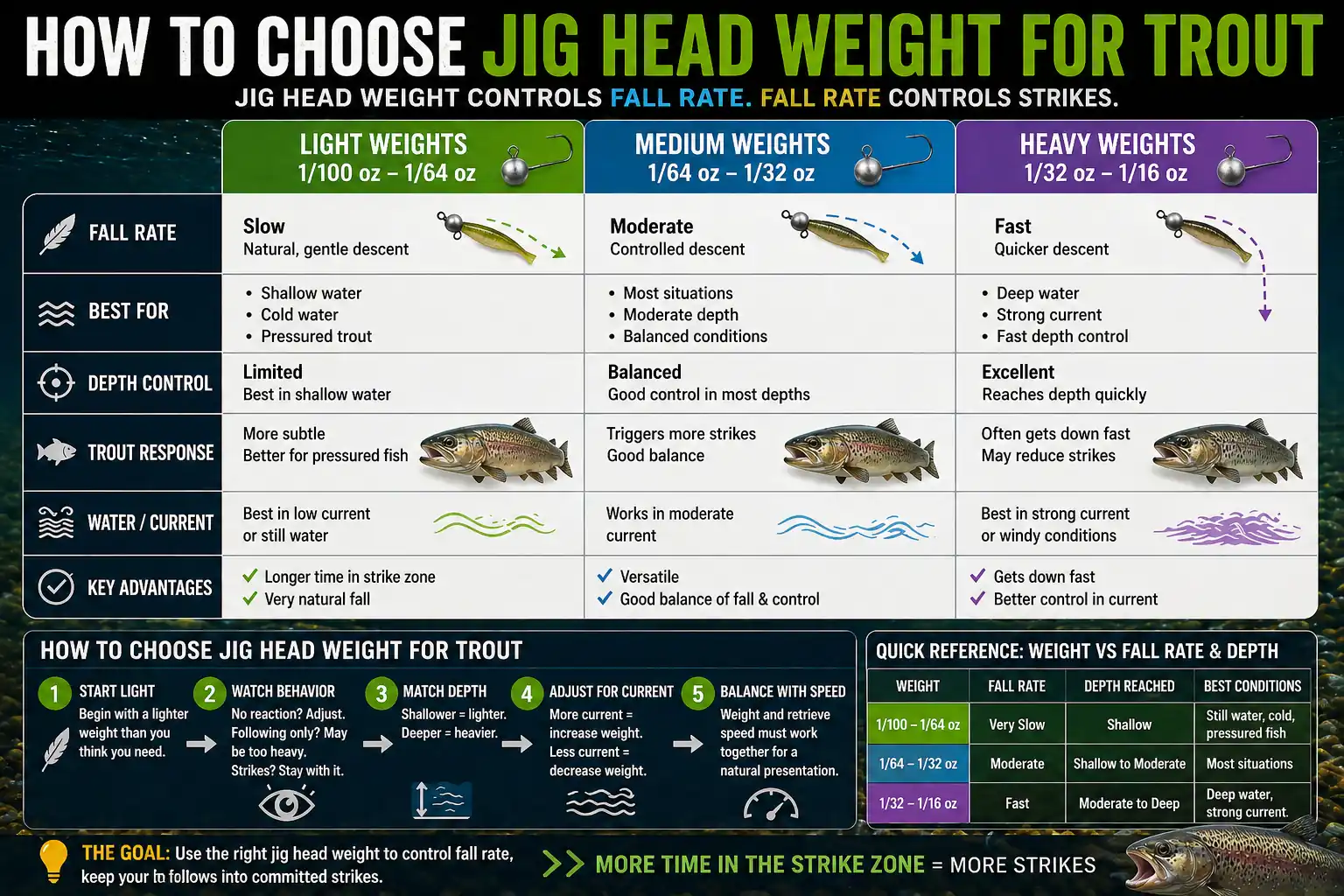
Jig weight is especially important because it controls how quickly the lure reaches the target depth and how easily you can maintain the presentation. For a deeper explanation, see our How Jig Head Weight Affects Trout guide.
This guide explains what dead sticking is, why it can work for trout, how to rig it, where to use it, how long to leave the lure still, and how to recognize when doing less is actually the better presentation.
What Is Dead Sticking Fishing?
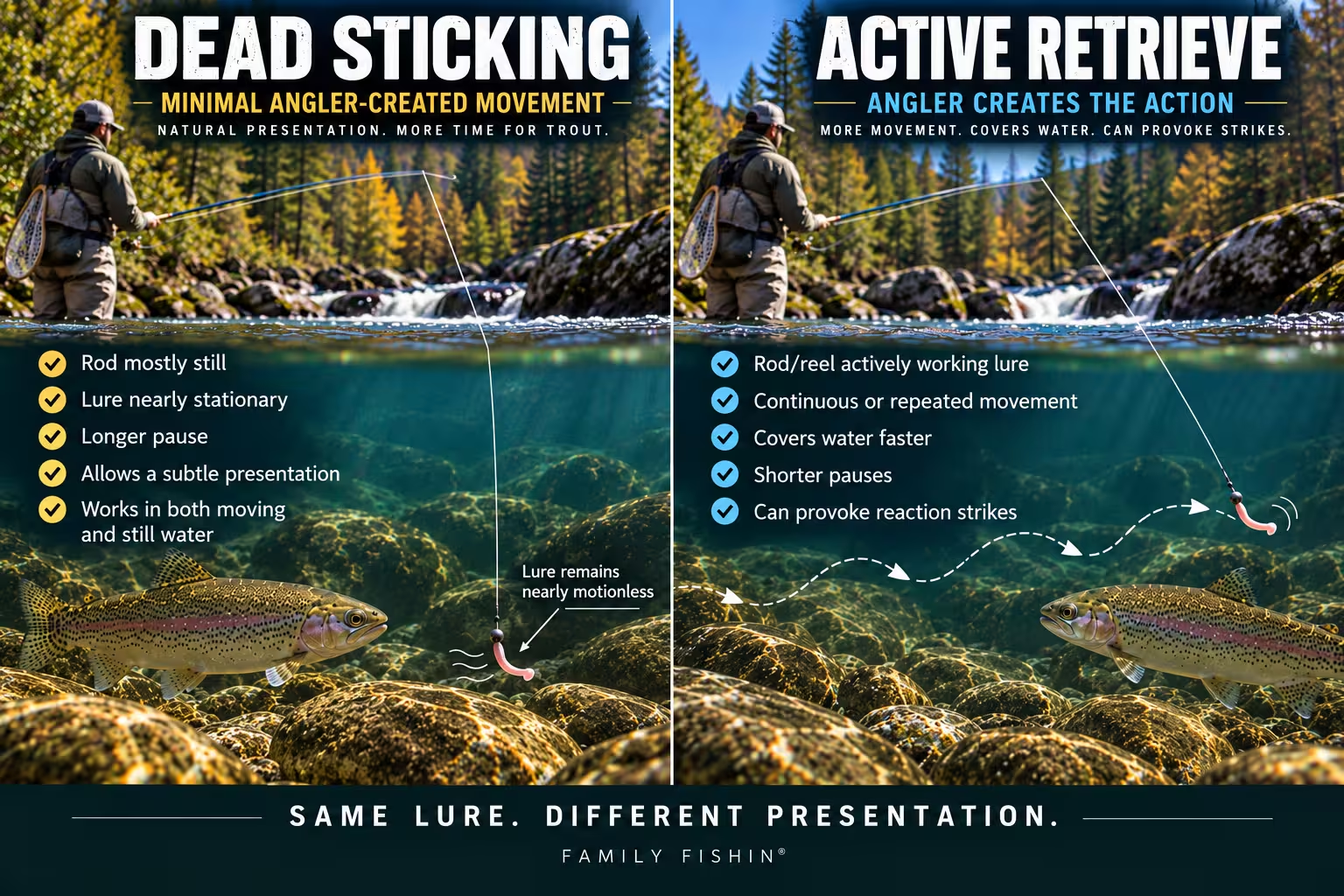
Dead sticking is a fishing technique in which a lure or bait is allowed to remain nearly motionless for an extended period rather than being continuously retrieved or actively worked.
The key word is nearly.
A lure being dead-sticked underwater is rarely perfectly motionless. Current may move the tail. Waves can move the line. A soft plastic may slowly flex. A marabou jig can breathe as individual fibers respond to tiny movements in the water.
Even the angler holding the rod introduces small movements.
The important difference is that the angler is not deliberately creating continuous action.
A typical active jig retrieve might look like this:
Cast → sink → hop → reel → twitch → pause → hop → retrieve
A dead-stick presentation is closer to:
Cast → sink → position → wait → watch → make a small adjustment if necessary → wait again
That long period of inactivity is the technique.
Dead sticking is used for many fish species, but it can be particularly useful for trout because trout often encounter food that comes to them rather than prey they must continuously pursue.
Why Would a Trout Eat Something That Isn’t Moving?
A motionless lure may seem unnatural until you consider what trout actually encounter underwater.
Not everything trout eat swims rapidly through the water.
Aquatic insects drift. Worms and terrestrial organisms can be washed into streams. Small aquatic organisms can become displaced. Injured prey may move poorly. Food can settle, tumble, suspend, or move slowly with current.
A trout holding in current often does not need to chase every food item. It can maintain position and intercept suitable items moving through its feeding area.
Where a trout holds is therefore just as important as how the lure moves. Rocks, banks, depth changes, and other structures create slower areas beside faster current where trout can conserve energy while remaining close to drifting food. Our How Trout Use Current Breaks guide explains these holding positions and how anglers can identify them.
Dead sticking takes the reduction in angler-imposed movement even farther.
Instead of asking:
How can I make this lure move enough to make a trout attack it?
you are asking:
Can I put this lure where the trout can inspect it without forcing the fish to chase it?
That is a very different presentation strategy.
Why Dead Sticking Can Work for Trout
Several mechanisms can contribute to the effectiveness of a dead-stick presentation. None requires us to assume that trout always prefer motionless lures. They do not.
Dead sticking is simply another presentation that can become useful under the right conditions.
1. It Increases Time in the Strike Zone
Every moving lure has a limited period during which it is available to a particular trout.
Imagine a trout holding beside a rock.
A rapidly retrieved lure may enter the fish’s effective feeding area and leave it almost immediately.
A slowly presented lure remains available longer.
A dead-sticked lure positioned correctly can remain there considerably longer.
That creates more opportunity.
It does not guarantee a strike. The trout may reject the lure completely.
But the fish has time to:
- detect it,
- approach it,
- inspect it,
- reposition,
- and potentially take it.
This can be particularly relevant when a trout will not move very far to intercept a presentation.
2. It Removes Unnecessary Angler Movement
Sometimes the problem isn’t the lure.
It is what we are doing to the lure.
A soft plastic worm already has a flexible body. A marabou jig already has fibers capable of responding to water movement. A small soft plastic can move when current pushes against it.
Adding aggressive rod movements can sometimes produce a presentation completely different from the subtle one we intended.
Dead sticking removes much of that input.
Instead of making the lure perform, we allow the lure and the water to interact.
This is an important distinction:
Dead sticking removes intentional action. It does not necessarily remove all lure movement.
3. Trout Don’t Have to Chase It
A lure moving away from a trout creates a decision.
The fish must pursue it or let it go.
Dead sticking changes that relationship.
The lure remains available.
A trout can approach slowly instead of immediately accelerating after the lure.
This is one reason dead sticking deserves consideration when trout repeatedly follow an actively retrieved lure but fail to strike.
A follow tells you something important: the fish noticed the presentation.
The problem may be what happens after detection.
Instead of immediately changing color or replacing the lure, reducing movement is one variable worth testing.
4. It Can Be Useful Around Pressured Trout
Trout in heavily fished water can experience many artificial presentations.
That does not mean every trout becomes “lure shy” in exactly the same way, nor does it mean a motionless lure automatically defeats fishing pressure.
It means that presentation can matter.
If numerous anglers are repeatedly retrieving spinners, spoons, jigs, and plastics through the same area, a slower presentation represents a substantially different stimulus.
In Missouri trout parks, where large numbers of anglers may target the same stocked trout, changing presentation speed can be especially useful as fishing conditions change throughout the day.
Our own experience is that aggressive moving presentations can be very effective when trout are actively chasing. When that bite slows, reducing lure speed—and sometimes reducing it almost completely—can continue producing opportunities.
That is a Family Fishin field observation, not a universal rule for every trout fishery.
Dead Sticking vs. Pausing a Lure
These techniques are related, but they are not identical.
A pause is normally one part of an active retrieve:
retrieve → pause → retrieve
The pause may last one or several seconds.
Dead sticking makes inactivity the primary presentation:
position → wait → wait → subtle adjustment → wait
The distinction is useful because anglers sometimes believe they are fishing slowly when they are actually giving the lure only very short pauses.
If you normally pause for two seconds, deliberately leaving the lure alone for 10, 20, or even 30 seconds can feel extraordinarily long.
There is no universal number of seconds that defines dead sticking. Water temperature, current, depth, fish activity, lure type, and the individual situation all change how long a useful pause might be.
The important point is that the lure is being allowed to remain available rather than immediately being moved away.
Best Lures for Dead Sticking Trout
Not every lure is equally suited to this technique.
A spinner generally needs movement to rotate its blade. A spoon normally depends heavily on movement to wobble or flash.
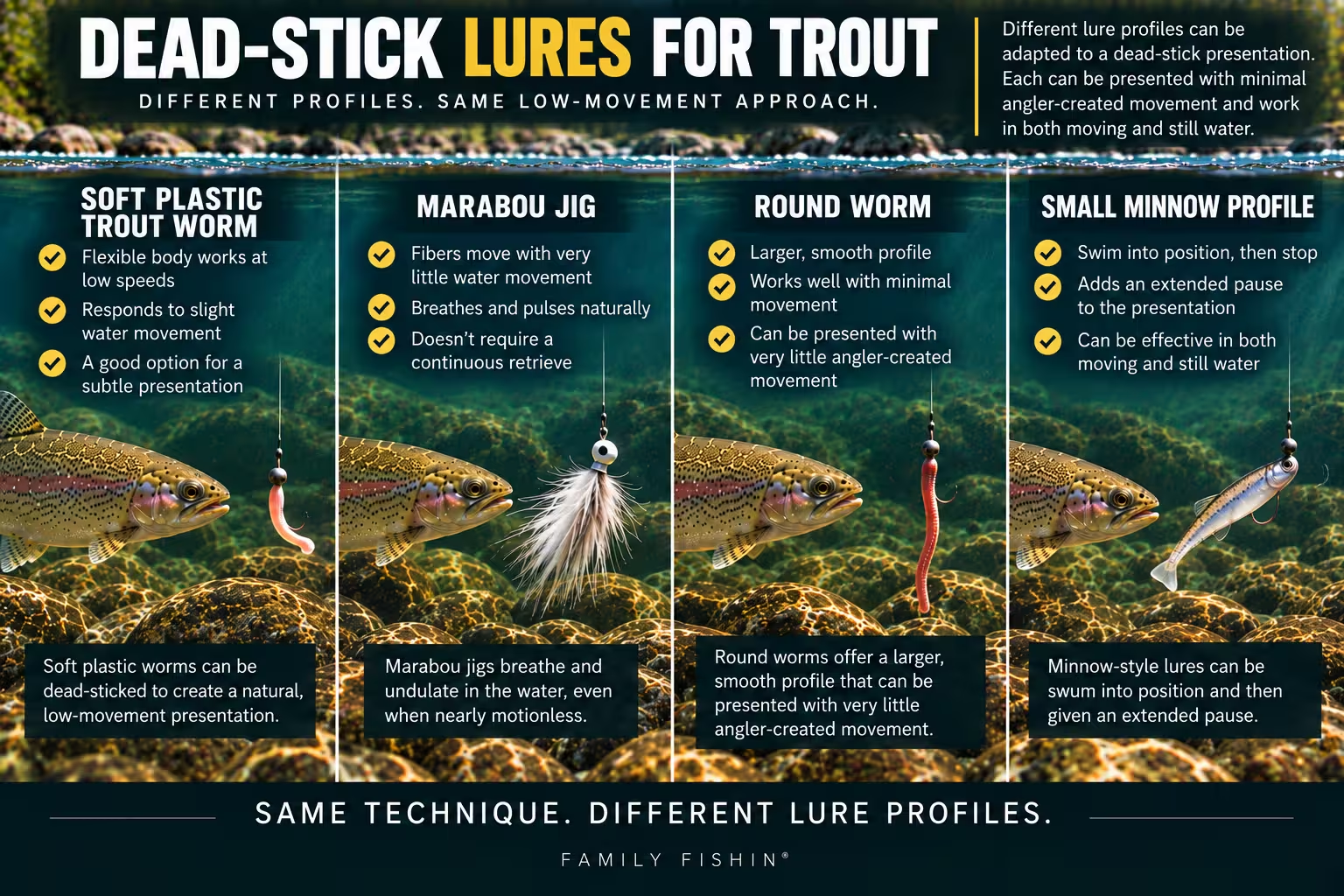
Dead sticking tends to favor presentations that remain potentially convincing without continuous forward movement.
Soft Plastic Trout Worms
A soft plastic trout worm is one of the most natural candidates for dead sticking because it does not require a continuous retrieve to remain useful.
Current can bend the body, move the ends of the worm, or subtly change its position while the angler does very little.
Possible rigging methods include:
- light jig head,
- split-shot rig,
- float rig,
- drop-shot,
- or other legal finesse presentations.
Ribbed designs are particularly interesting for this type of fishing because the flexible body and surface geometry interact with moving water even at very low presentation speeds. One example is our 2.38-inch Ribbed Trout Worm, which we designed around slow finesse presentations for stocked and pressured trout.
It isn’t necessary to use a ribbed worm to dead stick effectively. The important point is choosing a soft plastic that can still present naturally when you stop actively retrieving it.
Soft plastic performance also involves profile, softness, fall rate, visibility, and how the lure behaves at different presentation speeds. Our Best Soft Plastics for Trout guide looks at those variables as a complete system.
Marabou Jigs
Marabou is also well suited to low-motion presentations.
The individual fibers can move with subtle changes in water flow, so the angler does not necessarily need to impart large rod movements.
That makes marabou particularly interesting for dead sticking. What appears motionless from above the water may still have subtle fiber movement below the surface.
For a jig-head presentation, however, the important issue is not simply getting the jig to the bottom.
You want the lure positioned where trout are actually holding.
Round Trout Worms and Larger Worm Profiles
Worm profile can change how a dead-sticked presentation behaves.
A thicker, smooth-bodied worm provides a different silhouette from a finer ribbed finesse worm and can be useful when you want a more substantial profile with very little angler-created action.
Our 2.95-inch Round Trout Worm is an example of this type of profile. It can be fished slowly on a light jig head or incorporated into other appropriate finesse presentations.
Again, the specific product is less important than the principle: profile remains a variable even when retrieve speed approaches zero.
Small Grubs and Creature-Style Plastics
Small grubs, larvae profiles, crawfish shapes, and other finesse plastics can also be dead-sticked.
Some designs depend more heavily on retrieve speed than others.
A paddle tail, for example, is designed to generate substantial action while moving through the water. Stop retrieving it and much of that designed action disappears.
That doesn’t mean a trout cannot eat it while stationary.
It simply means a lure designed specifically to work at extremely low speeds may be better suited to a traditional dead-stick presentation.
Dead Sticking a Small Minnow Profile
Dead sticking can also be incorporated into a baitfish presentation.
A small minnow-style soft plastic is normally retrieved to imitate a swimming baitfish, but the retrieve does not have to remain continuous.
Try swimming the lure into a likely holding area, stopping it, and allowing it to fall or remain nearly stationary before moving it again.
That creates a:
swim → stop → wait → swim
sequence rather than a constant retrieve.
A compact bait such as our 1-inch Black Minnow Soft Plastic Swimbait is one example of a small baitfish profile that can be fished this way.
The important part of the technique isn’t the specific lure. It is the transition from active movement to an extended pause once the lure reaches the area where you believe a trout is holding.
For more on why trout respond to baitfish profiles and how minnow behavior relates to trout feeding, see Why Trout Eat Minnows.
Jig Weight Matters More Than Many Anglers Realize
Dead sticking doesn’t eliminate the importance of jig-head weight.
It makes weight selection more important.
A jig that is too heavy can drop below the desired position quickly or become anchored to the bottom when you wanted a slow, suspended presentation.
A jig that is too light may never reach the fish or may be swept away by current.
The objective is therefore not:
Use the lightest jig possible.
Nor is it:
Use enough weight to hit bottom.
A better objective is:
Use enough weight to put the lure where the trout can encounter it while retaining the type of presentation you want.
That may require very light weights in shallow, slow water and substantially more weight in deeper or faster water.
This is why fixed recommendations such as “always use 1/64 ounce” are inadequate.
Depth, current, line diameter, lure size, casting distance, and presentation angle all influence what the jig does underwater.
For a deeper breakdown of fall rate, strike-window time, current, and depth control, see How Jig Head Weight Affects Trout.
Weight is also only one part of the jig system. Hook size, lure compatibility, balance, and presentation all matter. Our Best Jig Heads for Trout covers those factors together.
Dead Sticking in Moving Water
Moving water changes the technique considerably.
You cannot assume that because your rod tip is stationary, your lure is stationary.
Current may be:
- moving the lure downstream,
- lifting it,
- pushing it along the bottom,
- bowing your line,
- or making the plastic move while the jig head remains relatively stable.
That can be exactly what you want.
Let the Current Supply the Action
One of the most useful concepts in dead sticking is:
The angler doesn’t always have to create the movement.
Place a soft lure correctly in moving water and the current may do much of the work.
This can be particularly effective near current breaks.
A rock, bank irregularity, log, depth change, or other obstruction can produce areas of faster and slower water. Trout can use these areas to maintain position while remaining close to drifting food.
Learning to recognize those seams and pockets makes dead sticking much more effective because you can position the lure where trout are actually holding. Our How Trout Use Current Breaks guide goes deeper into recognizing those areas from the bank and on the water.
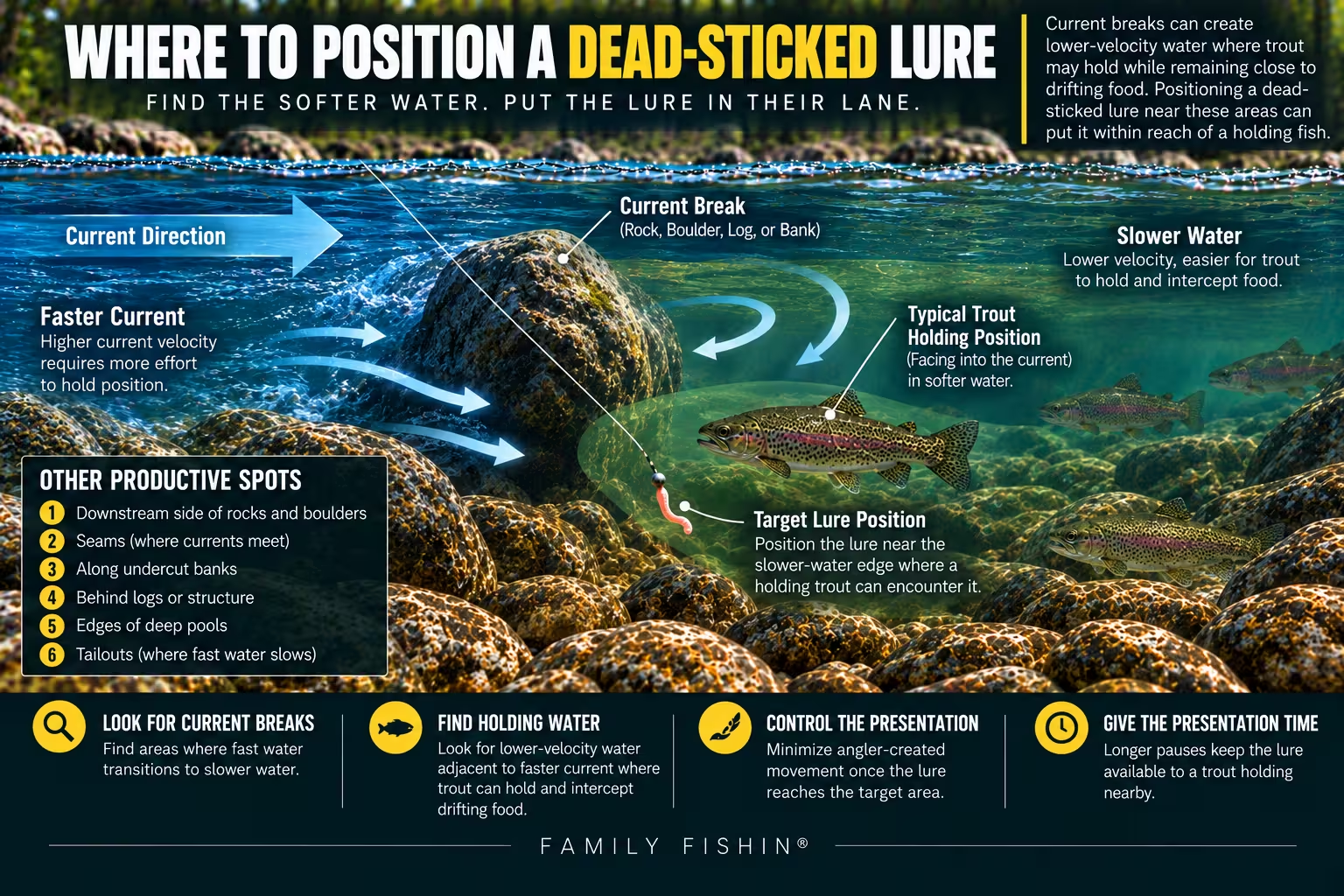
The goal is to put the presentation where the fish can encounter it without constantly pulling it away.
Cast Angle Matters
Casting directly downstream, directly upstream, and across the current can produce very different presentations with the same lure and weight.
Upstream
An upstream cast allows the lure to sink while moving back toward you with the current.
You must manage slack carefully.
Too much slack makes bites difficult to detect.
Too much tension can drag the lure unnaturally.
Across Current
Casting across or slightly upstream allows the lure to sweep through different current lanes.
You can allow it to settle near a seam or slower-water area and then stop actively retrieving it.
Downstream
A downstream presentation can hold a lure in current, but line tension may cause the lure to behave differently than a free-drifting presentation.
None of these angles is automatically correct.
Use the angle that puts the lure where the trout are holding.
Dead Sticking in Still Water
In ponds, lakes, slow pools, and nearly motionless sections of stream, the technique changes again.
Current no longer provides as much lure movement.
Now the lure’s own material properties and very small angler inputs become more important.
Cast beyond the area you want to fish.
Allow the lure to reach the desired depth.
Then stop.
Watch the line.
After an appropriate period, make a very small adjustment.
That might be:
- a few inches of drag,
- a tiny lift,
- one slow turn of the reel,
- or simply tightening the line enough to reestablish contact.
Then leave it alone again.
This is where anglers often make their biggest mistake.
They move the lure too much.
A six-inch movement may be enough.
You do not necessarily need a two-foot hop.
How to Dead Stick for Trout: Step by Step
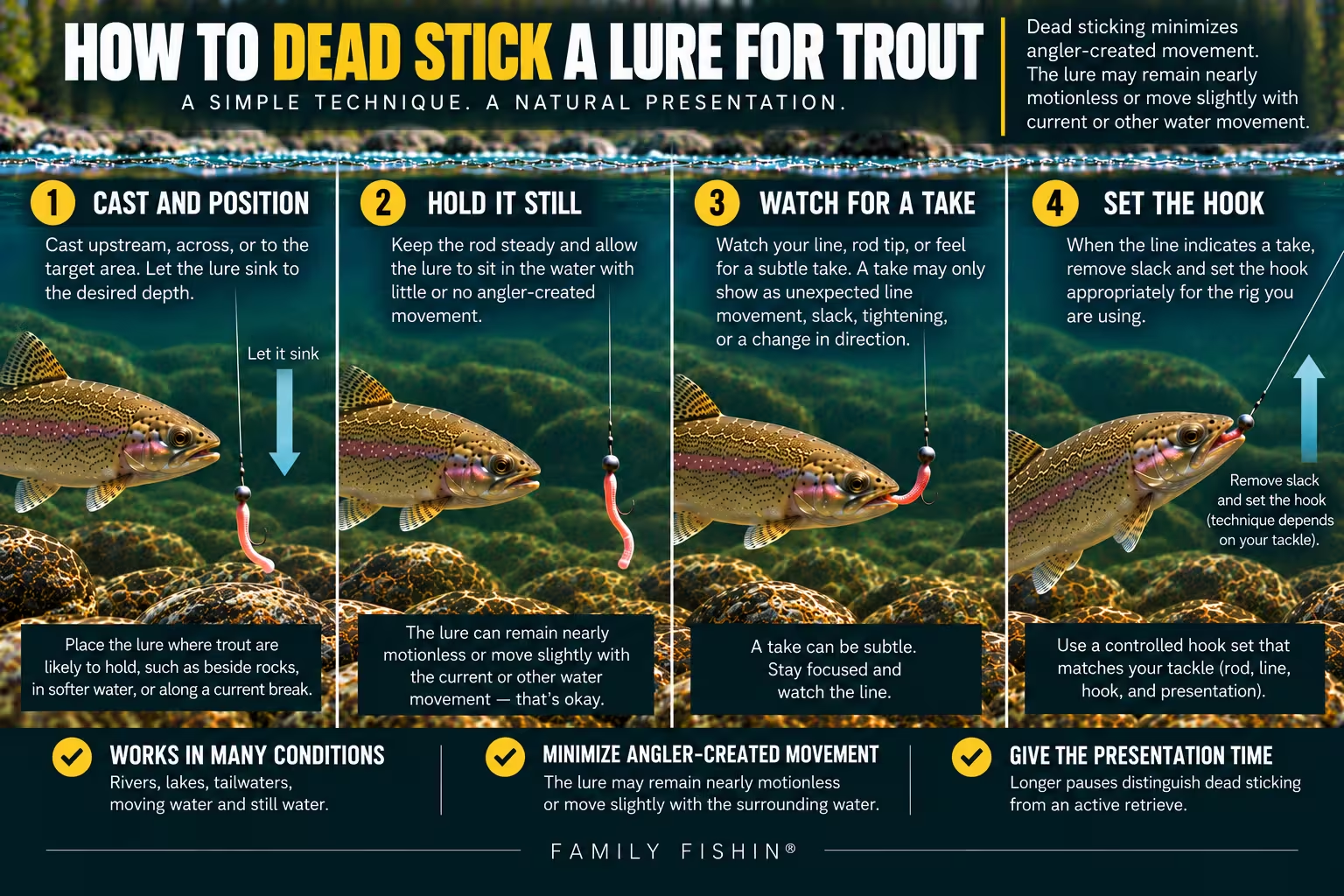
Step 1: Identify Where the Trout Are Likely Holding
Do not begin with the lure.
Begin with location.
Look for:
- current seams,
- edges of faster water,
- deeper pockets,
- pools,
- structure,
- undercut banks,
- transitions between shallow and deep water,
- and areas where you can actually see trout holding.
Dead sticking a perfect lure in empty water is still fishing empty water.
Stocked trout can also develop recognizable positioning patterns after release. If you’re fishing stocked water, Where Stocked Trout Actually Feed provides a deeper look at positioning, depth, and movement.
Step 2: Choose a Lure That Works at Low Speed
A small soft plastic worm or marabou jig is a logical starting point.
The lure should not require a high retrieve speed to produce its primary action.
Keep the overall presentation appropriate for the trout and water you are fishing.
Step 3: Select Weight for Depth and Current
Start with enough weight to reach the target area.
Watch what happens.
If the lure immediately crashes to the bottom and repeatedly hangs up, consider whether you have more weight than the presentation requires.
If it never reaches the fish, increase weight.
Make changes incrementally.
The difference between two neighboring jig weights can be significant when dealing with very light trout tackle.
Step 4: Cast Beyond or Upstream of the Target
Whenever possible, avoid dropping the lure directly onto a trout’s head.
Give the lure room to enter the strike area.
In moving water, that may mean casting upstream and allowing the current to bring the presentation toward the fish.
In still water, casting beyond the target can allow you to position the lure without immediately pulling it away.
Step 5: Let It Reach the Desired Depth
This is where line watching becomes important.
Watch for:
- line suddenly stopping,
- line going slack,
- an unexpected jump,
- sideways movement,
- or the line tightening before you expect the lure to reach bottom.
Any of these can indicate contact with the bottom, current—or a fish.
Step 6: Stop Moving the Lure
This is the part that requires discipline.
Do nothing.
Keep enough contact to detect what is happening without constantly dragging the lure.
The exact amount of line tension depends on the presentation.
A completely tight line can pull the lure toward you.
Excessive slack can hide a strike.
The objective is controlled contact, not necessarily a guitar-string-tight line.
Step 7: Watch Before You Feel
Trout can take a slow or stationary presentation subtly.
You may never feel a dramatic strike.
Instead, the line might:
- twitch,
- straighten,
- move sideways,
- stop drifting,
- begin moving upstream,
- or slowly tighten.
Your eyes can sometimes detect the bite before your hand does.
Step 8: Make a Small Adjustment
If nothing happens, don’t immediately reel in.
Move the lure slightly.
Then stop again.
This creates an interesting sequence:
still → tiny movement → still
That small change can make the lure newly noticeable without converting the presentation into an active retrieve.
Step 9: Repeat Through the Holding Area
Eventually, move the lure to another position.
Dead sticking doesn’t mean leaving one cast in exactly the same location indefinitely.
You are systematically presenting a slow-moving or stationary lure to likely fish-holding positions.
How Long Should You Dead Stick a Lure?
There is no scientifically established universal dead-stick timer for trout.
That is important because fishing advice often turns a useful technique into an arbitrary rule:
Wait exactly 15 seconds.
There is no reason to expect 15 seconds to be correct in every situation.
Instead, think in terms of fish behavior and presentation.
If trout are visibly inspecting the lure, give them time.
If you know fish are concentrated in a small area, thoroughly work that area before moving.
If you are searching a large section of water and have no indication trout are present, excessively long pauses can make you inefficient.
Dead sticking therefore creates a tradeoff:
More time per presentation = more opportunity for a nearby fish to inspect it
but:
More time per presentation = less water covered
The right balance changes with conditions.
When Dead Sticking Is Worth Trying
When Trout Follow but Don’t Bite
This is one of the clearest situations for testing it.
If a trout follows your lure, you already know the presentation was detected.
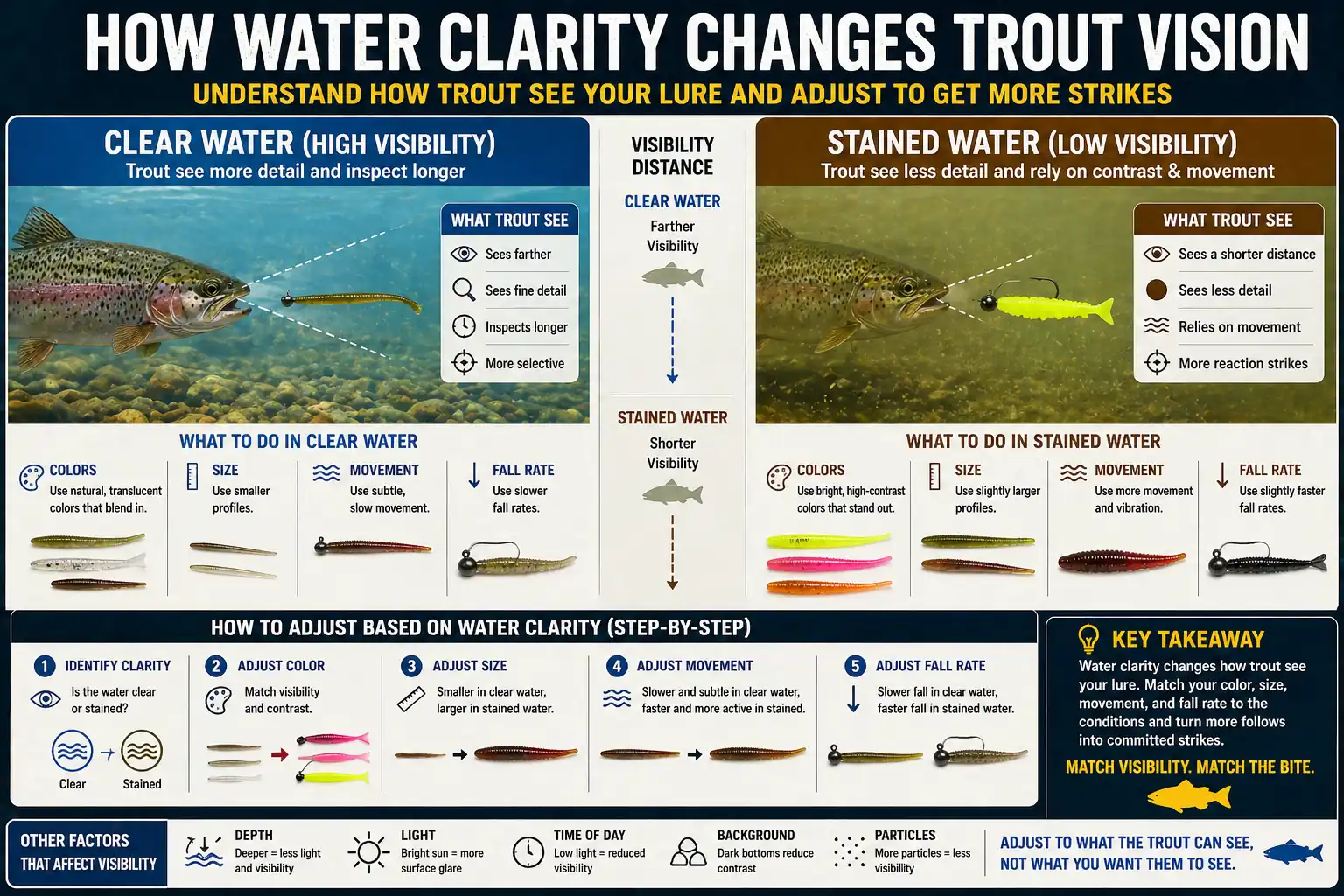
Instead of immediately changing lure color, try changing speed.
Slow down.
Then slow down more.
Then stop.
You are testing whether movement—not color or lure profile—is contributing to the rejection.
When Fishing Pressure Is High
After trout have been exposed to repeated casts and active presentations, dead sticking gives them something different.
This doesn’t make it a magic pressured-trout technique.
It simply changes an important variable.
Presentation becomes increasingly important as trout receive repeated fishing pressure. Our Best Soft Plastics for Trout guide explains how softness, fall rate, visibility, profile, and presentation work together.
In Clear Water
Clear water can allow trout to inspect presentations closely.
A slower presentation may give the fish more time to inspect the lure, which can be either beneficial or detrimental depending on the situation.
That is worth emphasizing.
More inspection time is not automatically better.
Sometimes a faster reaction presentation works precisely because the fish has less time to inspect it.
Dead sticking should therefore be tested rather than assumed superior.
When Trout Are Holding in a Small Area
If you know exactly where trout are holding, you don’t necessarily need to cover large amounts of water.
This is where dead sticking becomes efficient.
You are spending time where the fish actually are.
When Active Retrieves Stop Producing
This is where dead sticking fits especially well into a larger fishing system.
You do not have to choose between active fishing and dead sticking for the entire day.
Start with the presentation appropriate for the conditions.
If trout are aggressively chasing, take advantage of it.
When that response changes, change your presentation.
Dead sticking is one end of the speed spectrum.
When Dead Sticking May Be the Wrong Choice
No fishing technique works everywhere.
When You Need to Find Fish
If trout are widely scattered and you have no idea where they are, an extremely slow presentation covers little water.
A moving lure may be a more efficient search tool.
Once you locate fish, you can slow down.
When Trout Are Aggressively Chasing
If fish are readily chasing and striking a spinner, spoon, minnow lure, or actively worked jig, there may be little reason to remove the movement that is producing bites.
Don’t slow down merely because slow fishing sounds more sophisticated.
Let the trout tell you.
When Current Won’t Let You Maintain Position
In sufficiently strong current, the lure may be swept through the area regardless of how still you hold the rod.
At that point you may need:
- more weight,
- a different casting angle,
- a different position,
- or a different technique.
Dead Sticking Under a Float
A float can make dead sticking particularly useful because it helps control depth.
Instead of allowing a jig or soft plastic to rest on bottom, you can suspend it at a selected depth.
The basic setup is:
float → line/leader → jig or hook → soft plastic or other permitted lure/bait
Adjust the distance between the float and lure according to the depth at which trout are holding.
Then allow the float to move naturally.
In current, this becomes a hybrid between dead sticking and drift fishing.
In still water, wind and surface movement can impart subtle movement to the suspended lure even when you aren’t deliberately working it.
The critical point is depth.
If trout are holding four feet below the surface and your lure is suspended two feet down, an otherwise perfect dead-stick presentation may never enter their feeding area.
Dead Sticking on Bottom
A lure can also be dead-sticked directly on or very near the bottom.
This can work when trout are feeding low, but bottom contact creates additional considerations.
You can:
- snag more frequently,
- collect debris,
- lose visual contact with the lure,
- and potentially position the presentation below fish that are suspended.
Bottom is therefore not automatically the target.
Fish the depth where the trout are holding, not simply the easiest depth to identify.
Line Control: The Part Many Anglers Miss
Dead sticking is often described as doing nothing.
That description hides one of the hardest parts of the technique:
doing nothing while maintaining useful line control.
Too much tension and you move the lure.
Too much slack and you lose information.
The ideal amount depends on current and presentation, but you generally want enough connection to recognize unusual movement while allowing the lure to behave naturally.
Think of your line as a sensor.
You are watching and feeling for information without using that sensor to drag the lure away from the fish.
Bite Detection While Dead Sticking
Do not wait exclusively for the classic “tap.”
A trout may pick up the lure and remain in place.
It may move toward you.
It may turn sideways.
It may swim upstream.
That can produce line behavior that feels nothing like a conventional strike.
Watch for anything that doesn’t make sense.
If the lure should be drifting downstream but the line moves sideways, investigate.
If the jig should still be sinking but the line suddenly stops early, investigate.
If slack disappears without you moving the rod, investigate.
The rule isn’t:
Set the hook at every line movement.
The useful principle is:
Treat unexplained line movement as information.
Common Dead Sticking Mistakes
1. Moving the Lure Too Soon
This is probably the defining mistake.
The lure sits for three seconds.
Nothing happens.
The angler twitches it.
Three more seconds.
Another twitch.
At that point you may simply be fishing a slow jig retrieve.
Give the technique enough time to actually be different.
2. Using Too Much Weight
Heavy weight can provide excellent contact, but contact isn’t the only goal.
If weight causes the lure to drop below the trout or pins a presentation to bottom when you want subtle movement, it may be counterproductive.
3. Using Too Little Weight
Going ultralight is not automatically finesse fishing.
If you cannot reach or maintain the target depth, the presentation isn’t effective merely because it looks delicate.
4. Watching the Rod Instead of the Line
Your line may show the strike first.
Pay attention to where the line enters the water and how its shape changes.
5. Dead Sticking Where There Are No Trout
Slow fishing magnifies location mistakes.
If every cast takes considerably longer, you need confidence that you are fishing productive water.
6. Assuming No Rod Movement Means No Lure Action
A soft plastic or marabou jig may be moving underwater even when the rod is completely still.
Current, turbulence, wind, and water displacement can create movement you cannot see from shore.
7. Changing Color Before Changing Presentation
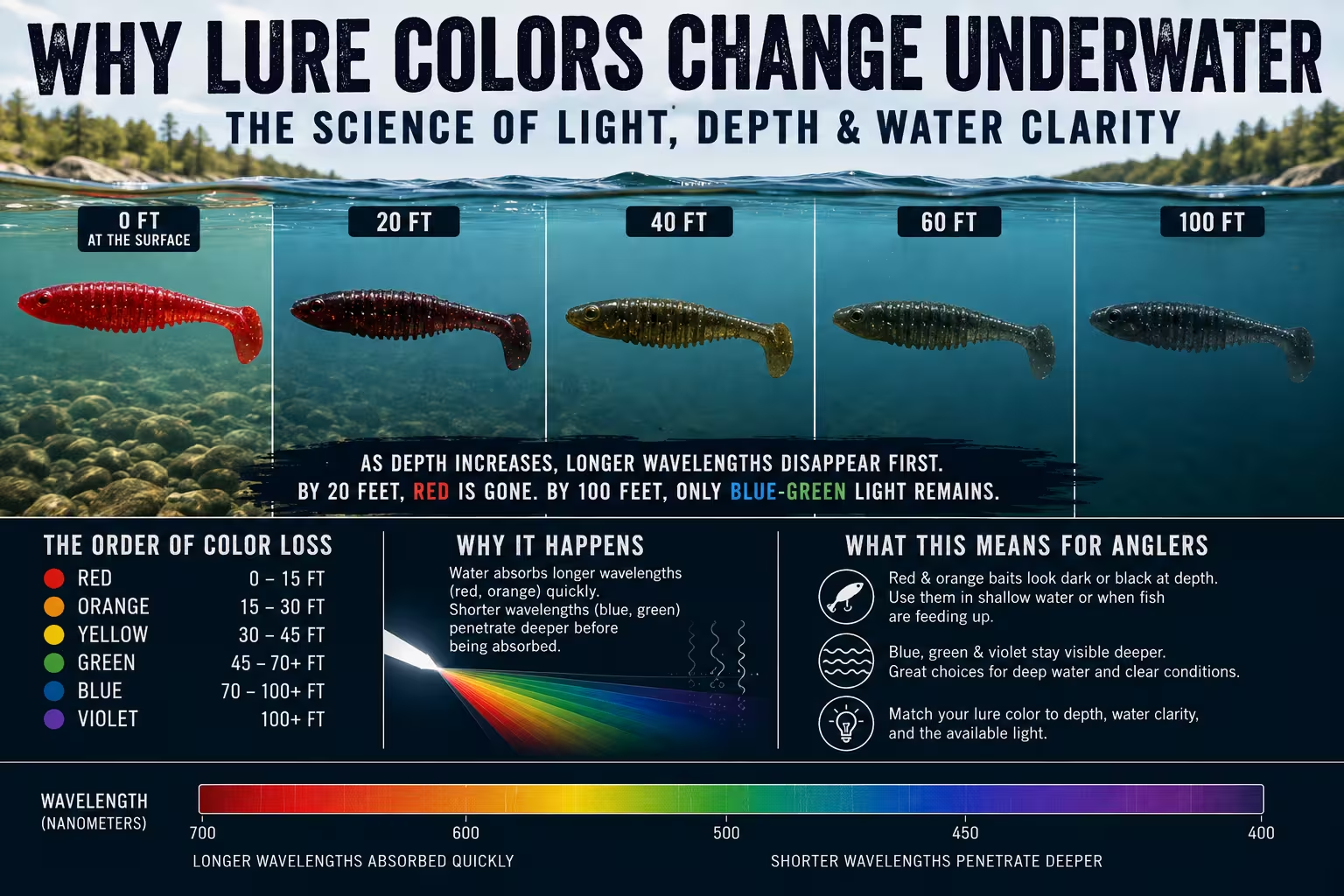
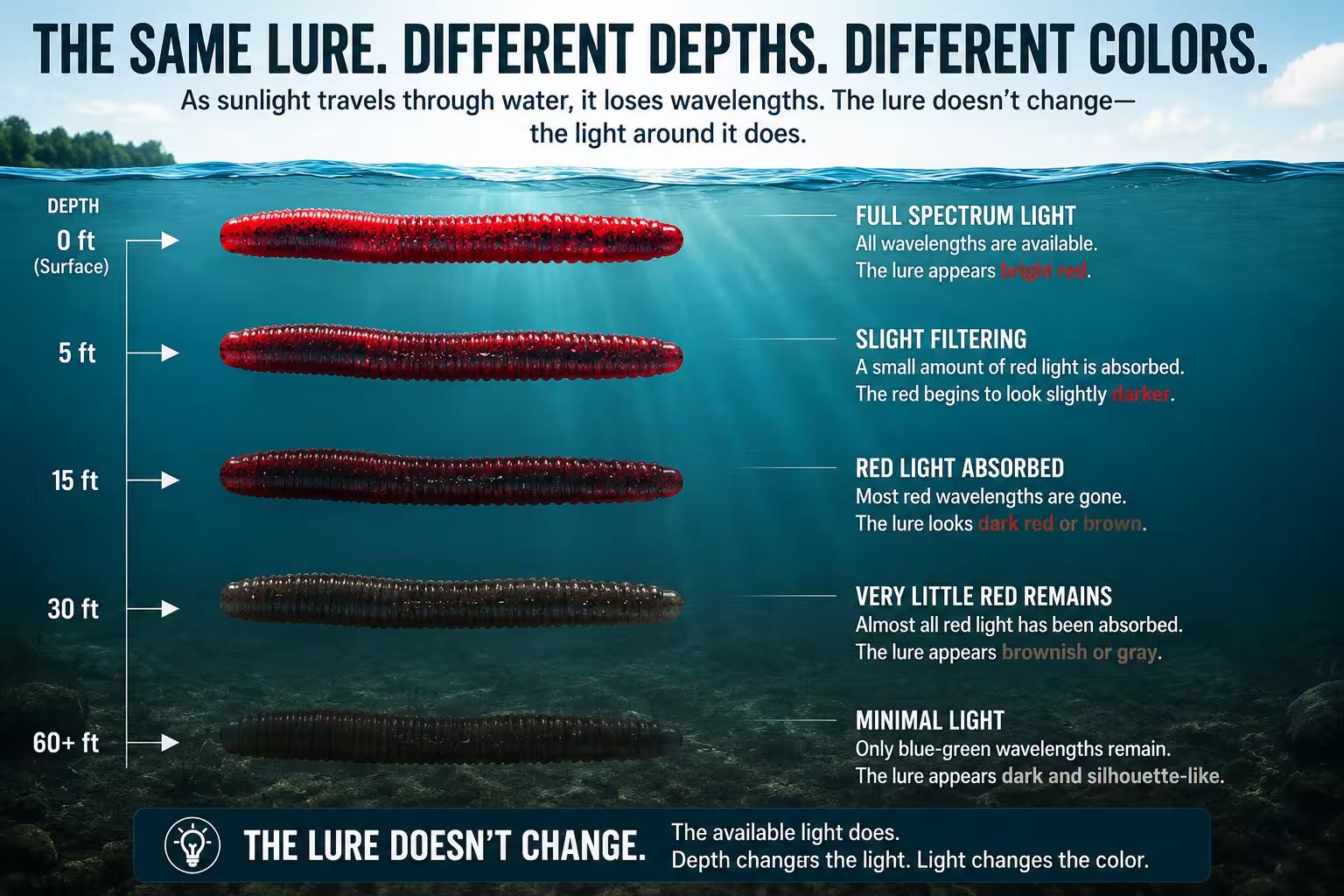
Color can matter.
But if trout are following without biting, don’t assume color is automatically the problem.
Before opening the tackle box, test another variable:
speed.
Sometimes the same lure presented differently is a more informative experiment than immediately changing to another lure.
A Simple Dead-Sticking Decision System
When trout are not responding, use a deliberate sequence rather than making random changes.
Trout Are Chasing and Striking
Keep using the active presentation.
There is no reason to solve a problem you don’t have.
Trout Are Following but Not Striking
Reduce retrieve speed.
Increase pauses.
Then test dead sticking.
Trout Are Present but the Lure Won’t Stay Near Them
Adjust jig weight, casting angle, float depth, or position.
If jig weight appears to be the problem, use How Jig Head Weight Affects Trout to work through fall rate, current, and depth control rather than changing weights randomly.
Trout Take the Lure During the Pause
Lengthen the pause and see whether the pattern repeats.
You Cannot Locate Trout
Return to a presentation that covers more water.
This approach gives each change a purpose.
Dead Sticking and Trout Regulations
The technique itself is not what determines whether your setup is legal.
The lure, bait, hook configuration, location, season, and specific regulations do.
This is particularly important in trout waters where different areas can have different restrictions.
A soft plastic that is legal in one location may not necessarily be legal in another. Scented and unscented products can also be treated differently under particular regulations.
Before dead sticking a soft plastic worm, scented bait, jig, or other presentation:
Check the current regulations for the exact water you are fishing.
Do not assume that because a lure is legal in one trout area it is legal everywhere.
Frequently Asked Questions About Dead Sticking Fishing
What is dead sticking fishing?
Dead sticking is a technique in which a lure or bait is allowed to remain nearly motionless rather than being continuously retrieved. The angler positions the presentation in a productive area and allows current, water movement, lure material, and very small adjustments to provide any necessary movement.
Does dead sticking work for trout?
Yes, dead sticking can catch trout when a slow presentation is appropriate. It can be useful when trout are holding in a known location, when active retrieves are not producing strikes, or when fish follow moving lures without committing.
It is not automatically better than an active retrieve.
What is the best lure for dead sticking trout?
Soft plastic worms and marabou jigs are useful starting points because they can retain subtle movement without a continuous retrieve. Other small finesse plastics can also work.
How long should I dead stick a lure?
There is no universal time. The useful pause depends on fish activity, current, depth, fishing pressure, lure type, and whether you know trout are present.
The important distinction is to give the lure substantially more stationary time than it receives during a conventional retrieve.
Should a dead-sticked lure sit on the bottom?
Not necessarily.
If trout are feeding near bottom, that can be productive. If they are suspended higher in the water column, placing the lure on bottom may put it below them.
Depth should follow fish position.
Can I dead stick a trout worm?
Yes, where regulations allow soft plastic baits. A trout worm can be presented on a light jig head, beneath a float, or with other appropriate finesse rigs.
Our Ribbed Trout Worm and 2.95-inch Round Trout Worm illustrate two different worm profiles that can be adapted to slow presentations.
Can I dead stick a marabou jig?
Yes. Marabou is particularly interesting for slow presentations because the fibers can respond to subtle water movement even without aggressive rod action.
Can I dead stick a minnow-style soft plastic?
Yes. One method is to swim the lure into the holding area and then stop it for an extended pause before resuming the retrieve.
A small profile such as the 1-inch Black Minnow Soft Plastic Swimbait can be used for this type of swim-and-stop presentation.
Can I dead stick under a float?
Yes. A float can help suspend the presentation at a controlled depth.
In moving water, the technique can overlap with drift fishing because the entire rig may move downstream while the angler adds little or no intentional lure action.
What jig weight should I use for dead sticking?
There is no single correct weight.
Use enough weight to reach and maintain the desired depth without adding more weight than the presentation requires. Current, depth, line, lure size, and casting angle all affect the choice.
For more detail, see How Jig Head Weight Affects Trout.
Is dead sticking the same as drift fishing?
No, although the techniques can overlap.
Drift fishing deliberately allows a presentation to move with current. Dead sticking emphasizes minimizing angler-created lure movement.
A dead-sticked lure in moving water may therefore drift naturally even though the angler isn’t actively retrieving it.
Is dead sticking only for inactive trout?
No.
Active trout can also eat a stationary or slowly moving presentation. Dead sticking is simply another presentation to test when faster approaches are not producing the response you want.
Why do trout follow my lure but not bite?
There can be many reasons, and observing a follow alone does not tell us exactly why a trout refused the lure.
Presentation speed, lure movement, size, profile, depth, color, fishing pressure, and individual fish behavior can all contribute.
If trout repeatedly follow but don’t strike, reducing retrieve speed and eventually testing a dead-stick presentation is a logical experiment.
Do I need to keep the line tight?
Not necessarily.
A completely tight line may move the lure or alter its drift. Excessive slack can make bite detection difficult.
The goal is sufficient line control to monitor the presentation without unintentionally pulling it away from the fish.
How do I detect a bite while dead sticking?
Watch the line as much as you feel the rod.
Unexpected twitches, sideways movement, premature slack, tightening, or movement against the current can indicate that something has changed at the lure.
Is dead sticking better in cold water?
It can be useful in cold water, but “cold water means trout always want a motionless lure” is too broad.
Trout behavior depends on more than temperature alone. Treat dead sticking as a presentation option to test rather than a temperature rule.
Does dead sticking work for stocked trout?
Yes, it can.
Stocked trout can be caught with many presentations, and a dead-stick approach can be useful when fish are concentrated or when active presentations stop producing.
For more on where stocked trout position themselves and feed, see Where Stocked Trout Actually Feed.
Can I use scented soft plastics when dead sticking?
Where regulations allow them, yes.
Regulations vary substantially among trout waters, so always check the rules for the specific location before fishing.
The Most Important Lesson: Stop Trying to Make the Lure Do Something
Dead sticking fishing is useful because it forces an angler to reconsider one of the most common assumptions in lure fishing:
A lure must constantly move to catch fish.
It doesn’t.
Sometimes movement attracts trout.
Sometimes movement triggers trout.
Sometimes movement helps us locate trout.
And sometimes the movement we are adding is exactly what we should remove.
The objective isn’t to fish slowly simply for the sake of fishing slowly. It is to control the presentation.
When trout are chasing, give them something to chase.
When trout respond to a jig, work the jig.
When they want a drifting presentation, drift it.
But when trout are present, seeing your lure, and refusing to commit, don’t automatically assume you need a different color, a different bait, or a different lure.
Try doing less.
Cast to the correct location. Get the lure to the correct depth. Control the line.
Then leave it alone.
That is dead sticking.
And sometimes the hardest thing an angler can do is also the most important:
Nothing.