Best Trout Lures for Beginners: What to Use, Why They Work, and How to Fish Them
Finding the best trout lures for beginners can seem complicated when a tackle shop wall is covered with spinners, spoons, jigs, crankbaits, soft plastics, flies, colors, blade shapes, hook styles, and sizes measured in fractions of an ounce. The good news is that successful trout fishing doesn’t require knowing which one of hundreds of lures is the secret lure.
For a beginner, that much choice creates the wrong impression: that successful trout fishing requires knowing which one of hundreds of lures is the secret lure.
It doesn’t.
A beginner really needs only a handful of lure types, because most successful trout lures do one of a few basic things. They imitate something a trout eats, create enough movement or flash for a trout to detect them, or present an easy opportunity that a feeding trout can intercept without spending much energy.
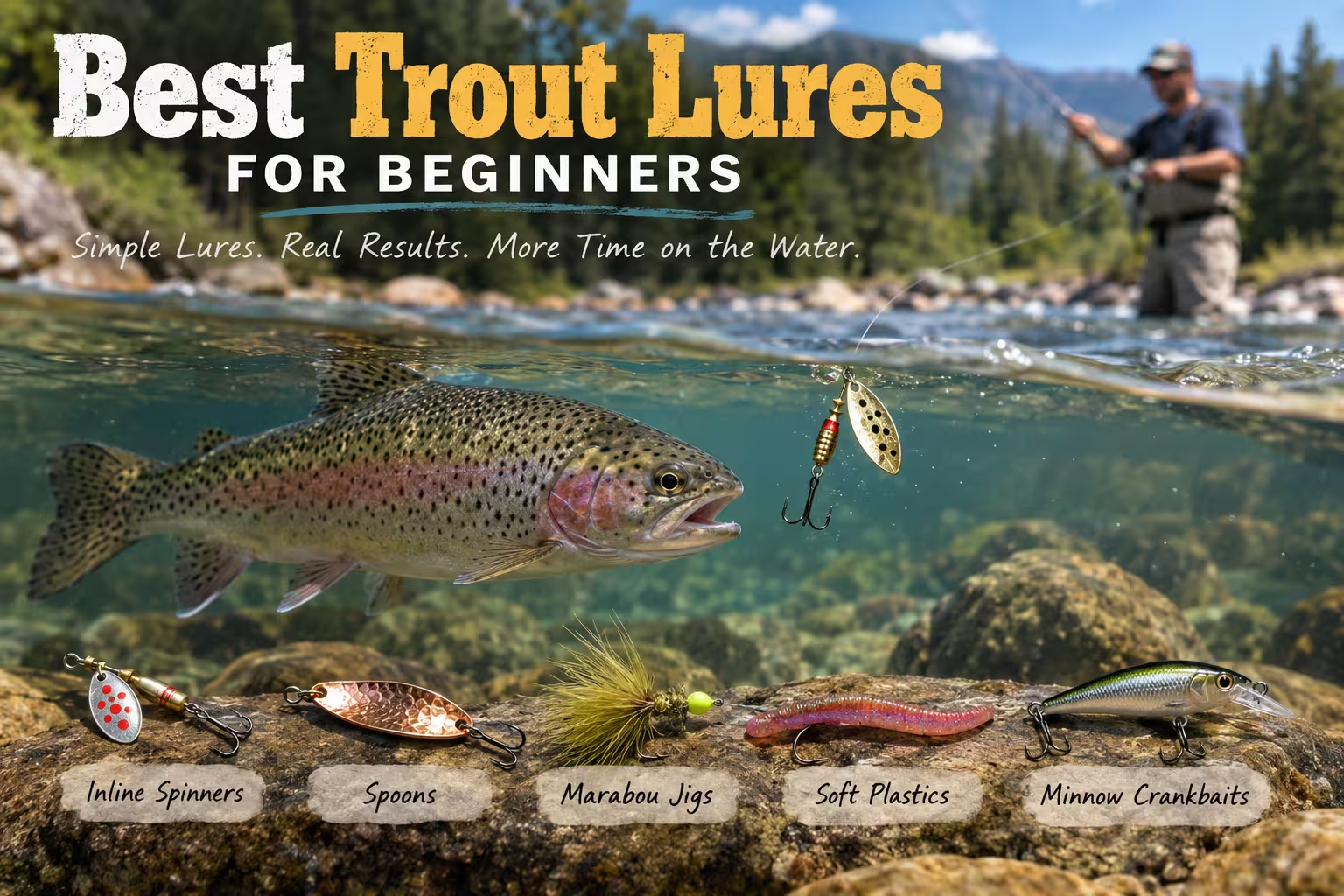
The five most useful lure categories for a beginning trout angler are small inline spinners, small spoons, marabou jigs, soft plastic worms, and small minnow-style crankbaits or jerkbaits.
Each solves a different fishing problem.
A spinner is excellent for covering water and finding active trout. A spoon gives you casting distance and lets you work different depths. A marabou jig can be fished extremely slowly and naturally. A soft plastic worm can imitate an easy drifting food item. A small minnow imitation becomes useful when trout are feeding on baitfish.
The important part isn’t owning all five. It’s understanding what each one does and knowing when to reach for it.
What Makes a Good Beginner Trout Lure?
The best lure for an experienced angler isn’t necessarily the best lure for someone making their first hundred casts.
A beginner lure should do several things well.
First, it should be relatively easy to fish correctly. If a lure requires precise rod movements, exact depth control, specialized tackle, or years of experience reading subtle strikes, it may be effective, but it isn’t an ideal starting point.
Second, it should provide some feedback. A spinner is useful for learning because you can feel the blade working. A crankbait usually produces resistance when it’s swimming correctly. A jig teaches you to watch your line and understand depth. These things help a new angler connect what they’re doing with what the lure is doing underwater.
Third, the lure should work in more than one situation. Beginners don’t need a tackle box full of highly specialized patterns. They need a few dependable tools that can be adapted to streams, ponds, lakes, stocked trout parks, and different water conditions.
Finally, it should teach something about trout.
That’s the part that gets overlooked.
A beginner who learns why a trout holds behind a boulder, why it follows a spinner without striking, why a jig works better when slowed down, or why a minnow imitation becomes effective at certain times is learning trout fishing — not merely learning how to retrieve a lure.
That knowledge transfers to almost everything else you’ll fish later.
1. Inline Spinners: Excellent for Finding Active Trout
If someone has never caught a trout on an artificial lure, a small inline spinner is one of the easiest lures to learn.
That does not mean it is always the best lure to fish all day.
In Missouri trout parks, our experience has been that inline spinners can be especially effective during roughly the first 30 minutes after fishing begins, when freshly stocked trout are often actively moving and willing to chase. As fishing pressure increases, that fast spinner bite can slow considerably, and changing to a slower presentation such as a jig or soft plastic often becomes more productive.
That 30-minute window is an observation from our own fishing, not a fixed biological rule. Weather, stocking location, water conditions, crowd pressure, and the behavior of the trout can all change how long an aggressive bite lasts.
An inline spinner has a weighted body, a hook, and a metal blade that rotates around a wire shaft as the lure moves through the water. The rotating blade produces flash and water displacement, making the lure easy for trout to detect.
For a beginner, the biggest advantage is simplicity:
Cast it out and reel it back.
The spinner also lets a new angler cover water quickly, which makes it particularly useful when trout are actively chasing rather than holding tightly in one location.
There are refinements, of course, but you can catch trout before learning any of them.
Why Trout Strike Spinners
A spinner isn’t a perfect copy of one particular prey animal. Instead, it produces several signals associated with small moving prey.
The rotating blade flashes as its angle to available light changes. At the same time, the blade displaces water and creates vibration.
That combination makes the lure noticeable.
This is particularly useful when you’re searching for trout rather than presenting to a fish you can actually see. Instead of waiting for a trout to encounter a stationary lure, you’re moving a detectable target through a larger section of water.
That makes the spinner a good search lure.
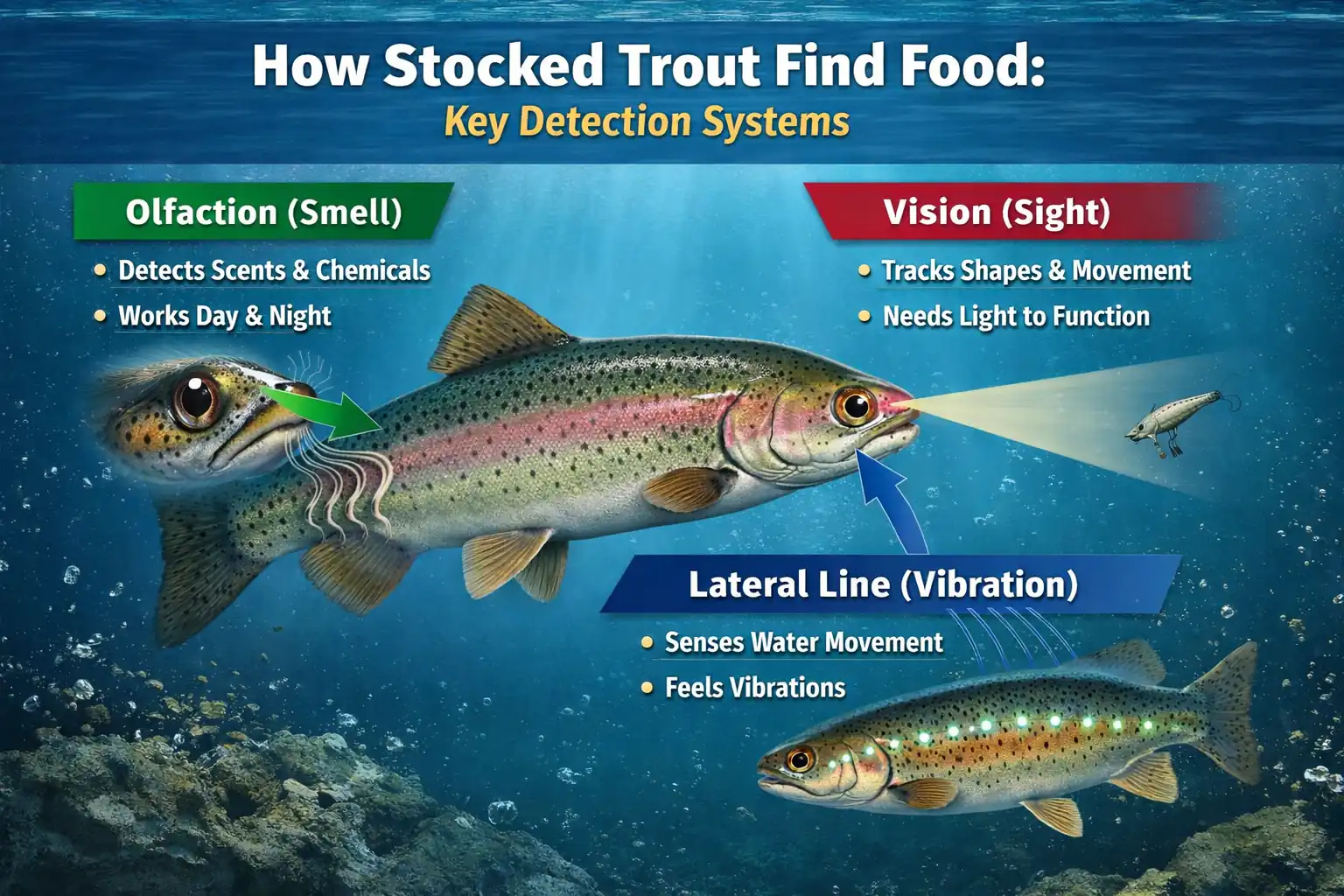
There is also a useful connection here to how trout sense their surroundings. Trout detect underwater disturbances differently than humans perceive sound. If you want the deeper explanation, our guide to what trout actually hear underwater explains trout hearing, particle motion, and the lateral line in considerably more detail.
For the beginner, the practical lesson is simpler: a spinner gives a trout more than just a visual target.
How to Fish an Inline Spinner
Start with a cast beyond the area you believe holds trout.
As soon as the lure reaches the depth you want, begin retrieving it fast enough to make the blade rotate consistently.
You do not need to reel as fast as possible.
In fact, one of the most useful spinner skills is learning the slowest retrieve speed that keeps the blade working. That lets the lure remain in productive water longer.
In a stream, cast upstream and across or across the current rather than simply throwing straight downstream every time. Allow the current and your retrieve to bring the spinner through likely holding water.
Pay particular attention to current seams, pockets behind rocks, the edges of deeper runs, and other places where fast water meets slower water.
Those locations aren’t random. Trout frequently use slower water next to faster current so they can reduce the energy required to hold position while remaining close to food being delivered by the flow. We explain how to identify those spots in How Trout Use Current Breaks.
In a pond or lake, fan-cast the area rather than repeatedly throwing to exactly the same spot. Start shallow, then allow the spinner to sink longer on later casts so you gradually search deeper water.
The Biggest Spinner Mistake
Retrieving too fast.
The blade needs to rotate. The lure does not need to race through the water.
If you can feel the blade working, you’re generally moving fast enough. From there, experiment with speed until the trout tell you what they want.
If you’re repeatedly getting follows without strikes, don’t automatically change colors. Try changing speed, depth, or direction first.
2. Small Spoons: Simple, Versatile, and Excellent for Covering Water
A small casting spoon is another very good beginner trout lure.
A spoon is essentially a curved piece of metal designed to wobble as it’s pulled through the water. That wobbling motion creates changing flashes of reflected light while the lure moves from side to side.
Like a spinner, a spoon can imitate the general visual signals of a small injured or fleeing fish without reproducing one perfectly.
But a spoon has one major advantage over many small trout lures:
It casts extremely well for its size.
That matters more than it might sound.
Bank anglers frequently encounter trout holding farther from shore than a very light jig or soft plastic can comfortably reach. A compact metal spoon puts considerable weight into a small profile, making longer casts much easier.
How to Fish a Trout Spoon
The simplest spoon retrieve is a steady retrieve.
Cast beyond the target, allow the spoon to sink to the approximate depth you want, and reel it back fast enough that it wobbles rather than simply dragging through the water.
You can change depth by changing two things:
Sink time and retrieve speed.
Let it sink longer and it starts deeper.
Retrieve more slowly and it generally stays deeper.
Begin retrieving sooner or retrieve faster and it generally runs higher.
This gives a beginner a straightforward way to search the water column without changing lures.
Suppose you’re fishing a stocked lake from shore and don’t know whether the trout are two feet down or ten feet down. Make the first few casts fairly shallow. If nothing happens, let the spoon sink progressively longer before beginning the retrieve.
You’re not just casting randomly anymore. You’re searching different layers of water.
Spinner or Spoon?
Beginners often wonder why they would need both.
Think of them as related tools with different strengths.
The spinner provides strong blade rotation and is very easy to fish at a steady pace.
The spoon generally gives you better casting distance and can be allowed to sink before the retrieve, making it easier to probe deeper water.
If you’re fishing a small stream where long casts aren’t necessary, an inline spinner may be the simpler choice.
If you’re standing on the bank of a larger lake and need to reach trout farther offshore, a small spoon becomes extremely useful.
Neither is universally better.
They solve different problems.
3. Marabou Jigs: One of the Best Lures for Learning Finesse
A marabou jig looks almost too simple to be as effective as it is.
It consists of a weighted jig head and hook dressed with marabou feather fibers. In the water, those fibers expand, collapse, pulse, and move with extremely small changes in current or rod movement.
That means a marabou jig doesn’t need a fast retrieve to produce action.
Sometimes it barely needs a retrieve at all.
The Missouri Department of Conservation specifically identifies marabou jigs as trout lures that have proven themselves over time, with sizes extending from 1/16 ounce down to extremely small 1/256-ounce jigs.
For a beginner, however, there’s no reason to start at the extreme end of that range. Very tiny jigs become difficult to cast and control without appropriately light tackle.
A small jig you can comfortably cast and feel is a better learning tool.
Why Marabou Works
Marabou moves with very little input.
Pull it forward and the fibers compress.
Pause it and they expand.
Move it gently and they pulse.
Current alone can keep the material moving.
That gives the jig a lifelike appearance at very slow speeds — exactly what you want when trout aren’t willing to chase a faster spinner or spoon.
This becomes especially important in colder water or around pressured trout.
Trout are ectothermic animals, meaning their body temperature and metabolism are strongly influenced by the surrounding water. Their feeding behavior therefore changes through the year rather than remaining constant.
Our Trout Diet by Season guide goes deeper into how temperature, metabolism, and available food change trout feeding from winter through fall.
For lure selection, the lesson is straightforward: there are times when slowing down matters.
That’s where a marabou jig becomes valuable.
How to Fish a Marabou Jig
You have several beginner-friendly options.
In moving water, cast slightly upstream and allow the jig to drift through likely holding areas while maintaining enough line control to detect a strike.
In still water, cast it out, allow it to sink, and retrieve it with small lifts followed by pauses.
You can also suspend a small jig beneath a float. The float helps control depth while waves, current, and subtle rod movements keep the jig alive underneath.
Don’t make the mistake of thinking “jig” means you must constantly jerk the rod.
With marabou, small movements are often enough.
Watch your line carefully. Trout can take a light jig without producing the dramatic strike a beginner expects. The line may jump, stop sinking, move sideways, or simply feel different.
When that happens, tighten the line and set the hook with control rather than trying to drive the hook home with a bass-style hookset.
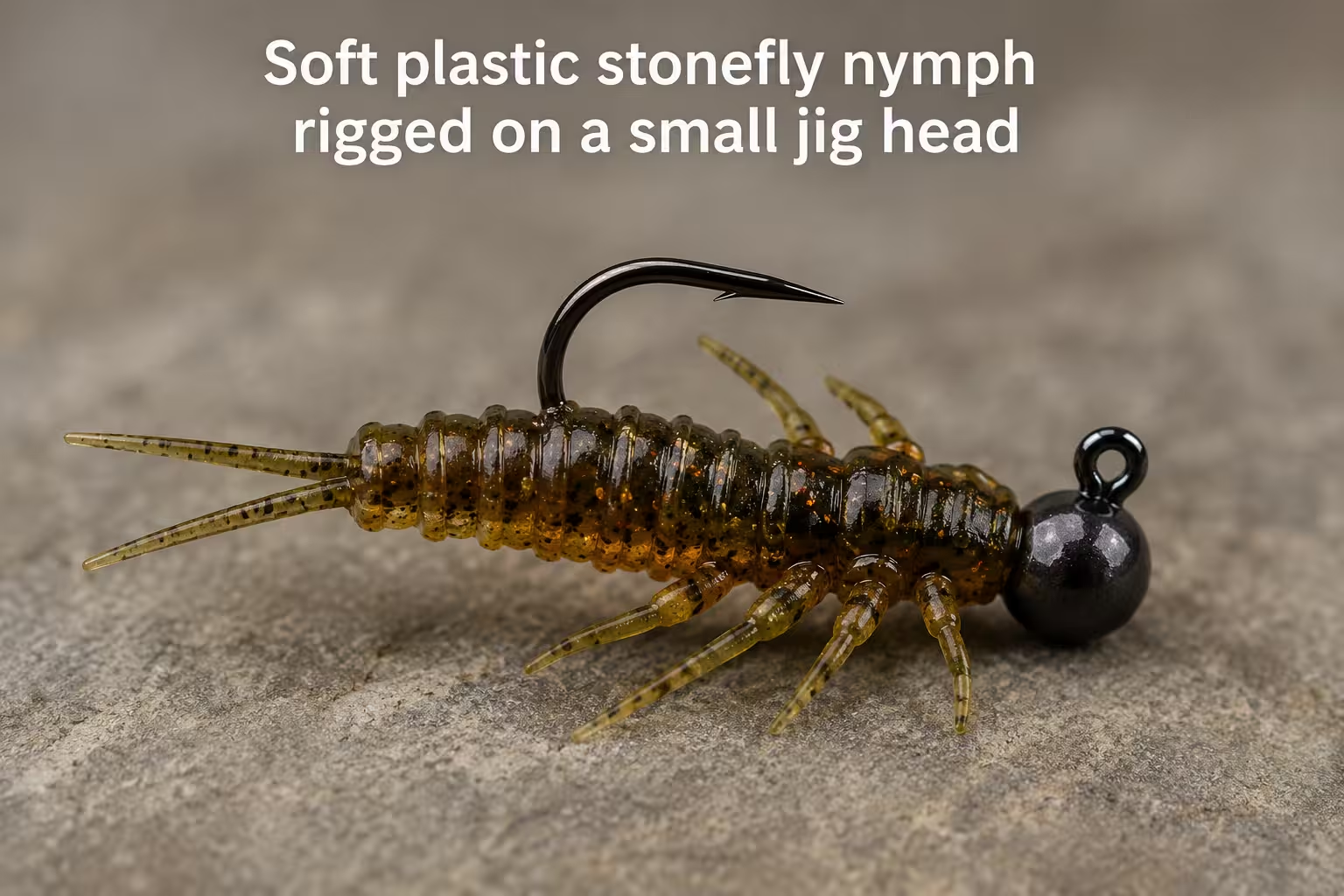
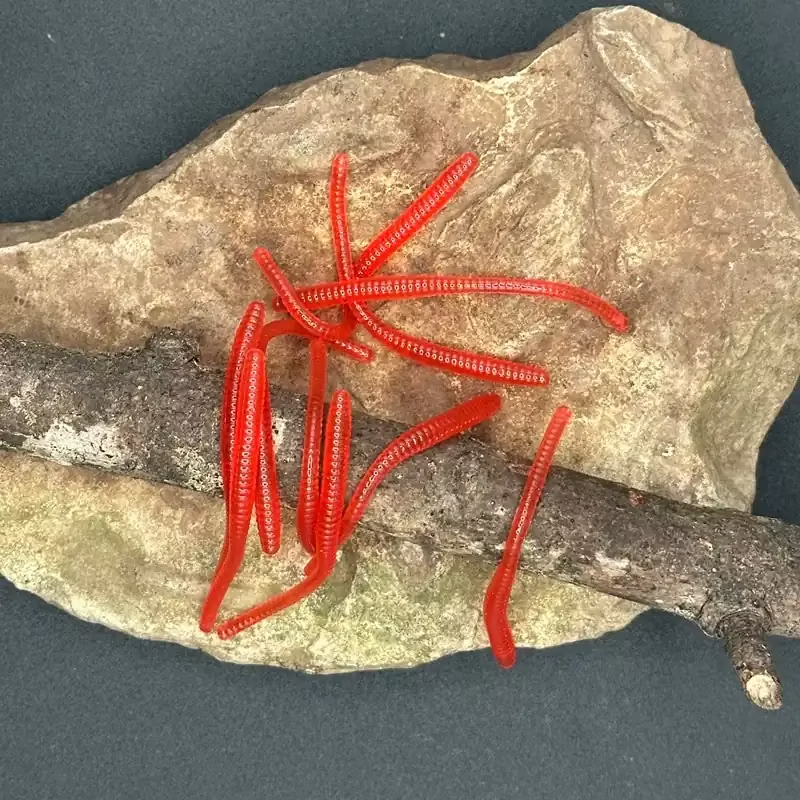
4. Soft Plastic Trout Worms: Simple Presentation With Multiple Rigging Options
Soft plastic worms deserve a place in a beginner’s trout box because they can be fished in several completely different ways without requiring complicated tackle.
They can be placed on a small jig head.
They can be drifted on a plain hook with split shot.
They can be suspended under a float.
They can be used on a drop-shot rig.
And unlike a spinner or spoon, the angler doesn’t necessarily need to create the lure’s action with a continuous retrieve.
A soft, flexible worm can move from current, water resistance, and very small rod movements.
Why a Worm Profile Makes Sense to Trout
Trout do encounter real earthworms, particularly when rain and runoff wash terrestrial worms into streams.
That doesn’t mean a plastic worm must perfectly reproduce an earthworm to catch trout. But it does mean the basic elongated, soft-bodied profile represents a legitimate food shape.
Our article on why trout eat worms explains this in detail: earthworms are terrestrial rather than aquatic animals, so their availability in streams is closely associated with runoff, saturated banks, and other events that carry them into the water. The article also explains why a natural drift is so effective with worm presentations. The previous Family Fishin post used that same biology-first approach rather than treating the worm as simply a traditional bait.
For beginners, soft plastics offer another important advantage: you can slow everything down.
If a spinner passes through a holding area in a few seconds, a lightly weighted soft plastic can remain there much longer.
A Simple Beginner Rig
One of the easiest setups is a small hook or jig head with a trout-sized soft plastic worm.
In current, use enough weight to get the lure into the feeding zone without turning it into an anchor.
You want the presentation moving naturally with the water, not constantly snagging the bottom.
If you need more depth, increase weight gradually.
If you’re constantly hanging up, reduce weight or shorten the amount of time you allow the lure to sink.
In still water, a float can make depth control easier. Adjust the distance between the float and lure until the worm travels through the depth where trout are holding.
There is no single soft plastic color that wins in every water condition. Visibility changes with water clarity, depth, available light, and background. That’s why color is better treated as part of a system than as a list of supposedly magical shades.
Our Best Soft Plastics for Trout guide covers soft-plastic selection, visibility, rigging, and presentation in considerably more detail.
5. Small Minnow Crankbaits and Jerkbaits: When Trout Are Hunting Fish
Small minnow-style hard baits are a useful next step once a beginner becomes comfortable casting and retrieving spinners and spoons.
These lures generally have a hard body shaped like a small fish. Many use a plastic diving lip that causes the lure to dive and wobble during the retrieve.
Unlike a spinner, which produces an obvious rotating blade, a minnow-style crankbait or jerkbait is more directly built around the appearance and movement of a small fish.
That matters because trout do eat fish.
And for larger trout, baitfish can become increasingly important prey.
Our article on why trout eat minnows explains the biology behind that behavior, including why larger prey can offer a substantial energetic payoff compared with capturing many tiny food items.
How to Fish a Small Minnow Imitation
A beginner can start with a steady retrieve.
You don’t need an elaborate jerk-pause-jerk sequence immediately.
Cast the lure past the target area and retrieve it at a speed that makes it wobble properly.
Once you’re comfortable with that, start experimenting with pauses.
A retrieve might become:
Reel.
Pause.
Reel.
Pause.
Or you can add a gentle twitch before the pause.
The point isn’t to memorize a secret cadence. It’s to observe what the lure does and repeat what produces a response.
Minnow imitations can be particularly useful around deeper pools, lake shorelines, current seams, and places where trout have access to small fish.
They’re also useful when you need to cover water but want a more obvious baitfish profile than a spinner provides.
Which Are the Best Trout Lures for Beginners?
If you want the simplest possible answer, start with three:
Spinner first when the fish are aggressive → jig or soft plastic when the initial chase bite slows.
Those three teach three very different forms of trout fishing.
The spinner teaches you to cover water.
The jig teaches you to slow down and control depth.
The soft plastic teaches you presentation and natural drift.
Add a spoon when you need more casting distance or want to search deeper water.
Add a small minnow imitation when you’re ready to deliberately target trout feeding on baitfish.
That gives you five lure families capable of handling an enormous range of trout-fishing situations without filling a tackle box with dozens of specialized lures.
Choosing Lure Size and Weight
Beginners often focus on color before size and weight.
Usually, that’s backward.
The weight of the lure determines whether you can cast it effectively, reach the proper depth, control it in current, and keep it in the strike zone.
Too light and you may never reach the fish.
Too heavy and you may constantly drag bottom, snag, or move unnaturally.
There isn’t one correct lure weight for every trout stream because current speed, depth, tackle, casting distance, and fish size all change.
The better rule is:
Use enough weight to reach and control the water you’re trying to fish, but no more than necessary.
The same principle applies to lure size.
Most beginner trout fishing is better served by relatively small lures than by oversized ones, but “small” is relative to the trout and available prey.
Don’t turn lure selection into a mathematical formula that doesn’t exist.
Match the tool to the water.
Color: Keep It Simple at First
A beginner can easily spend more time choosing colors than fishing.
Don’t.
Start with a small selection that gives you different levels of visibility and contrast.
For metallic lures, having both silver-toned and gold-toned options gives you a useful starting range.
For jigs and plastics, carry a few subdued or natural colors and a few brighter or higher-contrast colors.
Then let the conditions and fish response guide you.
If you’re getting follows but no strikes, change something.
But don’t assume color is automatically the problem.
Change retrieve speed.
Change depth.
Change angle.
Change lure size.
Then experiment with color.
Trout can’t strike a lure they never encounter. Getting the lure in front of a fish and making it behave appropriately usually matters more than endlessly switching between slightly different shades.
Where You Cast Matters More Than What’s Tied On
This may be the most important lesson in the entire article.
A great lure fished where there are no trout is still fishing empty water.
In streams, look for:
- current seams
- pockets behind and beside rocks
- deeper runs
- undercut banks
- tailouts
- depth changes
- slower water immediately adjacent to faster current
These are locations where trout can balance two competing needs: conserving energy and obtaining food.
Before making your first cast, spend a minute looking at the water.
Where does the fast water slow down?
Where does current change direction?
Where does a deep run border shallow water?
Where can a trout sit without fighting the strongest flow while remaining close enough to intercept food?
Once you start asking those questions, lure choice becomes much easier.
You’re no longer trying to make a lure convince a trout to cross half the river.
You’re trying to put the lure into the trout’s existing feeding lane.
The Beginner’s Biggest Mistake: Changing Lures Too Quickly
A beginner catches nothing for five minutes and assumes the lure is wrong.
So they change it.
Five minutes later, they change again.
After an hour they’ve used ten lures without really learning how to fish any of them.
A better approach is to change one variable at a time.
Keep the same lure and change retrieve speed.
Then change depth.
Then change casting angle.
Then try a different piece of water.
If those changes don’t produce anything, switch lure types.
This approach teaches you something even when you aren’t catching fish.
Random lure changes don’t.
Don’t Ignore Fishing Regulations
Trout regulations can vary substantially between states, individual waters, seasons, and special management areas.
Some waters permit bait.
Some restrict it.
Some have artificial-lure or artificial-fly requirements.
Some restrict hook types or the number of hooks.
Definitions can also matter. A scented or impregnated soft plastic may not necessarily be treated the same way as an unscented artificial lure under every set of regulations.
Don’t assume that because a lure is sold as a “trout lure” it is legal on the water you’re fishing.
Check the current regulations for the specific body of water before fishing.
This is particularly important on special-regulation and catch-and-release trout waters.
Frequently Asked Questions
What is the best trout lure for a complete beginner?
A small inline spinner is one of the easiest artificial lures for a beginner to learn because the basic presentation is simply casting and retrieving while keeping the blade rotating. It also lets a new angler cover a substantial amount of water while searching for active trout.
What are the five best types of trout lures for beginners?
A useful beginner selection is small inline spinners, small casting spoons, marabou jigs, soft plastic trout worms, and small minnow-style crankbaits or jerkbaits. Together, those lure types cover fast and slow presentations, shallow and deeper water, drifting food, and baitfish imitation.
Are spinners or spoons better for beginner trout fishing?
Both are beginner-friendly, but they have different strengths. Inline spinners are extremely simple to retrieve and produce strong flash and vibration. Compact spoons generally cast farther and make it easy to search different depths by changing sink time and retrieve speed.
What size lure should I use for trout?
There is no universal size that works for every trout fishery. In general, relatively small lures are appropriate for typical stream and stocked-trout fishing, but lure size and weight should be matched to fish size, water depth, current speed, available forage, and the distance you need to cast.
Are marabou jigs good for beginner trout anglers?
Yes. Marabou jigs are particularly useful for teaching slower presentations. The feather fibers move with very little rod movement and can be drifted, slowly retrieved, jigged gently, or suspended beneath a float. They are especially useful when trout aren’t willing to chase a faster-moving lure.
Do soft plastic worms really work for trout?
Yes. Trout naturally encounter terrestrial worms that enter streams through runoff, erosion, and other events, and soft plastic worms can present a similar elongated, soft-bodied profile. They can also be rigged in several beginner-friendly ways, including on a jig head, beneath a float, or with a lightly weighted drift rig.
Do trout eat minnow lures?
Yes. Trout eat small fish, and baitfish can become important prey, particularly for larger trout. Small minnow-style crankbaits and jerkbaits can imitate that prey and can be fished with either a steady retrieve or retrieve-and-pause presentation.
What color trout lure should a beginner use?
Don’t look for one universal “best” color. Carry a small selection that provides different levels of visibility and contrast. For spinners and spoons, silver- and gold-toned finishes provide a practical starting point. For jigs and plastics, carry both natural/subdued and brighter or higher-contrast choices. Water clarity, depth, light, background, and trout behavior can all affect visibility and response.
How fast should I retrieve a trout spinner?
Retrieve it fast enough that the blade rotates consistently. You don’t need to retrieve it as fast as possible. Learning the slowest speed that keeps the blade working is useful because it lets the spinner remain in productive water longer.
How deep should I fish a trout lure?
Fish the depth where the trout are holding rather than relying on one fixed depth. Start by working the most likely part of the water column, then systematically fish deeper or shallower until you locate fish. With spoons and jigs, changing sink time is an easy way to search different depths.
Should beginners use a float with trout lures?
A float can be very useful with small jigs and soft plastics because it gives a beginner direct control over approximate presentation depth and provides a visible strike indicator. It is especially useful in ponds, slower pools, and other situations where you want a small lure suspended at a consistent depth.
Why do trout follow a lure without biting it?
A following trout has detected the lure but hasn’t necessarily decided to strike. The problem may be retrieve speed, depth, lure size, presentation angle, color, or simply the fish’s level of feeding motivation. Instead of immediately replacing the lure, change one variable at a time and watch for a different response.
Is lure color more important than presentation?
Usually, getting the lure to the right location and depth with an appropriate movement should come first. Color can matter because it affects visibility and contrast, but changing colors won’t solve a lure that’s passing several feet above a trout or moving unnaturally through its feeding lane.
Where should a beginner cast for trout in a stream?
Look for places where trout can hold in relatively slower water close to faster water carrying food. Current seams, boulders, deeper runs, undercut banks, tailouts, pocket water, and depth changes are all worth checking. Learning to identify these holding areas is more valuable than randomly casting across the entire stream.
Do I need a large tackle box to start trout fishing?
No. A beginner can learn a tremendous amount with only a few lure types. A couple of inline spinners, a spoon or two, several small jigs, a few soft plastic worms, and a small minnow imitation cover most of the basic presentations a new trout angler needs to learn.
Should I change lures if I’m not catching trout?
Eventually, yes — but don’t make changing lures your first response. First change retrieve speed, depth, casting angle, or location. Changing one variable at a time helps determine what the trout are responding to and teaches you much more than cycling rapidly through an entire tackle box.
Are artificial trout lures legal everywhere?
No. Regulations vary by jurisdiction and individual body of water. Special-regulation trout waters may restrict bait, lure types, hook configuration, or other tackle. Some regulations may also define scented or impregnated artificial products differently from unscented lures. Always check the current regulations for the exact water you plan to fish.
Closing Thought
The best trout lure for a beginner isn’t the lure with the most complicated design, the newest color, or the biggest collection of claims printed on the package.
It’s the lure that teaches you what the trout are doing.
Start with an inline spinner and learn how retrieve speed changes the presentation. Fish a spoon and learn to search different depths. Slow down with a marabou jig and learn how little movement a lure sometimes needs. Drift a soft plastic worm and learn how current carries food through a trout’s feeding lane. Fish a minnow imitation and start recognizing when trout are behaving like predators rather than simply waiting for drifting food.
Most importantly, watch the water.
A trout doesn’t know whether you’re a beginner or whether the lure you’re holding is considered the “best” one. It responds to what reaches its position, what it can detect, what resembles an opportunity to feed, and whether taking that opportunity is worth the effort.
Learn those pieces first, and the wall of hundreds of trout lures at the tackle shop becomes much less confusing.
Instead of asking, “Which lure should I buy?”
You’ll start asking the much more useful question:
“What do I need this lure to do?”
That’s when you’re really starting to learn how to fish for trout.