Why Trout Eat Leeches
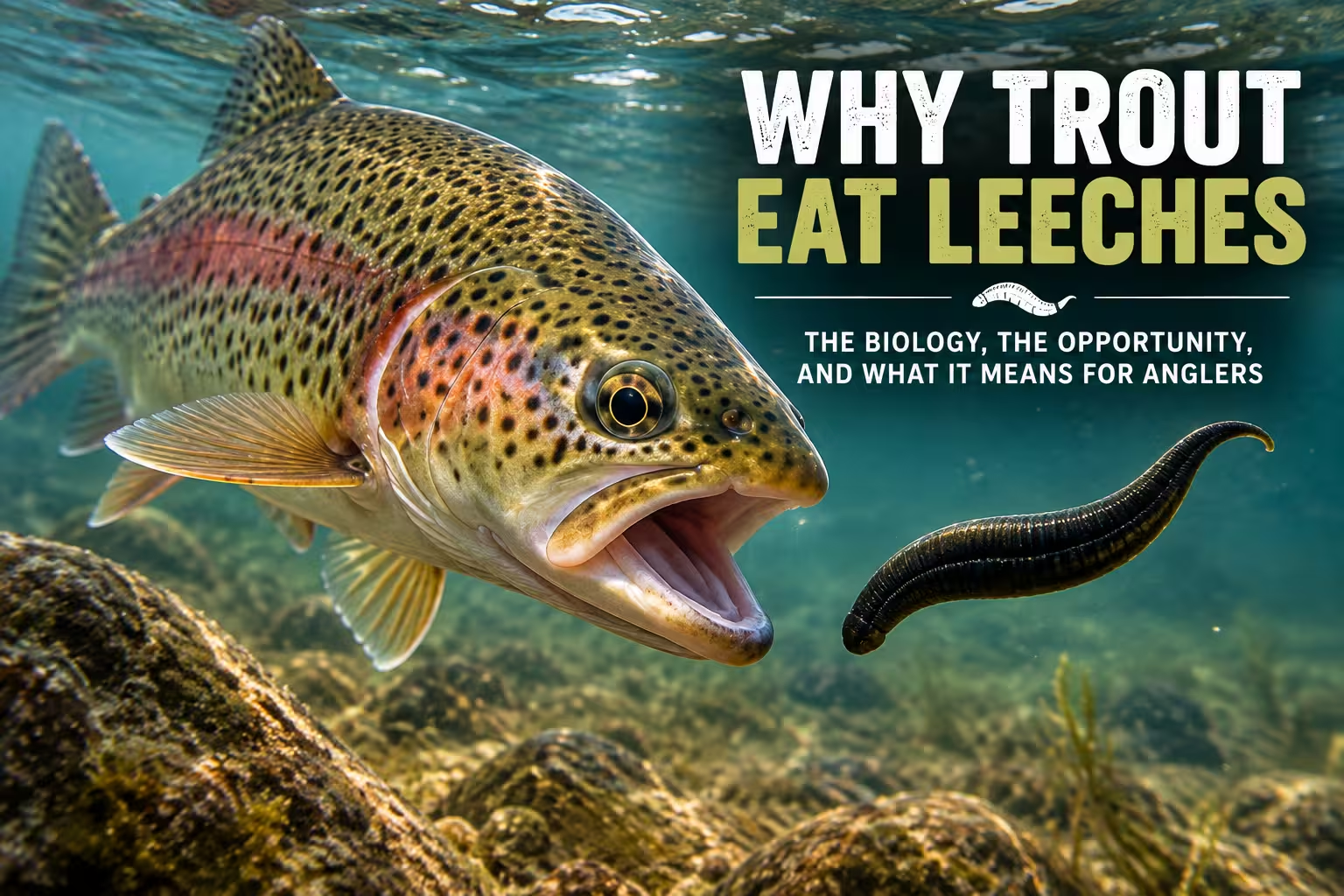
Mention leeches to most anglers and you’ll get a shudder, not a strategy. It’s an odd blind spot, because in stillwater trout fisheries — lakes, reservoirs, ponds — leeches are quietly one of the most consistent, highest-percentage food sources a trout ever encounters, and some of the biggest rainbows and browns taken from lakes every year come on nothing more than a slow-swimming black or olive leech pattern. Understanding why trout eat leeches explains something that trips up a lot of stream anglers moving to lake fishing for the first time: why the fast, flashy presentations that work in current so often go untouched in a lake, while a slow, undulating, almost boring retrieve produces the biggest fish of the day.
This is the fourth post in our Trout Food Sources series, and it’s worth reading the first three if you haven’t, since the ideas keep building on one another. Our overview on how trout diet shifts by season explains why a trout’s feeding priorities change with water temperature and metabolism. Our piece on why trout eat minnows covers the shift toward fast, calorie-dense baitfish predation as trout grow. Our piece on why trout eat crawfish covers a slower, structure-bound, high-reliability food source in rivers and rocky streams. Leeches round out the picture, and in a lot of ways they’re the odd one out — not because trout eat them any less eagerly, but because the water they live in, the way they move, and the way trout hunt them are all different enough from baitfish and crawfish to deserve their own explanation.
What a Leech Actually Is
Before getting into why trout eat them, it’s worth clearing up what a leech actually is, since the word carries more baggage than biology for most anglers. A leech is a segmented worm, a member of the class Hirudinea, and a closer relative of the earthworm than of anything you’d typically call a parasite. There are hundreds of freshwater leech species in North America alone, and while the blood-feeding leech is the one that shows up in campfire stories, most freshwater leeches trout actually encounter are predators or scavengers in their own right, hunting insect larvae, worms, snails, and dead organic matter rather than latching onto anything with a pulse. A minority of species are parasitic and will feed on the blood of fish, amphibians, or waterfowl when the opportunity arises, but the leeches making up the bulk of a trout’s diet are simply another invertebrate working the same soft, muddy bottoms as everything else down there.
Like an earthworm, a leech’s body is built from repeating segments, and it moves using a pair of suckers — one at each end — that let it anchor, extend, and pull itself along a surface. That basic body plan is also what makes a leech such an efficient meal once a trout finds one: no shell to work around, no bones, no fins, nothing but a soft, muscular tube that offers a trout almost no resistance going down.
Why Trout Eat Leeches: High Reward, Low Effort
The same basic rule that governs every other food source in this series applies here too: a meal has to deliver more energy than it costs to catch. Leeches score unusually well on both sides of that equation, which is part of why they punch so far above their reputation.
On the calorie side, a leech is essentially a soft, protein-dense tube with no shell, no scales, and no bones to work around. Unlike a crawfish, which carries real caloric loss in the form of an indigestible exoskeleton and claws a trout often has to work to disable, a leech is close to 100 percent usable tissue. Pound for pound, a leech isn’t quite as energy-dense as an oily baitfish, but it’s considerably more efficient than an insect, and a trout doesn’t lose much value to shell, fin, or bone waste the way it does with other prey types.
On the cost side, a leech is about as close to a free meal as exists in a trout’s world. It has no claws, no teeth, no burst of speed, and no armor. Its only real defenses are to contract into a tight ball, hide under cover, or, in open water, attempt a slow undulating retreat that a trout can run down without much effort at all. A minnow makes a trout work for its calories through speed and evasion. A crawfish makes a trout work through claws and structure. A leech asks almost nothing of the trout that finds it — which is exactly why leeches show up so reliably in the stomach contents of stillwater trout, even though no single leech represents a huge caloric jackpot on its own.
This combination — decent calories, essentially zero risk, and minimal effort — is what makes leeches a background food source that trout will eat opportunistically almost any time one crosses their path, rather than a food source tied to a narrow trigger window the way a baitfish chase or a crawfish molt is. It also explains something stillwater anglers learn quickly: trout rarely refuse a well-presented leech pattern outright. They may ignore it if something more calorie-rich is available, but a leech is close to universally acceptable across seasons, water clarity, and trout size, in a way few other prey items are.
Which Waters — and Which Trout — Actually Key on Leeches
Leeches are overwhelmingly a stillwater and slow-water phenomenon, and that single fact does more to determine when a leech pattern belongs in your box than anything about the trout themselves.
Freshwater leeches need slow current, soft bottoms, and abundant cover — silt, muck, decaying vegetation, and submerged debris — to thrive. Fast, cobble-bottomed freestone streams, the classic home water for a lot of crawfish and sculpin predation, simply don’t hold many leeches; the current is too fast and the bottom too clean and rocky for leech populations to establish in any real numbers. Lakes, ponds, reservoirs, slow spring creeks, and the sluggish tailouts and backwaters of larger rivers are a different story entirely. These environments hold the soft, organically rich bottoms leeches need, and trout living in that water learn to recognize and hunt them as a matter of course.
This is why leech patterns dominate stillwater trout fishing in a way they rarely do on a freestone trout stream. If you fish lakes and reservoirs for trout, leeches deserve a place in your box right alongside your favorite baitfish and scud patterns. If you fish fast mountain streams almost exclusively, leeches are a minor factor at best, and your time is better spent matching the crawfish, sculpin, and insect patterns those streams actually support.
Both rainbow and brown trout eat leeches readily in stillwater systems, and unlike crawfish predation, which skews hard toward larger, more capable browns, leech predation doesn’t require much in the way of size or predatory sophistication. Because leeches offer essentially no resistance, even modest-sized trout can eat them confidently, which means leech patterns tend to produce across a wider range of trout sizes than crawfish or baitfish imitations typically do. That said, larger trout still take a disproportionate share of the biggest leeches available in a given system, for the same reason bigger trout take bigger prey of any kind — the caloric payoff scales with size, and a bigger trout can process a bigger leech without difficulty.
Brook trout and cutthroat in lake environments eat leeches too, and in alpine and high-mountain lakes where insect hatches can be sparse and unpredictable, leeches often become a disproportionately important, dependable food source precisely because they don’t require a hatch or a spawning run to be available — they’re simply always down there, moving through the muck at their own pace.
Reading a lake for leech potential works much the same way reading a streambed for crawfish potential does. Soft, dark, organically rich bottoms — silt, decomposing vegetation, muck flats near inlets and weed beds — hold leeches. Clean sand, gravel, or hard rock bottoms generally don’t. A few minutes spent probing the bottom with a paddle or wading boot in the shallows near a boat launch or inlet tells you more about whether leech patterns belong in your rotation on a given lake than any general rule of thumb ever could.
The Swim Is the Trigger: How Leeches Actually Move
Leech locomotion is genuinely unusual among trout prey, and understanding it is the single most useful piece of biology in this post, because it’s the direct basis for how a leech pattern should be fished.
On the bottom, a leech moves by looping — anchoring one sucker, reaching forward with the other end of its body, anchoring that end, then releasing the first and repeating the motion, inchworm-style. This crawling gait is slow and largely invisible to a cruising trout unless the trout is looking directly at the bottom, which limits how often this phase of leech movement actually triggers a strike.
The far more important behavior, from a fishing standpoint, is what a leech does when it leaves the bottom and swims through open water. A swimming leech moves its entire body in a smooth, ribbon-like, side-to-side undulation — a wave that travels the length of its body from head to tail, propelling it forward in a slow, sinuous glide. This motion is distinctive, visible from a distance, and reads unmistakably as “leech” to a trout that has seen the real thing. It’s also, notably, a much slower and more exposed way to travel than crawling, which is why leeches only swim when they have a specific reason to — searching for food, avoiding a disturbance, or during the reproductive season when they leave the bottom to find mates or lay cocoons in shallower water.
This swimming behavior is the entire foundation of leech-pattern fly and lure fishing. An unweighted or lightly weighted leech imitation, fished with a slow, steady retrieve interrupted by pauses, produces exactly the undulating S-curve motion of a real swimming leech — tail trailing and rippling behind a slightly denser head section as the whole profile glides through the water column. A stiff, straight-line retrieve or an erratic, jerky one breaks that illusion immediately, which is part of why leech patterns reward patience and a slow hand far more than most other imitations in a trout angler’s arsenal.
Leeches are also considerably more tolerant of low-oxygen, warm, or turbid conditions than most other trout forage, which lets them remain active in water and at times of year when insect activity and baitfish movement are both depressed. This gives leech predation a different rhythm than either the metabolically-driven baitfish surges or the molt-driven crawfish windows described elsewhere in this series — leeches are simply present and available across a wider range of conditions, even if their peak activity still concentrates around specific seasonal windows.
When Leech Predation Peaks
Leech activity doesn’t disappear in any season the way baitfish chasing does in winter or crawfish molting does outside of warm months, but it does concentrate around a few predictable windows worth planning around.
Early spring, right after ice-out or as stillwater temperatures first climb out of winter lows, is one of the best windows of the year for leech predation. Leeches become increasingly active as water warms, insect hatches are still limited, and trout coming off a long winter are looking for reliable, low-effort calories. A slow-fished leech pattern worked along drop-offs and the edges of remaining winter cover is a classic early-season stillwater producer for exactly this reason.
Reproduction adds another layer to the spring and early-summer picture. Leeches are hermaphroditic and, depending on species, lay their cocoons in spring and early summer, often after migrating into shallower water to do so. That migration pulls leeches out of the deeper, muckier water where they spend most of their time and puts them into the same shallow, weedy margins where cruising trout already spend a disproportionate amount of their own time hunting — a seasonal overlap that concentrates leech encounters well beyond what raw leech abundance alone would predict.
Fall brings a second strong window as water cools back down from summer highs and leeches, along with most other stillwater forage, become more active again after a summer lull. This overlaps loosely with the fall baitfish surge described in our minnows post, giving fall stillwater trout multiple high-value food sources to key on simultaneously — which is part of why fall is often considered prime time for trophy stillwater trout across the board.
Summer sees leech activity continue at a steady, if less dramatic, pace, with the most productive windows shifting to low light — early morning, evening, and overcast days — as leeches, like most other prey, avoid the most intense heat and light of a summer afternoon. Deeper, cooler water near drop-offs tends to hold both the leeches and the trout hunting them during the hottest stretches of the day.
Winter slows leech activity considerably in cold stillwater, mirroring the broader metabolic slowdown covered in our seasonal diet post, but doesn’t eliminate it entirely the way it does baitfish chasing. A leech that does venture off the bottom in winter is moving slowly and predictably, and a small, dark, slow-fished pattern can still produce when almost nothing else will.
Overcast, low-light, and slightly stained-water conditions tend to favor leech activity and leech-pattern fishing at any time of year, since leeches themselves are more willing to leave cover and swim when they’re less exposed to visual predators from above — a category that, from a leech’s perspective, includes ospreys and herons as much as trout.
How Trout Actually Hunt Leeches
Trout hunting leeches in stillwater behave differently than trout hunting baitfish in a current or crawfish along a rocky streambed, and the difference comes down to how a stillwater environment itself works.
Without current to create the ambush points that define river-based feeding — current seams, current breaks, structure that channels prey past a waiting predator — stillwater trout are far more likely to cruise, actively patrolling likely-looking water rather than holding in one spot and waiting. Drop-offs, weed edges, submerged timber, and the transition zones between shallow and deep water are the stillwater equivalent of a current seam, and trout on the move through this kind of structure are, in effect, searching for exactly the kind of slow-moving, low-resistance prey a leech represents.
Because a leech offers so little resistance and no real defense, the take itself tends to be unhurried and confident rather than the sudden, reactive strike a fleeing baitfish or a cornered crawfish might trigger. A cruising trout that spots a swimming leech often tracks it for a moment, closes the distance at a measured pace, and inhales it with none of the urgency you’d see in a baitfish chase. This has a real practical consequence: strikes on leech patterns are frequently subtle, registering as a slight tightening of the line or a gentle pull rather than a violent take, and anglers fishing leech patterns need to stay attentive to detect takes that a baitfish angler might miss entirely.
Depth matters more with leech patterns than with a lot of other stillwater presentations, because leeches themselves move through the entire water column depending on what they’re doing — crawling near bottom, suspended and swimming at mid-depths, or occasionally near the surface during warm evenings. Trout keying on leeches will feed at whatever depth the leeches themselves are using at that moment, which is why experimenting with retrieve depth — countdown time on a sinking line, or a floating line with varying leader length — is often more important to leech-pattern success than fine-tuning color or size.
Because the take is so often unhurried, detecting it takes a different kind of attention than baitfish or crawfish fishing does. Watching the line at the rod tip or where it enters the water, rather than waiting to feel a strike through the rod, catches far more of these subtle, confident eats — a trout that has decided a leech is worth the trouble rarely announces it the way a trout crashing a fleeing baitfish does.
Color, Profile, and What Actually Triggers the Strike
Leech color science is far simpler than the pigment chemistry that governs crawfish coloration, but the practical takeaway is just as important to get right.
Real leeches run overwhelmingly dark — black, dark brown, deep olive, and near-maroon are the dominant natural colors across most freshwater species, with only subtle variation between individuals and habitats. This is reflected almost universally in effective leech patterns, which lean heavily on black, olive, and brown rather than the bright, provocation-style colors that work well for crawfish in stained water. A trout keying on leeches has learned to recognize a specific dark, elongated silhouette, and a pattern that matches that silhouette closely tends to outperform anything brighter or flashier, even in low light or stained water where a crawfish angler might reach for something bold.
Silhouette and profile carry more weight than fine detail, much as they do with baitfish. From below, where most strikes originate, a trout registers the overall shape and proportion of a passing leech long before it resolves any fine texture, which means a soft, slightly tapered, elongated profile matters more to a leech pattern’s effectiveness than exact color accuracy or surface detail.
Movement is, without much competition, the single most important trigger in leech-pattern fishing — more important than it is for almost any other food source in this series. Because the entire visual signature of a real leech comes from its undulating swim, a pattern that produces that same S-curve motion on a slow retrieve will consistently outfish a more detailed or realistically colored pattern that swims stiffly or sinks like dead weight. This is part of why marabou has such a long-standing reputation as a leech-imitating material — its soft fibers pulse and undulate with almost no rod input, closely mirroring the way a real leech’s body ripples as it swims. We cover this in more depth in our guide to marabou jigs for trout, which remains one of the most effective ways to imitate a swimming leech in cold or pressured water.
Size selection follows the same general logic covered elsewhere in this series: match the size of the leeches actually present in your water rather than defaulting to a single go-to size. Leech populations vary considerably by system, and a lake known for large leeches rewards a correspondingly larger pattern, while a lake with a smaller average leech population often produces better on a slimmer, more modest profile.
Fishing Leech Imitations for Trout Effectively
Putting the biology to work, a few practical principles consistently improve results when targeting stillwater trout with leech patterns.
Fish it slow, and fish it steady. A leech’s undulating swim is a slow, continuous motion, and the retrieve that best imitates it is a slow, steady hand-twist or figure-eight retrieve, occasionally punctuated by a pause rather than a sharp strip. Erratic, fast retrieves that work well for baitfish imitations tend to work against a leech pattern, since they break the smooth, gliding motion that makes the presentation convincing in the first place.
Work the depth systematically rather than assuming leeches are always near the bottom. Countdown your sinking line or adjust your leader length in stages until you find the depth producing strikes, since leeches — and the trout hunting them — move through the entire water column depending on time of day and season.
Favor dark, natural colors as your default. Black, olive, and dark brown consistently outproduce bright or flashy patterns for leech imitation, in clear water and stained water alike, because they match the near-universal coloration of the natural prey rather than trying to provoke a reaction the way a bright crawfish pattern does.
Target drop-offs, weed edges, and structure transitions rather than open, featureless water. These are the stillwater equivalent of the current seams and undercut banks that concentrate feeding activity in rivers, and cruising trout hunting leeches tend to work these transition zones methodically rather than holding in one fixed ambush point.
Lean on marabou or other soft, mobile materials when fish are cold, pressured, or inspecting closely. As covered in our marabou jigs guide, feather materials produce the kind of subtle, self-generating movement that a leech pattern depends on, often outperforming stiffer soft plastics in exactly the conditions where a leech’s natural advantages — low effort, high reliability — matter most to a cautious trout. For anglers who prefer soft plastics, a thicker profile like our 2.95″ Round Trout Worm can be trimmed down to a slimmer, leech-appropriate silhouette and worked on a slow retrieve or light jig head for a similar effect.
Prioritize early spring and fall, and lean on low light during summer. These are the windows where leech activity concentrates most predictably, and timing your leech-pattern fishing around them will produce more consistent results than fishing them at random throughout the season.
Don’t overlook leeches as a year-round searching pattern in stillwater. Because leeches are available and edible across a wider range of conditions than most other trout forage, a slow-fished leech pattern worked through likely holding water can produce fish even outside peak windows — particularly on tough days when trout are inactive and unwilling to chase anything faster or more demanding.
Frequently Asked Questions
Do trout really eat leeches, or is that mostly a stillwater myth?
Trout genuinely eat leeches, and in lakes, reservoirs, and ponds, leeches are one of the most consistent food sources available. Leeches are less significant in fast-moving freestone streams, where the current and rocky bottom don’t support large leech populations, but in stillwater systems they’re a real and often underrated part of the diet.
Are leech patterns better for rainbow trout or brown trout?
Both species eat leeches readily in stillwater. Unlike crawfish, which skew toward larger, more capable brown trout, leech predation doesn’t require much size or predatory sophistication, so leech patterns tend to produce across a wide range of trout sizes and both major species.
What’s the best retrieve for a leech pattern?
A slow, steady retrieve — a hand-twist or figure-eight, sometimes with a brief pause — best imitates the smooth, undulating swim of a real leech. Fast, erratic retrieves tend to work against the presentation rather than for it.
What color leech pattern works best?
Dark, natural colors dominate. Black, olive, and dark brown match the near-universal coloration of real freshwater leeches and consistently outproduce bright or flashy patterns, in both clear and stained water.
When is the best time of year to fish leech patterns?
Early spring, right after ice-out or as stillwater temperatures first rise, and fall as water cools back down are the two strongest windows. Leech activity continues through summer as well, concentrated around low-light hours, and slows but doesn’t disappear in winter.
Why does marabou work so well for imitating leeches?
Marabou’s soft fibers pulse and undulate with very little rod input, closely mirroring the natural ripple of a swimming leech’s body. That self-generating movement is difficult to replicate with stiffer materials, which is part of why marabou has such a long-standing reputation as an effective leech-imitating material.
Do leeches live in trout streams, or just lakes?
Leeches need slow current and soft, organically rich bottoms to thrive, so they’re far more common in lakes, ponds, reservoirs, and slow-moving water than in fast, rocky freestone streams. If you fish stillwater for trout, leech patterns deserve a regular spot in your box; in fast mountain streams, they’re a minor factor at best.
How deep should I fish a leech pattern?
It depends on where the leeches themselves are in the water column at that moment, which changes with time of day and season. Countdown your sinking line or adjust leader length systematically until you find the depth producing strikes, rather than assuming leeches are always near the bottom.
Closing Thought
A leech never has to be caught so much as simply accepted — it offers no speed, no armor, and almost no resistance, which is exactly why it’s earned a permanent, if underappreciated, place in the diet of stillwater trout. Fish it slow, fish it dark, work the depth until you find where the leeches are moving that day, and pay attention to the drop-offs and weed edges where cruising trout do most of their hunting, and a leech pattern will start producing the same patient, confident takes that have made it a quiet staple among anglers who spend their time on lakes rather than rivers.
About Family Fishin
Family Fishin is a family-owned fishing tackle company dedicated to designing, testing, and producing high-quality fishing lures — inspired by generations of fishing tradition and driven by a passion for innovation. Every product is developed with one goal in mind: helping anglers spend more time doing what they love, catching fish and creating memories on the water.