How Trout Use Current Breaks (And Why It Matters for Where You Cast)
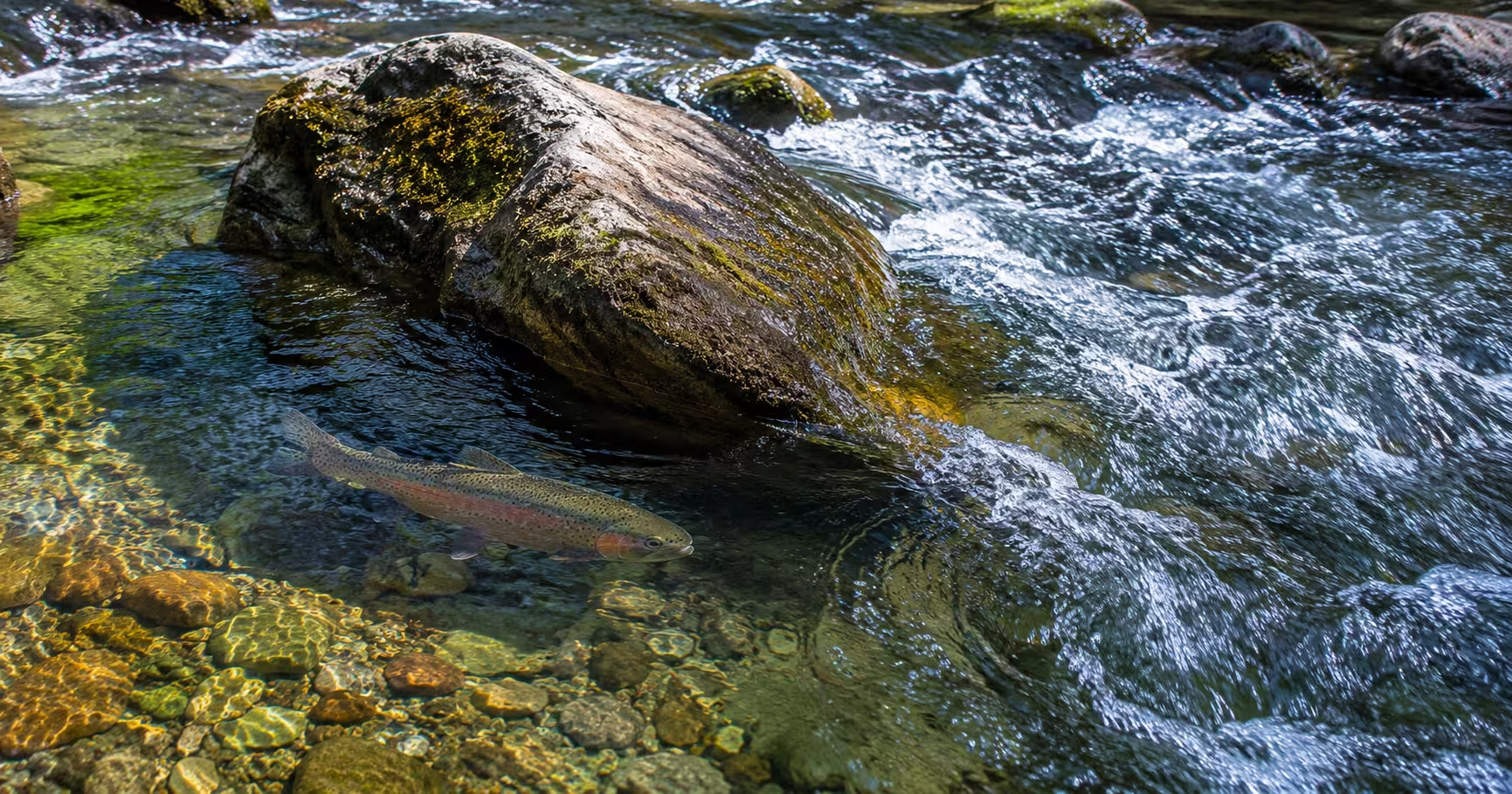
If you’ve ever watched a trout stream for a while, you’ve probably noticed something strange: trout aren’t scattered randomly through the water. Understanding trout current breaks helps explain why fish show up in the same kinds of spots over and over — behind certain rocks, along certain seams, and tucked against certain banks. That’s not luck. Trout are experts at reading current, and once you understand how they use it, you’ll start seeing the river the way they do.
This is a deep dive into “current breaks” — what they are, why trout depend on them, and how to spot the good ones from the bank or a drift boat.
Why Trout Care About Current At All
Before we talk about breaks, it helps to understand the problem trout are solving. A trout’s whole life is a math problem: how much energy does it cost to hold a position, versus how much energy (food) does that position deliver? Nature runs on that ratio for every wild animal, but for a fish living in moving water, it’s especially brutal. Water is heavy. Swimming against a strong current burns real calories, minute after minute, all day long.
So a trout that sits in the middle of fast current, fighting the flow nonstop, is spending energy just to stay in place. If it doesn’t get fed enough to make up for that, it starves — slowly, but surely. Meanwhile, a trout that finds a spot where the current is slower, but food still drifts by close enough to grab, gets the best of both worlds: low cost, steady income.
That’s the entire game. Trout aren’t hiding for the fun of it, and they’re not “resting” the way we might rest on a couch. They are constantly running a cost-benefit calculation, and the water itself hands them the answer if they know where to look. The answer is written into the current in the form of breaks.
What Exactly Is a “Current Break”?
A current break is any spot where moving water suddenly changes speed, direction, or both. It can be caused by something in the water (a rock, a log, a bridge piling) or by something about the shape of the streambed and banks (a bend, a ledge, a drop-off, a narrowing or widening of the channel).
Wherever the current changes abruptly, you get two things happening side by side:
- A zone of slower, calmer water where a fish can hold with very little effort.
- A nearby zone of faster water that’s still delivering a steady supply of food — insects, minnows, crustaceans, whatever the stream produces — drifting along at full speed.
Put those two zones next to each other, and you’ve built a trout’s dream real estate. The fish parks in the slow lane, but its nose (and its window of vision) is right at the edge of the fast lane, so anything edible sweeping downstream funnels almost straight to it. It sips food out of the fast water without paying the toll of swimming in it.
This is the single idea behind almost every piece of “structure” advice you’ve ever heard in trout fishing. Rocks, logjams, undercut banks, current seams, tailouts, pocket water — all of it comes back to this same principle: slow water next to fast water, positioned so the fish barely has to move to eat.
The Main Types of Trout Current Breaks
Let’s go through the common ones you’ll actually find on the water.
1. Boulders and Rocks
This is the classic example, and it’s a great one to start with because you can see the whole mechanism happen right in front of you.
When current hits a boulder, it has to go somewhere. Most of it splits and rushes around the sides, speeding up as it squeezes past the obstruction (this is the same principle as water squeezing through a narrow pipe — less room, more speed). But directly in front of the rock, water actually piles up and slows down before it’s forced to split. And directly behind the rock, in its “shadow,” the water becomes slack, sometimes even reversing into a small back-eddy.
That gives you three separate holding spots around a single boulder:
- In front of the rock, where the piled-up water is slower than the surrounding current.
- Behind the rock, in the calm pocket created by the obstruction — usually the most obvious and most heavily fished spot.
- Along the sides, right where the accelerated water meets the slower water at the edges — a seam.
Big trout very often hold in front of a boulder, not behind it, because fewer anglers think to cast there. It’s worth remembering that the classic “cast behind the rock” advice is only part of the picture.
2. Current Seams
A seam is simply the line where two different speeds (or two different directions) of current run alongside each other without fully mixing. You’ll often see this as a visible “crease” on the surface — a stripe where fast, choppy water rubs against slower, smoother water.
Seams form below boulders, along the edges of faster center-channel current, where a side channel rejoins the main flow, and anywhere a stream narrows or widens. Trout will sit right on the slow side of the seam, angled so they can dart into the fast side to intercept food, then slide back.
Because a seam is often a fairly long, thin strip rather than a single point, it can hold several fish stacked one behind another, each claiming its own few feet of the break.
3. Undercut Banks
When a stream bends, the outside of the bend gets hit with the strongest current, which erodes the bank faster than it erodes the bottom. Over years, this carves out an undercut — a bank that overhangs the water below it, like a little cave.
Undercuts are outstanding current breaks because they combine three things trout want at once: slower water tucked under the bank, overhead cover that hides them from herons, ospreys, otters, and anglers, and close proximity to the faster current running along the outside of the bend, which delivers food. Big, wary trout love undercuts specifically because of that overhead cover — it’s not just about current, it’s about safety too.
4. Tailouts
A tailout is the shallow, gradually slowing stretch at the downstream end of a pool, right before the water speeds back up into the next riffle. As the pool’s current spreads out and slows down heading into the tailout, it creates a gentle, food-rich feeding lane. Trout often move up into tailouts, especially during a hatch, because the slower pace gives them more time to inspect and eat drifting insects.
5. Pocket Water
In faster, choppier sections of river — especially the kind full of scattered rocks — you get dozens of tiny current breaks packed close together. Each rock creates its own miniature pocket of slack water. Trout in pocket water tend to be opportunistic: the current is moving fast and food doesn’t linger, so a fish has to decide instantly whether to eat something or let it go. This is why pocket water fish are often less picky but require faster, more accurate presentations.
6. Depth Changes and Ledges
Even without any visible obstruction, current slows down where the streambed drops into a deeper trough or steps down over a ledge. Water moving into a deeper slot loses velocity because it has more room to spread vertically. These breaks aren’t visible in the same dramatic way a boulder is, but experienced anglers learn to read subtle surface clues — a slight flattening or a change in the ripple pattern — that tip off a depth change underneath.
Why This Matters More Than Fly or Lure Choice
Here’s the part that changes how people fish once they really understand it: presentation and pattern selection get all the attention, but position is what actually puts a fish in front of your offering in the first place. You can throw the perfect fly or the perfect lure through water with no current break, and it can drift right past a stretch of river with zero fish in it. Meanwhile, a mediocre presentation through a good break will still get looked at, because that’s simply where the trout are.
This is why experienced anglers spend so much time reading water before they ever make a cast. They’re not guessing. They’re identifying the current breaks first, then fishing those specific spots with real intention, rather than blind-casting across the whole river hoping to get lucky.
How to Read a Run Before You Cast
When you walk up to a piece of water, it helps to slow down and actually look before wading in. A few minutes of observation will tell you more than an hour of random casting.
Start by watching the surface for seams — those visible creases where fast and slow water meet. Look for anything breaking the surface or sitting just under it: boulders, logs, and gravel bars all create breaks, and so do the wakes and disturbances downstream of them. Pay attention to the banks too, especially outside bends, since that’s where undercuts tend to form. And don’t overlook the quiet stretch at the tail end of a pool, right where it starts speeding up again into the next riffle — that tailout is often overlooked but frequently holds fish.
Once you’ve spotted two or three of these, you have a real fishing plan instead of just working water at random.
A Quick Mental Model to Take With You
If you remember nothing else from this, remember this one sentence: trout sit in slow water next to fast water, so they can eat without paying for it.
Every current break — rock, seam, undercut, tailout, ledge, pocket — is just a different flavor of that same setup. Once that idea clicks, you stop seeing a river as one big body of moving water and start seeing it as a map of energy costs and food delivery routes. The breaks are where those routes intersect, and that’s where the trout will be.
FAQ: How Trout Use Current Breaks
What is a current break in a trout stream?
Any spot where moving water changes speed or direction — caused by a rock, log, bend, ledge, or channel shape. It creates a slow-water zone next to a fast-water zone.
Why do trout hold at current breaks instead of open water?
Holding in fast current burns energy nonstop. A current break lets a trout sit in slow water while food drifts by in the adjacent fast water, minimizing effort while maximizing intake.
Where do trout usually sit around a boulder — in front or behind?
Both, plus the sides. Water piles up and slows in front of a rock, goes slack behind it, and forms seams along the edges. Many anglers only fish behind the rock and miss fish holding in front.
What is a current seam?
The line where two different current speeds or directions run side by side without fully mixing, often visible as a crease on the surface. Trout hold on the slow side and dart into the fast side to feed.
Why are undercut banks good holding spots?
They combine slower water, overhead cover from predators, and nearby fast current carrying food — making them especially attractive to larger, more cautious trout.
What is a tailout, and why do trout use it?
The shallow, slowing stretch at the downstream end of a pool. The reduced speed gives trout more time to spot and eat drifting insects, especially during a hatch.
Is fly or lure choice more important than position?
No. A good presentation through water with no current break often produces nothing. A mediocre presentation through a real current break will still get looked at, because that’s where the fish are.
How do I find current breaks before casting?
Look for surface seams, visible obstructions (rocks, logs, gravel bars), undercut banks on outside bends, and the slower water at the tail end of pools. Identify a few breaks first, then fish them with intention.
What’s the one idea to remember about current breaks?
Trout sit in slow water next to fast water so they can feed without paying the energy cost of fighting the current. Every type of break is a variation on that same setup.