Watermelon, Wild Berry, and Cappuccino: The Real Chemistry Behind “Novelty” Fishing Scents
Novelty scents for trout include watermelon, wild berry, and cappuccino fishing scents. Unlike garlic or fish oil, these flavors are borrowed from the food industry rather than a trout’s natural prey, making the real science behind their effectiveness far more interesting than the marketing claims.
1. Why Novelty Scents for Trout Can Still Work
The garlic and anise posts covered carrier scents: strong, detectable aromatics that aren’t part of a trout’s natural diet but work by being noticeable. The fish oil post covered the opposite case: a genuine natural prey signal, chemically identical to what a real injured fish releases.
Watermelon, wild berry, and cappuccino scents don’t fit either box. They’re not generalist industrial aromatics like garlic’s sulfur compounds. They’re not remotely close to anything in a trout’s evolutionary diet. They’re flavor-industry formulations, built from the same compound families used in candy, soda, and coffee creamer — which raises a fair question: why would a fish react to a smell that has never once appeared in its evolutionary history?
2. What’s Actually in These Scents
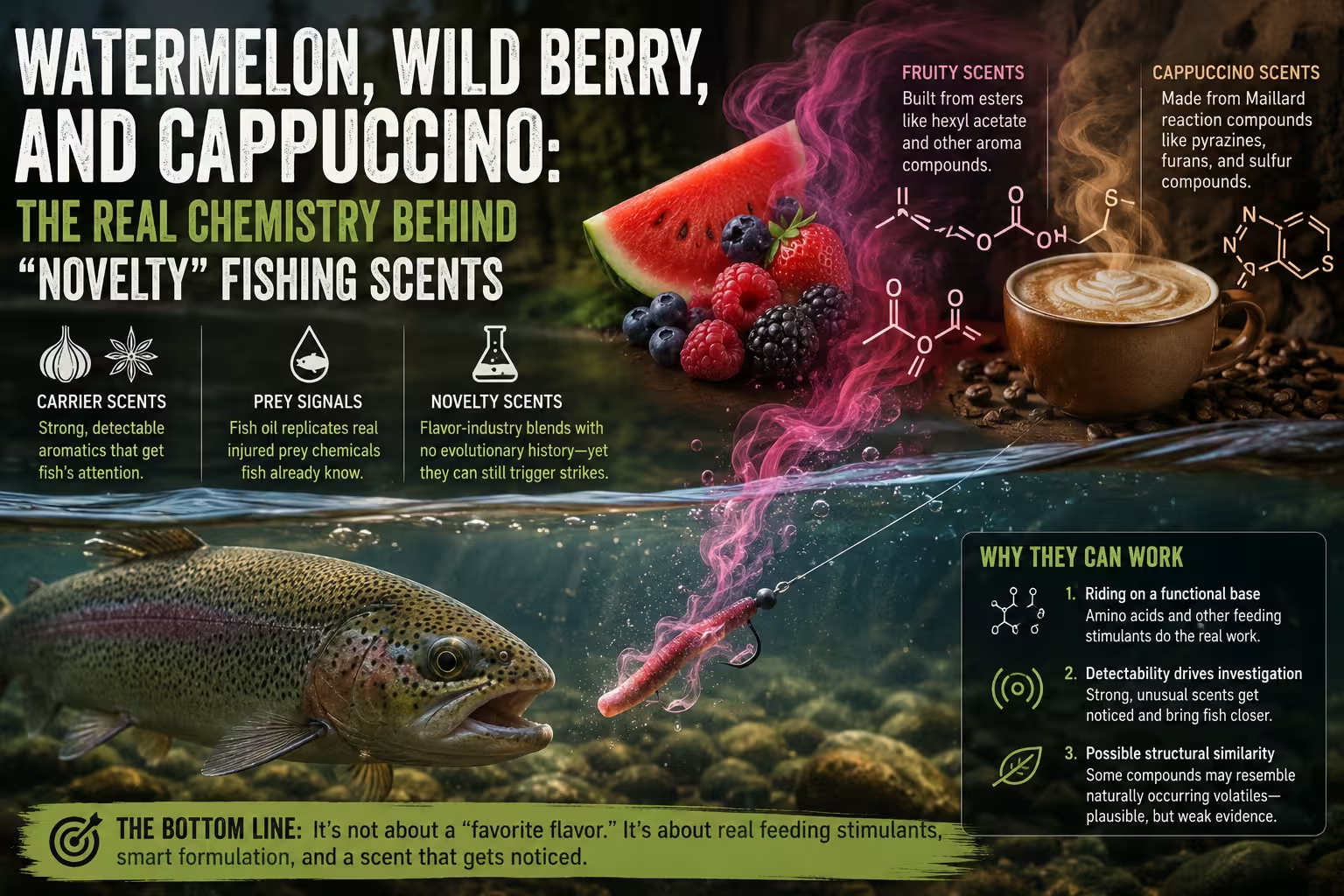
Fruity scents like wild berry and watermelon are built almost entirely from esters — a class of compound formed when an acid and an alcohol combine, and the workhorse of the entire flavor and fragrance industry. Different esters produce different fruit-like notes: compounds like hexyl acetate read as green, berry-like, or apple-ish; others in the same family read as tropical or melon-like. Blended together in different ratios, these esters are what let a flavor lab reproduce “watermelon” or “wild berry” without using a shred of actual fruit.
Cappuccino is a different chemical family entirely. Coffee’s aroma comes from Maillard reaction compounds — the same browning reaction responsible for the smell of seared meat and toasted bread, produced when sugars and amino acids are broken down together under heat. Roasting coffee generates pyrazines, furans, and sulfur-containing compounds that combine into the specific smell of coffee and, with dairy-derived notes layered in, cappuccino.
Core principle: none of these are single “trigger molecules” the way trimethylamine is for fish oil. They’re complex blends of ten or more compounds, selected by flavor chemists for how a human nose reads them — not for any known biological meaning to a fish.
3. The Honest Question: Why Would a Trout Care?
There’s no evolutionary story where a rainbow trout in an Ozarks stream has ever benefited from recognizing watermelon, berry, or roasted coffee. So when one of these scents does produce strikes, the most defensible explanations are different from the ones used for garlic, anise, or fish oil:
1. The flavor note is usually riding on top of a functional formula. Most commercial fishing scents — including flavor-forward ones — are built on a base of the same feeding-stimulant compounds covered in the garlic post: free amino acids like alanine and proline, or betaine. The fruity or roasted aroma is often the marketing-facing layer; the amino acid base underneath is doing the actual feeding-stimulant work at the taste-check stage. The “cappuccino” or “wild berry” name describes what a human smells opening the jar, not necessarily the only thing happening chemically in the water.
2. Detectability alone can trigger investigation, independent of meaning. The same principle from the garlic and anise posts applies here: a strong, high-concentration, unusual volatile compound can register as “something is here” and prompt a trout to move in and investigate, even without the compound carrying any specific biological meaning. Investigation isn’t the same as commitment — that’s still decided at the taste-check step — but it gets a bait noticed in water where a subtler, more “natural” scent might go undetected.
3. This is the weakest-evidence explanation, and worth treating with real skepticism: some ester compounds in fruity scent blends structurally resemble volatiles naturally produced by algae, decaying plant matter, or aquatic invertebrates. It’s plausible a trout’s receptors respond to structural similarity rather than an exact chemical match — but this is a much thinner, less-established claim than the fish oil or amino acid science, and shouldn’t be presented as settled.
4. Where the Real Evidence Points
Put plainly: the flavor identity itself (watermelon vs. wild berry vs. cappuccino) is very likely doing far less work than the functional additives blended underneath it, and the strength/detectability of the overall scent plume. Two baits both labeled with fruity flavor names can perform very differently depending on what feeding-stimulant compounds are actually in the formula — the flavor name on the label is not a reliable predictor of the biological mechanism at work.
That reframes the right question. It’s not “do trout have a favorite flavor” — there’s no credible mechanism for that. It’s “is this bait built on a real feeding-stimulant base, with a detectable, well-formulated scent layer on top” — which is the same question that applies to every scent in this series, garlic and anise included.
5. Where Novelty Scents Actually Earn Their Place
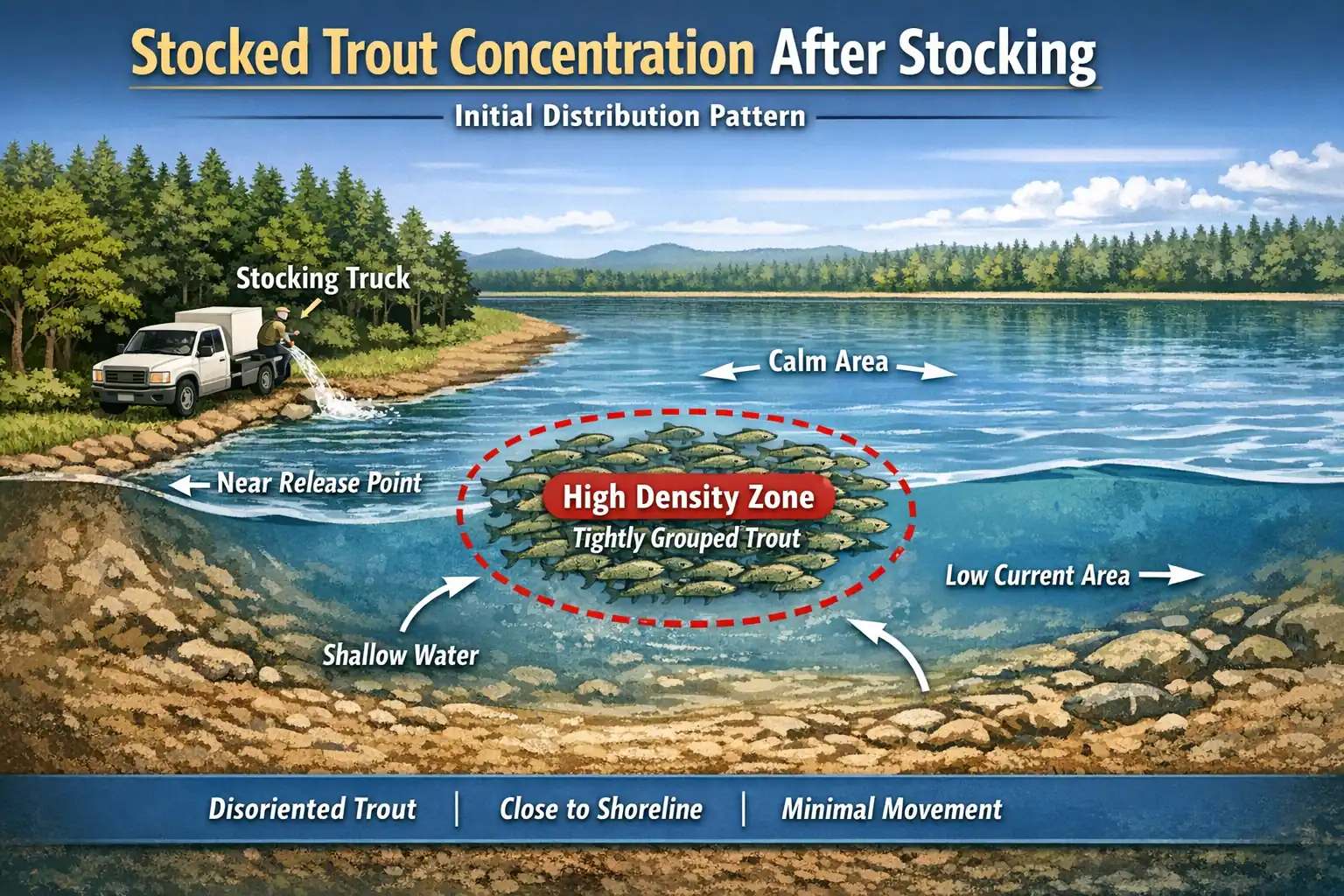
Tactical adjustment: the strongest legitimate use case for a novelty-flavor scent isn’t “trout love watermelon.” It’s pattern-breaking on pressured water. Stocked and heavily-fished trout are exposed to the same handful of dominant scent profiles — garlic and standard dough-bait smells are everywhere at popular stocked locations, and pressured fish can become conditioned to associate a familiar scent with a hook. A distinct, less commonly encountered aromatic profile avoids that specific learned association, independent of whether the flavor identity itself means anything to the fish.
This is the same logic anglers already apply to color: when the obvious presentation stops working on pressured fish, changing something unexpected can outperform doing the same thing louder.
6. All Four Scent Categories, Side by Side
| Where each scent category actually gets its effectiveness | |||
| Category | Examples | Real mechanism | Evidence strength |
| Carrier aromatic | Garlic, anise | Strong, detectable volatile; not natural prey chemistry | Well established |
| Natural prey signal | Fish oil | Genuine tissue breakdown compound (trimethylamine) | Well established |
| Functional base | Free amino acids, betaine (often blended into all of the above) | Direct feeding-stimulant receptor activation | Well established |
| Novelty flavor | Watermelon, wild berry, cappuccino | Mostly rides on a functional base; flavor identity itself likely has little independent effect beyond detectability and pattern-breaking | Weak to speculative |
7. Common Mistakes
- Assuming a fruity or novelty scent works because trout “like” that specific flavor — there’s no credible biological basis for that
- Picking a scent based on the flavor name on the label instead of what functional feeding-stimulant compounds are actually in the formula
- Overlooking pattern-breaking as the actual legitimate use case for a novelty scent on pressured, heavily-scented water
- Expecting a novelty scent to outperform garlic, anise, or fish oil in a fresh, unpressured location where a conditioned-avoidance response isn’t in play yet
Key Takeaways
- Watermelon and wild berry scents are built from esters, the same flavor-industry compound class used across candy and soda; cappuccino comes from Maillard reaction compounds, the same chemistry behind roasted and browned food aromas
- None of these have any evolutionary connection to a trout’s natural diet, unlike fish oil
- The most defensible explanation for why they can still work is that the flavor note usually rides on top of a functional amino-acid or betaine base doing the actual feeding-stimulant work
- Strong, unusual, easily-detected scents can prompt investigation on general detectability alone, independent of specific meaning
- Their strongest legitimate use case is pattern-breaking on pressured water conditioned to a familiar dominant scent, not a claim that trout have flavor preferences
Frequently Asked Questions
Do fruity scents like watermelon or wild berry actually work for trout?
They can produce strikes, but the honest mechanism is different from garlic or fish oil. There’s no evolutionary reason for a trout to recognize watermelon or berry flavor. The scent most likely works because it’s built on a functional feeding-stimulant base (amino acids, betaine) with a detectable aroma layered on top, or because its novelty helps a bait get noticed on water where fish have grown conditioned to familiar scents.
Why does cappuccino scent exist as a fishing bait flavor?
Cappuccino-scented baits use Maillard reaction compounds — the same roasted, browned-food chemistry found in coffee and toasted bread. Like other novelty flavors, its effectiveness likely comes more from the functional compounds blended into the formula and its detectability than from the coffee identity itself meaning anything to a trout.
Is there real science behind fruity fishing scents, or is it just marketing?
Both, to different degrees. The functional feeding-stimulant compounds (amino acids, betaine) commonly blended into flavored scent formulas have real, documented science behind them. The specific fruity or roasted flavor identity riding on top of that base is much closer to marketing, since there’s no established biological reason a trout would respond to “watermelon” or “cappuccino” as a category.
When should I actually reach for a novelty scent over garlic or fish oil?
The strongest use case is pressured, heavily fished water where trout may have grown conditioned to associate a common scent profile with danger. A distinct, less familiar aromatic can avoid that learned association. In fresh or lightly-pressured water, a scent with an established mechanism — garlic, anise, or fish oil — is the better-evidenced starting point.