Does Lure Action Matter More Than Color?
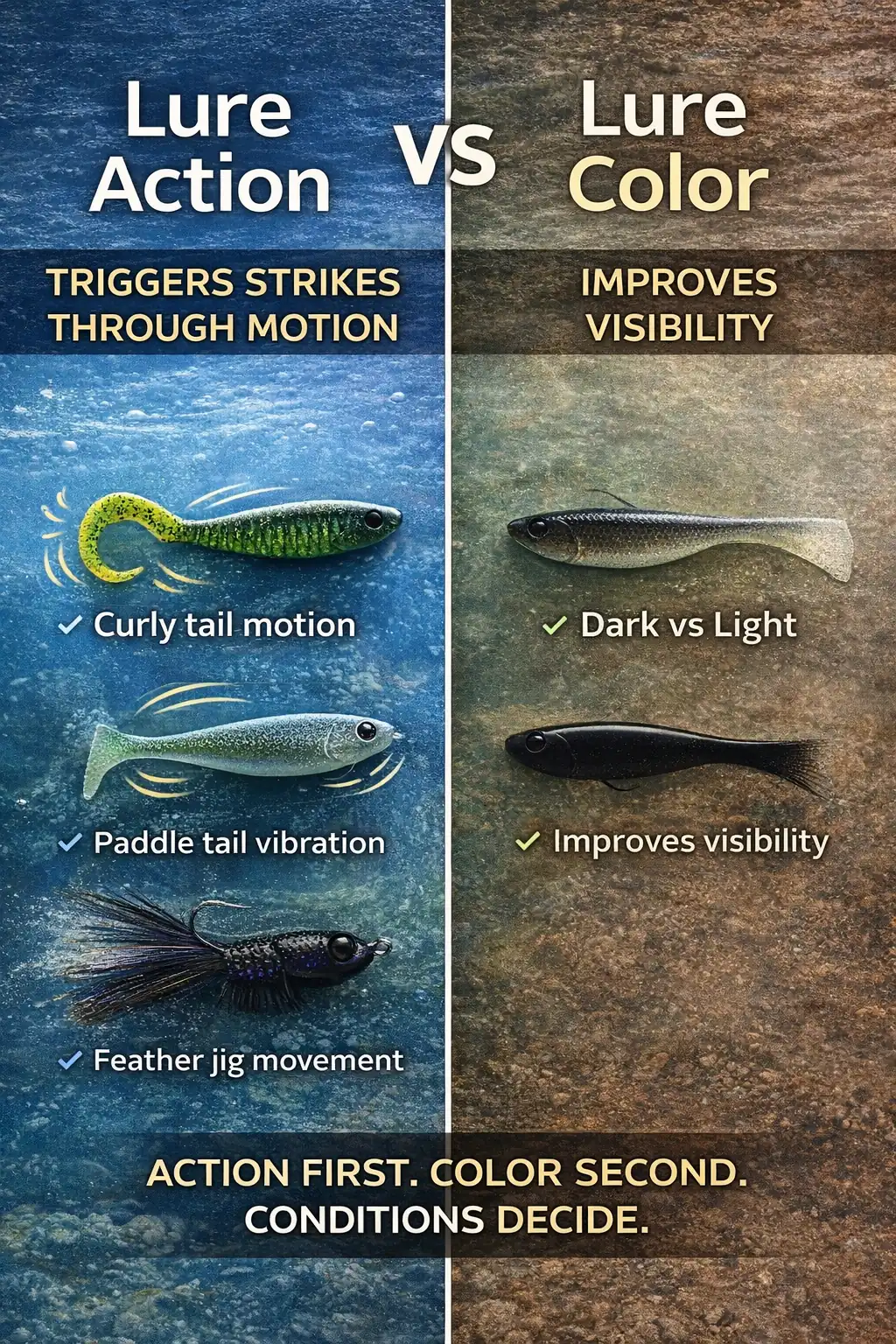
Does lure action matter more than color? Usually yes — movement is what triggers a strike, while color mostly decides whether a fish notices and accepts the bait in the first place.
Does Lure Action Matter More Than Color? The Real Answer
Anglers often debate lure color endlessly, but in real fishing conditions, lure action frequently triggers strikes before color ever does. Understanding when action matters more than color — and when color becomes critical — helps eliminate guesswork and improves consistency.
What Is Lure Action?
Lure action refers to how a bait moves through the water: tail movement, body vibration, displacement of water, and speed and cadence. Fish detect action through their lateral line, which senses vibration and pressure changes. This detection often happens before a fish visually identifies color.
When Action Matters More Than Color
- Low Visibility: Muddy or stained water, heavy wind, surface chop, night fishing — fish rely more on vibration and movement than visual detail
- Reaction-Based Fishing: Power fishing, fast retrieves, active fish — reaction strikes are triggered by motion, color plays a secondary role
- Cold or Pressured Fish: Subtle, natural action often outperforms bright colors — a lure that moves naturally can appear less threatening
When Color Becomes More Important
- Water is clear and fish have time to inspect the bait
- Fishing pressure is high
- Light conditions are stable
In these situations, action gets the lure noticed but color helps close the strike.
How Action and Color Work Together
Action attracts attention. Color confirms the target. Practical approach: start by choosing the right action for conditions, adjust color only if fish follow but do not strike, and prioritize contrast over exact color shades. → See: Why Trout Follow But Don’t Bite
Common Angler Mistake
Changing lure colors repeatedly without adjusting action. If fish are not reacting at all, the problem is usually movement, not color.
Practical Takeaway
- Action triggers strikes
- Color improves visibility and realism
- Conditions determine which matters more
- Successful lure selection starts with action and fine-tunes with color — not the other way around
Instead of asking “What color should I use?” start by asking “What action will fish respond to right now?”
For a deeper breakdown of how specific tail profiles control movement: → Part 2 — Tail Design: Why Shape Controls Movement More Than Retrieval
Frequently Asked Questions About Lure Action and Color
If action matters more, why do so many anglers focus on color first?
Color is simply easier to see, compare, and buy — it’s the most visible difference between baits sitting in a tackle box. Action requires actually fishing a bait to understand, which is why it gets overlooked even though it usually has more influence on whether a fish commits.
When does color become more important than action?
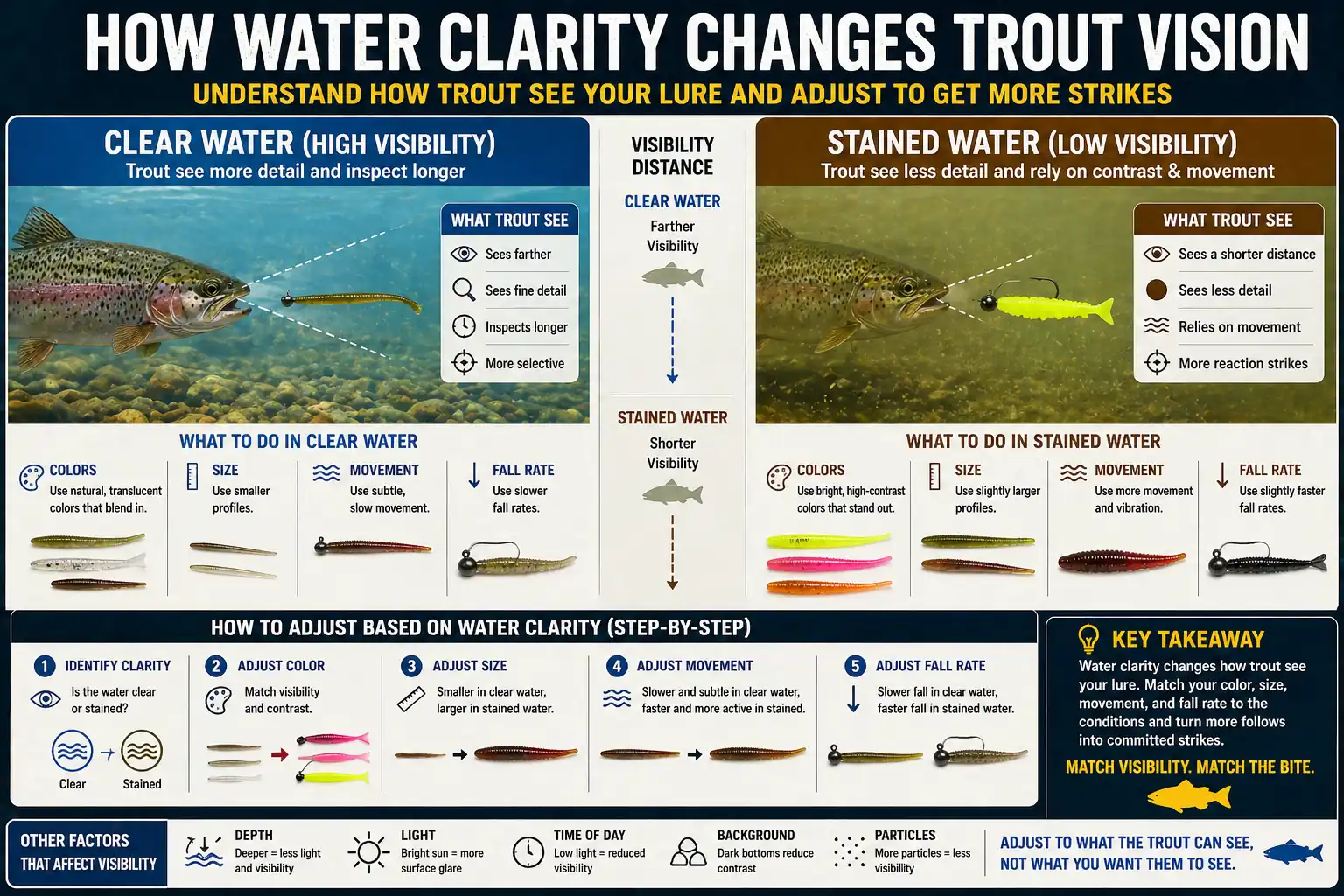
Color becomes more important in low visibility — stained water, low light, or deeper water where contrast is what lets a fish find the bait at all. In those conditions, a fish has to notice the bait before action has any chance to trigger a strike.
Can the right action make up for the wrong color?
Often, yes, in clear water where visibility isn’t the limiting factor — natural, well-matched movement can convert fish even if the color isn’t exactly what they’d prefer. The reverse is less true: a perfect color moved unnaturally usually gets refused.
How do I test whether action or color is the problem when trout won’t bite?
Change one variable at a time. Try adjusting retrieve speed or fall rate first, since action tends to matter more overall — if that doesn’t change results, then test a color adjustment next rather than changing both at once and not knowing which fix worked.
Does water temperature change whether action or color matters more?
Yes — cold water makes action even more important, since trout are less willing to chase and rely more on subtle, natural movement to trigger a bite. Warmer, more active fish are somewhat more forgiving of imperfect action and may respond more readily to color and visibility.
Should beginners prioritize learning action over memorizing colors?
Yes — understanding how retrieve speed and fall rate affect a bait’s movement will improve results more consistently than building a large color collection. Color selection is a relatively simple adjustment to make once the more important skill of controlling action is understood.
Is this action-versus-color question different for jigs versus straight retrieves?
The principle holds either way, though action shows up differently — a jig’s action comes largely from fall rate and rod movement, while a straight retrieve’s action comes from tail design and speed. In both cases, movement is still generally the bigger lever than color.
What’s the biggest mistake anglers make when a bait isn’t working?
Reaching for a color change before checking action. It’s the more visible, easier adjustment to make, but it skips over the variable — movement — that more often explains why fish are following without committing in the first place.