Crawfish Biology Explained: Life Cycle, Molting, Color, and Ecological Role
Crawfish biology helps explain why these freshwater crustaceans are among the most successful and important animals in aquatic ecosystems. Crawfish go by many names—crayfish, crawdad, mudbug—but they’re all the same kind of animal: freshwater crustaceans in the infraorder Astacidea, the same broad group that includes clawed lobsters. There are nearly 700 described species worldwide (Crandall & De Grave, 2017), and the southeastern United States is the global hotspot for crayfish diversity. They’re among the largest invertebrates on the bottom of most freshwater systems, and in many of them, crayfish make up the single largest share of bottom-dwelling animal mass (Reynolds et al., 2013).
That combination — big, abundant, and everywhere — is why crayfish matter far beyond the dinner plate or the tackle box. This is a complete, plain-language tour of what a crawfish actually is: how it’s built, how it grows by shedding its own skeleton, why it changes color, how it reproduces, and the outsized role it plays in keeping freshwater ecosystems running. The biology is detailed, but you don’t need a degree to follow it.
(If you’re here mainly for fishing — which lures, colors, and presentations the biology points to — start with our companion guide, The Crawfish Connection: How Crayfish Drive Freshwater Fishing. This post is the deep biology behind it.)
Anatomy: A Lobster’s Blueprint
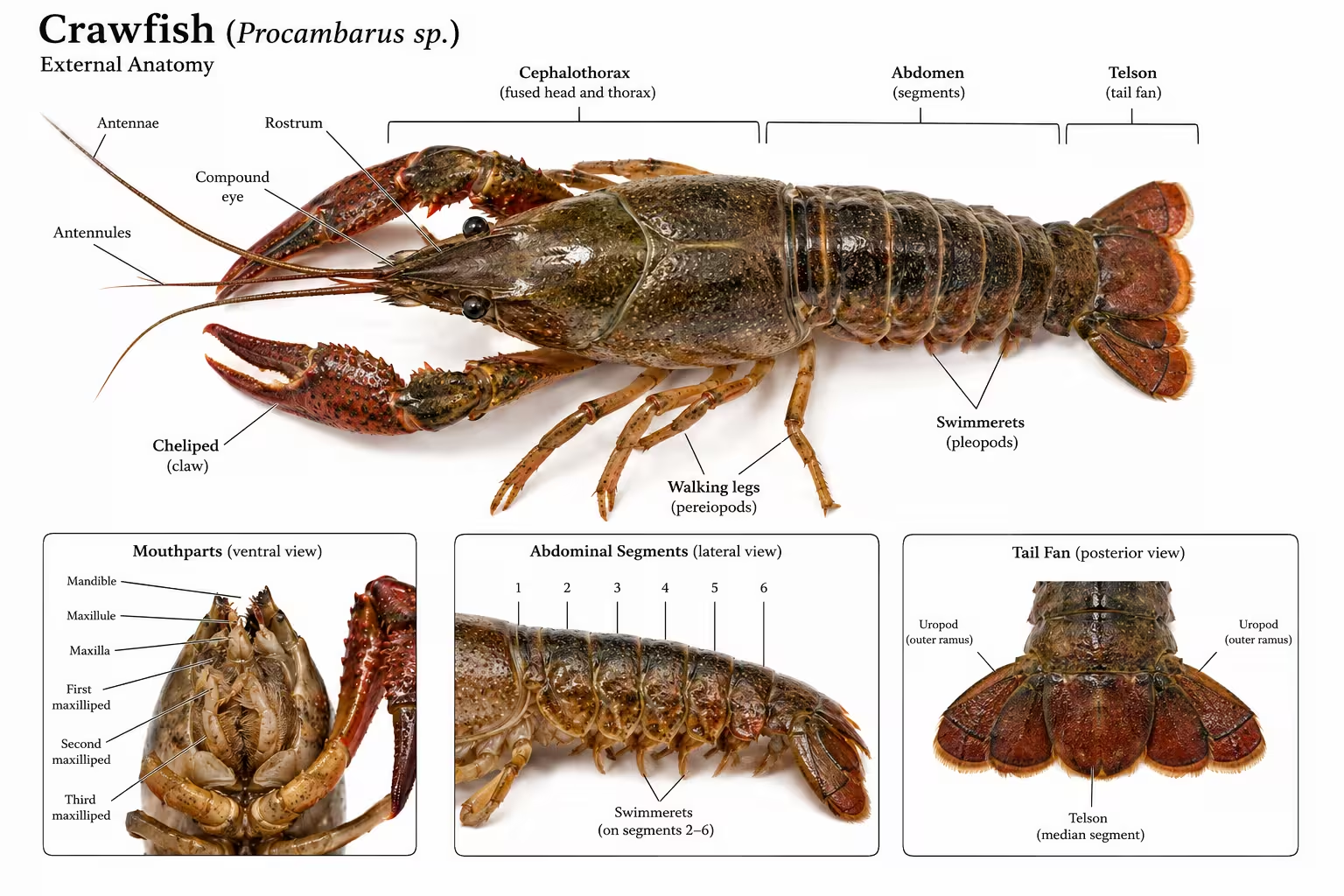
A crawfish’s body has two main parts. The front section, the cephalothorax, fuses the head and thorax into one armored unit and carries the eyes, antennae, mouthparts, the large claws (chelae), and the walking legs (pereiopods). The rear section is the segmented, muscular abdomen — the “tail” — which ends in a fan-shaped telson. That tail is the escape engine: a hard flick of it shoots the animal backward in a burst.
Underneath the abdomen sit small paired appendages called pleopods, or swimmerets. They look minor, but they do two crucial jobs: they help move water (and, in females, they hold and aerate eggs). The whole animal is wrapped in a rigid exoskeleton — a hard external shell made largely of calcium carbonate that protects the soft body and anchors the muscles.
Crayfish breathe through gills tucked beneath the sides of the cephalothorax, which is why they need oxygenated water and why low dissolved oxygen stresses them. And hidden in the foregut are two small calcium stores called gastroliths — a detail that becomes important the moment a crawfish has to grow.
Growth by Molting: The Ecdysis Cycle
Here’s the central problem of crawfish life: that protective exoskeleton can’t stretch. To get bigger, the animal has to abandon its entire shell and build a new, larger one. This shedding is called molting, or ecdysis, and it’s not a single event — it’s a four-phase cycle that repeats for the animal’s whole life.
- Pre-molt (proecdysis). The crawfish prepares. It often stops eating, becomes stiff and less mobile, and begins reabsorbing calcium from its old shell, banking it in those gastroliths in the foregut.
- The molt (ecdysis). The exoskeleton splits along a seam between the cephalothorax and abdomen, and the crawfish slowly backs out — claws, legs, gills, eye coverings, and all. The whole withdrawal can take minutes to hours.
- Post-molt (metecdysis). Now soft, swollen, and nearly helpless, the crawfish pumps in water to stretch its new shell to a larger size before it hardens, then begins remineralizing it — first the mouthparts and claws, using the calcium stored in the gastroliths, then the rest of the body using calcium pulled from food and water. This is the danger zone.
- Inter-molt. The long, stable phase between molts, where the shell is fully hard and the animal lives, feeds, and grows internally until the next cycle begins.
Molting is frequent in youth and slows with age. A young crawfish may molt 6 to 14 times in its first year, while older adults molt only one to three times a year (Wired2Fish; lure industry biology references). Warm water accelerates the whole process, and acidic or calcium-poor water makes it harder, because the animal can’t harden its new shell properly. Because growth only happens in the brief soft-shell window, crayfish grow in a stair-step pattern: a quick jump in size at each molt, followed by a long plateau (McLay & van den Brink, 2016).
The post-molt soft-shell stage is the most dangerous period in a crawfish’s life. Stripped of its armor and unable to flee or defend itself, it’s acutely vulnerable to predators and even to cannibalism from other crayfish (Biology Insights, 2025). It’s also why molting crawfish hide — and why the ones caught in the open are such an easy, sought-after meal.
The Science of Crawfish Color
Crawfish come in olive, brown, rust, blue, and nearly every shade between — and the reason is one of the most elegant pieces of chemistry in the animal world.
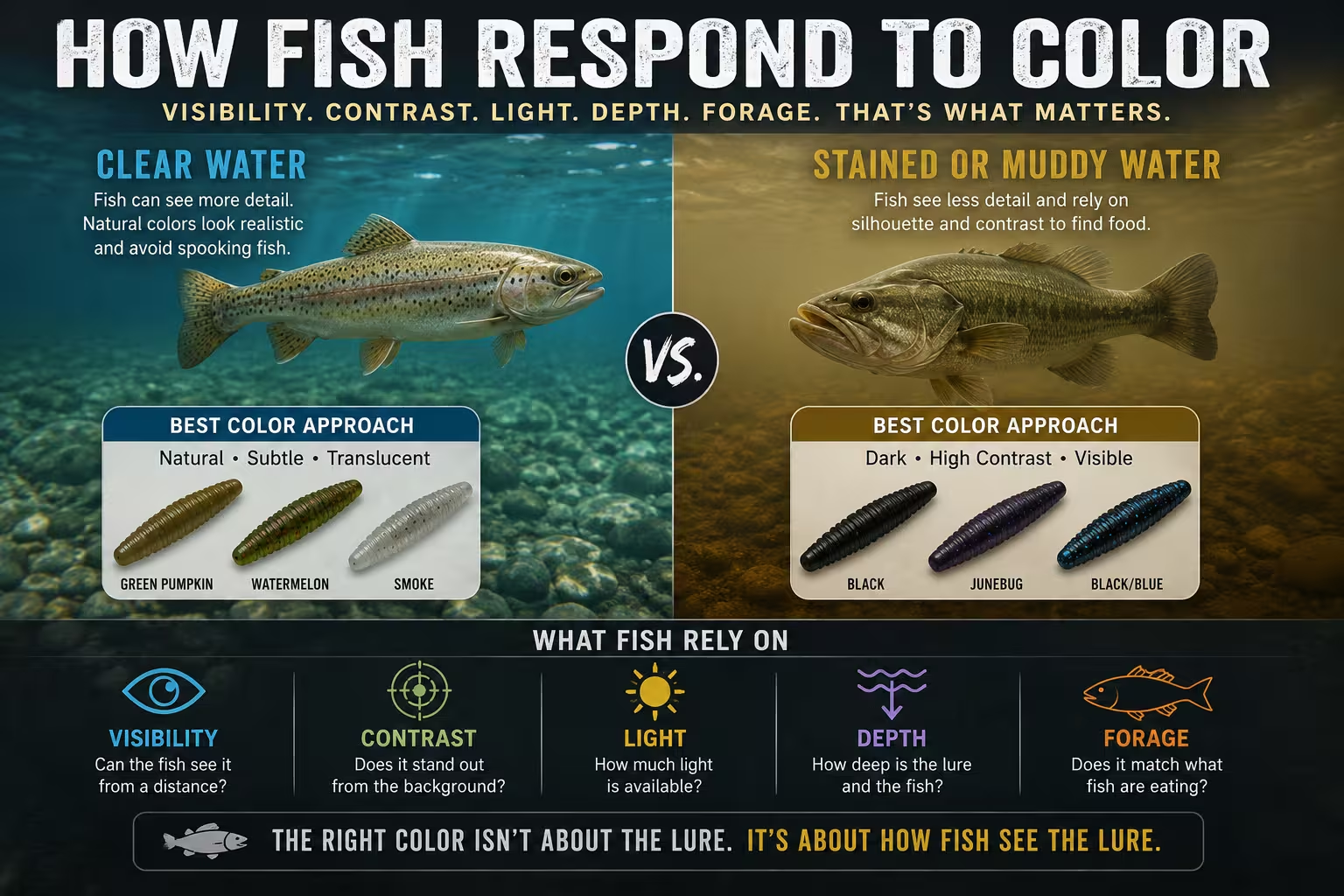
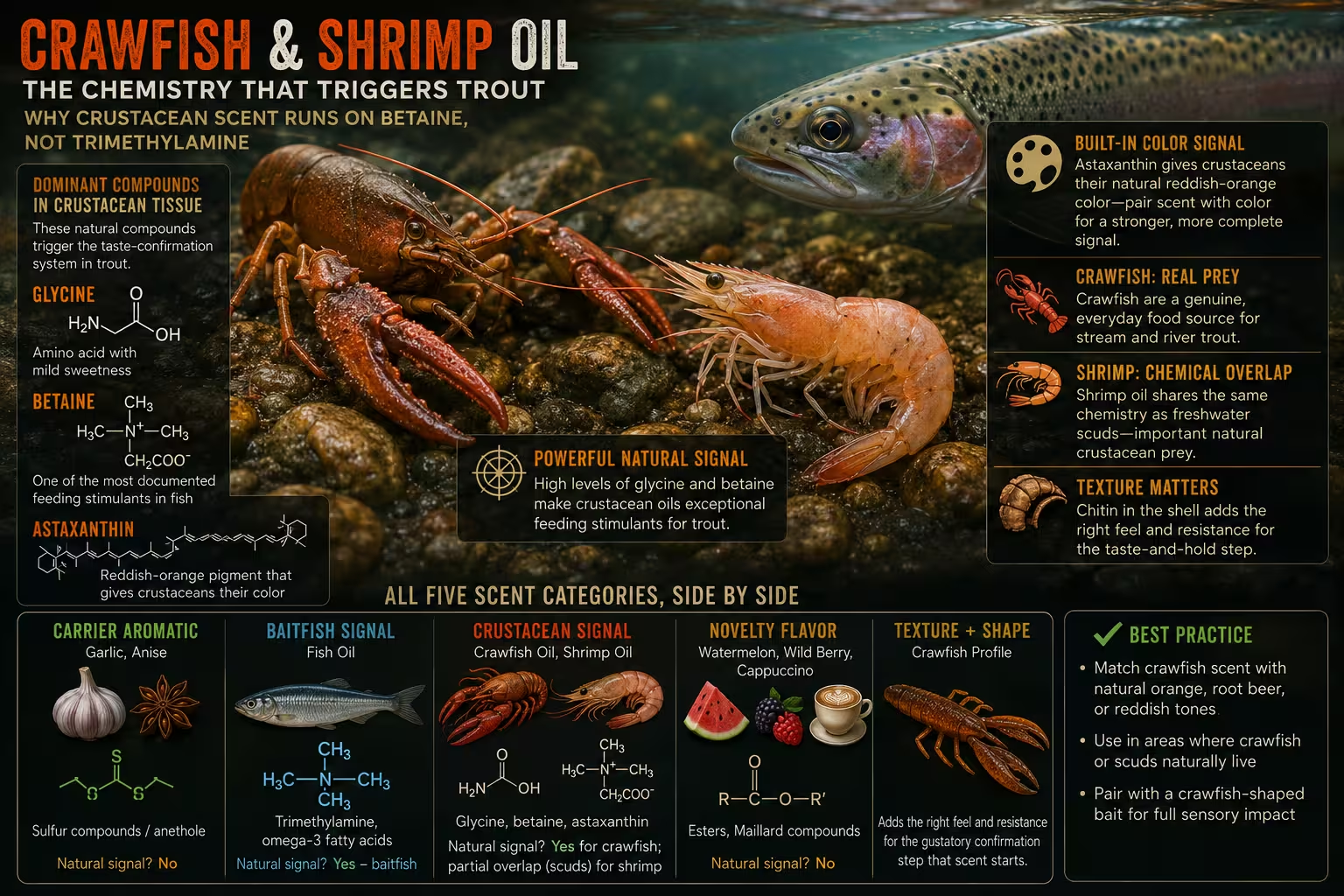
The base pigment is astaxanthin, a carotenoid the crawfish gets from its diet (the same pigment that makes shrimp, salmon, and lobster flesh red). On its own, astaxanthin is red-orange. But in a living crawfish, it’s bound to a protein called crustacyanin. When the pigment locks onto that protein, the protein physically twists the molecule, shifting its color away from red and toward blues, greens, and browns. Scientists describe it as a “one molecule, many colors” system — a single pigment producing the whole camouflage palette depending on how it’s bound (Wade, Global Seafood Alliance, 2010).
Break that bond and the color springs back to red. Heat does it — which is why a crawfish turns red when you boil it: the protein denatures and releases the astaxanthin (Begum et al., as reviewed in Journal of Experimental Biology, 2017). The same disruption happens, more subtly, during the stress and chemistry of molting, which is why molting or freshly stressed crawfish often take on a brighter orange or red cast.
Three more factors tune a crawfish’s color:
- Diet. Because the pigment comes from food, a carotenoid-rich diet produces richer color.
- Water temperature. In the red swamp crayfish (Procambarus clarkii), warmer water increases expression of an astaxanthin-related gene and raises pigment content in the shell (Chen et al., 2024).
- Background. Crayfish darken over dark substrate and lighten over pale bottoms, a camouflage response. Pigment cells called chromatophores can expand and contract to adjust shading, though their number and pattern are genetically fixed for each species (Wade, 2010).
Reproduction and the Life Cycle
Crayfish have separate sexes (a condition called gonochorism). You can tell them apart by the position of the genital openings and by the male’s first two pairs of pleopods, which are modified into a rigid copulatory structure called gonopods (Vogt, 2002; reviewed in Journal of Crustacean Biology, 2023).
Many North American crayfish (the family Cambaridae) add a fascinating twist: mature males alternate between two states with each molt. Form I is the reproductive state, with hardened gonopods and the ability to mate; Form II is a non-reproductive resting state. A male can molt back and forth between them depending on the season (Wetzel, 2002; McLay & van den Brink, 2016).
Mating itself is indirect. The male deposits a packet of sperm (a spermatophore) onto the female, who can store it — sometimes for days, sometimes for months — until conditions are right to lay her eggs. Egg-laying is often triggered by environmental cues like falling water temperature or shortening daylight. When she’s ready, glands release a secretion that dissolves the spermatophore’s wall, freeing the sperm to fertilize the eggs as they’re laid (Skurdal & Taugbøl, 2002; reviewed in Knowledge and Management of Aquatic Ecosystems, 2016).
The fertilized eggs attach under her tail to those pleopods, and a female carrying them is described as “in berry” or berried — the dark cluster resembles a bunch of berries. She fans and cleans them with her swimmerets to keep them oxygenated through an incubation that can last up to about 20 weeks depending on species and temperature. A female may carry roughly 100 eggs, though prolific species like the signal crayfish can carry 300 or more, and a larger female carries more eggs than a small one (Wired2Fish; Wildwood Trust).
Crayfish have one of their most distinctive biological traits here: direct development. Marine crustaceans typically hatch as free-swimming larvae that drift in the plankton. Crayfish don’t. The embryo passes through its early developmental stages — blastula, gastrula, and the larval-equivalent stages — inside the egg, and hatches as a miniature crayfish, called a first instar juvenile, that already looks like a tiny adult (reviewed in Journal of Crustacean Biology, 2023).
The newly hatched young cling to the mother’s pleopods, attached by a fine telson thread, and live off their remaining egg yolk through their first couple of molts (each developmental stage between molts is an instar). By around the third instar they begin to venture out and feed independently, but they’ll scramble back to her if threatened (McLay & van den Brink, 2016). Depending on the species, crayfish reach maturity anywhere from a few months to three or four years of age, and most live two to three years, though some larger species live longer (Wired2Fish; Wildwood Trust).
Habitat and Burrowing
Crayfish need structure — rock, gravel, woody debris, undercut banks, and vegetation — both as ambush cover for hunting and as refuge from being hunted. Different life stages often need different microhabitats, which is why a healthy crayfish population depends on varied, complex bottom habitat (Reynolds et al., 2013).
Many species are also burrowers, digging tunnels into banks and sediment for shelter, especially during winter cold or summer dry-downs. Some are weak, opportunistic burrowers; others are obligate burrowers that spend much of their lives underground, surfacing mainly to feed and breed. These burrows do real work in the ecosystem: they provide refuge, they can stabilize or destabilize banks depending on the species and density, and the digging itself reshapes the streambed — a process that becomes ecologically important, as the next section explains.
Ecological Role: Keystone Species and Ecosystem Engineer
Ecologists give crayfish two heavyweight labels, and they’re worth unpacking because they explain why crayfish punch so far above their weight.
A keystone species is one whose impact on its community is far larger than its numbers alone would suggest — remove it, and the whole system shifts (the term traces to Robert Paine’s 1966 sea-star experiments). An ecosystem engineer is a species that physically changes the habitat itself, altering what’s available to everything else living there. Crayfish are documented as both (Momot, 1995; Creed & Reed, 2004; Usio & Townsend, 2004), which is unusual.
They earn the keystone label through their intermediate trophic position — they sit in the middle of the food web, acting as both predator and prey (reviewed in Conservation Physiology, 2022). As predators, these opportunistic omnivores eat plants, algae, detritus, aquatic insects, snails, and even fish eggs and larvae, which lets them regulate populations across several lower levels at once. As prey, they’re a high-value food source for fish, birds, mammals, and other wildlife, funneling all that energy upward. In Missouri’s own Ozark streams, research has documented crayfish as a central link in this transfer of energy through the food web (Whitledge & Rabeni, 1997).
They earn the engineer label through two activities. First, bioturbation — their constant digging, burrowing, and foraging stirs the substrate, can increase suspended sediment, and reshapes the physical bottom (Statzner et al., 2003). Second, their heavy processing of leaf litter and detritus speeds the breakdown of organic material, influencing the base of the entire stream food web (Usio & Townsend, 2004). On top of all this, because crayfish are sensitive to pollution, low pH, and poor oxygen, healthy crayfish populations serve as a bioindicator of overall water quality (Reynolds et al., 2013).
The Invasive Crayfish Problem
Not all crayfish belong where they’re found, and this is where the ecological story turns serious. Because crayfish are keystone species and ecosystem engineers, a non-native crayfish dropped into a new system can disrupt it from multiple directions at once (reviewed in Biology, 2024).
Invasive crayfish — such as the rusty crayfish (Faxonius rusticus), red swamp crayfish (Procambarus clarkii), and signal crayfish (Pacifastacus leniusculus) — harm native crayfish and ecosystems through four main mechanisms: competition for food and shelter, direct predation on natives and other species, the introduction of disease (the signal crayfish, for example, spreads “crayfish plague,” a water mold lethal to many native species), and reproductive interference. Their omnivory and aggressive habits let them occupy several trophic roles at once, which is precisely what makes them so destructive when they establish (reviewed in Biology, 2024). It’s a major reason anglers should never move crayfish — live or as bait — between waters.
Why This Matters on the Water
Every piece of this biology has a fishing consequence. The molt cycle dictates when fish gorge on soft, defenseless crawfish. The astaxanthin–crustacyanin color system explains why lure color works and why a molting craw flashes red. The habitat and burrowing behavior tell you where fish hunt them. And the keystone role is the underlying reason crawfish-imitating lures are so consistently effective across so many species.
For the full translation of all this into lure selection, color, rigging, and presentation — species by species — see our companion guide: The Crawfish Connection: How Crayfish Drive Freshwater Fishing.
Frequently Asked Questions About Crawfish Biology
What kind of animal is a crawfish?
A crawfish (also crayfish or crawdad) is a freshwater crustacean in the infraorder Astacidea — the same broad group as clawed lobsters. There are nearly 700 species worldwide, with the southeastern U.S. as the global diversity hotspot.
How do crawfish grow?
By molting (ecdysis). Their rigid exoskeleton can’t expand, so they periodically shed it whole and harden a larger one. Young crawfish molt 6 to 14 times in their first year; adults only one to three times a year.
Why do crawfish turn red when cooked?
Their color comes from the pigment astaxanthin bound to a protein, crustacyanin, which masks the red and produces camouflage browns and greens. Heat denatures the protein and releases the pigment’s natural red-orange color.
How do crawfish reproduce?
Sexes are separate. The male transfers a sperm packet that the female can store until she lays eggs, often triggered by cooling water or shorter days. She carries the fertilized eggs under her tail (“in berry”) and the young hatch as miniature crayfish — crayfish skip the free-swimming larval stage that marine crustaceans have.
How long do crawfish live?
Most species live two to three years, though some larger species live longer. Maturity comes anywhere from a few months to three or four years depending on species.
Why are crawfish important to the ecosystem?
They’re both a keystone species and an ecosystem engineer. They sit mid-food-web as both predator and prey, process huge amounts of plant and detritus material, reshape the streambed by burrowing, and serve as an indicator of water quality.
Are some crawfish invasive?
Yes. Species like the rusty, red swamp, and signal crayfish damage native populations through competition, predation, disease, and reproductive interference when introduced outside their native range — which is why crayfish should never be moved between waters.
References
- Crandall, K.A. & De Grave, S. (2017). An updated classification of the freshwater crayfishes of the world. Journal of Crustacean Biology.
- McLay, C.L. & van den Brink, A.M. (2016). Crayfish Growth and Reproduction.
- Wade, N.M. (2010). Genetics and Environment Define Crustacean Color. Global Aquaculture Alliance / Global Seafood Advocate.
- Chen, X. et al. (2024). PcASTA in Procambarus clarkii, a novel astaxanthin gene affecting shell color. Frontiers in Marine Science.
- Different aspects of reproduction strategies in crayfish: A review (2016). Knowledge and Management of Aquatic Ecosystems.
- Reproductive biology of the red swamp crayfish Procambarus clarkii: A review (2023). Journal of Crustacean Biology.
- Whitledge, G.W. & Rabeni, C.F. (1997). Energy sources and ecological role of crayfishes in an Ozark stream. (Missouri.)
- Usio, N. & Townsend, C.R. (2004); Momot, W.T. (1995); Creed, R.P. & Reed, J.M. (2004). On crayfish as keystone species and ecosystem engineers.
- Physiological performance of native and invasive crayfish species (2022). Conservation Physiology.
- The Impacts of Invasive Crayfish and Other Non-Native Species on Native Freshwater Crayfish: A Review (2024). Biology.
About Family Fishin
Family Fishin is a family-owned fishing tackle company dedicated to designing, testing, and producing high-quality fishing lures — inspired by generations of fishing tradition and driven by a passion for innovation. Every product is developed with one goal in mind: helping anglers spend more time doing what they love, catching fish and creating memories on the water.
Tags: #crawfish biology #crayfish life cycle #crawfish molting #crayfish ecology #freshwater biology #crawfish habitat