Part 3 — Best Hook Size for Trout Jigs
(Bite Conversion, Hook Mechanics, and Retention Under Real Conditions)
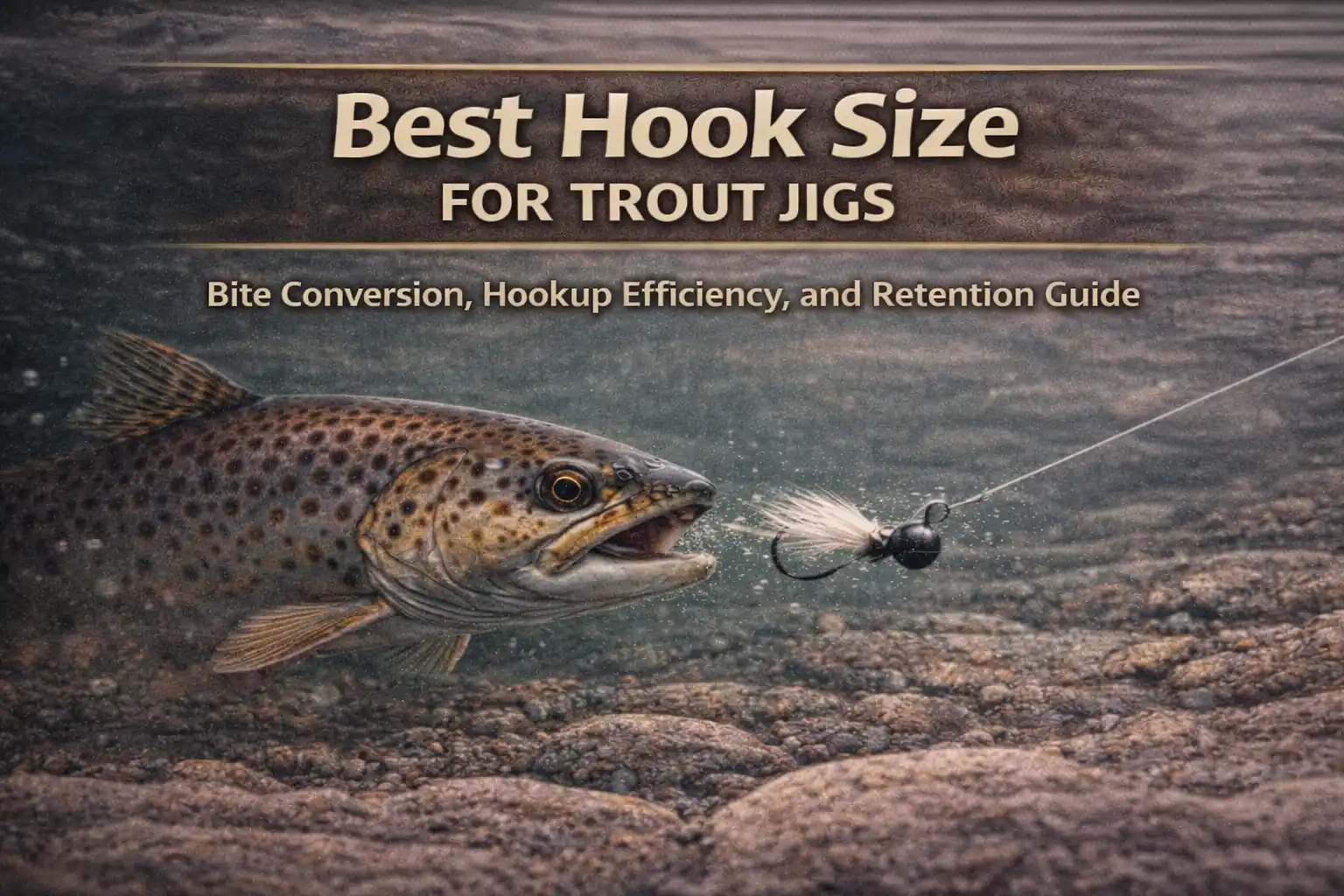
Choosing the best hook size for trout jigs is one of the most important decisions trout anglers make. Hook size directly affects how easily trout inhale a bait, how quickly the hook penetrates, and how securely fish stay pinned during the fight.
Hook size determines how efficiently trout are hooked and how securely they stay pinned during the fight.
Introduction
Before selecting hook size, it’s important to understand that jig weight controls the fall rate, strike window, and depth behavior that determine how trout interact with the bait in the first place. If you have not read it yet, start with: → Part 2 — How Jig Head Weight Affects Trout
Hook size is only one part of the larger trout presentation system involving fall rate, lure softness, visibility, and retrieve control. For the complete system breakdown, see our Best Soft Plastics for Trout Guide.
Hook size is the most misunderstood variable in trout fishing. Most anglers think in terms of “bigger fish = bigger hook.” That is incorrect.
Hook size actually controls: how easily a trout can take the bait, how quickly the hook penetrates, and how well the hook holds under dynamic load.
This creates a fundamental tradeoff: Hooks that catch the most fish are not always the hooks that hold fish the best. Understanding and managing that tradeoff is what separates consistent anglers from inconsistent ones.
A. How Trout Actually Strike (Failure Starts Here)
Before choosing hook size, you need to understand what you’re trying to hook.
Trout Do Not Always Fully Commit. Most trout strikes are partial, hesitant, and extremely fast. Common strike behaviors: inhale → reject (fractions of a second), side nip (hook never fully enters mouth), trailing bite (grabs tail of bait).
You are not designing for perfect eats. You are designing for imperfect, partial, low-commitment strikes. If trout are tracking your bait without fully committing, see Best Soft Plastics for Trout Guide.
Key Principle: Hook size must maximize engagement during incomplete strikes — not ideal ones.
B. Hook Gap and Entry Geometry
Hook size is not just “size” — it defines gap width, entry angle, and contact probability.
- Small Hooks (#12–#10): Narrower gap, faster entry into mouth, higher probability of initial contact. Effect: increased hookup on light or partial strikes.
- Larger Hooks (#6–#4): Wider gap, require deeper commitment, lower initial engagement probability. Effect: reduced hookup on hesitant fish.
Critical Insight: Most missed trout are not “missed hooksets” — they are failures of hook entry.
C. Penetration Mechanics (Force vs Resistance)
Hook penetration depends on wire diameter, hook point sharpness, force applied, and resistance (bone, tissue, angle).
- Small Hooks: Lower mass, thinner wire, lower penetration resistance. Result: faster, easier penetration — effective with light tackle.
- Large Hooks: Thicker wire, higher resistance, require more force. Result: slower penetration, higher failure rate on light hooksets.
With finesse gear: trout strikes lightly → hook does not fully penetrate → fish shakes free.
Key Principle: A hook that does not penetrate immediately will not hold later.
D. Retention Under Load (Dynamic Pressure)
- Small Hooks (#12–#10): Advantages: deep penetration, minimal entry resistance. Limitations: lower structural strength, more sensitive to pressure spikes.
- Large Hooks (#6–#4): Advantages: higher resistance to bending, more stable under load. Limitations: less consistent penetration.
The best hook size for trout jigs is not fixed — it depends on strike behavior, bait size, and how the fish are reacting in real conditions.
Key Principle: Small hooks fail from pressure. Large hooks fail from poor penetration.
E. Hook Orientation and Force Distribution
Force travels through the line → into the hook eye → into the hook bend → into the fish.
- Small Hooks: Distribute force over smaller area, penetrate deeper, require smoother pressure. Failure modes: sudden jerks → pull-out, excessive drag → hook flex.
- Large Hooks: Distribute force over wider area, resist deformation, tolerate higher pressure. Failure modes: shallow set → shake free, poor angle → incomplete penetration.
F. Hook Size vs Plastic Behavior
- Large Hook + Small Plastic: Stiffens bait, reduces collapse, decreases hook exposure.
- Small Hook + Large Plastic: Insufficient exposure, poor hookup ratio.
- Correct Match: Bait collapses easily, hook point remains exposed, movement is not restricted.
Plastic softness, density, and collapse behavior directly influence hook exposure and strike conversion. For a full breakdown of trout plastic performance, see our Best Soft Plastics for Trout Guide.
Key Principle: Hook size must match the collapse behavior of the bait — not just its length.
G. Pressure Management (Skill-Based Variable)
- With Small Hooks: Required — steady pressure, smooth drag, no sudden force.
- With Large Hooks: Allows more aggressive control, higher drag settings.
Critical Insight: Hook size changes how you fish — not just what you fish.
H. Real-World Hook Size System
- #12–#10 (Maximum Conversion): Use when fish are pressured, water is clear, bites are subtle. Highest hookup rate. Requires controlled fighting.
- #8–#6 (Balanced System): Use for general conditions and mixed fish behavior. Best balance of conversion and retention.
- #4 (Retention-Focused): Use for larger baits, stronger current, larger fish. Resists bending, holds under load. Trade-off: reduced bite conversion.
I. Decision System (Practical Use)
Start with #8 or #6. If you are trying to determine the best hook size for trout jigs in your current conditions, start with a balanced size and adjust based on missed bites and hook retention.
Adjust Based On Results:
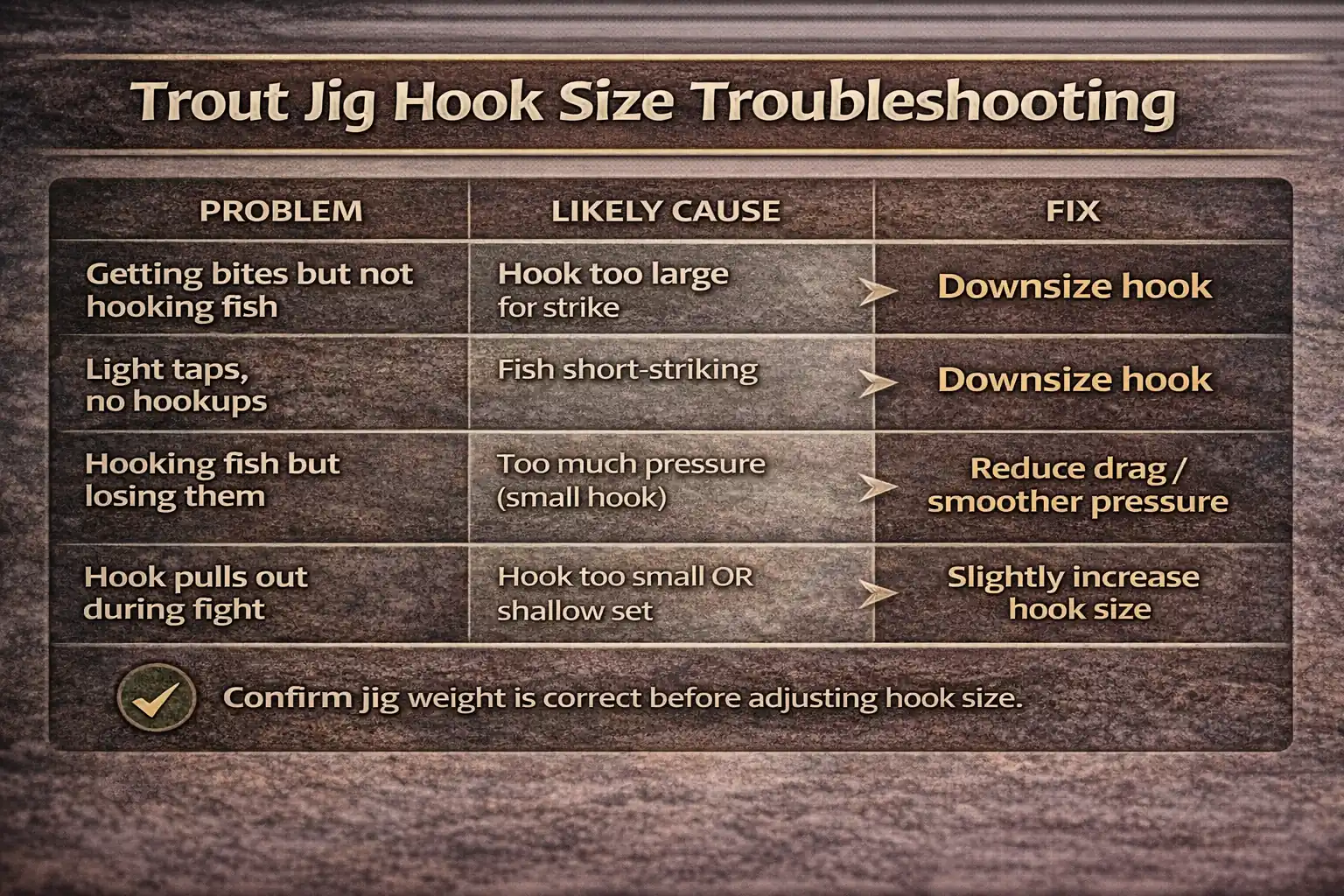
Missing bites? → go smaller
Hooking fish but losing them? → go slightly larger
Fish not committing? → downsize hook before changing bait
Key Rule: Hook size adjustments should be small and deliberate — never drastic. Use this chart to diagnose hook-size problems before changing bait, color, or other variables.
J. Common Mistakes
- Oversizing hooks for perceived fish size
- Ignoring strike behavior
- Applying too much force with small hooks
- Mismatching hook to bait collapse
Summary
- Trout rarely strike perfectly
- Hook entry is more important than hook size
- Penetration determines success
- Retention depends on pressure control
- Hook size must match bait behavior
- Small hooks catch more fish — large hooks hold better
Action Checklist
Before fishing: start with #8 or #6, match hook to bait size and softness.
During fishing: missing bites → go smaller; losing fish → adjust pressure or go slightly larger; analyze strike behavior.
Frequently Asked Questions About Hook Size for Trout Jigs
What is the best hook size for trout jigs?
For most trout fishing situations, #8 or #6 hooks provide the best balance between hookup ratio and fish retention. Smaller hooks improve penetration and bite conversion, while slightly larger hooks provide better holding strength during the fight.
Do smaller hooks catch more trout?
In many situations, yes. Smaller hooks penetrate more easily and perform better during hesitant or partial strikes. Trout often inhale and reject baits quickly, and smaller hooks increase the probability of immediate penetration during short strike windows.
Why do trout keep hitting my jig without getting hooked?
This usually happens because the hook is too large, the bait is too stiff, or the trout are only partially committing to the lure. In pressured or clear-water conditions, downsizing the hook often improves hookup consistency. For a deeper breakdown of refusal behavior and presentation adjustments, see our guide on Why Trout Follow But Don’t Bite.
What hook size should I use for 2-inch trout worms?
Most 2-inch trout worms pair well with #8 or #6 hooks depending on plastic thickness and water conditions. Softer plastics often perform better with smaller hooks because they collapse more easily during the strike.
Are larger hooks better for bigger trout?
Not always. Larger trout can still be hooked effectively on small hooks if penetration is good and pressure is managed correctly. Oversized hooks often reduce bite conversion because trout do not fully commit to the bait.
Does hook size affect lure action?
Yes. Hook size changes bait balance, collapse behavior, movement, and hook exposure. Oversized hooks can stiffen small plastics and reduce natural movement underwater. To understand how softness and material behavior affect strike conversion, see our Soft Plastic Material Performance Guide.
What hook size works best for stocked trout?
#10 to #6 hooks are typically most effective for stocked trout depending on bait size and fishing pressure. Recently stocked trout often strike aggressively, while pressured fish usually respond better to smaller finesse hooks.
Should hook size change in clear water?
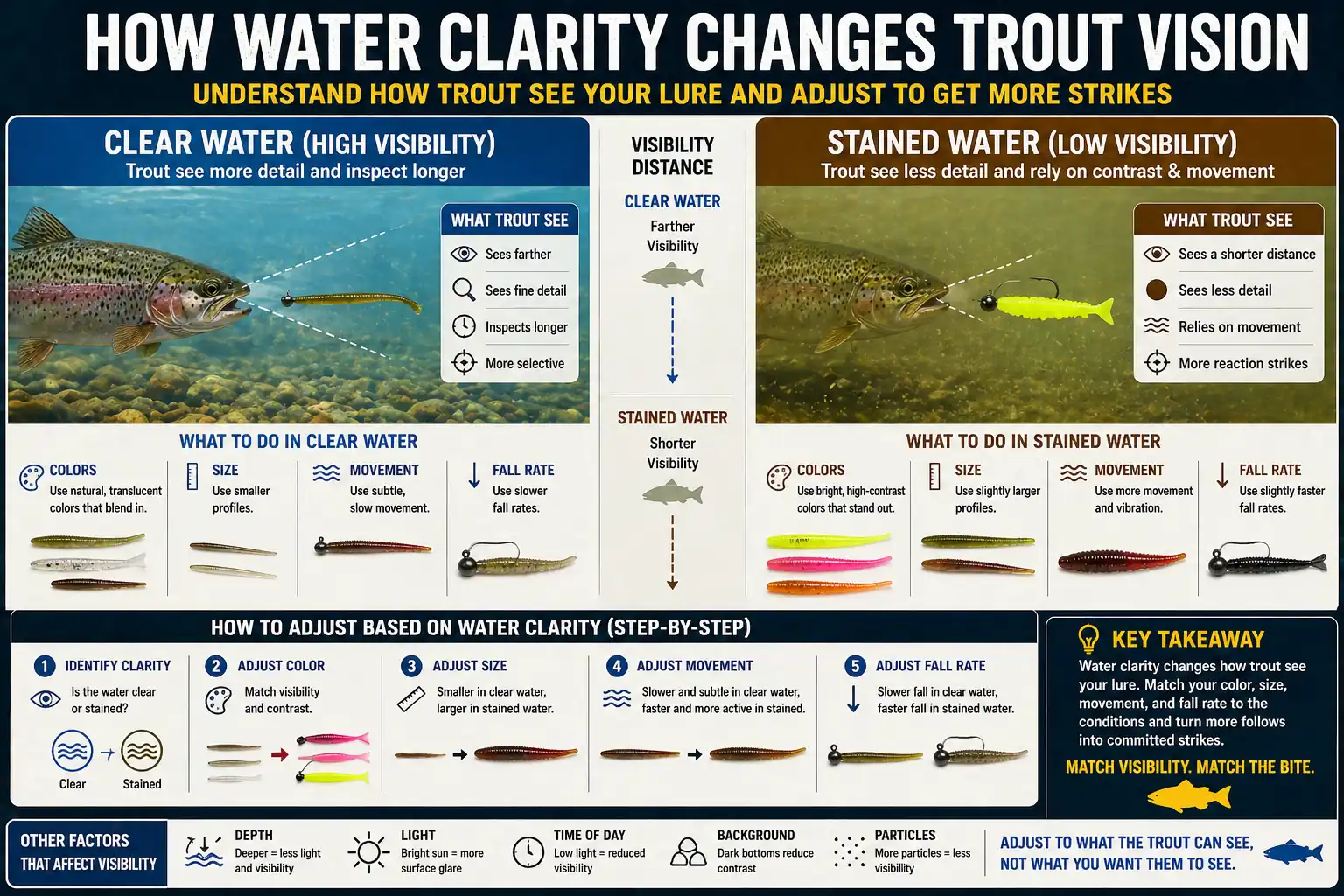
Often, yes. In clear water, trout inspect baits longer and subtle presentations become more important. Smaller hooks generally create more natural movement and improve strike conversion under pressured conditions. For more clear-water adjustments, see our Clear Water vs Stained Water Trout Guide.
Does hook wire thickness matter for trout?
Yes. Thin-wire hooks penetrate more easily with light tackle and finesse presentations, while thicker-wire hooks provide more strength but require more force to fully penetrate.
Can hook size affect hookup ratio?
Absolutely. Hook size directly influences penetration speed, strike engagement, bait collapse, and pressure distribution during the fight. Choosing the correct hook size is one of the most important factors in improving trout hookup consistency.