Why Plastisol Yellows, Smells, and Scorches (The Degradation Problem)
Why plastisol turns yellow is one of the most common questions in soft plastic lure making. The answer lies in PVC degradation, heat stabilizers, and the release of hydrogen chloride gas when plastisol is overheated. You’re pouring a batch, the plastic in the pot looks great — and then it doesn’t. It picks up a yellow tinge, maybe drifts toward amber, and if you’ve really cooked it, there’s a sharp, acrid smell. Most pourers chalk it up to “I burned it,” like overcooked food, and move on. But it’s worth understanding what actually happened, because it’s not random scorching — it’s one specific chemical reaction, and that same reaction explains the yellowing, the smell, why a batch can suddenly turn dark, and why you can’t reheat the same plastic forever. Understand it once and you’ll cook clean plastic every time. (This is about degradation from heat while making baits — the separate problem of baits aging and yellowing in storage over time is covered in “Why Soft Plastic Baits Melt”.)
The Root Problem: PVC Wants to Fall Apart When Heated
Plastisol is built on PVC, and PVC is a long chain of carbon atoms with hydrogen and chlorine hanging off it (chemists write the repeating unit as –CH₂–CHCl–). Those units are inherently shaky under heat. Warm PVC up and neighboring hydrogen and chlorine atoms start tearing off in pairs and combining into hydrogen chloride (HCl) gas. The chemical name for this is dehydrochlorination — literally “removing hydrogen and chlorine.” It kicks off at surprisingly modest temperatures: once PVC is heated to around 170°C, hydrogen and chlorine are eliminated and decomposition begins, releasing HCl.
Here’s the cruel part. You have to heat plastisol to fuse it into a finished bait (that’s the whole pouring process — the good kind of heating, covered on the the Science of Plastisol hub). But the very heat that fuses it is also the heat that makes it come apart. The entire craft of pouring is living inside a narrow window: hot enough to fuse properly, not so hot — or held so long — that it starts to degrade. Miss high, and you’re not “burning food,” you’re kicking off a chemical reaction.
And the window is genuinely tight, because here’s the uncomfortable truth: the temperature that fuses plastisol sits right at or above the temperature where degradation begins. Dehydrochlorination starts around 170°C, but full fusion typically needs roughly 180°C and up — meaning you’re deliberately heating the plastic past the point where it starts breaking down, and the only thing keeping it from running away while you do it is the stabilizer package and a careful eye on time. You’re not heating it to a safe temperature; you’re heating it into the danger zone on purpose and relying on protection and timing to get out clean. That’s why this is a real skill and not just “melt the goo.”
Why It Runs Away: The Zipper Effect
If dehydrochlorination just happened a little and stopped, it wouldn’t be a big deal. The problem is that the reaction feeds itself — two ways at once.
First, when an HCl pair tears off the chain, it leaves behind a double bond, and that double bond makes the next hydrogen-chlorine pair right beside it even easier to remove. So the reaction runs down the chain like a zipper unzipping — which is exactly what chemists call it, the “zipper elimination” or unzipping process.
Second, the HCl gas it releases doesn’t just float away — it acts as a catalyst that speeds up more breakdown. This HCl triggers a self-catalytic degradation chain reaction: even trace amounts accelerate further dehydrochlorination. That’s what autocatalytic means — the product of the reaction speeds up the reaction. Put the two together and you get a snowball: a little degradation makes more degradation easier, which makes still more, faster and faster. This is why an overcooked batch doesn’t fade gradually — it can tip over an edge and run.
Where It Starts: The Weak Links
PVC doesn’t start unzipping from random points. It lights up first at specific weak spots built into the chain when it was made — places where a chlorine atom is already loosely held. Degradation begins at structural defects like internal double bonds and branch points associated with tertiary chlorine. These are the “labile” (unstable) chlorines, and they’re the ignition points. And it’s self-propagating because, as noted, removing one HCl creates a fresh weak spot right next door. So degradation isn’t a wall the whole batch hits at once — it’s a fire that starts at the pre-existing weak points and spreads from there.
Why Plastisol Turns Yellow, Then Amber, Then Black
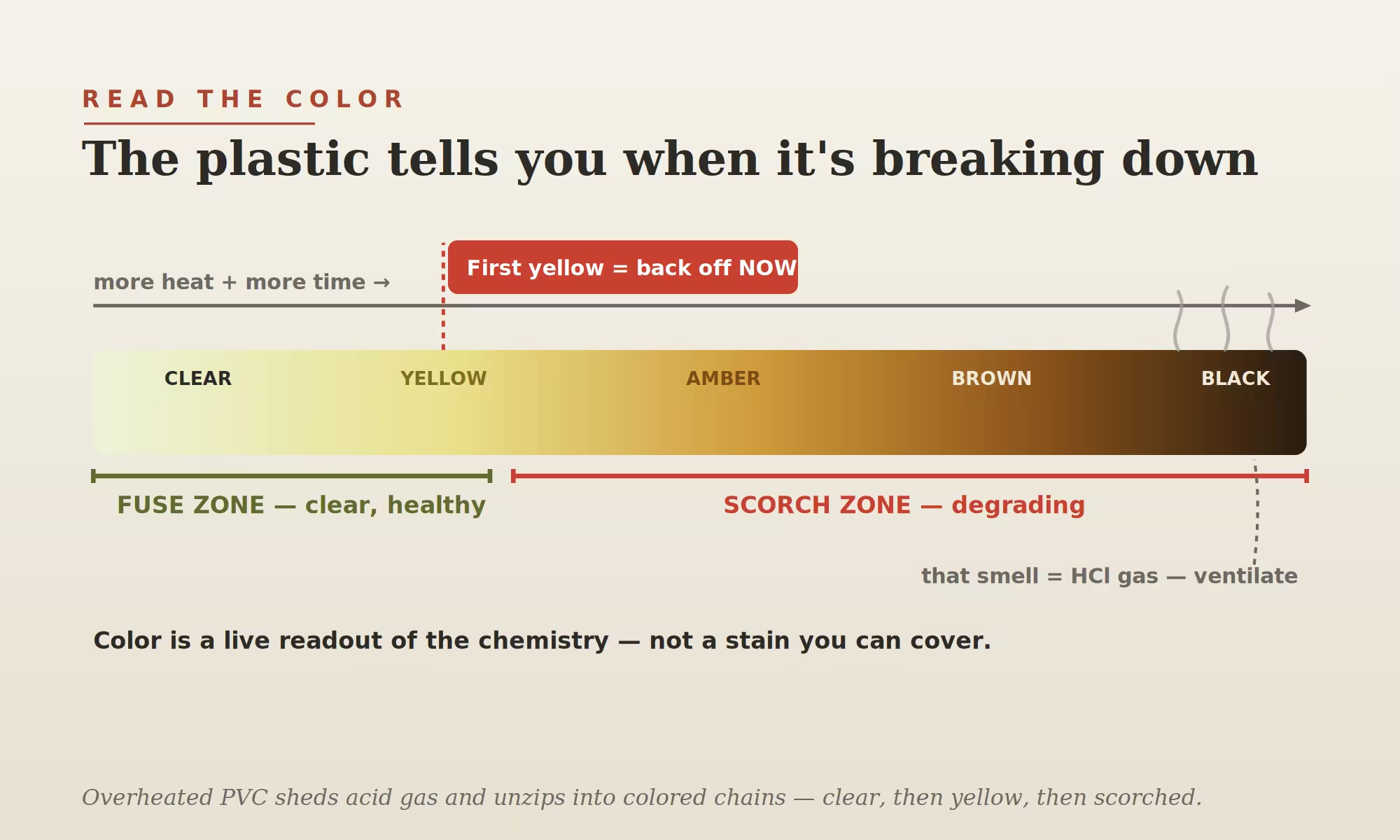
This is the part you can actually see, and it’s genuinely useful as a gauge. Those double bonds left behind by the unzipping don’t just sit there — they line up into long runs called conjugated polyene sequences (a chain of alternating double bonds). And conjugated double bonds absorb visible light, which means they have color. As degradation proceeds, this conjugated polyene structure absorbs progressively longer wavelengths of light, causing increasing yellowing of the PVC over time. The longer the polyene chains grow, the deeper the color shifts — color change from thermal degradation is attributed to conjugated polyene sequences of roughly 5 to 25 double bonds.
So the color of your plastic is a direct readout of how far it’s degraded:
- Crystal clear / true to color — healthy, properly cooked.
- Faint yellow tinge — early degradation. Your warning light. Back off the heat now.
- Amber to brown — significant degradation; the polyenes are getting long.
- Dark brown to black — heavily degraded, scorched.
And it’s not just a cosmetic problem. The same chain-breaking that changes the color also damages the plastic mechanically — a scorched batch comes out weaker and more brittle, not just uglier. The yellow isn’t a stain you can wash off or cover with more pigment; it’s the plastic itself coming apart, made visible. When you see yellow, the chemistry is already running.
It Fishes Worse, Not Just Looks Worse
It’s tempting to think a little yellow is purely cosmetic — hide it under a dark pigment and fish on. But degradation breaks the polymer chains, and shorter chains make a weaker bait: a degraded pour tears more easily at the hook, loses some of its stretch and lively action, and can come out of the mold with surface pits or bubbles where gas escaped. So an overcooked batch doesn’t just look off-color — it’s a measurably worse bait that won’t survive as many fish (the durability side of that is the Why Soft Plastic Baits Tear). Masking the color doesn’t restore the strength; the damage is in the chains, not on the surface.
Oxygen Speeds It, and Black Is Char
Two more mechanism notes worth knowing. First, air makes it worse — degradation in the presence of oxygen accelerates dehydrochlorination, so whipping air into hot plastic or leaving a large hot surface exposed both speed the reaction. Stir gently and don’t beat air into a hot pot. Second, that final black stage isn’t just “more yellow” — once enough chlorine has been stripped out, the leftover polyene chains start cross-linking into char (the same dark, carbonized residue you’d get burning most organics). Black plastic is effectively scorched to char and is completely spent — there’s no using it for anything but the trash.
The Smell Is the Important Warning
That sharp, acrid odor off overheated plastic isn’t “burnt smell” in the toast sense — it’s hydrogen chloride gas, and HCl is a corrosive acid gas. This is the single most important safety point in pouring, and it’s why every serious guide hammers ventilation: if you can smell that sharpness, the plastic is actively degrading and shedding an acid gas into the air you’re breathing. It’s not just a ruined-batch issue; it’s a don’t-breathe-this issue. Fumes mean stop, kill the heat, and ventilate — and pour with good airflow (and ideally a proper respirator) so you never reach that point in the first place. The smell is the plastic telling on you, and it’s telling you to get air moving. There’s a hardware reason too: HCl is corrosive to metal, so a poorly ventilated pouring space slowly rusts and pits your tools, pots, and anything steel nearby. Ventilation protects your lungs first and your gear second.
What the Stabilizers Are Actually Doing
Given all that, you might wonder how plastisol survives being heated at all. The answer is heat stabilizers — and without them you literally could not fuse plastisol into a bait. They fight the runaway on two fronts at once. They act as HCl scavengers, removing the acidic dehydrochlorination catalyst, and react with allylic chlorides to transform highly labile structures into more stable groups — and in doing so they shorten the conjugated polyene sequences and thereby reduce the discoloration of degrading PVC. In plain terms: stabilizers (1) mop up the HCl before it can catalyze more breakdown, (2) cap the weak ignition points before they can start unzipping, and (3) chop down the color-causing polyene chains. They’re a sacrificial buffer — they get used up doing this job, which becomes important in a minute.
Why two metals, and the dreaded “zinc burn”
The most common non-toxic stabilizer system is calcium/zinc, and there’s a reason it’s always two metals. Zinc is the fast one — it aggressively caps the labile chlorines and keeps early color clean. But zinc has a vicious failure mode: as it does its job it converts to zinc chloride, which is itself a catalyst for degradation. When the zinc gets used up, that byproduct can trigger a sudden, total blackening called “zinc burn” — a batch that looked fine one moment flashes dark the next. Calcium is the slow partner that prevents this: it scavenges HCl and continuously regenerates the spent zinc, cleaning up the dangerous byproduct so the system lasts. Run together at the right ratio, you get zinc’s clean early color and calcium’s staying power. (A third option, organotin stabilizers, is prized for giving water-clear plastic, which is why crystal-clear baits often use it.) The practical upshot: if a batch ever flashes from fine to dark almost instantly, you didn’t just “burn it” — you ran the stabilizer out and hit zinc burn.
Your Plastic May Already Have a Head Start
There’s a quiet factor behind why two pourers can run the same temperature and get different yellowing: the plastic doesn’t arrive at zero. PVC’s slow breakdown actually begins back in manufacturing and creeps along during storage — gentle, but real — even before you open the bottle. Plastic that’s old, or that’s been stored hot or in sunlight, has already spent part of its stabilizer buffer and started a few polyene chains, so it yellows and scorches sooner than fresh, well-kept plastic, at the same pot temperature. This is why storing your liquid plastisol cool, capped, and out of the light matters (covered with the rest of liquid shelf life on the hub), and why a bottle that’s been baking in the shop for two summers may give you grief that a fresh bottle wouldn’t. If a plastic seems weirdly prone to discoloring, its age and storage history may have used up its margin before you ever turned on the heat.
Why You Can’t Reheat It Forever
Here’s where “sacrificial buffer” matters on the bench. Every time you heat a batch, you spend some of that finite stabilizer protecting the plastic. Reheat the same plastic over and over — remelting leftovers, topping off the pot again and again — and you gradually use the buffer up. Eventually there’s not enough left, and that’s when an old, much-reheated batch suddenly yellows or goes brittle “for no reason.” There’s no mystery to it: the stabilizer is simply gone, and the next heat cycle has nothing protecting it. Reheating isn’t free, and a batch that’s been through many cycles is living on borrowed protection.
The Two Dials: Temperature and Time
Degradation is driven by how hot and how long, and both matter. Temperature is the steep one — like most chemical reactions, the degradation rate climbs sharply as temperature rises (a useful rule of thumb is that it roughly doubles for every ~15–20°F over the line), so a small overshoot isn’t a small problem. But time counts too: plastic held at a high temperature for a long time degrades more than plastic that hits temperature briefly and gets poured. Letting a pot sit and stew at high heat — or repeatedly creeping the temperature up to keep a thickening batch flowing — is a classic way to cook a batch to amber. The goal is always: the lowest temperature that fully fuses, held for the shortest time that gets the job done.
How to Pour Clean Plastic (Avoiding the Scorch)
Everything above points to a handful of bench habits that keep plastic clear and your air safe:
- Stay in the window, low and steady. Use the lowest temperature that fully fuses your plastic, and hold it there rather than chasing higher heat. Past the fuse window, the damage rate climbs fast.
- Treat the first yellow as a hard alarm. That faint tinge is the chemistry already running. Pull the heat the moment you see it — past that point degradation stops being gradual.
- Don’t let it stew, and stir it. Plastic sitting overcooked in a stagnant hot pot traps HCl, which then catalyzes more breakdown; gentle stirring and not parking it at high heat both slow things down. Heat what you’ll use, pour it, don’t let the pot idle hot.
- Limit reheats. Every remelt spends stabilizer. If you reheat leftovers a lot, expect them to discolor sooner — and consider a stabilizer additive to extend them (see below).
- Ventilate, always. Good airflow and ideally a respirator, every session. If you smell that sharp odor, stop and clear the air — that’s HCl, not “fishy plastic smell.”
- Add heat stabilizer if you push your plastic hard. Pourers who run hot, reheat often, or work big batches can add a stabilizer additive to extend the protective buffer and hold color longer. It’s cheap insurance against zinc burn and yellowing.
The Tools That Keep You in the Window
You can’t hit a narrow temperature window by eyeballing it, and most scorched batches come down to not actually knowing the temperature. A few cheap things make the difference:
- A real thermometer. An infrared temp gun or a probe thermometer in the pot turns “looks about right” into an actual number you can keep under control. This is the single best anti-scorch tool.
- Even, controllable heat. A temperature-controlled pot or a low, steady burner beats a screaming-hot element you keep flicking on and off. Wild temperature swings are how you overshoot.
- Know your method’s hot spots. Microwave heating is convenient but heats unevenly, leaving scorched pockets hot enough to degrade while the rest looks fine — stir thoroughly and heat in shorter bursts. Whatever the method, the enemy is a local hot spot you can’t see.
(The full how-to of heating methods and pouring lives in the pouring guide; here the point is narrow — you can’t avoid degradation if you don’t know your temperature.)
Can You Save a Discolored Batch?
Short answer: you can’t reverse it, but you can sometimes still use it. Degradation is one-way — there’s no un-yellowing plastic, because the chains are already broken. What you can do depends on how far it went:
- Faint yellow, caught early: still usable, especially for darker or opaque colors that hide the tint. It’s slightly weakened but often fine for fishing.
- Amber/brown: relegate to dark, opaque pours at most, and know it’ll be weaker — don’t use it for clears, naturals, or anything light, and don’t trust it for a bait that needs durability.
- Dark brown/black: done. It’s char-grade; scrap it.
One caution: hiding light yellowing under heavy dark pigment is fine cosmetically, but remember the plastic is still weakened underneath. Masking the color doesn’t fix the bait.
Diagnose the Discoloration
What your plastic is telling you:
- Slight yellow creeping in — early degradation. Lower the heat immediately; you may still save the batch for dark colors.
- Amber or brown — significant degradation. It’ll be weaker and off-color; fine to scrap or relegate to a dark opaque pour, not for clears or light colors.
- Flashed from fine to dark almost instantly — classic zinc burn: stabilizer spent, ran too hot or too long. Add stabilizer and keep temps down next time.
- Sharp acrid smell — HCl gas. Stop, kill the heat, ventilate. This is a safety stop, not a quality note.
- Discolors fast every time you reheat — your stabilizer buffer is depleted from too many cycles. Start with fresh plastic, or add stabilizer, and cut down on remelts.
- Came out clear but oddly weak/brittle — possible mild over-cook that hurt the plastic mechanically before it showed much color, or (more often) under-fusion — check your temperature against the fuse window on the hub.
The Bottom Line
When plastisol yellows, smells, and scorches, it’s not burning like food — it’s dehydrochlorinating: shedding corrosive HCl gas, unzipping along the chain in a reaction that feeds itself, and leaving behind conjugated polyenes that color the plastic yellow, then amber, then black. Stabilizers hold that reaction back, but they’re a finite buffer that heat and reheating spend down — which is why too hot, too long, or too many remelts all end the same way. Cook low and steady, treat the first yellow as your alarm, keep the air moving, and respect that the color in the pot is a live readout of the chemistry. Do that and you’ll pour clean, strong, true-color plastic batch after batch.
The other side of this coin — the good heating that turns liquid plastisol into a finished bait, and the formula choices behind it — lives on the the Science of Plastisol hub. And the separate way baits break down after they’re made, sitting in storage, is covered in Why Soft Plastic Baits Melt.
Frequently Asked Questions
Why does plastisol turn yellow when heated?
Plastisol turns yellow because PVC begins to degrade through a process called dehydrochlorination. As hydrogen chloride (HCl) leaves the polymer chain, long sequences of conjugated double bonds form. These structures absorb visible light and cause the plastic to shift from clear to yellow, then amber, brown, and eventually black as degradation progresses.
Is yellow plastisol still usable?
Usually, yes. Slightly yellow plastisol is often still fishable, especially when used for dark or opaque colors that hide the discoloration. However, the yellowing indicates that degradation has already started, so the plastic may be somewhat weaker than a properly cooked batch.
What temperature causes plastisol to yellow?
There is no single temperature where yellowing begins because time matters as much as heat. PVC degradation can begin around 170°C (338°F), while full fusion typically occurs around 180°C (356°F). Higher temperatures and longer hold times dramatically increase the rate of degradation.
Why does overheated plastisol smell so bad?
The sharp, acrid smell comes primarily from hydrogen chloride (HCl) gas released as PVC breaks down. This is not simply a “burnt plastic” smell—it is evidence that the plastisol is actively degrading and releasing a corrosive acid gas.
Is it safe to breathe plastisol fumes?
No. If you can smell a sharp, acidic odor, the plastic is likely releasing hydrogen chloride gas. Always pour in a well-ventilated area and consider using a respirator appropriate for acid gases when working with hot plastisol. If strong fumes appear, stop heating immediately and ventilate the area.
Can you fix yellowed plastisol?
No. Yellowing caused by thermal degradation cannot be reversed because the chemical changes have already occurred within the PVC chains. You may be able to hide minor discoloration with dark pigments, but the underlying degradation remains.
Why does plastisol suddenly turn dark or black?
A sudden color change is often caused by severe degradation or a phenomenon known as zinc burn. This occurs when the stabilizer system becomes depleted and the degradation reaction rapidly accelerates, causing the plastic to darken in a very short period of time.
Does reheating plastisol damage it?
Yes. Every heat cycle consumes a portion of the stabilizer package that protects the PVC from degradation. Repeated reheating eventually reduces this protection, making the plastic more likely to yellow, scorch, become brittle, or suffer zinc burn.
Does yellow plastisol catch fewer fish?
Color alone does not necessarily reduce effectiveness, especially in dark-colored baits. However, the same degradation that causes yellowing also weakens the polymer chains, which can reduce durability, flexibility, and tear resistance.
How do you prevent plastisol from scorching?
Use the lowest temperature that fully fuses the plastisol, avoid holding it at high temperatures for long periods, stir regularly to prevent hot spots, limit reheating cycles, monitor temperature with a thermometer, and maintain good ventilation throughout the pouring process.
About Family Fishin
Family Fishin is a family-owned fishing tackle company dedicated to designing, testing, and producing high-quality fishing lures — inspired by generations of fishing tradition and driven by a passion for innovation. Every product is developed with one goal in mind: helping anglers spend more time doing what they love, catching fish and creating memories on the water.
Tags: #plastisol #soft plastics #lure making #DIY lures #pouring baits #PVC #heat stabilizer #scorching