Trout Fishing Techniques
Mastering trout fishing techniques requires understanding how trout position, feed, react to current, and respond to changing environmental conditions.
Different techniques excel under different circumstances. Current speed, water temperature, depth, structure, fishing pressure, forage availability, and trout behavior all influence which presentation produces the most strikes.
Looking specifically for stocked or pressured trout? See our Best Trout Worm for Stocked Trout guide.
This section organizes proven trout fishing techniques into practical categories so anglers can quickly identify the right approach for the conditions they face on the water.
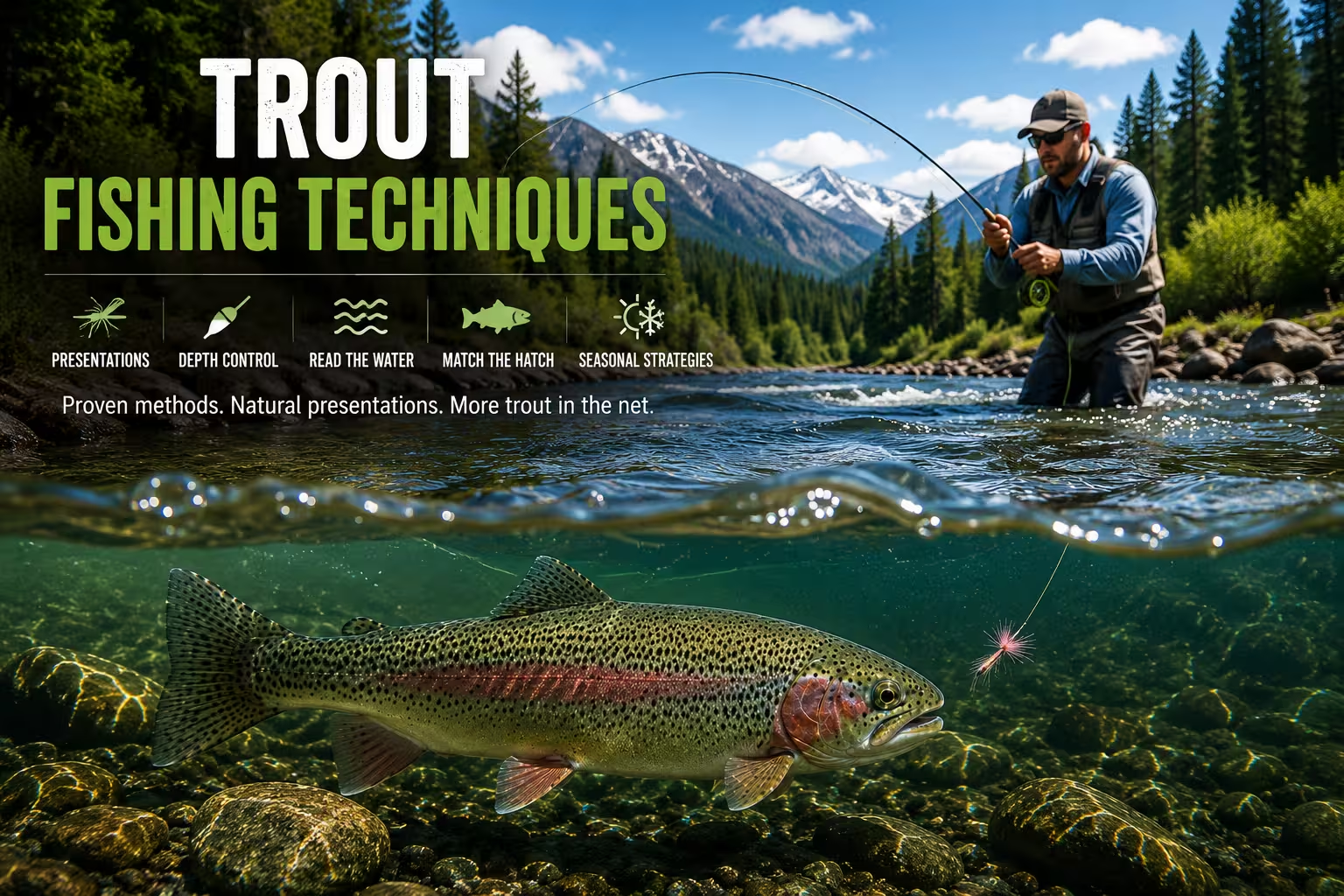
Explore detailed trout fishing technique guides covering lure presentations, rigging systems, seasonal strategies, retrieval methods, current seams, float fishing, jig fishing, finesse presentations, and trout-specific applications.
Click any article title below to read the full guide.
The Chemistry Behind Crawfish and Shrimp Oil: Why Crustacean Scent Runs on Betaine, Not Trimethylamine
Crawfish and shrimp oil for trout is one of the most scientifically supported natural scent categories because it contains high concentrations of betaine, glycine, and other compounds found in real crustacean prey. Fish oil’s signature comes from trimethylamine. Crustacean tissue runs on an almost entirely different chemistry — dominated by glycine and betaine instead —…
The Chemistry Behind Fish Oil Scent: Why Trimethylamine Is the Real “Dead or Dying Fish” Signal
The fish oil scent for trout works differently than garlic or anise. As fish tissue breaks down, trimethylamine (TMA) is released, creating a natural chemical signal that trout recognize as injured or dying prey. 1.Why the Fish Oil Scent for Trout Works Differently As covered in the garlic and anise chemistry breakdowns, both of those scents work as carrier…
The Chemistry Behind Anise Scent: How Anethole’s Oil Chemistry Changes the Scent Trail
Anise scent for trout works differently than garlic because its active compound, anethole, is oil-loving instead of water-loving. That unique chemistry allows anise scent to cling to the bait and create a slow, long-lasting scent trail that performs especially well during extended presentations. 1.Same Two Systems, Different Molecule As covered in our garlic scent chemistry breakdown,…
Do Fish Like Garlic? The Chemistry Behind Garlic Scent on Trout
Do fish like garlic? Garlic scent can help you catch trout, but not because fish eat garlic. Its sulfur compounds spread fast in water and build a strong scent trail that draws trout in to investigate. Amino acids, not garlic, are what tell a trout something is food. 1.Smell Isn’t One Sense — It’s Two…
Part 5 — Best Jig Head Color for Trout
The best jig head color for trout is determined by light penetration, water clarity, reflectivity, and underwater contrast—not simply by choosing a favorite color. Understanding how trout see a lure helps anglers select the right jig head color for every fishing condition. (Spectral Light, Reflectivity, and Strike Decision Mechanics) Light, water clarity, and reflectivity determine…
Part 4 — Best Jig Head Shapes for Trout
(Movement, Stability, and Directional Control Based on Real Jig Geometry) Introduction Best Jig Head Shapes for Trout Understanding the best jig head shapes for trout is critical because shape controls how a jig moves, tracks, and presents itself in the water. Jig head shape does not change weight—it changes how that weight behaves in the water.…
Best Baits and Techniques for Creek Fishing: What Actually Works and Why
The best baits and techniques for creek fishing can make the difference between a slow day and a limit of trout. Small creeks offer excellent opportunities to catch rainbow trout, brown trout, and stocked trout, but success depends on choosing the right bait, gear, and presentation. In this guide, you’ll learn which trout worms, soft…
Why Marabou Jigs for Trout Are Deadly (Cold Water & Pressured Fish Guide)
When trout get cold, pressured, and selective, most anglers downsize their soft plastics and slow everything down. But in clear water and tough conditions, marabou jigs for trout often outproduce plastics—not because they’re old-school, but because they solve a specific problem trout create. Marabou moves without force. It breathes without speed. And it draws strikes…
Stonefly Nymph: How to Rig and Fish It for Trout
The stonefly nymph is one of the important subsurface foods for trout in rivers, tailwaters, and cold streams — and when fish are holding tight to the bottom or refusing flashier baits, a properly rigged soft-plastic stonefly can out-produce a bulkier worm or a reaction lure. But the lure is only half of it. With…
How to Rig Trout Worms for Stocked and Pressured Trout
Learning how to rig trout worms properly can dramatically improve success for stocked trout and pressured trout. It also helps trigger bites from selective fish that stop responding to larger or more aggressive presentations. Small worm profiles imitate vulnerable forage naturally, and slight changes in how the worm is rigged can completely change its movement,…