The Things Fishing Teaches Us About Life
Patience, persistence, and joy from the water’s edge.
Why Fishing Isn’t Just About Catching Fish
The things fishing teaches us often have very little to do with catching fish. Most people think fishing is about the hookset, the fight, and the photo, but experienced anglers know the greatest rewards often come from the lessons learned between bites. The hookset, the bend in the rod, the photo. But anyone who’s spent enough mornings on the water knows the fish are only part of it. Some of the most meaningful days I’ve ever had fishing ended with an empty stringer.
A Cold Morning That Wasn’t About the Trout
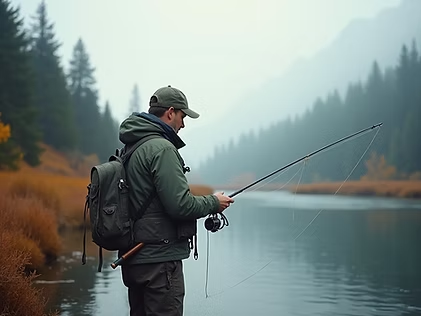
It was early March, the water barely above 40 degrees, with a thin fog hanging over a small local lake most people would drive right past. I had a light spinning rod rigged with a 2.38-inch ribbed trout worm under a small float — the kind of setup that works well in cold, clear water when trout are sluggish. My son had already asked twice if the fish were “even awake yet.”
We waited. And waited. The bobber never moved.
But something else did. The conversation shifted, the rush disappeared, and we talked about school, about plans for the summer, about nothing important at all. When we finally packed up, fishless, he asked, “Can we come back next weekend?”
That was the win.
Things Fishing Teaches Us About Life
That morning reminded me that fishing is rarely just about catching fish. The things fishing teaches us often happen during the waiting, the conversations, the adjustments, and the moments when nothing seems to be happening at all. Those lessons tend to stay with us far longer than any trophy photo.
One of the most valuable things fishing teaches us is that success often comes from patience, consistency, and small adjustments rather than quick results.
Lesson 1: Patience Is Learned, Not Taught
Fishing forces patience in a way nothing else does. You can’t rush a cold front, you can’t make trout feed when they’re suspended and inactive, and you can’t bully a bite. You adjust, you cast again, and you wait.
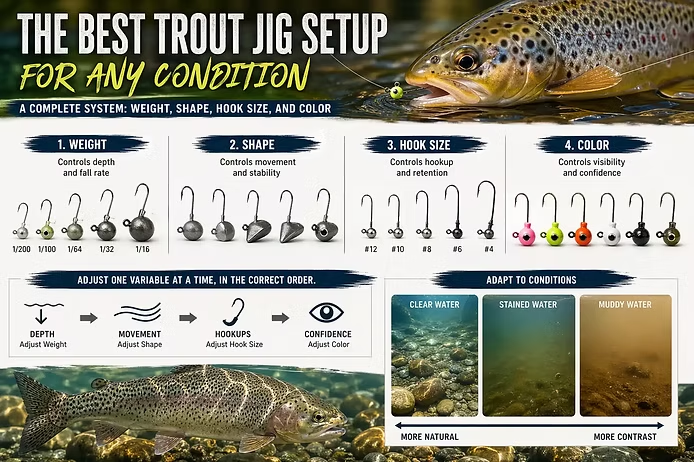
On tough days, I’ll switch from brighter colors like chartreuse to something more natural — pumpkinseed or smoke — especially in clear water with pressured fish, and sometimes I’ll slow the retrieve down to almost nothing. Small adjustments, long waits.
That same discipline shows up everywhere in life. Building a business takes time. Raising kids takes time. Getting good at anything takes time. Fishing doesn’t just teach patience — it trains it.
Lesson 2: Adaptability Beats Frustration
One summer evening, a storm rolled through faster than expected and the water went from clear to muddy in under an hour. The bite died instantly. That’s the moment you either adapt or go home frustrated.
In stained water, I’ll move to darker colors — black, dark purple, deeper greens — something that creates contrast. I’ll fish slower, closer to structure, closer to the bottom. The anglers who adapt usually still catch fish; the ones who don’t end up complaining about conditions.
Life works the same way. Technology changes, markets shift, plans fall apart. The question is simple: do you adjust your approach, or do you blame the weather? Fishing rewards flexibility, and so does life.
Lesson 3: Small Details Matter More Than Big Effort
Some of the biggest differences I’ve seen on the water came from tiny changes — switching knot types to prevent line twist, adjusting leader length by six inches, changing retrieve speed by a second or two. Once, during a slow bite, I swapped from a straight-tail soft plastic to a ribbed-body version. Same size, same color, just a slightly different vibration in the water. The fish responded.
It wasn’t dramatic or flashy. It was subtle. In life, improvement often works the same way: a small change to a morning routine, five more minutes of preparation, a slight shift in how you communicate. Big results usually hide behind small refinements.
Lesson 4: The Quiet Is the Point
Early mornings on the water feel different from the rest of the day. No notifications, no deadlines — just the sound of line moving through the guides and water against the shoreline. Even when the fish aren’t biting, something valuable is happening. You’re present.
I’ve watched my kids skip rocks between casts. I’ve seen friends sit in comfortable silence, not because they had nothing to say but because they didn’t need to say anything. Fishing gives you permission to slow down, and in a world that constantly demands speed and noise, that alone is rare. You start to realize the catch is often secondary, and the quiet is the reward.
Lesson 5: Resilience Is Built Through Slow Days
Not every trip produces. There are days you get skunked — days when the water looks perfect, the bait choice is right, the conditions seem ideal, and nothing happens. Those days matter, because the next time you go out, you go anyway. You show up. And sometimes, on the fourth try, you land your personal best.
Resilience isn’t built during easy wins. It’s built when you decide to come back after disappointment. Fishing teaches that without speeches or slogans — you either come back tomorrow, or you don’t.
Why This Matters for Families
Fishing creates space for connection without pressure. There’s no scoreboard, no performance requirement, no constant stimulation — just shared time. Some kids won’t remember the exact fish they caught. They’ll remember the snack breaks, the tangled lines, the boat rocking slightly in the wind, and the ride home talking about “next time.” Those small, repeated outings compound over the years, and that’s the bigger picture.
Fishing Is More Than a Hobby
If you fish long enough, you start to see patterns that reach well beyond the water: patience beats panic, adaptation beats stubbornness, details beat brute force, quiet beats noise, and showing up beats quitting.
Catching fish is exciting. But building character, relationships, and perspective lasts longer. Some days you land a trophy; other days you land a conversation. Both matter.
The Bigger Picture
Fishing isn’t always about the fish. Sometimes it’s about teaching a child how to tie a knot, watching a sunrise you’d otherwise have missed, sitting beside someone without distraction, or learning to handle slow seasons without frustration. Those lessons stay with you long after the rod is put away — and that’s why we keep going back.
Looking back over years on the water, the things fishing teaches us often prove more important than the fish we catch. The lessons stay long after the trip is over.
Final Thought
The next time the bite is slow, resist the urge to call it a wasted trip. Look around. Notice who’s there with you, notice the stillness, notice what you’re learning in the waiting. Because sometimes the most important thing you bring home from the water isn’t a fish. It’s perspective.
About Family Fishin
Family Fishin is a family-owned fishing tackle company dedicated to designing, testing, and producing high-quality fishing lures — inspired by generations of fishing tradition and driven by a passion for innovation. Every product is developed with one goal in mind: helping anglers spend more time doing what they love, catching fish and creating memories on the water.
Tags: #fishing life #life lessons #outdoor wisdom #family fishing #angler stories