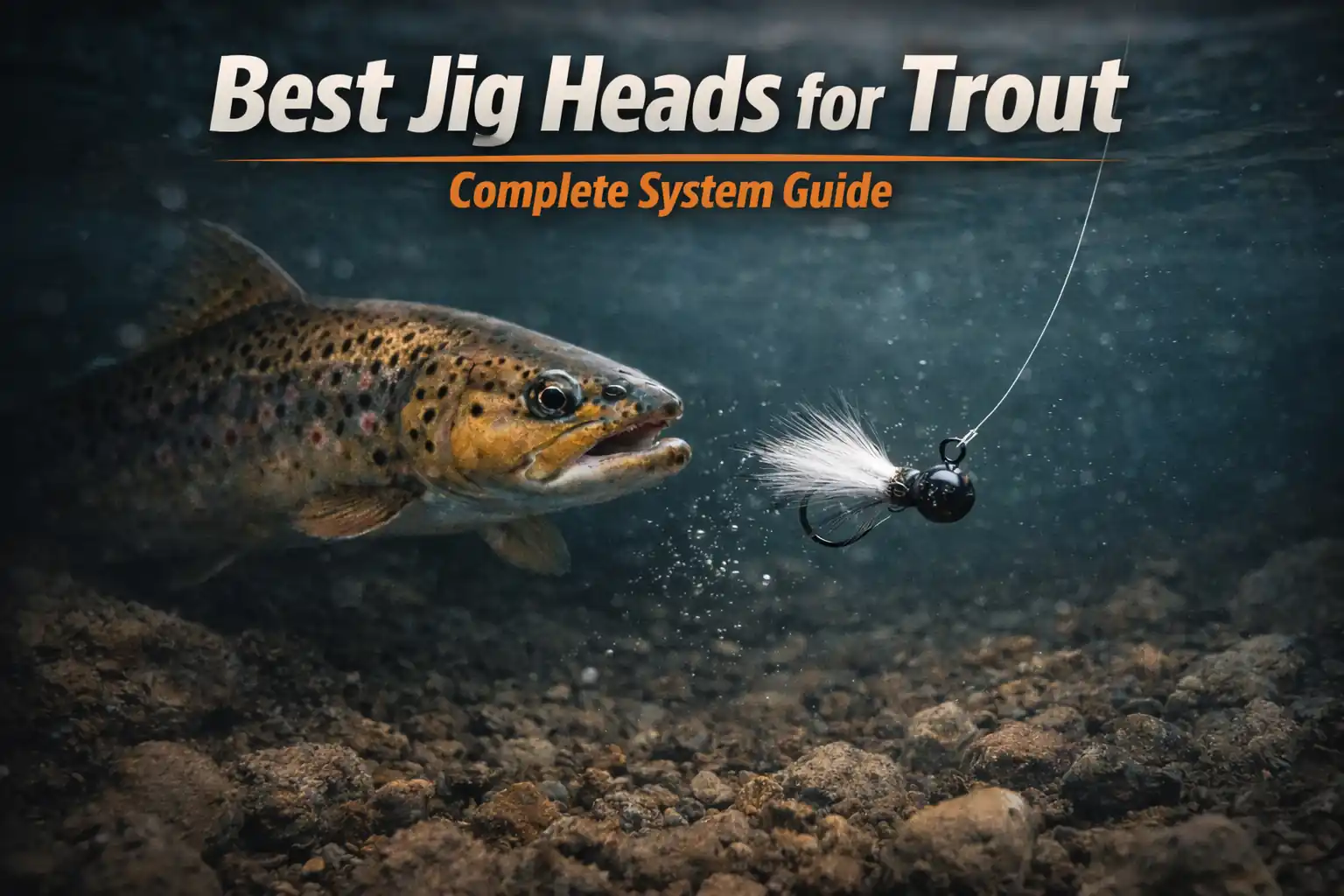
Best Jig Heads for Trout (Complete System Guide)
The complete system for selecting jig heads for trout — weight, head shape, hook size, eye angle, and finish working together. Proven high-performance setups and a full FAQ covering every variable.

The complete system for selecting jig heads for trout — weight, head shape, hook size, eye angle, and finish working together. Proven high-performance setups and a full FAQ covering every variable.

The complete Missouri trout fishing guide — Bennett Spring, Roaring River, Montauk, Taneycomo, Ozark streams, bait selection, color guide, slip bobber setup, and local tips from anglers based in Ozark, MO.

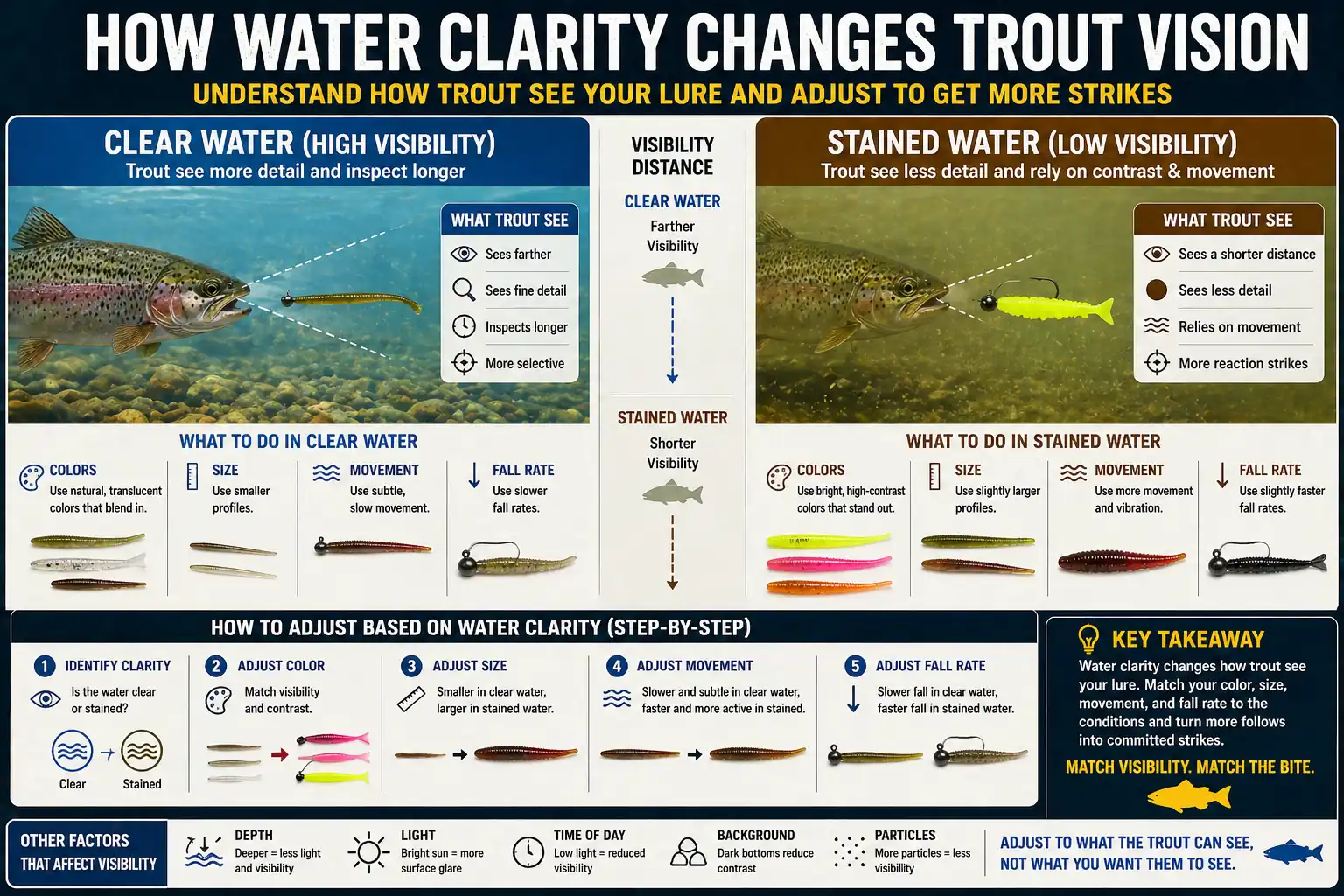
Water clarity controls how trout see your lure, how long they inspect it, and whether they commit or refuse. A complete system for adjusting color, size, movement, and fall rate to match any clarity condition.

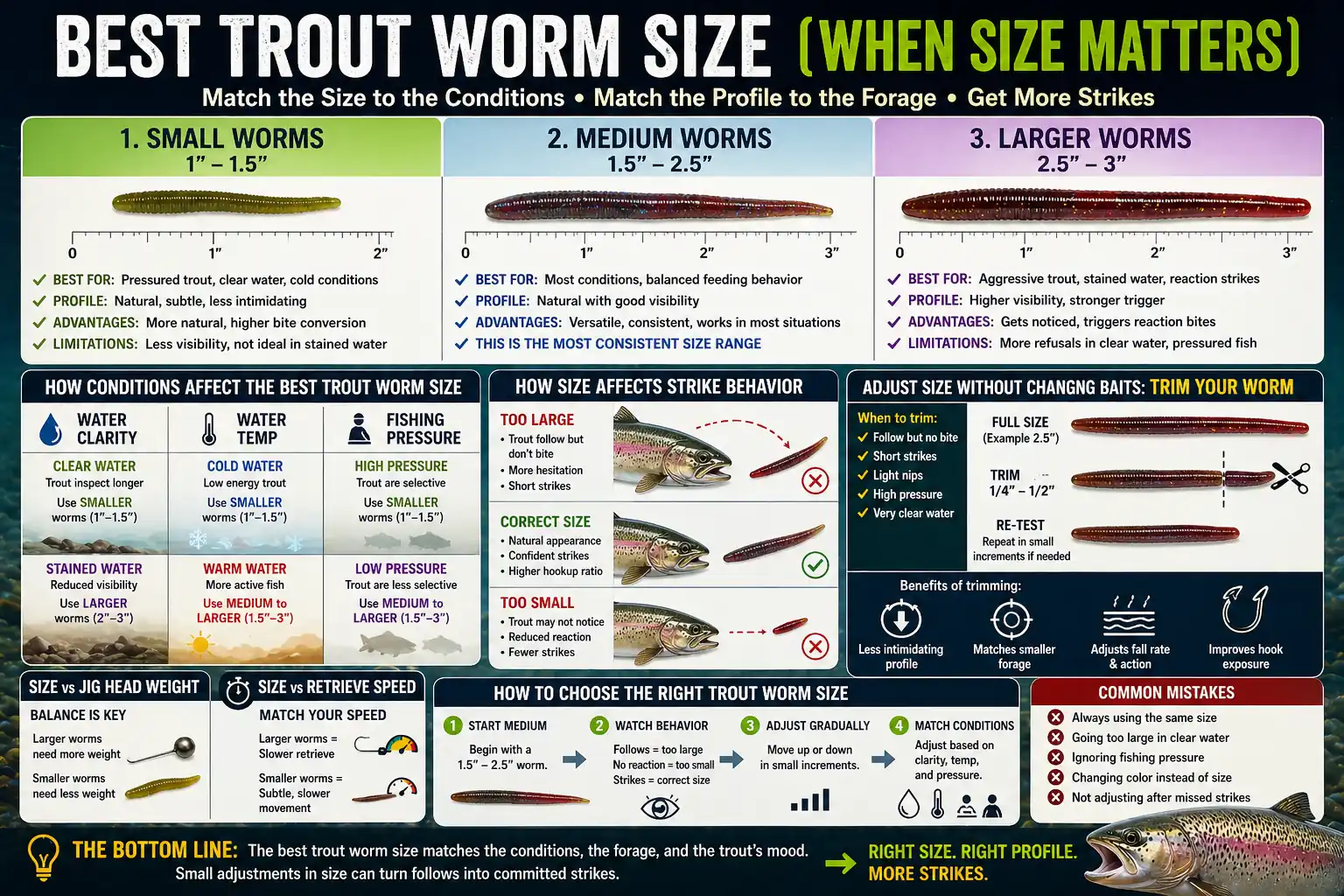
The best trout worm size changes with conditions. A complete guide to small, medium, and large profiles — plus the trimming technique that turns follows into strikes without changing baits.

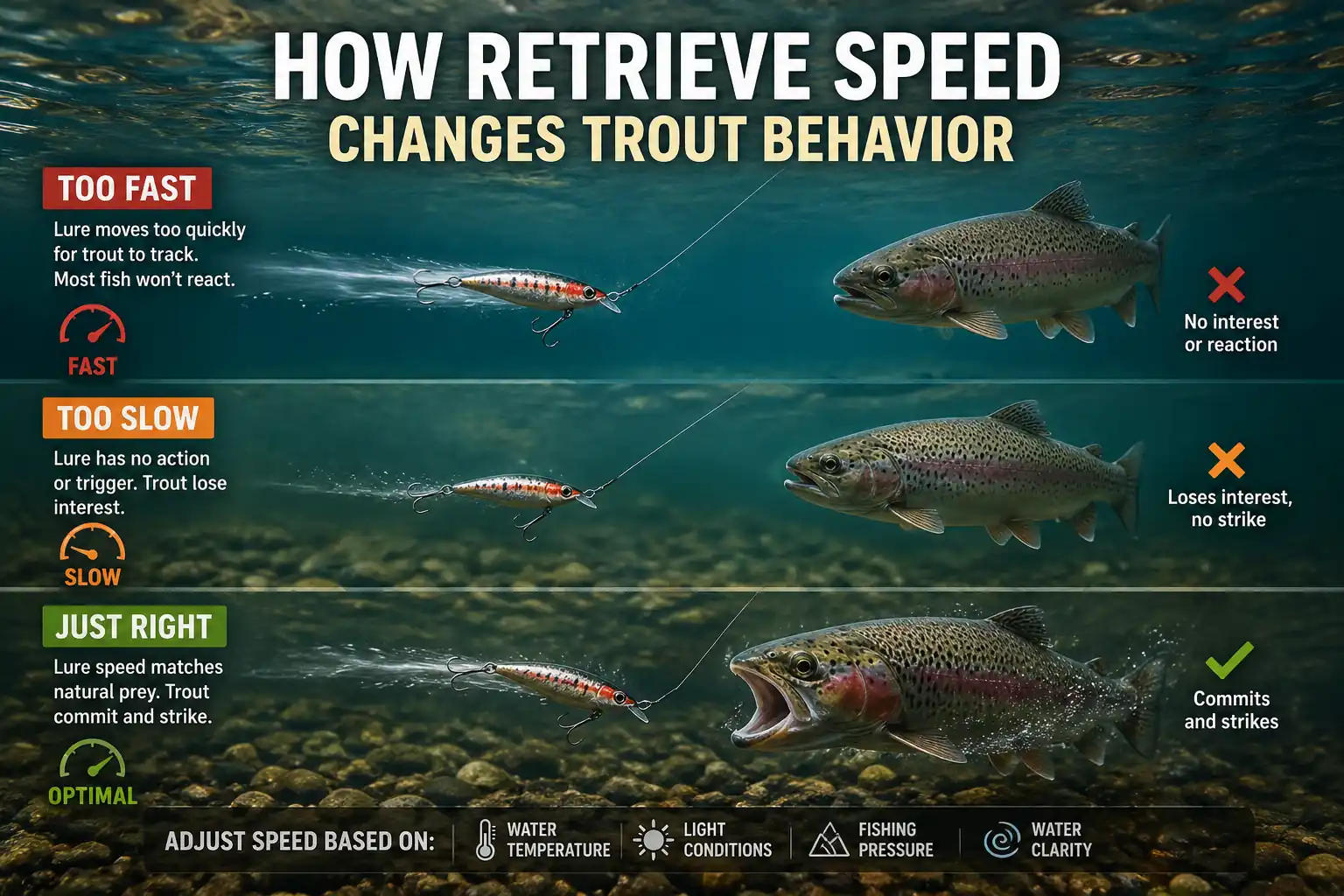
Retrieve speed directly controls trout behavior — too fast or too slow leads to missed strikes. A complete system for matching retrieve speed to temperature, pressure, and conditions.

A trout that follows your bait is not a missed opportunity — it is a diagnostic signal. A complete step-by-step guide to identifying which variable is wrong and fixing it for consistent strikes.

A condition-based five-variable framework for catching stocked trout consistently — time since stocking, water conditions, fish location, feeding activity, and fishing pressure evaluated in the correct priority order.

After the first week, stocked trout shift from recognition-based feeding to experience-based decision making. A complete guide to the 12 behavioral changes and how to adjust your presentation at each stage.

Stocked trout do not feed continuously — catch rate is determined more by timing than bait choice. A complete guide to feeding windows, time-of-day patterns, pressure timing, weather triggers, and the peak 24–72 hour window.

Stocked trout are location-dependent, not evenly distributed. A complete positioning guide covering stocking point effect, shoreline bias, depth control, holding vs cruising behavior, current positioning, and pressure-induced movement.