Part 7 — How to Dye Marabou Feathers at Commercial Scale
This is how to dye marabou feathers at commercial scale — and it’s not about larger pots. It is about control, documentation, repeatability, and margin discipline.
If your process cannot produce the same color twice, it is not scalable. This section outlines the systems required to move from hobby output to consistent small-business production.
1. Batch Dye Planning to Dye Marabou Feathers at Commercial Scale
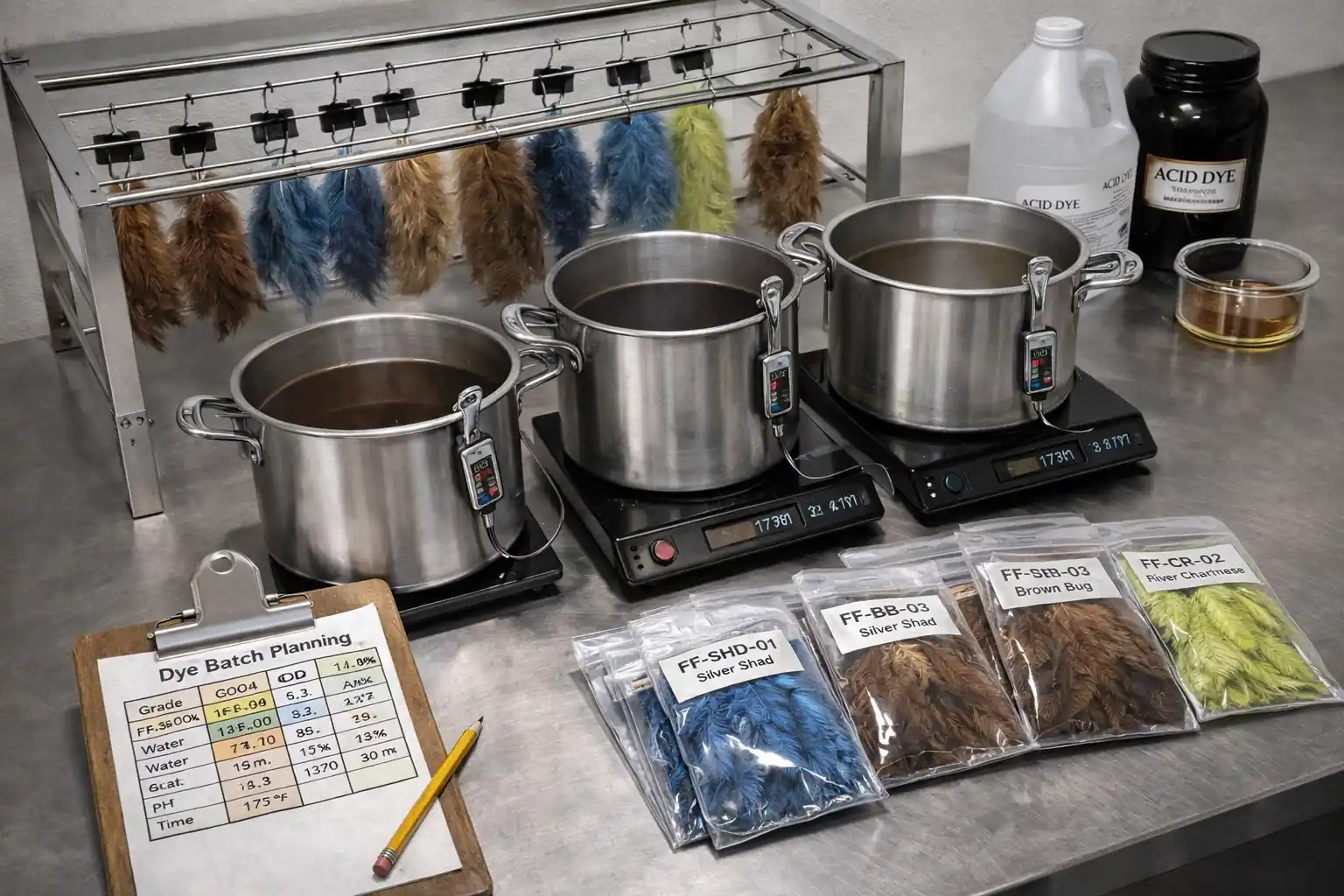
Before heating water, production planning must be defined. Key variables per batch: Feather grade, Stem classification, Target color code, Water volume, Dye weight, Acid amount, Target pH, Target temperature, Bonding time.
Batch Size Recommendation (Small Commercial)
- 2–5 gallon stainless steel dye vessels
- 50–150 feathers per batch depending on stem density
- Separate batches by stem thickness to ensure even fixation
- Never mix thin and heavy stems in commercial batches
2. Cost Per Feather Calculations
Scaling without understanding cost structure destroys margin.
Example Cost Model (1 Gallon Batch)
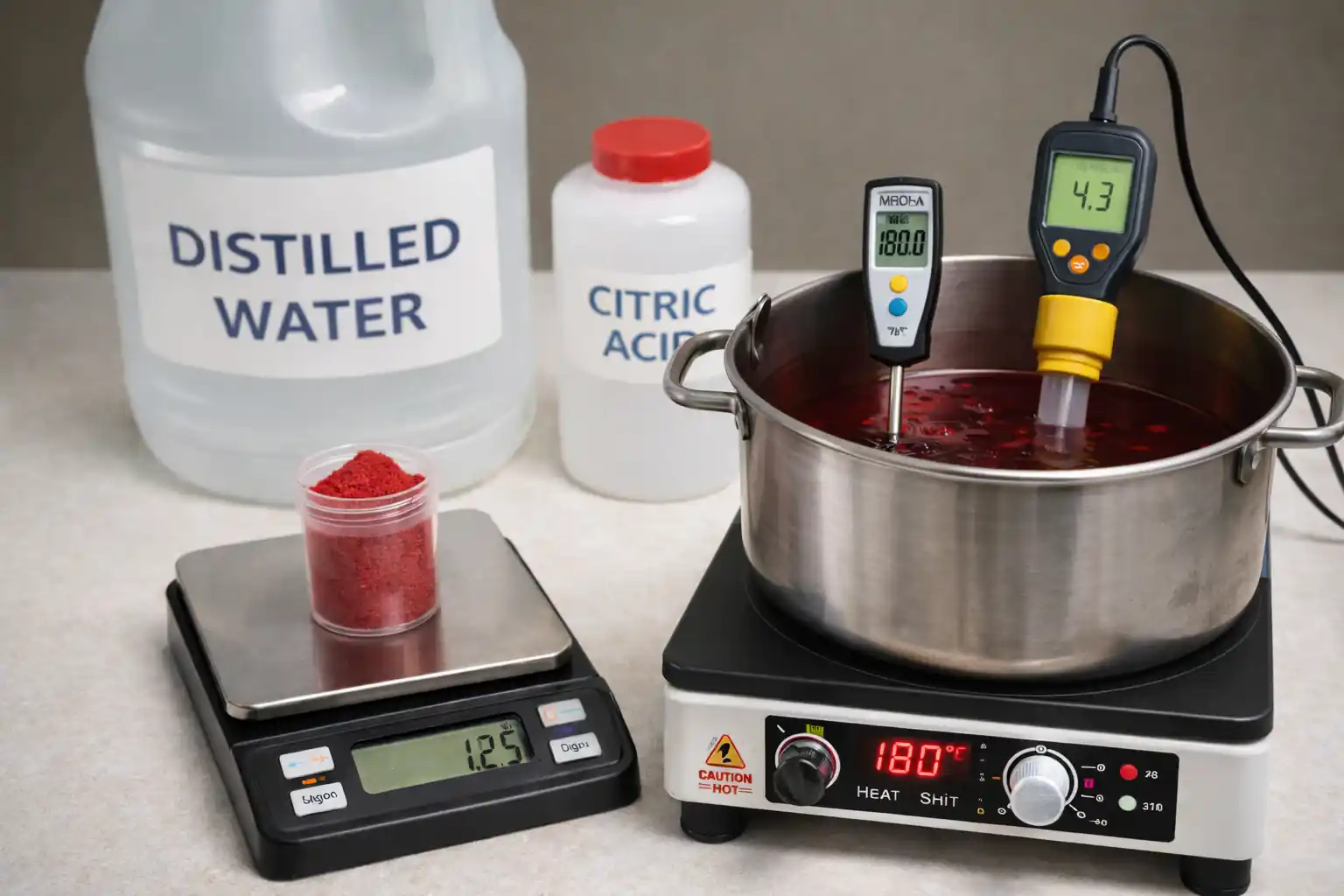
- Dye cost: $4.50
- Acid cost: $0.20
- Distilled water: $1.25
- Energy (estimated): $0.80
- Total batch cost: $6.75
- Cost per feather (100 feathers): $0.0675
This does not include labor or packaging. Production scaling requires tracking: labor per hour, drying rack capacity, yield loss percentage, and reject rate. All four must be tracked.
3. Bulk Water Heating Systems
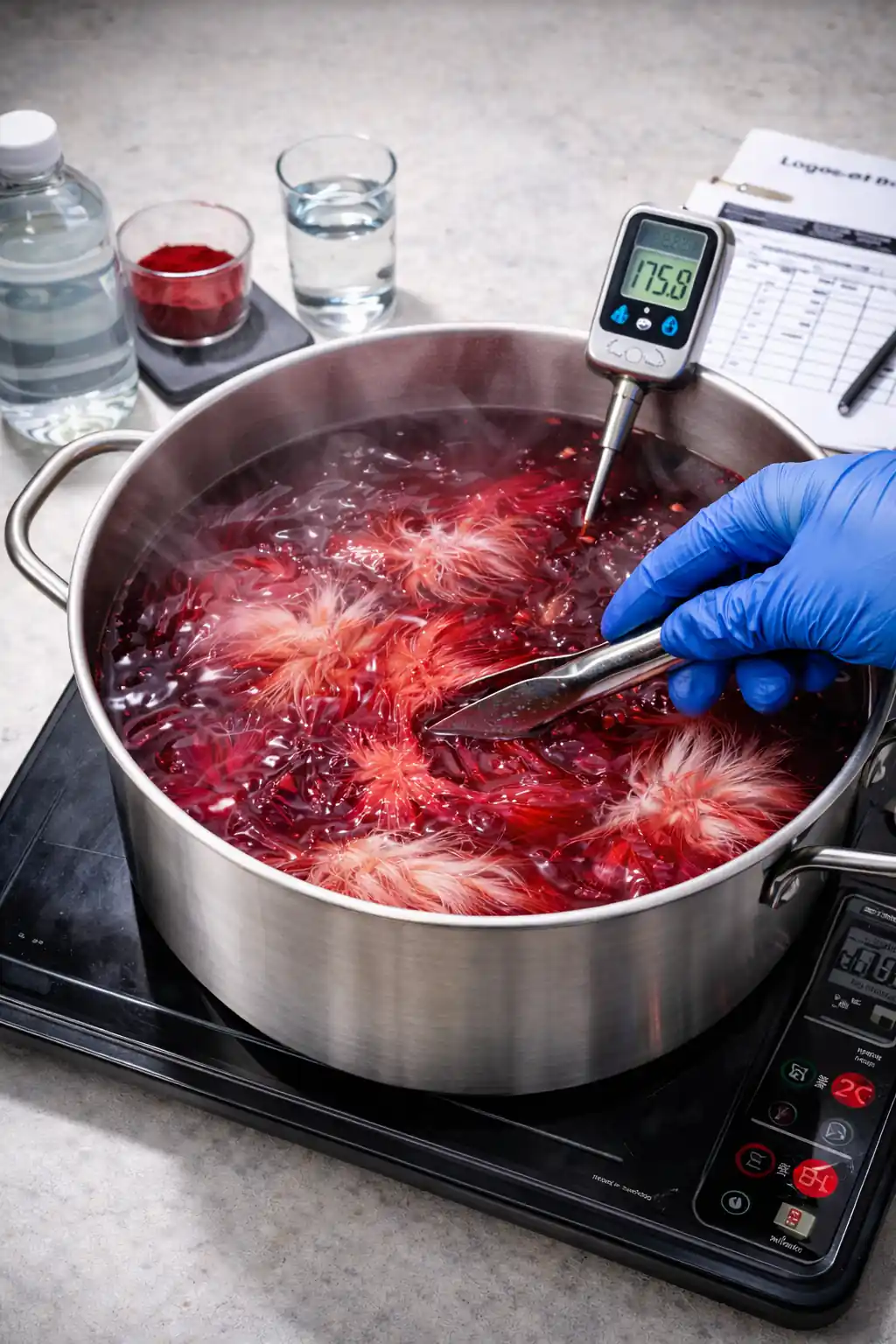
As production increases, stove-top heating becomes unstable. Recommended systems: dedicated electric hot plates with fine control dial, commercial induction burners, thermostat-controlled water bath systems, and insulated stainless steel vessels.
Control requirements: Temperature tolerance ±2°F. Digital thermometer with probe. Independent verification thermometer. Never rely solely on dial settings.
4. Safe Chemical Storage
- Acid dyes stored in sealed, labeled containers — stored dry, moisture-free, below 85°F
- Separate from alkaline materials, clearly labeled with lot date
- Vinegar stored sealed; citric acid stored airtight
- Baking soda stored dry and separate
- Never store acids and bases together in open containers
5. Standardizing Color Codes
Color names are marketing. Color codes are production. Every commercial color should have: unique code, exact dye weight, exact water volume, exact pH target, exact bonding duration, and temperature range.
Example Entry
- Color: FF-SHD-01 (Silver Shad)
- Water: 1 gallon
- Dye: 2.8g gray + 0.4g optical brightener (acid-compatible)
- pH: 4.3 | Temperature: 175°F | Bond time: 30 minutes
Without written formula records, scaling fails.
6. Packaging Dyed Marabou
- Fully dried before packing — no residual surface moisture
- Stem straightened before bagging, light compression only
- Moisture barrier poly bags recommended
- Include: color code, batch number, date produced
- Batch coding allows full traceability
7. Branding Custom Color Lines
Scaling production opens differentiation opportunities: forage-matched series, water-clarity specific blends, UV-enhanced lines, and limited-run seasonal colors.
Commercial Positioning: Instead of “Chartreuse Marabou” — use “FF-CR-02 River Chartreuse — Cold Water Blend.” Precision signals professionalism.
Production Checklist for Scaling How to Dye Marabou Feathers
Before releasing a batch: pH logged, temperature logged, time logged, visual penetration checked, rinse fastness confirmed, dry softness verified, batch code assigned.
Scaling is measurement, not volume.
Frequently Asked Questions About Dyeing Marabou at Commercial Scale
How many feathers can I dye in one batch at commercial scale?
A 2–5 gallon stainless steel dye vessel typically handles 50–150 feathers per batch, depending on stem density. Keep batches separated by stem thickness — mixing thin and heavy stems in the same commercial batch leads to uneven fixation.
What’s a realistic cost per feather at small commercial volume?
Using the 1-gallon example (dye, acid, water, and energy), cost per feather runs around $0.0675 before labor and packaging. At larger 2–5 gallon batches, dye and acid costs scale roughly with water volume, while energy and labor costs per feather typically drop — the main reason batching up makes sense once you’re selling, not just tying for yourself.
Do I need a color-code system if I’m a small operation?
Yes, as soon as you’re selling. A color name like “Chartreuse Marabou” can’t be reproduced reliably — a code like “FF-CR-02” with a logged dye weight, water volume, pH, and bond time can. Without written formula records, scaling fails even at small volume.
What’s the biggest mistake when scaling up from hobby batches?
Increasing batch size before your process is reliable at small scale. Blotching, weak penetration, and fixation errors don’t go away with bigger pots — they multiply. Fix quality control issues first, then scale.
How should I store acid dyes and chemicals for commercial production?
Keep acid dyes sealed, labeled, and moisture-free below 85°F, stored separately from alkaline materials. Never store acids and bases together in open containers, and label everything with a lot date for traceability.
Why Scaling Matters on the Water
Consistent dye chemistry ensures uniform breathing action, stable color under UV exposure, reduced bleed, predictable softness, and brand trust. Customers may not see your pH log — they will see inconsistency immediately.
Before scaling production, review Part 6 — Troubleshooting & Quality Control. Expanding batch size without solving blotching, weak penetration, or fixation errors only multiplies defects. Scaling should only begin once your dye process performs predictably at small scale.
Scaling how to dye marabou feathers moves you from maker to manufacturer.