
Fishing Tackle Making
Building fishing tackle combines craftsmanship, engineering, materials science, and on-the-water testing.
Whether you’re pouring soft plastics, designing custom molds, creating new color formulas, building jigs, painting crankbaits, or experimenting with lure action, understanding the principles behind tackle making helps produce better-performing fishing gear.
This section organizes tackle-making knowledge into practical categories that guide beginners and experienced makers through the design, construction, testing, and refinement process.
Lure Selection
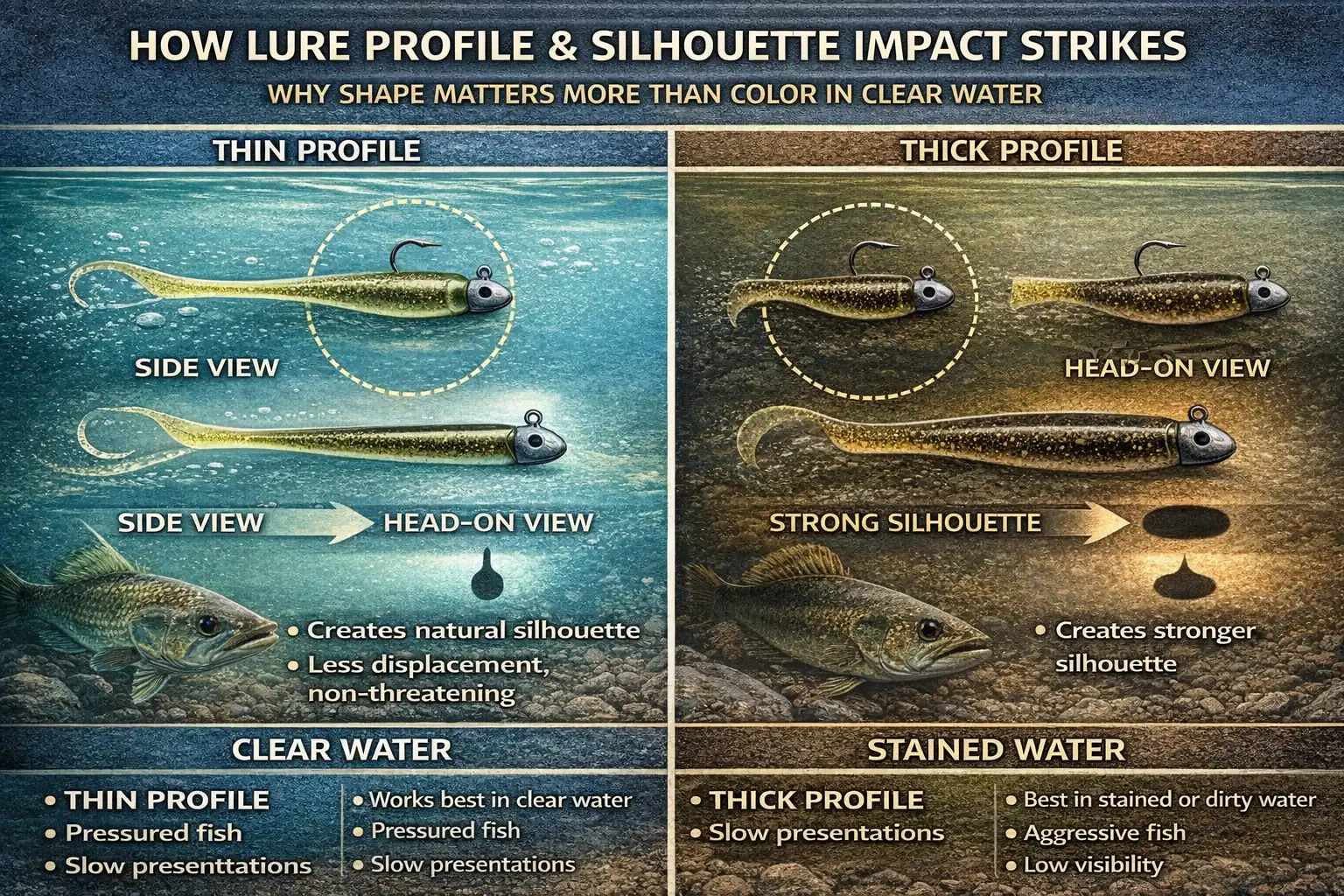
Part 4 — Lure Profile and Silhouette: Why Shape Matters More Than Color in Clear Water
March 9, 2026
Fish evaluate profile and silhouette before color. Thin profiles excel in clear pressured water; thick profiles help in stained conditions. Shape often determines commitment before color details matter.
Read more
Materials Science
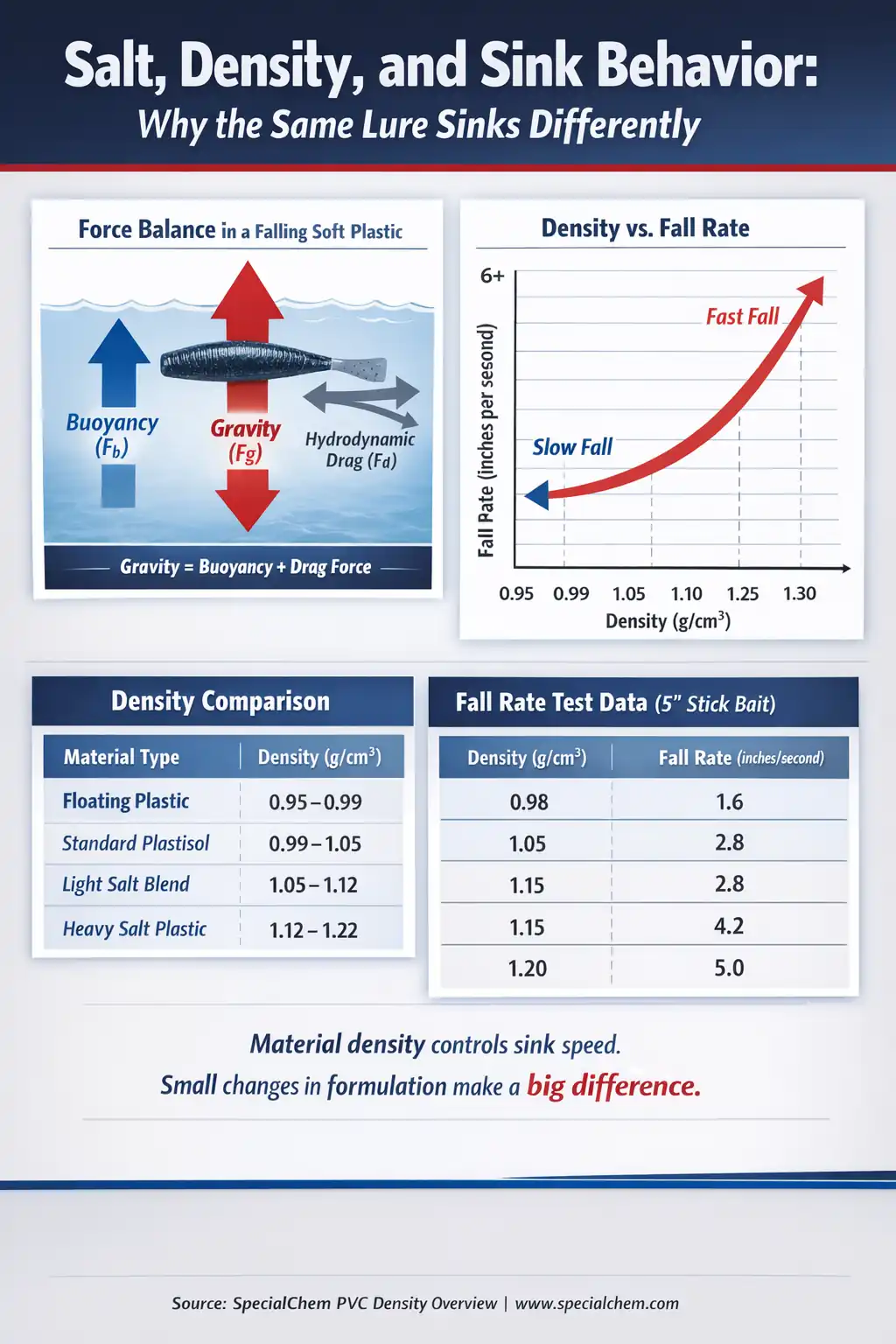
Part 3 — Salt, Density, and Soft Plastic Lure Sink Rate: Why the Same Lure Falls Differently
March 6, 2026
Soft plastic sink rate is controlled by material density, not shape. Salt loading changes density, which changes the gravity-buoyancy-drag balance. Includes density comparison table, measured fall rate data,…
Read more
Lure Design and Manufacturing
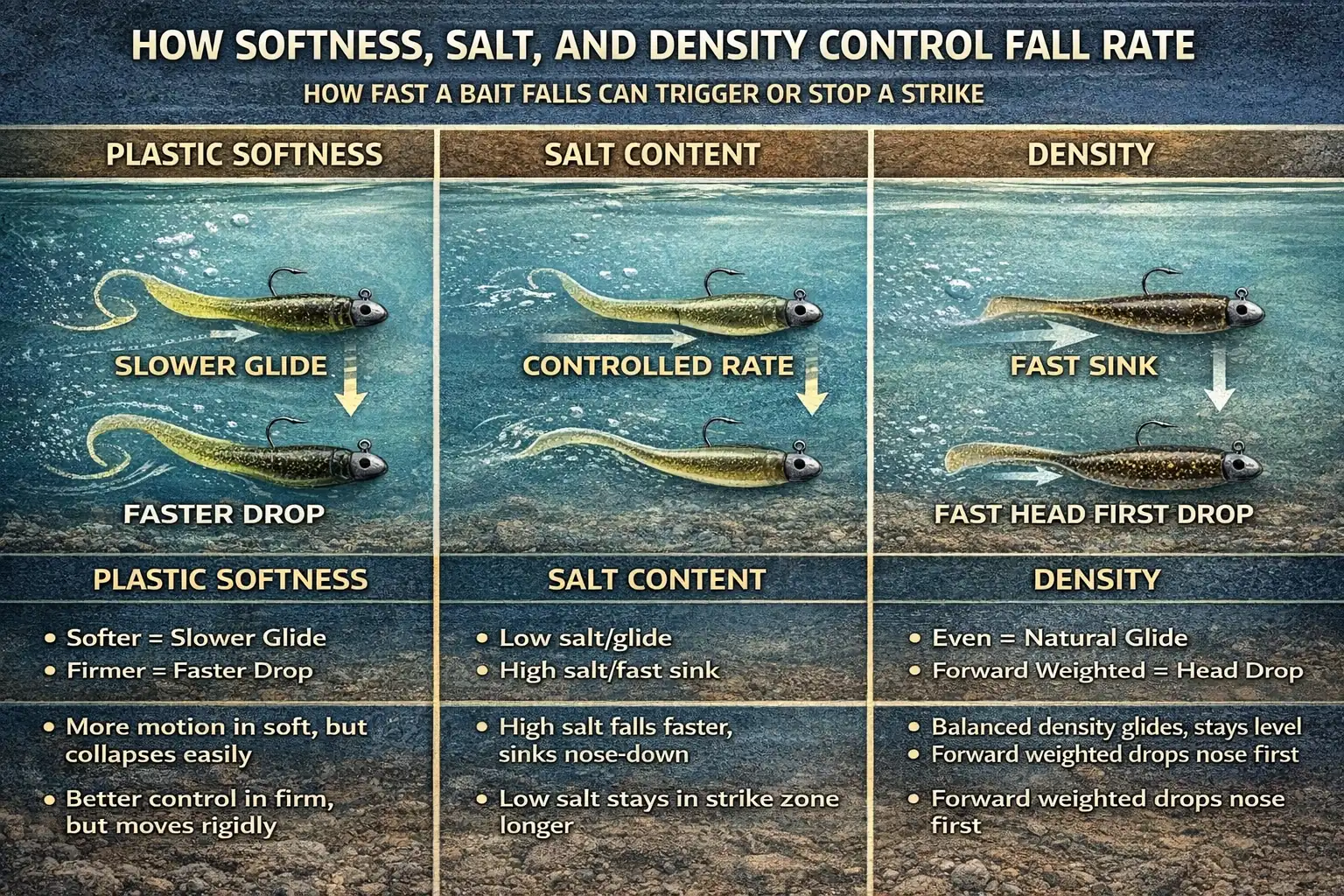
Part 3 — Soft Plastic Fall Rate Explained: How Softness, Salt, and Density Control Movement
March 2, 2026
Fall rate is controlled by softness, salt, and density — not jig head weight. Why fall rate matters most in cold water, how each variable affects the fall,…
Read more
Materials Science
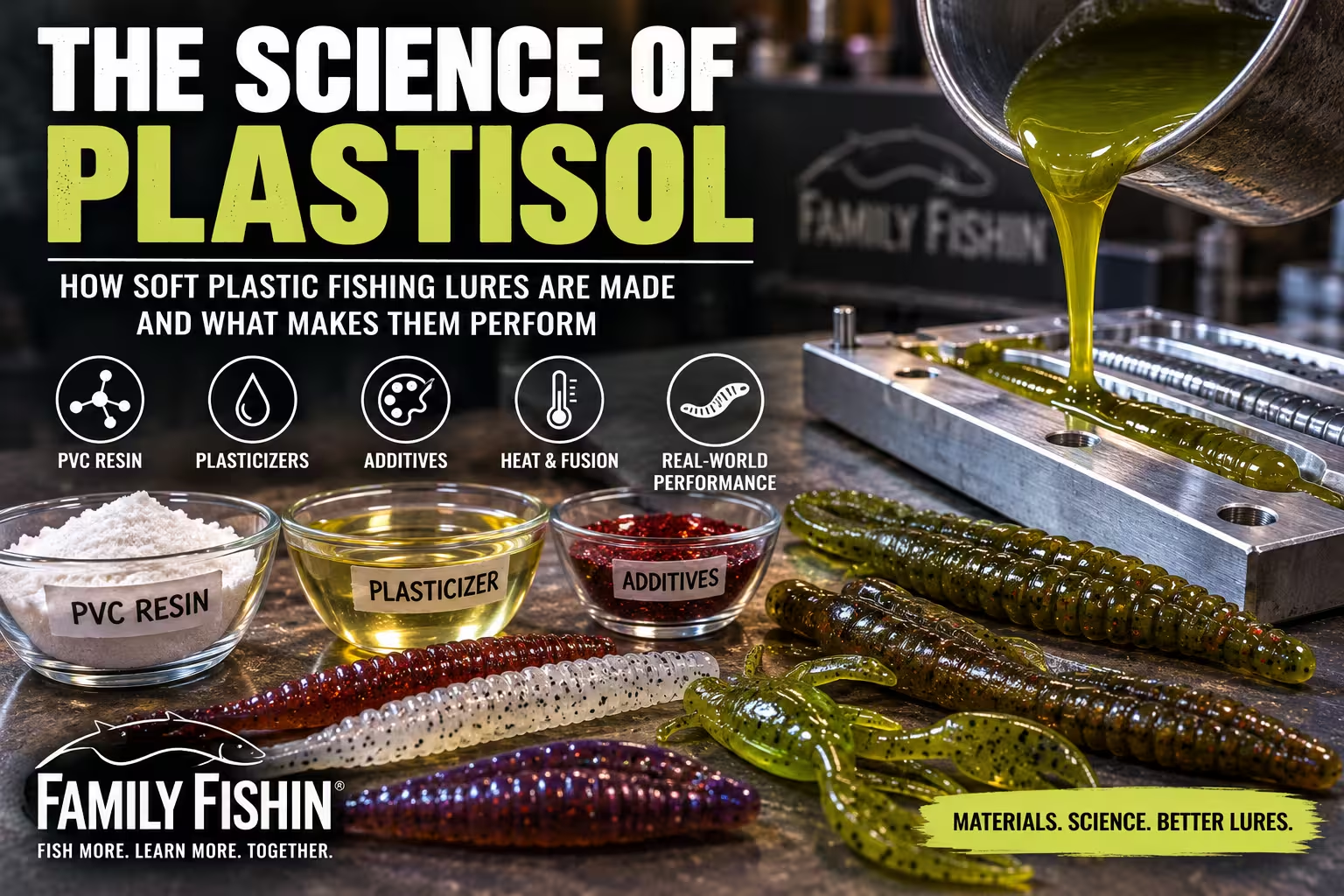
The Science of Plastisol: How Soft Lures Are Engineered for Action
March 1, 2026
Soft plastic fishing lures are built on plastisol — a PVC resin and plasticizer system. Covers formulation components, non-phthalate plasticizers, example formulation ranges, fusion process, and how each…
Read more
Materials Science
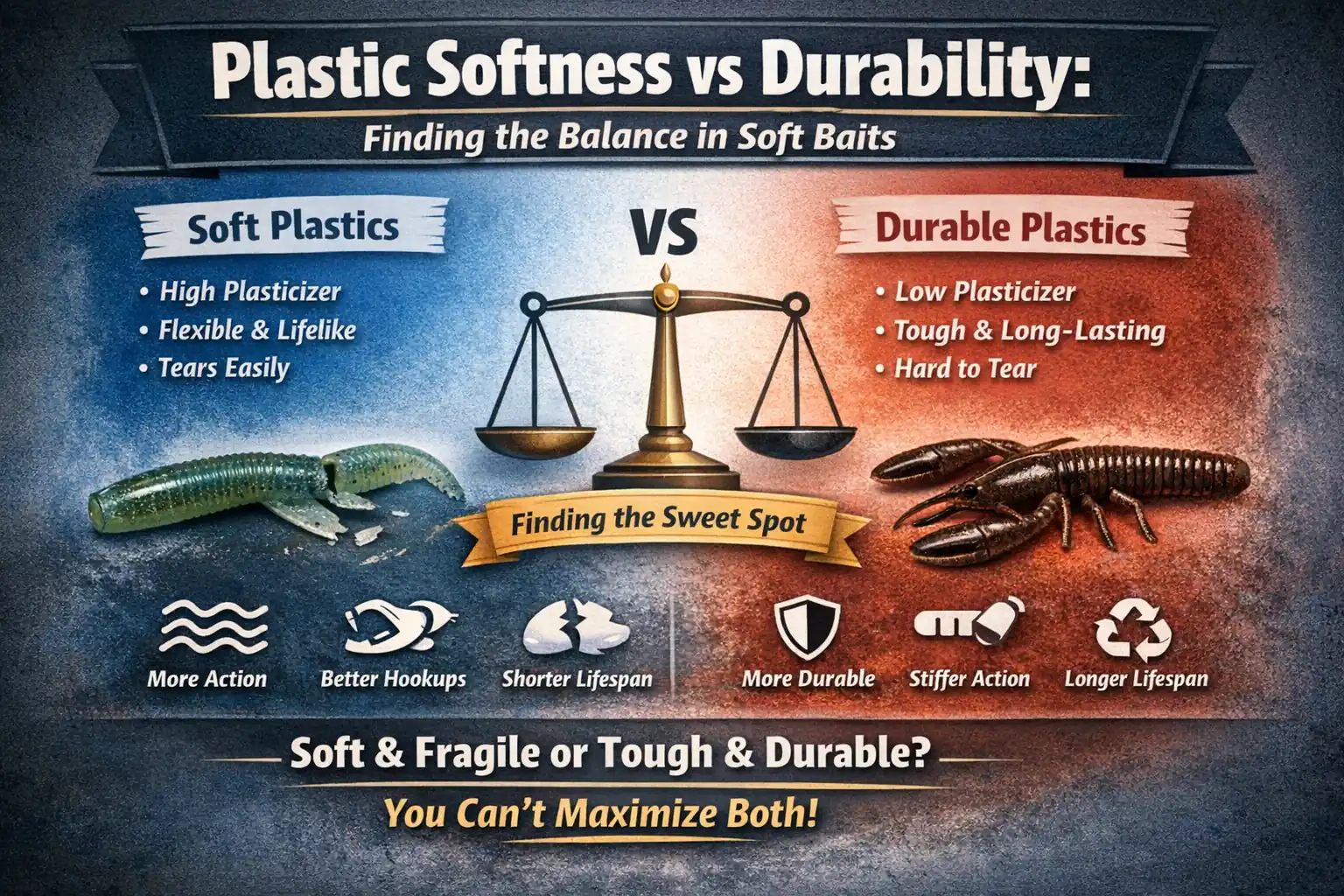
Part 2 — Plastic Softness vs Durability: The Trade-Off Nobody Explains
February 27, 2026
You cannot maximize softness and durability at the same time. A complete breakdown of the plasticizer ratio trade-off, why fragile baits often catch more fish, and application-specific optimization…
Read more
Lure Design and Manufacturing
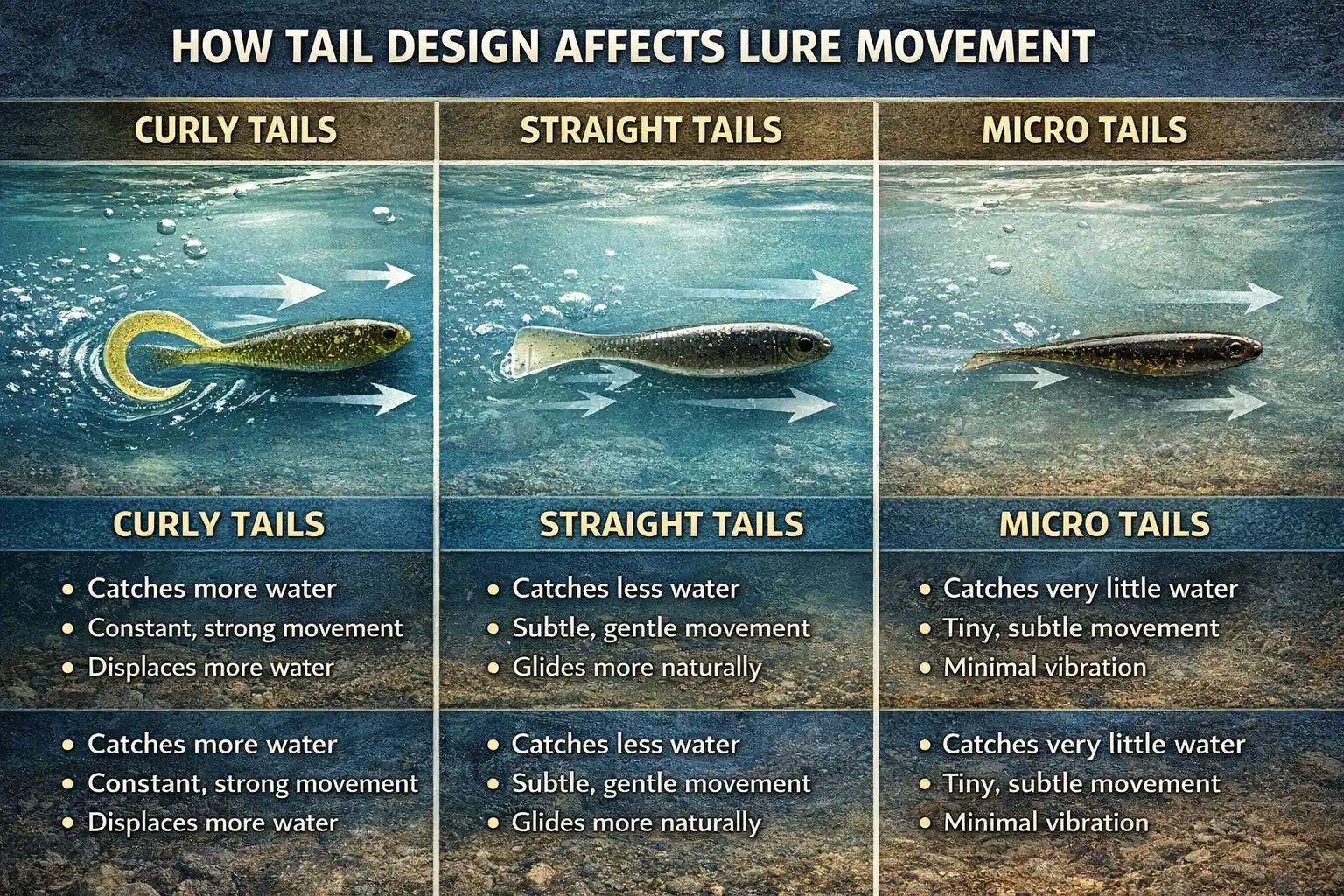
Part 2 — Soft Plastic Tail Design: Why Shape Controls Movement More Than Retrieval
February 23, 2026
Tail shape controls movement more than retrieve speed. A complete breakdown of curly, straight, and micro tail designs — when each works best, why baits overwork in cold…
Read more
Materials Science
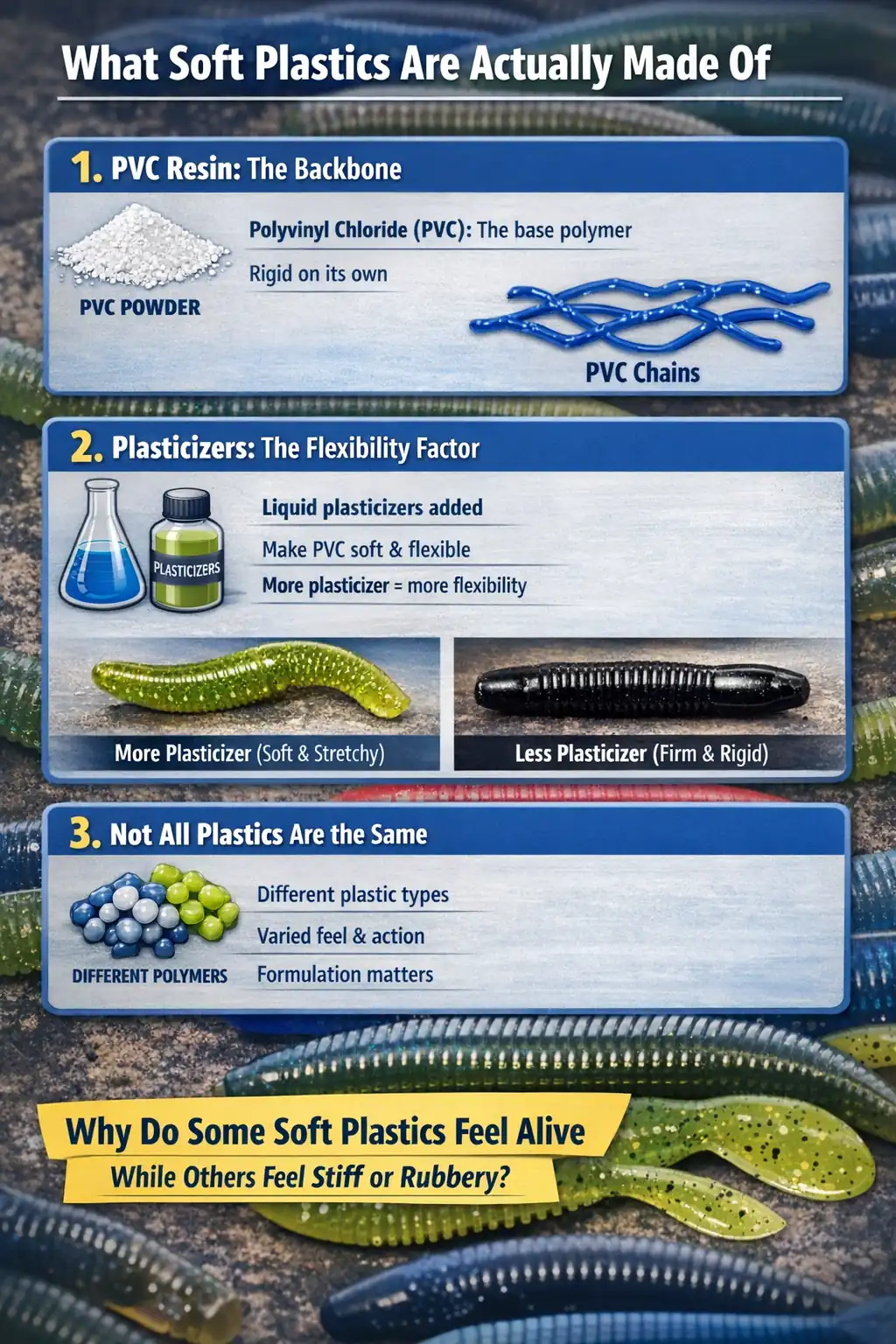
Part 1 — What Are Soft Plastic Fishing Lures Made Of? (PVC, Plastisol & Plasticizers Explained)
February 20, 2026
Soft plastic fishing lures are engineered PVC plastisol systems — not rubber. A complete breakdown of how PVC resin, plasticizers, and additives determine flexibility, density, and action.
Read more
Lure Selection
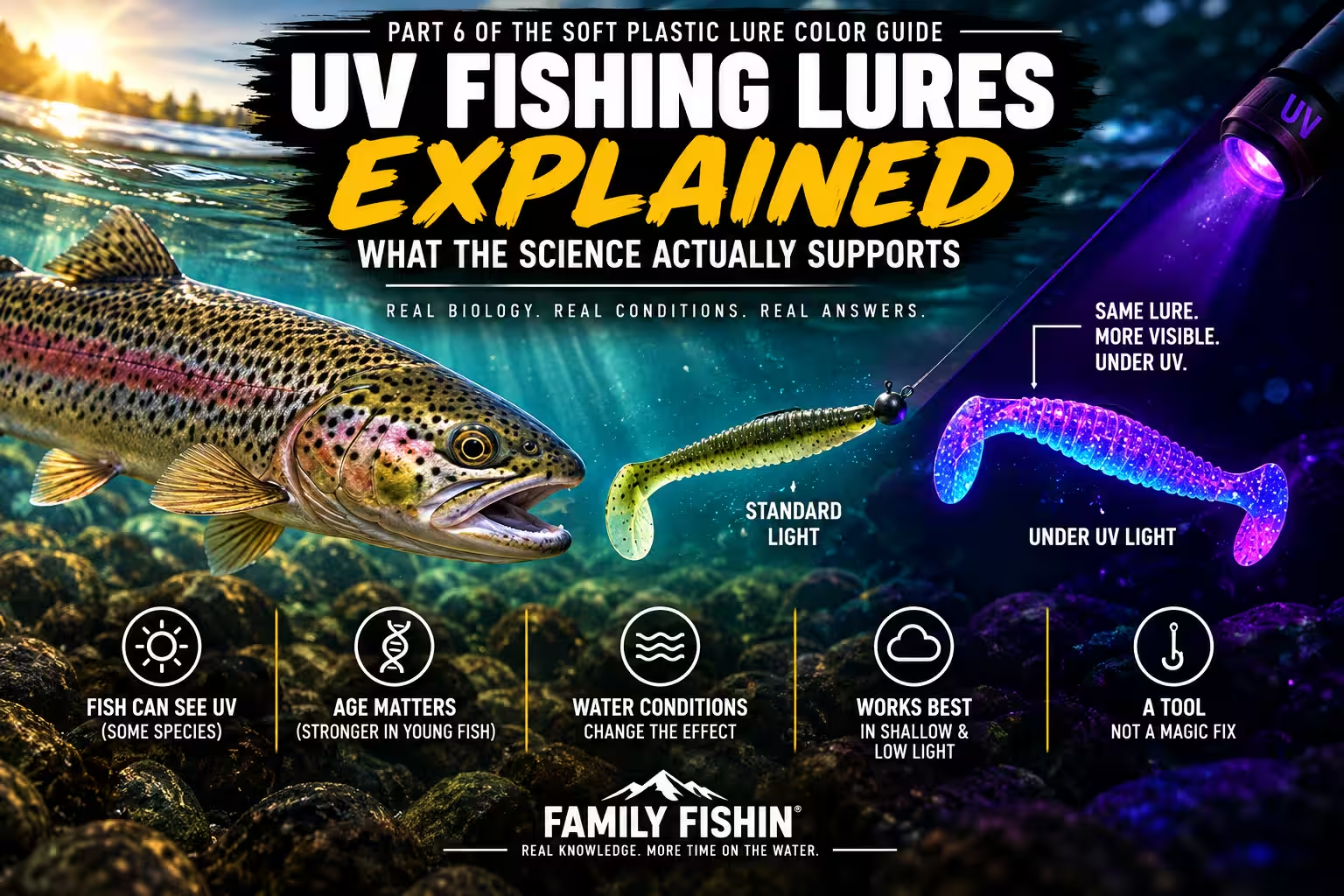
UV Lures Explained: What UV Reflectance Is and When It Actually Works
February 9, 2026
UV can help — but only when understood correctly. Covers what UV reflectance is, which fish can see UV, when UV lures work, and when they don't.
Read more