The Crawfish Connection: How Crayfish Drive Freshwater Fishing
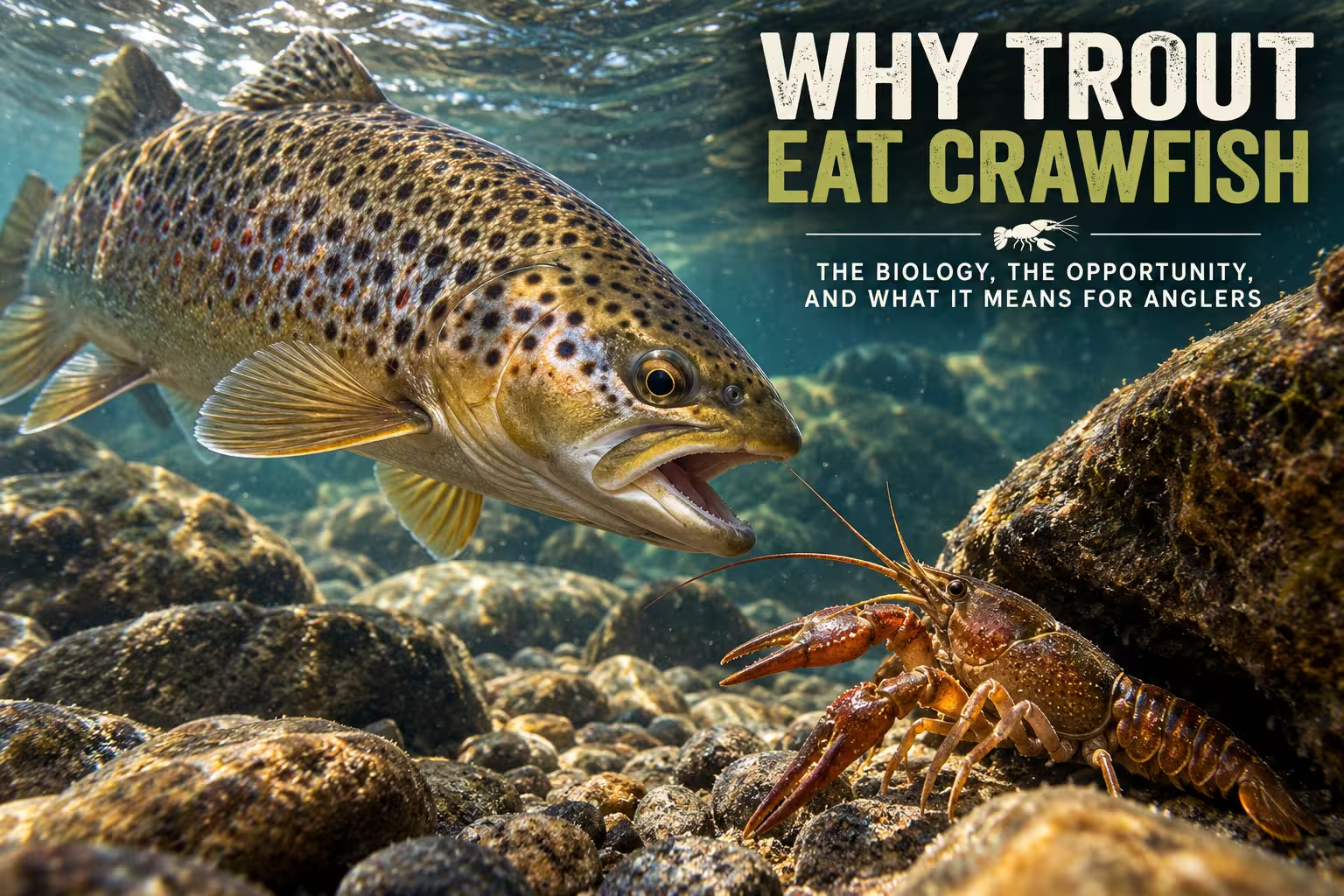
The connection between crawfish and fishing is stronger than many anglers realize. Crawfish influence trout, bass, and catfish feeding behavior, lure selection, seasonal movement patterns, and overall feeding activity throughout the year. Molting cycles, color changes, habitat preferences, and seasonal availability are some of the most important yet misunderstood factors in freshwater angling. Most anglers file crawfish under “bass food” and stop there. That’s a mistake—especially if you fish for trout. Larger trout, brown trout in particular, hunt crawfish aggressively, and the trout that eat them tend to be some of the biggest fish in the system.
But the crawfish connection runs through the entire food web. If you could look inside the stomachs of Missouri’s freshwater predators, the same prey would show up again and again. Bass crush them along rocky banks. Catfish root them out of gravel beds. Trout ambush the small ones drifting through riffles. Even crappie will hammer a bright lure that moves like one.
Understanding why — what a crawfish actually is, how it grows, why it changes color, and when it becomes defenseless — is what separates anglers who throw a craw lure because it’s in the box from anglers who throw the right one at the right time. This guide goes deep on the biology, then turns every piece of it into something you can use on the water.
What a Crawfish Actually Is
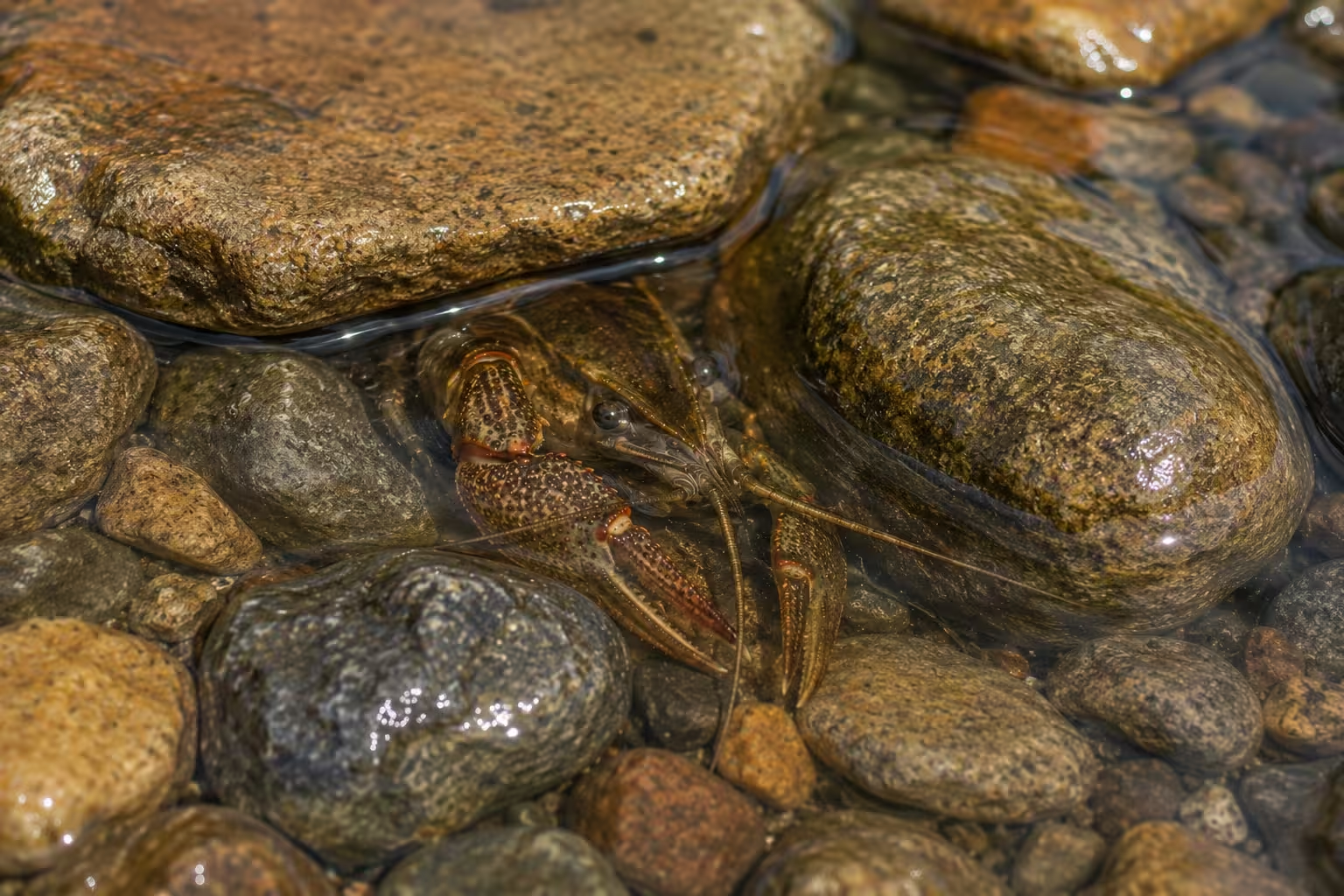
A crawfish (crayfish, crawdad, mudbug — same animal) is a freshwater crustacean, more closely related to a lobster than to anything with fins. Most live two to three years. They’re opportunistic omnivores, eating plants, algae, insects, dead fish, and each other. And they spend their whole lives locked in a problem that shapes everything about how fish hunt them: their shell can’t grow. (For the full deep dive on crawfish biology — anatomy, the molt cycle, reproduction, and their ecological role — see our companion guide: Crawfish Biology Explained: Life Cycle, Molting, Color, and Ecological Role.)
Growth Means Molting — and Molting Means Vulnerability
A crawfish’s hard exoskeleton protects it, but it can’t stretch. To get bigger, the crawfish has to climb out of its old shell entirely — a process called molting — and then harden a new, larger one underneath.
This happens constantly when they’re young and slows with age. A crawfish may molt 6 to 14 times in its first year, then drop to just one to three molts a year as a mature adult. Warm water speeds the whole cycle up; molting peaks through the warmer months when their metabolism runs fastest.
Here’s why that matters to you. In the hours and days right after a molt, the new shell is soft, the animal can barely move, and it has lost the armored claws it uses to defend itself. It’s essentially defenseless. To survive, a freshly molted crawfish hides — but the ones that get caught in the open are an easy, high-value meal, and predators key on them.
On the water: the molt is the feeding trigger. When crawfish are molting through the warm months, fish are actively hunting soft, vulnerable craws — and a soft-plastic craw or tube worked slowly along the bottom is imitating exactly that. This is also why a soft, collapsible lure outfishes a hard one here: a molting crawfish is soft, and fish expect it to give when they bite.
Why Crawfish Change Color — the Real Science
This is the part almost no fishing article gets right, and it’s the most useful thing in the post.
A crawfish’s color comes mostly from a pigment called astaxanthin — the same carotenoid that turns shrimp and lobster bright red when you cook them. But a live crawfish usually isn’t red. It’s olive, brown, rust, or muted amber. Why?
Because in the living shell, that red pigment is bound to a protein called crustacyanin. The protein physically twists the pigment molecule, shifting its color away from red and into the greens, browns, and olives that camouflage a crawfish against a streambed. Scientists describe it as a “one molecule, many colors” system. Break that protein bond and the pigment snaps back to its natural red-orange — which is exactly what heat does when you boil one.
The same thing happens, less dramatically, in nature. When a crawfish molts or is stressed, that camouflage chemistry is disrupted and many crawfish take on a brighter orange or red cast — turning a hidden animal into a visual target. On top of that, a crawfish’s baseline shade is shaped by three things:
- Diet — carotenoids come from what they eat, so well-fed crawfish carry richer color.
- Water temperature — warmer water increases pigment production in some species.
- Bottom color — crawfish darken over dark substrate and lighten over pale gravel, a camouflage response.
On the water: this is the entire logic of crawfish lure color. A hard-shelled, healthy adult on a clean gravel bottom is olive/brown/rust — so natural tones match it in clear water. A freshly molted crawfish is pale tan or cream. A molting or agitated one flashes orange and red — which is why bright craws (orange, red, chartreuse) can trigger reaction strikes even when they don’t perfectly “match.” You’re not always imitating; sometimes you’re provoking.
Where They Live — and Burrow
Crawfish concentrate where there’s cover and food: rocky banks, gravel bars, riprap, submerged wood, and weed edges. Many species also burrow into banks and sediment, especially in winter or during dry spells, creating tunnels that shelter them and, incidentally, stabilize riverbanks. Those burrows also create cavities where other prey collects — which is why ambush predators patrol them.
On the water: crawfish habitat is predator habitat. Rock, gravel, wood, and rubble aren’t just where crawfish live — they’re where fish go to eat crawfish. Fish your craw imitations on and around that structure, on the bottom, not swimming through open water.
Why Predators Can’t Resist Them
Crawfish aren’t the most calorie-dense prey available — research suggests they offer roughly half the energy return of a minnow of similar size. And yet predators eat them constantly. Four reasons explain it:
- They’re predictable. Crawfish stay tied to specific structure. A bass doesn’t have to chase a school across open water; it knows where the crawfish live.
- They’re slow. Unlike a baitfish that bolts, a crawfish creeps along the bottom and can only manage short backward tail-flips to escape. Easy to corner.
- They’re abundant and seasonal. Molting pulses and warm-season activity flood the system with vulnerable targets at predictable times.
- They’re defenseless when molting. A soft-shell crawfish can’t pinch, can’t flee, and can’t hide its color. It’s the easiest meal in the river.
Put simply: crawfish trade calories for reliability. A predator gets a smaller payoff per bite, but it gets it without burning much energy — and that math wins.
Trout and Crawfish
Trout get pegged as insect feeders, and the small ones mostly are. But as trout grow, they shift toward higher-protein meals, and crawfish move squarely onto the menu — especially for the larger fish.
Rainbow trout take crawfish opportunistically, and juvenile crawfish in the half-inch to roughly one-and-a-quarter-inch range are common prey. Crawfish matter most for rainbows when insect activity slows in midsummer, filling the gap between hatches.
Brown trout are the real crawfish hunters. Larger browns rely on crawfish for high-calorie meals, often feeding near structure, and crawfish abundance frequently tracks with trophy brown trout growth. If you’re chasing a big brown, you’re chasing a fish that eats crawfish.
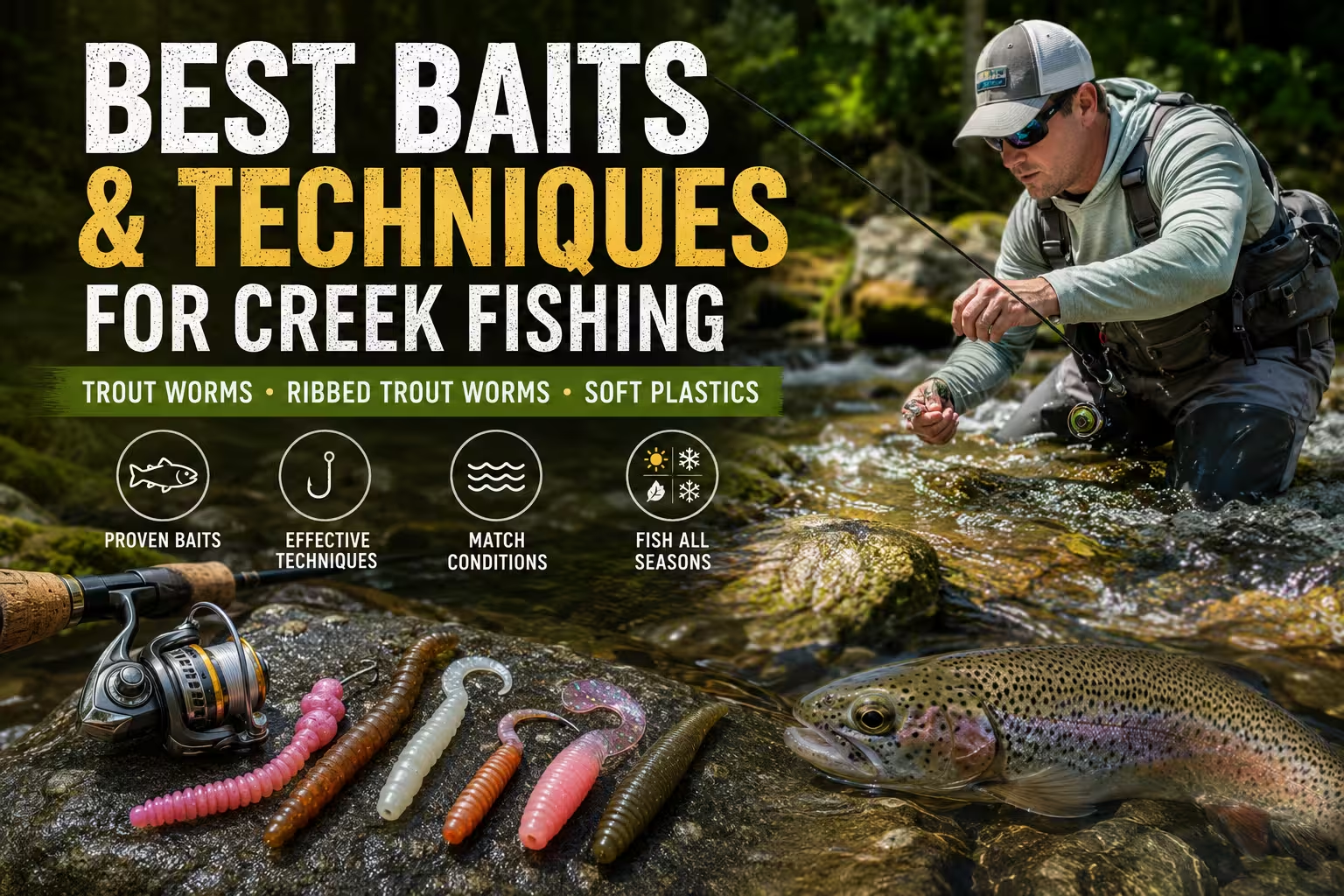
On the water: small tubes and soft-plastic craws drifted through riffles and rocky seams imitate juvenile crawfish for rainbows. For browns, fish a weighted craw or tube near structure with a lift-drop retrieve — the lift-drop mimics the defensive tail-flip a crawfish uses when it’s threatened. Natural olive, rust, and amber tones work in clear water; pink, orange, and white can trigger aggressive strikes in stained water. (For the full breakdown of plastics, rigging, and color for trout, see our guide: Best Soft Plastics for Trout.)
Smallmouth Bass and Crawfish
In rocky rivers and Ozark streams, crawfish are a cornerstone of the smallmouth diet. Peer-reviewed diet studies of Ozark-stream smallmouth show a clear shift as the fish grow: small, young smallmouth eat mostly insects, but once they pass roughly five inches, their diet swings to fish and crawfish — and crawfish remain a primary prey item for adults from then on, with their importance peaking in summer.
- Seasonal rhythm: spring and early-summer molting periods create prime feeding windows.
- Strike mechanics: smallmouth often crush the shell, spit the claws, and swallow the soft body.
On the water: soft craws and tubes shine when dragged across gravel bars, hopped along rocky bottoms, or bounced through current seams. Effective colors are the natural set — olive, rust, brown, muted amber.
Largemouth Bass and Crawfish
Largemouth lean more on baitfish than smallmouth do, but crawfish remain a major food source in many lakes and reservoirs — and in some systems they dominate the diet in late fall, winter, and spring.
- Habitat overlap: riprap, weed edges, submerged timber, and rocky shorelines all hold crawfish.
- Timing overlap: crawfish are most active in low light, which lines up with prime largemouth feeding windows.
On the water: a jig-and-craw imitates a crawfish in its defensive, claws-up posture. A lift-drop retrieve mimics the short escape bursts crawfish use when cornered.
Catfish and Crawfish
Catfish are opportunists, and crawfish are squarely on the menu.
Channel catfish root through gravel beds for crawfish, mussels, and insect larvae, and they capitalize on late-summer crawfish die-offs when easy meals pile up on the bottom. Fresh or cut crawfish are excellent bait; scented soft-plastic craws can work on rocky river bottoms.
Flathead catfish are ambush hunters that patrol near crawfish burrows, where prey concentrates, especially at dusk and after dark. Live crawfish are one of the most reliable flathead baits; soft craw imitations can substitute when live bait isn’t available.
Crappie and Crawfish
Crappie feed mostly on minnows and insects, not crawfish directly — but they’re aggressive visual feeders that react hard to color and flash. That makes a bright, craw-style tube an effective trigger even though it isn’t a literal imitation.
On the water: bright tubes in pink, orange, chartreuse, or white, fished on light jig heads under a slip float, draw strikes in stained water and brushy cover.
Matching Lure Color to the Crawfish
Pull the biology together and lure color stops being guesswork. Color reflects life stage and conditions:
- Natural tones (olive, brown, rust, amber): a healthy, hard-shelled adult crawfish. Best in clear water, where fish inspect closely and a realistic match matters.
- Pale tones (tan, cream): a recently molted crawfish. A subtle, deadly choice during and just after molt periods.
- Bright tones (pink, orange, chartreuse): a molting, stressed, or fleeing crawfish — and a pure reaction trigger. They don’t imitate a calm crawfish; they provoke a strike, which is exactly what you want in stained water or when fish are aggressive.
The rule of thumb: imitate in clear water, provoke in stained water, and lean brighter during molt season when real crawfish are flashing color anyway.
Angler Takeaways
- Trout: small tubes and craw imitations through riffles and rocky seams for rainbows; weighted craws near structure with a lift-drop for big browns.
- Smallmouth: natural craws and tubes dragged and hopped across rock and gravel.
- Largemouth: jig-and-craw with a lift-drop near riprap, timber, and weed edges.
- Catfish: live or cut crawfish first; scented soft craws as backup on rocky bottoms.
- Crappie: bright tubes as visual triggers in stained or brushy water.
- Season: fish soft, natural craws hardest during warm-season molt windows; lean on bright colors when crawfish are molting and flashing.
- Always: keep it on the bottom, around structure, moving slowly. Crawfish don’t swim through open water, and neither should your lure.
Frequently Asked Questions About Crawfish and Fishing
Do trout really eat crawfish?
Yes. Larger trout — especially brown trout — eat crawfish regularly, and crawfish can be a key food when insect activity slows. Rainbow trout take smaller, juvenile crawfish opportunistically.
Do bass eat crawfish?
Heavily. In rocky rivers and Ozark streams, crawfish are a primary prey of adult smallmouth bass. Largemouth feed on them too, sometimes as a dominant food in cooler months.
Why do crawfish turn red?
Their red pigment, astaxanthin, is normally bound to a protein that masks the red and produces camouflage browns and greens. When that bond breaks — from the heat of cooking, or the stress and chemistry of molting — the pigment reverts to its natural red-orange.
When are crawfish most vulnerable to predators?
Right after molting. Until the new shell hardens, the crawfish is soft, slow, and unable to defend itself — the easiest meal in the system.
How often do crawfish molt?
Young crawfish molt frequently — six to 14 times in their first year — while older adults molt only one to three times a year. Warm water speeds the cycle.
What color crawfish lures work best?
Natural olive, rust, and brown match hard-shelled adults in clear water. Pale tan mimics fresh molts. Bright pink, orange, and chartreuse trigger reaction strikes in stained water and during molt periods.
What lures imitate crawfish best?
Soft-plastic craws, tubes, jig-and-craw combinations, and creature baits — anything that replicates the shape and slow, bottom-hugging behavior of a real crawfish.
Closing Thought
From a big brown trout ambushing a molting crawfish in an Ozark riffle, to a smallmouth crushing one on a gravel bar, to a flathead patrolling a burrow after dark, crawfish sit at the center of how freshwater predators behave. Understand the animal — how it grows, why it changes color, and when it’s defenseless — and lure choice stops being a guess. Match presentation, color, and timing to the real rhythms of the crawfish, and the fish tend to follow.
About Family Fishin
Family Fishin is a family-owned fishing tackle company dedicated to designing, testing, and producing high-quality fishing lures — inspired by generations of fishing tradition and driven by a passion for innovation. Every product is developed with one goal in mind: helping anglers spend more time doing what they love, catching fish and creating memories on the water.
References (for the biology): Dauwalter & Fisher, Ontogenetic and Seasonal Diet Shifts of Smallmouth Bass in an Ozark Stream (Journal of Freshwater Ecology); research on crustacean coloration via astaxanthin–crustacyanin (Global Seafood Alliance; Frontiers in Marine Science); crayfish molting and life-history sources (state wildlife and aquaculture references). Confirm and format citations to your preference before publishing.
Tags: #crawfish #crawfish lures #trout fishing #smallmouth bass #fishing biology #soft plastic lures #missouri fishing