Best Jig Heads for Trout (Complete System Guide)
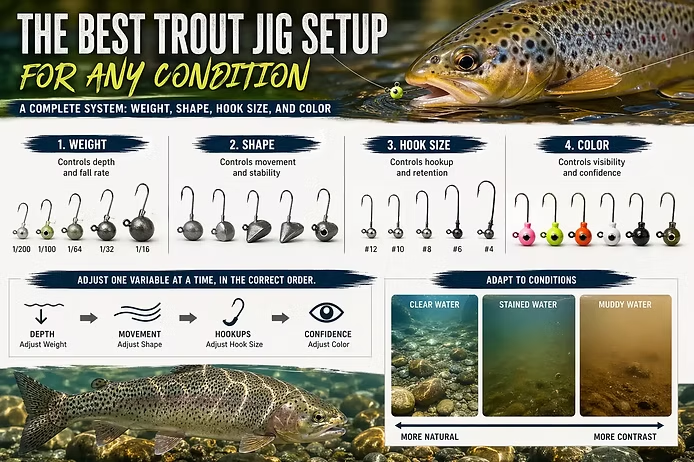
The complete system for selecting jig heads for trout — weight, head shape, hook size, eye angle, and finish working together. Proven high-performance setups and a full FAQ covering every variable.
The complete Missouri trout fishing guide — Bennett Spring, Roaring River, Montauk, Taneycomo, Ozark streams, bait selection, color guide, slip bobber setup, and local tips from anglers based in Ozark, MO.
The best trout worm size changes with conditions. A complete guide to small, medium, and large profiles — plus the trimming technique that turns follows into strikes without changing baits.
Marabou and soft plastics behave differently in the water. A complete guide to matching the right material to conditions — cold water, pressured fish, depth control, and active feeding — for more consistent strikes.
Jig head weight controls fall rate — too heavy drops past trout, too light never reaches them. A step-by-step system for selecting the correct weight based on depth, current, temperature, and trout behavior.
Retrieve speed directly controls trout behavior — too fast or too slow leads to missed strikes. A complete system for matching retrieve speed to temperature, pressure, and conditions.
A trout that follows your bait is not a missed opportunity — it is a diagnostic signal. A complete step-by-step guide to identifying which variable is wrong and fixing it for consistent strikes.
Softer plastics collapse on the bite and expose the hook faster, increasing hookup ratio. A complete breakdown of how material softness affects strike conversion, with step-by-step adjustment guide.
Water clarity controls how trout see your lure, how long they inspect it, and whether they commit or refuse. A complete system for adjusting color, size, movement, and fall rate to match any clarity condition.
Mayflies are available year-round as nymphs — subsurface feeding drives consistent trout success far more than visible surface hatches. Covers nymph habitat, feeding windows, and presentation for both fly and spin anglers.